SEOUL, South Korea (AP) — A North Korean women’s soccer team is scheduled to play at a regional tournament in South Korea later this month, in a rare sports exchange between the war-divided rivals.
The South’s Unification Ministry, which handles inter-Korean affairs, said in a statement Monday that the Pyongyang-based Naegohyang Women’s FC is expected to face Suwon FC Women on May 20 in the semifinals of the Asian Football Confederation Women’s Champions League in Suwon, south of Seoul.
The Korea Football Association, South Korea’s soccer body, said the AFC notified it that the North Korean team submitted a list of players and staff set to come to Suwon. The KFA said North Korea would be fined by the AFC if the team failed to compete in the semifinals.
North Korea’s state media has not reported on the soccer club’s expected trip.
North Korea last sent athletes to South Korea in December 2018 for a table tennis event, continuing a period of diplomatic engagement highlighted by the participation of North Korean athletes alongside a high-level delegation at the Winter Olympics in the South earlier that year. North Korea also sent its national women’s soccer team to the 2014 Asian Games in Incheon, which was the last time its female soccer players competed in the South.
North Korea's women's teams have had recent success in international youth competitions, and are the defending Under-17 and Under-20 World Cup champions.
In the continental club tournament, Naegohyang Women’s FC defeated Suwon FC Women 3-0 in the group stage in Myanmar last November, before beating a Vietnamese club in the quarterfinals in March. The winners of the May 20 semifinals will meet in the final three days later in Suwon, with Melbourne City FC and Tokyo Verdy Beleza facing off in the other semifinal.
While athletes from North and South Korea have previously competed on combined teams and marched together in Olympic ceremonies during periods of warmer relations, sports exchanges have since faded as relations deteriorated, with no inter-Korean activities for years.
North Korea has shunned talks with South Korea and the U.S. since North Korean leader Kim Jong Un's broader nuclear diplomacy with U.S. President Donald Trump collapsed in 2019 over disagreements on U.S.-led sanctions on the North.
Tensions have been rising lately as Kim ramps up his nuclear and missile program targeting Asian U.S. allies and the U.S. mainland and hardens his stance toward South Korea. Kim has labeled South Korea as his most hostile adversary and has shown sensitivity to South Korean soft power, pushing aggressively to block the influence of South Korean culture and language among his population.
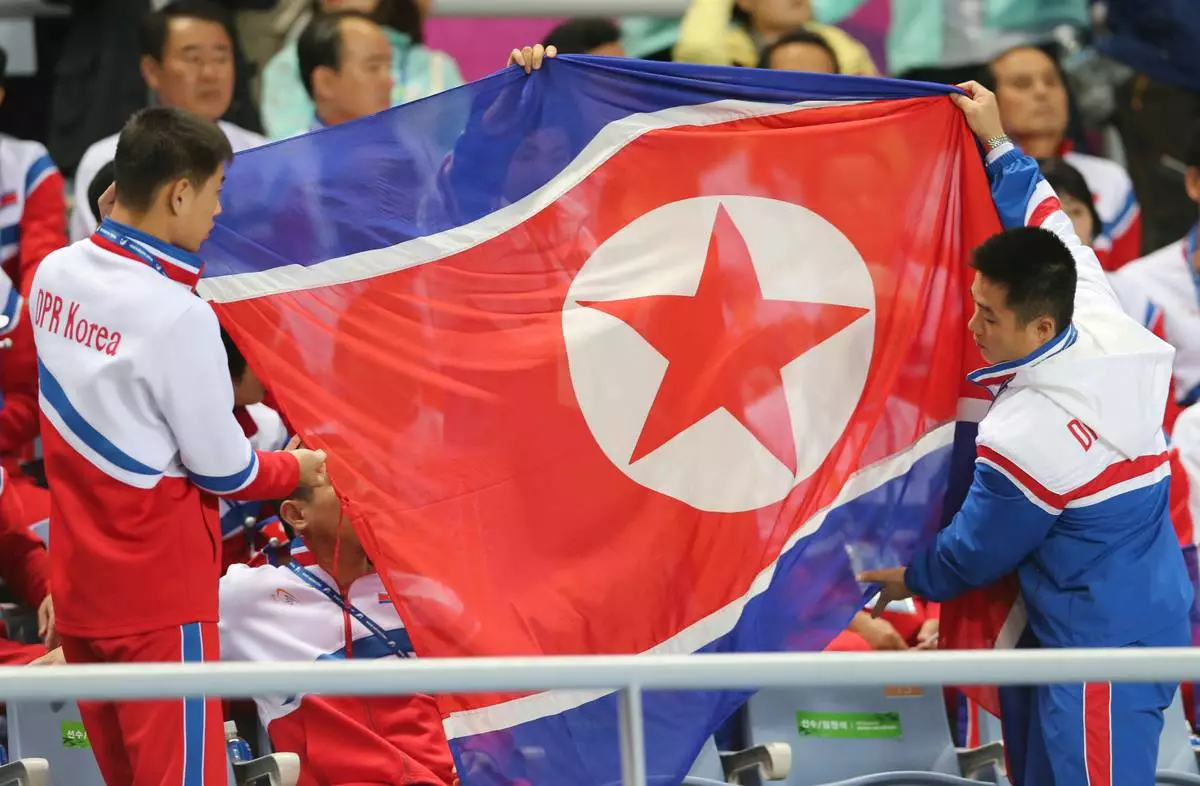
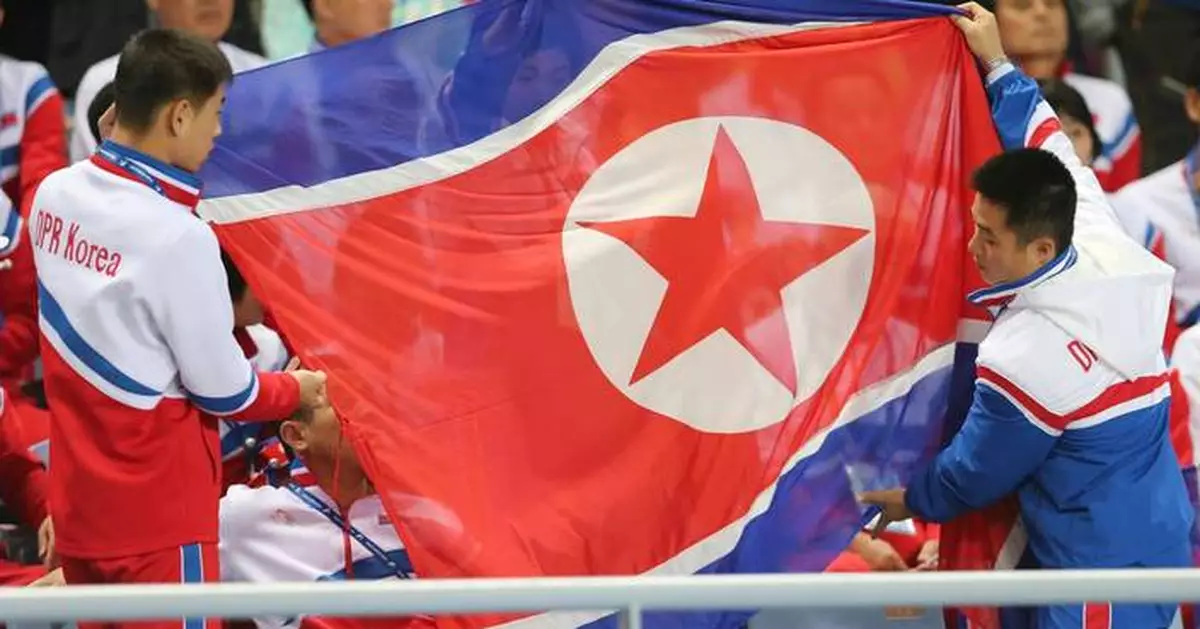
FILE - North Korea's delegation members prepare to spread the North Korean flag during their women's soccer final match at the 17th Asian Games in Incheon, South Korea, Oct. 1, 2014. (AP Photo/Eugene Hoshiko, File)
YEREVAN, Armenia (AP) — European leaders on Monday said that U.S. President Donald Trump’s snap decision to pull thousands of U.S. troops out of Germany came as a surprise but is a fresh sign that Europe must take care of its own security.
The Pentagon announced last week that it would pull some 5,000 troops out of Germany, but Trump told reporters on Saturday that “we’re going to cut way down. And we’re cutting a lot further than 5,000.”
He offered no reason for the move, which blindsided NATO, but his decision came amid an escalating dispute with German Chancellor Friedrich Merz over the U.S-Israeli war on Iran, and Trump’s anger that European allies have been reluctant to get involved in the conflict in the Middle East.
Asked about the decision to pull out 5,000 troops from Germany, Norwegian Prime Minister Jonas Gahr Støre said: “I wouldn’t exaggerate that because I think we are expecting that Europe is taking more charge of its own security.
“I do not see those figures as dramatic, but I think they should be handled in a harmonious way inside the framework of NATO,” he told reporters in Yerevan, Armenia, where European leaders are holding a summit.
The European Union’s foreign policy chief, Kaja Kallas, said “there has been a talk about withdrawal of U.S. troops for a long time from Europe. But of course, the timing of this announcement comes as a surprise.”
“I think it shows that we have to really strengthen the European pillar in NATO,” she said.
Asked whether she believes that Trump is trying to punish Merz, who said that the U.S. has been humiliated by Iran in talks to end the war, Kallas said: “I don’t see into the head of President Trump, so he has to explain it himself.”
Over the weekend, NATO spokesperson Allison Hart said that officials at the 32-nation military alliance “are working with the U.S. to understand the details of their decision on force posture in Germany.”
European allies and Canada have known since just after he came to office again last year that Trump would pull troops out of Europe — indeed some left Romania in October — but U.S. officials had pledged to coordinate any moves with their NATO allies to avoid creating a security vacuum.
NATO Secretary-General Mark Rutte played down the move, saying that “there has been at this point disappointment on the U.S. side” about European support for the war on Iran.
Notably France, Spain and the U.K. have declined to give U.S. forces free rein to use bases on their territory to attack Iran. Spain has denied them the use of its airspace and bases there for the war.
But Rutte, who has championed Trump’s leadership at NATO despite the U.S. president's criticism of the majority of the allies, said: “I would say the Europeans have heard a message. They are now making sure that all the bilateral basing agreements are being implemented.”
Rutte added that European nations “have decided to pre-position assets, key assets, close to the theater for the next phase.”
He provided no details, but the Europeans have insisted they would not help police the Strait of Hormuz, a key energy trade route, until the war is over.
Cook reported from Brussels.
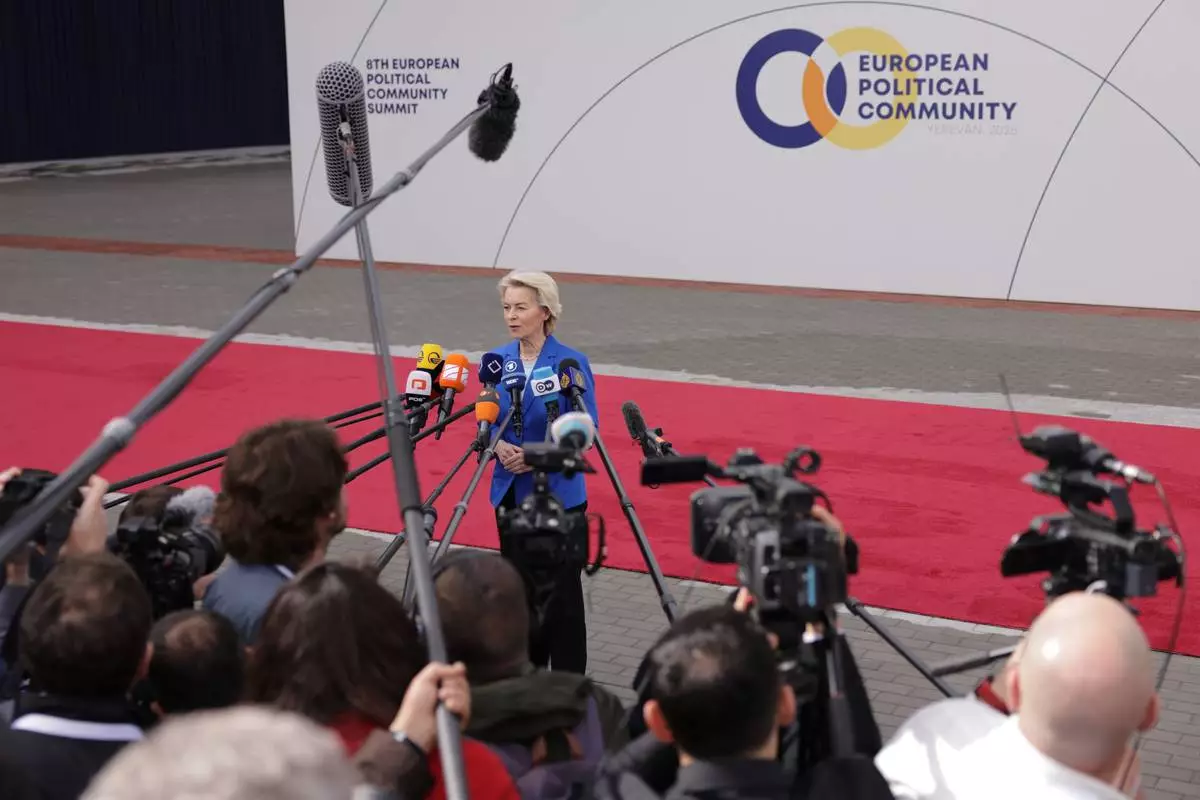
European Commission President Ursula von der Leyen speaks with the media as she arrives for a meeting of the European Political Community in Yerevan, Armenia, Monday, May 4, 2026. (AP Photo/Anthony Pizzoferrato)
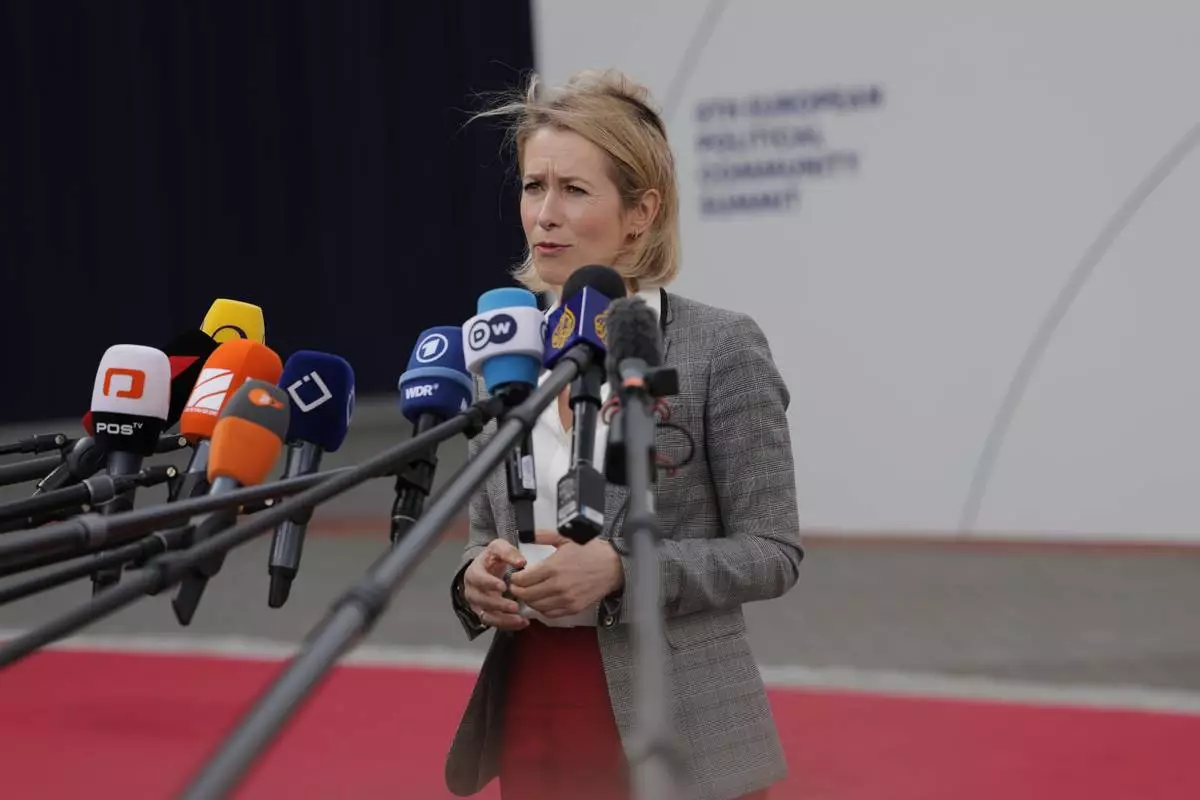
European Union foreign policy chief Kaja Kallas speaks with the media as she arrives for a meeting of the European Political Community in Yerevan, Armenia, Monday, May 4, 2026. (AP Photo/Anthony Pizzoferrato)
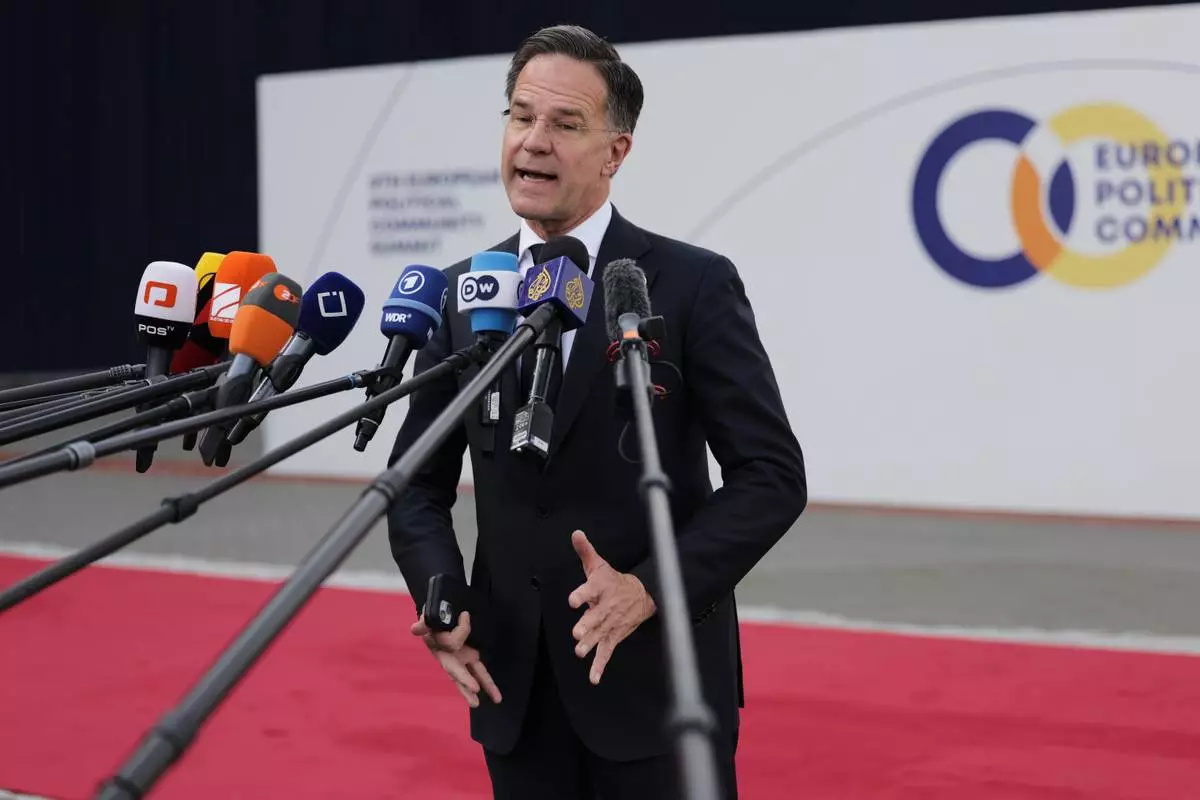
NATO Secretary General Mark Rutte speaks with the media as he arrives for a meeting of the European Political Community in Yerevan, Armenia, Monday, May 4, 2026. (AP Photo/Anthony Pizzoferrato)
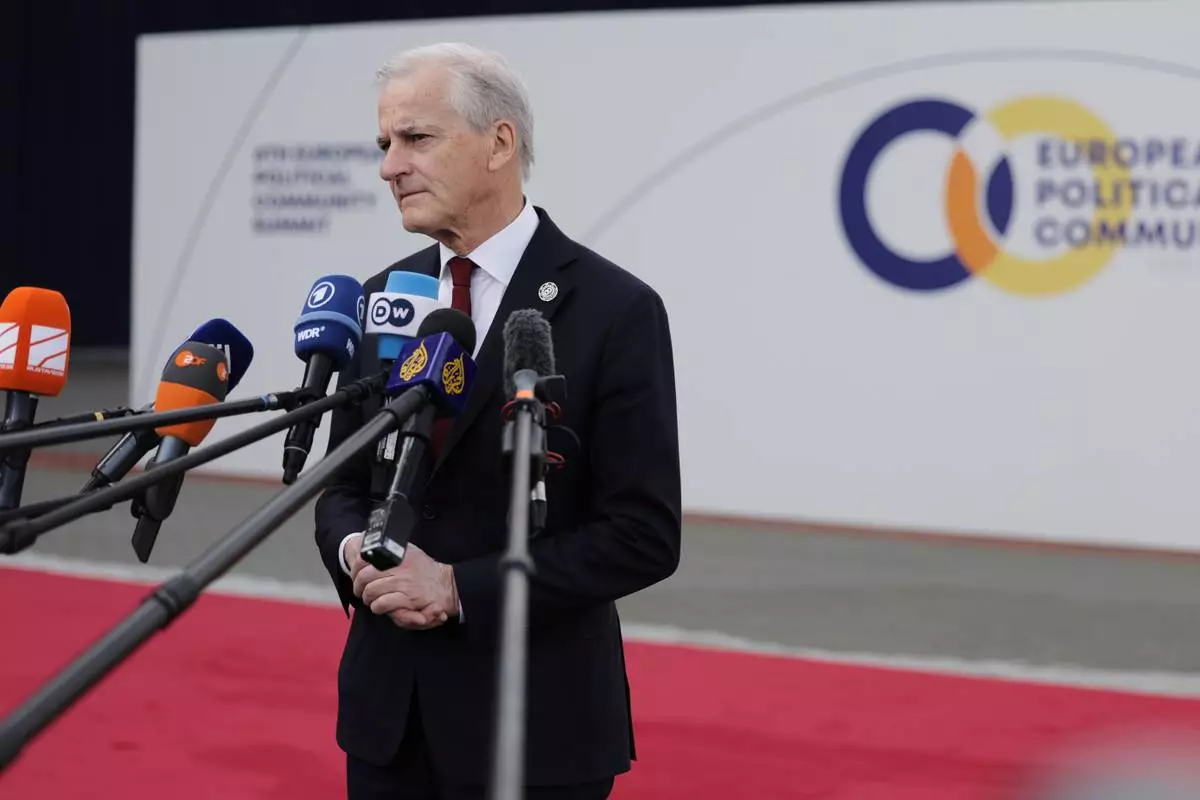
Norway's Prime Minister Jonas Gahr Store speaks with the media as he arrives for a meeting of the European Political Community in Yerevan, Armenia, Monday, May 4, 2026. (AP Photo/Anthony Pizzoferrato)
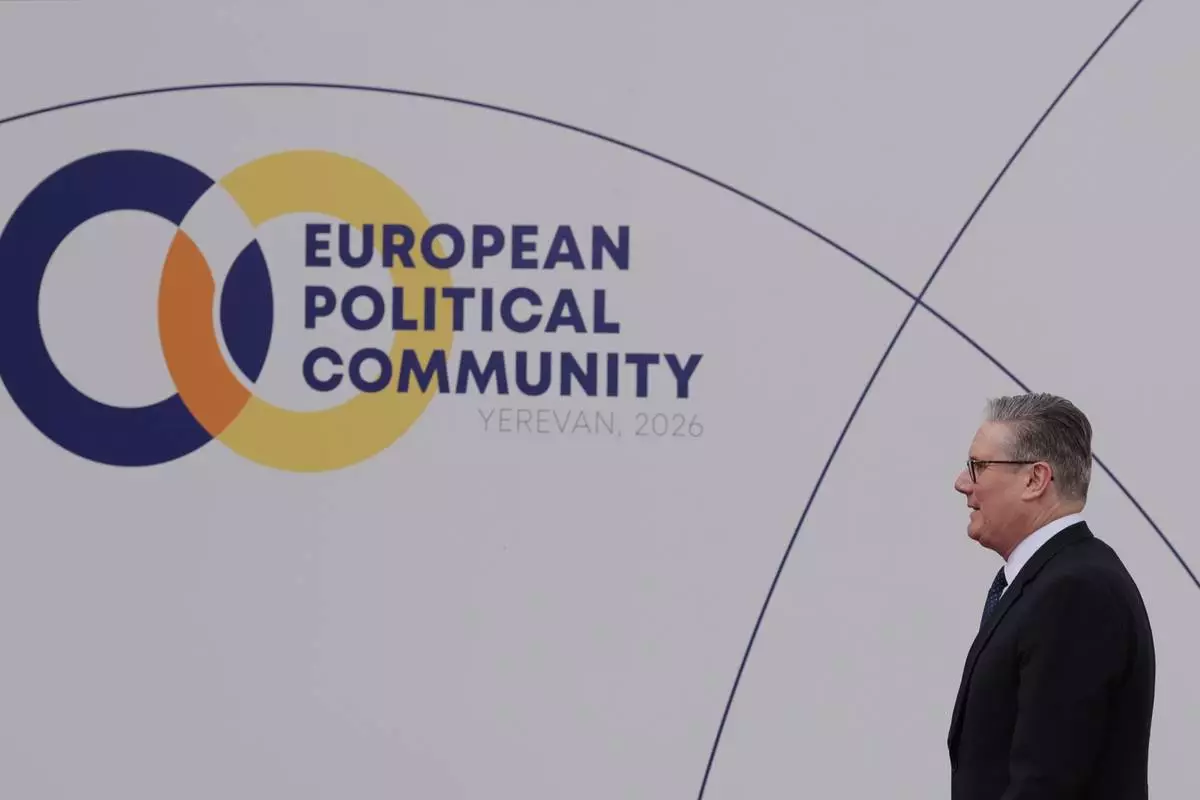
Britain's Prime Minister Keir Starmer arrives for a meeting of the European Political Community in Yerevan, Armenia, Monday, May 4, 2026. (AP Photo/Anthony Pizzoferrato)