Skip to Content Facebook Feature Image

For foreign workers in the Mideast, risk from the Iran war collides with economic strain at home

News

For foreign workers in the Mideast, risk from the Iran war collides with economic strain at home
News

News

For foreign workers in the Mideast, risk from the Iran war collides with economic strain at home

2026-05-04 13:59 Last Updated At:14:10

HANOI, Vietnam (AP) — He had met his 6-year-old son only once. A few days together in a life otherwise spent apart.

For 15 years, Mohammad Abdullah Al Mamun worked in Saudi Arabia, sending money home to his family in one of the poorest areas of Bangladesh. This year, he had planned to return, build a larger house with his savings and spend time with the child he barely knew.

More Images
Sahidul Islam, center, the father of Mohammad Abdullah Al Mamun, stands with his relatives in Rasulpur village, Mymensingh district, Bangladesh, Friday, April 17, 2026.(AP Photo/Rajib Dhar)
Sahidul Islam, center, the father of Mohammad Abdullah Al Mamun, stands with his relatives in Rasulpur village, Mymensingh district, Bangladesh, Friday, April 17, 2026.(AP Photo/Rajib Dhar)

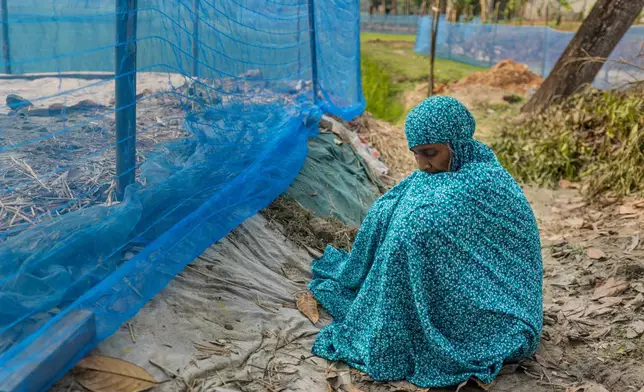
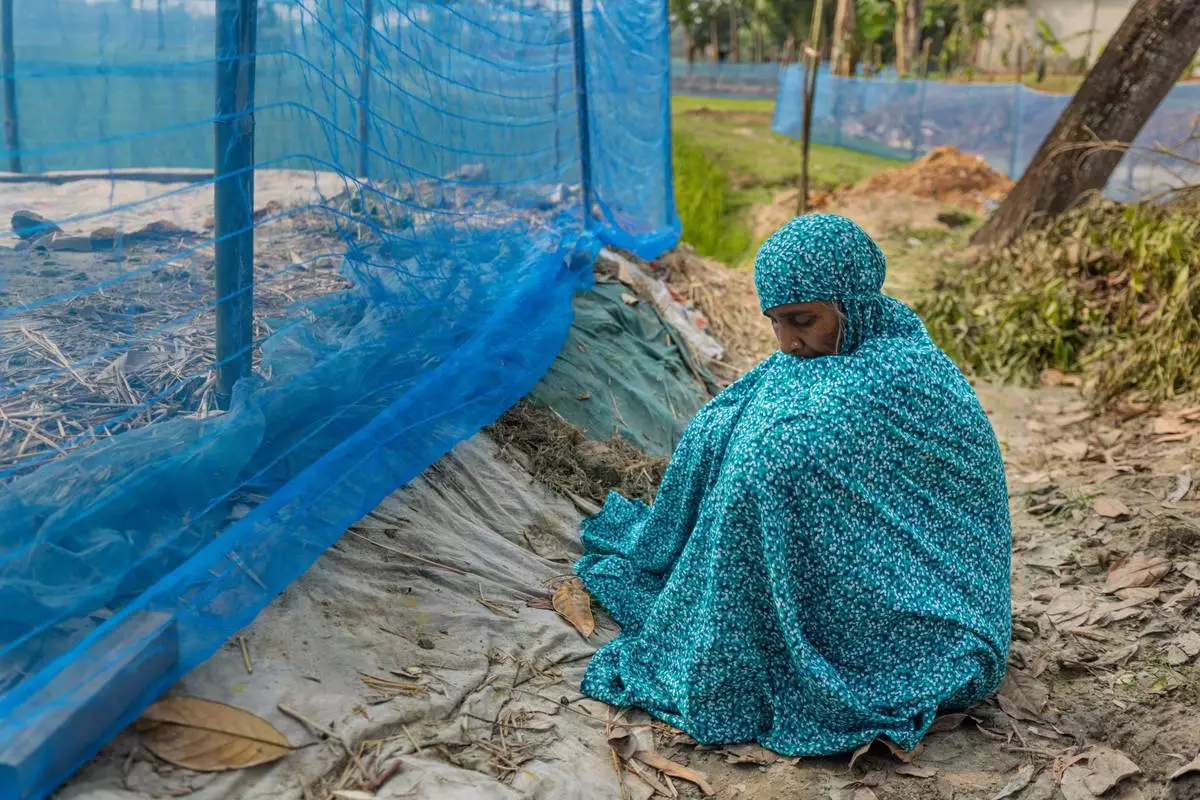
Shahida Khatun, mother of Mohammad Abdullah Al Mamun, sits beside her son's grave in Rasulpur village, Mymensingh district, Bangladesh, Friday, April 17, 2026. (AP Photo/Rajib Dhar)
Shahida Khatun, mother of Mohammad Abdullah Al Mamun, sits beside her son's grave in Rasulpur village, Mymensingh district, Bangladesh, Friday, April 17, 2026. (AP Photo/Rajib Dhar)
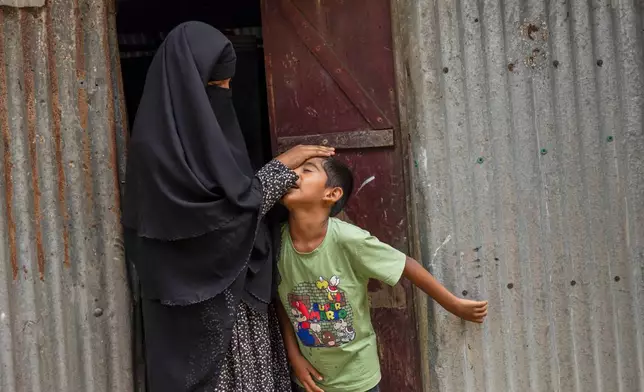
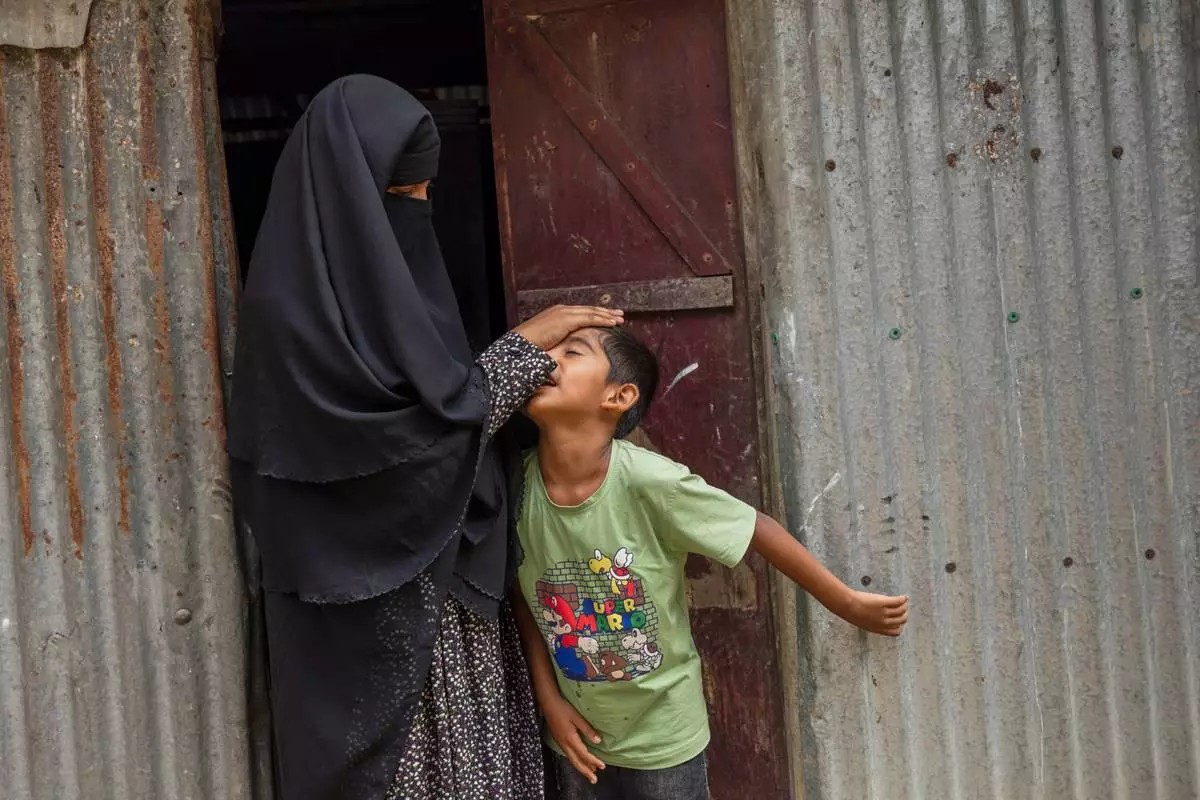
Sadia Islam Sarmin, wife of Mohammad Abdullah Al Mamun touches the forehead of her son at the doorway of their home in Rasulpur village, Mymensingh district, Bangladesh, Friday, April 17, 2026. (AP Photo/Rajib Dhar)
Sadia Islam Sarmin, wife of Mohammad Abdullah Al Mamun touches the forehead of her son at the doorway of their home in Rasulpur village, Mymensingh district, Bangladesh, Friday, April 17, 2026. (AP Photo/Rajib Dhar)

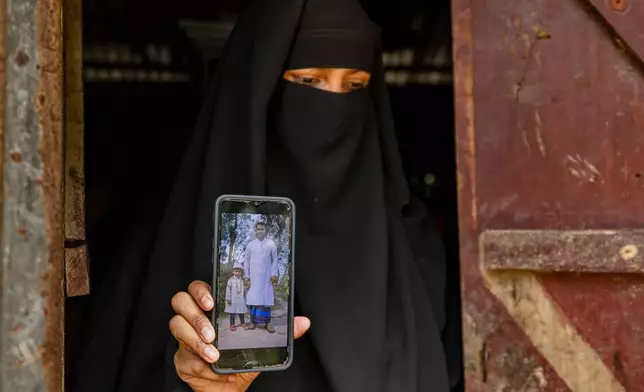
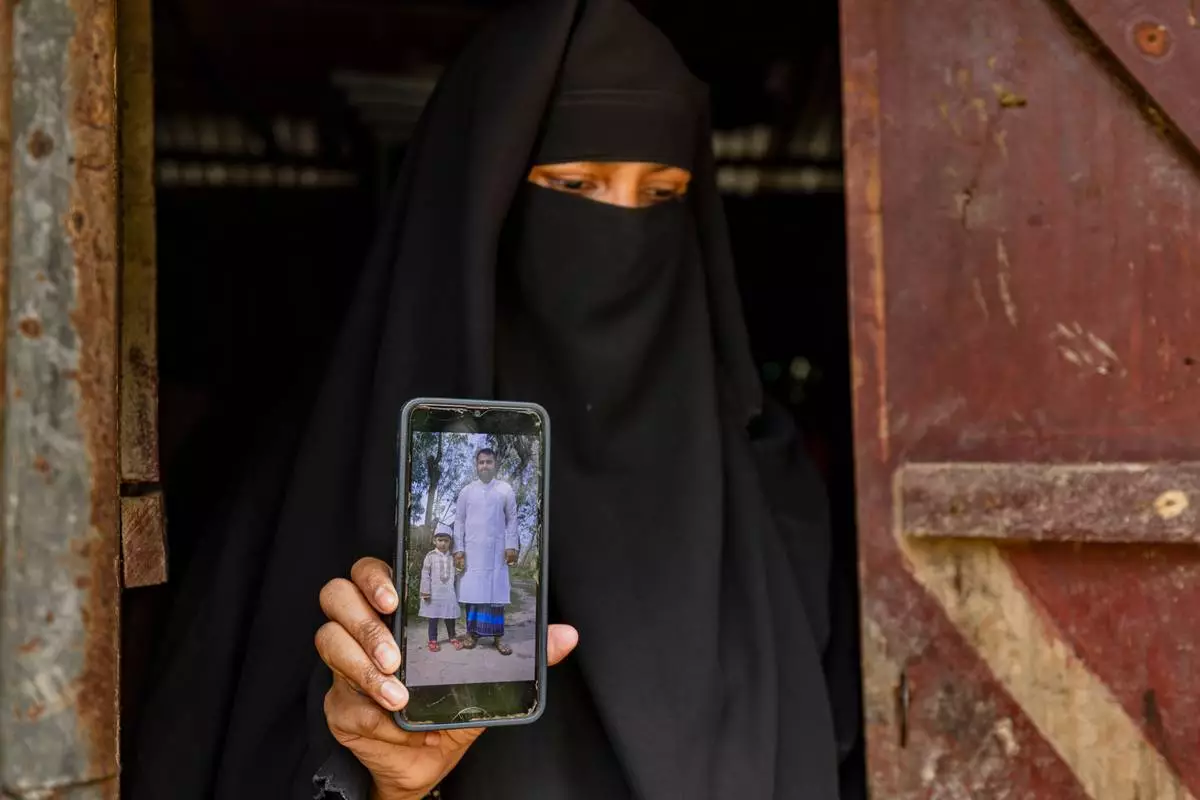
Sadia Islam Sarmin, the wife of Mohammad Abdullah Al Mamun, shows a photo of her late husband and their son on a mobile phone in Rasulpur village, Mymensingh district, Bangladesh, Friday, April 17, 2026. (AP Photo/Rajib Dhar)

Sadia Islam Sarmin, the wife of Mohammad Abdullah Al Mamun, shows a photo of her late husband and their son on a mobile phone in Rasulpur village, Mymensingh district, Bangladesh, Friday, April 17, 2026. (AP Photo/Rajib Dhar)

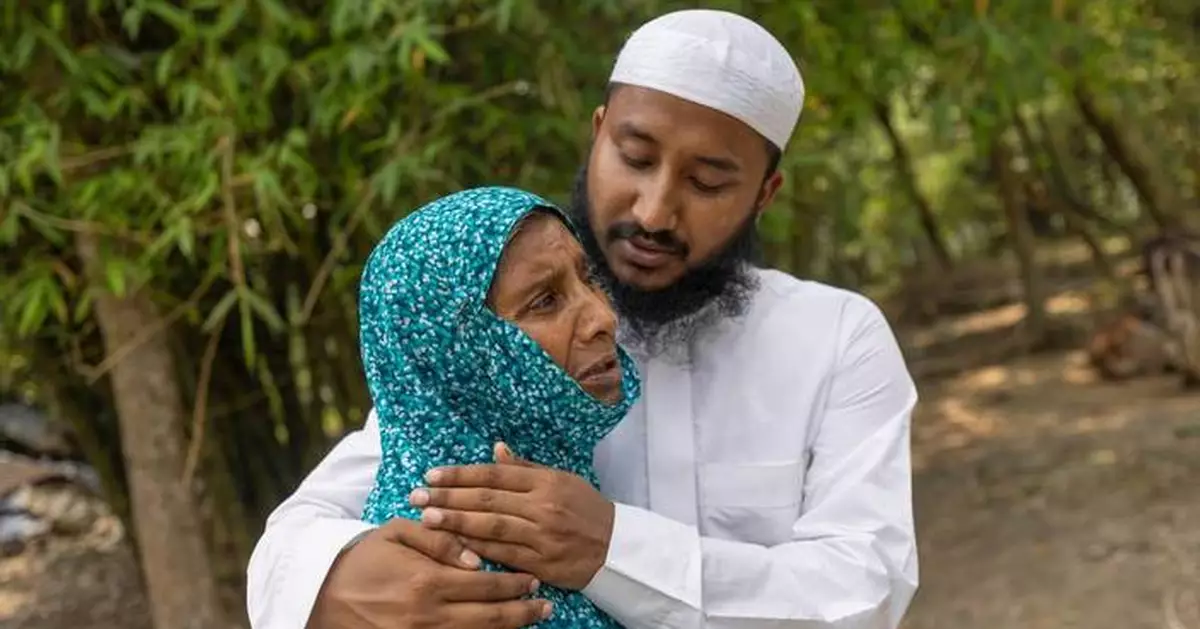
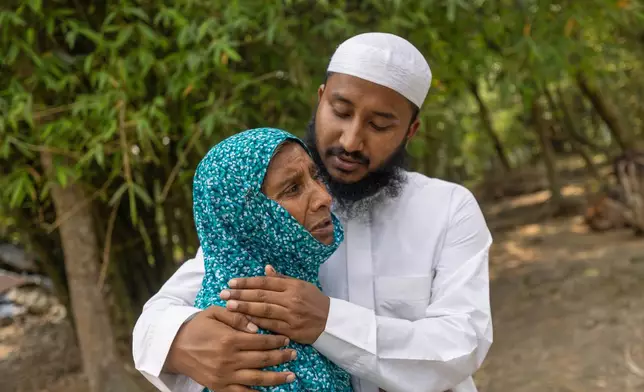
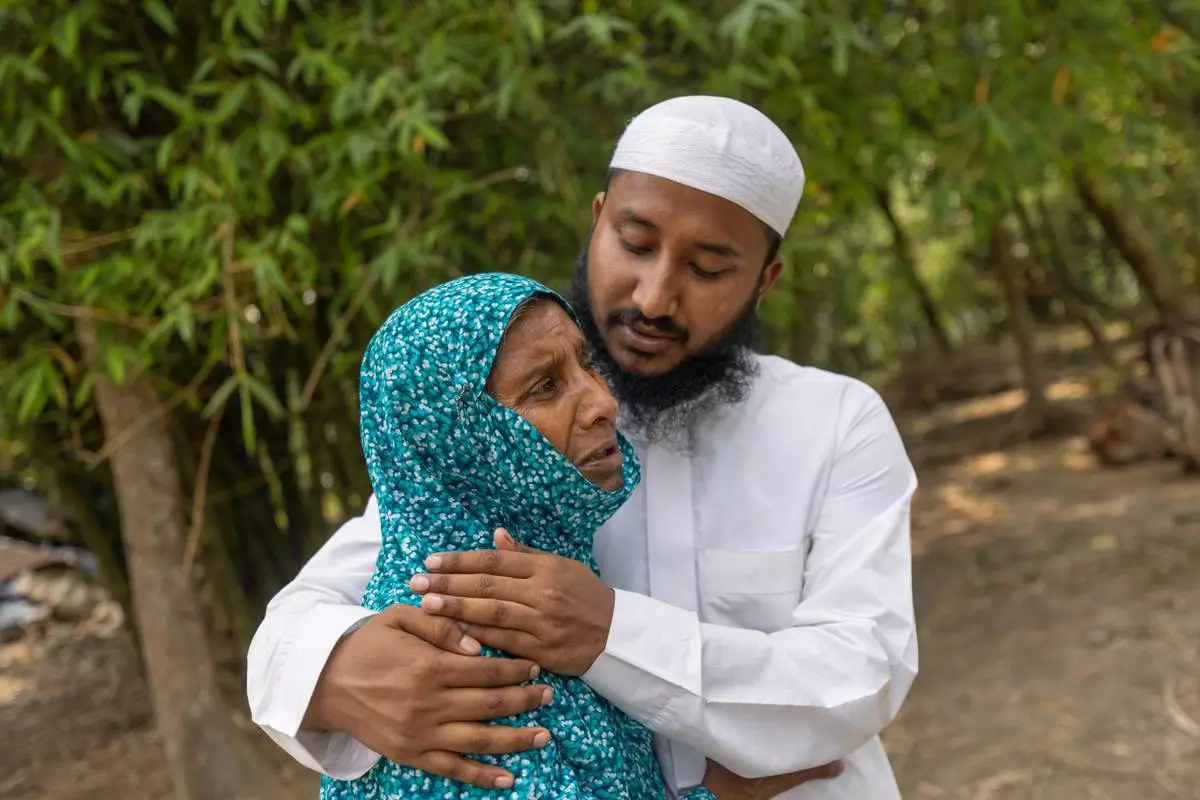
Maruf Hasan, brother of Mohammad Abdullah Al Mamun comforts his mother, Shahida Khatun, as she weeps at their home in Rasulpur village in Mymensingh district, Bangladesh, Friday, April 17, 2026. (AP Photo/Rajib Dhar)

Maruf Hasan, brother of Mohammad Abdullah Al Mamun comforts his mother, Shahida Khatun, as she weeps at their home in Rasulpur village in Mymensingh district, Bangladesh, Friday, April 17, 2026. (AP Photo/Rajib Dhar)

Then, on March 8, a missile struck his workers’ camp. He suffered severe burns and later died. He was among more than two dozen foreign workers killed across the Mideast after the United States and Israel went to war with Iran in February.

Tens of millions of foreign workers have helped build the Gulf Arab states' modern, oil-fueled economies — with many not fully sharing in their prosperity. Now they face an even sharper dilemma: Keep working in the Mideast, where wages are far higher, hoping that a shaky ceasefire endures; or return to already poor countries where prices have soared because of the conflict.

Mamun's choice was made for him. He arrived home in a coffin earlier this month.

“We don’t know what we will do next,” said his widow, Sadia Islam Sarmin.

Migrant workers make up a majority of the population in many Gulf Arab states. Westerners, Arabs and Indians dominate business and finance, while laborers from poor countries in Asia and Africa toil for long hours in scorching temperatures at oil facilities and construction sites — often with few protections.

The Coalition for Labour Justice for Migrants in the Gulf, an advocacy group, says few had access to bomb shelters and many were stranded by the conflict. It says attacks killed at least 24 foreign workers in the Gulf and four in Israel as Iran and allied armed groups launched waves of missile and drones strikes. Their count includes eight mariners killed at sea.

“It’s a very precarious situation for migrant workers,” said Udaya Wagle, who studies labor and migration at the Northern Arizona University.

A ceasefire was announced in early April, but negotiations to end the war have repeatedly stalled. Iran has effectively blocked the Strait of Hormuz, a key waterway for global oil and gas, and says it will only reopen it if the war ends and the U.S. lifts its blockade.

The resulting spike in the price of gas, fertilizer and other goods has hit Asian countries particularly hard.

Remittances from the Gulf make up about 1% of the gross domestic product of India, 3% to 5% of the GDP in Bangladesh, Pakistan and Sri Lanka; and nearly 10% in Nepal. Now they are more vital than ever, as household incomes are strained and governments seek foreign currency to buy oil and gas.

The Gulf economies also face a bleak outlook, with exports bottled up and key energy facilities in need of repair after missile strikes. The fighting could resume, as Iran rejects U.S. President Donald Trump 's demands.

Mamun's family awoke on March 9 to phone calls saying the 35-year-old had been hurt. Video footage shot by another worker showed him sitting in the open, badly burned and bleeding, crying out for help.

“He never imagined he would be hurt. That a missile would fall on him,” said Maruf Hasain, his younger brother.

Workers like Mamun are the most vulnerable since they do the “most dirty, dangerous and difficult” jobs, said Shariful Islam Hasan of the Bangladeshi development organization BRAC.

In Qatar, a 27-year-old Bangladeshi factory worker labored through 12-hour shifts as missiles flew overhead. Shrapnel from one strike fell near his living quarters. When alarms sounded, he said, workers went to a designated room.

He earns less than $400 monthly and sends two-thirds home. “We have no choice but to keep working,” he said on condition of anonymity for fear of angering the authorities.

Qatar enacted several reforms in the run-up to hosting the 2022 World Cup, including the partial dismantling of a system that tied workers to their employers. But activists say abuses are still widespread and that workers have few avenues to pursue justice.

Ahmed al-Aliyli, a taxi driver in Qatar, has not sent money home to his family in Egypt for two months. He once earned as much as $3,000 a month but his income has plunged to a third of that as the war has disrupted travel. “We are the collateral damage of this war,” he said.

A slowdown in key sectors like real estate and construction will hit migrant workers directly, said Hasan of BRAC. Workers from Bangladesh and Pakistan are especially vulnerable, as they are often employed informally and without fixed contracts, he said.

Despite reforms in some countries, work permits are also often tied to a single employer and, in some cases, workers are effectively stranded, according to the labor coalition. It warned that some employers may use the conflict to withhold wages, deny leave or carry out arbitrary dismissals.

When the war began, Mamun’s mother, Shahida Khatun, urged him to come home.

He had been saving up since November. In his last call home, he promised his younger brother and sisters he would pay for their studies, that he would build a larger house for his parents and return for good this spring.

Now, his family is struggling to recover his wages and piece together a life without him.

“The pain of losing a child. There are no words to describe the agony,” Kathun said.

For many workers, going home would mean giving up a steady income and much higher wages.

Marlene Flores, a Filipina worker in Qatar, said she felt the shudder each time a missile was intercepted. But the tax-free pay and health insurance made it feel safer — in a way — than the Philippines, which has declared a ″ national energy emergency.”

“It’s not easy for me to say,” she admitted, “But I would really stay here.”

Israel also has a large population of foreign workers. Filipino caregiver Jeremiah Supan continued caring for his two elderly charges despite near-daily missile alerts, sometimes dashing out for food or medicine despite the danger. He questions whether his own family could survive if he returns to the Philippines.

“I know that in the blink of an eye, one can die,” he said. “But what life shall we return to?”

Gomez reported from Manila, Philippines. Associated Press writers Al Emrun Garjon in Dhaka, Bangladesh, Sam Magdy in Cairo, and Eileen Ng from Kuala Lumpur, Malaysia, contributed to this report.

The Associated Press’ climate and environmental coverage receives financial support from multiple private foundations. AP is solely responsible for all content. Find AP’s standards for working with philanthropies, a list of supporters and funded coverage areas at AP.org.
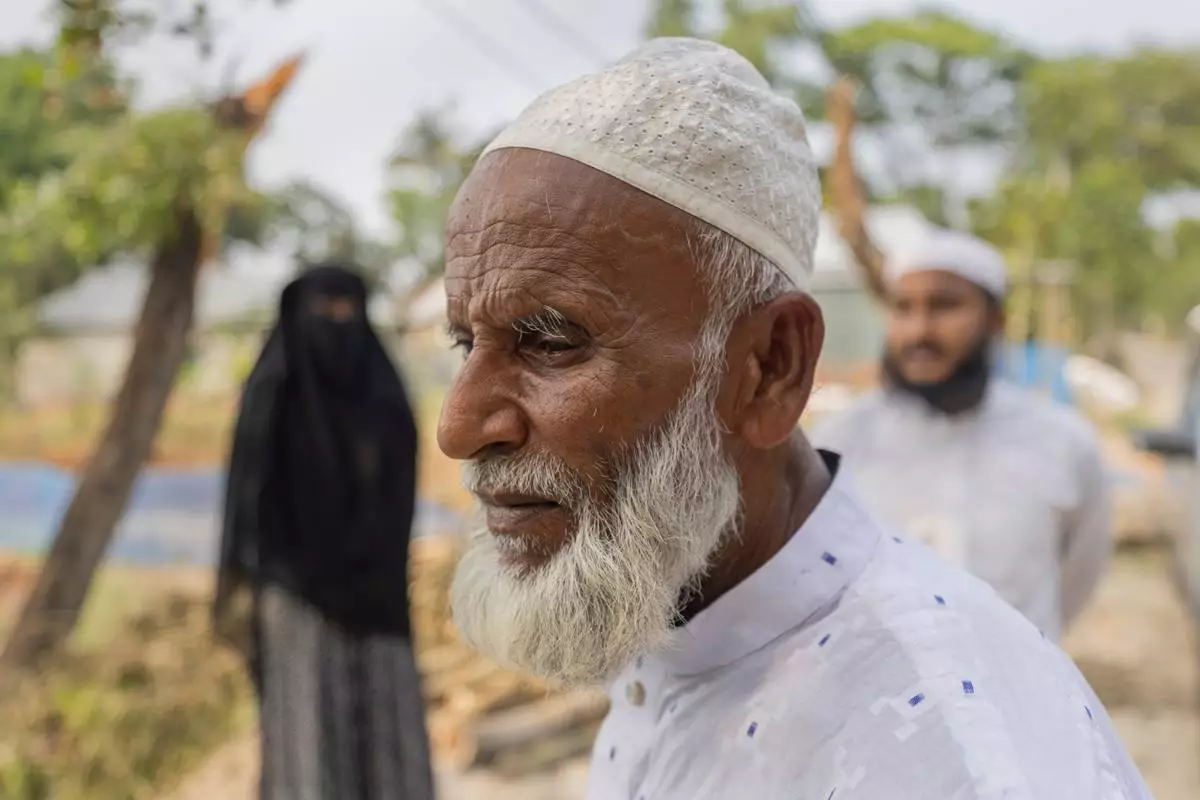
Sahidul Islam, center, the father of Mohammad Abdullah Al Mamun, stands with his relatives in Rasulpur village, Mymensingh district, Bangladesh, Friday, April 17, 2026.(AP Photo/Rajib Dhar)
Sahidul Islam, center, the father of Mohammad Abdullah Al Mamun, stands with his relatives in Rasulpur village, Mymensingh district, Bangladesh, Friday, April 17, 2026.(AP Photo/Rajib Dhar)

Shahida Khatun, mother of Mohammad Abdullah Al Mamun, sits beside her son's grave in Rasulpur village, Mymensingh district, Bangladesh, Friday, April 17, 2026. (AP Photo/Rajib Dhar)
Shahida Khatun, mother of Mohammad Abdullah Al Mamun, sits beside her son's grave in Rasulpur village, Mymensingh district, Bangladesh, Friday, April 17, 2026. (AP Photo/Rajib Dhar)
Sadia Islam Sarmin, wife of Mohammad Abdullah Al Mamun touches the forehead of her son at the doorway of their home in Rasulpur village, Mymensingh district, Bangladesh, Friday, April 17, 2026. (AP Photo/Rajib Dhar)
Sadia Islam Sarmin, wife of Mohammad Abdullah Al Mamun touches the forehead of her son at the doorway of their home in Rasulpur village, Mymensingh district, Bangladesh, Friday, April 17, 2026. (AP Photo/Rajib Dhar)

Sadia Islam Sarmin, the wife of Mohammad Abdullah Al Mamun, shows a photo of her late husband and their son on a mobile phone in Rasulpur village, Mymensingh district, Bangladesh, Friday, April 17, 2026. (AP Photo/Rajib Dhar)

Sadia Islam Sarmin, the wife of Mohammad Abdullah Al Mamun, shows a photo of her late husband and their son on a mobile phone in Rasulpur village, Mymensingh district, Bangladesh, Friday, April 17, 2026. (AP Photo/Rajib Dhar)

Maruf Hasan, brother of Mohammad Abdullah Al Mamun comforts his mother, Shahida Khatun, as she weeps at their home in Rasulpur village in Mymensingh district, Bangladesh, Friday, April 17, 2026. (AP Photo/Rajib Dhar)


Maruf Hasan, brother of Mohammad Abdullah Al Mamun comforts his mother, Shahida Khatun, as she weeps at their home in Rasulpur village in Mymensingh district, Bangladesh, Friday, April 17, 2026. (AP Photo/Rajib Dhar)

Now for the encore, Paris Saint-Germain and Bayern Munich.

Two teams which produced a 5-4 instant classic last week will take center stage on Wednesday for the second act of their Champions League semifinal.

The return game in Munich surely cannot reach the same height of drama as the waves of finessed attacks — and overwhelmed defenses — reached in Paris.

Still, coaches Luis Enrique and Vincent Kompany will aim for the stars.

“More, even more,” Kompany said in Paris, when asked about his main message to Bayern's players for the decisive second leg.

Arsenal hosts Atletico Madrid on Tuesday with the score 1-1.

The rewards for a semifinal victory are a place in the final on May 30 at the Puskas Arena in Budapest.

Champions League semifinals are often more memorable than the title matches.

One year ago, an exciting Inter Milan-Barcelona contest was widely praised like the PSG-Bayern opener has been. A 3-3 first leg in Barcelona was just an appetizer for Inter’s roller coaster 4-3 win in extra time at San Siro.

In 2022, Real Madrid somehow rallied in stoppage time of the second leg to deny Manchester City victory. Two Rodrygo goals forced extra time that was settled by Karim Benzema’s penalty for a 3-1 win. The wild first leg had finished 4-3 to City in Manchester.

A vintage knockout phase in 2019 was capped by astonishing comebacks on back-to-back nights in the semifinal second legs by Liverpool against Barcelona and Tottenham at Ajax.

It is perhaps eight years since a truly compelling back-and-forth final, when substitute Gareth Bale’s goals — the first an iconic bicycle kick — lifted Madrid to a 3-1 win over Liverpool in Kyiv.

While PSG excelled in the final last year, the 5-0 rout of Inter was never competitive.

Munich was the scene of PSG's finest game last season against Inter to fulfill its Qatari owners' quest to become European champion for the first time.

The Allianz Arena is also where six-time champion Bayern won all six home games in the Champions League this season, scoring 20 goals including four past Real Madrid in a quarterfinals, second-leg thriller three weeks ago.

Munich is the only candidate to host the Champions League final again in 2028. UEFA should confirm that decision in September.

Coach Diego Simeone takes his Atletico team to north London for a third game this season. Third time lucky?

Atletico lost 4-0 at Arsenal in a league-phase game in October and survived a 3-2 loss at Tottenham in the second leg of the round of 16 that easily could have been a bigger margin. Atletico also started this Champions League campaign in England in September — and lost, 3-2 at Liverpool.

It all adds up to five games lost by Atletico in its 15-game Champions League campaign so far, while Arsenal has the last remaining unbeaten record.

Neither team has been European champion. It's 10 years since Atletico played in the last of its three finals, losing to Real Madrid, and 20 years since Arsenal lost its only final, against Barcelona.

All four semifinalists were awarded, and scored, a penalty kick last week. A fifth was awarded to Arsenal but then overturned after the referee was sent to his pitchside monitor to review replays.

Since the Video Assistant Referee system made its World Cup debut in 2018, the trend in top-tier games has been to award ever more spot-kicks.

None of the five decisions last week was universally praised, and the two handball incidents showed how UEFA’s view differs to many coaches, players and fans.

UEFA’s director of refereeing Roberto Rosetti has previously said “we don’t like soft penalties” and cautioned against “microscopic VAR interventions” — which seemed to be happening last week.

For each handball, the ball first deflected from the body of, respectively, Bayern’s Alphonso Davies and Arsenal’s Ben White before contacting an arm which was not held tight to the side of their bodies. That is typically not a penalty in the English Premier League but almost certainly is in UEFA competitions.

Rosetti plans to meet soon with refereeing officials from Europe’s main leagues to seek more clarity and consistency next season.

AP soccer: https://apnews.com/hub/soccer

Atletico Madrid's head coach Diego Simeone gestures from the touchline during a Champions League semifinal, first leg, soccer match between Atletico Madrid and Arsenal in Madrid, Spain, Wednesday, April 29, 2026. (AP Photo/Jose Breton)

Atletico Madrid's head coach Diego Simeone gestures from the touchline during a Champions League semifinal, first leg, soccer match between Atletico Madrid and Arsenal in Madrid, Spain, Wednesday, April 29, 2026. (AP Photo/Jose Breton)

Atletico Madrid's Julian Alvarez, center, is challenged by Arsenal's Declan Rice during a Champions League semifinal, first leg, soccer match between Atletico Madrid and Arsenal in Madrid, Spain, Wednesday, April 29, 2026. (AP Photo/Jose Breton)

Atletico Madrid's Julian Alvarez, center, is challenged by Arsenal's Declan Rice during a Champions League semifinal, first leg, soccer match between Atletico Madrid and Arsenal in Madrid, Spain, Wednesday, April 29, 2026. (AP Photo/Jose Breton)

Bayern's Luis Diaz, center right, and PSG's Vitinha embrace at the end of a Champions League semifinal, first leg, soccer match between Paris Saint-Germain and Bayern Munich in Paris, Tuesday, April 28, 2026. (AP Photo/Aurelien Morissard)

Bayern's Luis Diaz, center right, and PSG's Vitinha embrace at the end of a Champions League semifinal, first leg, soccer match between Paris Saint-Germain and Bayern Munich in Paris, Tuesday, April 28, 2026. (AP Photo/Aurelien Morissard)

PSG's head coach Luis Enrique grimaces during the Champions League semifinal first leg soccer match between Paris Saint-Germain and Bayern Munich in Paris, Tuesday, April 28, 2026. (AP Photo/Christophe Ena)

PSG's head coach Luis Enrique grimaces during the Champions League semifinal first leg soccer match between Paris Saint-Germain and Bayern Munich in Paris, Tuesday, April 28, 2026. (AP Photo/Christophe Ena)

PSG's Ousmane Dembele celebrates after scoring his side's third goal during a Champions League semifinal, first leg, soccer match between Paris Saint-Germain and Bayern Munich in Paris, Tuesday, April 28, 2026. (AP Photo/Aurelien Morissard)

PSG's Ousmane Dembele celebrates after scoring his side's third goal during a Champions League semifinal, first leg, soccer match between Paris Saint-Germain and Bayern Munich in Paris, Tuesday, April 28, 2026. (AP Photo/Aurelien Morissard)

Recommended Articles