DES MOINES, Iowa (AP) — After years of coming up short, Democrats think they can make Iowa a political battleground again.
Republican Donald Trump may have won the state by double digits in the last presidential election, but growing dissatisfaction with his leadership and rising costs from the Iran war could help set the stage for Democrats to make previously unattainable gains.
Iowa Democrats plan to have 60 field organizers on the ground by June, nearly double from eight years ago during the midterm elections of Trump's first term. Another two dozen people will staff a coordinated campaign that's intended to support candidates for governor, U.S. House and U.S. Senate, among others.
“Iowa is still, in my view, a purple state," state party chair Rita Hart said in an interview. "We just haven’t given them an opportunity to show that lately.”
Republicans insist that Iowa will remain red, but White House travel plans suggest there may be some concern. Vice President JD Vance is visiting on Tuesday to support Rep. Zach Nunn, who represents Des Moines, its suburbs and the state's rural center. Trump also chose Iowa as his first stop when he began his midterm campaigning earlier this year.
Iowa has an unusual number of competitive races for open seats this year, with Republican Gov. Kim Reynolds and Republican Sen. Joni Ernst both opting out of reelection bids.
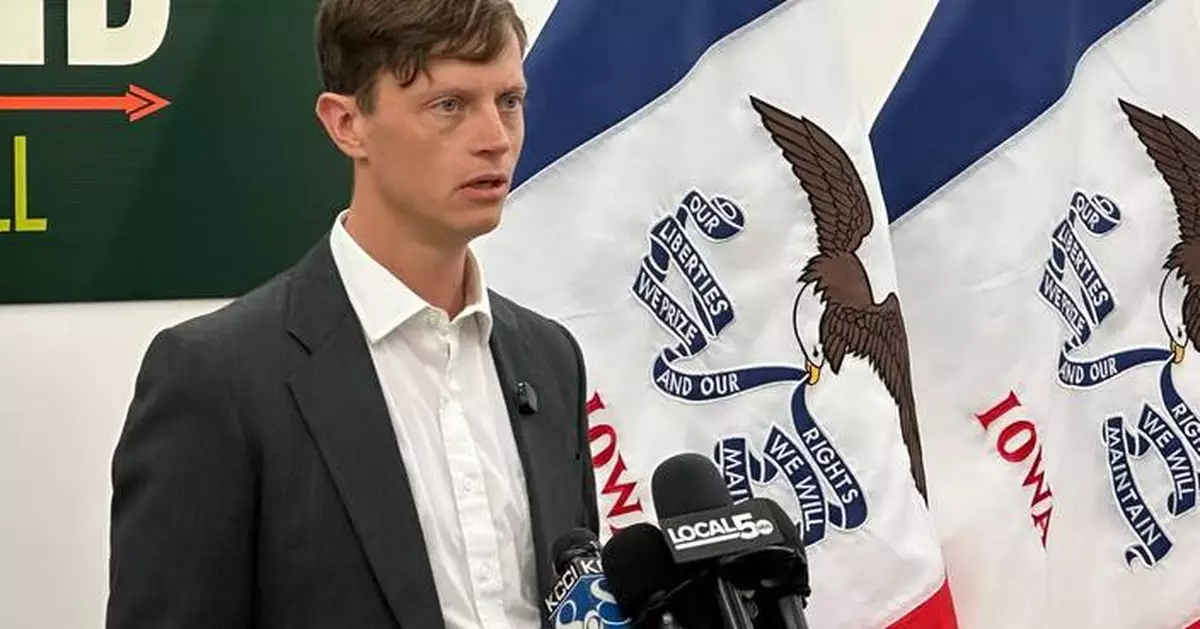
Leading what Hart called “the best statewide ticket we’ve had for a generation" is Rob Sand, the state auditor running for governor. He ended last year with $13 million in his campaign account, and he often highlights his rural roots, Christian faith and bowhunting prowess, as well as a disdain for partisan politics, to try to appeal to Iowans of all backgrounds.
Josh Turek and Zach Wahls, both state lawmakers, are seeking the Democratic nomination for U.S. Senate in the June 2 primary. The party is also targeting three of the four Republican-held U.S. House seats.
Democrats believe a populist economic message could resonate in Iowa when farmers are squeezed by tariffs and face higher prices for fertilizer and diesel fuel. In addition, hundreds of people have lost jobs as factories and meat processors shut down, and rural residents are driving further to see doctors as healthcare clinics close.
This year's candidates are also willing to take swings at their own party, even though they will likely benefit from campaign spending by national organizations.
Turek and Wahls say Democrats have abandoned the rural and small-town voters who placed hope in Trump to change the status quo. Turek, who calls himself a “prairie populist,” says there are too many millionaires in Congress who don’t know what it is to live paycheck to paycheck. Wahls, endorsed by several labor unions, says corruption in politics benefits corporate interests over working people.
Christina Bohannan, who is running for a third time to unseat Republican U.S. Rep. Mariannette Miller-Meeks in a southeast Iowa district, said both major political parties “have failed to really fight for working people.”
“Everybody’s talking about affordability,” she said. “I don’t want it just to become a catchphrase that people can kind of just brush aside as political rhetoric. This is real.”
Sand targets the entire political system, which he said "helps incumbents get reelected, rather than actually forcing them to solve our problems.” He recently introduced policy proposals, including term limits, bans on stock trading while in office, and open primaries.
Before Trump’s dominance in the region, it wasn’t uncommon to find Democrats representing the Midwest and Plains states in governors’ mansions or in Congress. Trump’s promises to resurrect American manufacturing jobs and “drain the swamp” won over voters who traditionally supported populist Democrats, said Iowa Democratic strategist Jeff Link.
“Because the knee-jerk reaction to Trump is to be the opposite of Trump, we went away from economic populism to our detriment,” Link said. “By just being anti-Trump, it is being condescending towards people that chose him three times.”
Tom Harkin, a former Democratic senator from Iowa, said Trump’s stumbles have created an opportunity for change.
“I think a lot of people wanted to get things shaken up a little bit," he said. "But I don’t think they wanted them shaken up like this."
Harkin said his party has an opportunity to rebrand itself.
“I think Democrats in the Midwest especially got painted with this broad brush, and we didn’t fight back well enough," he said. "We became more defensive.”
Republicans argue that Democrats' left-wing positions remain out of touch with Iowans' values.
“You can’t have political born-again experiences,” said Jeff Kaufmann, chairman of the Republican Party of Iowa. He said tweaking the message and running away from the national party is not going to “erase your history in one election cycle."
Kaufmann acknowledged that the cycle wouldn’t be easy but said Iowans trust Trump’s long game, knowing that he intends for tariffs to protect Iowa farmers and war with Iran to eliminate the country’s nuclear threat. But, he said, it took years for Democrats to lose the Iowa communities that flipped from supporting Barack Obama to backing Trump.
“It’s going to take a long time for them to build it back up again,” Kaufmann said.
The political environment for Democrats has been bleak since Obama won the state in 2008 and 2012. Republicans have had total control in the Iowa state government for nearly a decade. All six members of the federal delegation are Republicans.
Democrats also lag Republicans by roughly 200,000 registered voters statewide and run at a deficit in each of the four congressional districts.
Iowa Democrats said 7,000 people have signed up over the past year to volunteer for Democratic candidates, and the state party will hold volunteer training sessions. The party has signed leases on eight field offices with plans to open at least seven more, including in blue-collar areas in eastern Iowa along the Mississippi River that supported Obama before pivoting to Trump.
“We’re investing so much in these organizers and in our county parties and supporting and training our volunteers,” Hart said. “It’s through these kinds of conversations where we build trust with voters.”
Senior leaders expect their spending this cycle to be on par with presidential years, reaching the high seven figures. They’re also pivoting from text messages and digital advertising to face-to-face conversations.
“Since the pandemic, we’ve really struggled with getting back to the basics with person-to-person communication," Hart said, adding, “We’ve got to get back to that.”
Follow the AP’s coverage of the 2026 election at https://apnews.com/projects/elections-2026/.
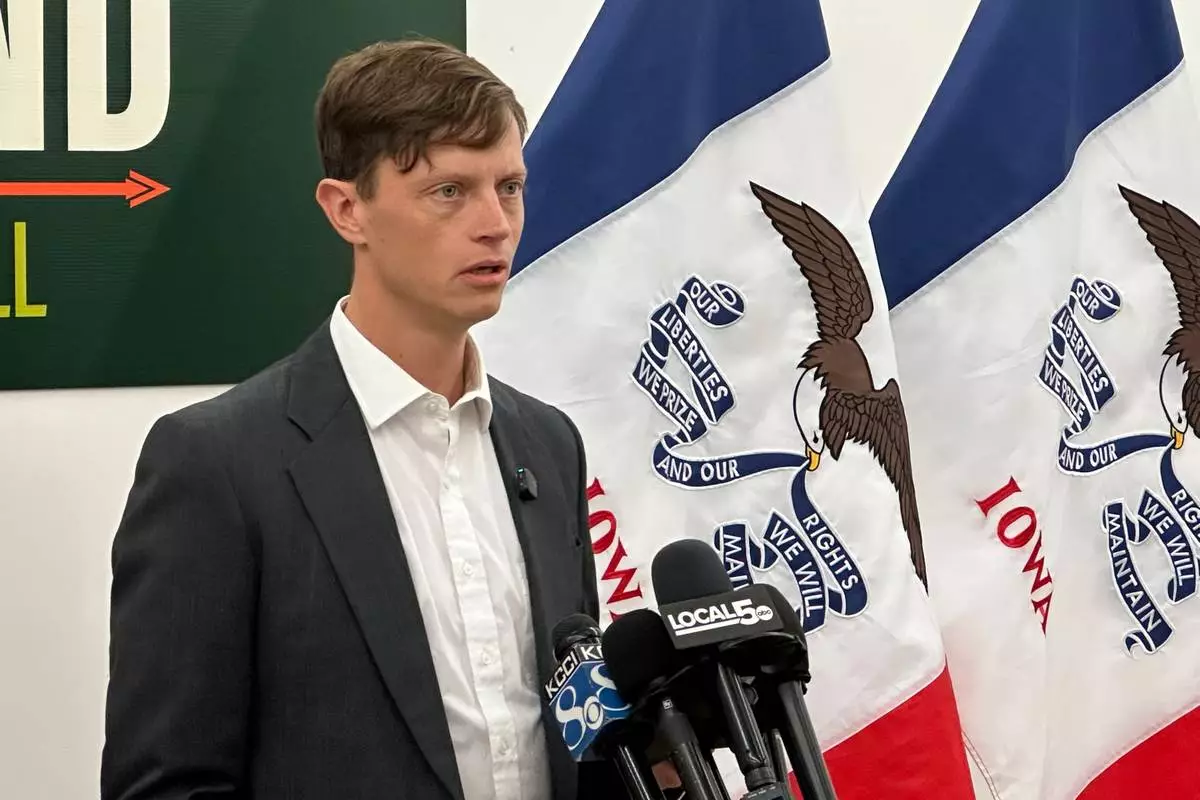
Iowa state auditor Rob Sand, who is running for Iowa governor, talks to reporters in Des Moines, Iowa, April 2, 2026. (AP Photo/Hannah Fingerhut)
DUBAI, United Arab Emirates (AP) — The U.S. military is rejecting claims that Iran struck a U.S. Navy vessel.
The denial on Monday came as the U.S. remains active in the area near the Persian Gulf, offering to guide ships through the Strait of Hormuz and dislodge Iran’s blockade on vessels that don’t receive its authorization..
Iranian news agencies — including the semiofficial agency Fars and the Iranian Labour News Agency — claimed that Iran had struck a U.S. Navy vessel southeast of the strait of Hormuz, accusing it of “violating maritime security and navigation norms.”
THIS IS A BREAKING NEWS UPDATE. AP’s earlier story follows below.
DUBAI, United Arab Emirates (AP) — The United States said Monday it is ready to “guide” commercial ships through the Strait of Hormuz in a new effort to end the blockade wreaking havoc on the global economy.
The U.S.-led Joint Maritime Information Center advised ships to cross the strait in Oman’s waters, saying it had set up an “enhanced security area.” The American military has said the initiative might involve guided-missile destroyers, more than 100 aircraft and 15,000 service members but has not specified what kind of assistance or escorts it would provide ships.
That has left open the question of whether shipping companies, and their insurers, will feel comfortable taking the risk given that Iran has fired on ships in the waterway and vowed to keep doing so.
Iran’s control of traffic through the crucial artery for the world’s oil and gas supplies has proved a major strategic advantage in its war with the U.S. and Israel, allowing Iran to inflict tremendous pain on the global economy despite being outgunned on the battlefield.
The effort to revive traffic risks unraveling the fragile ceasefire that has held for more than three weeks.
U.S. President Trump in a social media post on Sunday promised that the U.S. would “guide” ships out of the strait, warning that Iranian efforts to block them "will, unfortunately, have to be dealt with forcefully.”
He described part of what he called “Project Freedom” in humanitarian terms, designed to aid stranded seafarers, many on oil tankers or cargo ships, have been stuck in the Persian Gulf since the war began. Crews have described to The Associated Press seeing intercepted drones and missiles explode over the waters as their vessels run low on drinking water, food and other supplies.
Iran’s state-run IRNA news agency later called Trump’s “Project Freedom” part of his “delirium." Iran’s military command said on Monday that ships passing must coordinate with them.
“We warn that any foreign military force — especially the aggressive U.S. military — that intends to approach or enter the Strait of Hormuz will be targeted,” Major General Pilot Ali Abdollahi told state broadcaster IRIB.
It was unclear as of Monday morning whether any vessels, many of which have become essentially stranded by the standoff, were attempting to cross or whether ships were staying put.
The Joint Maritime Information Center said the U.S. has set up an “enhanced security area” near the Oman side of the strait. It urged mariners to coordinate closely with Omani authorities “due to anticipated high traffic volume.”
It warned that passing close to usual routes, know as the traffic separation scheme, “should be considered extremely hazardous due the presence of mines that have not been fully surveyed and mitigated.”
The disruption of the waterway has become one of the most enduring consequences of the war that the U.S. and Israel launched Feb. 28, squeezing countries in Europe and Asia that depend on Persian Gulf oil and gas and raising gasoline, food and other prices far beyond the region.
Iran has put particular pressure on Trump, who promised to bring down gas prices and faces midterm elections this year, and has called U.S. moves to dislodge its grip over the strait ceasefire violations. They have vowed not to return the strait to prewar conditions and moved to impose charges on transiting ships.
The U.S. has warned shipping companies they could face sanctions for paying Iran and enacted a naval blockade on Iranian ports since April 13, telling 49 commercial ships to turn back, U.S. Central Command said Sunday.
The blockade has deprived Tehran of oil revenue it needs to shore up its ailing economy.
U.S. officials hope the blockade helps break the deadlock, forcing Iran back to the negotiation table under pressure. Yet thus far negotiations are still in the proposal and review phase, with no publicly announced talks between the U.S. and Iran underway.
“We think that they’ve gotten less than $1.3 million in tolls, which is a pittance on their previous daily oil revenues,” U.S. Treasury Secretary Scott Bessent told Fox News on Sunday, adding that Iran’s oil storage is rapidly filling up and “they’re going to have to start shutting in wells, which we think could be in the next week.”
Iran’s 14-point proposal made public over the weekend calls for the U.S. lifting sanctions on Iran, ending the U.S. naval blockade of Iranian ports, withdrawing forces from the region and ceasing all hostilities, including Israel’s operations in Lebanon, according to the semiofficial Nour News and Tasnim agencies, which have close ties to Iran’s security organizations.
Iranian officials said they received and were reviewing the U.S. response, though Foreign Ministry spokesperson Esmail Baghaei told reporters on Monday that changing demands, which he did not detail, made diplomacy difficult.
Iran has publicly claimed its proposal does not include issues related to its nuclear program and enriched uranium — long a driving force in tensions with the U.S.
Iran’s proposal wants other issues resolved within 30 days and aims to end the war rather than extend the ceasefire, according to Iran’s state-linked media. Trump on Saturday said he was reviewing the proposal but expressed doubt it would lead to a deal.
Pakistan said Monday it has facilitated the transfer of 22 crew members from an Iranian vessel seized by the U.S., describing the move as a confidence-building measure as Pakistant attempts to revive talks between the two sides.
Pakistan's Foreign Ministry said in a statement that the crew members, who had been aboard the Iranian container ship MV Touska, were evacuated and flown to Pakistan overnight. They are expected to be handed over to Iranian authorities.
The vessel will be brought into Pakistani territorial waters for necessary repairs before being returned to its original owners, the ministry said, adding that the process is being coordinated with the support of Iran and the U.S.
Metz reported from Ramallah, West Bank. Munir Ahmed contributed from Islamabad, Pakistan.
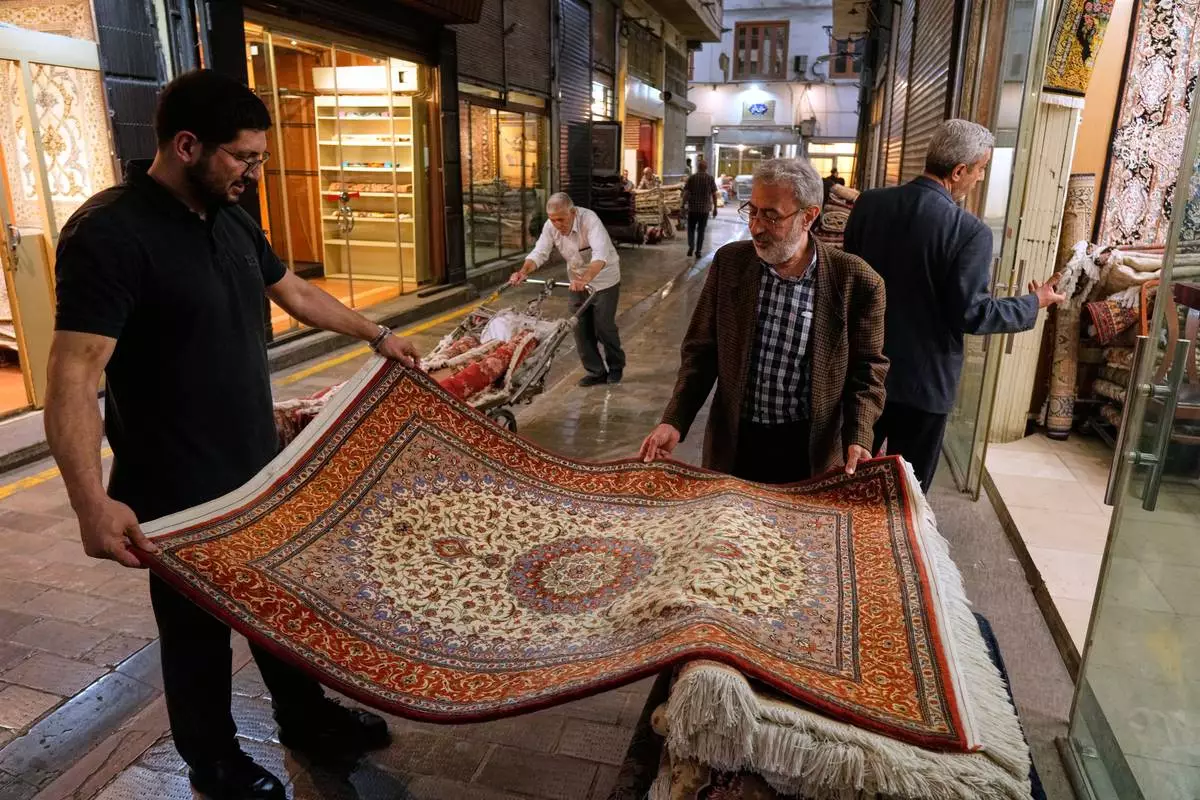
People view rugs at the Grand Bazaar in Tehran, Sunday, May 3, 2026. (AP Photo/Vahid Salemi)
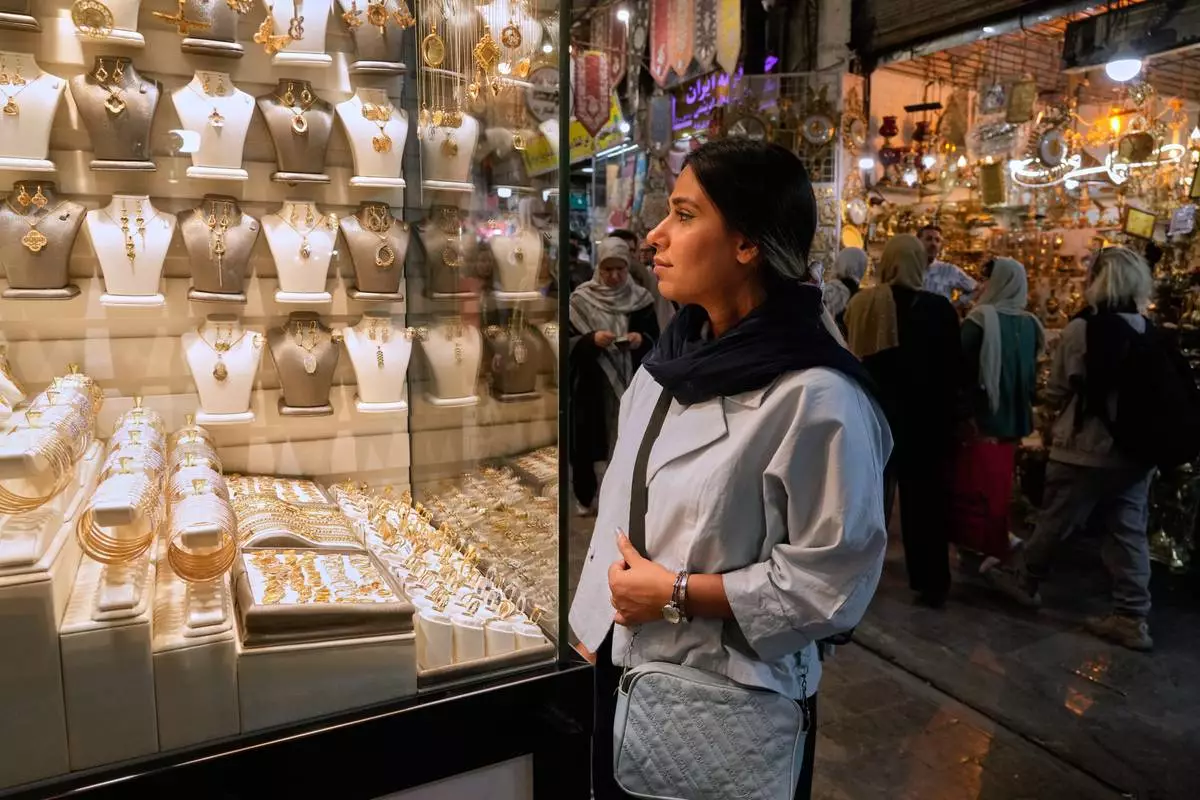
A woman looks at jewelry in the window of a gold shop at Tehran's historic Grand Bazaar, Iran, Sunday, May 3, 2026. (AP Photo/Vahid Salemi)
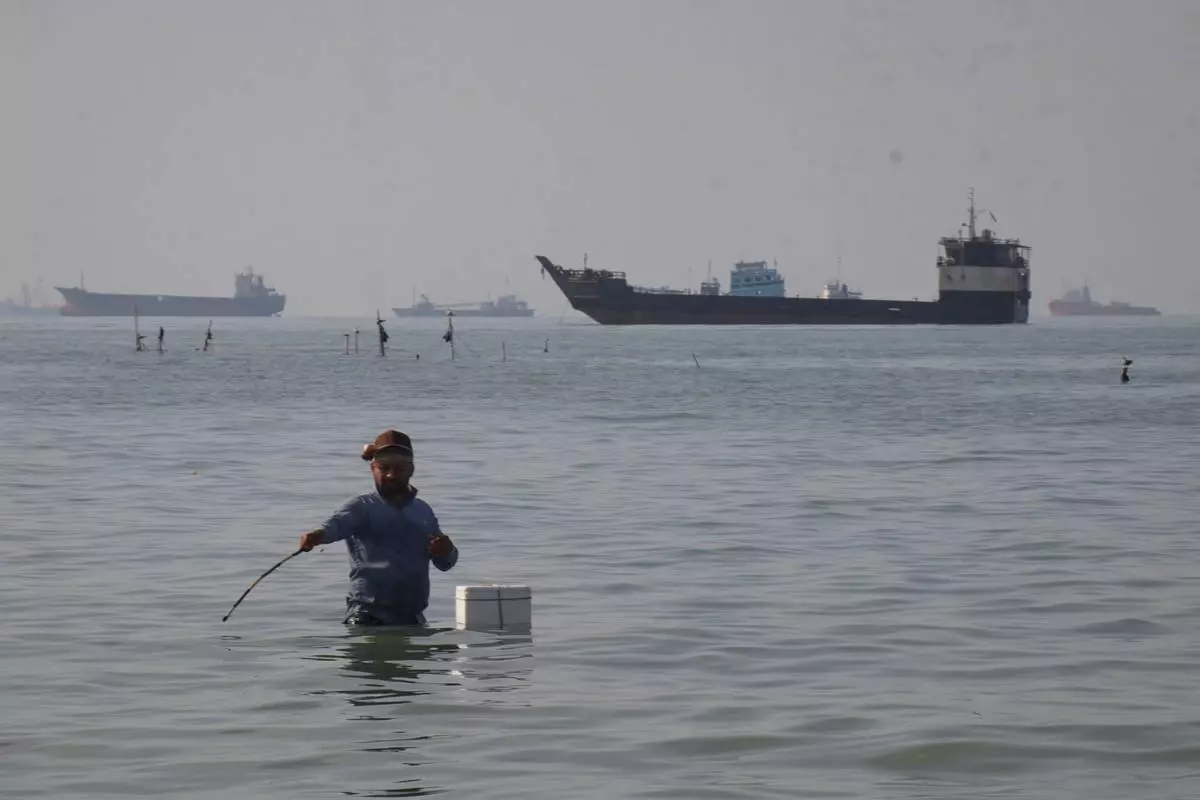
A man stands in the water, appearing to fish, as bulk carriers, cargo ships, and service vessels line the horizon in the Strait of Hormuz off Bandar Abbas, Iran, Monday, April 27, 2026.(Razieh Poudat/ISNA via AP)
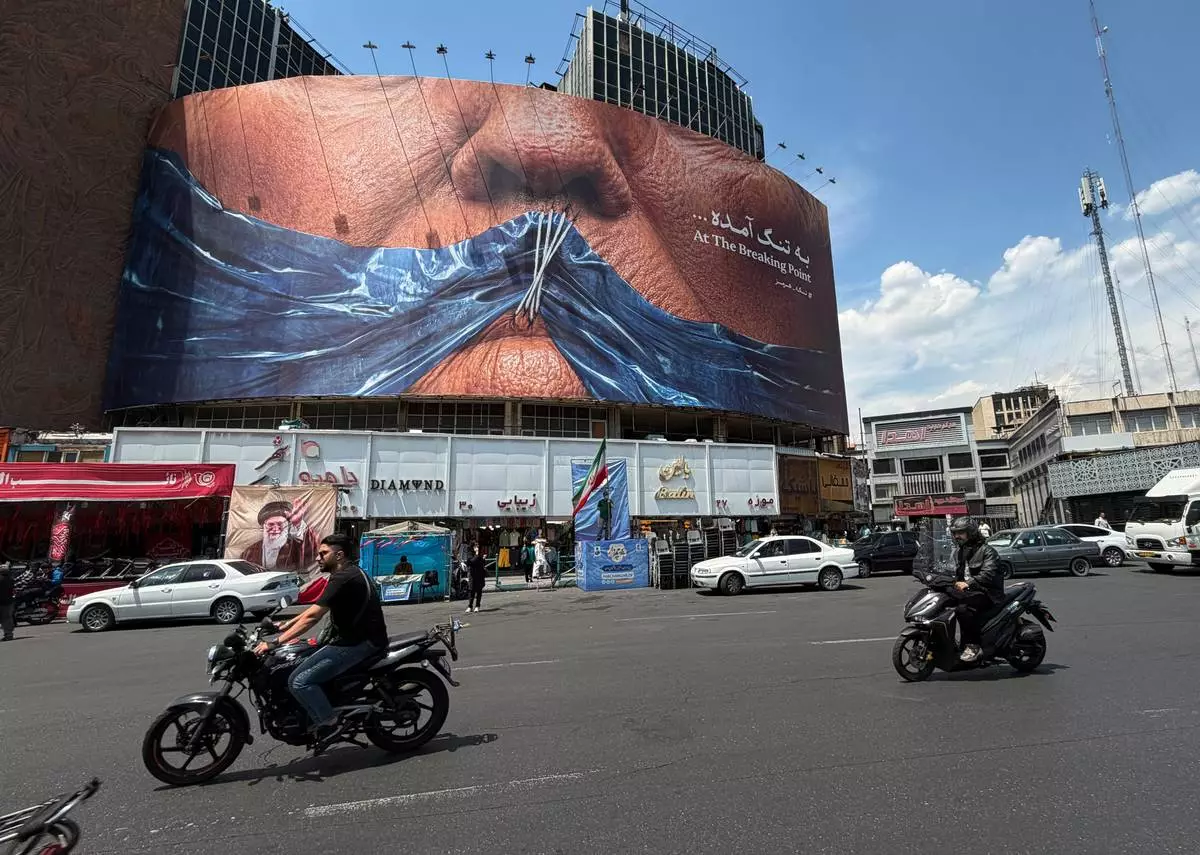
Vehicles drive past a billboard with graphic showing Strait of Hormuz and sewn lips of U.S. President Donald Trump in a square in downtown Tehran, Iran, Saturday, May 2, 2026. (AP Photo/Vahid Salemi)
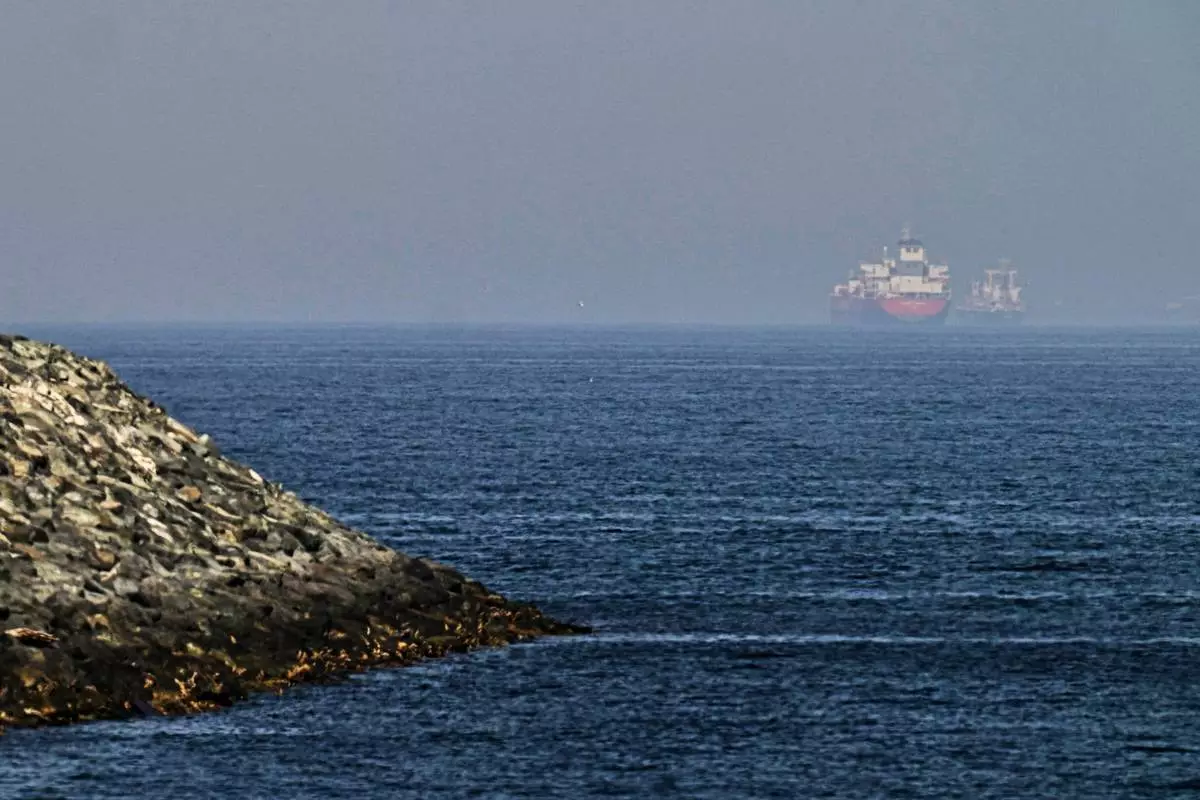
Cargo ships are seen at sea near the Strait of Hormuz, as viewed from a rocky shoreline near Khor Fakkan, United Arab Emirates, Friday, May 1, 2026. (AP Photo/Fatima Shbair)