The 139th Canton Fair in south China's Guangzhou is spotlighting China's industrial clusters as they move from fragmented efforts to collective strength, highlighting the country's manufacturing power on the global stage.
In the fair's third phase from May 1 to May 5, home textiles, alongside traditional sectors such as leather goods, are taking a different path, demonstrating collective branding and differentiated development.
In the household textiles section, multiple small booths under the unified banner of "Haining home textiles" appeared as a cohesive group.
Representing 27 enterprises in 35 stalls, the collective showcase differentiated products tailored to diverse consumer needs.
"We used to make the same kind of machine-woven fabrics. But as consumer demand has evolved, we've moved toward differentiated products and personalized customization. Exhibiting together boosts our regional profile and help drive the industry's transformation," said Cao Yaoqiang, president of the Haining Home Textiles Association.
This coordinated presentation represents a broader strategy by the Zhejiang trading delegation. For this year's Canton Fair, Zhejiang Province has 7,764 participating enterprises and approximately 17,000 booths, with numerous specialized industrial clusters joining in.
"Zhejiang has 70 foreign trade transformation and upgrading bases, many of which are clustered economies. Six of them, including textiles from Shaoxing, apparel from Jiaxing, umbrellas from Shangyu, and home textiles from Haining, are now exhibiting as groups at the Canton Fair. Their product quality and export prices are above average, and they invest more in research and development and design, which is why they qualify for group exhibitions," said Peng Xinxing, deputy director of the foreign trade development division under the Department of Commerce of Zhejiang Province.
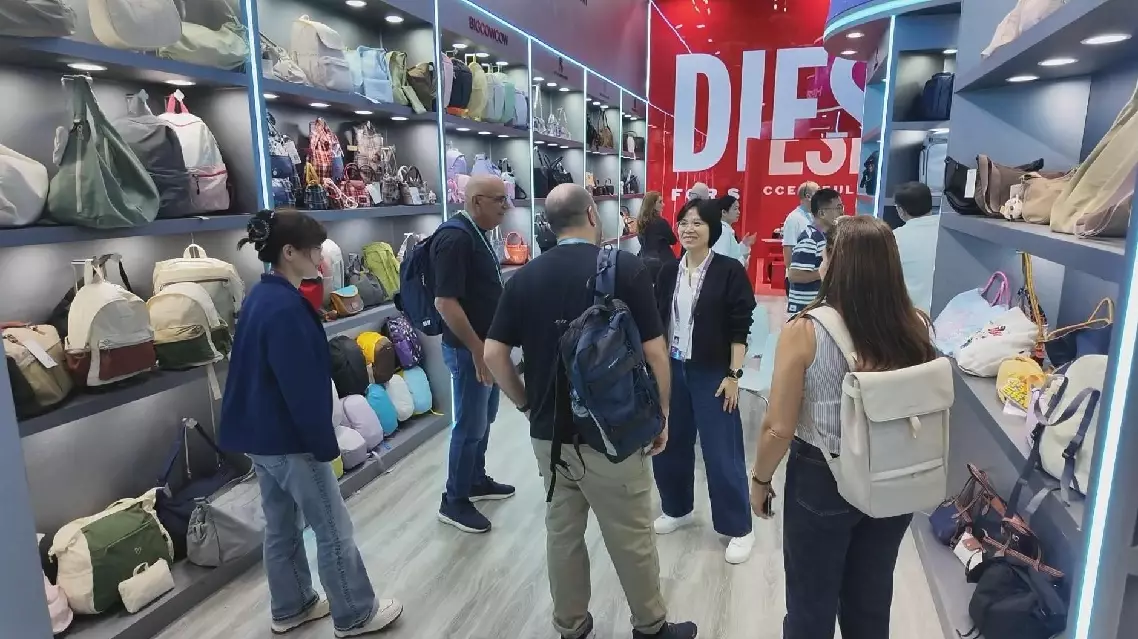
A similar transformation is taking place in Guangzhou's leather goods sector. Exhibitors from Shiling Town of Huadu District have abandoned isolated participation in favor of a unified "Shiling" label.
This collective branding strategy marks a shift from individual competition to group branding, representing an upgrade from "Made in China" to "Created in China" and from product export to brand export.
"Our company first got its own booth back in 2003 - it was a small, remote corner on the fourth floor. Now at the Canton Fair, we have 14 standard booths. The scale has grown tremendously, and we're also working with more brands," said Zhang Xuanhao, an exhibitor from Guangzhou.
We have truly grown with the Canton Fair. Since we started participating in 2003, we have gained great results every time. Most of our key clients came from the Canton Fair. We have gradually transitioned to brand export," said Ding Xiaoping, an exhibitor from Guangzhou.
"Shiling is good for the handbag business,according to my experience. The quality, the developments of fabric, everything is fantastic. At every Canton Fair they are introducing different types of materials based on the fashion technology and all things," said Bala Murugan, a buyer from Dubai.
Canton Fair spotlights collective strength of China's industrial clusters