Skip to Content Facebook Feature Image

Karlie Kloss Joins Board of Miami’s Lotus Endowment Fund and Pledges $1 Million to Support Children’s Village at the Nation’s Largest Women’s Shelter

Business

Karlie Kloss Joins Board of Miami’s Lotus Endowment Fund and Pledges $1 Million to Support Children’s Village at the Nation’s Largest Women’s Shelter
Business

Business

Karlie Kloss Joins Board of Miami’s Lotus Endowment Fund and Pledges $1 Million to Support Children’s Village at the Nation’s Largest Women’s Shelter

2026-05-04 20:01 Last Updated At:20:21

MIAMI--(BUSINESS WIRE)--May 4, 2026--

Supermodel, philanthropist, and women’s advocate Karlie Kloss has joined the Board of Directors of the Lotus Endowment Fund, Inc., the supporting foundation of Lotus House, where she has been actively volunteering for more than five years. In tandem with her appointment to the board of the nation’s largest shelter for women and children, Kloss has pledged $1 million to advance the organization’s mission to support at-risk women and children.

This press release features multimedia. View the full release here: https://www.businesswire.com/news/home/20260504953430/en/

Kloss’ gift will support the Children’s Village at Lotus House, including the complimentary Clothing Boutique and Toy Room, part of an innovative education and resource center serving children and families at Lotus House and across the surrounding community.

Alongside her board appointment, Kloss and fellow Board Member Gisele Bündchen have come together to launch a heartfelt Mother’s Day campaign to raise funds and gather product donations for the women and families of Lotus House, because every mother deserves to feel seen, valued, and cared for. You can help by shopping directly from the Lotus House Essentials Amazon Wish List. In addition, Kloss and Bündchen are grateful for the generous pre-campaign launch donations for the moms from brands within their network - Carolina Herrera Good Girl, Coterie, Garnier, Lume Deodorant, Flamingo, Bliss, Laura Gellar, Bobbie, Lancôme, and Lanolips. Every donation, big or small, makes a real difference and every bit of help truly counts.

Founded in 2004, Lotus House serves more than 1,450 women, youth, and children annually and has supported more than 14,500 individuals to date. With a comprehensive therapeutic model focused on long-term stability, Lotus House provides holistic support services, including restorative therapies for children and adults, employment assistance, life skills training, early childhood education, medical and mental health services, and more, empowering women and children to successfully exit the shelter system and build safer, brighter futures.

Building on the success of Lotus House as a national model for healing and empowerment, the Children’s Village expands and complements the foundation’s work to end and prevent homelessness by investing in children with education, tools, and enriched resources. Located adjacent to Lotus Village shelter, the 71,000-square-foot facility advances the safety, education, health, and well-being of children, youth, and families. The state-of-the-art Children’s Village at Lotus Village utilizes an innovative collective-impact strategy, bringing more than 15 nonprofit partners together under one roof to deliver enriched educational programming and holistic therapeutic services that strengthen families and advance educational success and opportunities for the children and families served.

“Every child deserves a safe, inspiring place to learn, grow, and dream,” said Kloss. “I am honored to support Lotus House and the Children’s Village as they create meaningful pathways to opportunity and hope for families in the Overtown community and beyond.”

Serving thousands of children annually, the Toy Room within the Children’s Village functions as a wish fulfillment center for children of all ages and milestones, including birthdays, report cards, completion of counseling sessions, holidays, and key moments such as move-ins and move-outs. The Toy Room is a resource that ensures kids can be kids.

The Children’s Village Clothing Boutique addresses the immediate needs of women and children entering the shelter, many of whom arrive with only the clothes they are wearing. Offering both new and gently used clothing at no cost, the space supports confidence, healing, growth and success. Kloss’s commitment will help sustain and expand these essential services for generations to come.

“Karlie’s involvement brings not only vital resources, but also a passionate voice to our efforts,” said Constance Collins, founder of Lotus House. “Her pledge has a direct and lasting impact on the lives of women and children served by the Children’s Village, furthering our shared vision of ending and preventing homelessness in Miami.”

—--

About Lotus House:

Since launching in 2004, Lotus House has sheltered more than 14,500 women, youth, and children experiencing homelessness, with over 86 percent of the shelter’s guests successfully exiting the shelter system last year. More than a shelter, Lotus House offers holistic support services including restorative therapies for children and adults, employment assistance, life skills training, early childhood education, medical and mental health services, and more. Together, these tools empower women, youth, and children to heal, transform their lives, achieve greater self-sufficiency, and build the foundation for safer, brighter futures.

About the Children’s Village at Lotus Village:

The Children’s Village at Lotus House is a first-of-its-kind education and resource center in Miami-Dade County, dedicated to supporting the holistic needs of children and families experiencing or at risk of homelessness. Located in Overtown and spanning 71,000 square feet, the Children’s Village brings together more than a dozen nonprofit organizations under one roof to deliver integrated educational programming, therapeutic services, healthcare, and social support. Anchored by Lotus House, the Children’s Village expands the organization’s mission to end and prevent homelessness by investing in children, strengthening families, and fostering long-term stability and opportunity within the community.

Anchored by Lotus House’s Center for the Advancement of Children and Families, the Children’s Village truly is a “village” and home for 15 nonprofit organizations working together to provide an array of enriched educational programming, therapeutic supports, social services, and resources for both Lotus House and the children and families in the surrounding community.

Support for Lotus House and its Children’s Village at Lotus Village has united a remarkable group of philanthropists, business leaders, and cultural figures dedicated to strengthening the lives of women, children, and families in Miami’s Overtown community. Champions such as Gisele Bündchen, Ken Griffin, Martin Margulies, and Micky and Madeleine Arison have played an instrumental role in advancing the organization’s mission, investing in programs that prioritize education, wellness, and long-term stability for children and families. Alongside these leaders, a broader network of civic partners and supporters has helped shape the Children’s Village at Lotus Village into a transformative resource focused not only on shelter, but on prevention, opportunity, and lasting impact. Together, their collective commitment underscores a shared belief that addressing childhood homelessness begins with access to care, education, resources, meaningful opportunities, and a supportive community.

About Lotus Endowment Fund, Inc:

Lotus Endowment Fund, Inc. is a 501(c)(3) nonprofit charitable foundation established to support the mission and initiatives of Sundari Foundation, Inc., which operates Lotus House. Together, Lotus House and the Children’s Village comprise Lotus Village, a comprehensive campus dedicated to serving women, youth, and children experiencing homelessness. The foundation plays a key role in advancing capital projects and long-term growth strategies that expand access to critical resources, services, and programming, helping drive transformative, community-focused initiatives that foster stability, opportunity, and impact.

About Karlie Kloss:

Karlie Kloss is a supermodel, entrepreneur, and philanthropist whose career spans fashion, media, and impact. She has appeared on more than 40 international covers of Vogue and continues to front global campaigns for leading brands including Estée Lauder and Carolina Herrera.

In 2023, she founded Bedford Media, a holding company focused on revitalizing culturally significant legacy brands, with acquisitions including i-D Magazine and LIFE Magazine. Her philanthropic work centers on expanding access and opportunity for women and girls. In 2015, she founded Kode With Klossy, which has reached more than 12,000 young women, and in 2022, she launched Gateway Coalition to support access to critical reproductive healthcare.

Kloss is also an investor in the New York Liberty. Most recently, she joined the Board of Directors of the Lotus Endowment Fund, Inc., supporting Lotus House, the nation’s largest shelter for women and children.

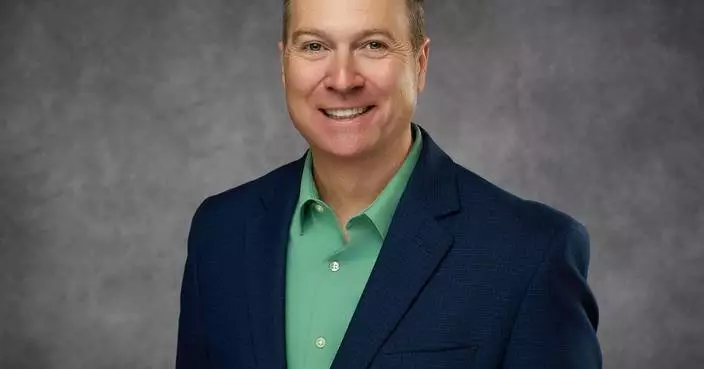
Karlie Kloss

Karlie Kloss

HANOI, Vietnam (AP) — He had met his 6-year-old son only once. A few days together in a life otherwise spent apart.

For 15 years, Mohammad Abdullah Al Mamun worked in Saudi Arabia, sending money home to his family in one of the poorest areas of Bangladesh. This year, he had planned to return, build a larger house with his savings and spend time with the child he barely knew.

Then, on March 8, a missile struck his workers’ camp. He suffered severe burns and later died. He was among more than two dozen foreign workers killed across the Mideast after the United States and Israel went to war with Iran in February.

Tens of millions of foreign workers have helped build the Gulf Arab states' modern, oil-fueled economies — with many not fully sharing in their prosperity. Now they face an even sharper dilemma: Keep working in the Mideast, where wages are far higher, hoping that a shaky ceasefire endures; or return to already poor countries where prices have soared because of the conflict.

Mamun's choice was made for him. He arrived home in a coffin earlier this month.

“We don’t know what we will do next,” said his widow, Sadia Islam Sarmin.

Migrant workers make up a majority of the population in many Gulf Arab states. Westerners, Arabs and Indians dominate business and finance, while laborers from poor countries in Asia and Africa toil for long hours in scorching temperatures at oil facilities and construction sites — often with few protections.

The Coalition for Labour Justice for Migrants in the Gulf, an advocacy group, says few had access to bomb shelters and many were stranded by the conflict. It says attacks killed at least 24 foreign workers in the Gulf and four in Israel as Iran and allied armed groups launched waves of missile and drones strikes. Their count includes eight mariners killed at sea.

“It’s a very precarious situation for migrant workers,” said Udaya Wagle, who studies labor and migration at the Northern Arizona University.

A ceasefire was announced in early April, but negotiations to end the war have repeatedly stalled. Iran has effectively blocked the Strait of Hormuz, a key waterway for global oil and gas, and says it will only reopen it if the war ends and the U.S. lifts its blockade.

The resulting spike in the price of gas, fertilizer and other goods has hit Asian countries particularly hard.

Remittances from the Gulf make up about 1% of the gross domestic product of India, 3% to 5% of the GDP in Bangladesh, Pakistan and Sri Lanka; and nearly 10% in Nepal. Now they are more vital than ever, as household incomes are strained and governments seek foreign currency to buy oil and gas.

The Gulf economies also face a bleak outlook, with exports bottled up and key energy facilities in need of repair after missile strikes. The fighting could resume, as Iran rejects U.S. President Donald Trump 's demands.

Mamun's family awoke on March 9 to phone calls saying the 35-year-old had been hurt. Video footage shot by another worker showed him sitting in the open, badly burned and bleeding, crying out for help.

“He never imagined he would be hurt. That a missile would fall on him,” said Maruf Hasain, his younger brother.

Workers like Mamun are the most vulnerable since they do the “most dirty, dangerous and difficult” jobs, said Shariful Islam Hasan of the Bangladeshi development organization BRAC.

In Qatar, a 27-year-old Bangladeshi factory worker labored through 12-hour shifts as missiles flew overhead. Shrapnel from one strike fell near his living quarters. When alarms sounded, he said, workers went to a designated room.

He earns less than $400 monthly and sends two-thirds home. “We have no choice but to keep working,” he said on condition of anonymity for fear of angering the authorities.

Qatar enacted several reforms in the run-up to hosting the 2022 World Cup, including the partial dismantling of a system that tied workers to their employers. But activists say abuses are still widespread and that workers have few avenues to pursue justice.

Ahmed al-Aliyli, a taxi driver in Qatar, has not sent money home to his family in Egypt for two months. He once earned as much as $3,000 a month but his income has plunged to a third of that as the war has disrupted travel. “We are the collateral damage of this war,” he said.

A slowdown in key sectors like real estate and construction will hit migrant workers directly, said Hasan of BRAC. Workers from Bangladesh and Pakistan are especially vulnerable, as they are often employed informally and without fixed contracts, he said.

Despite reforms in some countries, work permits are also often tied to a single employer and, in some cases, workers are effectively stranded, according to the labor coalition. It warned that some employers may use the conflict to withhold wages, deny leave or carry out arbitrary dismissals.

When the war began, Mamun’s mother, Shahida Khatun, urged him to come home.

He had been saving up since November. In his last call home, he promised his younger brother and sisters he would pay for their studies, that he would build a larger house for his parents and return for good this spring.

Now, his family is struggling to recover his wages and piece together a life without him.

“The pain of losing a child. There are no words to describe the agony,” Khatun said.

For many workers, going home would mean giving up a steady income and much higher wages.

Marlene Flores, a Filipina worker in Qatar, said she felt the shudder each time a missile was intercepted. But the tax-free pay and health insurance made it feel safer — in a way — than the Philippines, which has declared a ″ national energy emergency.”

“It’s not easy for me to say,” she admitted, “But I would really stay here.”

Israel also has a large population of foreign workers. Filipino caregiver Jeremiah Supan continued caring for his two elderly charges despite near-daily missile alerts, sometimes dashing out for food or medicine despite the danger. He questions whether his own family could survive if he returns to the Philippines.

“I know that in the blink of an eye, one can die,” he said. “But what life shall we return to?”

This story has been updated to correct the spelling of Shahida Khatun's last name on second reference.

Gomez reported from Manila, Philippines. Associated Press writers Al Emrun Garjon in Dhaka, Bangladesh, Sam Magdy in Cairo, and Eileen Ng from Kuala Lumpur, Malaysia, contributed to this report.

The Associated Press’ climate and environmental coverage receives financial support from multiple private foundations. AP is solely responsible for all content. Find AP’s standards for working with philanthropies, a list of supporters and funded coverage areas at AP.org.

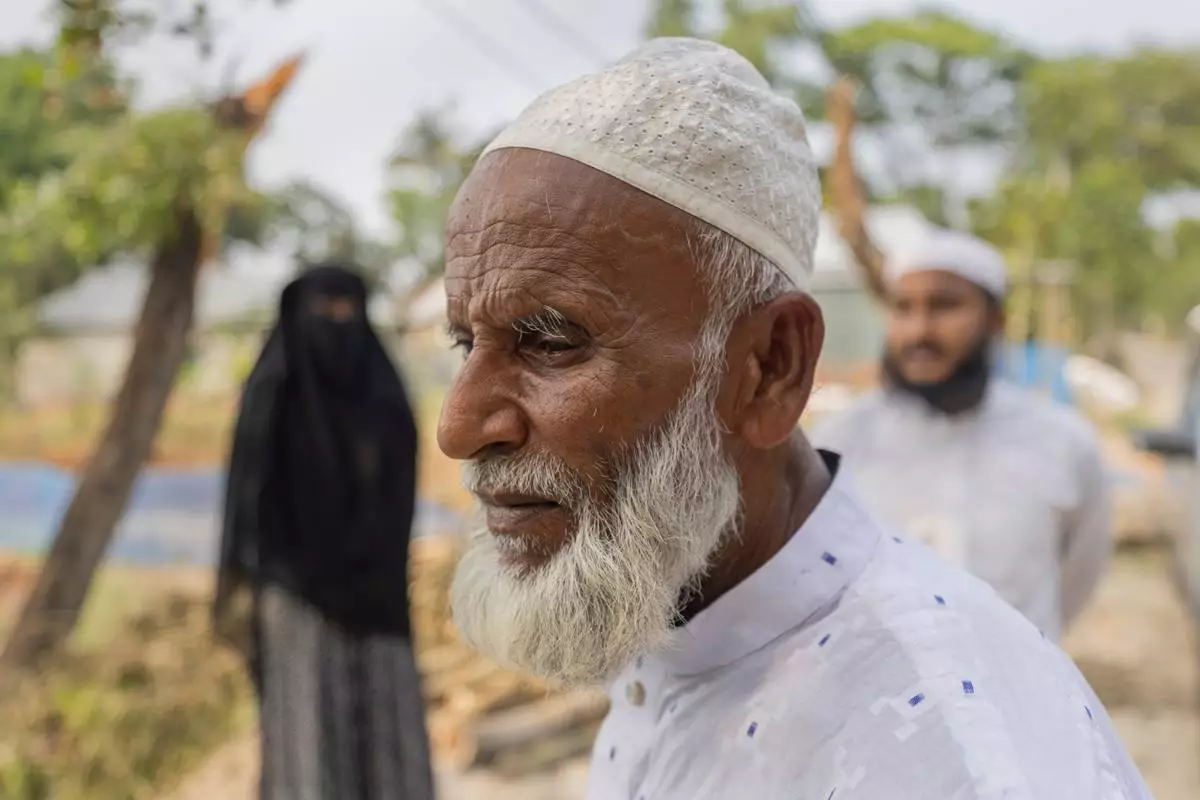
Sahidul Islam, center, the father of Mohammad Abdullah Al Mamun, stands with his relatives in Rasulpur village, Mymensingh district, Bangladesh, Friday, April 17, 2026.(AP Photo/Rajib Dhar)

Sahidul Islam, center, the father of Mohammad Abdullah Al Mamun, stands with his relatives in Rasulpur village, Mymensingh district, Bangladesh, Friday, April 17, 2026.(AP Photo/Rajib Dhar)

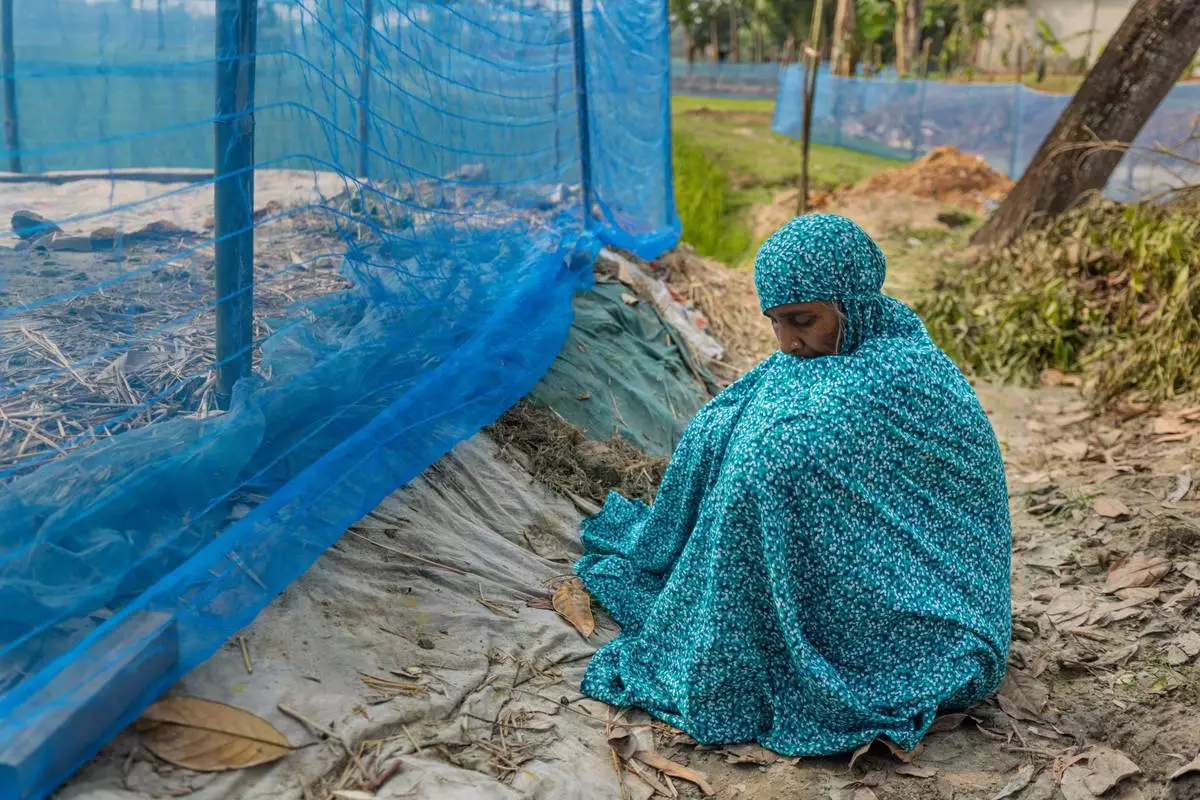
Shahida Khatun, mother of Mohammad Abdullah Al Mamun, sits beside her son's grave in Rasulpur village, Mymensingh district, Bangladesh, Friday, April 17, 2026. (AP Photo/Rajib Dhar)

Shahida Khatun, mother of Mohammad Abdullah Al Mamun, sits beside her son's grave in Rasulpur village, Mymensingh district, Bangladesh, Friday, April 17, 2026. (AP Photo/Rajib Dhar)

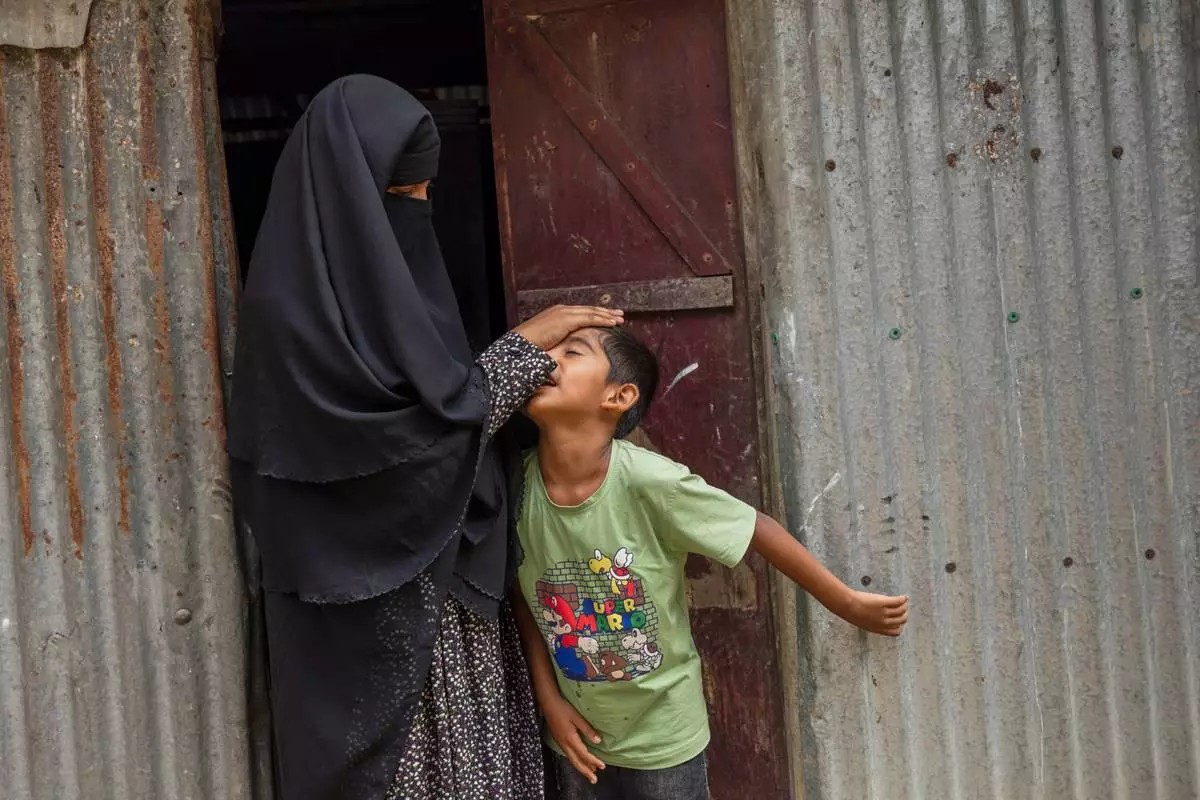
Sadia Islam Sarmin, wife of Mohammad Abdullah Al Mamun touches the forehead of her son at the doorway of their home in Rasulpur village, Mymensingh district, Bangladesh, Friday, April 17, 2026. (AP Photo/Rajib Dhar)

Sadia Islam Sarmin, wife of Mohammad Abdullah Al Mamun touches the forehead of her son at the doorway of their home in Rasulpur village, Mymensingh district, Bangladesh, Friday, April 17, 2026. (AP Photo/Rajib Dhar)

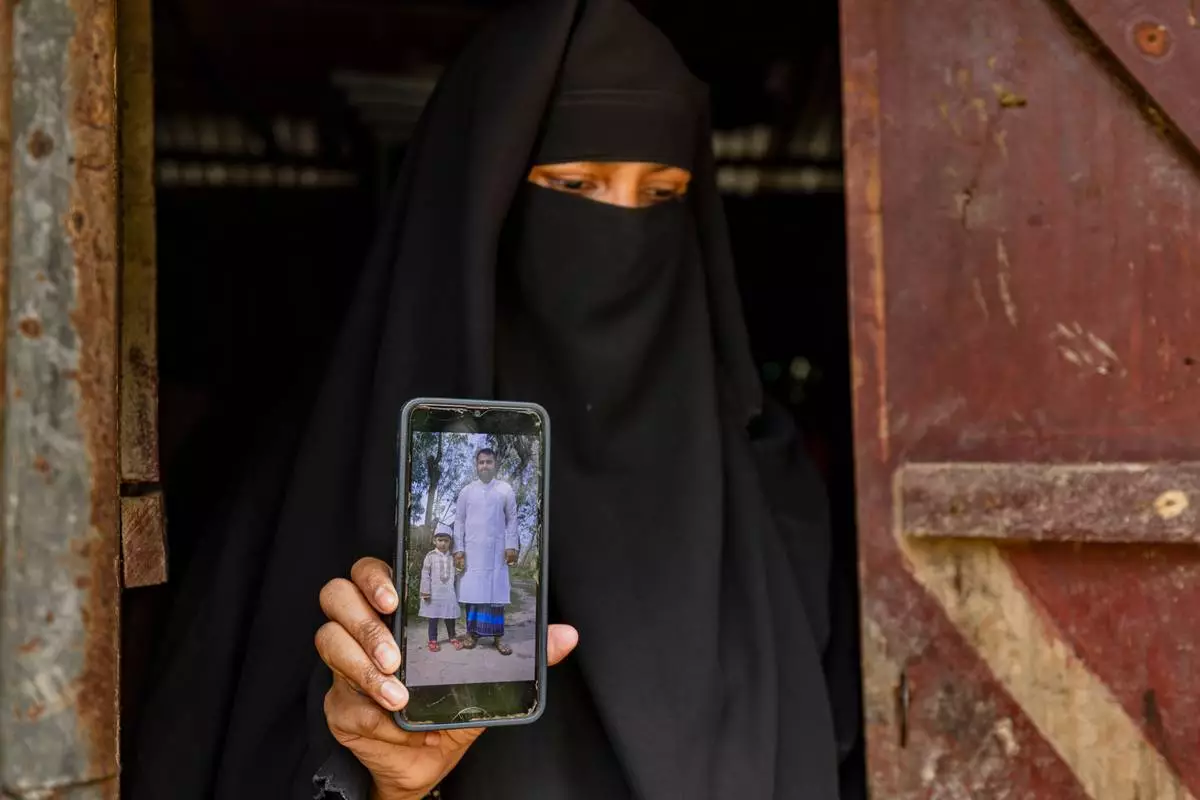
Sadia Islam Sarmin, the wife of Mohammad Abdullah Al Mamun, shows a photo of her late husband and their son on a mobile phone in Rasulpur village, Mymensingh district, Bangladesh, Friday, April 17, 2026. (AP Photo/Rajib Dhar)

Sadia Islam Sarmin, the wife of Mohammad Abdullah Al Mamun, shows a photo of her late husband and their son on a mobile phone in Rasulpur village, Mymensingh district, Bangladesh, Friday, April 17, 2026. (AP Photo/Rajib Dhar)

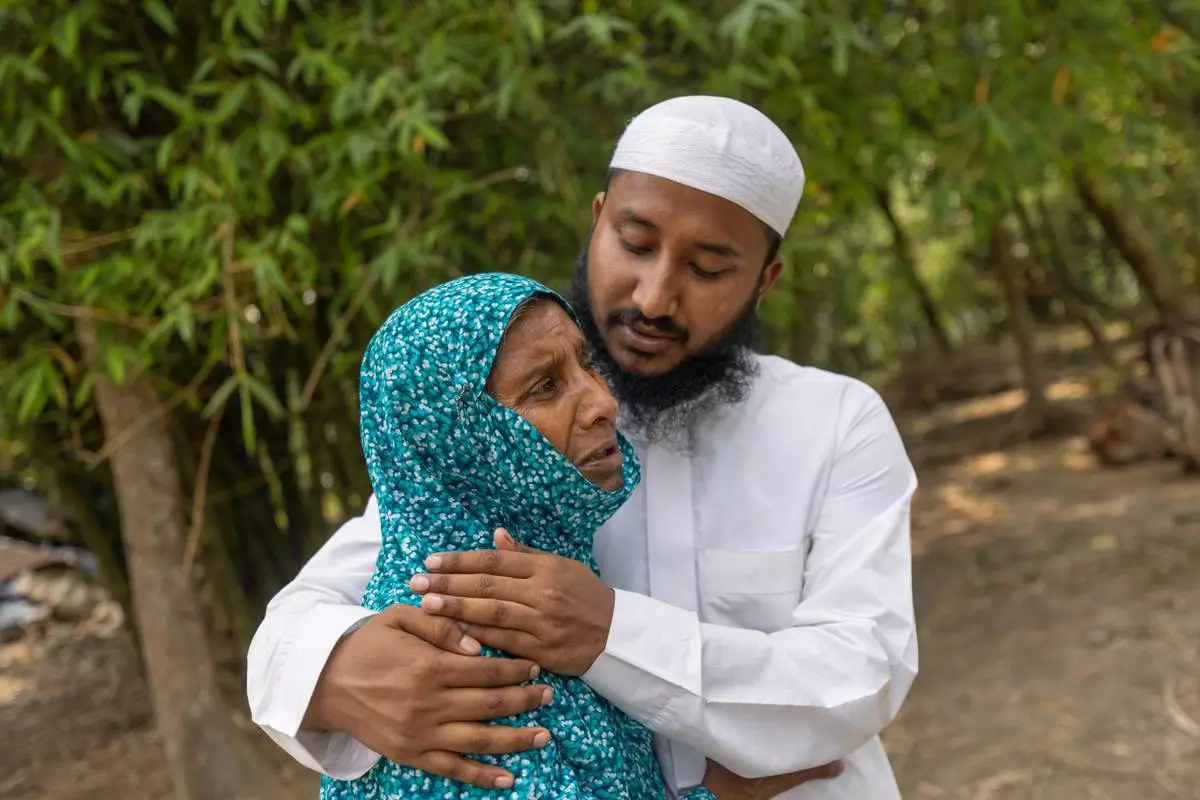
Maruf Hasan, brother of Mohammad Abdullah Al Mamun comforts his mother, Shahida Khatun, as she weeps at their home in Rasulpur village in Mymensingh district, Bangladesh, Friday, April 17, 2026. (AP Photo/Rajib Dhar)

Maruf Hasan, brother of Mohammad Abdullah Al Mamun comforts his mother, Shahida Khatun, as she weeps at their home in Rasulpur village in Mymensingh district, Bangladesh, Friday, April 17, 2026. (AP Photo/Rajib Dhar)

Recommended Articles