China's trade-in subsidy program for consumer goods continue to boost consumption during the ongoing five-day May Day holiday, when many people are busy shopping.
Various local authorities have actively expanded the scope of subsidies since May 1, effectively stimulating market vitality.
Besides the 10 product categories designated at the national level, Shanghai, Hubei, Chongqing and other regions have added kitchen appliances, cleaning appliances, smart home devices, and other consumer goods, with maximum subsidies ranging from 1,000 (about 145.5 U.S. dollars) to 2,000 yuan per item.
Driven by these policy incentives, a shopping mall in Xiaogan City of Hubei saw a 40 percent increase in foot traffic in the first two days of the holiday, with smart products newly included in Hubei's provincial subsidy program selling particularly well. "I want to replace my stove with one that has steaming and roasting functions. The subsidy can save me more than 1,000 yuan," said Tian Dan, a resident.
"This round of (trade-in) policy has a very broad coverage. Our goal is clear, that is, to turn good policies into tangible, real benefits for the people," said Yu Di, an official of the Xiaogan Municipal Commerce Bureau.
In Jiangsu Province, trade-in programs also extended to the AI field. The province added "AI plus next-generation intelligent products" to its expanded trade-in subsidy catalog, with maximum subsidies up to 1,500 yuan, substantially lowering the barrier to entry for smart product consumption.
At a smart product trade-in fair in Taizhou City of the province, people have been enthusiastic in buying AI-powered robot toys during the holiday.
"It can spark children's interest in scientific exploration. And if you buy it now, you could enjoy the provincial trade-in subsidy, with handsome discounts," said Tang Jin, a resident who is going to buy a robot dog.
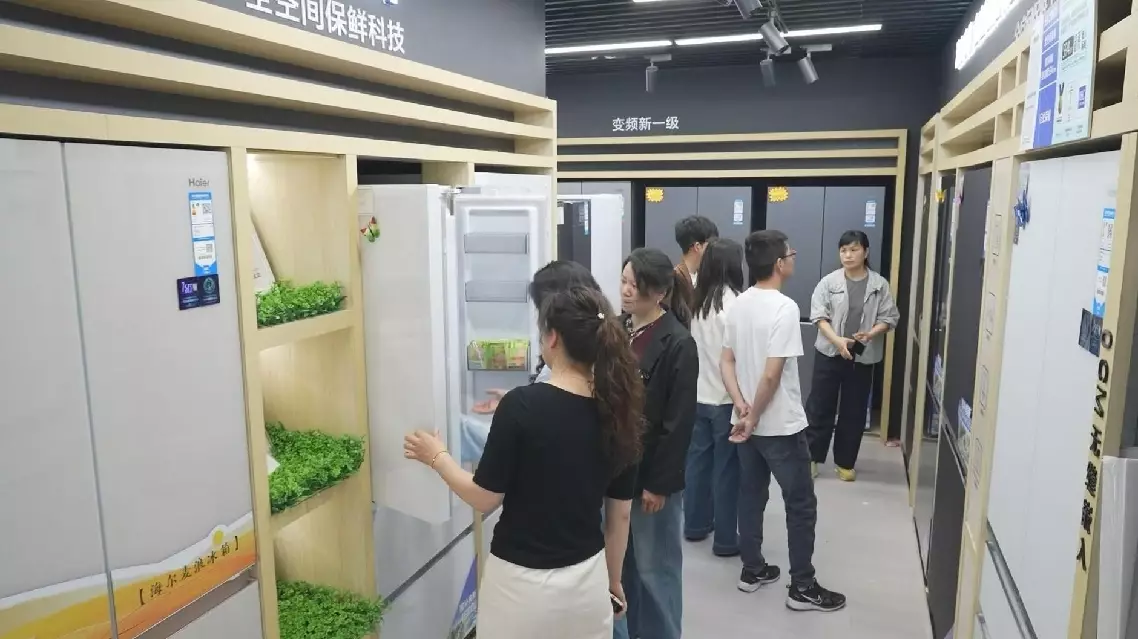
Trade-in programs continue to boost holiday consumption