After Colorado's low-scoring, first-round sweep of Los Angeles to a matchup against Minnesota everyone figured would be more competitive, Avalanche captain Gabriel Landeskog wondered aloud whether whether games against the Wild would end with scores like 2-1.
“It’ll be a tight-checking series, I’m sure,” Landeskog said then. “We’re ready and prepared for whatever.”
Click to Gallery
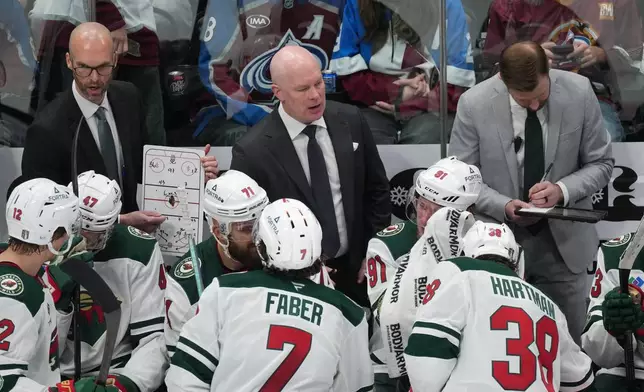
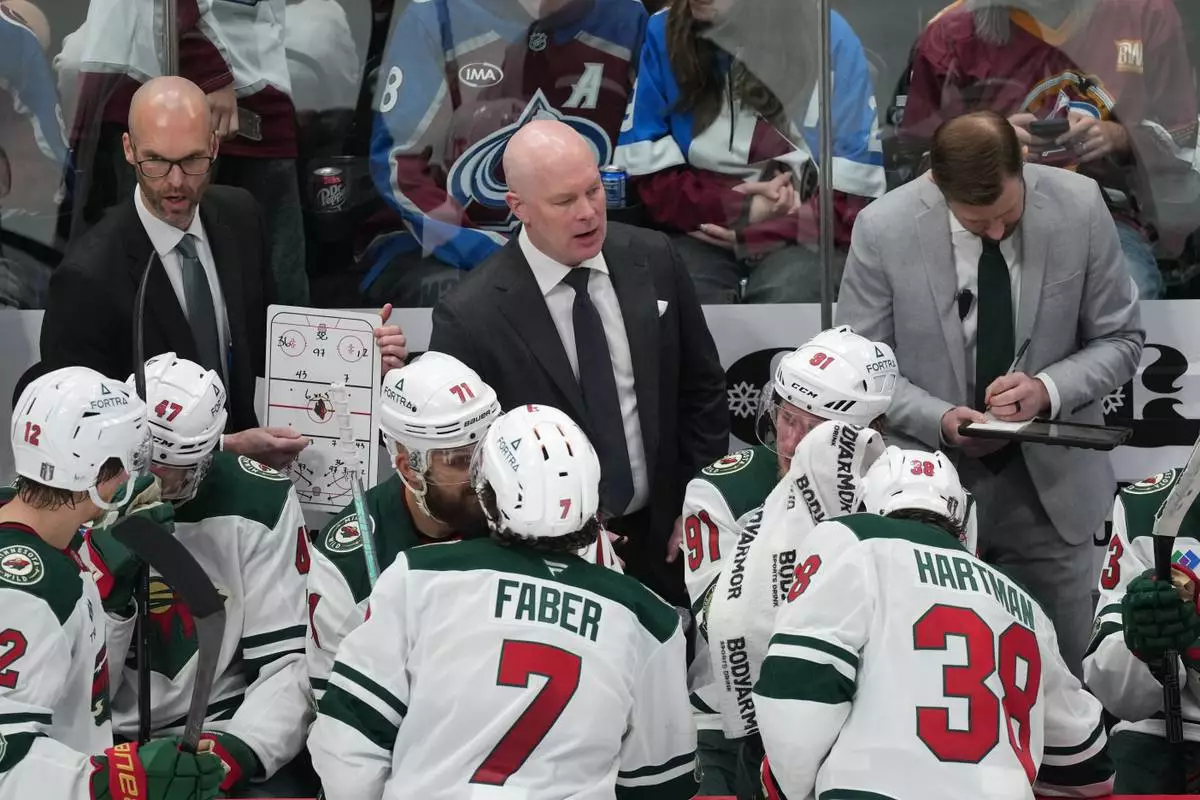
Minnesota Wild head coach John Hynes, back center, confers with players during a time out as assistant coaches Jason King, back left, and Patrick Dwyer join in in the third period of Game 1 of an NHL hockey Stanley Cup second-round playoff series against the Colorado Avalanche Sunday, May 3, 2026, in Denver. (AP Photo/David Zalubowski)
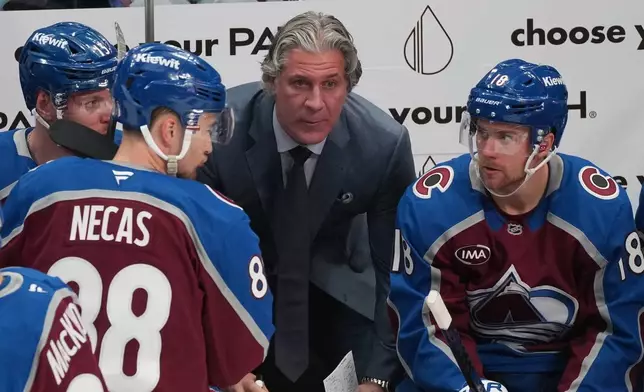
Colorado Avalanche head coach Jared Bednar, center, confers with players during a timeout in the third period of Game 1 of an NHL hockey Stanley Cup second-round playoff series against the Minnesota Wild Sunday, May 3, 2026, in Denver. (AP Photo/David Zalubowski)
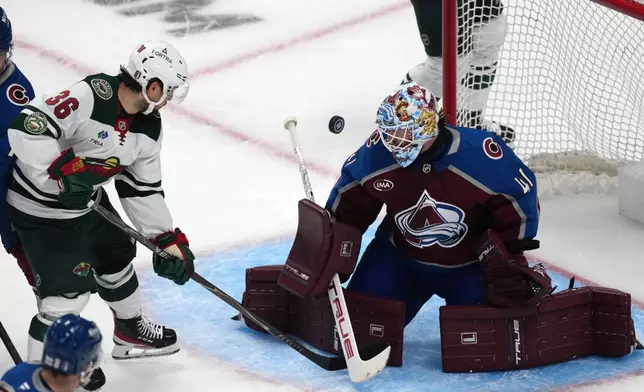
Minnesota Wild right wing Mats Zuccarello, left, redirects the puck at Colorado Avalanche goaltender Scott Wedgewood in the third period of Game 1 of an NHL hockey Stanley Cup second-round playoff series Sunday, May 3, 2026, in Denver. (AP Photo/David Zalubowski)
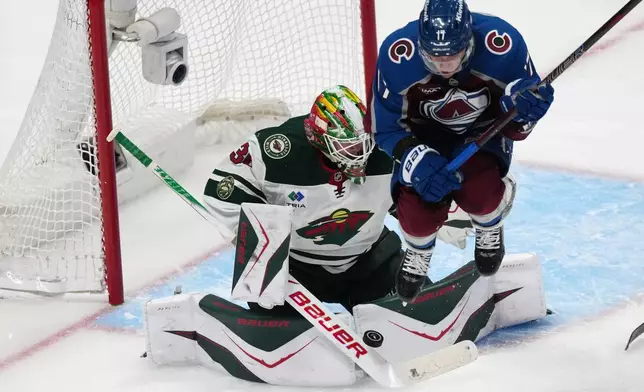
Colorado Avalanche center Parker Kelly, right, jumps as Minnesota Wild goaltender Jesper Wallstedt makes a stick save of a shot in the third period of Game 1 of an NHL hockey Stanley Cup second-round playoff series Sunday, May 3, 2026, in Denver. (AP Photo/David Zalubowski)
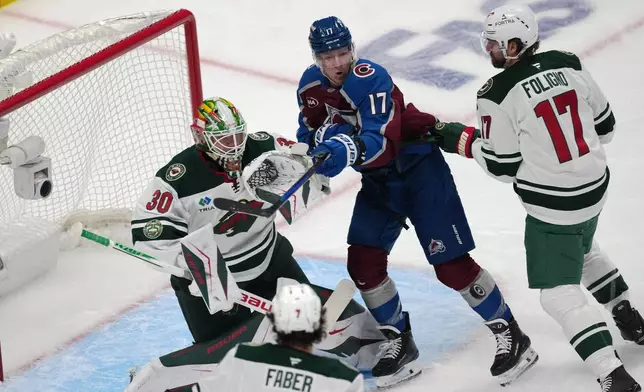
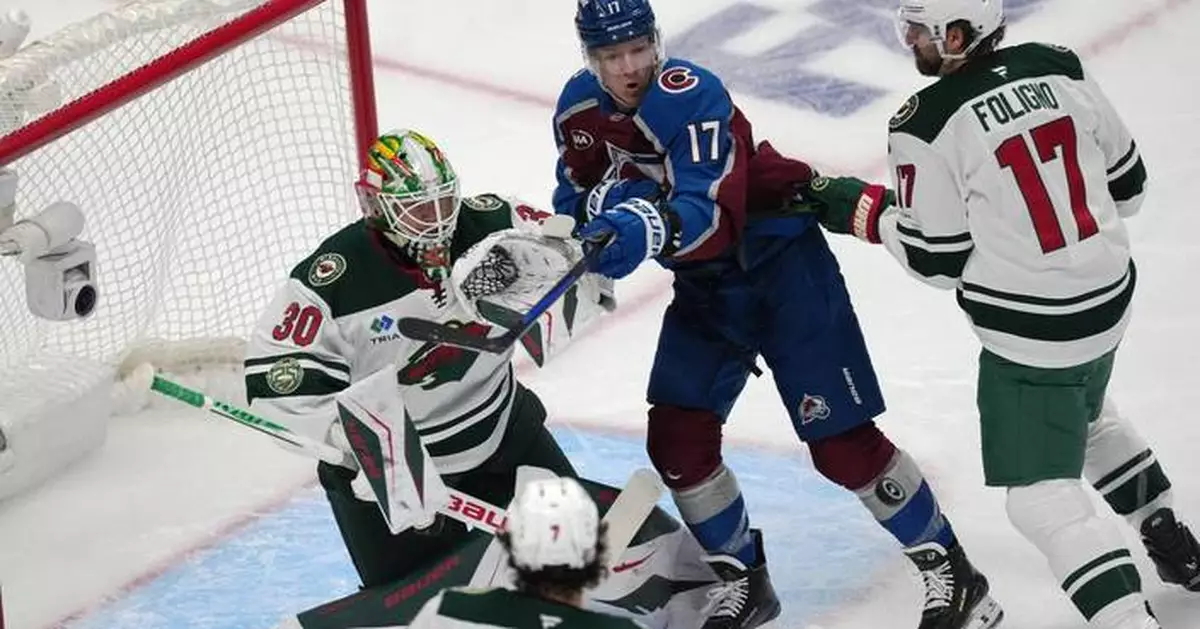
Colorado Avalanche center Parker Kelly, center top, tries to redirect a shot at Minnesota Wild goaltender Jesper Wallstedt (30) as Wild left wing Marcus Foligno, right, covers in the first period of Game 1 of an NHL hockey Stanley Cup second-round playoff series Sunday, May 3, 2026, in Denver. (AP Photo/David Zalubowski)
No one was prepared what happened in the series opener Sunday night, a show-stopping, 9-6 instant classic won by the Avalanche with a score more befitting of the 1980s when goaltenders wore a fraction of the equipment they do now and got lit up regularly.
This one was less about the goalies being bad and more of a sign about how hockey is being played now. Coaches let skilled players take more chances and there is high-end talent — 15 Olympians dressed for the opener — all over the place in this showdown between championship contenders.
Stanley Cup-winning coach Bruce Cassidy pointed specifically to the elite offensive defensemen involved, headlined by Colorado's Cale Makar and Minnesota's Quinn Hughes and Brock Faber. Makar and Hughes were among the 14 goal-scorers, the most in a playoff game since 1982.
“Personnel drives that as much as anything,” Cassidy said Monday. “Players, they shoot the puck better now. They’re finding different ways to score maybe than a little bit in the past. They can all bring it. Just better offensive skill.”
Coaches are more forgiving in the name of making plays, Cassidy acknowledged, because “it’s not fun trying to win 2-1 every night.” But Minnesota's John Hynes and Colorado's Jared Bednar will make adjustments that will likely keep the goal total down in Game 2 on Tuesday night (8 p.m. EDT, ESPN).
"We probably all felt there was a lot of scattered things going on throughout the game, but I do think there’s some things for us that we were a little out of sorts," Hynes said. “I feel like our team, some of the things that we gave up, are fixable.”
They can't fix the fact that the Avalanche have Makar, Nathan MacKinnon, Martin Necas and so much firepower. Even depth defenseman Nick Blankenburg, acquired at the trade deadline for insurance and only in the lineup because Josh Manson is injured, scored in Game 1.
The Avalanche, whose 233 points from the blue line led all teams during the regular season, got five of their goals from defensemen. They’re just the third team in NHL playoff history to do that and the first since Los Angeles in 1992.
Fourteen of the 15 goals came with a goalie in net, including the Wild's Jesper Wallstedt allowing eight on 42 shots. After a season in which the average leaguewide save percentage of .896 was the lowest in more than 30 years, there was something to Wallstedt and Colorado's Scott Wedgewood not being at their best. Wallstedt said the puck seemed to have eyes.
“I think if they put them both in and you played the exact same game with the same chances it would be closer to like 5-3." Cassidy said. “They found their way in. They weren’t bad goals, but they didn’t make a lot of saves that they typically do, both in the same night. It’s kind of a one-off.”
Each of these teams had close to an even split of duties in net during the regular season but has so far stuck to one guy in the playoffs. The Avalanche in 2022 became just the fourth team in NHL history to win the Stanley Cup having two goaltenders win at least five games during the title run.
“You do it all year. Why wouldn’t you rotate?” said Cassidy, who started two goaltenders coaching Vegas to the Cup in 2023, though that was because of injury. “It would make some sense to rotate in the playoffs, and not too many teams do it. I don’t know. That’s the one thing that hasn’t changed much is you’re going with one guy and he’s the guy, so it’ll be interesting to see how it plays out.”
Players were quick to take the blame for the rapid-scoring affair, and it's fair to say the game became so entertaining in part because of how wide open it was.
“Some of those details were lacking from the start of the game and all the way throughout,” Bednar said, acknowledging the Avs were prepared for the Wild to attack off the rush. “It was more D-zone coverage, but it starts with your rush coverage and then your arrivals, so you’re organized.”
Colorado's first three goals came over a span of 121 seconds, and Minnesota's response was two goals separated by just over a minute — all in the first period. After Blankenburg restored some cushion, the Wild got three in a row.
Cassidy thinks the Avalanche could play six more games like that. Minnesota, not so much.
“With a team like Colorado, they play to score the next goal a lot,” Cassidy said. “That’s who they are. They’re an offensive juggernaut and they’ve got three lines and four, five defensemen that can bring it, so why not play that way? That’s how they’re constructed.”
Even with that, Colorado defenseman Brett Kulak, who helped Edmonton make consecutive trips to the final, knows he and his teammates need to be better moving forward to have sustained success.
“You just got to laugh about it a little bit now — we’re able to anyways, that we we came out on the right side of it,” Kulak said. “So, we’re happy with that but certainly not a recipe to win through the playoffs and win the Stanley Cup.”
AP Sports Writer Pat Graham in Denver contributed to this report.
AP NHL playoffs: https://apnews.com/hub/stanley-cup and https://apnews.com/hub/nhl
Minnesota Wild head coach John Hynes, back center, confers with players during a time out as assistant coaches Jason King, back left, and Patrick Dwyer join in in the third period of Game 1 of an NHL hockey Stanley Cup second-round playoff series against the Colorado Avalanche Sunday, May 3, 2026, in Denver. (AP Photo/David Zalubowski)
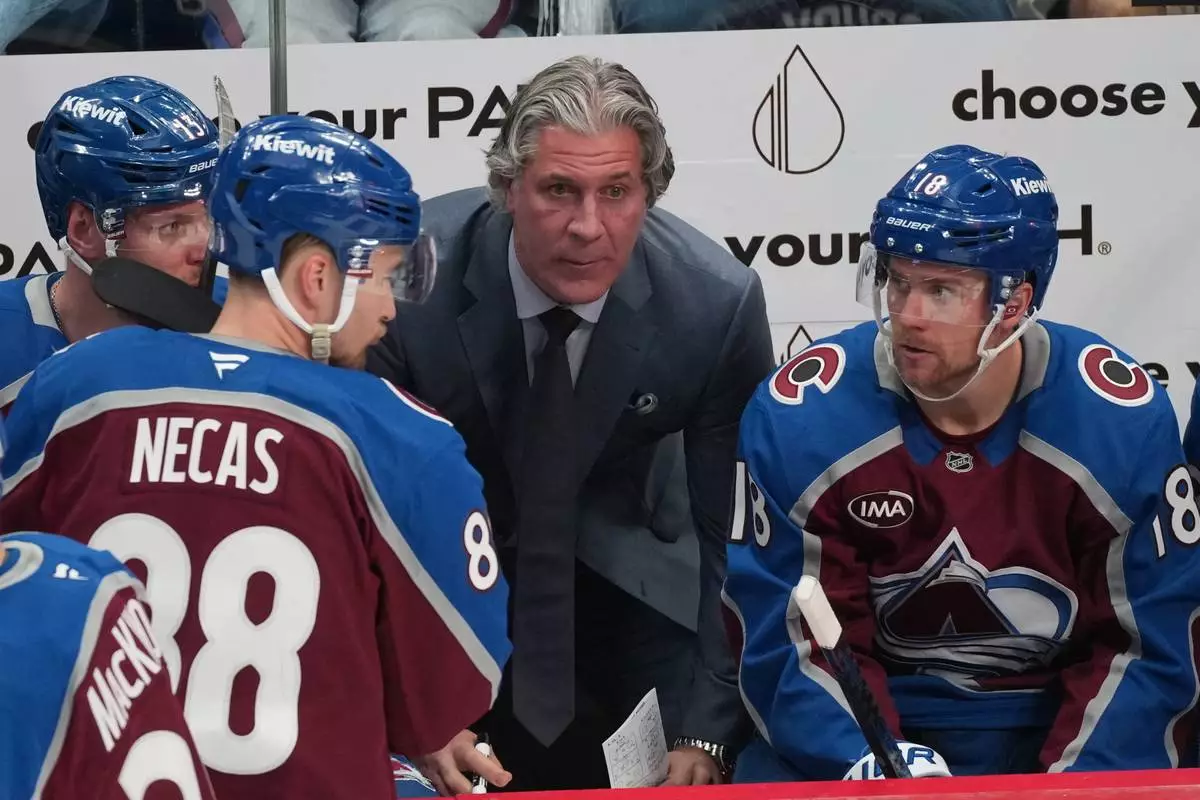
Colorado Avalanche head coach Jared Bednar, center, confers with players during a timeout in the third period of Game 1 of an NHL hockey Stanley Cup second-round playoff series against the Minnesota Wild Sunday, May 3, 2026, in Denver. (AP Photo/David Zalubowski)
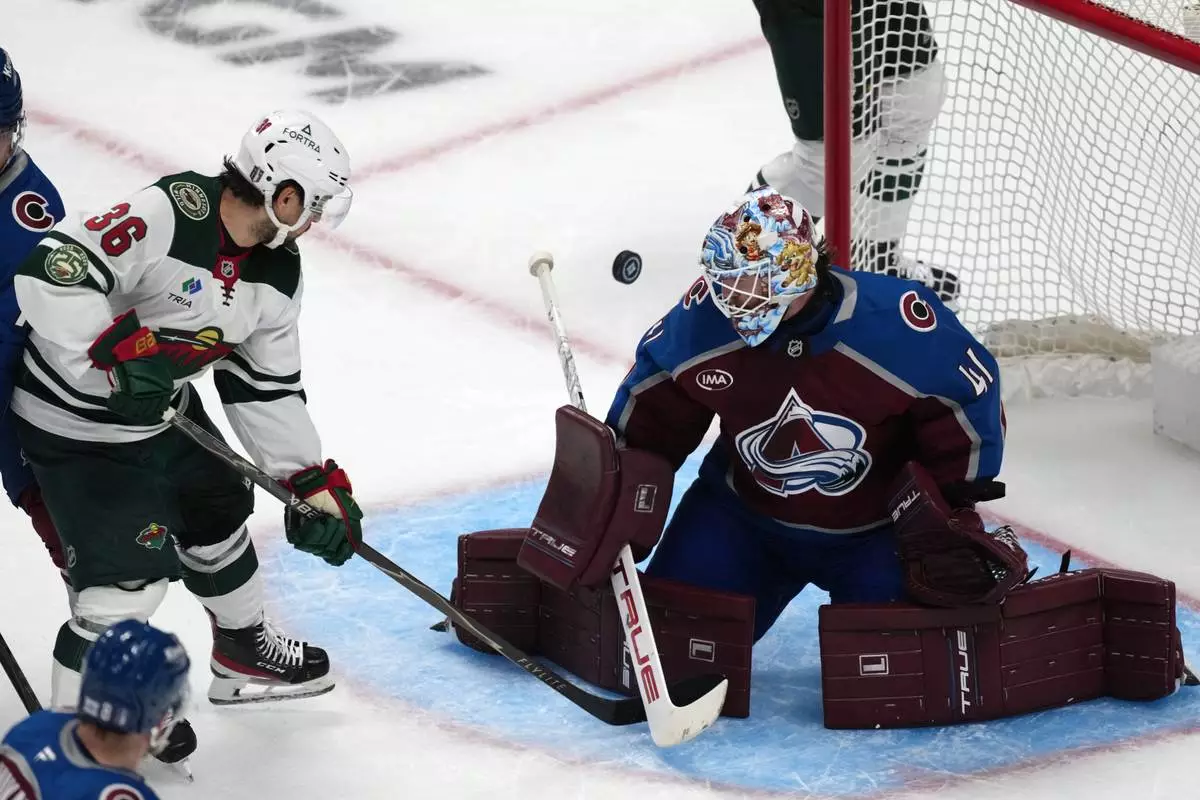
Minnesota Wild right wing Mats Zuccarello, left, redirects the puck at Colorado Avalanche goaltender Scott Wedgewood in the third period of Game 1 of an NHL hockey Stanley Cup second-round playoff series Sunday, May 3, 2026, in Denver. (AP Photo/David Zalubowski)
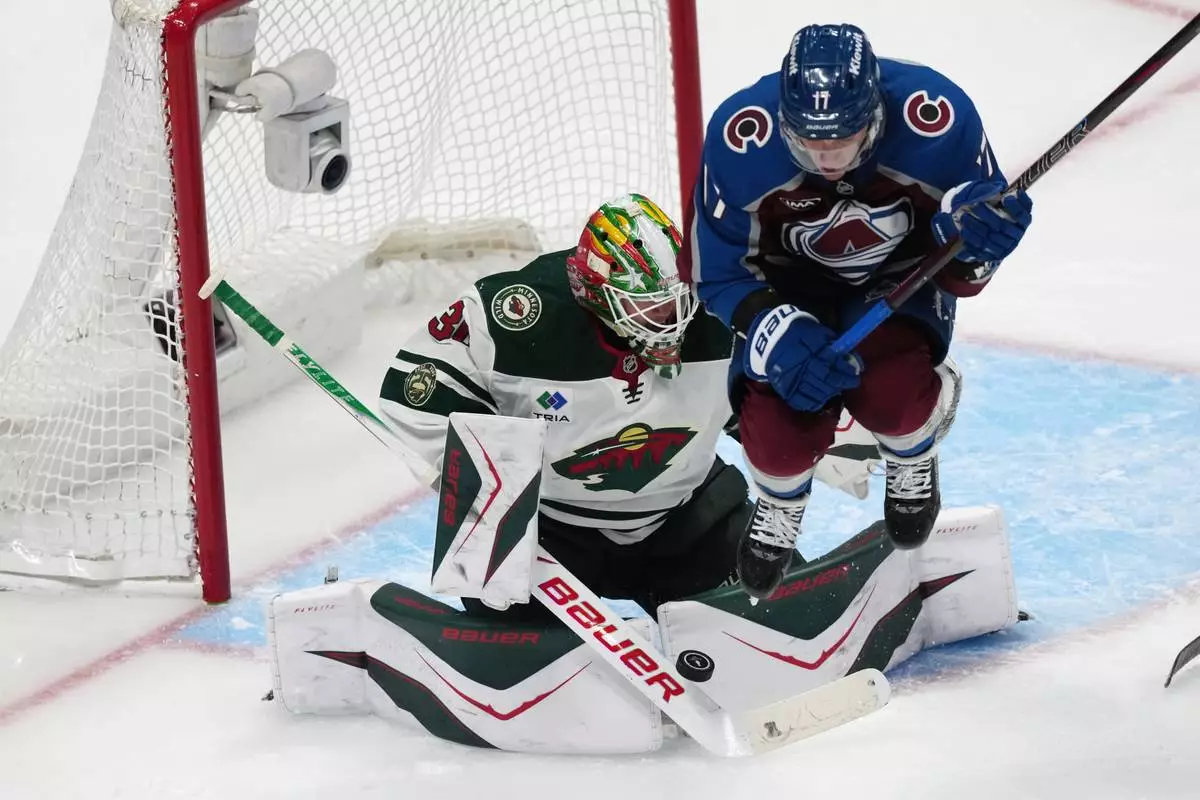
Colorado Avalanche center Parker Kelly, right, jumps as Minnesota Wild goaltender Jesper Wallstedt makes a stick save of a shot in the third period of Game 1 of an NHL hockey Stanley Cup second-round playoff series Sunday, May 3, 2026, in Denver. (AP Photo/David Zalubowski)
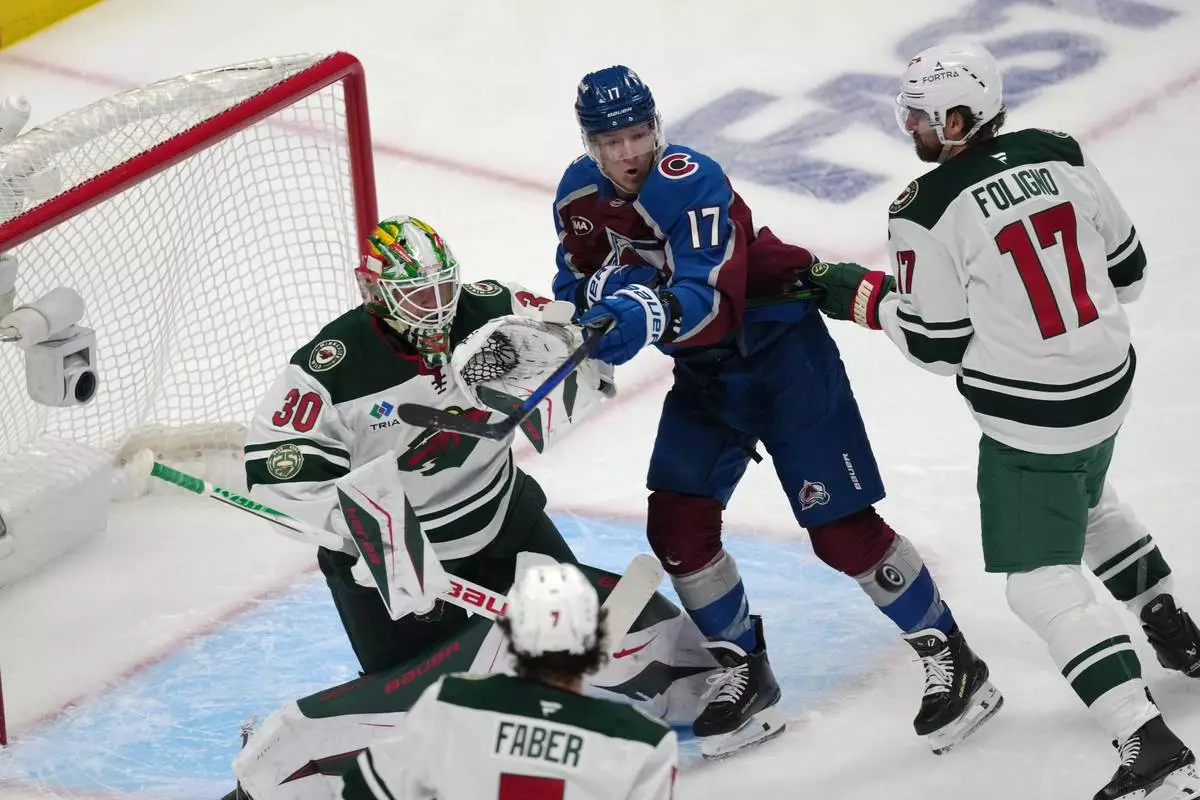
Colorado Avalanche center Parker Kelly, center top, tries to redirect a shot at Minnesota Wild goaltender Jesper Wallstedt (30) as Wild left wing Marcus Foligno, right, covers in the first period of Game 1 of an NHL hockey Stanley Cup second-round playoff series Sunday, May 3, 2026, in Denver. (AP Photo/David Zalubowski)