President Donald Trump's administration moved Monday to block a lawsuit Minnesota officials filed almost six years ago alleging oil companies and a petroleum trade group deceived state residents about climate change.
The U.S. Department of Justice, the administration's law enforcement arm, filed an action in federal court in Minneapolis arguing that the federal government has the authority to regulate greenhouse gas emissions, not states, and that Minnesota officials are trying to improperly impose their policy preferences on the rest of the country.
“The Constitution does not tolerate such a conflict,” Justice Department attorneys argued in the filing. “Nor does it allow Minnesota to national its regulatory powers.”
Minnesota Attorney General Keith Ellison, a Democrat, filed a lawsuit in state court in June 2020 against ExxonMobil, Koch Industries, the American Petroleum Institute and refinery company Flint Hills Resources, a Koch subsidiary, accusing them of consumer fraud and deceptive trade practices. At least 15 other states brought similar lawsuits, including Massachusetts, New York and Rhode Island.
Ellison issued a statement Monday calling the Justice Department's action meritless.
“The American people deserve a Department of Justice that fights for us, and it's a tremendous shame that Trump's DOJ would rather sell us out to Big Oil,” Ellison said.
Messages The Associated Press left for media officials at ExxonMobil, the Koch Industries and the American Petroleum Institute on Monday weren’t immediately returned. ExxonMobil officials said when Ellison sued in 2020 that the action was baseless. The American Petroleum Institute said then that the industry provides reliable energy to U.S. consumers while substantially reducing its environmental footprint.
Trump has called for boosting domestic energy production. The administration in February revoked a scientific finding that long has been the central basis for U.S. action to regulate greenhouse gas emissions and fight climate change, the most aggressive move by the Republican president to roll back climate regulations. The rule finalized by the Environmental Protection Agency rescinded a 2009 government declaration known as the endangerment finding that determined carbon dioxide and other greenhouse gases threaten public health and welfare.
The Justice Department filing marks another flashpoint of friction between the Trump administration and Minnesota officials. The two sides have been at odds since January, when federal immigration officers killed two Minneapolis residents in separate incidents during a crackdown in the city. Federal agents in April conducted a series of searches connected with an investigation into publicly funded social programs for children, further escalating tensions.
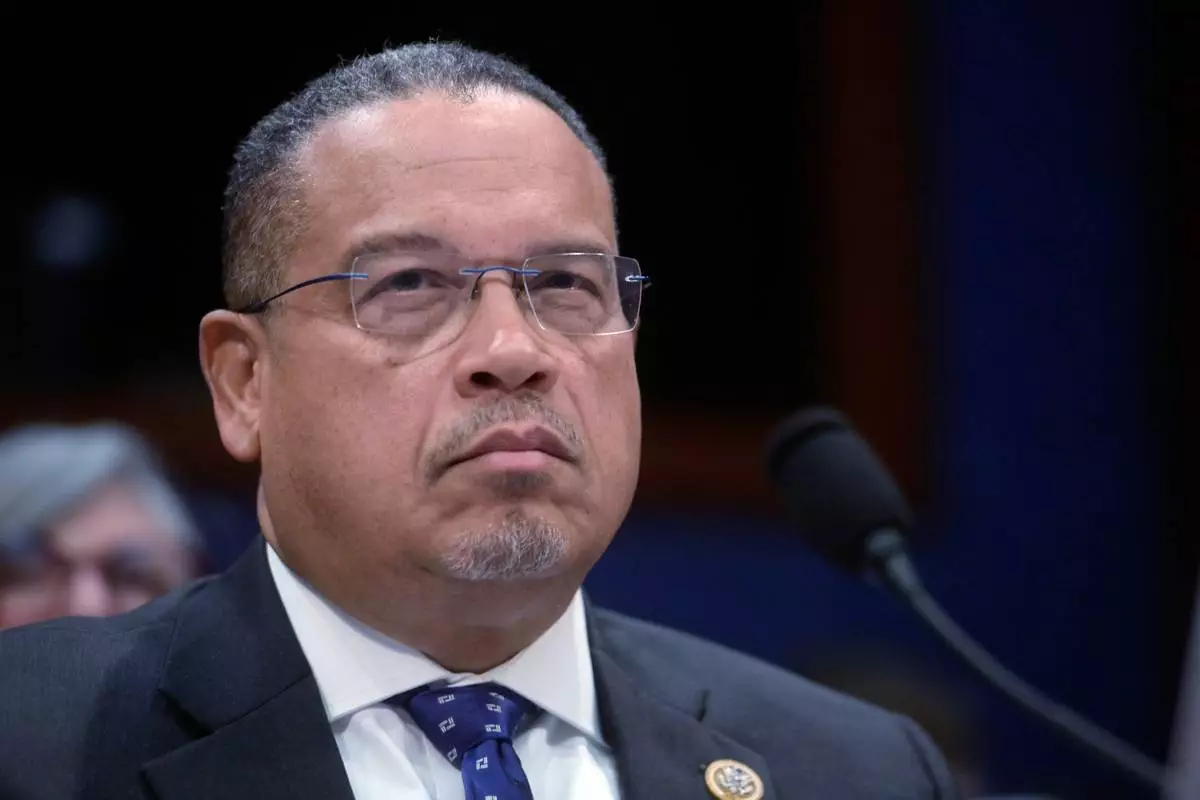
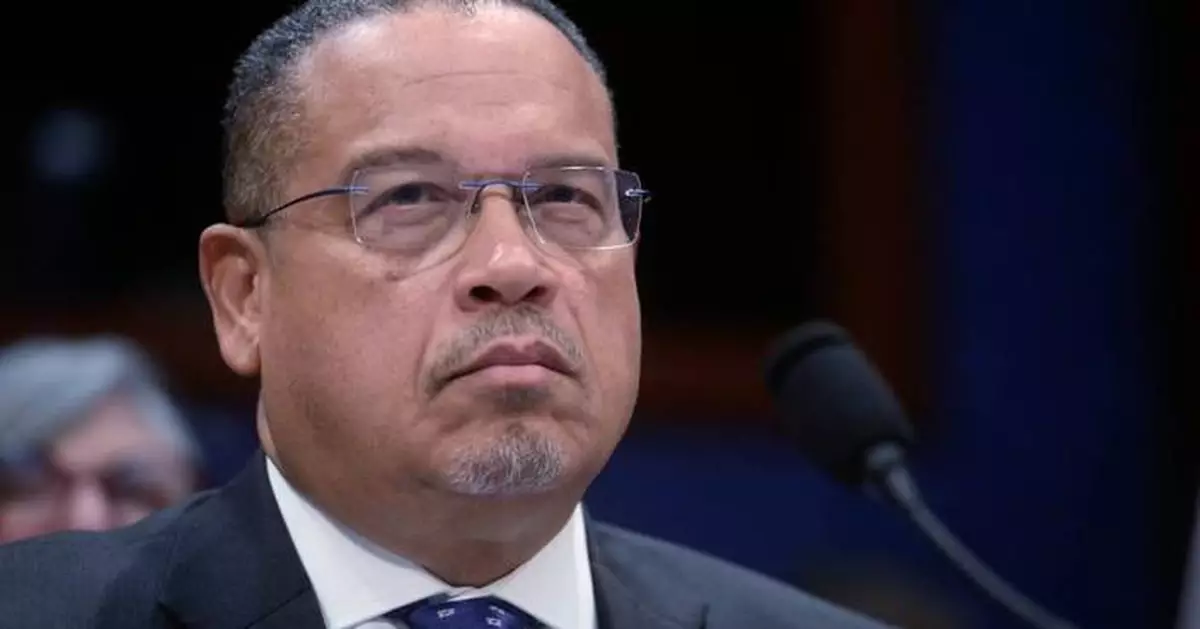
FILE - Minnesota Attorney General Keith Ellison listens during a House Committee on Oversight and Government Reform hearing on oversight of fraud and misuse of Federal funds in Minnesota, March 4, 2026, on Capitol Hill in Washington. (AP Photo/Rod Lamkey, Jr., file)
NEW YORK (AP) — The Washington Post won the Pulitzer Prize for public service for scrutinizing the Trump administration’s sweeping, choppy overhaul of federal agencies, and The Associated Press won the award Monday for international reporting about surveillance.
In a year when several prize-winning projects zoomed in on the Trump presidency, the Post's coverage illuminated the fast-moving, sometimes opaque particulars of the administration's drive to reshape the national government and what the cuts and changes meant for individual Americans.
The Miami Herald’s Julie K. Brown was given a special citation for her reporting, nearly a decade ago, that drew attention to Jeffrey Epstein ’s abuses. The New York Times won three of the coveted prizes, the Post and Reuters each won two, and smaller outlets ranging from The Connecticut Mirror to the podcast “Pablo Torre Finds Out” also were recognized in a challenging year for American journalism.
“This is always a day of celebration in our communities, but perhaps never more so than today as we face tremendous political and economic pressures,” prize administrator Marjorie Miller said in a livestream announcing the awards.
In the last few months, the Post cut a third of its staff, CBS News announced it would shutter its nearly century-old radio service, The AP offered buyouts to over 120 journalists and some regional newspapers also publicly struggled. CBS parent Paramount’s acquisition of CNN has raised questions about what’s next for those networks. Meanwhile, President Donald Trump continued to bash, and sometimes sue, outlets whose coverage he finds objectionable.
Spanning three years, thousands of pages of documents and numerous interviews, the AP project found that American companies help lay the foundations of the Chinese government’s system for monitoring and policing its citizens.
“This was sweeping and deeply impactful reporting, the kind of work that highlights the unique strengths of AP’s global, multiformat newsroom,” executive editor Julie Pace said in an email to staffers. She is among the Pulitzer Board's new members.
Some of The Washington Post's winning work was by reporter Hannah Natanson, whose home was searched and devices were seized in what federal authorities say was an investigation into a Pentagon contractor’s handling of classified documents but the Post says was a violation of the First Amendment.
Two winning entries focused on Trump's pulverizing approach to norms and constraints. Reuters, which won for national reporting, looked at how Trump has used the federal government and his supporters’ influence to expand presidential authority and target foes, the award judges noted. The Times took the investigative reporting prize for exploring the Republican president’s boundary-pushing approach to the notion of conflicts of interest.
Joseph Kahn, executive editor of the Times, said its reporters have been threatened over their work. “We have not, and will not” bow to the pressure, he said in a statement.
Reuters' reporting on scam ads, AI chatbots and the social media giant Meta — which owns Facebook, Instagram and WhatsApp — won the newly revived prize for beat reporting. The award, for journalists consistently assigned to a particular topic, was last given two decades ago.
Reuters' wins spotlighted "fearless, deeply reported, original work that holds powerful institutions to account,” editor-in-chief Alessandra Galloni said in a statement.
The prize for breaking news went to The Minnesota Star Tribune’s coverage of last year’s deadly mass shooting during Mass at a Minneapolis Catholic school. Judges praised the thoroughness and compassion of the newspaper’s reporting on a scene of carnage in its hometown.
“To me, it’s really a moment to appreciate the power of local journalism,” Kathleen Hennessey, the Star Tribune's editor and senior vice president, said in an interview. One Tribune reporter who lives in the neighborhood heard the gunshots and called 911 before running to the scene, she noted; an editor at the paper has children who attend the school.
“It feels really gratifying to be recognized, but for this newsroom, this is also just still a really painful event,” Hennessey said.
The San Francisco Chronicle received the award for explanatory reporting, which means work that makes a complex topic comprehensible to everyday readers and viewers. The Chronicle's series laid out how insurers, aided by algorithmic tools, undervalued and denied rebuilding claims for fire-destroyed homes, the judges said.
In visual journalism, The Times got a breaking news photography award for depicting devastation and starvation in Gaza resulting from Israel's war in the territory. The Post won the feature photography prize, for a visual essay on a family welcoming a firstborn as the child’s father grappled with terminal cancer. The award for illustrated reporting and commentary — a category that includes editorial cartoons and more — went to Bloomberg for a graphic novel about online scams that threaten “digital arrest.”
In a statement, Bloomberg Editor-in-Chief John Micklethwait called it "deeply reported public service journalism, published in an inventive format.”
While several prizes reflected the year’s biggest news stories, others highlighted work that wasn’t pushed to everyone’s phones.
One of two local reporting awards went to The Connecticut Mirror and ProPublica for a series on how towing companies profited off Connecticut laws, at the expense of poor car owners; the state soon changed the laws. The Chicago Tribune also was honored for its coverage of the Trump administration’s intense immigration crackdown in the Windy City.
Texas Monthly won the feature writing award for an editor's first-person story of flooding that killed his toddler nephew and swept his home away. Also in Texas, The Dallas Morning News' architecture critic won the criticism award; judges praised Mark Lamster's wit and expertise. The New York Times' M. Gessen won the opinion writing award for essays on authoritarianism.
The audio award went to “Pablo Torre Finds Out” for probing financial arrangements between Los Angeles Clippers superstar Kawhi Leonard and an environmental startup in which the team owner invested. The judges called the project a “pioneering and entertaining form of live podcast journalism.”
The Pulitzer announcement — usually followed by a dinner later in the year — came little more than a week after an armed man rushed a security checkpoint and exchanged gunfire with Secret Service agents outside another big event for U.S. journalists, the White House Correspondents’ Association dinner in Washington. The man is now charged with trying to assassinate Trump, who was attending the event for his first time as president.
Separately, Monday’s awards also honored books, music and theater.
The prizes were established in newspaper publisher Joseph Pulitzer’s will and were first awarded in 1917. Winners receive $15,000, and the public service award carries a gold medal. Decisions are made by the Pulitzer Board, based at Columbia University in New York.
Associated Press writer Sarah Raza contributed from Canton, Michigan.

FILE - Signage for The Pulitzer Prizes appear at Columbia University, May 28, 2019, in New York. (AP Photo/Bebeto Matthews, File)