California is investigating one of the Trump administration's deals to end an offshore wind project.
Golden State Wind was a floating offshore wind project proposed off California’s central coast. The California Energy Commission said Monday it issued an administrative subpoena to Golden State Wind.
The commission said it is seeking documents and information about the company's recent agreement with the Department of Interior to accept a payout in exchange for voluntarily abandoning its offshore wind lease.
“The Trump administration is recklessly spending billions of taxpayer dollars on backroom deals that would turn back the clock on innovation,” CEC Chair David Hochschild said in a statement. “Californians deserve immediate answers about the nature of this payout. Taxpayer dollars should be used to build a sustainable energy future, not to pay to make projects disappear.”
The Trump administration is spending nearly $2 billion to get energy companies to walk away from U.S. offshore wind projects. Interior Secretary Doug Burgum said companies were sold a product that was only viable when propped up by massive taxpayer subsidies when they bid for these offshore wind leases in 2022, under former President Joe Biden.
The Republican administration adopted this strategy after federal courts thwarted President Donald Trump’s efforts to stop offshore wind development through executive action. Three agreements have been announced.
Under the first deal, made public in March, French company TotalEnergies is getting $1 billion — essentially a refund of its leases for offshore wind projects off North Carolina and New York — if it invests the money in fossil fuel projects instead. In the latest deals announced last week, the administration said Golden State Wind and Bluepoint Wind agreed to end their leases in exchange for reimbursements totaling nearly $900 million, provided they invest equally in fossil fuels.
Both Golden State and Bluepoint are co-owned by Ocean Winds, a joint venture of EDP Renewables and French energy giant Engie. Bluepoint Wind was an offshore wind project in the early stages of development off the coasts of New Jersey and New York.
When asked about the subpoena Monday, Ocean Winds said it does not comment on open or potential litigation.
This investigation sets the stage for legal action from California to safeguard renewable energy, as well as the thousands of jobs and millions of dollars of investment the state was counting on, said Eddie Ahn, executive director of Brightline Defense, an environmental justice nonprofit working to advance offshore wind in California.
A letter from California Attorney General Rob Bonta’s office to Golden State Wind says the state anticipates potential litigation involving the federal government and parties to lease buyouts impacting California’s energy needs and offshore wind programs. California has invested about $100 million to support offshore wind development in order to accelerate the state's transition to clean energy and address climate change.
Democrats in Congress are investigating, too. U.S. Reps. Jared Huffman of California, the top Democrat on the House Natural Resources Committee, and Jamie Raskin, the ranking Democrat on the House Judiciary Committee, are demanding information about TotalEnergies agreement.
The Associated Press’ climate and environmental coverage receives financial support from multiple private foundations. AP is solely responsible for all content. Find AP’s standards for working with philanthropies, a list of supporters and funded coverage areas at AP.org.
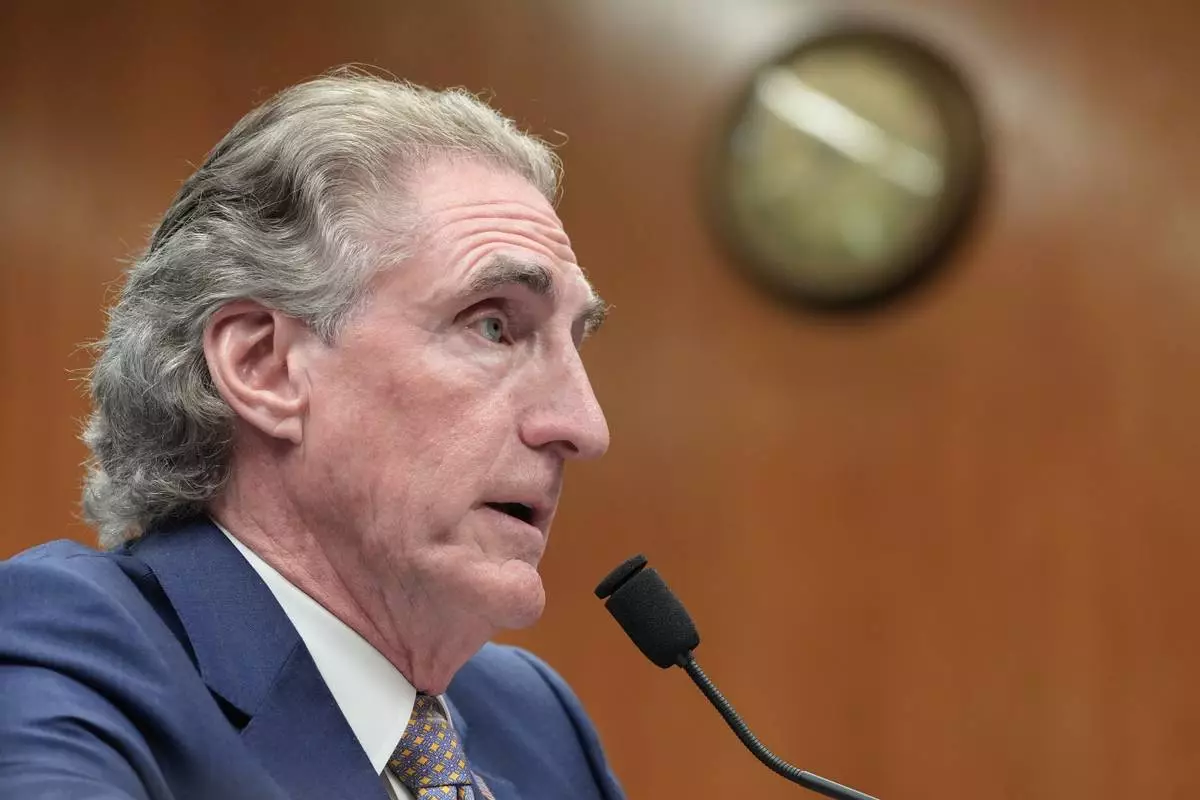
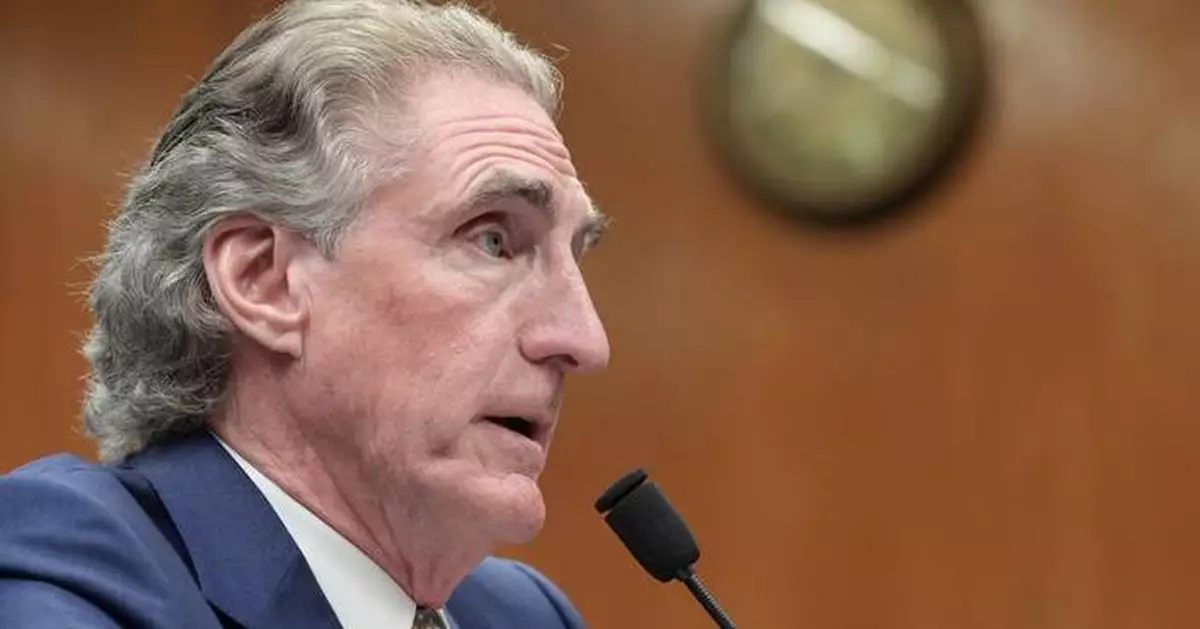
Interior Secretary Doug Burgum testifies during a Senate Committee on Appropriations, Subcommittee on Department of Interior, Environment, and Related Agencies hearing on the proposed budget for fiscal year 2027 on Capitol Hill Wednesday, April 22, 2026, in Washington. (AP Photo/Mariam Zuhaib)
SANTA FE, N.M. (AP) — New Mexico state prosecutors are seeking fundamental changes to Meta's social media apps and algorithms to safeguard children in the second phase of a landmark trial on allegations that platforms such as Instagram have created a public safety hazard.
Opening statements began Monday in the three-week bench trial to decide whether the platforms of Meta, which also owns Facebook and WhatsApp, pose a public nuisance.
In the first phase, jurors ordered $375 million in civil penalties against Meta, determining that it knowingly harmed children’s mental health and concealed what it knew about child sexual exploitation on its platforms.
Prosecutors are now asking a judge impose fundamental changes aimed at reining in addictive features, improving age verification and preventing child sexual exploitation through default privacy settings and closer oversight.
Meta has vowed to appeal the jury verdict and warned that it could eliminate service in New Mexico entirely if forced to comply with impractical mandates and multibillion-dollar remedies.
“The fact that we’re having a trial on nuisance is itself a remarkable outcome,” said Eric Goldman, co-director of the High Tech Law Institute at Santa Clara University School of Law in California. “That theory is not well accepted as applied to the internet, and that theory doesn’t really fit the internet.”
As the trial reconvened Monday, state District Court Judge Bryan Biedscheid addressed concerns that the court might overreach its authority.
“I’m probably not the easiest sell on an idea where I would become a one-person legislature, judge and executive branch enforcer,” he said.
New Mexico Attorney General Raúl Torrez said the jury verdict punctured the aura of invincibility protecting tech companies from liability for material on their platforms under Section 230, a 30-year-old provision of the U.S. Communications Decency Act.
A Los Angeles jury separately found both Meta and YouTube liable for harms to children, validating long-standing concerns about dangers of social media.
New Mexico prosecutors are demanding that Meta help remedy a mental health crisis among children through a series of safeguards and changes, including a redesign of algorithms that make content recommendations so they no longer prioritize constant engagement.
New Mexico prosecution attorney David Ackerman outlined a $3.7 billion proposal for Meta to remedy harm to children that “recognizes the scope of the public nuisance that Meta has caused.”
“Across New Mexico, across the country, children are begging for help," he said in opening statements. “It is thorough and it is necessary. There are items in this abatement plan for public education, to assist schools, to assist law enforcement, to assist mental health providers."
Prosecutors are also targeting other app features linked to compulsive use such as “infinite scroll,” which continuously loads content; push notifications; and default settings that show tallies for “likes” and sharing. Their lawsuit also seeks improvements to age verification and other steps aimed at curbing child sexual exploitation.
And New Mexico wants child accounts on Meta platforms to have an associated parent or guardian, as well as a court-supervised child safety monitor to track safety improvements over time.
Executives have said the company continuously improves child safety and addresses compulsive use and that many demands from prosecutors are redundant.
In opening statements, Meta attorney Alex Parkinson disputed the idea that there is a public right to social media under nuisance laws.
“Are bars a public nuisance because drinking alcohol is undeniably associated with car fatalities?” Parkinson said. “If individual (social media) users have been hurt, they have a remedy -- personal injury cases to cover the mental healthcare or any other care that they need. And that is what is happening in other lawsuits right now.”
The company also argues that its platforms are being singled out among hundreds of apps that teens use with less robust protections, while invoking concerns about restrictions on free speech.
“The state’s proposed mandates infringe on parental rights and stifle free expression,” Meta said last week in a statement.
Parkinson said prosecutors are making unworkable demands to change apps only for New Mexico users — an assertion disputed by the attorney general.
“To geo-fence New Mexico users into that version of the apps, new apps for New Mexico, that is not feasible, technologically,” Parkinson told the judge.
The case is the first to reach trial among lawsuits filed by more than 40 state attorneys general on allegations that Meta contributes to a youth mental health crisis. Most are pursuing remedies in U.S. federal court.
Torrez said he envisions a broad public education campaign to help parents and children navigate social media safely, with new public service warnings on Meta apps.
“All of those kids need help, they need counseling, they need therapy," Torrez said at a news conference Monday, accompanied by parent advocates for social media reforms.
Parkinson said the state’s $3.7 billion plan goes too far and would reshape the way all mental and behavioral healthcare is delivered to New Mexico teens.
“The state is asking you to develop from scratch a completely new regulatory regime that far exceeds anything in Europe, in Australia, anywhere,” Parkinson said in reference to a bevy of recent and planned restrictions on children’s online activities beyond the U.S.
Goldman said prosecutors may be venturing into uncertain legal waters just in seeking age verification mandates.
“In practice a court order saying that Facebook had to impose age authentication would have no Supreme Court textual support,” he said. “The Supreme Court might bless it. We don’t know.”
This story has been updated to correct the wording in the quote from Judge Bryan Biedscheid.
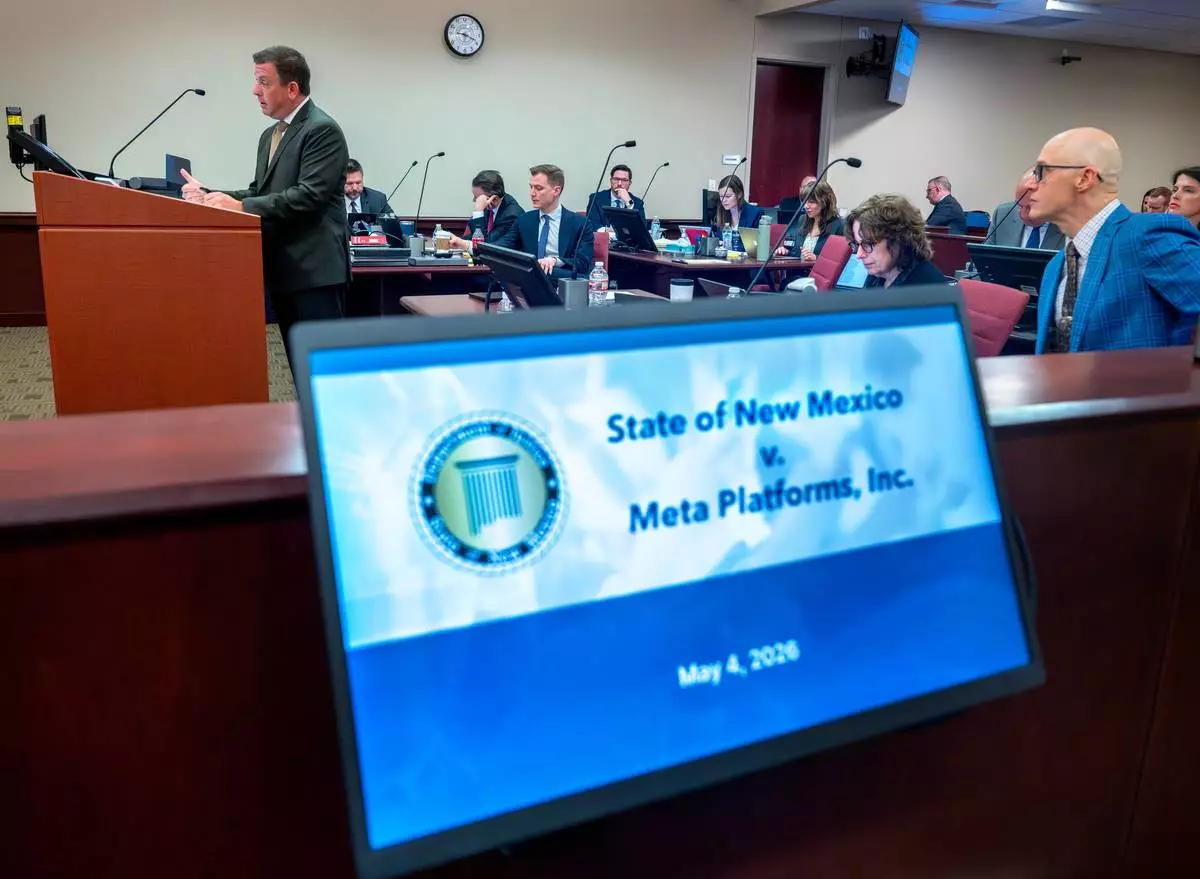
Attorney David Ackerman, left, representing the State, and other attorneys get started on phase 2 of the trial against Meta Platforms, Inc., in Santa Fe, Monday, May 4, 2026.(Eddie Moore/The Albuquerque Journal via AP, Pool)
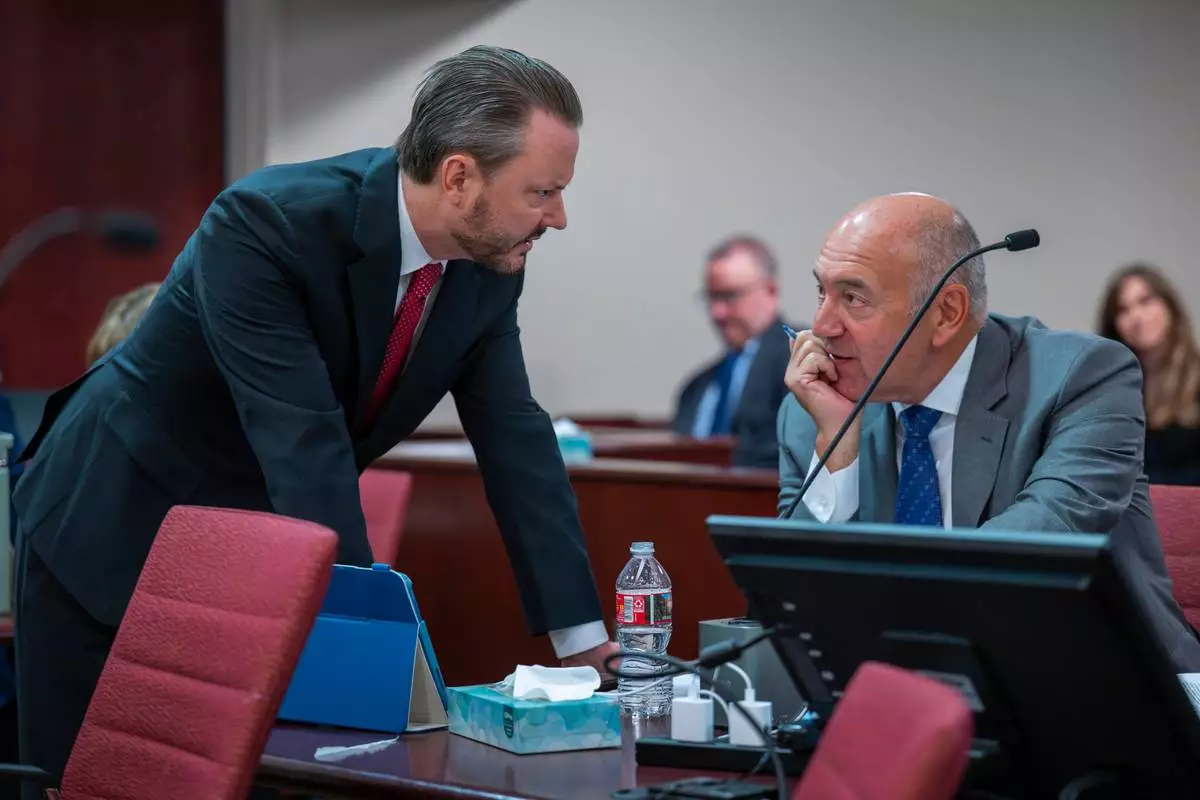
Attorney Kevin Huff, left, representing Meta Platform Inc., and attorney Donald Miglior, for the state, talk at the start of phase 2 of the trial against the social media company, in Santa Fe, N.M., Monday, May 4, 2026. (Eddie Moore/The Albuquerque Journal via AP, Pool)
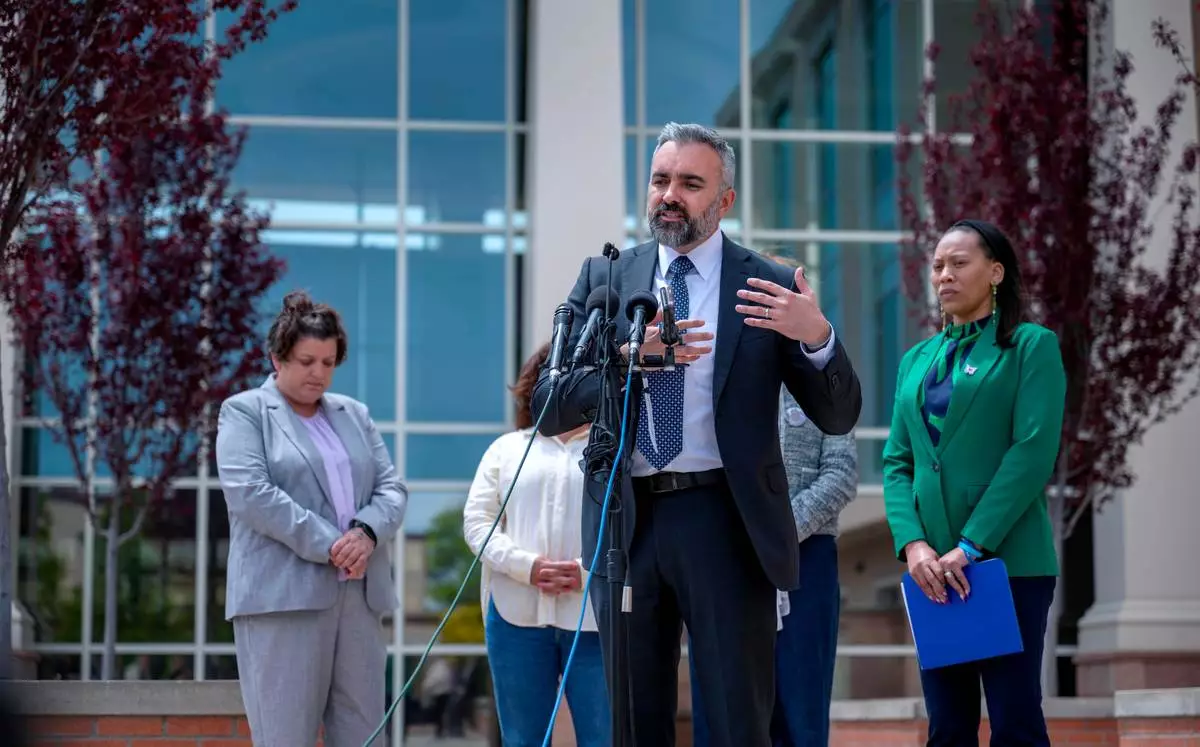
Attorney General Raul Torrez, is joined by a group of mothers advocating for a change to social media, at a news conference outside First District Court, in Santa Fe, N.M., Monday, May 4, 2026. (Eddie Moore/The Albuquerque Journal via AP, Pool)
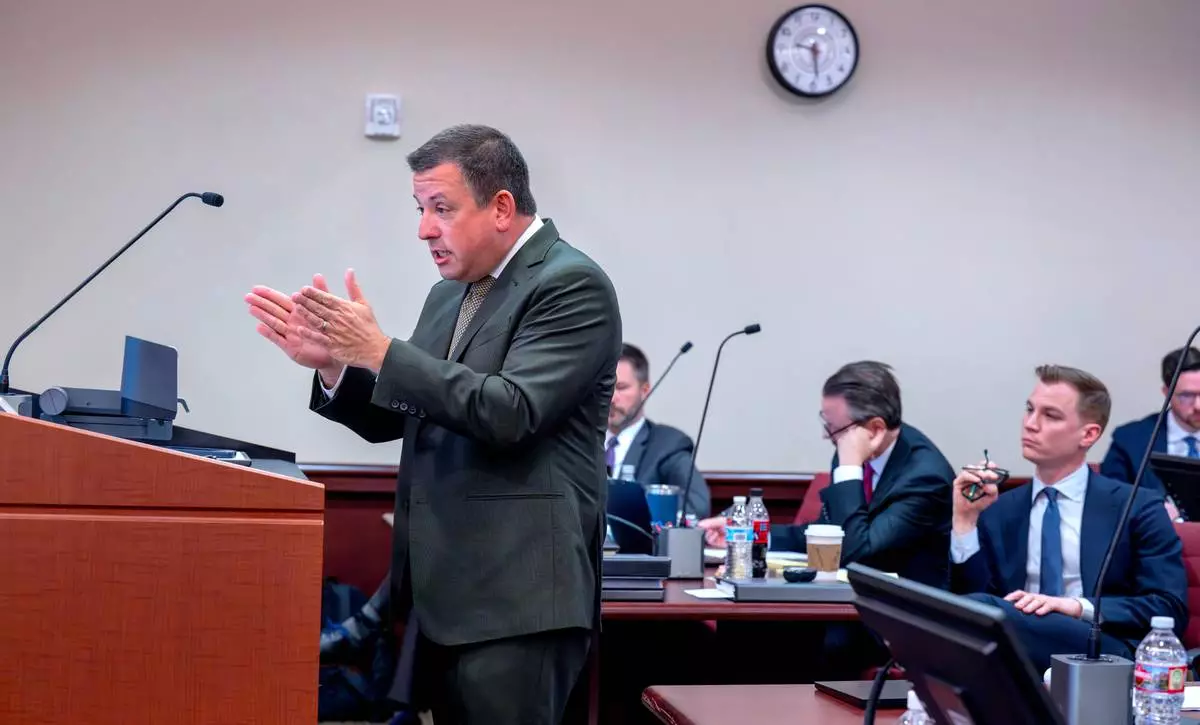
Attorney David Ackerman, left, gave an opening statement for the State, and attorney Alex Parkinson, right, during the opening statement for Meta Platforms Inc., at the start of phase 2 of the trial against the social media company, in Santa Fe, N.M., Monday, May 4, 2026.(Eddie Moore/The Albuquerque Journal via AP, Pool)
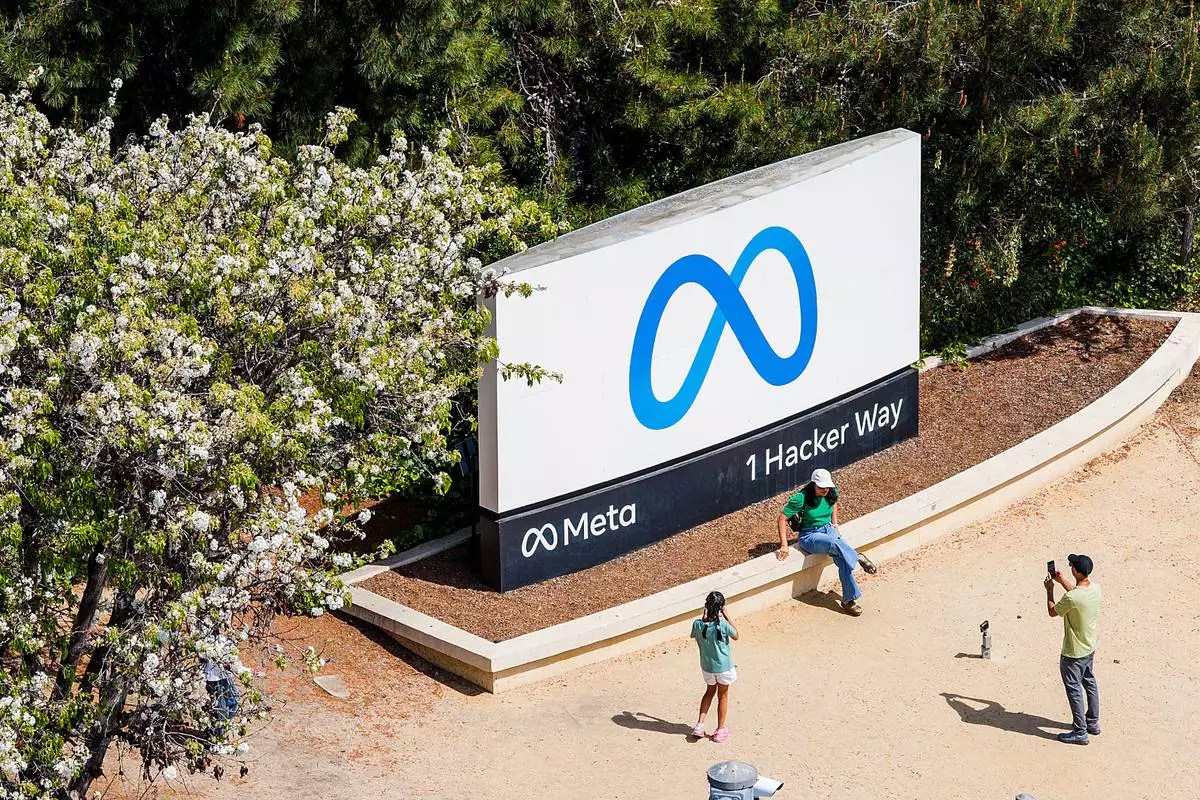
FILE - Visitors take photos at a sign outside Meta headquarters March 26, 2026, in Menlo Park, Calif. (AP Photo/Noah Berger, File)
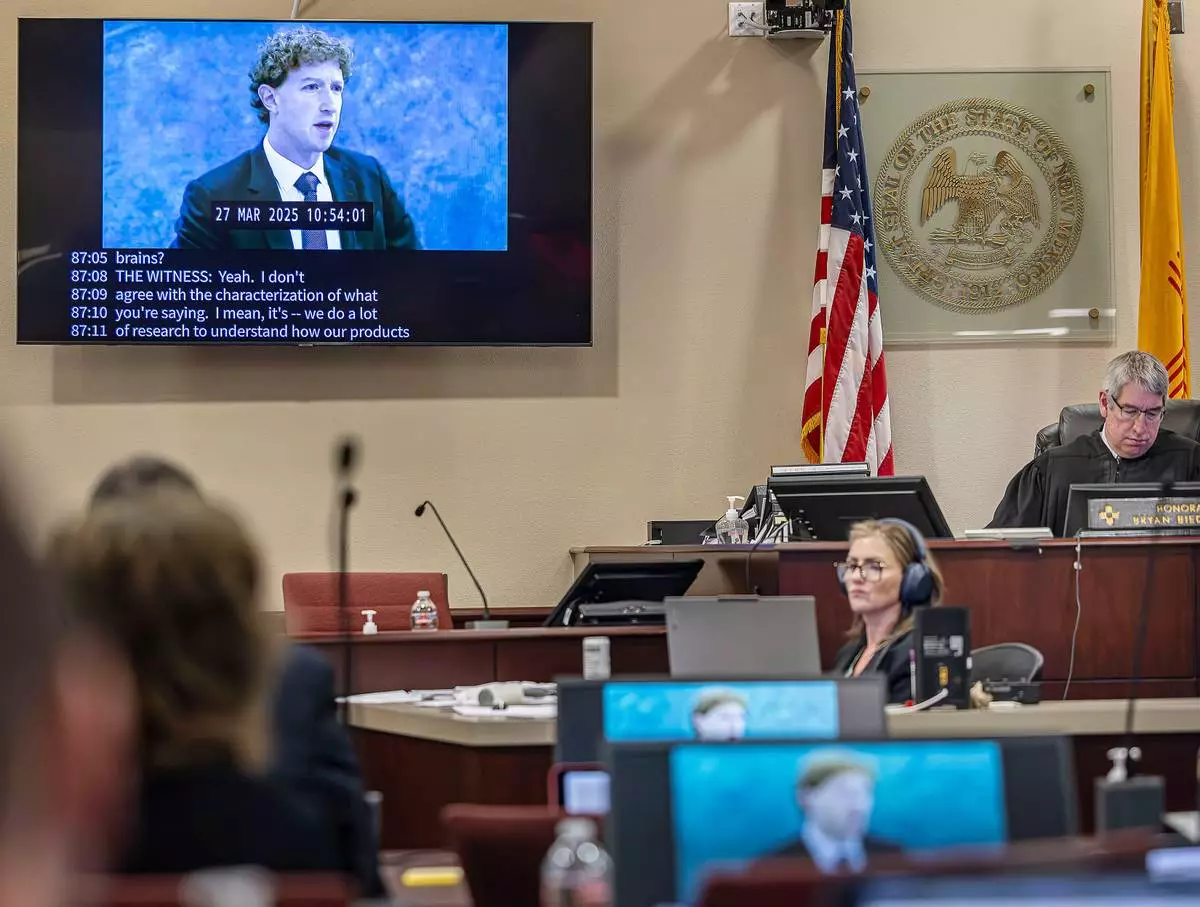
FILE - A recording of Meta Founder and CEO Mark Zuckerberg's deposition is played for the jurors on March 4, 2026, in Santa Fe, N.M. (Jim Weber/Santa Fe New Mexican via AP, Pool, File)