NEW YORK (AP) — The U.S. stock market is rising toward records Tuesday after an easing of oil prices let Wall Street turn its focus back to the big profits that companies keep producing.
The S&P 500 rose 0.6% and was on track to top its all-time high set at the end of last week. The Dow Jones Industrial Average was up 248 points, or 0.5%, as of 10:15 a.m. Eastern time, and the Nasdaq composite was heading toward its own record after climbing 0.7%.
Click to Gallery
Specialist Patrick King works at his post on the floor of the New York Stock Exchange, Friday, May 1, 2026. (AP Photo/Richard Drew)
Options trader Anthony Spina, foreground, works on the floor of the New York Stock Exchange, Thursday, April 30, 2026. (AP Photo/Richard Drew)
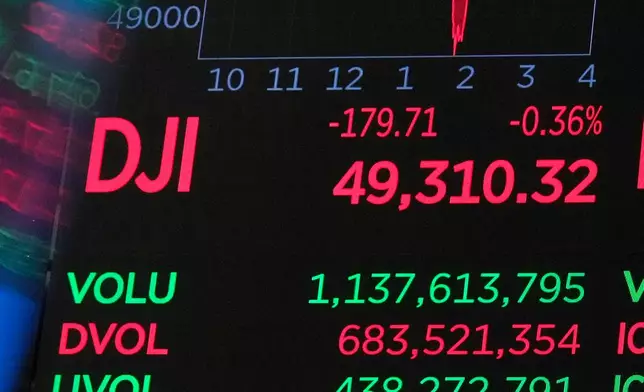
A board above the floor of the New York Stock Exchange displays the closing number for the Dow Jones industrial average, Thursday, April 23, 2026. (AP Photo/Richard Drew)
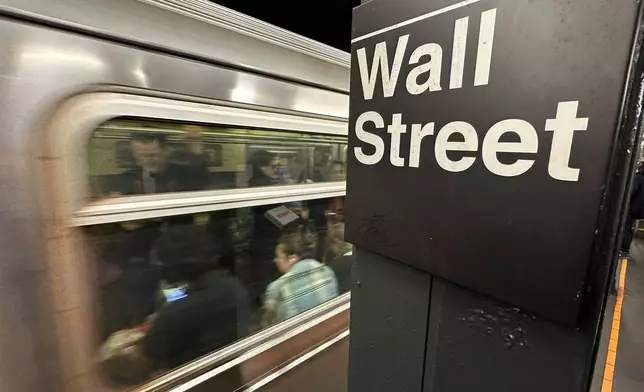
FILE - A train arrives at a Wall Street subway station in New York's Financial District on Nov. 5, 2024. (AP Photo/Peter Morgan, File)
Stocks got a boost after oil prices gave back some of their big jumps from Monday. The price for a barrel of Brent crude, the international standard, fell 3.3% to $110.70 after briefly topping $115 on Monday, though it’s still well above its roughly $70 price from before the war with Iran.
A ceasefire in the war appears to be holding, even after the United Arab Emirates said Monday that Iran fired missiles and drones at it. The U.S. military is trying to force open a path in the Strait of Hormuz, which would allow oil tankers to resume shipments from the Persian Gulf and hopefully bring down the price of crude.
Iran’s powerful parliamentary speaker and chief negotiator, Mohammad Bagher Qalibaf, accused the United States of undermining regional security with the effort to end Iran’s stranglehold on the strait and warned that Tehran will respond.
Even with the war ongoing, the U.S. stock market has remained remarkably resilient on its record-setting run. That’s in large part due to the strong profits that U.S. companies have reported for the start of 2026 despite the rise in oil prices since the end of February.
“This has been a ‘why ask why’ market,'” according to Scott Wren, senior global market strategist at Wells Fargo Investment Institute. “You just have to go with it.”
Even though many risks are still weighing on the market, “investors are looking at earnings” and how much companies are spending on AI data centers and other investments, he said.
DuPont’s stock rallied 8.7% Tuesday after the chemical giant led another cavalcade of companies reporting better-than-expected profits for the latest quarter.
DuPont said its water technologies business felt some impact because of the war with Iran due to logistics disruptions in the Middle East. But it nevertheless raised its forecasts for financial results over the full year due in part to its strong start to 2026.
Other winners included American Electric Power Co., which rose 1.8%, and Cummins, which added 1.7%, after they likewise made more money during the first three months of the year than analysts expected.
Pinterest soared 14% after the online bulletin board topped Wall Street’s first-quarter sales and profit targets as its number of active monthly users jumped 11% to 631 million.
AB InBev likewise topped analysts’ profit forecasts, and it credited growth for its Corona, Stella Artois and Michelob Ultra brands outside of their home markets. “Cheers to beer,” CEO Michel Doukeris said, as the company’s stock that trades in the United States jumped 9.2%.
They helped offset a drop for Palantir Technologies, which fell 4.3% even though it reported stronger results for the latest quarter than analysts expected. Its stock has struggled this year with worries about increased competition, like many software companies have. Its stock is also coming off a huge run where it more than doubled in each of the last three years.
In stock markets abroad, indexes were mixed in Europe. The CAC 40 rose 0.6% in Paris, but the FTSE 100 fell 1.7% in London. Many Asian markets were closed for holidays, as Hong Kong’s Hang Seng fell 0.8%.
Australia’s S&P/ASX 200 slipped 0.2% after the central bank raised its benchmark interest rate to 4.35%, saying conflict in the Middle East had sharply increased fuel and commodity prices that were already adding to inflation.
In the U.S. bond market, Treasury yields eased after oil prices gave back some of Monday’s gains and reports on the U.S. economy came in mixed.
One report said growth for U.S. services businesses unexpectedly decelerated last month, with some companies saying the war is slowing spending. A separate report said U.S. employers were advertising slightly more job openings at the end of March than economists expected, an encouraging signal for the job market.
The yield on the 10-year Treasury fell to 4.42% from 4.45% late Monday.
That’s still well above its 3.97% level from just before the war began. That rise has made mortgages and other kinds of loans for U.S. households and businesses more expensive.
AP Writers Chan Ho-him, Matt Ott and Rod McGuirk contributed.

Specialist Patrick King works at his post on the floor of the New York Stock Exchange, Friday, May 1, 2026. (AP Photo/Richard Drew)

Options trader Anthony Spina, foreground, works on the floor of the New York Stock Exchange, Thursday, April 30, 2026. (AP Photo/Richard Drew)

A board above the floor of the New York Stock Exchange displays the closing number for the Dow Jones industrial average, Thursday, April 23, 2026. (AP Photo/Richard Drew)
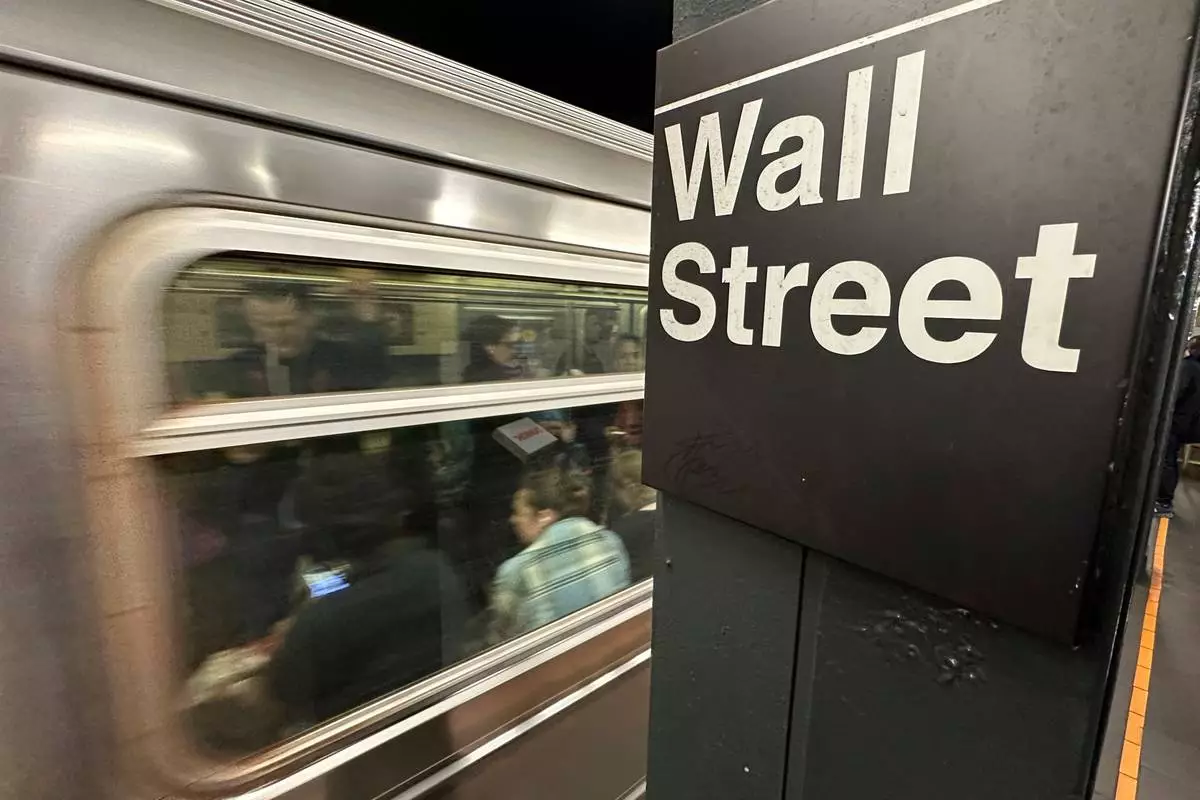
FILE - A train arrives at a Wall Street subway station in New York's Financial District on Nov. 5, 2024. (AP Photo/Peter Morgan, File)
NASHVILLE, Tenn. (AP) — As civil rights advocates protest, Republican lawmakers in several Southern states are seizing on the opportunity afforded by a U.S. Supreme Court ruling to redraw congressional districts ahead of the November midterm elections.
The latest state to jump on the redistricting bandwagon is Tennessee, where a special legislative session is to begin Tuesday, a day after a similar session kicked off in Alabama. In Louisiana, lawmakers also are making plans for new U.S. House districts after the Supreme Court last week struck down the state's current map.
The high court’s ruling said Louisiana relied too heavily on race when creating a second Black-majority House district as it attempted to comply with the Voting Rights Act. The ruling significantly altered a decades-old understanding of the law and gave Republicans in various states grounds to try to eliminate majority-Black districts that have elected Democrats.
It could lessen congressional representation for Black Americans and other minorities, reversing decades of gains in minority voting rights.
President Donald Trump has been encouraging more states to join in redistricting as Republicans seek to hold on to their narrow House majority in this year’s elections.
Alabama lawmakers were to hear testimony Tuesday on legislation that would allow a special congressional primary, if the Supreme Court clears the way for the state to change its U.S. House districts.
In light of the court's ruling on Louisiana's districts, Alabama officials have asked the high court to set aside a judicial order to use a U.S. House map that includes two districts with a substantial number of Black voters and instead let the state revert to a map previously passed by Republican lawmakers. That map could help the GOP win at least one of those two seats currently held by Democrats.
Alabama's primaries are scheduled for May 19. If the Supreme Court grants the state's request after or too close to the primary, the legislation under consideration would ignore the results of that primary and direct the governor to schedule a new primary under the revised districts.
“This is the voice of the people,” Alabama House Speaker Nathaniel Ledbetter said while promoting the Republican plan. “We had three judges determine how five million people were supposed to vote, and I don’t think that’s the way.”
Several hundred people protested Monday shortly before Alabama's special session began, some carrying signs declaring “No new map” and “We fight back! Black Voters Matter.” Opponents of the redistricting session gathered across the street from the historic Alabama Capitol, where the Confederacy was formed in 1861 and where the Rev. Martin Luther King Jr. addressed a crowd of thousands after the 1965 Selma-to-Montgomery voting rights march.
“Much blood, sweat and tears was shed in an effort for us to gain the right to vote,” said Sheyann Webb-Christburg, who as a child participated in the 1965 Bloody Sunday voting rights march in Selma. “In 2026, there are still people who are still not exercising that right to vote, and we are still fighting today, even in an effort to keep our right to vote.”
Republican Gov. Bill Lee called Tennessee lawmakers into a special session to consider a plan that could break up the state’s lone Democratic-held U.S. House district, centered on the majority-Black city of Memphis. The move comes after pressure from Trump.
The candidate qualifying period in Tennessee ended in March, and the primary election is scheduled for Aug. 6.
Clergy members concerned about plans to split Memphis’ congressional district denounced the move on Monday.
“This latest attempt at redistricting is not just about lines on a map. It is about misrepresentation,” said the Rev. Earle Fisher, a pastor at the Abyssinian Missionary Baptist Church and the founder of Up the Vote 901, referring to the Memphis area code. “It’s about whether the voices of Black people in this state will be heard or hidden.”
After last week’s Supreme Court decision, Louisiana moved to delay its May 16 congressional primary to allow time for lawmakers to approve new U.S. House districts.
Louisiana state Sen. Caleb Kleinpeter, a Republican who chairs a Senate committee tasked with redistricting, told The Associated Press that his committee plans to hold a public hearing Friday. Kleinpeter said lawmakers are still weighing their options, including bills that would eliminate one or both of the state’s two majority-Black Congressional districts.
Democrats and civil rights groups have filed several lawsuits challenging the suspension of Louisiana's congressional primary, including another filed Monday in federal court. They are encouraging people in Louisiana — where early voting already is underway — to go ahead and cast votes in the congressional primaries in case courts later allow them to be counted.
Legislative voting districts typically are redrawn only once a decade, after a census, to account for population changes. But Trump urged Texas Republicans last year to redraw U.S. House districts to give the party an advantage. Democrats in California responded by doing the same, and then other states joined in.
Florida became the eighth state to enact new House districts when Republican Gov. Ron DeSantis announced on Monday he had signed a redrawn map passed by the GOP-controlled Legislature. It could help Republicans win as many as four additional House seats. The new map was immediately challenged in court as a partisan gerrymander that violates a Florida constitutional provision against drawing districts that favor one political party over another.
All told, Republicans think they could gain as many as 13 seats from new congressional districts in five states, while Democrats think they could pick up as many as 10 seats from new districts adopted in three states. The newly proposed redistricting in Southern states could add to the Republicans’ tally.
Chandler reported from Montgomery, Alabama, and Lieb from Jefferson City, Missouri. Associated Press writers Jack Brook in New Orleans and Nicholas Riccardi in Denver contributed to this report.
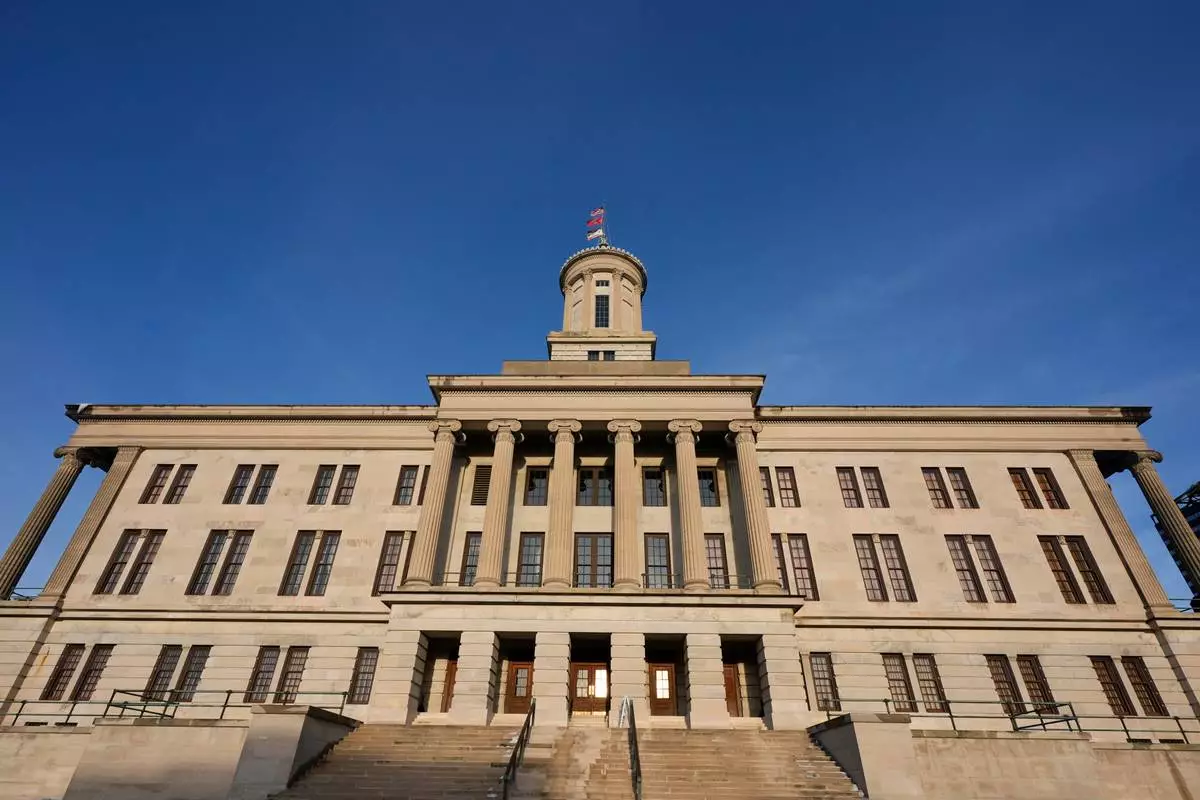
FILE - The Tennessee Capitol is seen, Jan. 22, 2024, in Nashville, Tenn. (AP Photo/George Walker IV, File)