WASHINGTON (AP) — White House economists estimate that President Donald Trump's deals with pharmaceutical companies to drop some of their U.S. prescription drug prices to what they charge in other countries could save $529 billion over the next 10 years.
The analysis obtained by The Associated Press includes the first economy-wide projections behind a policy at the core of Trump's pitch to voters going into November’s midterm elections for control of the House and Senate. Democratic lawmakers have been doubtful about the savings claimed by Trump and these new numbers are likely to trigger additional questions about the data.
Cost-of-living issues are at the forefront of voters' concerns and higher energy prices tied to the Iran war have deepened the public's anxiety. Trump has tried in part to address affordability concerns by focusing on his efforts to cut deals with companies so that the cost of prescription drugs in the U.S. would no longer be dramatically higher than in other affluent nations.
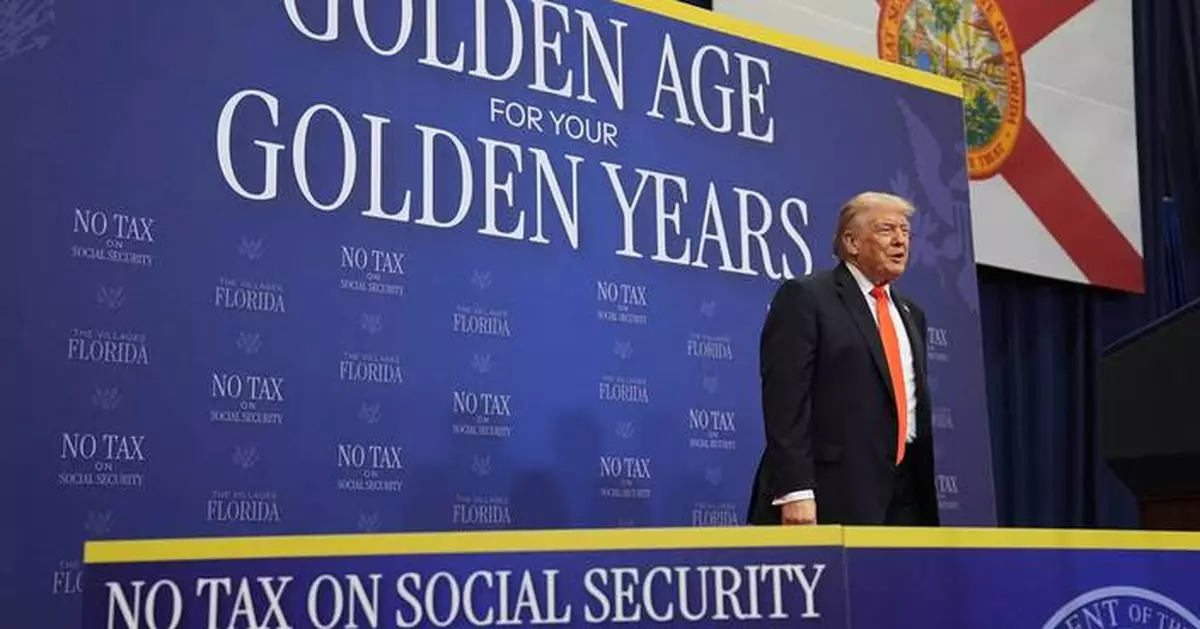
“Now you have the lowest drug prices anywhere in the world,” Trump said at a Friday rally before a crowd of seniors in Florida. “And that alone should win us the midterms.”
The analysis was done by administration officials for the White House Council of Economic Advisers. They also estimated that federal and state governments could save a combined $64.3 billion on Medicaid during the next decade because of what Trump calls his “most favored nation” policy on drug prices.
Few of the details of the deals struck by the Trump administration and 17 leading pharmaceutical companies have been made public, making it hard to independently verify the projected savings. The White House analysis sought to estimate the prospective savings as more medications come onto the market and fall under Trump's framework — with one model in the report tallying the possible savings at $733 billion over a decade.
Trump and his Department of Health and Human Services have touted his drug-pricing deals as transformative and urged Congress to codify their principles into law. Democratic lawmakers have challenged the administration's claims of savings. Senate Finance Committee Ranking Member Ron Wyden, D-Ore., and 17 Senate Democrats in April proposed a measure requiring the administration to disclose the terms of the agreements signed by pharmaceutical companies.
“If these deals are so great, why is the Trump administration afraid of showing them to the public?” Wyden said when announcing the measure. Health Secretary Robert F. Kennedy Jr. said his team would share details that didn’t include proprietary information or trade secrets.
The potential savings estimated by the Trump administration would be substantial as Americans spent $467 billion on prescription drugs in 2024, according to the most recent government data available. The analysis is premised on the idea that foreign countries would also pay more for their prescription drugs, which would diversify drugmakers' sources of revenue and preserve their ability to innovate with new treatments.
The Congressional Budget Office in October 2024 estimated that a plan similar to what Trump ended up adopting could reduce prescription drug prices by more than 5%, though the decrease “would probably diminish over time as manufacturers adjusted to the new policy by altering prices or distribution of drugs in other countries.”
The scope of the savings claimed by the Trump administration are likely to intensify the scrutiny by Democrats, who counter that any price reductions would be offset by higher costs for prescription drugs not covered by the “most favored nation” framework. One of their main critiques is that pharmaceutical companies have increased their profit margins while working with the administration.
In April, staff working for Sen. Bernie Sanders, I-Vt., released an analysis that looked at 15 of the companies that have agreed to this drug-pricing plan and found that their combined profits jumped 66% over the past year to $177 billion. The report noted that the tax cuts Trump signed into law last year “exempted or delayed many of the most expensive drugs” from price negotiations with Medicare.
The Trump administration has countered that they consider Sanders' critique to be flawed, saying that it's based on the list prices for pharmaceutical drugs instead the actual price that patients pay.
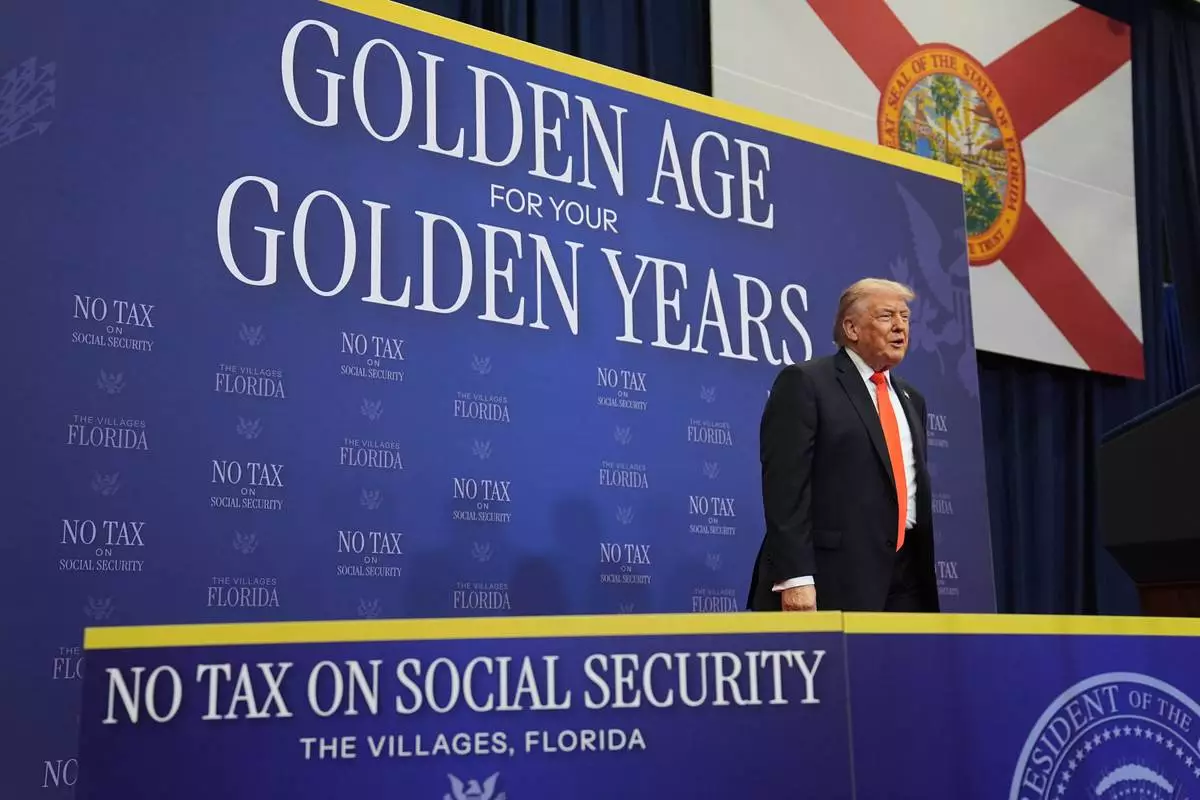
President Donald Trump arrives to speak at a charter school in The Villages, Fla., Friday, May 1, 2026. (AP Photo/Matt Rourke)
BUCHAREST, Romania (AP) — Romania’s pro-European coalition collapsed Tuesday after lawmakers voted against Prime Minister Ilie Bolojan, less than a year after he was sworn in, triggering fresh turmoil in the European country.
The no-confidence vote was a blow to Bolojan, who came to power with the aim of ending one of Romania’s worst political crises in its post-communist history.
The leftist Social Democratic Party, or PSD, and the hard-right opposition Alliance for the Unity of Romanians party, or AUR, jointly submitted the motion to Parliament on April 28. PSD withdrew from the coalition last month. On Tuesday, 281 lawmakers voted in favor and four voted against.
Lawmakers from Bolojan’s center-right National Liberal Party, or PNL, and coalition partners, Save Romania Union party and the small ethnic Hungarian UDMR party, abstained.
Romania has faced a long period of instability after the annulment of a presidential election in December 2024. The country has also grappled with one of the highest budget deficits in the European Union, rampant inflation, and a technical recession. In June, when the coalition was voted in, it pledged to reduce the budget deficit, marking it a top priority.
The PSD had often found itself at loggerheads with Bolojan over austerity measures, including tax hikes, public-sector wage and pension freezes, and cuts to state spending and public administration jobs.
Last week, the party accused Bolojan of “failing to implement any genuine reform” in his 10 months leading the government, and said Romania needs a leader who is “capable of collaboration.” Bolojan said that he took tough but necessary fiscal measures that effectively “regained the trust of the markets in the Romanian government.”
Bolojan also called the no-confidence motion “cynical and artificial” and said before the vote that it “seems to be written by people who were not in government every day and did not participate in all the decisions.”
“It is cynical, because it does not take into account the context in which we find ourselves,” he said. “I assumed the position of prime minister, being aware that it comes with enormous pressure and that I would not receive applause from the citizens. But I chose to do what was urgent and necessary for our country.”
The leftist party's president, Sorin Grindeanu, said Bolojan should appoint an interim prime minister until one is voted into office by lawmakers. He also said he expected Romanian President Nicusor Dan to consult PSD.
“I would like us to quickly find a solution … together with the other parties and move forward,” Grindeanu said. “All options are open.”
The secretary-general of Bolojan's party, Dan Motreanu, posted on social media, saying PSD and AUR “have a duty to take over the government, to come up with a prime minister candidate and a clear program,” accusing the two parties of “playing political theater.”
“You cannot overthrow a government and then run away from accountability,” Motreanu wrote, adding that “any signal of political chaos” negatively affects the country's economy and people.
The PSD would be needed to form a pro-European parliamentary majority. The leftist party has previously ruled out forming a government with AUR, whose leader, George Simion, said Tuesday that voters had “supported and wanted water, food, energy,” but had “received taxes, war and poverty.”
Cristian Andrei, a Bucharest-based political consultant, said the crisis will likely lead to a stalemate, since “no one has a majority, or a coalition, and it will take the president ... weeks to find such a majority and name a new prime minister, prolonging the indecision.”
“At this moment, there are two tentative options for a new Cabinet, both difficult to achieve; either a reshuffled coalition, without Bolojan, in the same formation ... or a minority Cabinet, rather led by PSD and satellites from populist parties, like AUR, or other small groups,” he said. “A PSD-AUR official Cabinet is not a possibility today because the president will not endorse it.”
The prime ministerial position was set to be rotated in 2027 from Bolojan to a PSD premier as part of a power-sharing agreement. A general election is scheduled for 2028.
McGrath reported from Leamington Spa, England.
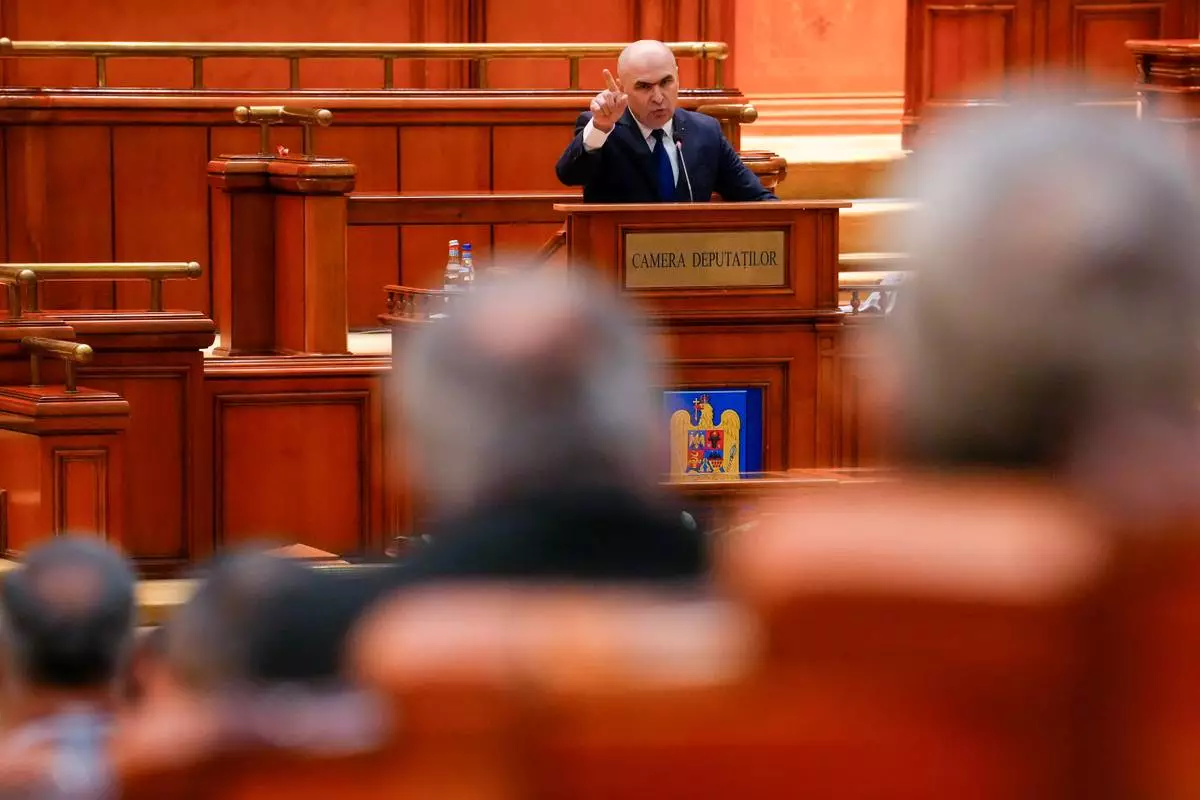
Romanian Prime Minister Ilie Bolojan addresses a parliament session ahead of a no confidence vote in Bucharest, Romania, Tuesday, May 5, 2026. (AP Photo/Vadim Ghirda)
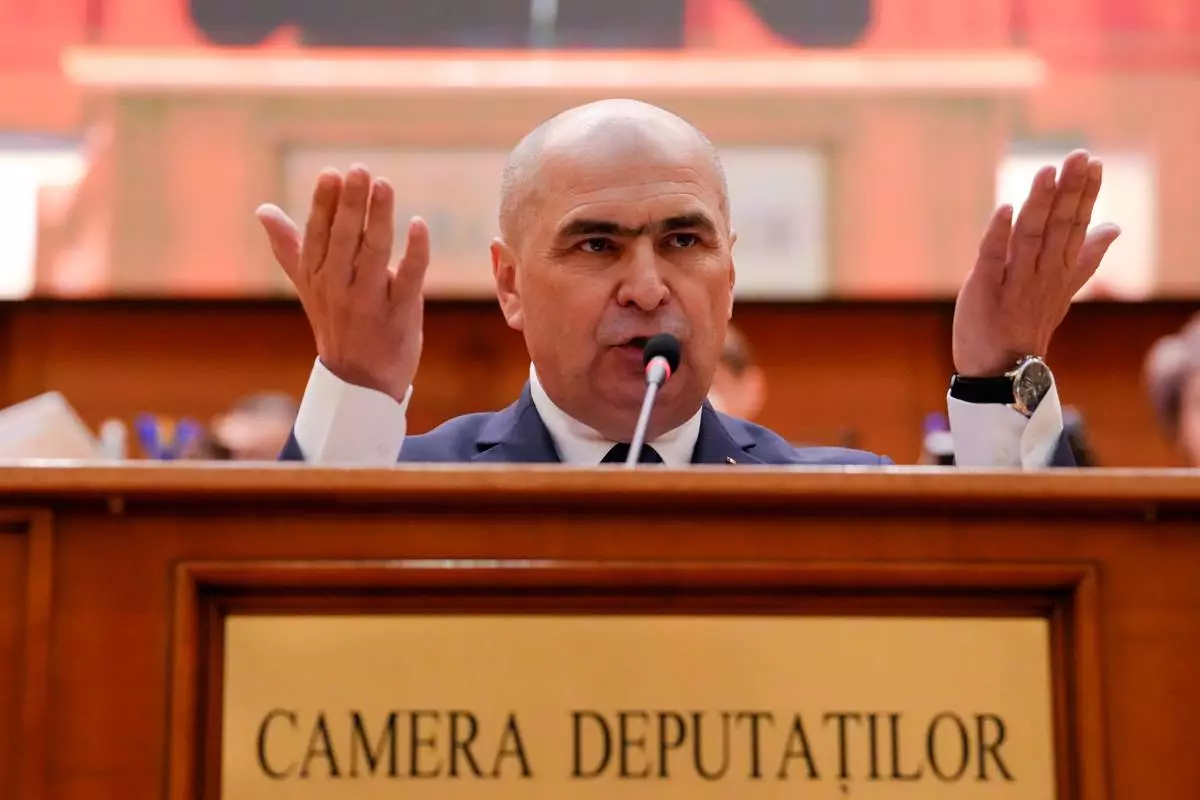
Romanian Prime Minister Ilie Bolojan addresses a parliament session ahead of a no confidence vote in Bucharest, Romania, Tuesday, May 5, 2026. (AP Photo/Vadim Ghirda)
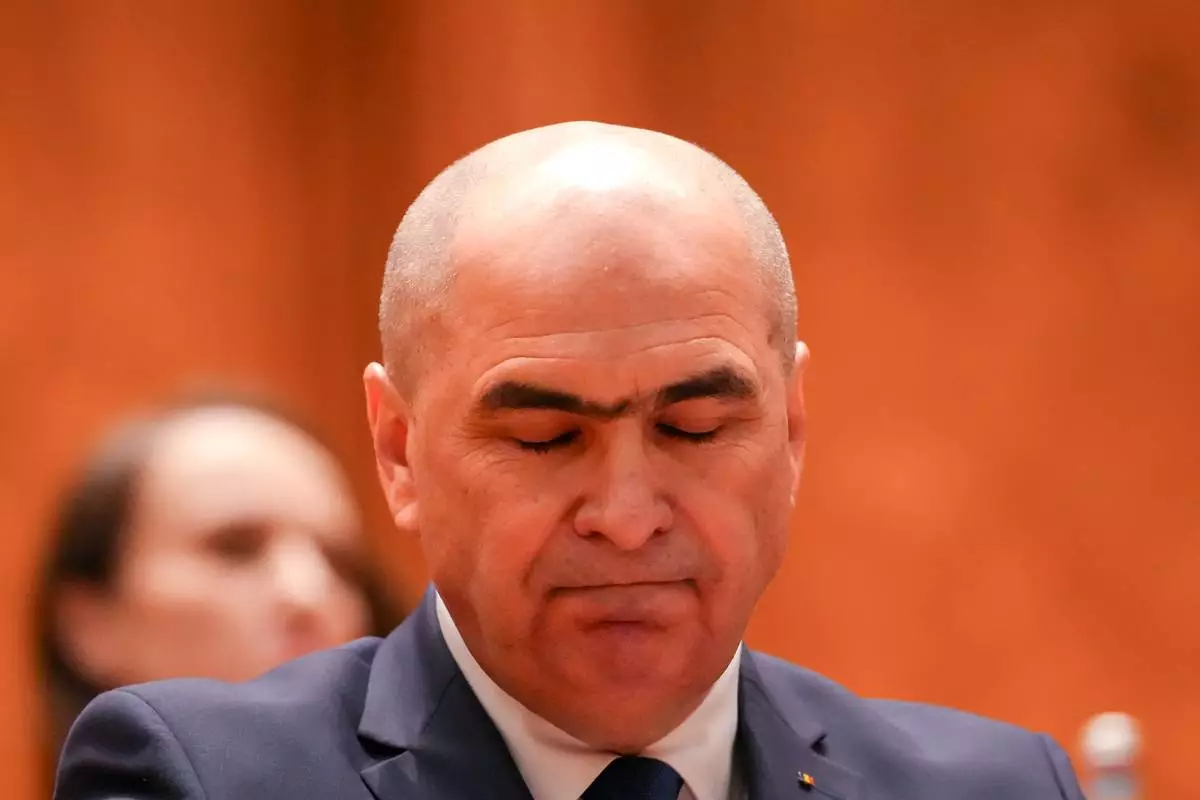
Romanian Prime Minister Ilie Bolojan reacts during a parliament session ahead of a no confidence vote in Bucharest, Romania, Tuesday, May 5, 2026. (AP Photo/Vadim Ghirda)
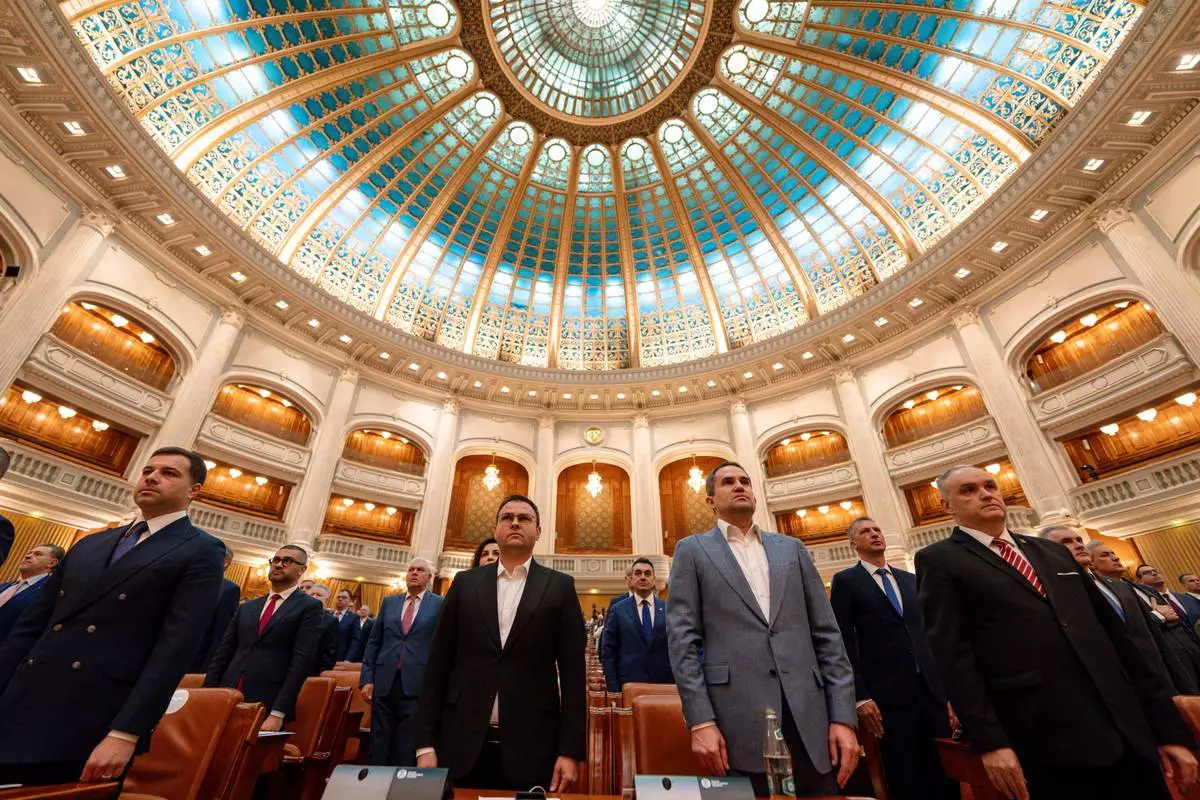
Romanian lawmakers stand during the anthem ahead of a no confidence vote against Prime Minister Ilie Bolojan's government in Romania's parliament in Bucharest, Romania, Tuesday, May 5, 2026. (AP Photo/Vadim Ghirda)
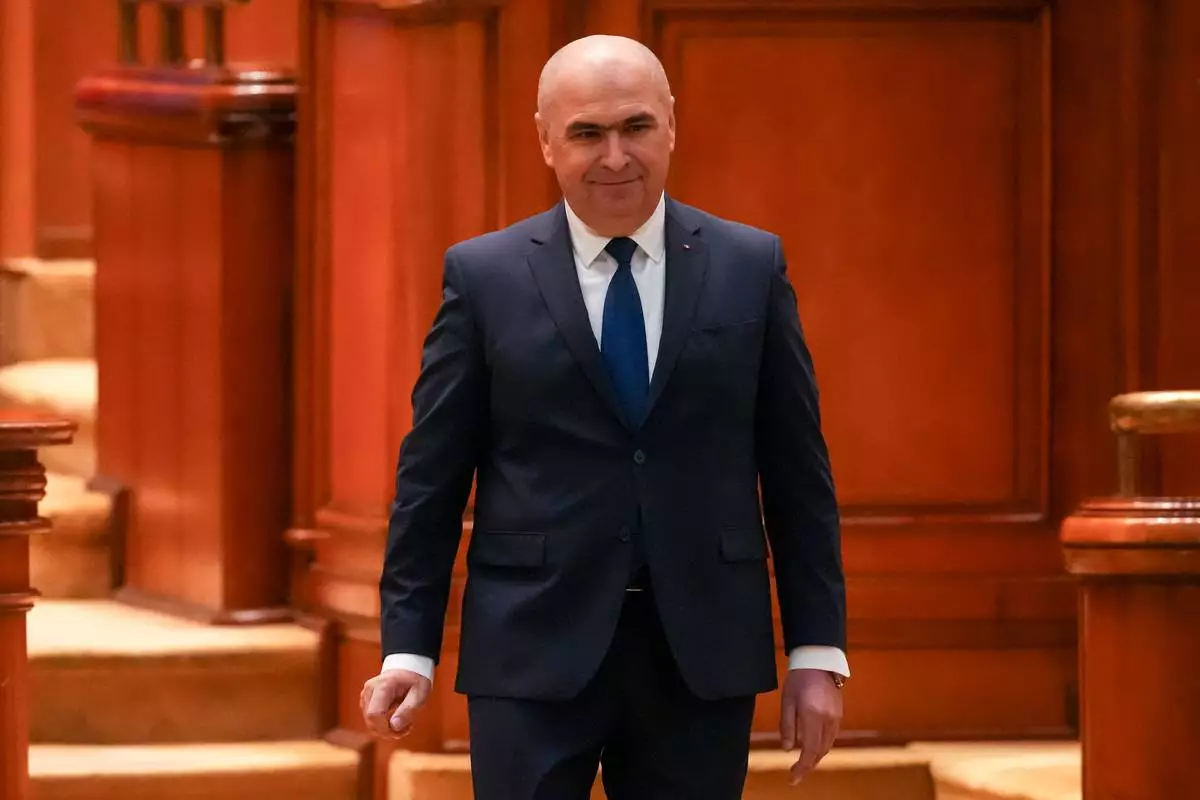
Romanian Prime Minister Ilie Bolojan arrives at a parliament session ahead of a no confidence vote in Bucharest, Romania, Tuesday, May 5, 2026. (AP Photo/Vadim Ghirda)