ROME (AP) — Top-ranked Aryna Sabalenka believes tennis players should organize a boycott if they don’t start receiving a bigger share of tournament revenues at the Grand Slams.
Sabalenka and fellow No. 1 Jannik Sinner were among leading players — most of them ranked in the top 10 — who issued a statement on Monday expressing “deep disappointment” over the French Open prize money.
Click to Gallery
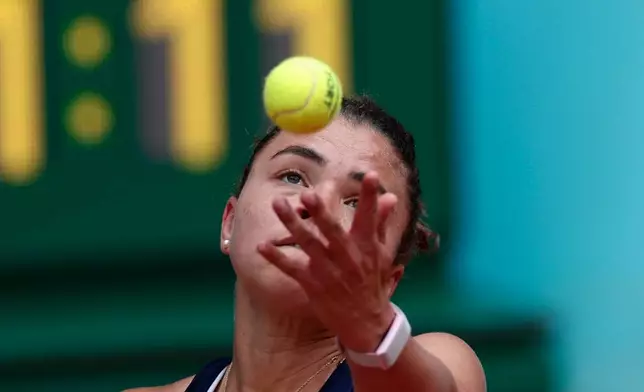
Jasmine Paolini of Italy serves to Hailey Baptiste of the U.S. during the Madrid Open tennis tournament in Madrid, Saturday, April 25, 2026. (AP Photo/Pablo Garcia)
Jannik Sinner, of Italy, holds the trophy after winning the men's singles tennis final match against Alexander Zverev, of Germany, at the Madrid Open tennis tournament in Madrid, Spain, Sunday, May 3, 2026. (AP Photo/Manu Fernandez)
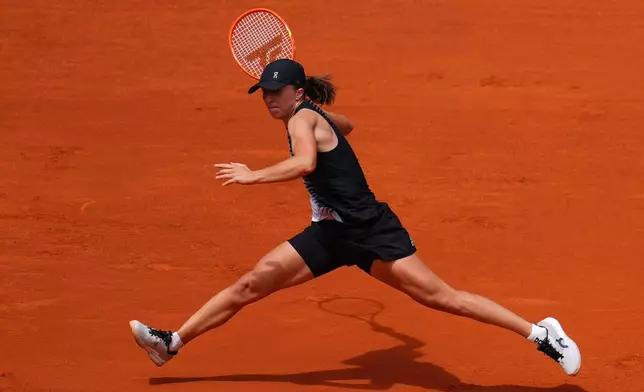
Iga Swiatek of Poland in action against Daria Snigur of Ukraine during their round of 64 match at Madrid Open tennis tournament in Madrid, Spain, Thursday, April 23, 2026. (AP Photo/Manu Fernandez)
Aryna Sabalenka, of Belarus, returns the ball to Hailey Baptiste, of the United States, during the Madrid Open tennis tournament in Madrid, Tuesday, April 28, 2026. (AP Photo/Manu Fernandez)
Aryna Sabalenka of Belarus celebrates a point during her match against Hailey Baptiste of the U.S. during the Madrid Open tennis tournament in Madrid, Tuesday, April 28, 2026. (AP Photo/Manu Fernandez)
“Without us there wouldn’t be a tournament and there wouldn’t be that entertainment. I feel like definitely we deserve to be paid more percentage,” Sabalenka said on Tuesday at the Italian Open as she celebrated her 28th birthday.
“I think at some point we will boycott it. I feel like that’s going to be the only way to fight for our rights.”
The players are also seeking better representation, health options and pensions from the four Grand Slam tournaments: Australian Open, French Open, Wimbledon and U.S. Open.
French Open organizers announced last month they were increasing overall prize money by about 10% for an overall pot of 61.7 million euros ($72.1 million), with the total amount up 5.3 million euros from last year.
Men’s and women’s singles champions in Paris will each receive 2.8 million euros and the runners-up 1.4 million euros. Semifinalists earn 750,000 euros and first round losers get 87,000 euros.
But the players’ statement said “the underlying figures tell a very different story,” claiming they will receive a smaller share of tournament revenues.
“Players’ share of Roland Garros tournament revenue has declined from 15.5% in 2024 to 14.9% projected in 2026,” the players said.
Iga Swiatek, a four-time French Open champion, said “the most important thing is to have proper communication and discussions with the governing bodies so we have some space to talk and maybe negotiate.
“Hopefully before Roland Garros there’s going to be opportunity to have these type of meetings and we’ll see how they go,” Swiatek added. “But boycotting the tournament, it’s a bit extreme kind of situation.”
The players statement said Roland Garros generated 395 million euros in revenue in 2025, a 14% year-on-year increase, yet prize money rose by just 5.4%, reducing players’ share of revenue to 14.3%.
“With estimated revenues of over 400 million euros for this year’s tournament, prize money as a percentage of revenue will likely still be less than 15%, far short of the 22% that players have requested to bring the Grand Slams into line with the ATP and WTA Combined 1000 events,” the players said.
French Open organizers did not respond to a request for comment after the players issued their statement.
The Australian Open this year increased the players’ compensation by 16%, and the U.S. Open prize money last year went up by 20%.
Jasmine Paolini, the Italian who reached the final of the French Open and Wimbledon in 2024, also suggested a boycott could be an option.
“If we’re all in agreement and I think we are — the men and the women are united right now — it’s something we could do,” Paolini said.
Paolini added that the WTA and ATP Tours — which organize all of the other tournaments — have done more than the Grand Slams to provide players with benefits, such as maternity leave, and retirement plans.
“There’s a lot of things that the Slams are not doing," Paolini said, “that the WTA and I think the ATP are doing.”
The French Open starts on May 24.
AP tennis: https://apnews.com/hub/tennis
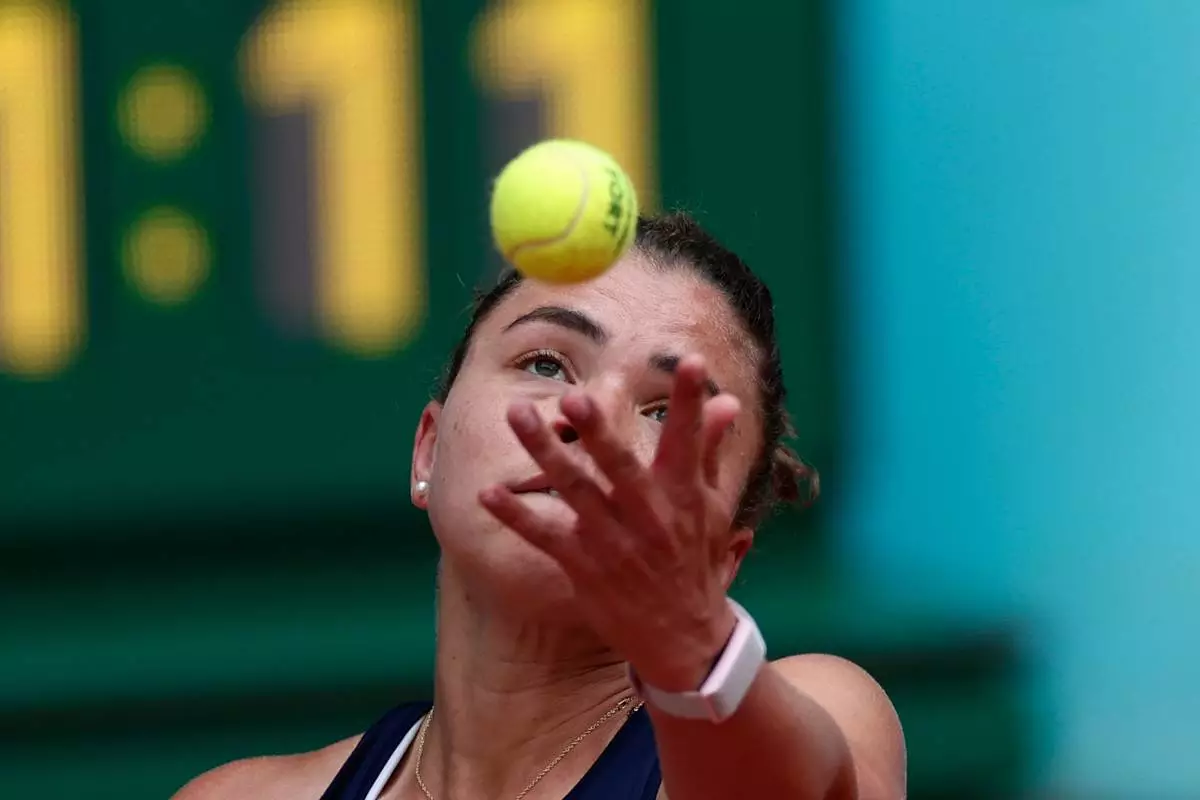
Jasmine Paolini of Italy serves to Hailey Baptiste of the U.S. during the Madrid Open tennis tournament in Madrid, Saturday, April 25, 2026. (AP Photo/Pablo Garcia)
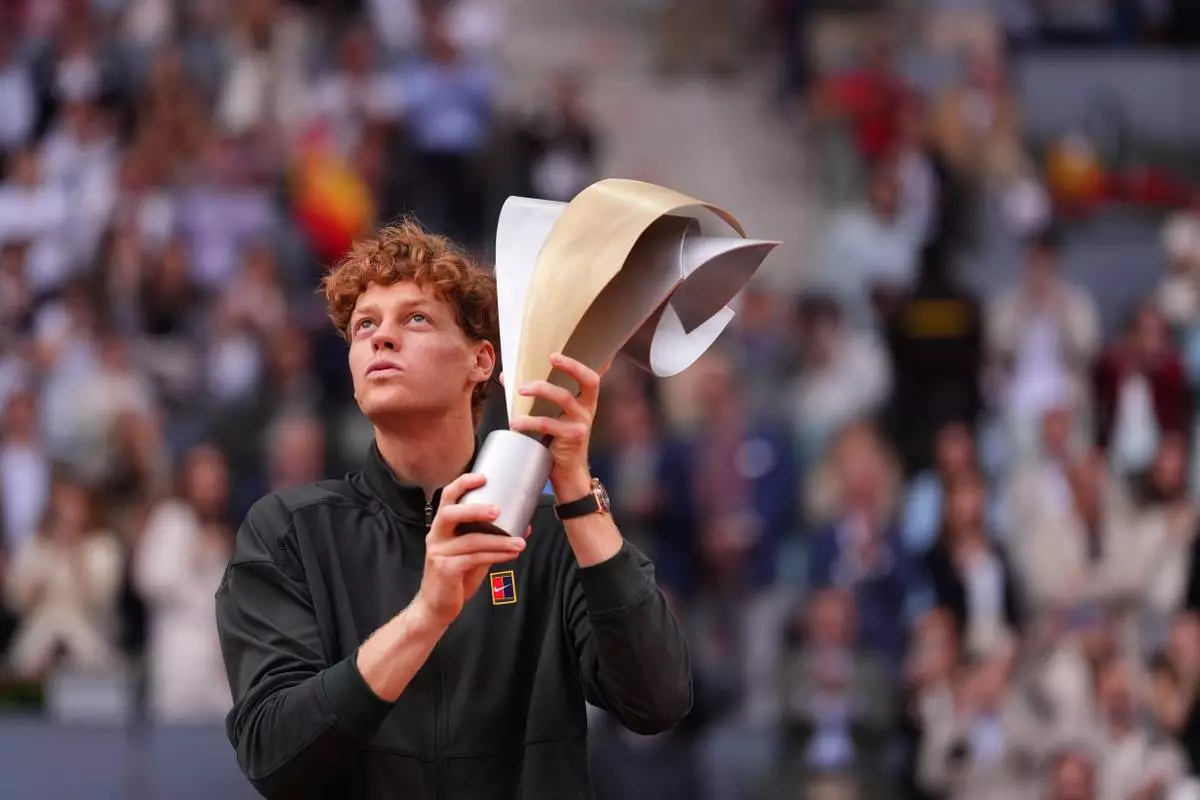
Jannik Sinner, of Italy, holds the trophy after winning the men's singles tennis final match against Alexander Zverev, of Germany, at the Madrid Open tennis tournament in Madrid, Spain, Sunday, May 3, 2026. (AP Photo/Manu Fernandez)
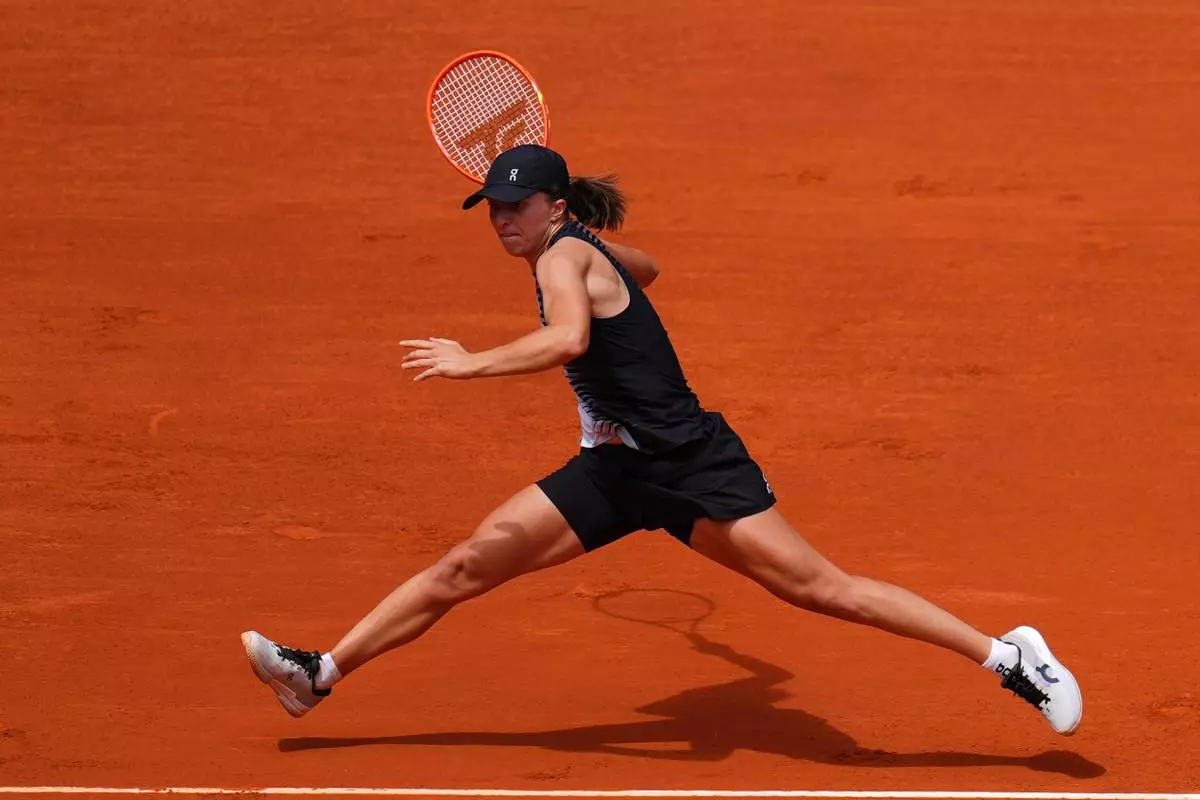
Iga Swiatek of Poland in action against Daria Snigur of Ukraine during their round of 64 match at Madrid Open tennis tournament in Madrid, Spain, Thursday, April 23, 2026. (AP Photo/Manu Fernandez)
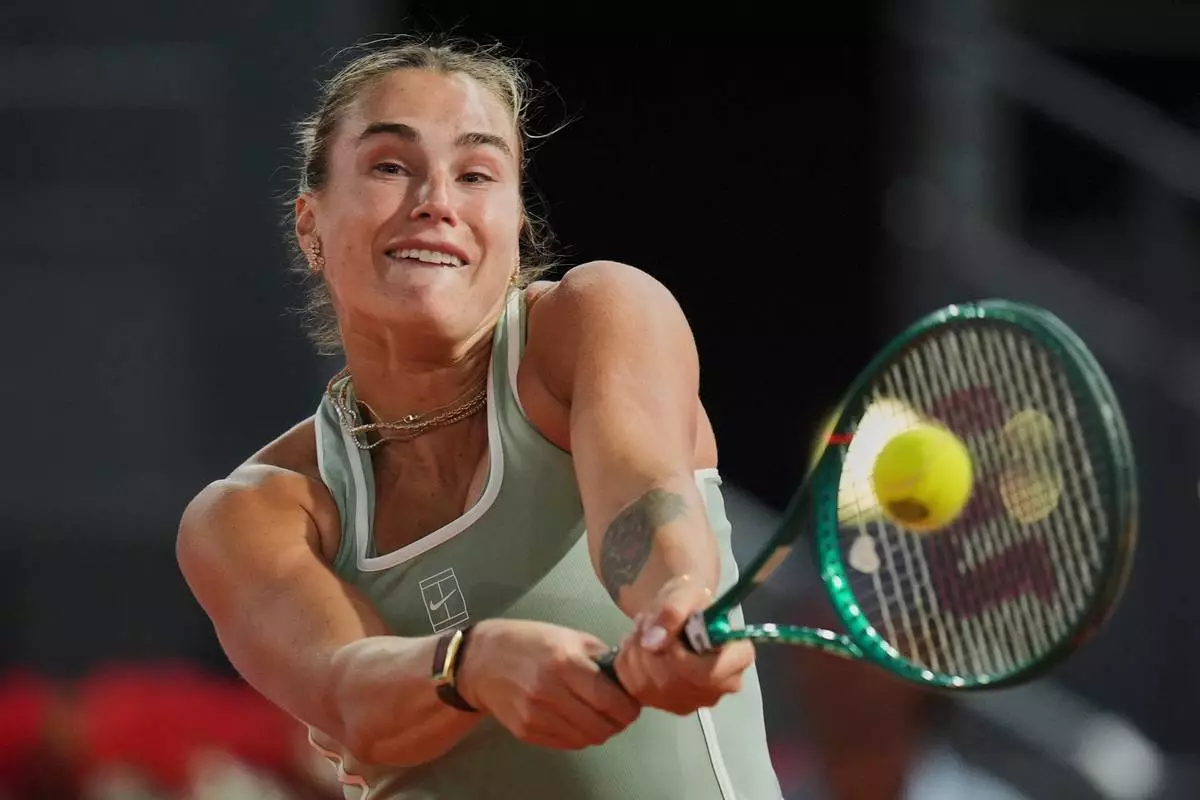
Aryna Sabalenka, of Belarus, returns the ball to Hailey Baptiste, of the United States, during the Madrid Open tennis tournament in Madrid, Tuesday, April 28, 2026. (AP Photo/Manu Fernandez)

Aryna Sabalenka of Belarus celebrates a point during her match against Hailey Baptiste of the U.S. during the Madrid Open tennis tournament in Madrid, Tuesday, April 28, 2026. (AP Photo/Manu Fernandez)
DUBAI, United Arab Emirates (AP) — U.S. military leaders said Tuesday that a ceasefire with Iran remains in effect a day after Tehran was blamed for new attacks in the Strait of Hormuz and against the United Arab Emirates.
The fragile truce, reached nearly a month ago, appeared to be holding as U.S. forces pressed ahead with efforts to reopen the vital waterway for global energy. On Monday, the U.S. said it sank six small Iranian boats that had threatened commercial ships.
So far, only two merchant ships are known to have passed through a new U.S.-guarded route, with hundreds more bottled up in the Persian Gulf. It's unclear whether continued U.S. military action will reassure shippers without reigniting the conflict that began with U.S. and Israeli strikes on Iran on Feb. 28.
The UAE, a key American ally, said it came under attack by Iranian missiles and drones for a second straight day on Tuesday. At least three people were wounded in attacks the day before, and a drone sparked a fire at a key oil facility in the eastern emirate of Fujairah.
Iran’s effective closure of the strait, through which major oil and gas supplies passed before the war, along with fertilizer and other petroleum-derived products, has sent fuel prices skyrocketing and rattled the global economy. Breaking Iran's grip would deny its main source of leverage as U.S. President Donald Trump demands a major rollback of its disputed nuclear program.
U.S. Defense Secretary Pete Hegseth and Gen. Dan Caine, the U.S. military’s top officer, told a news conference Tuesday that Iran’s renewed aggression hadn’t reached the threshold of what Caine called “major combat operations.” He said Tuesday marked a “quieter” day in the strait.
“No, the ceasefire is not over,” Hegseth said, affirming Caine’s assessment. They spoke before the latest attacks on the UAE.
Iran has said the new effort does violate the ceasefire. Iran’s parliament speaker and chief negotiator, Mohammad Bagher Qalibaf, accused the U.S. of undermining regional security. In a post on X, he signaled that Iran has yet to fully respond to the U.S. attempt to reopen the waterway.
“We know full well that the continuation of the status quo is intolerable for America; while we have not even begun yet,” he said. His statement did not mention negotiations with the U.S. that are now in the form of passing messages via Pakistan.
Disputing Washington’s claim of sinking six boats, an Iranian military commander said two small civilian cargo boats were hit on Monday, killing five civilians, Iran’s state TV reported.
Caine, the top U.S. general who serves as chairman of the Joint Chiefs of Staff, said more than 100 U.S. military aircraft are patrolling skies around the strait.
“Since the ceasefire was announced, Iran has fired at commercial vessels nine times and seized two container ships, and they’ve attacked U.S. forces more than 10 times – all below the threshold of restarting major combat operations at this point,” Caine said.
The administration has cited the April 8 ceasefire in asserting that the president does not have to give a formal update to Congress on the war under the War Powers Resolution. That law typically requires presidents to seek formal approval from Congress for war activities 60 days after beginning military action.
So far, just two civilian vessels, both U.S.-flagged merchant ships, are known to have passed through the strait as part of the lane the U.S. says it has created.
“At this point in time our risk assessment remains unchanged,” Hamburg, Germany-based shipping company Hapag-Lloyd AG said in a statement. “Transits through the Strait of Hormuz are for the moment not possible for our ships.”
Ship tracking data showed a Panamanian-flagged crude oil tanker heading toward the center of the strait Tuesday after leaving an anchorage in the Persian Gulf, though it was unclear if it would try to pass through. The tanker had a stated destination of Singapore, according to the MarineTraffic ship tracking site.
Iran has attacked ships that try to transit without going through its own route in the northern part of the narrow strait near the Iranian coastline. That involves going through vetting by Iran's Revolutionary Guard and payment in some cases.
The U.S.-approved “Project Freedom” route goes through territorial waters of Oman to the south.
“For shipping companies and for insurance companies, they still have to wait and see how this plays out,” said Torbjorn Soltvedt, principal Middle East analyst at risk intelligence company Verisk Maplecroft.
“This initiative alone isn’t something that looks like it’s going to open the Strait of Hormuz,” he said.
The United Arab Emirates said its air defenses had engaged 15 missiles and four drones fired by Iran. Authorities in the eastern emirate of Fujairah said one drone sparked a fire at a key oil facility, wounding three Indian nationals. The British military reported two cargo vessels ablaze off the UAE, also on Monday.
On Tuesday, the UAE's Defense Ministry said air defenses were responding to another Iranian drone and missile attack.
Indian Prime Minister Narendra Modi on Tuesday condemned the attacks, calling the targeting of civilians and infrastructure “unacceptable.” On X, Modi said India stands in “firm solidarity” with the UAE, and stressed the need for safe and uninterrupted shipping through the Strait of Hormuz.
Tehran did not confirm or deny the attacks but Iran’s Foreign Minister Abbas Araghchi early Tuesday said on X that both the U.S. and the UAE “should be wary of being dragged back into quagmire.”
Pakistan and Saudi Arabia condemned the strikes against the UAE. The Saudi condemnation came despite increasingly strained relations with the UAE.
The disruption of the waterway has squeezed countries in Europe and Asia that depend on Persian Gulf oil and gas, raising prices far beyond the region.
The U.S. meanwhile has enforced a naval blockade on Iranian ports since April 13, telling at least 49 commercial ships to turn back, according to its Central Command. It also has warned shipping companies they could face sanctions if they pay Iran for transit of the strait.
The blockade has deprived Tehran of oil revenue it needs to shore up its ailing economy. U.S. officials have expressed hope the blockade will force Iran to make concessions in talks on its nuclear program and other longstanding issues.
Finley reported from Washington and Becatoros reported from Athens, Greece. Sally Abou AlJoud in Beirut, Lebanon; Sheikh Saaliq in New Delhi; Meg Kinnard in Columbia, South Carolina; Bill Barrow in Atlanta; and Russ Bynum in Savannah, Georgia, contributed to this report.
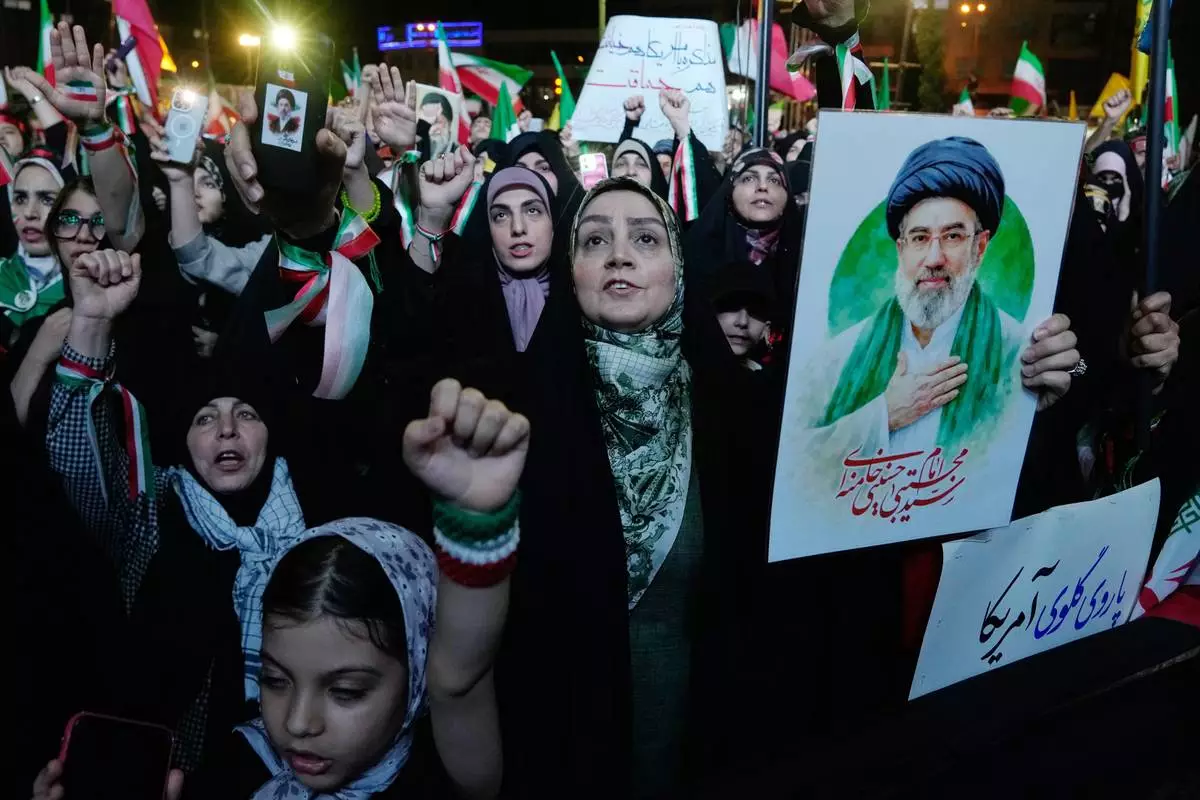
Pro-government demonstrators chant slogans as one of them holds a poster of the Iranian Supreme Leader Ayatollah Mojtaba Khamenei during their gathering at Enqelab-e-Eslami, or Islamic Revolution, square in Tehran, Iran, Monday, May 4, 2026. (AP Photo/Vahid Salemi)
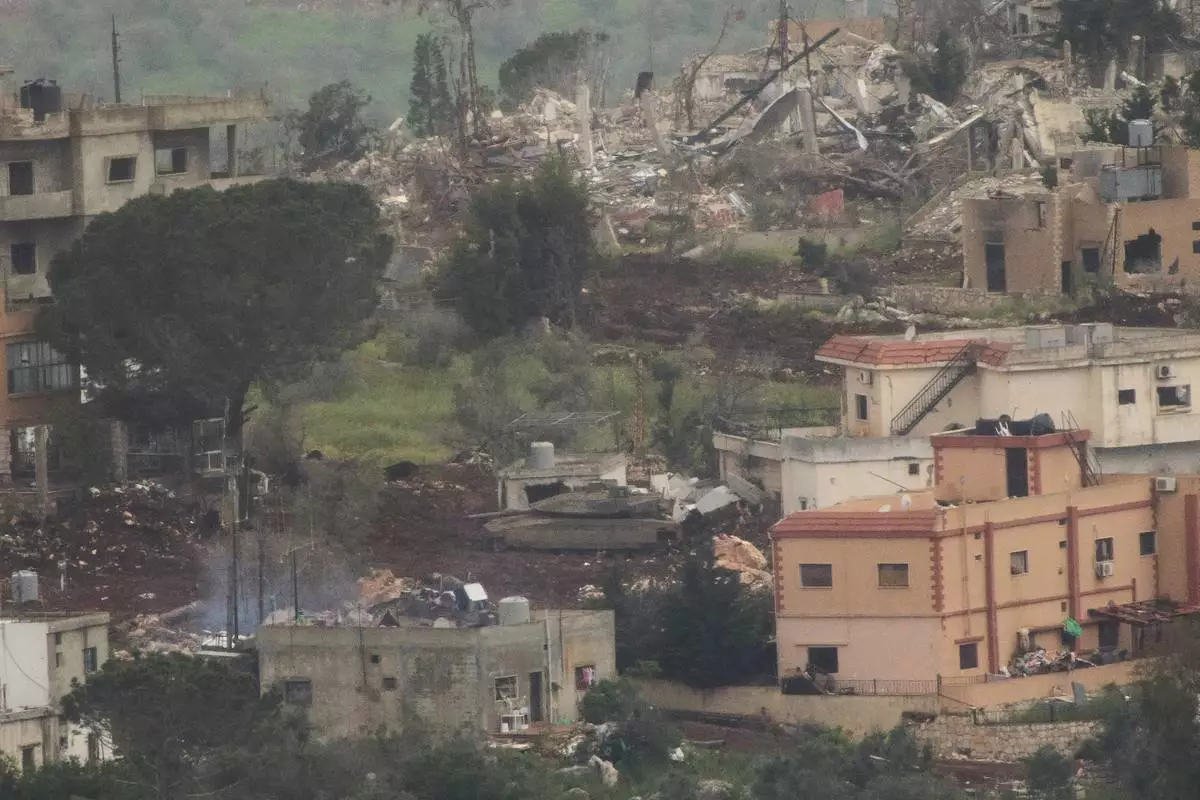
Israeli soldiers drive a tank inside a village in southern Lebanon, as seen from northern Israel, Tuesday, May 5, 2026. (AP Photo/Ariel Schalit)
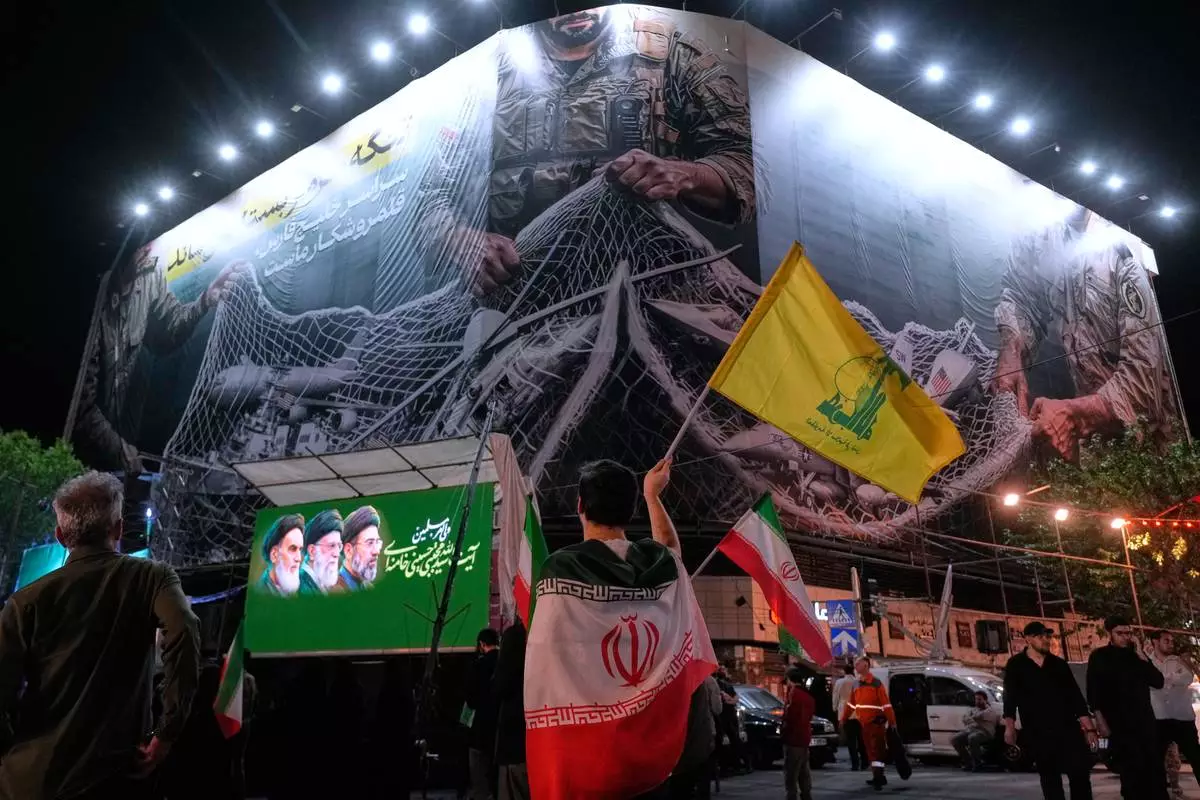
An Iranian demonstrator waves a flag of Lebanon's militant Hezbollah group under an anti-U.S. billboard depicting the American aircrafts into the Iranian armed forces fishing net with signs that read in Farsi: "The Strait of Hormuz will remain closed, The entire Persian Gulf is our hunting ground," during a pro-government gathering at Enqelab-e-Eslami, or Islamic Revolution, square in Tehran, Iran, Monday, May 4, 2026. (AP Photo/Vahid Salemi)
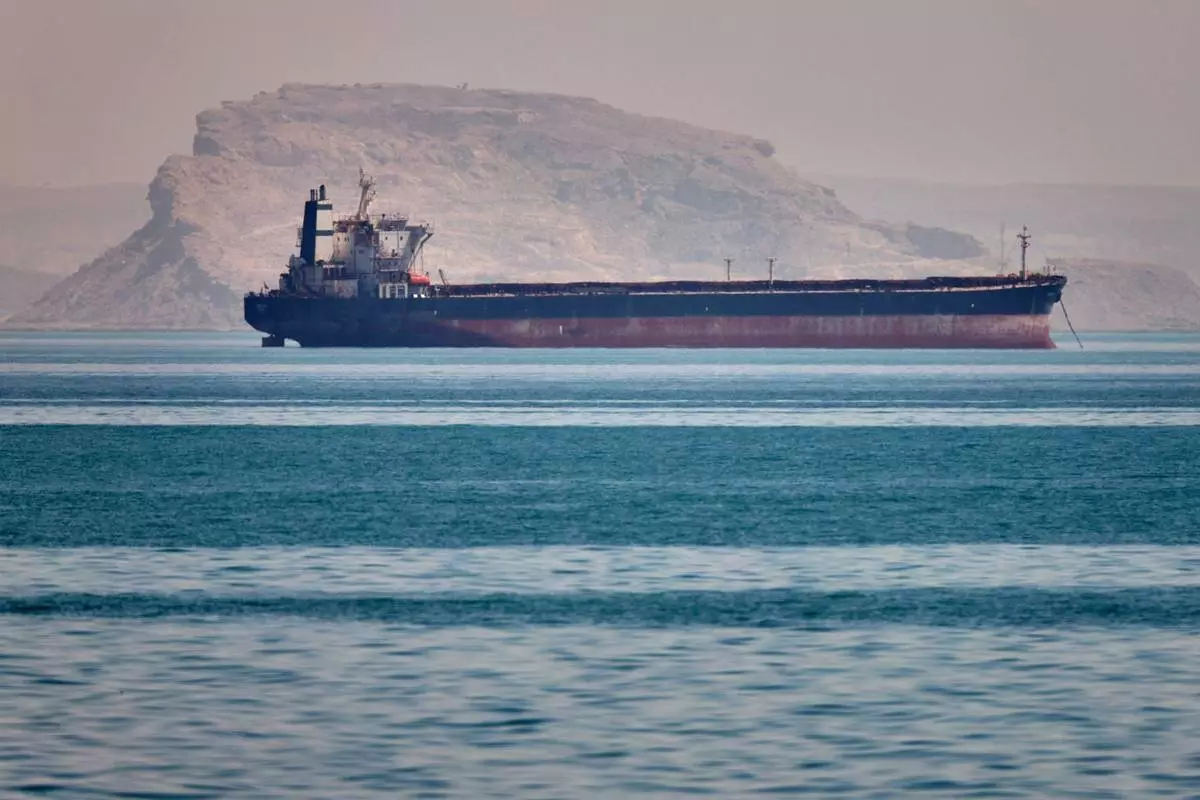
A bulk cargo ship sits at anchor in the Strait of Hormuz off Bandar Abbas, Iran, Saturday, May 2, 2026.(Amirhosein Khorgooi/ISNA via AP)