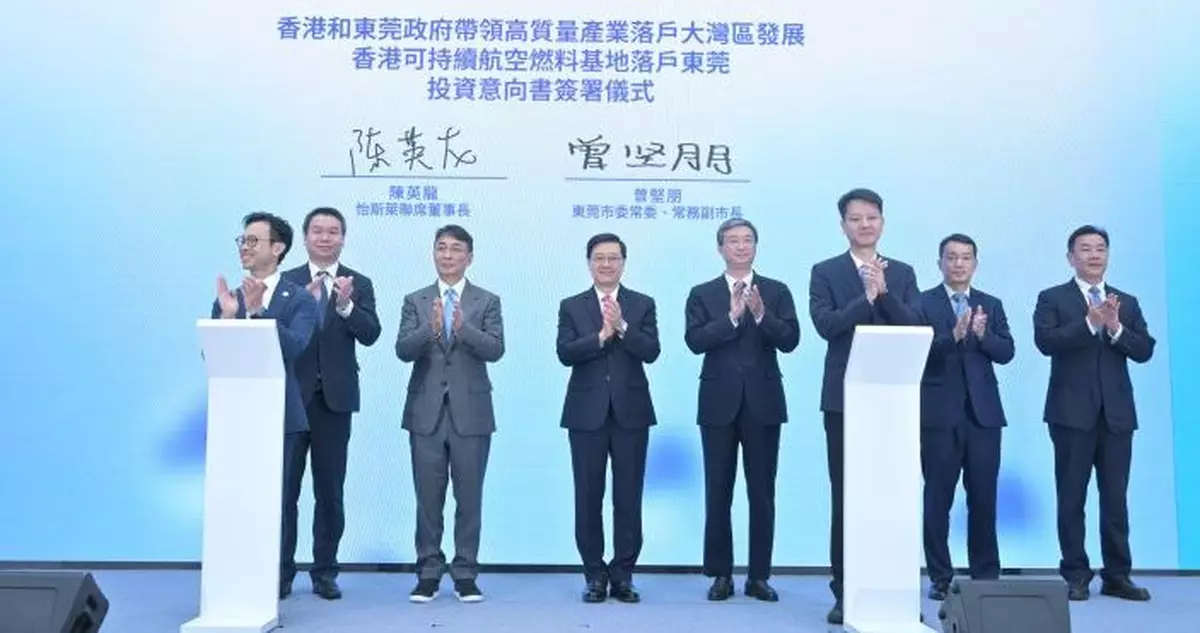
EcoCeres, a Hong Kong-incubated sustainable fuel and green molecule production enterprise, has signed a Memorandum of Understanding with the Dongguan government to set up a production base in the city, marking the establishment of the first complete sustainable aviation fuel (SAF) industry chain in the Guangdong-Hong Kong-Macao Greater Bay Area.
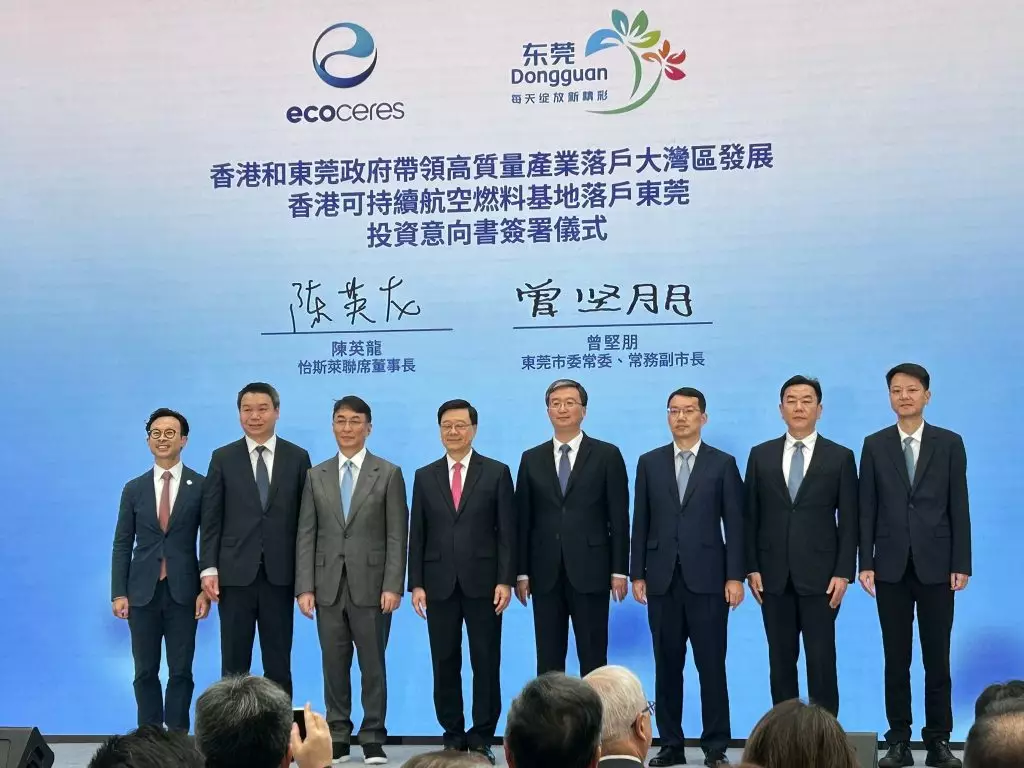
Photo by Bastille Post
Originally incubated within a project of Hong Kong and China Gas Company Limited, EcoCeres has grown into the world’s second-largest SAF producer. Last month, the enterprise joined forces with a major Mainland aviation corporation to launch the "Spark Program", aiming to build China’s first commercial demonstration initiative for a complete SAF industry chain.
Click to Gallery
Photo by Bastille Post
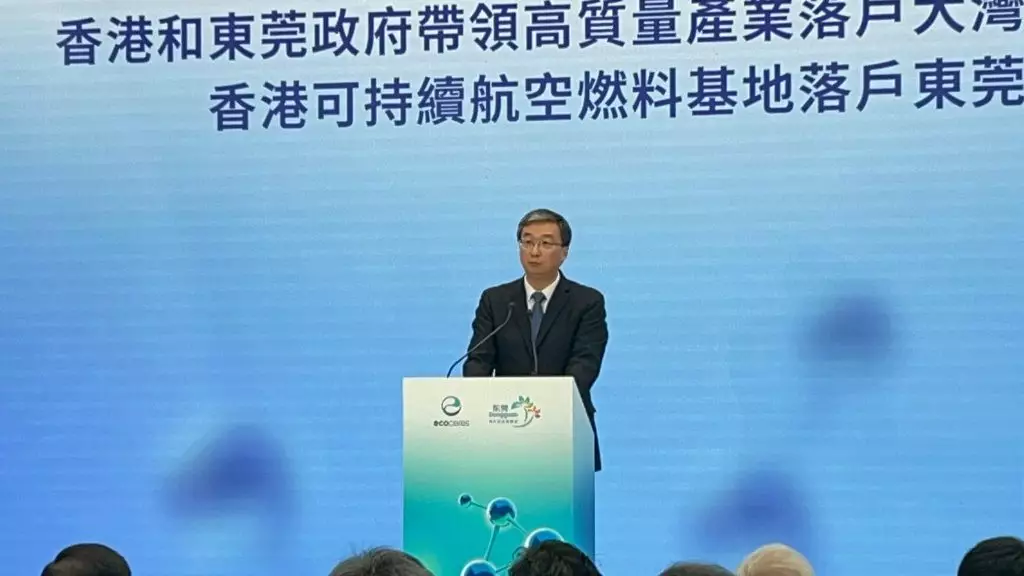
Mr. Wei Hao, Photo by Bastille Post
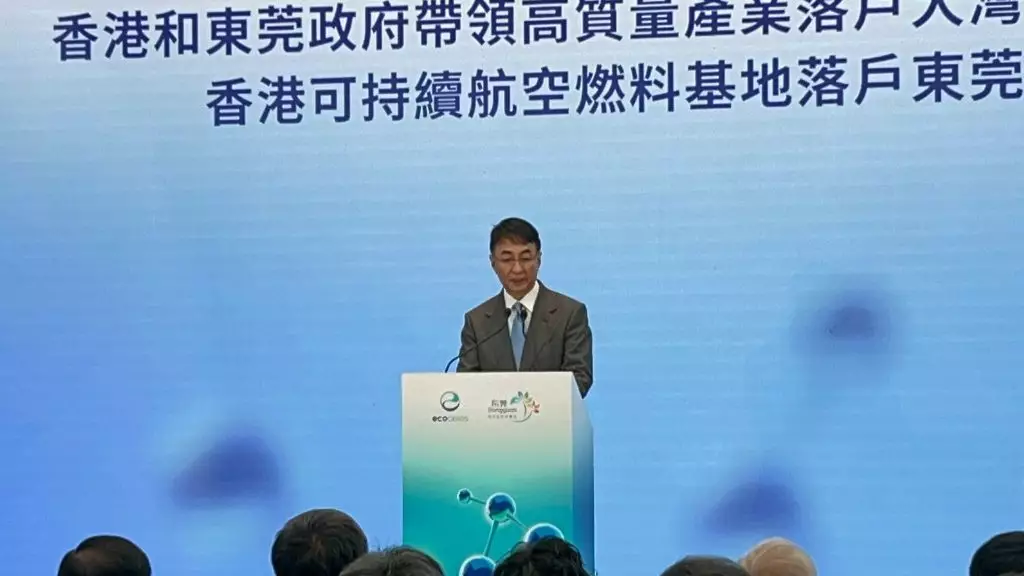
Mr. Lee Ka Kit, Photo by Bastille Post
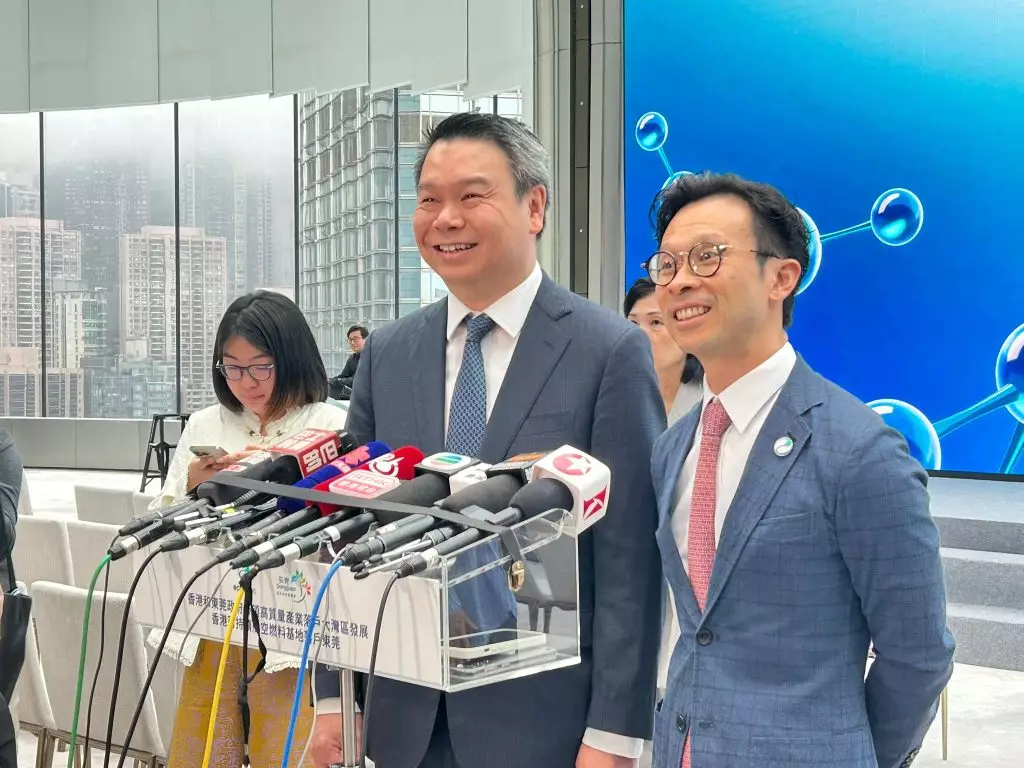
Mr. Alan Chan (right) and Mr. James Tam, Photo by Bastille Post
The Chief Executive, Mr. John Lee, said Hong Kong and Dongguan will continue to deepen cooperation, offering a "GBA Solution" to China's green transition and contributing "Chinese wisdom" to the global development of new energy.
The Secretary of the CPC Dongguan Municipal Committee, Mr. Wei Hao, noted that the cooperation between Dongguan and Hong Kong is on solid ground. By 2025, trade between the two cities had reached RMB 214.2 billion, an increase of 12%, while Dongguan’s actual utilized investment from Hong Kong amounted to approximately RMB 5 billion, marking a sharp rise of 20.5%. The partnership in the SAF sector, he said, underscores the strong upgrading momentum and broad market potential of Hong Kong-Dongguan collaboration.
Mr. Wei Hao, Photo by Bastille Post
Mr. Wei also noted that the new production base will be located on Lisha Island in Dongguan, an area that benefits from a comprehensive chemical industry support system. As for Hong Kong, the city brings strengths in green energy refining technology, environmental management, and trade. Meanwhile, EcoCeres' technological edge as a global leader in renewable fuels, combined with Dongguan's industrial capabilities, will create new opportunities for the Greater Bay Area's environmental protection and circular economy sectors.
Mr. Lee Ka Kit, Photo by Bastille Post
The Chairman of Hong Kong and China Gas Company Limited, Mr. Lee Ka Kit, said that EcoCeres focuses on converting recycled waste cooking oil into clean aviation fuel, effectively turning waste into treasure while keeping used oil off dining tables and safeguarding food safety. Looking forward, Hong Kong’s unique advantage of being "backed by the Chinese Mainland and connected to the world" can be leveraged alongside Dongguan’s strong industrial base to build a full industry chain integrating R&D, recycling, production, storage, distribution, and refueling, adding "green new productivity" to both the Greater Bay Area and the national economy.
The Co-Chairman of EcoCeres, Mr. Alan Chan, noted that Hong Kong, as a shipping hub, plays a key role in the market. With local manufacturing, raw material collection, and distribution, the city has formed a self-sustaining ecosystem. The decision to settle in Dongguan was made after careful consideration, given its favorable production environment and policy support. Moreover, the coordinated approach between the Dongguan and HKSAR governments gives Hong Kong enterprises a significant advantage in establishing operations in Dongguan. Since Dongguan has a population of over 10 million, it also provides a substantial supply of waste cooking oil for the corporation.
Mr. Chan expected to invest more than HK$10 billion in the Greater Bay Area over the next five to ten years, covering facilities, a raw material sourcing chain, and R&D bases, etc. While the corporation’s two existing production bases have a combined capacity of about 770,000 tons, the new Dongguan base will provide roughly 450,000 tons, to complete construction and start production during the 15th Five-Year Plan period.
Mr. Alan Chan (right) and Mr. James Tam, Photo by Bastille Post
Another Co-Chairman, Mr. James Tam, noted that global SAF development is still in its early stages, with a proportion of just 1% to 2% by 2025. He hoped to accelerate Hong Kong’s participation and help the city take a global lead. He also said that although the production base is in Dongguan, the raw materials actually come from across the Greater Bay Area. The ultimate goal, he said, is to achieve an "end-to-end" sustainable aviation fuel ecosystem, from raw material collection and production to final implementation entirely within the Greater Bay Area.