Skip to Content Facebook Feature Image

Cross Country Healthcare and Florida Atlantic University’s Christine E. Lynn College of Nursing Release Purpose Under Pressure: The State of Nursing in 2026

Business

Cross Country Healthcare and Florida Atlantic University’s Christine E. Lynn College of Nursing Release Purpose Under Pressure: The State of Nursing in 2026
Business

Business

Cross Country Healthcare and Florida Atlantic University’s Christine E. Lynn College of Nursing Release Purpose Under Pressure: The State of Nursing in 2026

2026-05-05 19:02 Last Updated At:19:30

BOCA RATON, Fla.--(BUSINESS WIRE)--May 5, 2026--

Cross Country Healthcare (NASDAQ: CCRN), a market-leading provider of workforce solutions and tech-enabled staffing, recruitment and advisory services, today released its fifth annual nursing survey, Purpose Under Pressure: The State of Nursing in 2026, developed in collaboration with Florida Atlantic University’s Christine E. Lynn College of Nursing.

This press release features multimedia. View the full release here: https://www.businesswire.com/news/home/20260505198241/en/

Based on insights from more than 2,000 nurses and nursing students across the United States, the study offers a comprehensive look at the current state of the profession, including what continues to motivate nurses, where workplace pressures are increasing and how healthcare organizations can better support the workforce at the center of patient care.

The findings point to a profession defined by resilience, purpose and change. Despite continued workforce pressures, nurses remain deeply connected to the meaning of their work. Eighty-three percent of nurses say they entered the profession to make a meaningful impact on patients’ lives, up from 66% in 2022.

“Purpose remains one of the strongest forces in nursing,” said Kevin Clark, Chairman and CEO of Cross Country Healthcare. “Nurses continue to choose this profession because they want to make a difference. At the same time, the data makes clear that the workforce experience is changing, and healthcare organizations have an opportunity to respond with more flexibility, better support and a renewed focus on retention.”

The survey also shows that practical career considerations are playing a larger role in how nurses evaluate their future. Sixty-two percent of respondents cited flexibility and lifestyle as key drivers, while 52% cited job security. These findings reflect a workforce that remains mission-driven while also seeking greater balance, stability and long-term sustainability.

Since 2022, the data shows several areas where pressure on nurses has increased:

“These findings are more than warning signs. They are a roadmap,” said Hank Drummond, PhD, RN, Enterprise Chief Nurse Executive and Divisional Senior Vice President at Cross Country Healthcare. “Nurses are telling us what they need to continue doing the work they love in a way that is sustainable. Now it is up to healthcare leaders to listen, respond and take meaningful action.”

Even as current nurses report increasing pressure, the future pipeline remains strong. Ninety-nine percent of nursing students say they are excited about their future in the profession, driven by a passion for helping others, confidence in career stability and a desire to contribute to meaningful work.

“Today’s nursing students are entering the profession with optimism, purpose and a realistic understanding of the challenges ahead,” said Cameron Duncan, Ph.D., DNP, APRN, the Holli Rockwell Eminent Dean at Florida Atlantic University’s Christine E. Lynn College of Nursing. “That combination matters. It gives healthcare leaders, educators and workforce partners an important opportunity to better prepare, support and retain the next generation of nurses.”

The report underscores a profession at an important moment. Nurses remain committed to their calling, but the systems around them must continue to evolve. From staffing models and scheduling flexibility to career development, recognition, compensation and technology-enabled workforce planning, the findings point to clear opportunities to strengthen the nursing experience and support better outcomes across care settings.

To download the full report, visit: https://www.crosscountry.com/2026-nurses-survey

About the Study

Purpose Under Pressure: The State of Nursing in 2026 is based on responses from more than 2,000 nurses and nursing students across the United States, representing a range of roles and care settings. Cross Country Healthcare conducted the study in collaboration with Florida Atlantic University’s Christine E. Lynn College of Nursing.

About Cross Country Healthcare

Cross Country Healthcare, Inc. (NASDAQ: CCRN) is a technology-driven healthcare workforce solutions company, delivering an AI-powered digital platform and advisory services backed by 40 years of healthcare labor expertise to help health systems optimize and sustain their entire labor ecosystem.

Through Intellify®, its cloud-based workforce and vendor management platform designed to integrate with core hospital systems, Cross Country helps improve transparency across the labor ecosystem. Intellify® unifies workforce management across service lines, including non-clinical, nursing, allied health and locums, into a single, centralized view of internal and contingent labor. Powered by real-time analytics and AI-driven insights, the platform helps leaders forecast demand, optimize labor utilization, streamline workflows and improve cost efficiency while supporting high-quality care delivery.

About Florida Atlantic University

Florida Atlantic University serves more than 32,000 undergraduate and graduate students across six campuses along Florida’s Southeast coast. Recognized as one of only 13 institutions nationwide to achieve three Carnegie Foundation designations - R1: Very High Research Spending and Doctorate Production,” “ Opportunity College and University,” and Carnegie Community Engagement Classification - FAU stands at the intersection of academic excellence and social mobility. Ranked among the Top 100 Public Universities by U.S. News & World Report, FAU is also nationally recognized as a Top 25 Best-In-Class College and cited by Washington Monthly as “one of the country’s most effective engines of upward mobility.” To learn more, visit www.fau.edu.
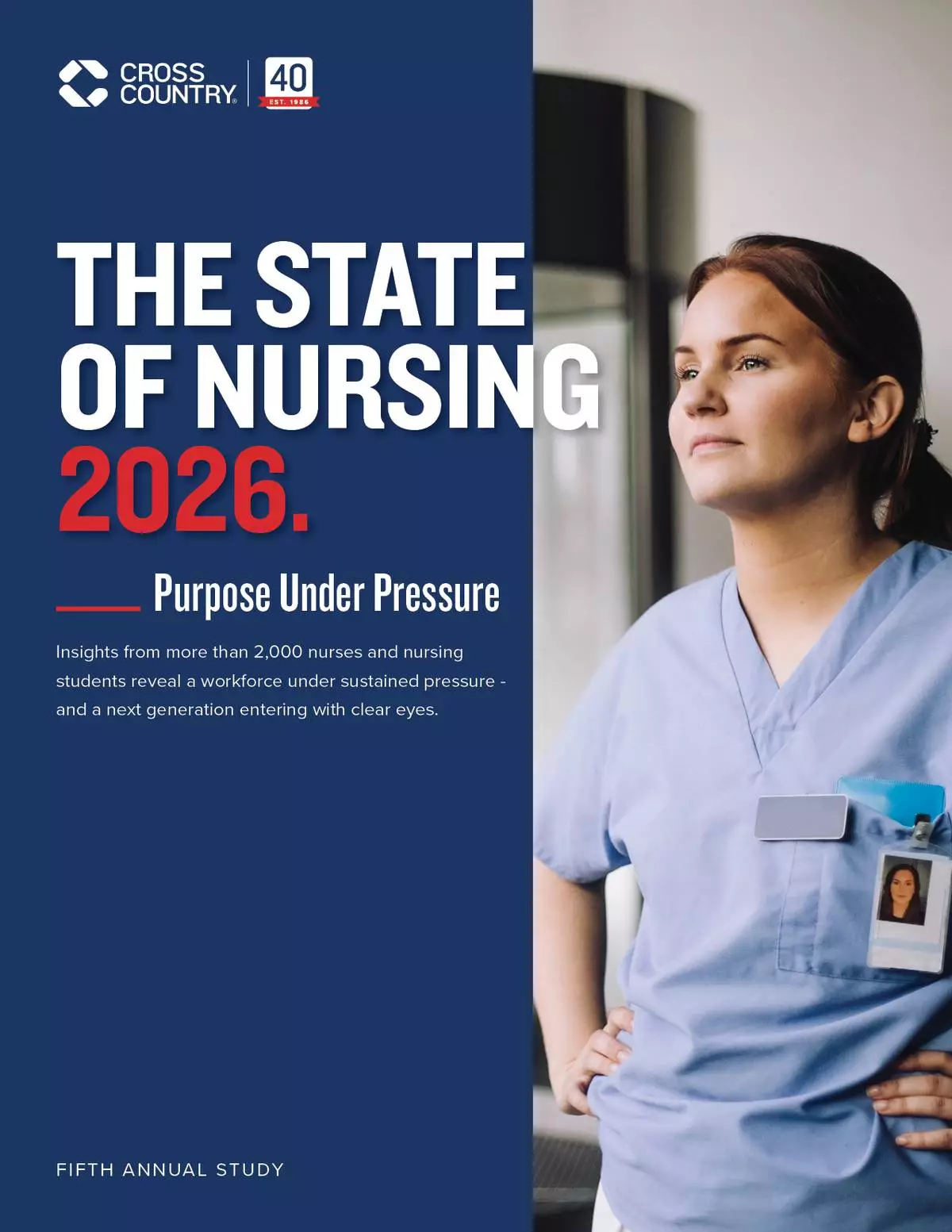
Cross Country Healthcare and Florida Atlantic University’s Christine E. Lynn College of Nursing released Purpose Under Pressure: The State of Nursing in 2026, the fifth annual national nursing survey. Based on insights from more than 2,000 nurses and nursing students across the U.S., the report explores how nurses remain deeply committed to patient care while facing evolving workforce expectations, growing pressure and increased demand for flexibility, support and career sustainability. The findings highlight what continues to motivate nurses, where workplace challenges are intensifying and how healthcare leaders can better respond to the needs of the profession.

Cross Country Healthcare and Florida Atlantic University’s Christine E. Lynn College of Nursing released Purpose Under Pressure: The State of Nursing in 2026, the fifth annual national nursing survey. Based on insights from more than 2,000 nurses and nursing students across the U.S., the report explores how nurses remain deeply committed to patient care while facing evolving workforce expectations, growing pressure and increased demand for flexibility, support and career sustainability. The findings highlight what continues to motivate nurses, where workplace challenges are intensifying and how healthcare leaders can better respond to the needs of the profession.
DUBAI, United Arab Emirates (AP) — The Iran war risked reigniting after the U.S. tried to force open the Strait of Hormuz for commercial shipping, though a ceasefire seemed to be holding Tuesday even after the United Arab Emirates said Iran fired missiles and drones at it.

Iran’s powerful parliamentary speaker and chief negotiator, Mohammad Bagher Qalibaf, accused the U.S. of undermining regional security with the effort to end Iran’s stranglehold on the strait and warned that Tehran will respond.

The U.S. military said two American-flagged merchant ships successfully transited the strait on Monday, the first day of the effort, and that it fired on Iranian forces, sinking six small boats that were targeting vessels.

Disputing Washington’s claim of sinking six boats, an Iranian military commander said two small civilian cargo boats were hit on Monday, killing five civilians, Iran’s state TV reported.

Ship tracking data showed a Panamanian-flagged crude oil tanker heading toward the center of the strait Tuesday morning after leaving an anchorage in the Persian Gulf, though it was unclear if it would try to pass through. The tanker had a stated destination of Singapore, according to the MarineTraffic ship tracking site.

Iran’s effective closure of the strait, through which about a fifth of the world’s trade in oil and natural gas typically passes, along with fertilizer and other petroleum-derived products, has sent fuel prices skyrocketing, rattled the global economy and proved a major strategic advantage in negotiations to end the war. Breaking that grip would deny Tehran a major source of leverage.

But such efforts risk reigniting the full-scale fighting that erupted when the U.S. and Israel attacked Iran on Feb. 28, prompting it to close the strait.

Iran has called the new U.S. effort a violation of the fragile ceasefire that has held for more than three weeks.

In a post on X on Tuesday, Qalibaf accused Washington of undermining shipping security in the Strait of Hormuz, and warned that a “new equation” there is taking shape.

He signaled that Iran has yet to fully respond to the U.S. attempt to reopen the waterway, saying: “We know full well that the continuation of the status quo is intolerable for America; while we have not even begun yet.”

His statement did not mention negotiations with the U.S. that are now in the form of passing messages via Pakistan.

U.S. President Donald Trump on Sunday warned that Iranian efforts to halt passage through the strait “will, unfortunately, have to be dealt with forcefully.”

He said the U.S. effort, “Project Freedom,” was intended to aid tens of thousands of stranded seafarers on hundreds of ships stuck in the Persian Gulf since the war began.

The U.S.-led Joint Maritime Information Center advised ships on Monday to cross the strait in Oman’s waters, saying it had set up an “enhanced security area.”

But shippers remained wary.

The United Arab Emirates' Defense Ministry said its air defenses had engaged 15 missiles and four drones fired by Iran. Authorities in the eastern emirate of Fujairah said one drone sparked a fire at a key oil facility, wounding three Indian nationals. The British military reported two cargo vessels ablaze off the UAE.

Indian Prime Minister Narendra Modi on Tuesday condemned the attacks, calling the targeting of civilians and infrastructure “unacceptable.” On X, Modi said India stands in “firm solidarity” with the UAE, and stressed the need for safe and uninterrupted shipping through the Strait of Hormuz.

Tehran did not confirm or deny the attacks but Iran’s Foreign Minister Abbas Araghchi early Tuesday said on X that both the U.S. and the UAE “should be wary of being dragged back into quagmire.”

Pakistan and Saudi Arabia condemned the strikes against the UAE. The Saudi condemnation came despite increasingly strained relations between it and the UAE.

The disruption of the waterway has squeezed countries in Europe and Asia that depend on Persian Gulf oil and gas, raising prices far beyond the region.

The U.S. meanwhile has enforced a naval blockade on Iranian ports since April 13, telling at least 49 commercial ships to turn back, according to its Central Command. It also has warned shipping companies they could face sanctions if they pay Iran for transit of the strait.

The blockade has deprived Tehran of oil revenue it needs to shore up its ailing economy. U.S. officials have expressed hope the blockade will force Iran to make concessions in talks on its disputed nuclear program and other longstanding issues.

Iran’s latest proposal for ending the war calls for the U.S. to lift sanctions, end the blockade, withdraw forces from the region and cease all hostilities including Israel’s operations in Lebanon, according to the semiofficial Nour News and Tasnim agencies, which have close ties to Iran’s security apparatus.

Iranian officials over the weekend said they were reviewing the U.S. response. Tehran has claimed its proposal does not include its nuclear program and enriched uranium, long a driving force in tensions with the U.S. and Israel.

Iran wants other issues resolved within 30 days and aims to end the war rather than extend the ceasefire. Trump expressed doubt over the weekend that the proposal would lead to a deal.

Becatoros reported from Athens, Greece. Sally Abou AlJoud in Beirut, Lebanon and Sheikh Saaliq in New Delhi contributed to this report.

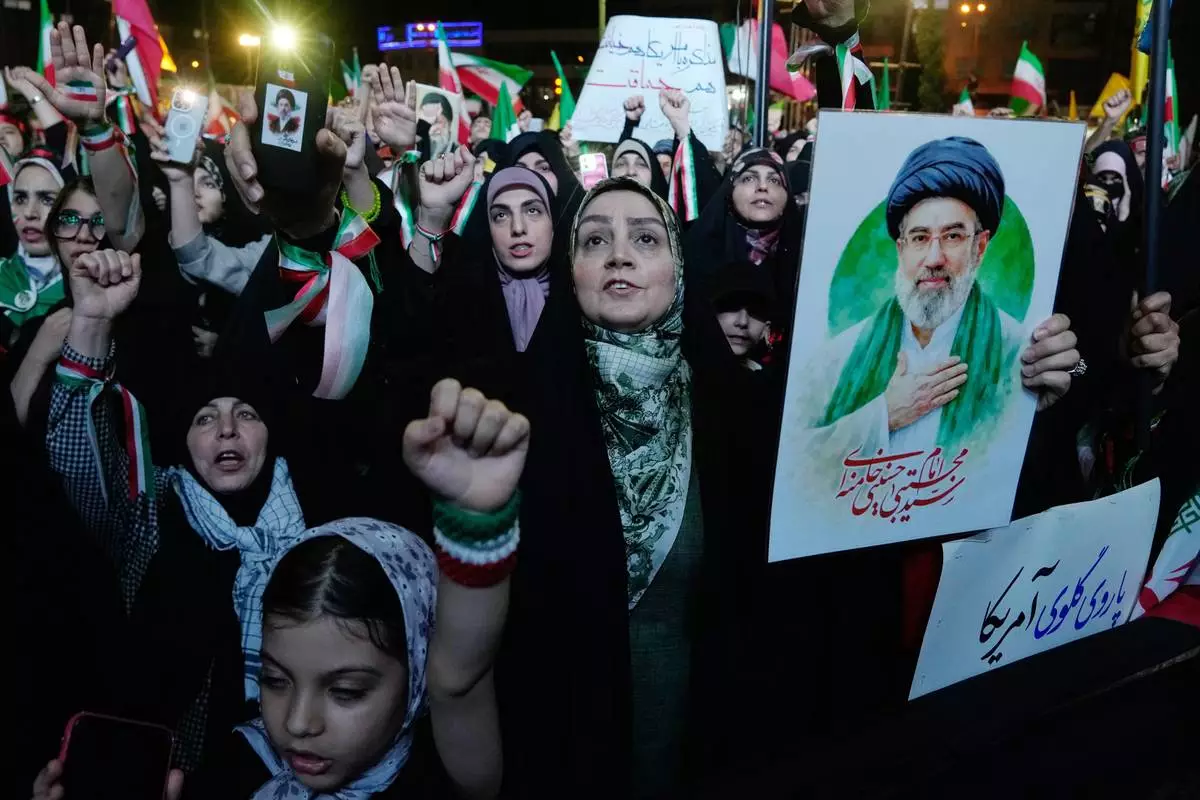
Pro-government demonstrators chant slogans as one of them holds a poster of the Iranian Supreme Leader Ayatollah Mojtaba Khamenei during their gathering at Enqelab-e-Eslami, or Islamic Revolution, square in Tehran, Iran, Monday, May 4, 2026. (AP Photo/Vahid Salemi)

Pro-government demonstrators chant slogans as one of them holds a poster of the Iranian Supreme Leader Ayatollah Mojtaba Khamenei during their gathering at Enqelab-e-Eslami, or Islamic Revolution, square in Tehran, Iran, Monday, May 4, 2026. (AP Photo/Vahid Salemi)

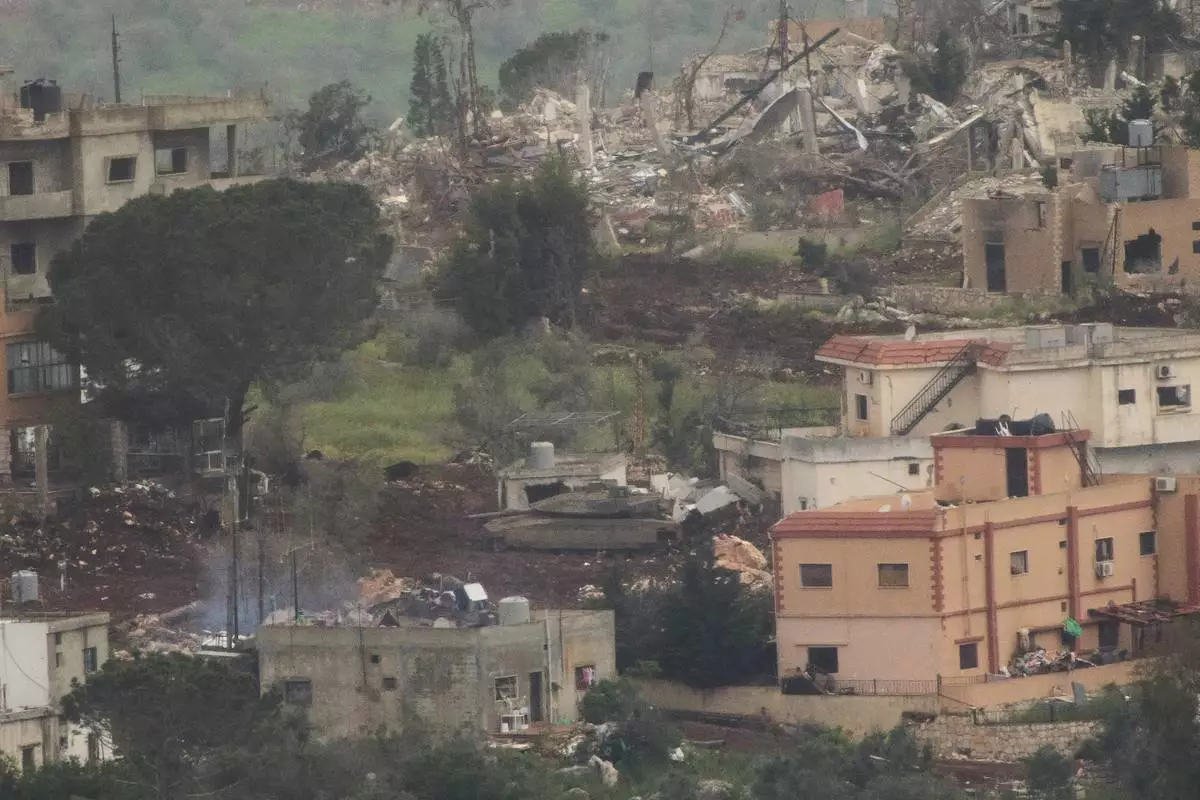
Israeli soldiers drive a tank inside a village in southern Lebanon, as seen from northern Israel, Tuesday, May 5, 2026. (AP Photo/Ariel Schalit)

Israeli soldiers drive a tank inside a village in southern Lebanon, as seen from northern Israel, Tuesday, May 5, 2026. (AP Photo/Ariel Schalit)

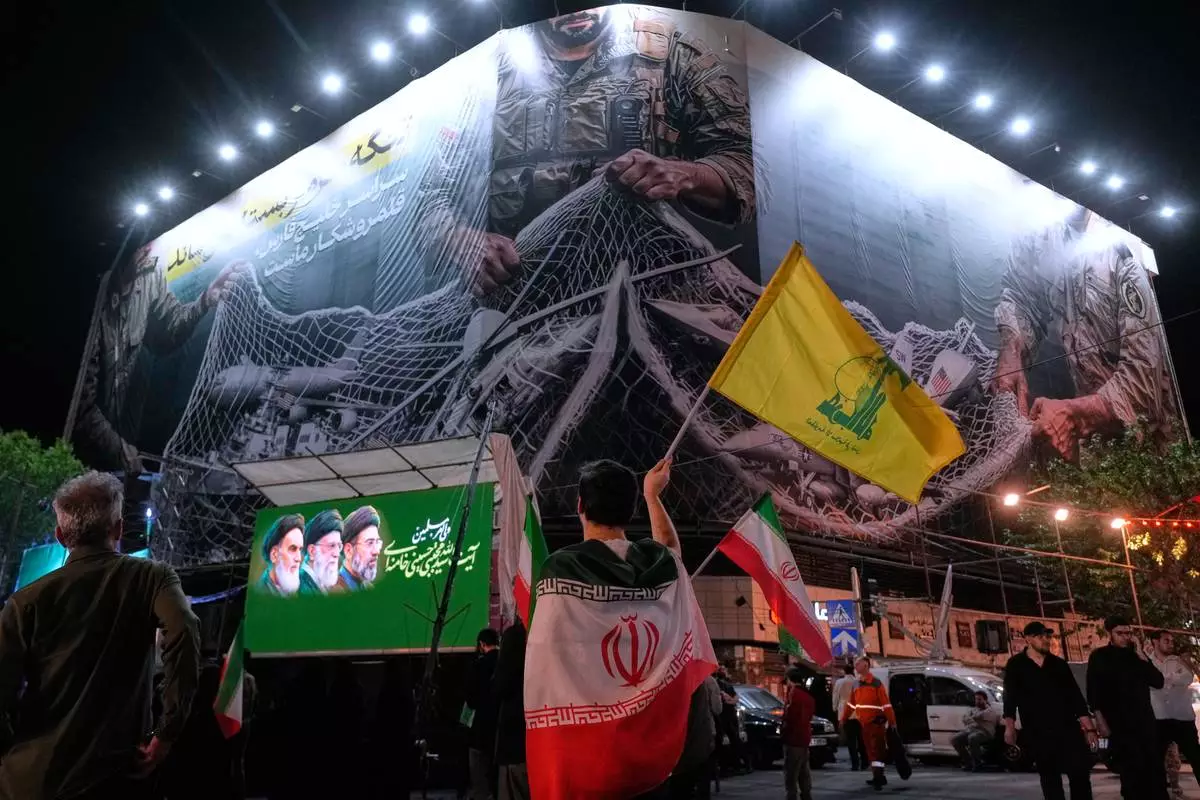
An Iranian demonstrator waves a flag of Lebanon's militant Hezbollah group under an anti-U.S. billboard depicting the American aircrafts into the Iranian armed forces fishing net with signs that read in Farsi: "The Strait of Hormuz will remain closed, The entire Persian Gulf is our hunting ground," during a pro-government gathering at Enqelab-e-Eslami, or Islamic Revolution, square in Tehran, Iran, Monday, May 4, 2026. (AP Photo/Vahid Salemi)

An Iranian demonstrator waves a flag of Lebanon's militant Hezbollah group under an anti-U.S. billboard depicting the American aircrafts into the Iranian armed forces fishing net with signs that read in Farsi: "The Strait of Hormuz will remain closed, The entire Persian Gulf is our hunting ground," during a pro-government gathering at Enqelab-e-Eslami, or Islamic Revolution, square in Tehran, Iran, Monday, May 4, 2026. (AP Photo/Vahid Salemi)

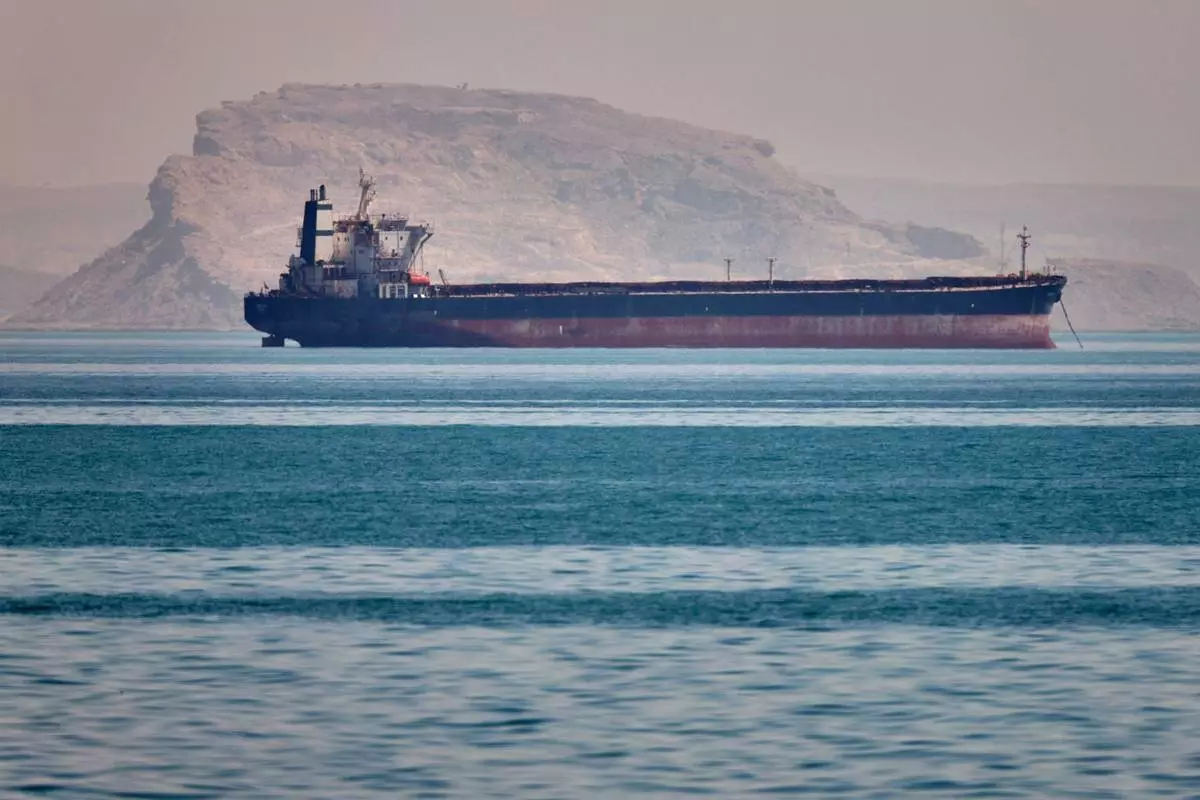
A bulk cargo ship sits at anchor in the Strait of Hormuz off Bandar Abbas, Iran, Saturday, May 2, 2026.(Amirhosein Khorgooi/ISNA via AP)

A bulk cargo ship sits at anchor in the Strait of Hormuz off Bandar Abbas, Iran, Saturday, May 2, 2026.(Amirhosein Khorgooi/ISNA via AP)

Recommended Articles