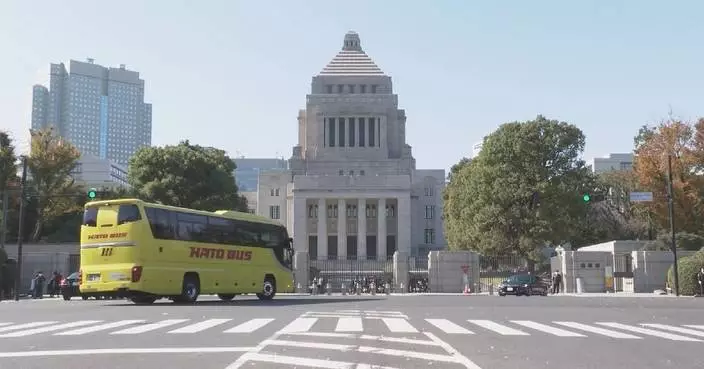
As the world marks the 80th anniversary of the start of the Tokyo Trial (1946-1948), analysts from Argentina and Chile have urged Japan to confront its wartime past and called on the international community to remain vigilant against a possible resurgence of Japanese militarism.
The International Military Tribunal for the Far East, or the Tokyo Trial, convened on May 3, 1946, marking the beginning of a historic trial. After two and a half years of proceedings, the court handed down 25 convictions and seven death sentences. The Tokyo Trial stands as a watershed in judicial history, sending a clear message to war criminals: aggression is a crime, and justice will ultimately prevail.
Atilio Borón, an Argentine political scientist and international analyst, voiced concerns about the resurgence of militarism in Japan and its implications for Southeast Asian nations.
"The 80th anniversary of the Tokyo Trial is a day worthy of remembrance for the world. But, as an international observer, I see Japan gradually deviating from the pacifist constitution established after World War II. For the entire Southeast Asian region, the resurgence of Japanese militarism is very bad news. There is a deep-rooted tradition of imperial expansion, often accompanied by a strongly racist perspective from the dominant groups in Japan. All of these have drawn strong criticism, great dissatisfaction and deep concern from the international community," he said.
Fernando Estenssoro, an academic at the University of Santiago's Institute of Advanced Studies in Chile, said the Tokyo Trial's legacy is increasingly relevant amid changes in Japan's defense policy that raise concerns in the region. In this context, he said, China is positioning itself as a key player in upholding the postwar international order and advancing stability, multilateralism and global cooperation.
"The Tokyo Trial represented a step forward in developing an international order that would not allow the crimes of the first half of the 20th century to occur again. China, as a permanent member of the U.N. Security Council, was one of the key Allied powers that defeated Japanese militarism. Today, with its growing international influence, China has become a stabilizing force in upholding the rules of the international order and defending multilateralism. It is committed to injecting rationality, wisdom and stability into the international system," he said.
"However, Japan has chosen the opposite path. It is distorting history and pursuing extreme nationalism while accelerating its remilitarization. The public is well aware of the painful history, and Japan's actions evoke deep tension and concern about the current situation," Estenssoro said.

Argentine, Chilean analysts urge Japan to reflect on history of aggression,refrain from remilitarization
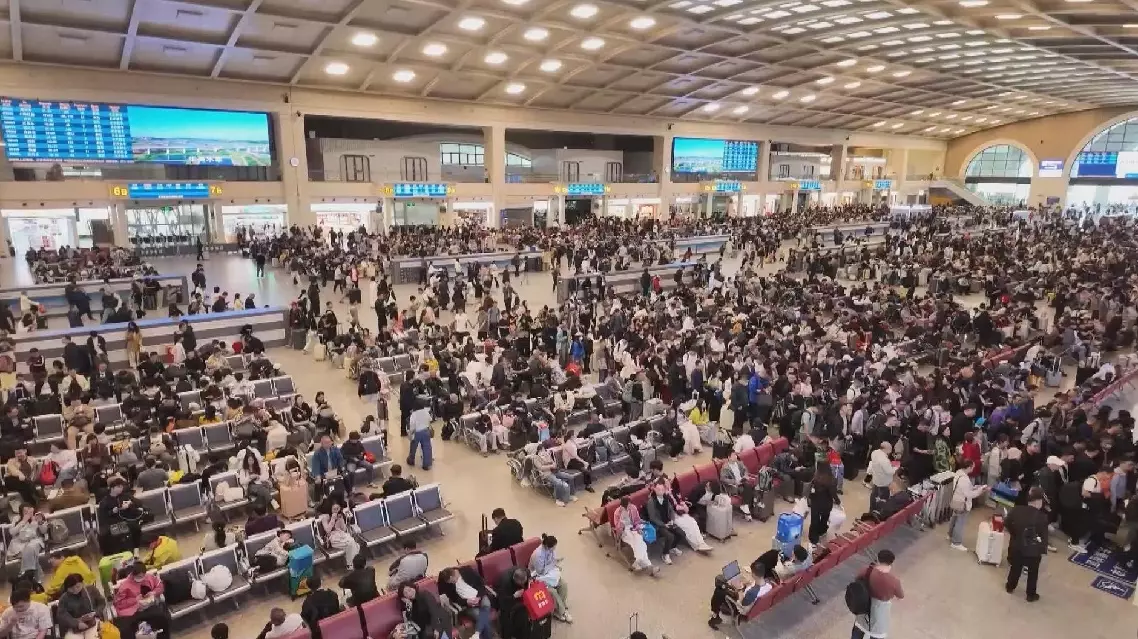
China’s transport authorities mobilized rail, road, air and waterway resources on Tuesday, the final day of the five‑day May Day holiday, to manage the peak return flow as passenger volumes surged nationwide.
The national railway system expects 23 million passenger trips on the day, with operators adding 2,225 extra trains and deploying capacity on popular routes and peak hours to handle the return flow from smaller cities to major hubs.
In Zhengzhou, central China's Henan Province, 134 trains have been temporarily added for high-demand directions including the Beijing-Tianjin-Hebei region, the Yangtze River Delta, and the Guangdong-Hong Kong-Macao Greater Bay Area.
"Railway return travel peaks today. In light of short stops and high passenger volumes, we have strengthened coordination with intermediate stations and offered guidance to passengers for smooth boarding and alighting to prevent crowding and stampedes," said Ji Yudi, a conductor of China Railway Zhengzhou Group.
Regional operators in Beijing, Chengdu and other cities have also proactively coordinated with local transit authorities to extend bus and subway operating hours, increase nighttime service frequency, and boost taxi and ride-hailing availability to ensure seamless transfers for late-arriving passengers.
With respect to highways, the national highway network is projected to record approximately 61 million vehicle trips on Tuesday. The peak traffic window is between 16:00 and 18:00, with congestion and slow-moving traffic likely around major city entry and exit points, as well as airport expressways in major cities like Beijing, Shanghai, Guangzhou and Chengdu.
To ease holiday congestion, traffic police in south China's Guangdong Province have rolled out tidal lanes and flow control measures at 24 key highway sections in nine cities.
"Using a highway interconnect system, we have conducted remote flow diversion. During this morning's peak return period, traffic efficiency on the Erenhot-Guangzhou Expressway improved significantly, showing no sign of congestion," said Dai Zhouwu, a local traffic police officer.
By water, an estimated 1.035 million passenger trips are expected to be made across the country on Tuesday, marking a 1.4-percent increase year on year.
To ensure smooth strait crossing from south China's Hainan Province, the maritime authorities in Zhanjiang City, south China's Guangdong Province have urged operators to supplement fixed sailings with extra voyages and optimized crew rotations to meet surging vessel demand.
Meanwhile, China's civil aviation sector is projected to carry 2.3 million passengers on Tuesday.
The Chengdu Shuangliu International Airport, one of the country's busiest airports in southwest China's Sichuan Province, are offering free luggage pick-up and delivering services to passengers arriving from Beijing, Shanghai, Guangzhou, and Shenzhen.
China’s transport network braces for record May Day return traffic