Skip to Content Facebook Feature Image

Free Trade Port policies boost Hainan’s inbound healthcare tourism

China

China

China

Free Trade Port policies boost Hainan’s inbound healthcare tourism

2026-05-05 17:11 Last Updated At:21:47

Hainan's Boao Lecheng International Medical Tourism Pilot Zone is emerging as a major draw for overseas visitors, with favorable Free Trade Port policies driving an influx of high‑quality medical resources and pushing inbound medical tourism to record levels.

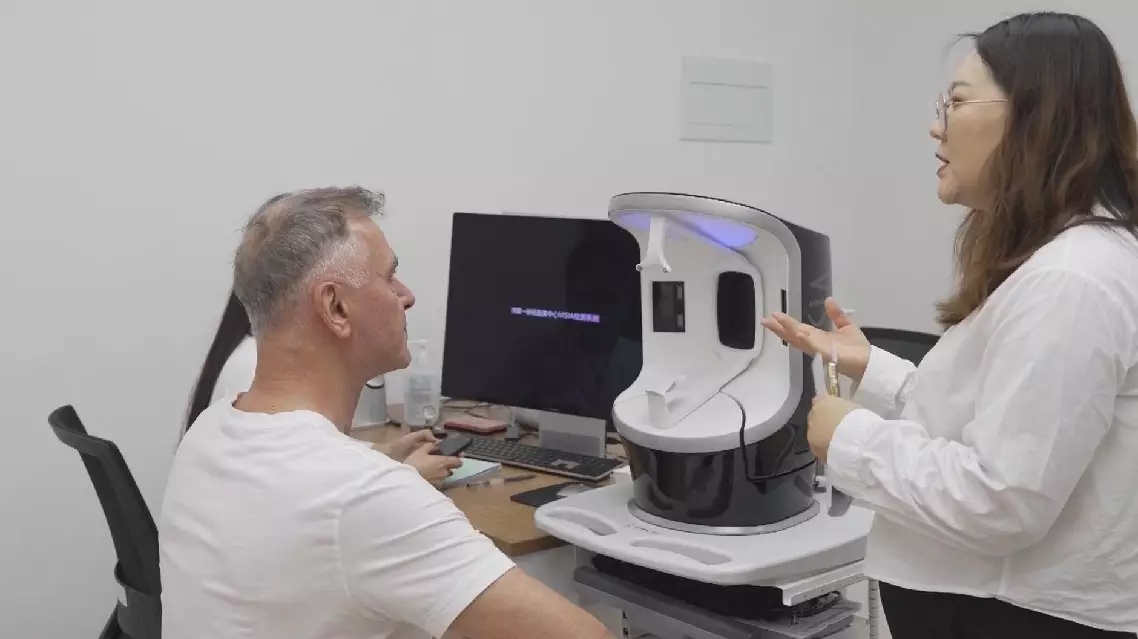
At 67, Bulgarian entrepreneur Bobokov Atanas Stoilov learned about the Hainan's Boao Lecheng International Medical Tourism Pilot Zone online and traveled there specifically to experience Chinese-style medical services. Local institutions tailored a personalized anti-aging and medical aesthetics program for him.

In addition to specialized aesthetic treatments, he also underwent a cardiovascular check-up at Ruijin Hainan Hospital and received treatment with the lipid-lowering drug Leqvio (inclisiran).

Benefiting from the local policy, the drug was first introduced and used in China in the Lecheng Pilot Zone.

"Here not only is it the medical service, but also the food is great, seafood is great and lots of green parks and green areas. So you can also do sports and it's affordable, so it's not so expensive like in Europe. So I would say come and see, come and try. Next year I'm here," he said.

With policy support following the Hainan Free Trade Port's special customs operations and its distinctive medical strengths, Lecheng received 3,053 inbound medical tourists in the first quarter of 2026 - an eightfold increase year-on-year. Its international reach now spans 14 countries and regions, including Singapore, Indonesia, Malaysia, Russia, and Canada.

"I love aromatherapy, during the section I could feel my whole body relaxing, the tension melted away and my breathing became calm and steady. I would love to come back and bring my friends," said Loh Tian Hwee, a visitor from Singapore.

So far, the pilot zone has introduced more than 560 internationally innovative drugs and medical devices, covering major fields such as oncology, cardiovascular diseases, and ophthalmology. It has also approved 29 cutting-edge biomedical technologies, including stem cell therapy, immune cell therapy, and gene therapy, and is home to more than 40 medical institutions.

"We have built a full-scenario, multilingual service network, offering one-on-one services in major international languages such as English, Japanese, Korean, Russian, and French, removing communication barriers for international clients," said Bao Xiaofeng, a staff member from Boao Yiling Life Care Center.

"We will continue upgrading Lecheng's global special medicine insurance, launch international versions of our products, and introduce more international insurers to facilitate cross-border insurance payments," said Fu Sheng, Director of Boao Lecheng Pilot Zone Administration.

Looking ahead, the Lecheng Pilot Zone will continue to accelerate the aggregation of global high-quality medical resources and further enhance its international medical tourism service capacity.
Free Trade Port policies boost Hainan’s inbound healthcare tourism

Free Trade Port policies boost Hainan’s inbound healthcare tourism

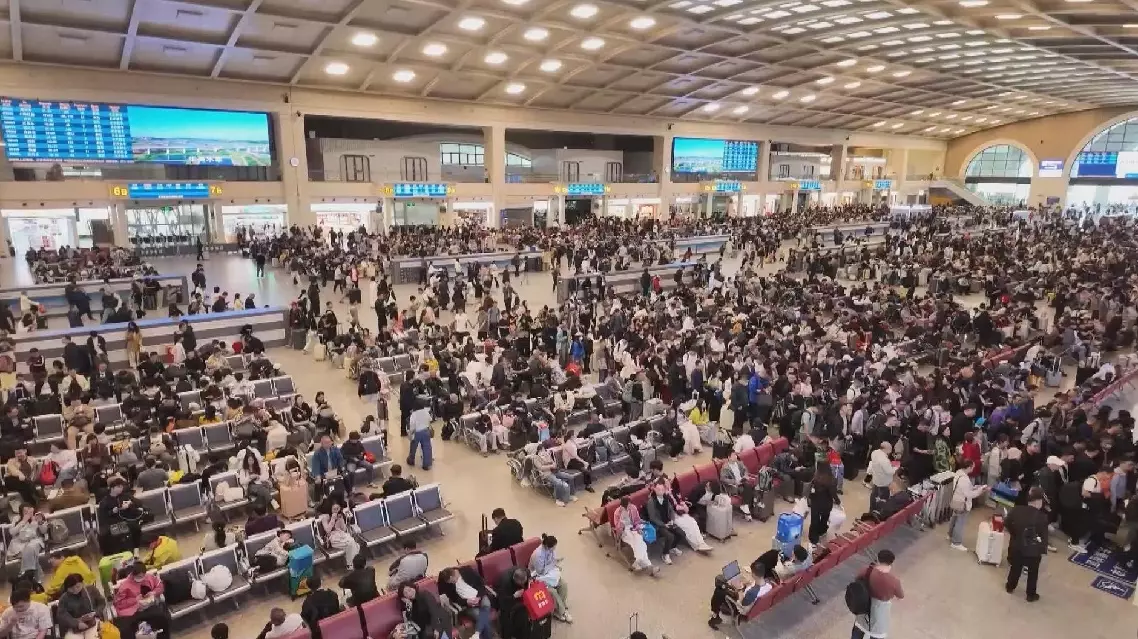
China’s transport authorities mobilized rail, road, air and waterway resources on Tuesday, the final day of the five‑day May Day holiday, to manage the peak return flow as passenger volumes surged nationwide.

The national railway system expects 23 million passenger trips on the day, with operators adding 2,225 extra trains and deploying capacity on popular routes and peak hours to handle the return flow from smaller cities to major hubs.

In Zhengzhou, central China's Henan Province, 134 trains have been temporarily added for high-demand directions including the Beijing-Tianjin-Hebei region, the Yangtze River Delta, and the Guangdong-Hong Kong-Macao Greater Bay Area.

"Railway return travel peaks today. In light of short stops and high passenger volumes, we have strengthened coordination with intermediate stations and offered guidance to passengers for smooth boarding and alighting to prevent crowding and stampedes," said Ji Yudi, a conductor of China Railway Zhengzhou Group.

Regional operators in Beijing, Chengdu and other cities have also proactively coordinated with local transit authorities to extend bus and subway operating hours, increase nighttime service frequency, and boost taxi and ride-hailing availability to ensure seamless transfers for late-arriving passengers.

With respect to highways, the national highway network is projected to record approximately 61 million vehicle trips on Tuesday. The peak traffic window is between 16:00 and 18:00, with congestion and slow-moving traffic likely around major city entry and exit points, as well as airport expressways in major cities like Beijing, Shanghai, Guangzhou and Chengdu.

To ease holiday congestion, traffic police in south China's Guangdong Province have rolled out tidal lanes and flow control measures at 24 key highway sections in nine cities.

"Using a highway interconnect system, we have conducted remote flow diversion. During this morning's peak return period, traffic efficiency on the Erenhot-Guangzhou Expressway improved significantly, showing no sign of congestion," said Dai Zhouwu, a local traffic police officer.

By water, an estimated 1.035 million passenger trips are expected to be made across the country on Tuesday, marking a 1.4-percent increase year on year.

To ensure smooth strait crossing from south China's Hainan Province, the maritime authorities in Zhanjiang City, south China's Guangdong Province have urged operators to supplement fixed sailings with extra voyages and optimized crew rotations to meet surging vessel demand.

Meanwhile, China's civil aviation sector is projected to carry 2.3 million passengers on Tuesday.

The Chengdu Shuangliu International Airport, one of the country's busiest airports in southwest China's Sichuan Province, are offering free luggage pick-up and delivering services to passengers arriving from Beijing, Shanghai, Guangzhou, and Shenzhen.

China’s transport network braces for record May Day return traffic

China’s transport network braces for record May Day return traffic

Recommended Articles