NEW YORK (AP) — The price of a gallon of regular gasoline climbed 31 cents in the past week, spiking to an average of $4.48 per gallon Tuesday, according to AAA, hitting the wallets of drivers after rising 50% since the war with Iran began.
The main reason drivers are paying more at the pump is because of the global energy crisis caused by the Iran war. The price of crude oil, which is the main ingredient in gasoline, has been climbing for most of the past two months because the Strait of Hormuz, the narrow passage of the Persian Gulf through which a fifth of the world’s crude oil normally passes, has effectively been shut, and oil tankers have been stranded there unable to deliver crude.
Many drivers were hopeful in mid-April, amid signs that the conflict could be winding down, and gasoline prices fell daily for almost two weeks.
“After the announcement of the initial ceasefire, there was kind of optimism that this really could be the beginning of the end of the conflict,” said Rob Smith, director of global fuel retail at S&P Global Energy. “And so crude prices came down correspondingly, gasoline spot prices followed, and so on and ... the retailers lowered prices as well.”
But as the war continued, gasoline prices reversed course and began increasing again.
“There’s a fundamental shortfall that will exist globally or fundamental struggle to meet that demand that will drive up price,” Smith said. “No matter what a government says or what any market person thinks, there is a true kind of upward pressure that’s being exerted on prices every day the Strait of Hormuz is constrained. And it is still severely constrained.”
Gas station owners set prices at the pump, but a lot of factors go into what they decide to charge.
The main ingredient in gasoline cost is the price of a barrel of crude oil. In the U.S., oil prices represented about 51% of the price of a gallon of gasoline in 2025, according to the Energy Information Administration.
That means when crude oil prices rise, gasoline prices generally follow. Less oil on the market means higher prices for oil and gasoline. And the effective closure of the Strait of Hormuz triggered the largest supply disruption in the history of oil markets, according to the The International Energy Agency, pushing oil prices as high as $112 a barrel in early April.
Bob Kleinberg, adjunct senior research scholar at the Columbia University Center on Global Energy Policy, compared the average price of a gallon of gasoline in the U.S. with the price for a barrel of WTI, the U.S. benchmark oil, over the past few weeks, and said their price changes generally matched up.
“Not much of a mystery here,” Kleinberg said. “It's not exactly proportional but the shape of the curves follows the same pattern, and really with very little delay.”
Federal and state taxes contributed about 17% of the oil price, refining costs and profits contributed 14% and distribution and marketing contributed 17%, the EIA said. In some states, such as California, higher taxes and refining costs push the price of gasoline well above the national average.
One event that could have changed the trajectory of gasoline prices occurred in April, when the U.S. blocked Iranian ports to stop the country from exporting oil.
“Iran had been moving an unusually high amount of oil to global markets, so that was helping moderate prices," said Jim Krane, energy research fellow at Rice University’s Baker Institute. "The Trump administration decides they’re going to punish Iran, and try to put more pressure on Iran by blocking their exports, so of course that does put pressure on Iran, but also puts pressure on global oil prices and forces them up. That was probably a big factor.”
What refineries and traders are willing to pay for oil swings wildly after news breaks about attacks on ships in the Persian Gulf or diplomacy talks stalling. “The oil market is exquisitely sensitive to what’s coming out of the White House,” Kleinberg said.
Back in early March, at the beginning of the Iran war, the price of gasoline jumped 48 cents in a week. The highest weekly jump was in March 2022, when the price jumped 60 cents in a week after Russia invaded Ukraine, AAA said.
No one can predict how high gasoline prices will climb. A gallon of regular in the U.S. costs more now than it did in early May of 2022, and back then, the price kept climbing through Memorial Day, AAA said.
The longer the flow of oil is constrained through the Strait of Hormuz, the higher prices will go, and the longer it will take to get back to normal, Smith said.
“Even if there was a true and lasting resolution of the conflict, both sides agree to play nice and truly do commit to keeping Hormuz open, it will still take months to get back to what it was pre-war, if not even longer,” Smith said. “There will still be within the industry a risk premium associated with going through that region. Not that it was ever a perfectly safe journey, but the past few months have shown that it’ll be hard to convince shippers and insurance companies that the risk level will be similar to what it was in February. It’ll be a long time before anyone can be convinced of that.”
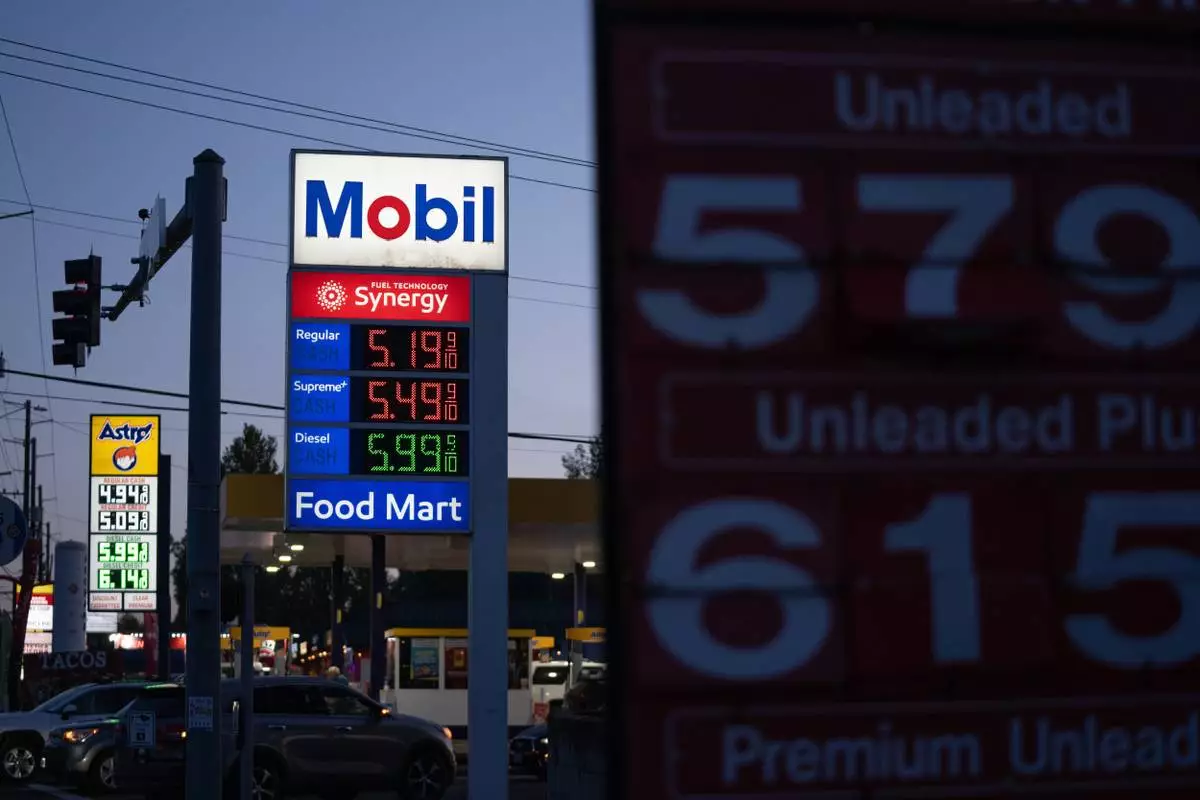
Gasoline prices are displayed at a Mobil gas station on Wednesday, April 29, 2026, in Portland, Ore. (AP Photo/Jenny Kane)
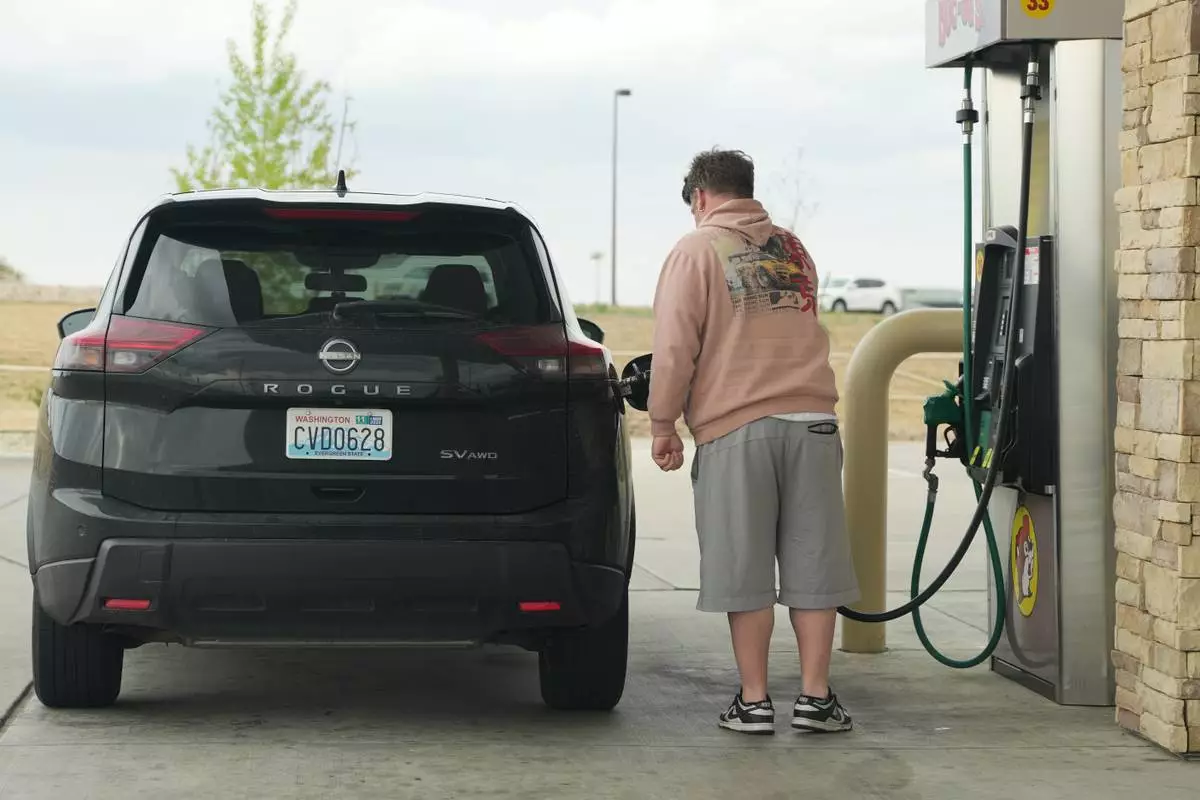
A motorist fills up the tank of a utility vehicle at a pump at a Buc-ee's gasoline stop Thursday, April 30, 2026, in Johnstown, Colo. (AP Photo/David Zalubowski)
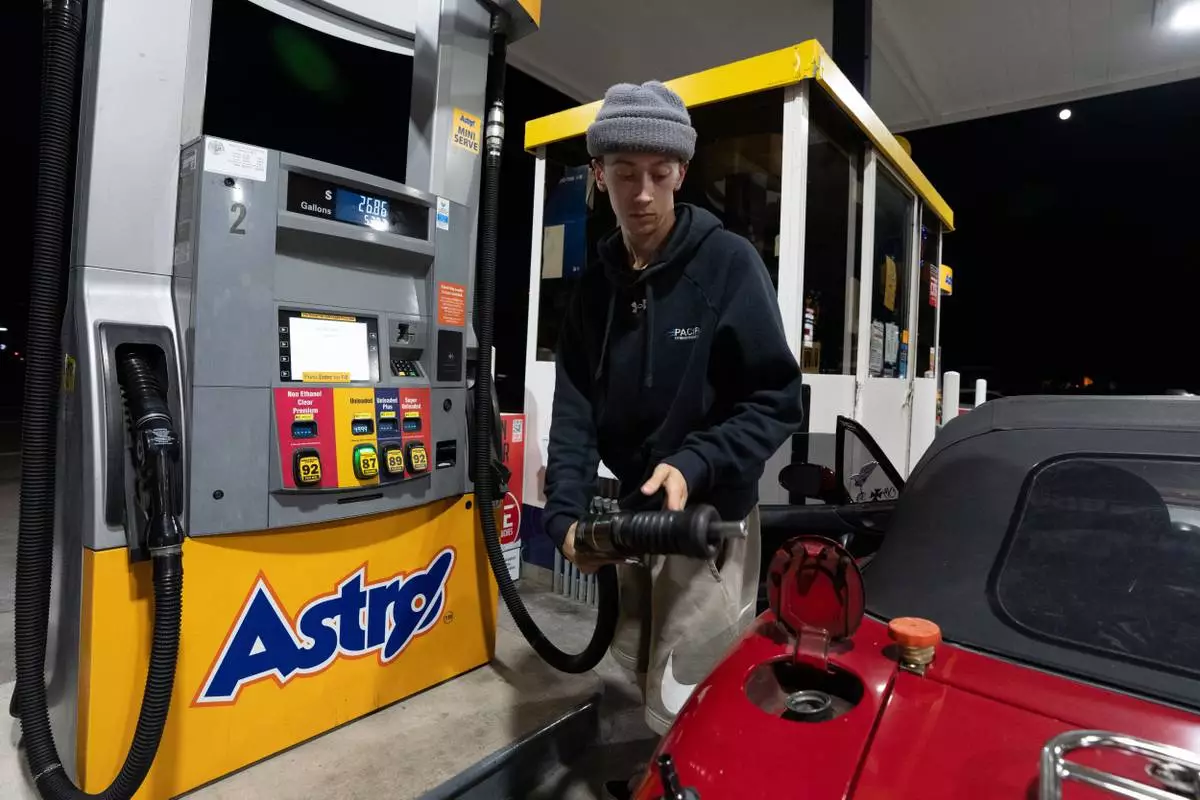
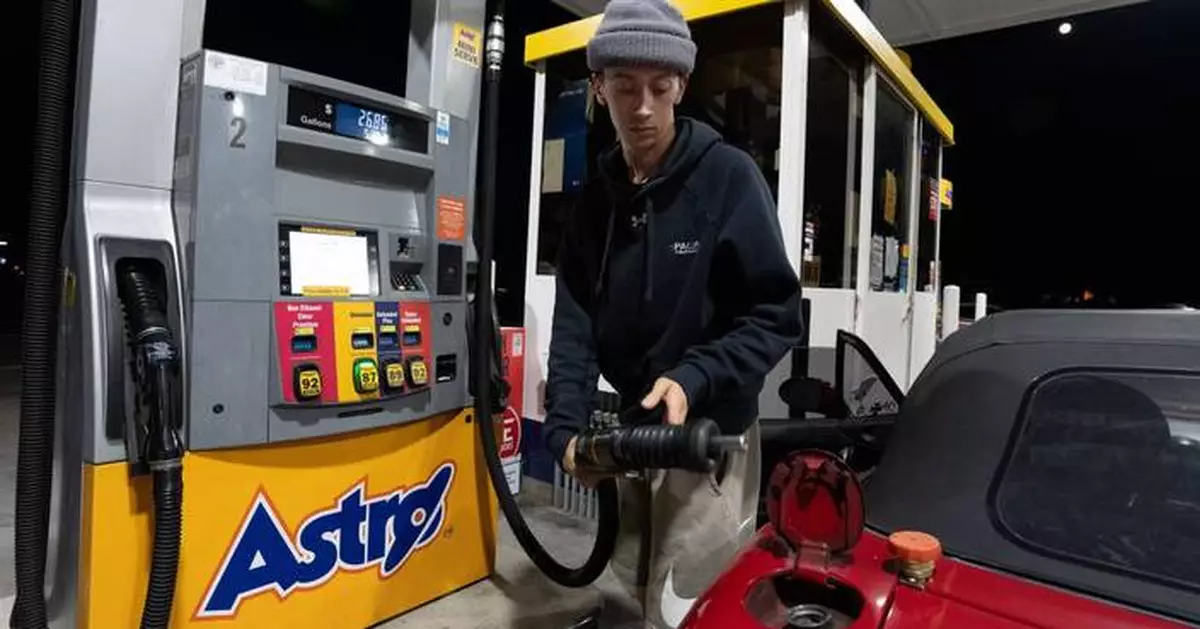
Luciano V. replaces the fuel nozzel after filling the tank of their 1999 Mazda Miata at an Astro gas station on Wednesday, April 29, 2026, in Portland, Ore. (AP Photo/Jenny Kane)
COLUMBUS, Ohio (AP) — Tuesday’s primary in Ohio set up what is expected to be one of the most expensive races for U.S. Senate this year as Republicans try to hold on to the chamber during a difficult midterm year, while biotech billionaire Vivek Ramaswamy will face a challenge from the state’s former health director as he seeks to keep the governor’s office in GOP hands.
In what promises to be one of November’s marquee matchups, former Sen. Sherrod Brown easily defeated a challenger in the Democratic primary and will now attempt to unseat Republican Sen. Jon Husted.
Democrats are counting on Brown’s previous popularity with voters to flip the seat. The Senate Leadership Fund, a top GOP super PAC, has pledged $79 million to defend Husted, who was unopposed in his primary.
Ramaswamy clinched the Republican nomination for governor over a minor challenger and will face off this fall against the state’s COVID-era health director, Democrat Amy Acton.
A newcomer to state politics, Ramaswamy aggressively positioned himself for the job early with the help of endorsements from President Donald Trump and the state Republican Party.
Trump’s endorsement continues to carry weight in Ohio, which favored him three times for president, but Ramaswamy could face headwinds amid the president’s lagging popularity over the war in Iran and the rising cost of living.
Acton, a physician who was unopposed in her primary, has a well-known public profile and robust fundraising. That has Democrats hopeful she can get the party back in the governor’s office for the first time in 20 years.
Ramaswamy, a 2024 GOP primary presidential candidate, swept onto the state's political scene early last year as a mad shuffle was taking place. Then-Sen. JD Vance was ascending to the vice presidency and front-running gubernatorial candidate Jon Husted was being appointed to replace him in Washington.
That opened a window of opportunity at the top of Republicans' statewide ticket.
Every statewide executive office was open this year due to term limits, but the governor’s race captured the bulk of the attention.
Though he is a newcomer in state politics, Ramaswamy's national profile, tech industry connections and proximity to Trump landed him the Ohio Republican Party's endorsement. With it, he cleared a prospective field that included the sitting state attorney general, state treasurer and lieutenant governor.
But Democrats also see opportunity with the open governors seat, even as the state, a former bellwether, has tipped convincingly toward Republicans during the Trump era. The president’s lagging approval ratings on the economy and dissatisfaction over the war in Iran are contributing to a competitive contest.
Acton, a physician and public health expert, emerged as their choice. She became a household name across Ohio in the early days of the COVID-19 pandemic as she stood alongside Republican Gov. Mike DeWine during daily coronavirus broadcasts. Her comforting presence during the crisis made her a beloved figure with many Ohioans.
“I just think she’s real,” said Aaron Weiner, a Cincinnati real estate agent who voted for Acton. “She has had struggles, so I think she can empathize with people who are struggling to get ahead.”
But the administration's aggressive actions — including shuttering businesses, closing schools and canceling an election — also earned Acton plenty of enemies and made her the occasional target of people upset about pandemic policies, with some armed protesters showing up outside her home.
Ramaswamy's campaign sought to capitalize on the lingering anger over pandemic restrictions with attacks on Acton's role early in the crisis. Ramaswamy was advising the lieutenant governor at the time — Husted — on virus-related economic issues and he founded a company that profited off its role developing vaccines.
Acton was unopposed in the Democratic primary, while Ramaswamy faced a long-shot challenge from Casey Putsch. The engineer and car designer is a YouTube provocateur who trolled Ramaswamy incessantly over his Indian heritage and Hindu faith and painted him as an out-of-touch billionaire “tech bro.”
Cincinnati voter Paul Mussman, who cast his ballot for Ramaswamy, said he considers it an asset that he is a relative newcomer to politics.
Ramaswamy would look at issues “in a fresh way and not based on what their party affiliation is,” Mussman said.
Husted was unopposed in the GOP primary for Senate, a special election to fill the remainder of the six-year Senate term Vance won in 2022. Husted's opponent will be Democrat Sherrod Brown, a former three-term senator who lost a reelection bid against Republican Bernie Moreno in 2024, a contest where spending hit $500 million. Brown faced a minor primary challenge from first-time candidate Ron Kincaid.
Early voting began April 7 under some new election laws, including citizenship checks and elimination of the four-day grace period for receiving mailed ballots. There have been no reports so far of any widespread problems for voters related to the changes.
In the wake of a new round of redistricting that slightly favored Republicans, the state also had numerous partisan congressional primaries.
The most heated GOP primary was in the Toledo area’s 9th District for the chance to take on Democratic U.S. Rep. Marcy Kaptur, the longest-serving woman in Congress.
The five-way contest included former state Rep. Derek Merrin, whom Kaptur defeated by less than a percentage point in 2024, as well as an Air National Guard veteran, a healthcare industry worker, a sitting state representative and the former deputy director of U.S. Immigration and Customs Enforcement, Madison Sheahan.
In Democratic U.S. Rep. Greg Landsman's Cincinnati-area district, which his party considers a “must-hold,” the three-way Republican primary included Eric Conroy, a CIA and Air Force veteran who was endorsed by Trump, Vance and Moreno.
Landsman also faced a primary challenge from Damon Lynch IV, the grandson of a prominent civil rights leader. Lynch criticized Landsman for his initial vote against a war powers resolution on the war in Iran, which Landsman later followed up with a favorable vote.
In the Akron area's 13th District, five Republicans including business owner Neil Patel, a 2022 U.S. Senate candidate, were vying for the opportunity to face Democratic U.S. Rep. Emilia Sykes.
As a Trump-backed national effort to remake congressional maps in Republicans' favor was underway, Ohio Democrats took a could-have-been-worse approach and passed the map they were given unanimously.
Now party candidates are crowding congressional primaries across the state for the chance to take on sitting Republican representatives, who hold 10 of Ohio's 15 seats.
The newly redrawn 7th District in the Cleveland area attracted eight Democrats hoping to challenge Republican U.S. Rep. Max Miller, a former senior Trump adviser, in November. Among them was former Cuyahoga County Executive Ed FitzGerald, the Democratic nominee for governor in 2014.
In northeast Ohio's 14th District, former state Supreme Court Justice William O'Neill was among three Democrats seeking to take on Republican U.S. Rep. Dave Joyce. Joyce also has two primary challengers.
Meanwhile six Democrats were on the ballot in the Dayton-area 10th District of Republican U.S. Rep. Mike Turner. There were seven in GOP U.S. Rep. Michael Rulli's 6th District along the Ohio River and five in the 5th District of Republican U.S. Rep. Bob Latta.
Associated Press writer Dylan Lovan in Cincinnati contributed.
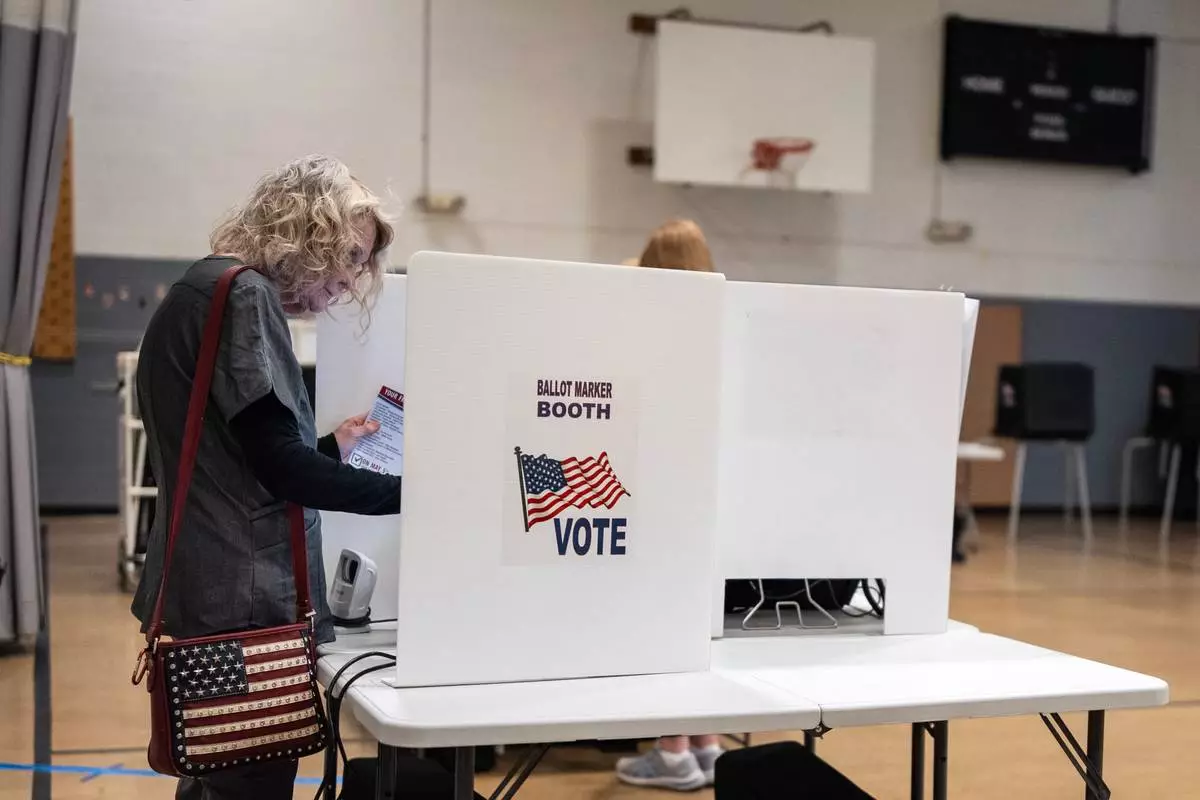
Marylou Zschach fills out her ballot at her polling place at the Burbank Early Childhood School in Columbus, Ohio, Tuesday, May 5, 2026, during the primary election. (AP Photo/Carolyn Kaster)
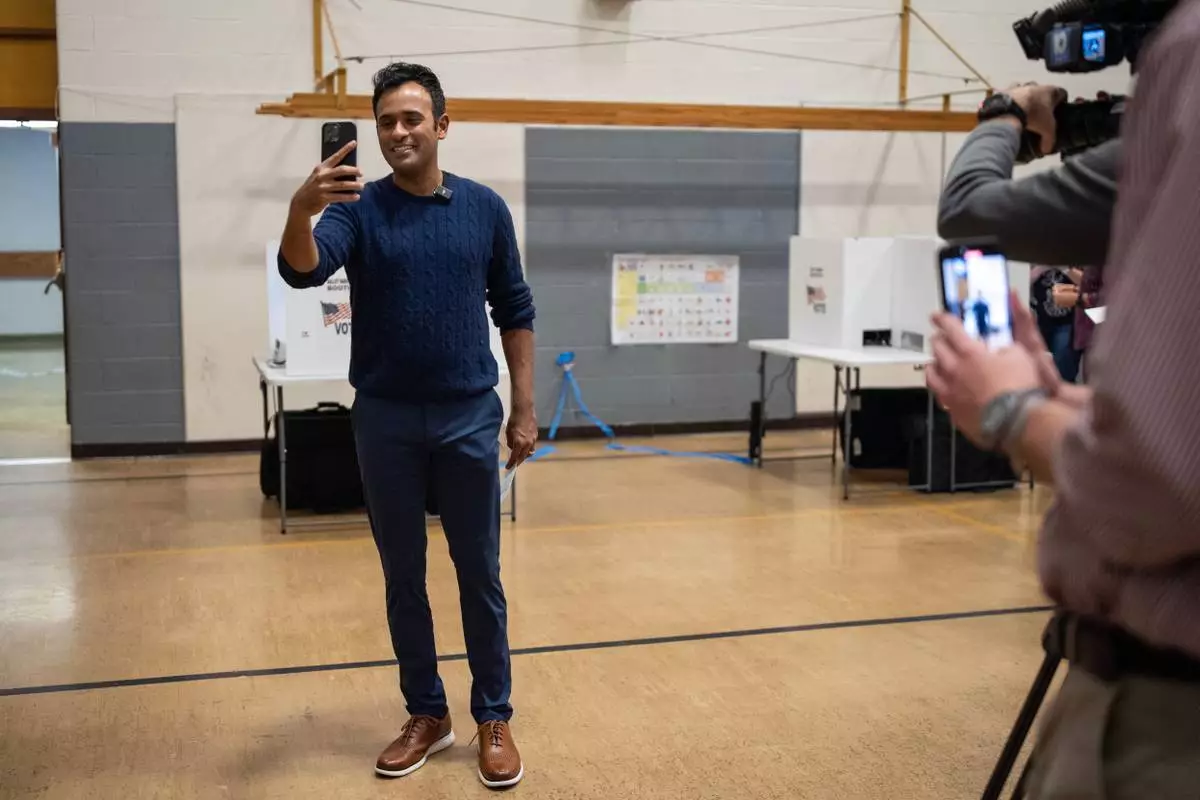
Republican Ohio gubernatorial candidate Vivek Ramaswamy talks into his phone after fining out his ballot at his polling place in Columbus, Ohio, Tuesday, May 5, 2026, during the primary election. (AP Photo/Carolyn Kaster)
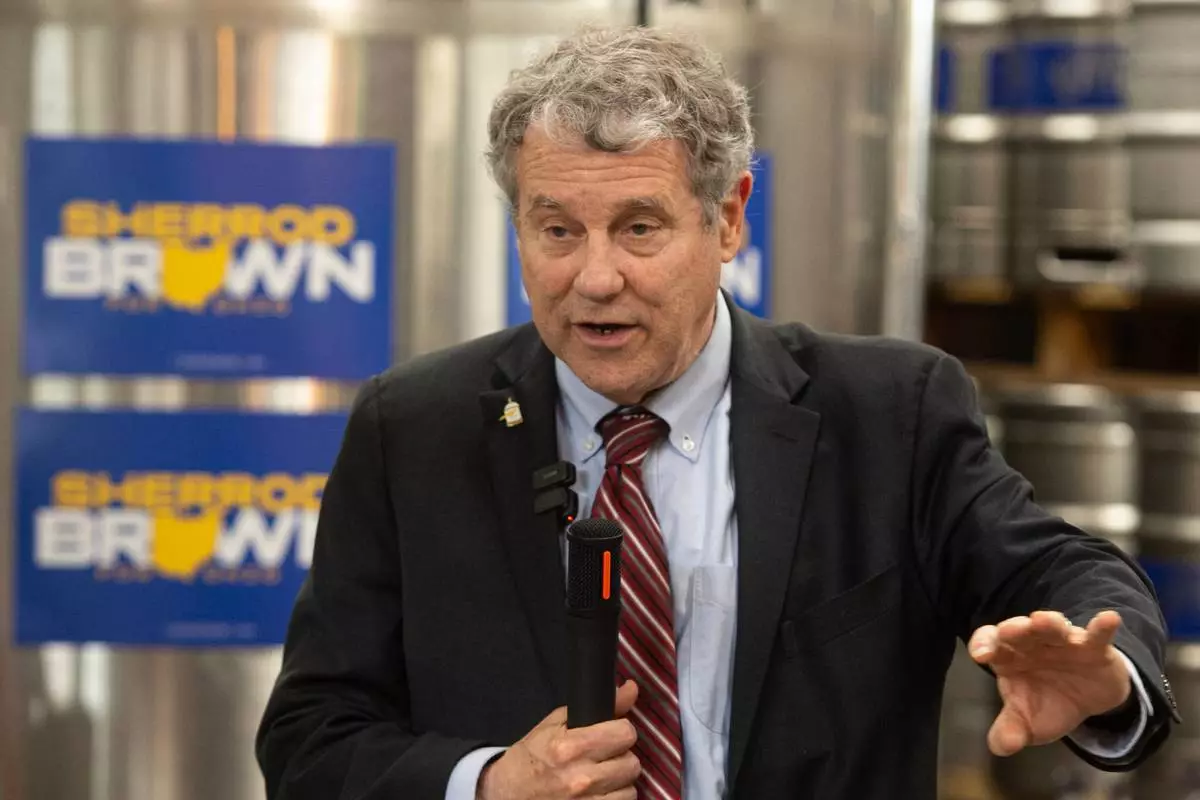
Former Democratic Sen. Sherrod Brown speaks during a campaign event ahead of primary elections at the Paladin Brewery in Austintown, Ohio, Thursday, April, 30, 2026. (AP Photo/Phil Long)
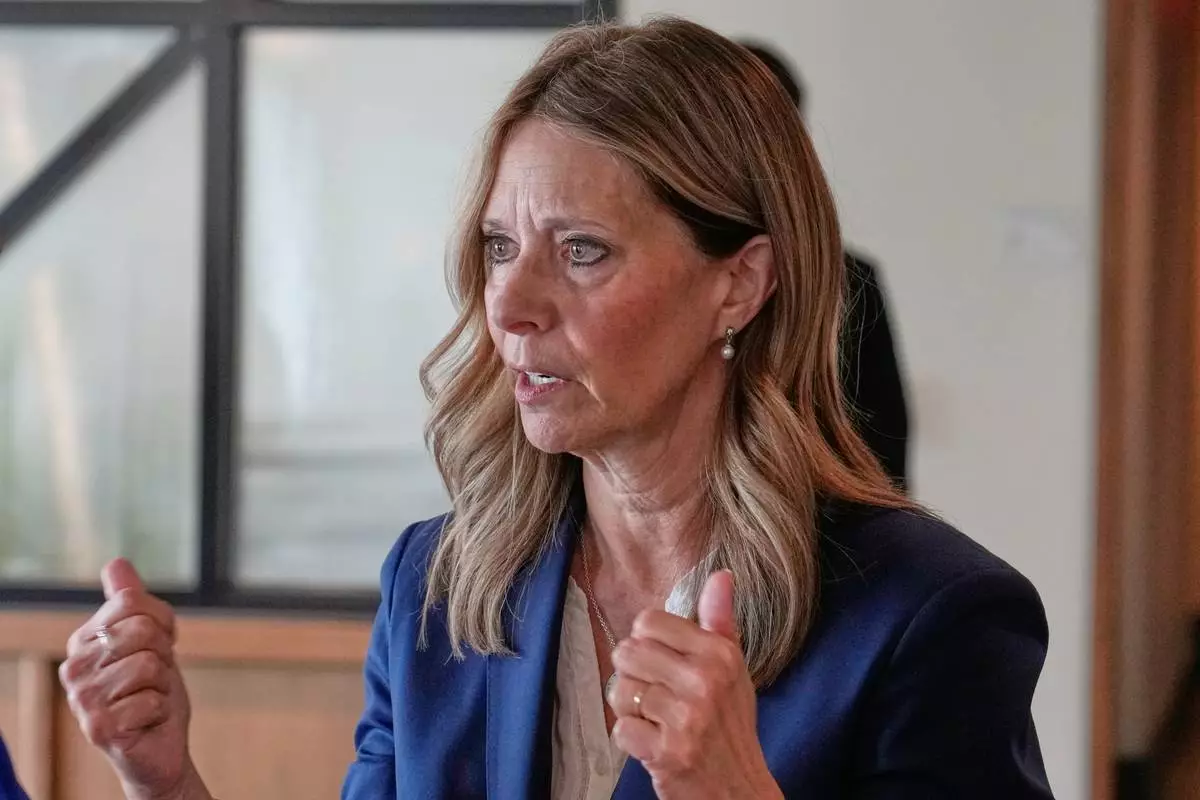
FILE - Amy Acton, Democratic candidate for Governor of Ohio, gestures as she speaks with a reporter in Columbus, Ohio April 15, 2026. (AP Photo/Sue Ogrocki, File)
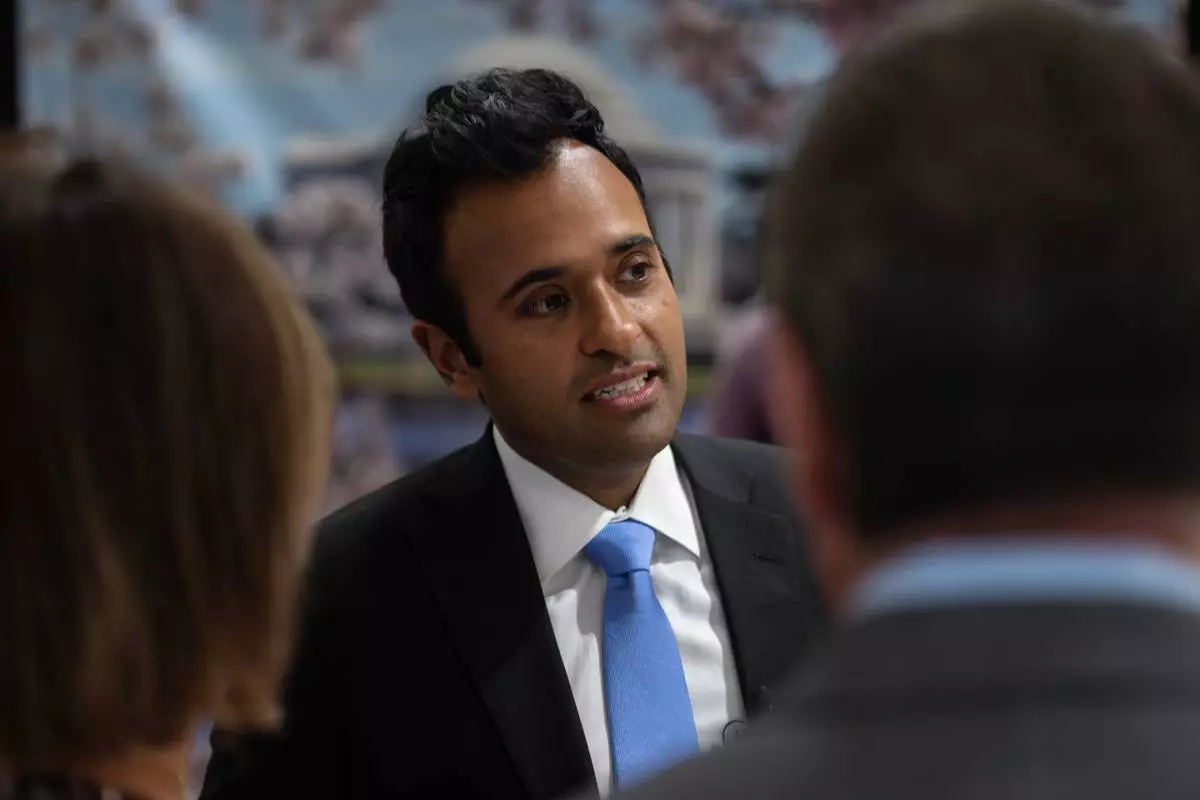
Republican Ohio gubernatorial candidate Vivek Ramaswamy speaks to supporters before the Warren County Republicans Lincoln Day Dinner at the Great Wolf Lodge in Mason, Ohio, Friday, April 10, 2026. (AP Photo/Carolyn Kaster)