SANTA MONICA, Calif.--(BUSINESS WIRE)--May 5, 2026--
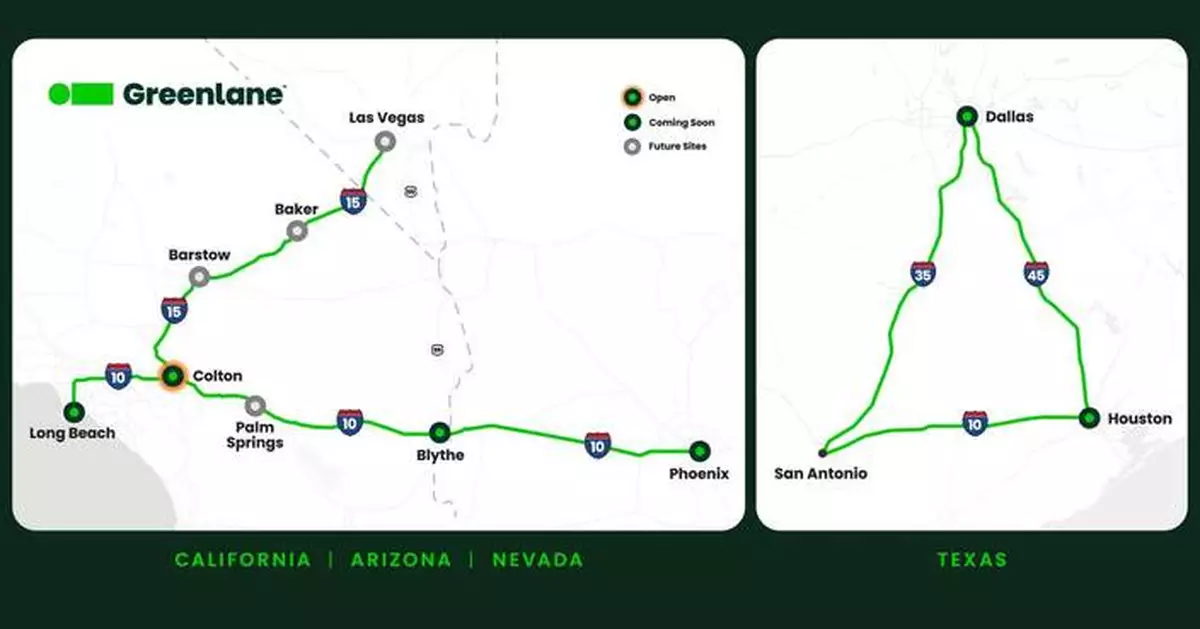
As fleets electrify along North America’s busiest freight routes, Greenlane is expanding its nationwide public charging network for commercial electric trucks beyond California. The public charging infrastructure developer and operator is entering Texas with new high-power sites planned in Dallas and Houston along the I-45 corridor. Greenlane’s Texas expansion targets one of the most strategically significant freight regions in the country. The Dallas-Houston corridor sits at the intersection of freight moving from the West Coast, the Midwest, and across the U.S.-Mexico border, making it among the highest-volume commercial trucking routes in the nation.
This press release features multimedia. View the full release here: https://www.businesswire.com/news/home/20260505310576/en/
“Our customers are making commitments to electrify their fleets, and they need a charging network that can grow alongside them,” said Patrick Macdonald-King, CEO of Greenlane. “This is the first leg of the Texas triangle, one of the more important freight arteries in the country, so bringing high-power charging there is the next logical step in building a network that serves how freight moves across America. Every site we develop is guided by a demand-driven strategy—and this is a big next step to building out the broader network.”
New locations will feature 6-8 pull-through lanes, tractor parking and charging, with chargers designed to support both combined charging system (CCS) connectors for current-generation trucks and megawatt charging system (MCS) connectors for next-generation vehicles. This dual capability allows fleets to transition smoothly and maintain operational continuity as vehicle technology evolves. The high-power output also enables electric trucks to recharge during standard driver rest periods, reducing dwell time and aligning more closely with diesel fueling expectations. Each site will also offer parking to support drop-and-hook relay operations and overnight stops, giving fleets the flexibility to run continuous freight operations along the corridor.
"Texas is where the future of zero-emission freight accelerates. It's a critical trucking market and a proving ground for any operator serious about scale," said John Verdon, Chief Commercial Officer at Nevoya. "Our launch on the I-45, catalyzed by GMA Trucking's book-and-claim program, shows what's possible when the industry collaborates effectively. Greenlane's Texas expansion gives us the infrastructure backbone to scale that model extending Nevoya's electric trucking leadership from California into Texas."
The Texas expansion builds on Greenlane’s growing West Coast network, anchored by its flagship Greenlane Center in Colton, California, which opened in April 2025. In Blythe, California, a new site is expected to open later this year, strategically positioned midway between Los Angeles and Phoenix along the I-10 corridor. At the Port of Long Beach, also expected later this year, Greenlane will support the high-volume drayage operations that move goods from one of the nation's busiest ports, as well as regional and long-haul fleets traveling broader freight routes.
Every site in Greenlane's growing network operates on the same foundation—the Greenlane Edge™ platform, which powers the Greenlane Fleet™ Portal and Greenlane Driver™ App, enabling fleet managers and drivers to reserve chargers in advance, monitor charging activity in real time, and manage billing from a single platform. That operational infrastructure has helped Greenlane achieve 99% uptime across its network and complete an independent SOC 2® Type 2 audit, verifying the security and reliability standards behind every customer interaction. As the network expands into Texas and beyond, that same operational standard travels with it.
Greenlane will unveil more details about the Texas expansion at ACT Expo 2026. The company will host a press conference on Tuesday, May 5, at 2:15 PM PT at booth #2567 and on LinkedIn Live. Attendees are invited to visit Greenlane’s booth to learn more about the company’s corridor strategy and locations.
About Greenlane
Greenlane Infrastructure, LLC's mission is to develop, build and operate a nationwide network of electric public charging stations for commercial vehicles. Greenlane addresses the urgent need for publicly available, nationwide electric charging infrastructure for commercial vehicles, especially for long-haul freight operations, and is a critical step toward the development of an electric vehicle ecosystem across North America.
Greenlane has been recognized for its leadership in advancing electric freight infrastructure, earning the 2025 EVIEs “Private Sector Infrastructure Strategy of the Year” award and being named Fast Company's “Next Big Thing in Tech” for 2025 in Sustainability & Energy. These honors reflect Greenlane’s pioneering approach to building reliable, high-power charging networks that are shaping the future of electric transportation. Visit www.drivegreenlane.com for more details.
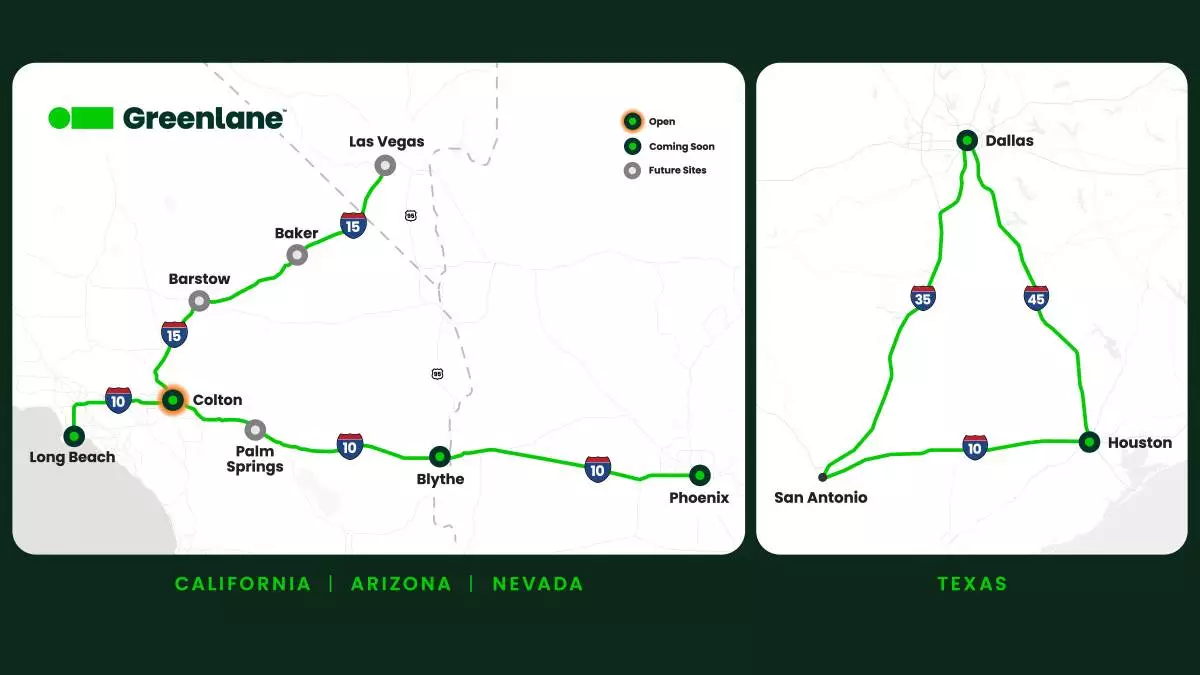
Public charging infrastructure developer and operator Greenlane is entering Texas with new high-power sites planned in Dallas and Houston along the I-45 corridor.