SECAUCUS, N.J. (AP) — The Toronto Maple Leafs won the lottery for the first pick in the NHL draft on Tuesday night, a significant victory that could change the trajectory of the storied franchise at a critical time.
The Maple Leafs got some lottery luck a little more than 48 hours after hiring John Chayka as general manager and bringing back franchise legend Mats Sundin to serve as a hockey operations adviser. Chayka and Maple Leaf Sports & Entertainment president and CEO Keith Pelley got some harsh questions at the introductory news conference, but it was all smiles at Toronto's facility after getting the No. 1 pick.
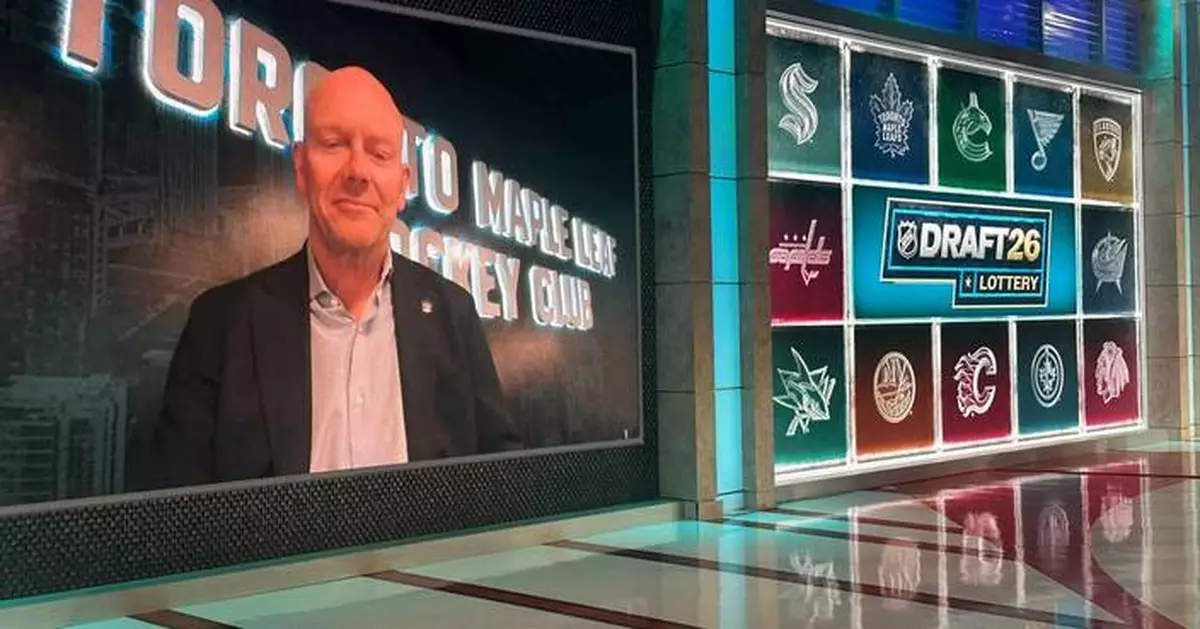
“I’m extremely happy for the Toronto Maple Leafs fanbase, of course," Sundin said. "Certainly this is really going to help when you’re looking into the future and try to help this team and what we’re looking for the future for the Toronto Maple Leafs, so it’s great to get the first pick.”
Penn State’s Gavin McKenna and Swedish winger Ivar Stenberg are rated as the top North American and European prospects by NHL Central Scouting. McKenna has been considered the prospective top choice for quite some time.
“I’ve kept track of him for a number of years now, and the skill level, the creativity, obviously the puck ability and then his shot and release is all pretty special,” Chayka said. “A good package, and it’ll be good to get with the scouts and talk through it all, but I know there’s a lot of passion for a lot of players, including Gavin.”
The most immediate question for the Leafs under new management is the future of captain and best player Auston Matthews after they missed the playoffs for the first time in his career. It's the first time they've won the lottery since taking Matthews with the No. 1 pick in 2016, and the draft is back in Buffalo where they made that selection.
Toronto had the fifth-highest odds of winning it at 8.5%. Vancouver had the highest at 18.5%, has never had the first pick and dropped to third. Chayka called moving up a fortuitous bounce.
“Long road ahead, of course: Lots of work to do still, but when you get a first overall pick, it’s a monumental type of opportunity,” Chayka said. “You don’t know what’s going to occur in these types of situations, but you do know you need some luck and it happened. I don’t think it changes the vision or the strategy, but certainly when these things happen it can change course and timelines, etc. But it’s not something that we’re going to change how we think about things.”
The Leafs get to keep the pick this year but lose their first-rounder in 2027 and '28 to Philadelphia and Boston. There is some uncertainty as to which order for the Flyers and Bruins, and deputy commissioner Bill Daly called it a complicated situation that would need to be worked out.
The San Jose Sharks won the lottery for the second pick. With yet another top-five pick, GM Mike Grier and his staff can augment a young group already led by Macklin Celebrini and including Will Smith and Michael Misa.
“There’s lots of options there,” Grier said. “There’s centers, there’s ‘D,’ there’s wingers, so to have the opportunity to add another very talented player to our young core is very exciting.”
Chicago has the No. 4 pick and the New York Rangers No. 5.
“We're going to get a great player,” Blackhawks GM Kyle Davidson said. “It's all about accumulating talent.”
This was the second live draft conducted at the NHL Network studio, after the draw in previous years was conducted in a conference room and those inside were sequestered until the results aired on television. Commissioner Gary Bettman credited president of content and events Steve Mayer for the change.
“He goes, ‘This is an exciting moment,’ when we would do it in the room before Bill would do the reveal,” Bettman said. "He said, ‘Let’s do it live.’ And I gave him 10 reasons that we should be concerned, including, what if the machine breaks. And he said, ‘No, no we’re going to be fine.’ He’s the one who figured out how to make it an interesting and compelling show.”
After the first three numbers were drawn, the Canucks had a 27.3% chance of winning and the Rangers 18.2%, while the Leafs were among six teams with 9.1%. When the No. 12 ball popped out, completing the 7-2-11-12 sequence, Toronto won, changing the entire mood around the Original Six organization that has not hoisted the Stanley Cup since 1967.
“Just really excited for the organization, for the fan base," Chayka said. "I think it's a meaningful step and just elated.”
AP Sports Writer Jay Cohen in Chicago contributed to this report.
AP NHL: https://apnews.com/hub/nhl
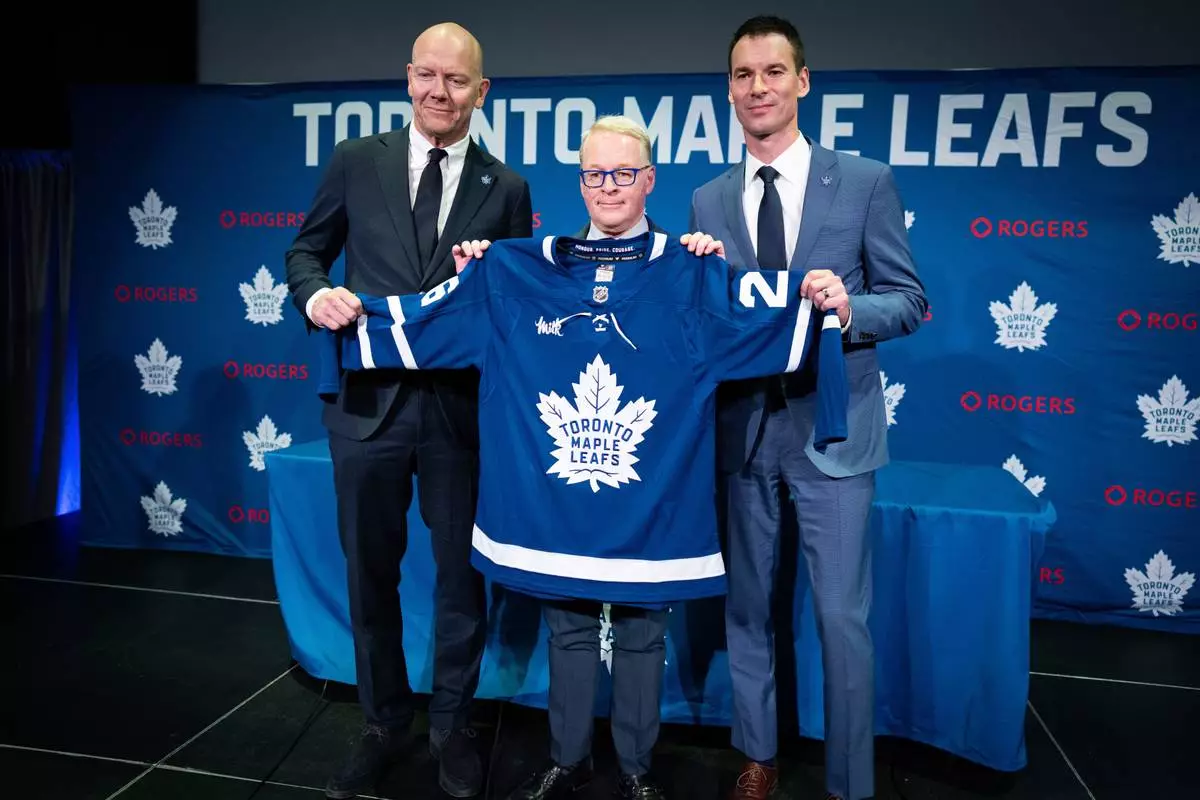
New Toronto Maple Leafs Senior Executive Advisor, Hockey Operations Mats Sundin, left to right, MLSE President and CEO Keith Pelley, and new Toronto Maple Leafs General Manager John Chayka, hold up a jersey following a press conference in Toronto on Monday, May 4, 2026. (Arlyn McAdorey/The Canadian Press via AP)
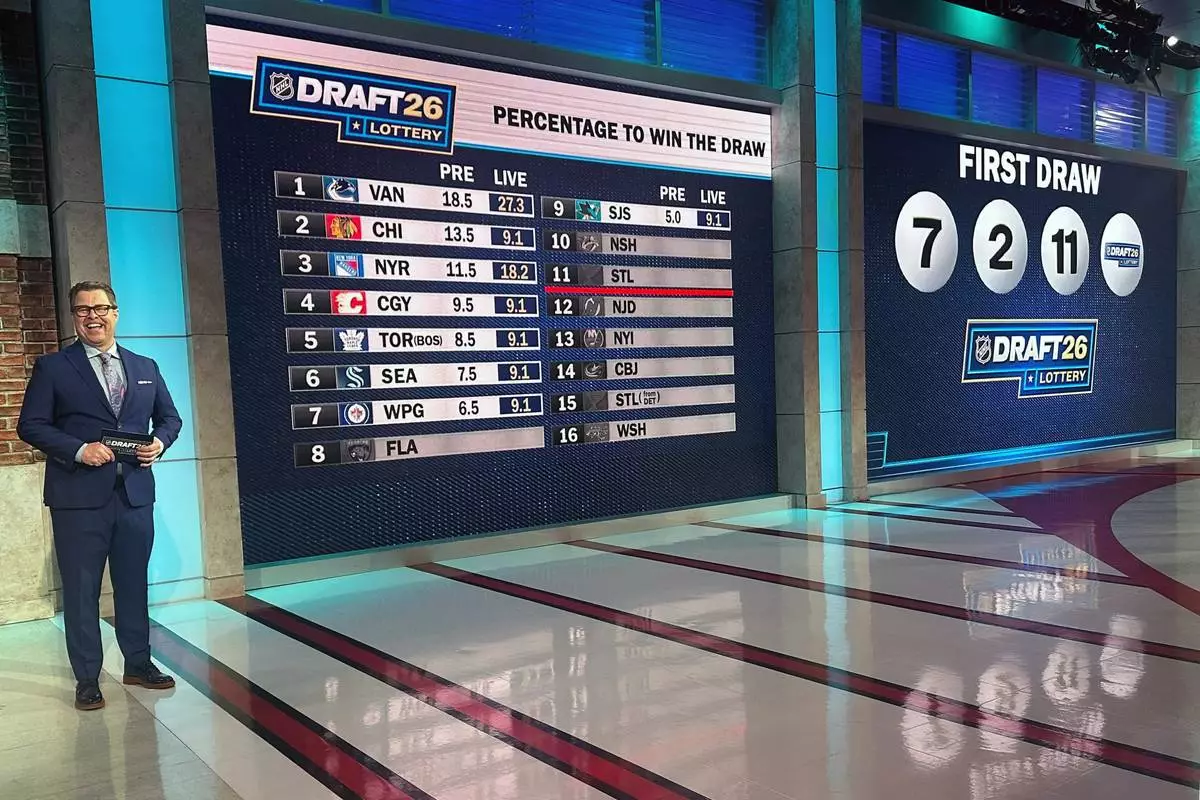
The Toronto Maple Leafs won the NHL draft lottery for the first pick, drawn at NHL Network studio in Secaucus, New Jersey, on Tuesday, May 5, 2026. (AP Photo/Stephen Whyno)
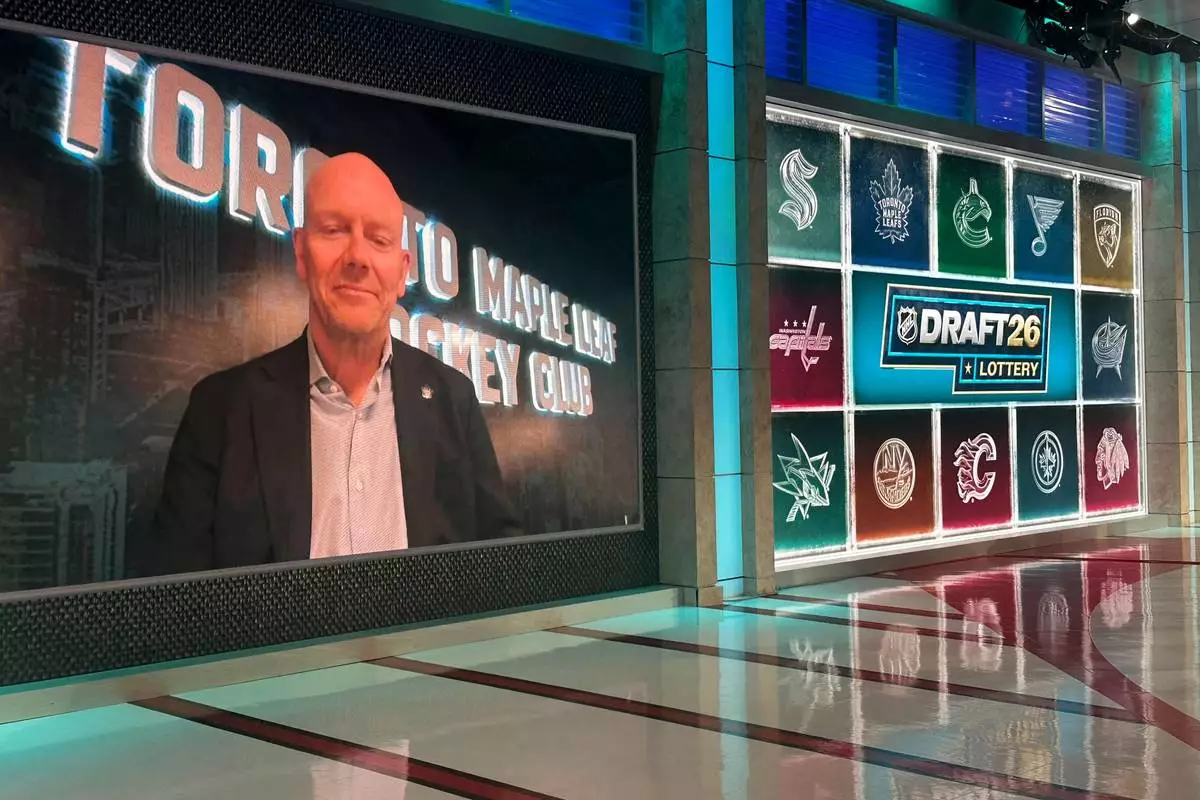
Toronto Maple Leafs executive Mats Sundin appears on a video screen after the team he just joined won the NHL draft lottery for the first pick, drawn at NHL Network studio in Secaucus, New Jersey, on Tuesday, May 5, 2026. (AP Photo/Stephen Whyno)
The primary election Tuesday in Ohio set up what is expected to be one of the most expensive races for U.S. Senate this year as Republicans try to hold on to the chamber, while biotech billionaire Vivek Ramaswamy will face a challenge from the state’s former health director as he seeks to keep the governor’s office in GOP hands.
In what promises to be one of November’s most high-profile races, former Sen. Sherrod Brown easily defeated a challenger in the Ohio Democratic primary and will now attempt to unseat Republican Sen. Jon Husted.
And in primary elections in Indiana, three Republican state senators have lost Tuesday to challengers backed by President Donald Trump, while another incumbent survived in four of seven races that are testing the president’s influence in a deep red state.
And in Michigan, after 16 months without representation in the state Senate, voters in the competitive District 35 are deciding control of the chamber. Michigan Democrats cling to a 19-18 majority. A Republican victory would deadlock the state Senate.
Here is the latest:
ndiana Sen. Travis Holdman, an 18-year senator from the Fort Wayne area, attributes his loss not to his vote against state redistricting in December but the more than $1.3 million in attack advertising that was bankrolled by super PACs organized by Indiana Gov. Mike Braun and Sen. Jim Banks.
“Welcome to D.C. politics in Indiana because this means that’s what’s coming,” he said. “I did what my constituents asked me to do and it cost me my job,” he said. “But that’s OK”
Carson survived his toughest primary challenge in nearly two decades in Indiana’s 7th Congressional District.
Carson won the four-person primary for the Indianapolis-area district. Carson has been in Congress since winning a special election in 2008 triggered by the death of his grandmother, former Rep. Julia Carson. He is one of four Muslims in Congress.
André Carson on Tuesday defeated George Hornedo, an attorney and Democratic Party strategist who served in the Obama administration and Destiny Wells, a U.S. Army Reserve member who previously lost races for secretary of state and attorney general.
Denise Paul Hatch, who cast herself as an anti-establishment outsider, also ran. Hatch pleaded guilty to felony misconduct in office in 2024, leading to her removal as a constable for Center Township.
Late Tuesday afternoon, before he’d lost the race to hold onto his state Senate seat, Indiana’s Travis Holdman said the last few months had been “a roller coaster.”
He was cold and wet from the 47-degree rain outside the polling place he had visited, though a voter had just thanked him for having “a spine.”
Holdman’s Trump-back challenger Blake Fiechter had entered the race, quit the race and reentered, all while super PACs backed by Gov. Mike Braun and Sen. Jim Banks unloaded more than $1.3 million in his Fort Wayne area district attacking Holdman after he voted against the White House redistricting plan.
“It’s the emotions of not knowing which way it’s going to go,” he explained, before finishing, “I’m at peace with however it goes.”
Billionaire biotech entrepreneur Vivek Ramaswamy has clinched the Republican nomination for Ohio governor and will face off this fall against the state’s COVID-era health director, Democrat Amy Acton.
A newcomer to state politics, Ramaswamy aggressively positioned himself for the job early with the help of endorsements from President Donald Trump and the state Republican Party.
Trump’s endorsement continues to carry weight in Ohio, which favored him three times for president, but Ramaswamy could face headwinds amid the president’s lagging popularity over the war in Iran and the rising cost of living.
Acton, a physician who was unopposed in her primary, has a well-known public profile and robust fundraising.
U.S. Sen. Jon Husted has secured the Republican Senate nomination in Ohio, as the incumbent braces for what is expected to be an expensive fight to hold his seat.
On the Democrats’ side, Dr. Amy Acton won the party’s nomination for governor. The state’s COVID-era state health director moves on to a likely matchup against Republican billionaire biotech entrepreneur Vivek Ramaswamy, who was facing a challenger in the GOP primary.
Husted and Acton were both unopposed in their primaries.
Today’s vote will decide candidates for the marquee Senate and governor’s races this fall. Anyone in line at 7:30 p.m. has the right to vote.
Outside groups have spent more than $8 million targeting incumbents in Indiana, in some cases outspending the money those candidates raised on their own.
In state Senate District 23, Trump endorsed Paula Copenhaver against state Sen. Spencer Deery. Deery raised $500,000, according to the latest state filings, while Copenhaver raised about $15,000. However, outside groups spent more than $2 million in ad reservations boosting Copenhaver, according to AdImpact.
In state Senate District 1, Trevor de Vries -- a challenger endorsed by Trump -- raised just over $30,000 as of latest filings, while incumbent Dan Dernulc has raised over $200,000. But AdImpact shows outside groups spending more than $200,000 to help defeat Dernulc.
Polls remain open in 12 counties in northwestern and southwestern Indiana that are in the central time zone.
“I think it might have some bearing on the country, because I know Trump is obviously looking to hold onto the House and Senate and maintain his advantage there, which is pretty razor-thin I think at this point,” said John Hall, a 69-year-old self-described independent who voted for Democrat Chedrick Greene. “So, I’m sure he’s going to be paying close attention to this particular race.”
Hall, a retiree who worked for years at an area radio station, said the economy is a key issue for him. He spent $58 at the gas station before driving to the public library in Bay City to vote.
“It’s taking a bite out of a lot of people’s budgets right now,” Hall said, adding it would have cost between $35 and $40 to fill up his car’s tank two months ago.
In a social media post while voters were headed to the polls, Trump said Republican state senators who voted against redistricting “couldn’t care less about our Country, or about keeping the Majority in Congress.”
Trump described the senators who crossed him as RINOs, which means “Republican in name only.” And he hailed “Great Patriots” that he’s endorsed to oust them.
Groups allied to defeat Indiana state Sen. Spencer Deery will have spent $2 million in ads attacking him by the time polls close. That’s more than any other district where incumbents are trying to fend off Trump-backed challengers.
Deery is completing his first term and was the first Republican senator to publicly oppose redistricting.
Paula Copenhaver is challenging him. She’s a close ally of Republican Lieutenant Gov. Micah Beckwith and is Fountain County GOP chair in rural, western Indiana. Deery beat Copenhaver in a four-way Republican primary for the seat four years ago.
The super PAC run by Indiana U.S. Sen. Jim Banks, Hoosier Leadership PAC, will have spent more than $1.1 million on ads attacking Deery through Election Day, according to the ad-tracking service AdImpact. Gov. Mike Braun’s American Leadership PAC will have spent more than $900,000 doing the same, according to the group.
Deery is on track to have spent more than $745,000 on this year’s primary, far more than last time.
An engineer and vehicle designer who calls himself “The Car Guy,” Putsch is making a long-shot bid for Ohio governor against Republican Vivek Ramaswamy.
After the last-minute disqualification of another candidate’s ticket, the 44-year-old from northwest Ohio ended up as Ramaswamy’s only primary opponent.
Putsch has attracted fans and critics with his provocative YouTube videos, which often — subtly or overtly — take aim at Ramaswamy’s Indian heritage or Hindu faith.
On the campaign trail, he’s also been critical of President Donald Trump, energy guzzling data centers and national Republicans’ support for Israel and handling of the Epstein files.
Trump is throwing his name behind Republican challengers to GOP senators who opposed redistricting. But Braun is carrying out much of the work.
After Trump’s pledge last year to rally against GOP senators who blocked the effort and are seeking reelection, Braun picked the candidates.
Frustrated by Rodrick Bray, the Senate GOP leader who opposed redistricting, Braun recruited the seven Republicans challengers on the pledge that they oppose Bray for leader.
In his break with party orthodoxy, Braun has also committed $3 million to advertising from his American Leadership PAC attacking those incumbents on the wishes of the president, according statistics collected by the ad-tracking firm AdImpact.
That includes almost $900,000 alone in ads attacking Republican state Sen. Spencer Deery of West Lafayette, the first Republican senator to oppose redistricting and a protege of former GOP Gov. Mitch Daniels, who is an opponent of the redistricting measure.
The Republican-controlled Indiana Senate in December rejected the measure that would have shaded all nine of the states congressional districts as favorable to the party, and halted progress on the party’s effort nationally.
The move defied months of urging by the White House led by Vice President JD Vance, who traveled twice to Indianapolis and hosted many in the caucus in Washington, where Trump phoned in to address the group.
While Indiana was considering the measure, voters in Democratic-leaning California approved Proposition 50, which allowed the state Legislature to bypass the independent commission to redraw districts for the next three biennial elections.
Republicans think they could win up to nine more seats under revised districts in Texas, Missouri, North Carolina and Ohio. But Democrats think they could win as many as 10 additional seats under new districts in California, Utah and Virginia, though legal challenges remain in both Missouri and Virginia.
Emily Bohall Board, 37, an occupational therapist in Columbus, Indiana, said she had never voted in a Republican primary before Tuesday. But the issue of redistricting compelled her to cast a ballot for Sen. Greg Walker.
“Greg Walker is the only option not supported by Donald Trump, and I have been very upset about everything Trump has done,” Board said.
Madison Long, 28, an attorney, who also voted for Walker, criticized Michelle Davis, Walker’s opponent, for her ties to Trump.
“She doesn’t have any promises of her own or any agenda of her own. Her goal is to just follow Trump,” Long said. “I find that extremely concerning given the nature of the nationwide politics.”
The race will determine whether Democrats maintain a majority in the state Senate for the final months of the year.
Democrats currently control the state Senate 19-18. If Democrat Chedrick Greene wins, Democrats keep their majority.
If Republican Jason Tunney wins, the Senate would be tied, making it tougher for Democrats to advance Gov. Gretchen Whitmer’s agenda. While Democratic Lt. Gov. Garlin Gilchrist II would serve as the tie-breaking vote, Republicans could effectively block any measure from passing by not having all members vote.
There’s another reason people are watching the race: The swing district in a battleground state could give clues to what will happen in November’s midterms..
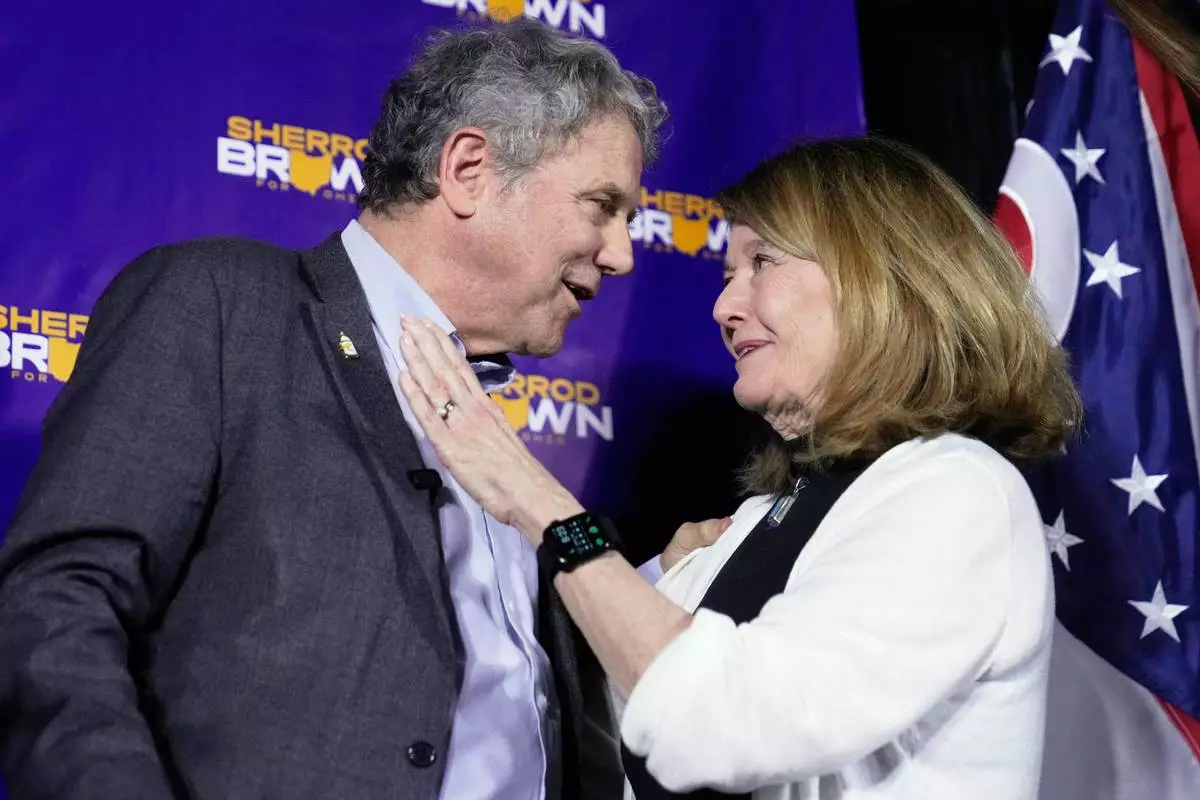
Democratic Ohio Senate candidate Sherrod Brown, a former three-term U.S. senator, left, and wife Connie Shultz react on stage at a primary election night campaign event after Brown won the party's primary for US Senate in Cleveland, Tuesday, May 5, 2026. (AP Photo/Sue Ogrocki)
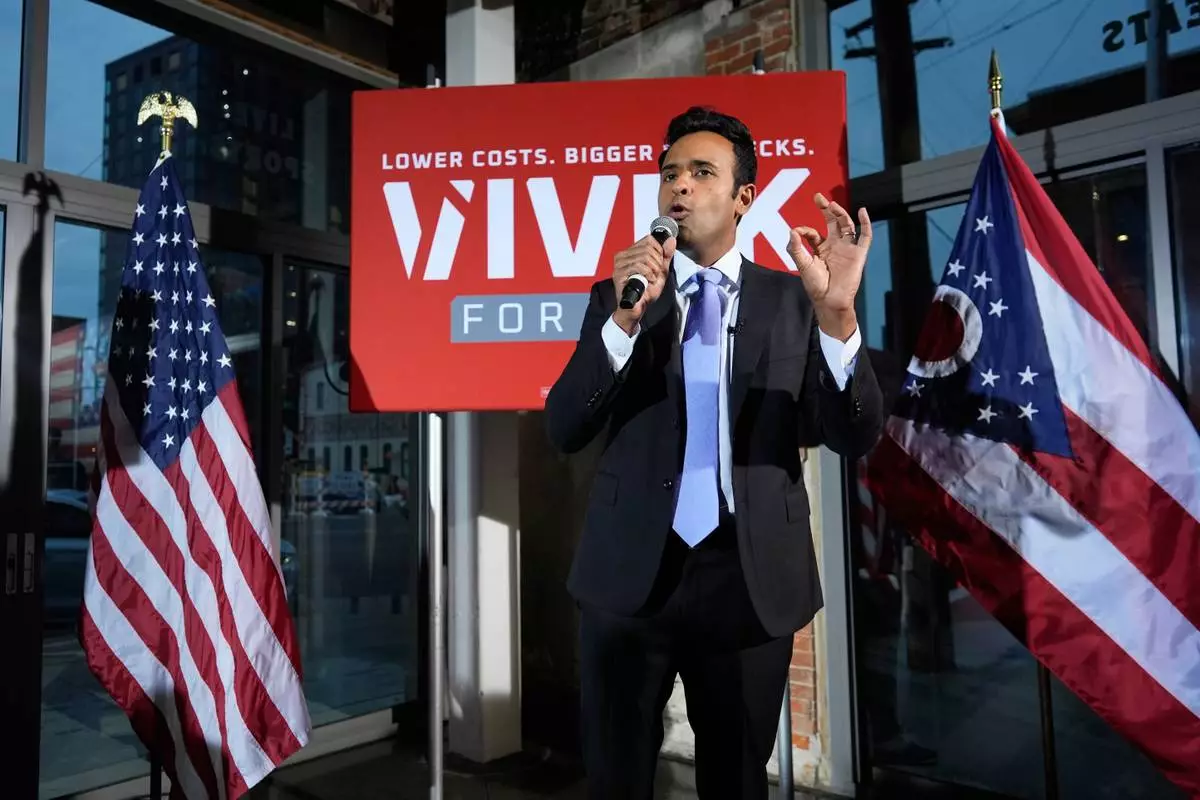
Republican Ohio gubernatorial candidate Vivek speaks during a watch party at the Spruce St. Sporting sports bar after winning the party's nomination for governor Tuesday, May 5, 2026, in Columbus. (AP Photo/Carolyn Kaster)
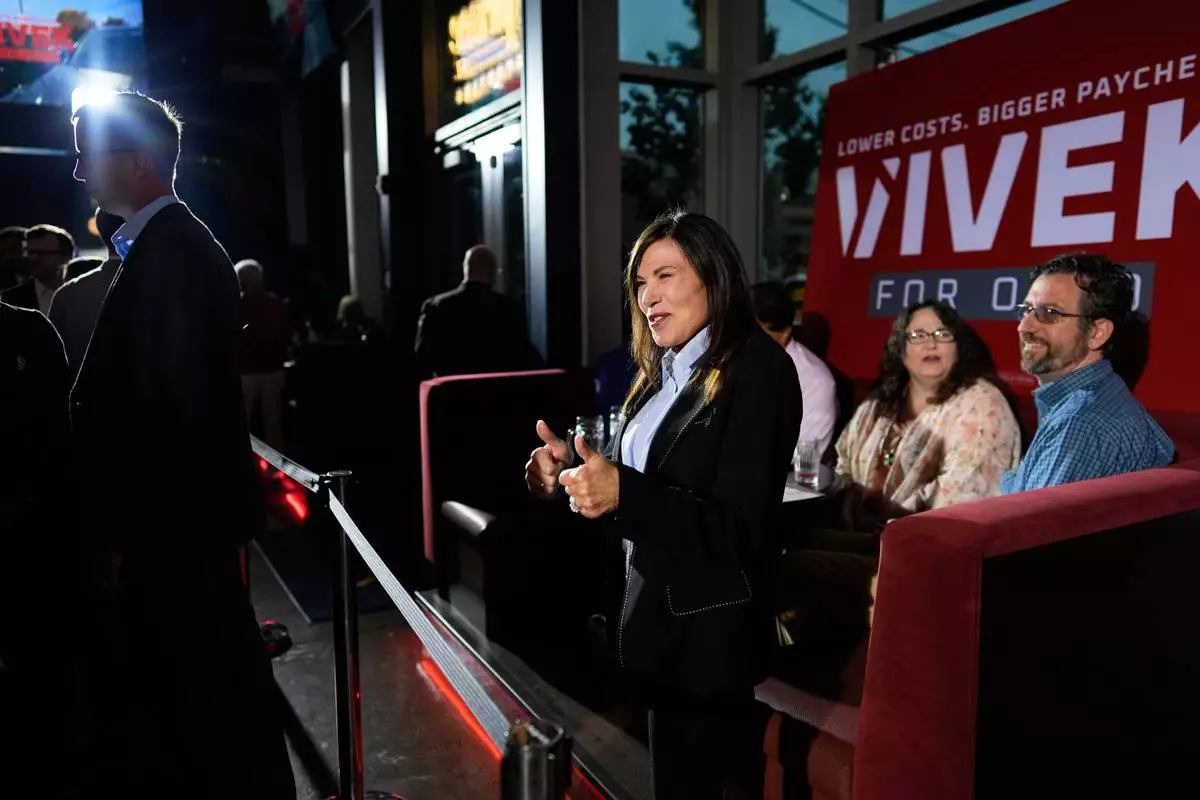
Meredith Freedhoff gestures during a watch party for Republican Ohio gubernatorial candidate Vivek Ramaswamy at the Spruce St. Sporting sports bar in Columbus, Ohio, Tuesday, May 5, 2026. (AP Photo/Carolyn Kaster)
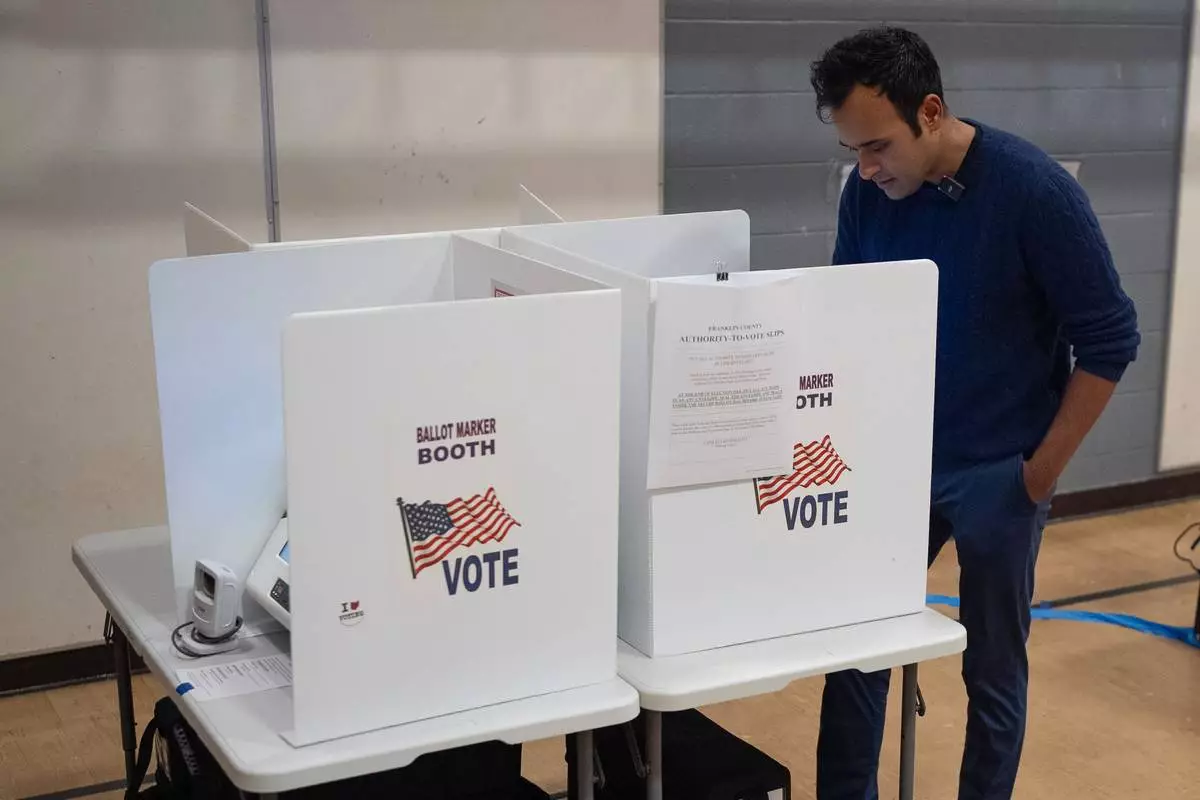
Republican Ohio gubernatorial candidate Vivek Ramaswamy fills out his ballot at his polling place at the Burbank Early Childhood School in Columbus, Ohio, Tuesday, May 5, 2026, during the primary election. (AP Photo/Carolyn Kaster)
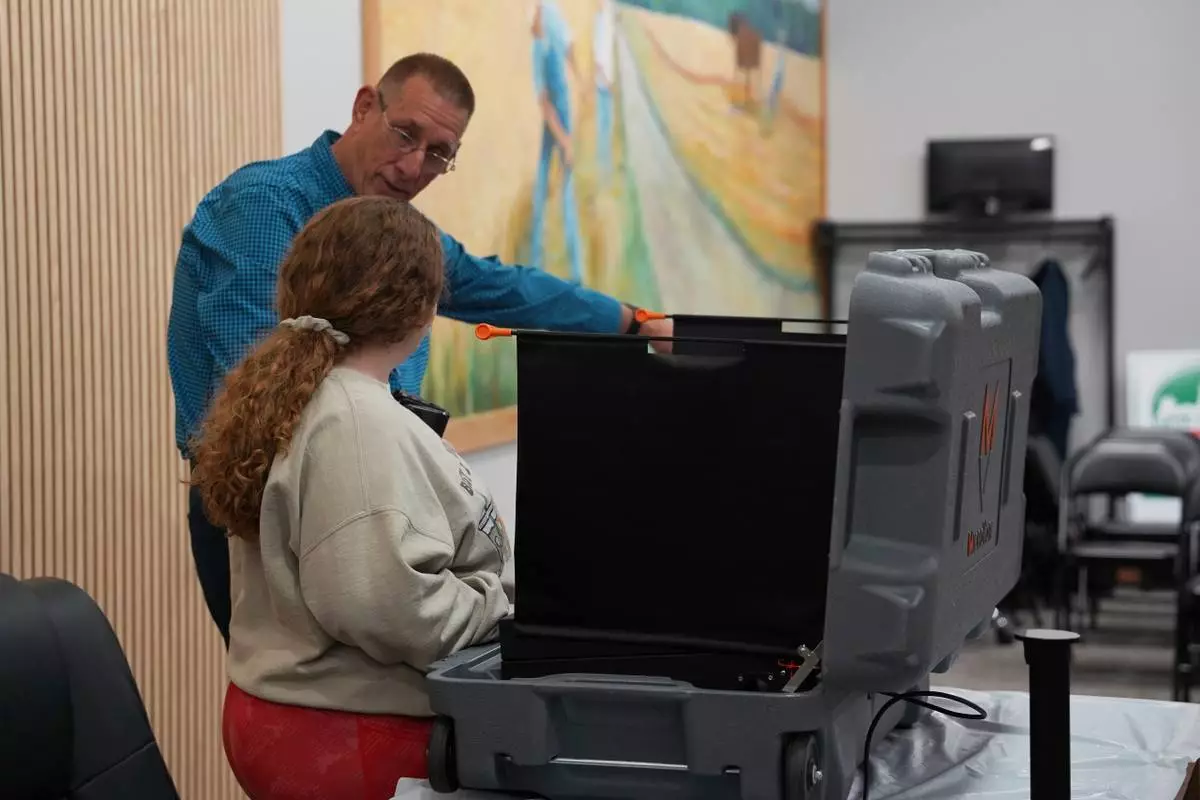
A poll worker talks with a voter at a polling booth in in Columbus, Ind., on Thursday, May 5, 2026. (AP Photo/Obed Lamy)
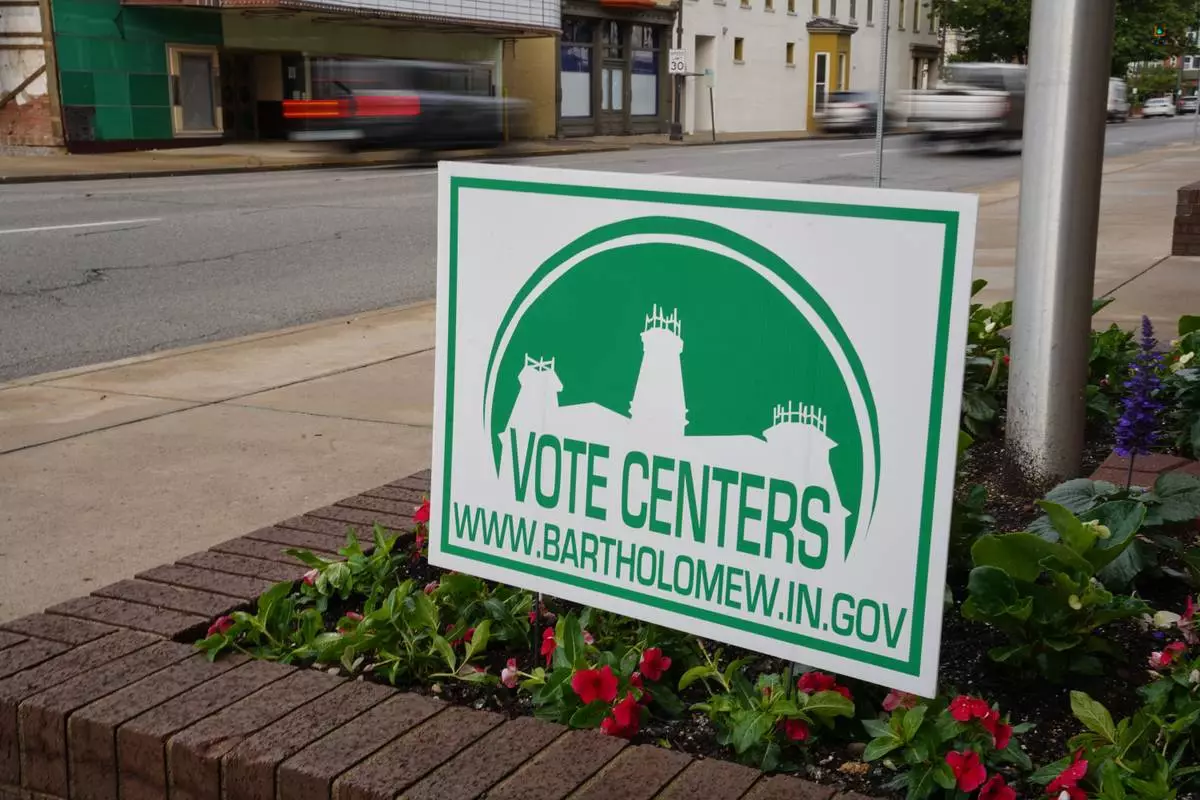
A voting sign is seen outside the Bartholomew County Governmental Office Building in Columbus, Ind., on Thursday, May 5, 2026. (AP Photo/Obed Lamy)