NEW YORK (AP) — A federal civil rights agency filed a discrimination lawsuit Tuesday against the New York Times, claiming that the new organization passed over a white male employee for a promotion in favor of a lesser qualified woman to meet its diversity goals.
The New York Times called the lawsuit politically motivated and said it would defend itself “vigorously.”
The Equal Employment Opportunity Commission filed the lawsuit Tuesday on behalf of a New York Times editor who lodged a complaint after he didn't get the role of deputy real estate editor in 2025, alleging gender and racial discrimination under Title VII of the 1964 Civil Rights Act, which prohibits employment discrimination on the basis of sex, race, national origin or religion.
The EEOC claimed the news organization's publicly stated goals of increasing the number of women and people of color in its leadership ranks influenced the decision to exclude the white male applicant for a final round of interviews, while advancing three women and a Black man.
EEOC Chair Andrea Lucas, a Republican, has been a staunch champion of the Trump administration's campaign against corporate diversity policies that she argues veer into discrimination against white men and others. In December, Lucas posted a social media call urging white men to come forward with complaints if they believe they have faced discrimination because of their employer's diversity policies.
“No one is above the law — including ‘elite’ institutions. There is no such thing as ‘reverse discrimination;’ all race or sex discrimination is equally unlawful, according to long-established civil rights principles," Lucas said in a statement. "No matter the size or power of the employer, the EEOC under my leadership will not pull punches in ensuring evenhanded, colorblind enforcement of Title VII to protect America’s workers, including white males.”
The New York Times spokeswoman Danielle Rhoades Ha said the EEOC “deviated from standard practices in highly unusual ways. The allegation centers on a single personnel decision for one of over 100 deputy positions across the newsroom, yet the EEOC’s filing makes sweeping claims that ignore the facts to fit a predetermined narrative.”
“Neither race nor gender played a role in this decision – we hired the most qualified candidate, and she is an excellent editor,” Rhoades Ha added.
In the lawsuit filed in the U.S. District Court of the Southern District of New York, the EEOC complaint said the complainant, who was not identified, has worked as an editor for the New York Times since 2014, mostly as a senior staff editor on the international desk with previous experience working on real estate stories.
The lawsuit claims that the woman ultimately appointed deputy real estate editor “did not have experience with real estate journalism" but “as a multiracial female, this candidate matched the race and/or sex characteristics NYT sought to increase in its leadership.” The EEOC said one final panel interviewer described her as “a bit green overall."
The EEOC's lawsuit extensively cited The New York Times diversity and inclusion policies as evidence for its alleged discriminatory policies.
In particularly, the lawsuit cites the organizations “Call to Action” plan published in February 2021 in which it set a goal of increasing the number of Black and Latino employees in leadership by 50% by 2025. The EEOC said the New York Times met that goal in 2022 but continued its commitment to diversity policies. According to reports cited in the lawsuit, white employees composed 68% of its leadership in 2024, compared to 29% people of color.
Lucas has been particularly critical of representation goals that many companies have publicly announced, particularly in the wake of of the 2020 racial protests following the police killing of unarmed Black man George Floyd.
In almost all cases, it is illegal under Title VII for employers to take race or gender into account when making hiring, promotion and other decisions. Lucas has taken aim at practices she claims pressure hiring managers to do just that, from certain forms of anti-bias training to ensuring a diverse slate of candidates for roles. Critics say the EEOC is attacking long held practices designed to level the playing field for workers who have traditionally faced discrimination in U.S. workplaces.
In February, the EEOC revealed that it was investigating sportswear giant Nike for racial discrimination against white employees. Unlike the New York Times lawsuit, the Nike investigation stemmed not from a worker complaint but by Lucas herself, who filed what is known as “commissioner's charge” to investigate an array of diversity policies at the sneaker company.
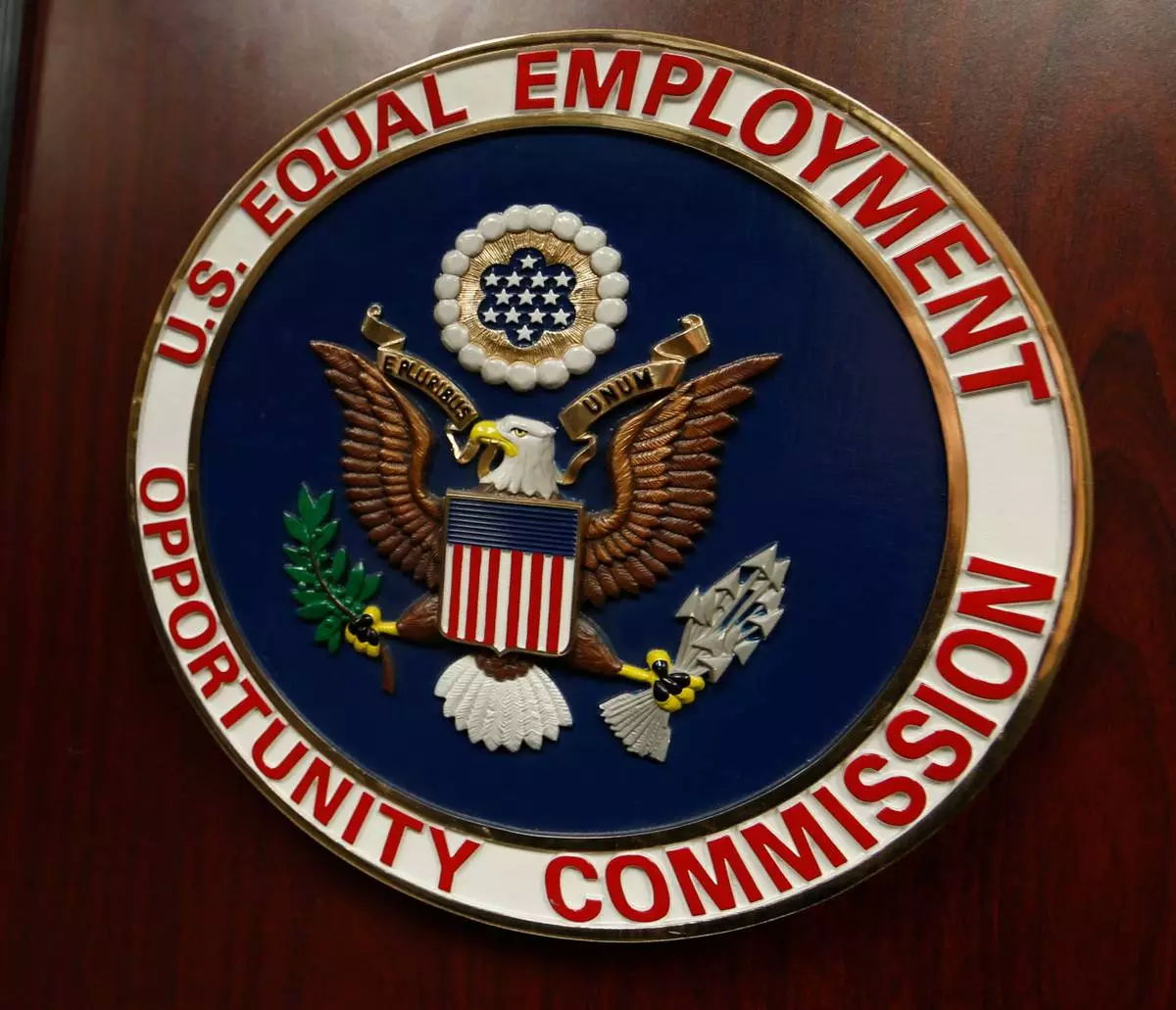
FILE - The emblem of the U.S. Equal Employment Opportunity Commission (EEOC) is displayed on a podium in Vail, Colo., Feb. 16, 2016. (AP Photo/David Zalubowski, File)

FILE - A sign for The New York Times is displayed above the entrance to its building in New York on May 6, 2021. (AP Photo/Mark Lennihan, File)
PRAIA, Cape Verde (AP) — Footage obtained by The Associated Press of a cruise ship at the center of a rare-virus outbreak shows deserted decks and gathering areas, medical teams in protective gear, and a still landscape ahead as the vessel and its nearly 150 passengers and crew waited another day off the coast of West Africa.
Three passengers have died and at least four people have been sick in what health officials say is an outbreak of hantavirus, which usually spreads by inhaling contaminated rodent droppings. The World Health Organization said passengers are isolating in their cabins.
The company that operates the vessel — currently anchored in the Atlantic off Cape Verde — said it plans to move to Spain’s Canary Islands once three people have been medically evacuated and put on specially equipped planes to the Netherlands. Earlier Tuesday, Spanish officials said that they were monitoring the situation and hadn't made a decision.
The MV Hondius, a Dutch ship on a weekslong polar cruise, departed April 1 from Argentina for Antarctica and several isolated islands in the South Atlantic.
“Our days have been close to normal, just waiting for authorities to find a solution,” passenger Qasem Elhato, 31 — who sent AP the video footage — said via WhatsApp. “But morale on the ship is high and we’re keeping ourselves busy with reading, watching movies, having hot drinks and that kind of things.”
Helene Goessaert, another passenger, told Belgian broadcaster VRT that everyone on board is “in the same boat, literally.”
“You don’t embark on a trip with the idea that one of your fellow passengers won’t make it,” she said.
“We receive information at regular intervals. It is accurate. For the rest, it is a waiting game,” she added. “Today we received fresh fruit and fresh vegetables. That was very important to us.”
Authorities in Cape Verde have said they sent teams of doctors, surgeons, nurses and laboratory specialists to the Hondius. They were seen in Elhato's video footage — wearing white overalls, boots and face masks as they disembarked to a smaller vessel.
Officials in Cape Verde’s capital of Praia, a city of less than 200,000 people, said they have stepped up safety protocols, particularly near the port, as a precautionary measure against the rodent-borne illness — which doesn't usually spread person to person, though health authorities say it might be possible.
Elhato said passengers were wearing masks and social distancing — practices that became hallmarks of the COVID-19 pandemic. Ship operator Oceanwide Expeditions said it had implemented its highest level of response, with isolation measures, hygiene protocols and medical monitoring.
Oceanwide Expeditions said Tuesday evening that two specialized aircraft were flying to Cape Verde to evacuate two people who need urgent medical care and one person who was traveling with a German woman who died on board Saturday. They were to be taken to the Netherlands, though exactly when that would happen was not immediately clear.
Once the medical evacuation happens, the ship plans to sail to the Canary Islands, either Gran Canaria or Tenerife, a voyage of some three days, the company said in its statement, adding that “discussions are ongoing with relevant authorities.”
Spanish health officials had said in an earlier statement that they were monitoring and that "the most appropriate port of call will be decided. Until then, the Ministry of Health will not adopt any decision, as we have informed the World Health Organization.”
WHO said Tuesday that it's looking at seven cases in all — three people who have died, one critically ill passenger who was previously taken off the ship, and three on board reporting mild symptoms.
Two of the cases — a woman who died and the evacuated man — tested positive for hantavirus.
A Dutch man was the first death, on April 11. His body was taken off the vessel nearly two weeks later, on the British territory of St. Helena, some 1,200 miles (1,900 kilometers) off the African coast, according to South Africa’s Department of Health.
His wife traveled by plane from St. Helena to South Africa; she collapsed at a Johannesburg airport and died at a hospital on April 26, according to WHO and the South African Department of Health.
The ship sailed on to Ascension Island, an isolated Atlantic outpost about 800 miles (1,300 kilometers) to the north, where a sick British man was taken off the ship and evacuated first to Ascension Island and then to South Africa by plane. He is in intensive care in a South African hospital, according to WHO.
Dr. Maria Van Kerkhove, WHO’s director of epidemic and pandemic preparedness, said the organization is investigating possible human-to-human transmission on the ship, and that officials suspect the first infected person likely contracted the virus before boarding. She said officials have been told there are no rats on board.
Officials in Argentina — where hantavirus led to 28 deaths nationwide last year, according to the health ministry — said they confirmed no passengers had symptoms when the Hondius departed. Symptoms can appear up to eight weeks after exposure, officials have said.
In South Africa, authorities said they have started contact tracing — another practice used extensively in the coronavirus pandemic. But officials have emphasized that the chance of a major public health threat is low.
An earlier version of this story incorrectly referred to the passenger who died on board Saturday as a German man; it has been corrected to reflect that a German woman died.
Asadu reported from Abuja, Nigeria. AP journalists Suman Naishadham in Madrid; Mogomotsi Magome in Johannesburg, South Africa; Mike Corder in The Hague, Netherlands; and Geir Moulson in Berlin contributed.
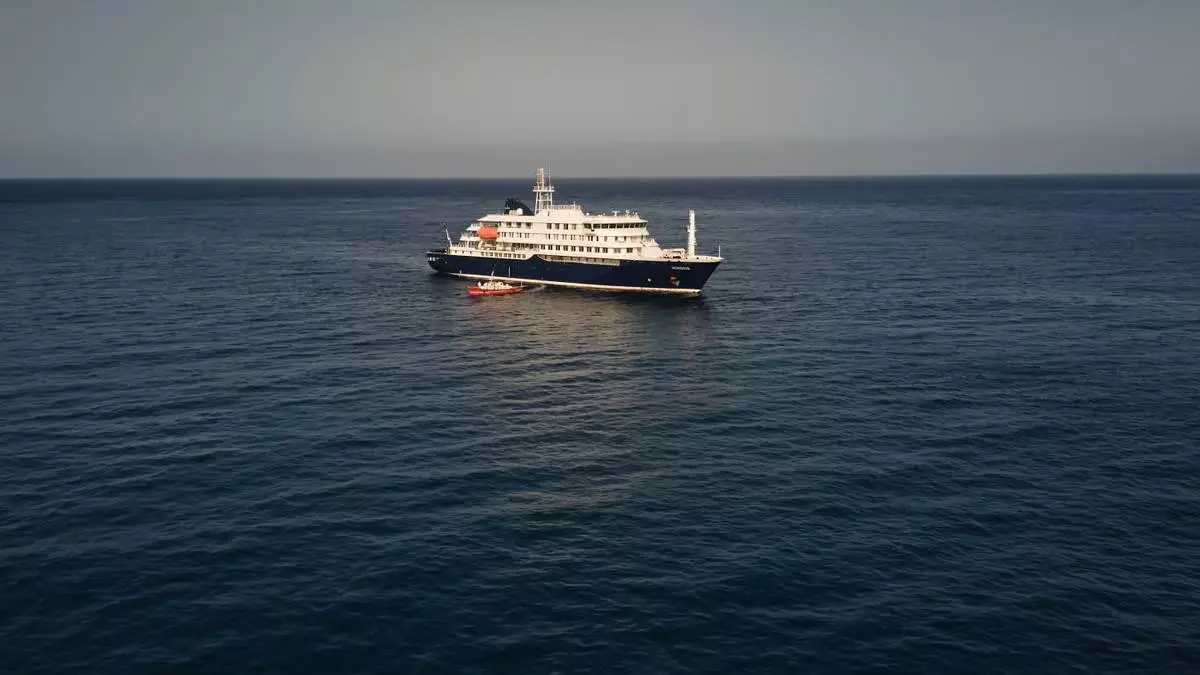
An aerial view of the MV Hondius Dutch cruise ship anchored in the Atlantic off Cape Verde, Tuesday, May 5, 2026. (AP Photo/Arilson Almeida)
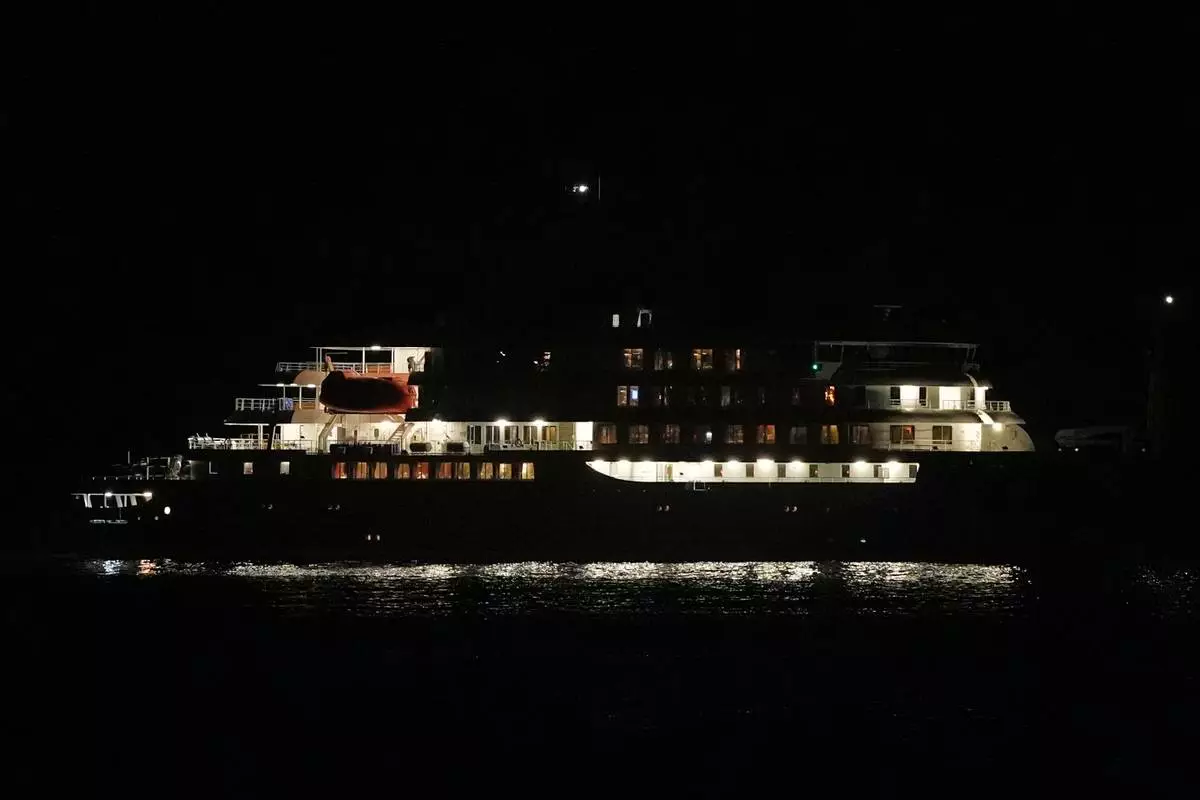
A night view of the MV Hondius cruise ship anchored at a port in Praia, Cape Verde, Tuesday, May 5, 2026. (AP Photo/Misper Apawu)
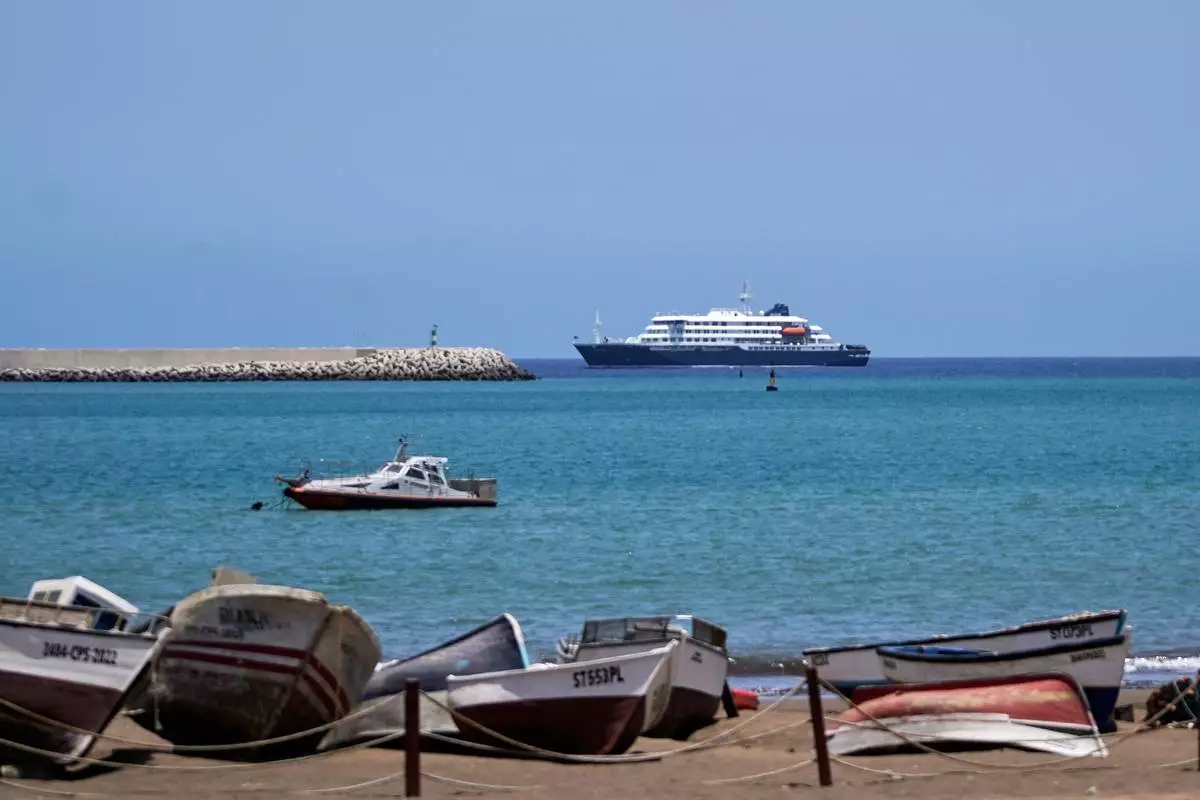
The MV Hondius cruise ship is anchored at a port in Praia, Cape Verde, Monday, May 4, 2026. (AP Photo/Arilson Almeida)

Research scientist Robert Nofchissey prepares samples of inactivated material as part of hantavirus research at the Center for Global Health at the University of New Mexico Health Sciences Center in Albuquerque, New Mexico, on Monday, May 4, 2026. (AP Photo/Susan Montoya Bryan)
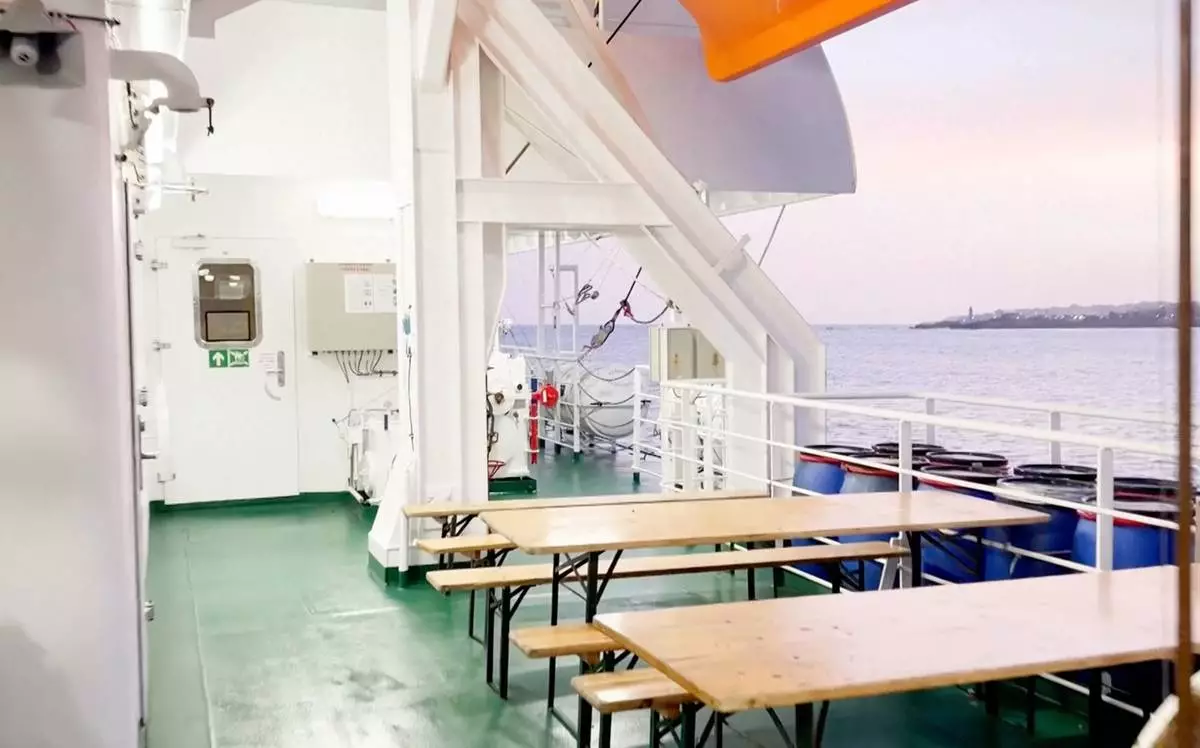
The Dutch-flagged MV Hondius, a cruise ship carrying nearly 150 people remains off Cape Verde on Monday, May 4, 2026 after three passengers died and several others fell seriously ill in a suspected hantavirus outbreak. (Qasem Elhato via AP)
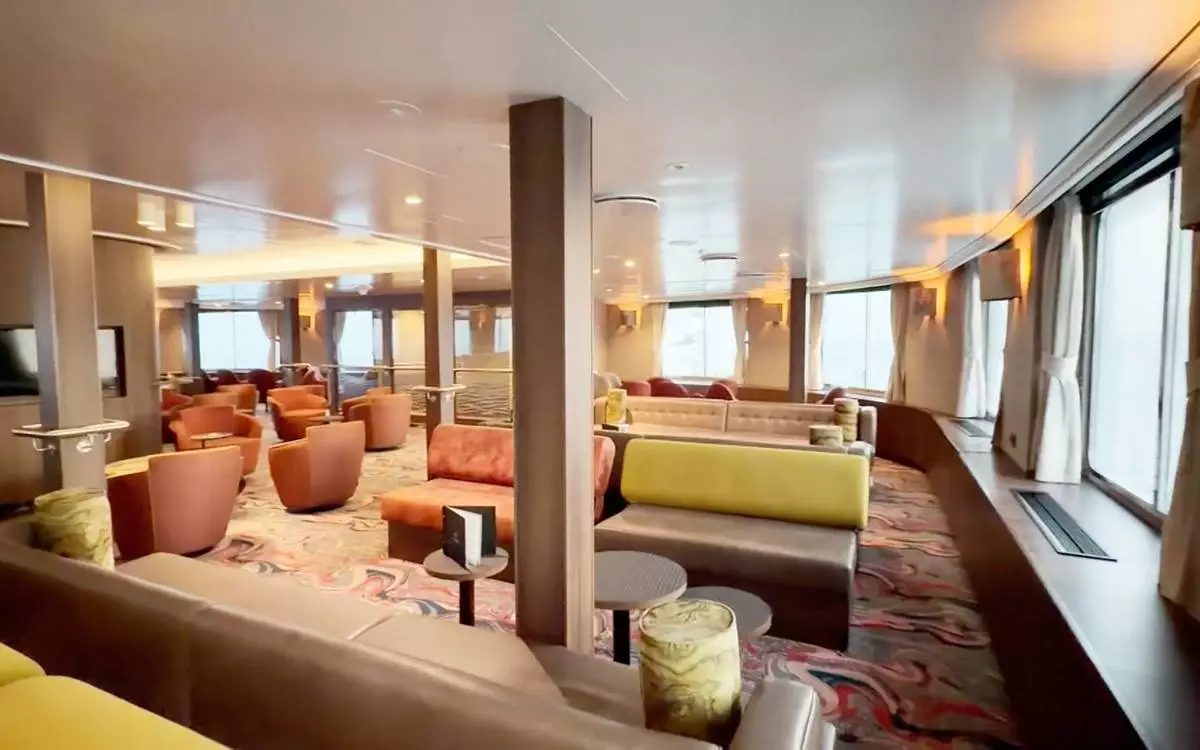
A view of the inside of the Dutch-flagged MV Hondius, a cruise ship carrying nearly 150 people as it remains off Cape Verde on Monday, May 4, 2026 after three passengers died and several others fell seriously ill in a suspected hantavirus outbreak. (Qasem Elhato via AP)
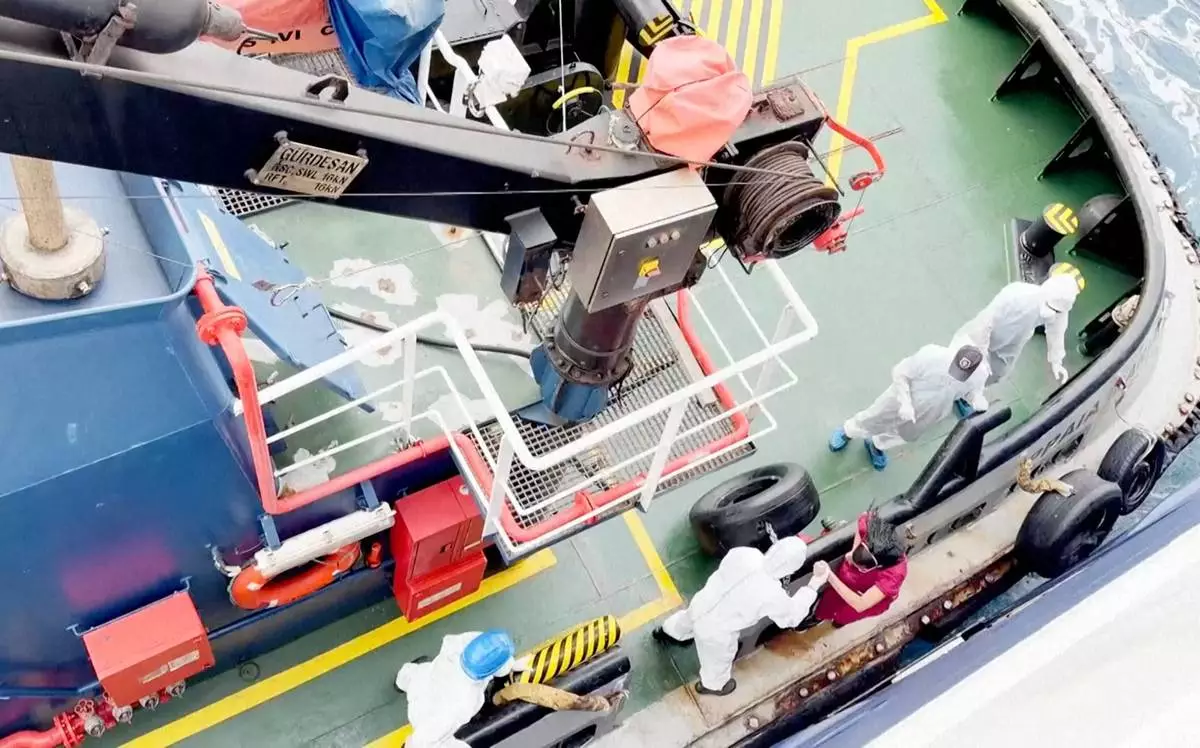
Health workers get off the Dutch-flagged MV Hondius, a cruise ship carrying nearly 150 people as it remains off Cape Verde on Monday, May 4, 2026 after three passengers died and several others fell seriously ill in a suspected hantavirus outbreak. (Qasem Elhato via AP)