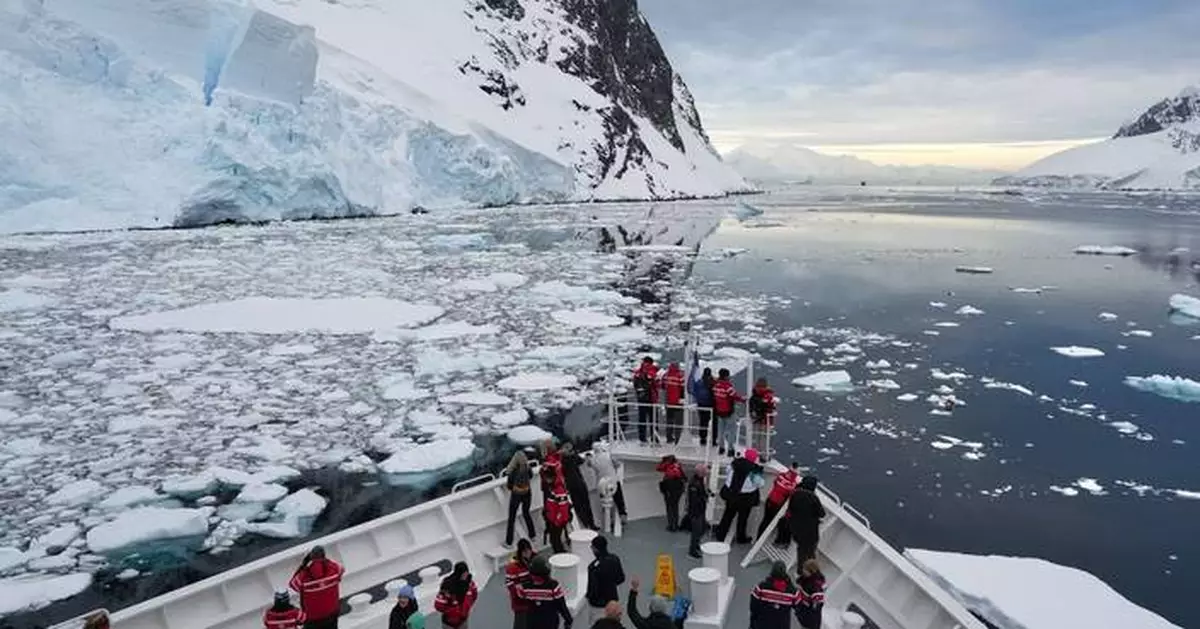
BRUSSELS (AP) — Driven in part by fears that the frozen landscapes of Antarctica may be irreversibly melting away because of climate change, tourism to the bottom of the world is soaring. And experts warn that with more visitors comes an increased risk of contamination, illness and other damage to the continent.
While visitor numbers are still small — in part due to the high costs and time it can take — they are growing so fast that scientists and environmentalists are sounding alarms.
A deadly outbreak of the rare hantavirus aboard a Dutch ship on a weekslong polar cruise has brought attention to the growing tourism trend.
Most expeditions head to the Antarctic Peninsula, one of the fastest-warming places in the world. From 2002 to 2020, roughly 149 billion metric tons (164 billion tons) of Antarctic ice melted per year, according to the National Aeronautics and Space Administration.
A common route is to voyage south from Argentina toward Antarctica before heading north up the coast of Africa — the same route taken by the cruise ship MV Hondius.
“The sites you will see in Antarctica are extremely unique and not replicable anywhere else on the planet — the whales, the seals, the penguins, the icebergs — it’s all really stunning and it makes a huge impression on people,” said Claire Christian, executive director of the environmental group Antarctic and Southern Ocean Coalition.
In 2024, more than 80,000 tourists touched down on the vast ice-cloaked continent and 36,000 viewed from the safety of ships, according to data collected by the International Association of Antarctica Tour Operators.
The International Union of Concerned Scientists estimates that tourism to Antarctica has grown tenfold in the past 30 years.
That number could rise further in the next decade as costs fall with more ice-capable hulls hitting the water and technological advances, said Hanne Nielsen, a senior lecturer of Antarctic law at the University of Tasmania. Her colleagues at the university estimate the annual figure could triple or quadruple to over 400,000 visits in that time.
Some tourists come to Antarctica for “last chance tourism,” knowing the melting landscape is rapidly changing, Nielsen said.
Officials have not indicated any evidence of contamination from the MV Hondius.
However, flocks of migratory birds brought avian flu from South America to Antarctica in recent years, according to the U.S. Centers for Disease Control and Prevention.
That outbreak prompted the International Association of Antarctica Tour Operators and others to harden rules for tourists’ conduct and hygiene to protect visitors from being contaminated. To protect the fragile ecosystem from invasive species large and microscopic, visitors are told to stay away from animals and to avoid touching the ground with anything but their feet.
“There are rules that people are bound by when they’re heading south,” Nielsen said, describing her five voyages as a former guide. Crews and passengers use vacuums, disinfectants and brushes to scrub shoes and equipment clear of bugs, feathers, seeds and microbe-carrying dirt.
“Between the tongues and the laces of the boots you can find a lot of things,” she said.
Cruise ships have been struck by outbreaks of diseases like norovirus, which can spread quickly in a ship's close quarters. In 2020, a COVID-19 outbreak on the Diamond Princess turned the cruise ship into an incubator for the then-mysterious virus.
Hantavirus usually spreads by inhaling contaminated rodent droppings.
The World Health Organization said Tuesday that MV Hondius left Ushuaia, Argentina, on April 1 and visited Antarctica and several isolated islands.
WHO is investigating possible human-to-human transmission on the cruise ship, said Dr. Maria Van Kerkhove, WHO’s director of epidemic and pandemic preparedness. Officials suspect the first infected person likely contracted the virus before boarding, she said, and officials have been told there are no rats on board.
Antarctica is governed by the Antarctic Treaty, which in 1959 enshrined the territory as a scientific preserve used only for peaceful purposes. A series of rules that followed “aim to ensure that all visits, regardless of location, do not adversely impact the Antarctic environment or its scientific and aesthetic values,” according to the treaty’s secretariat.
Companies and scientific ventures voluntarily comply with biosecurity guidelines and submit environmental impact assessments for Antarctic operations.
The treaty was written when tourism numbers were much lower, Christian said.
“Activity needs to be regulated appropriately, as you would with any of the world’s sensitive and precious ecological sites,” Christian said from Hiroshima, Japan, where she was preparing for an Antarctic Treaty Consultative Meeting. There she'll join calls to strengthen protections for Antarctica's penguins, whales, seabirds, seals and krill — tiny creatures at the base of the food chain.
For now, the lure of the frozen frontier continues to draw visitors.
“You can put a footprint in Antarctica and it’s still there 50 years later,” Christian said.
Associated Press writer Mike Corder contributed from The Hague, Netherlands.
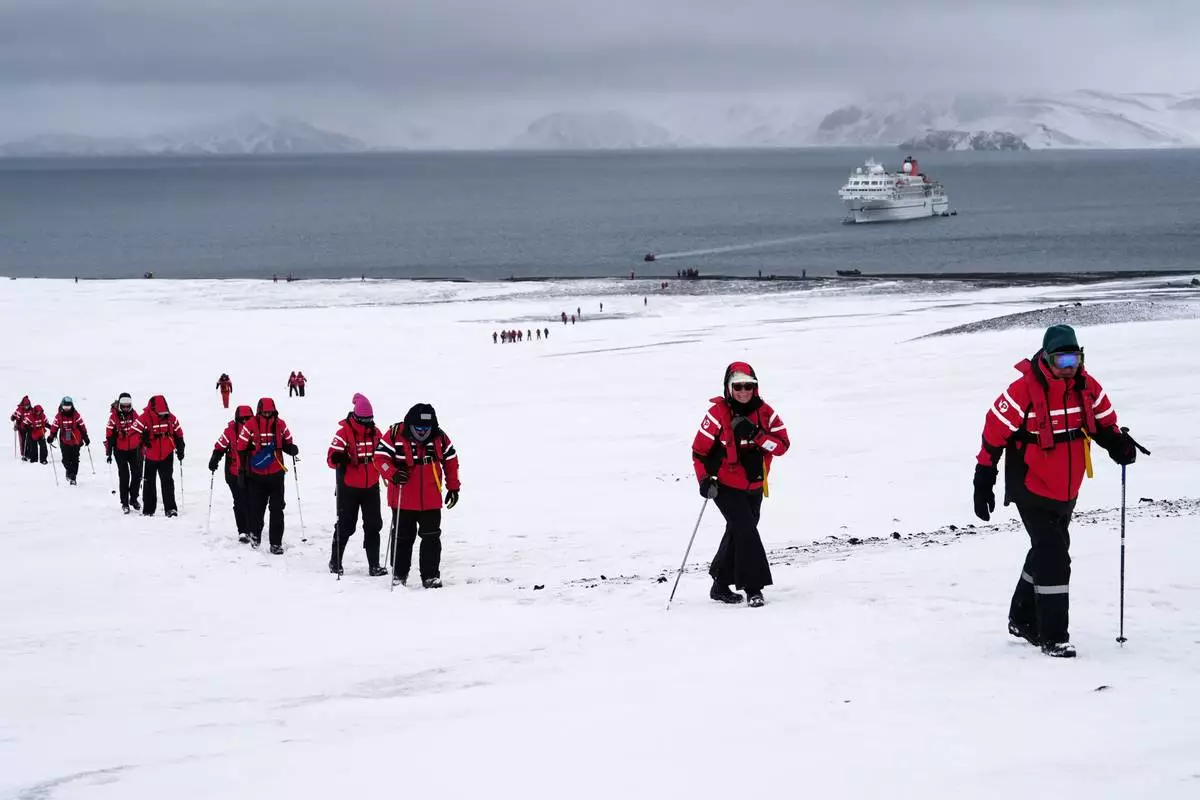
FILE - Passengers walk inside the volcano at Deception Island in Antarctica, Wednesday, Nov. 26, 2025. (AP Photo/Mark Baker, File)
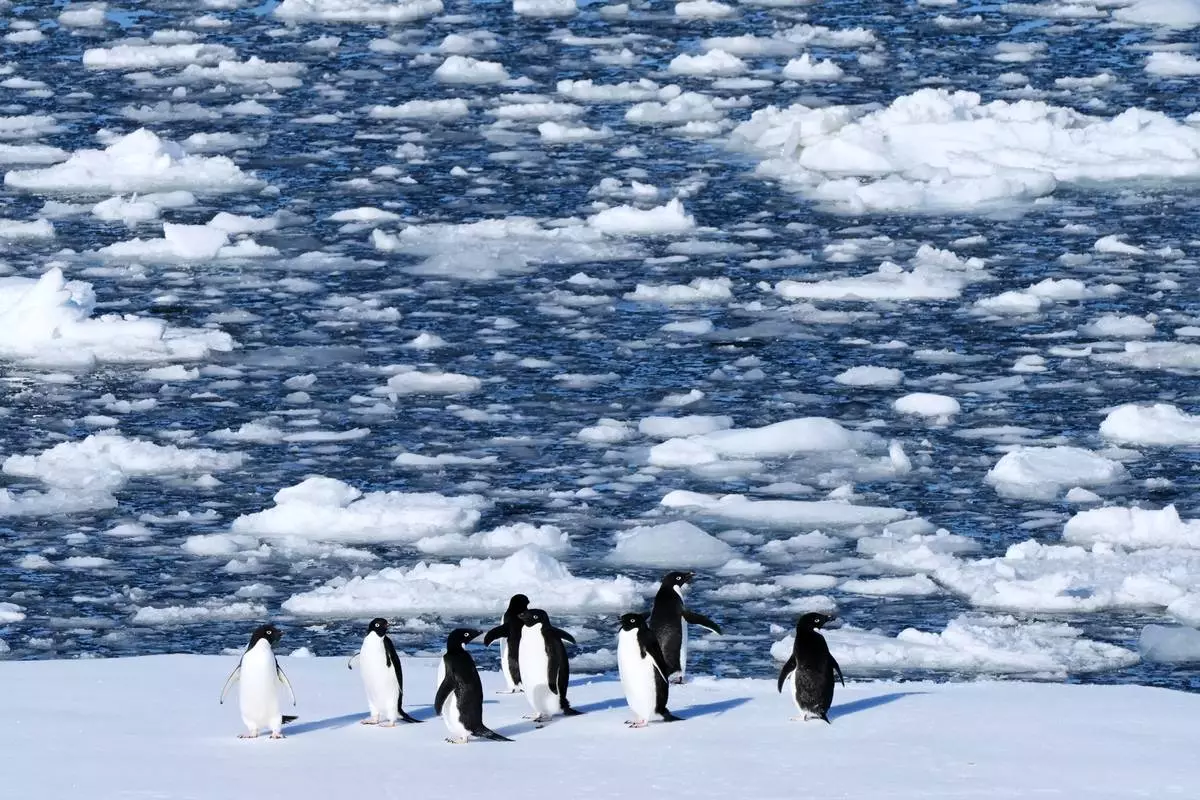
FILE - Adelie penguins stand on a block of floating ice at Yalour Islands in Antarctica, Nov. 24, 2025. (AP Photo/Mark Baker, File)
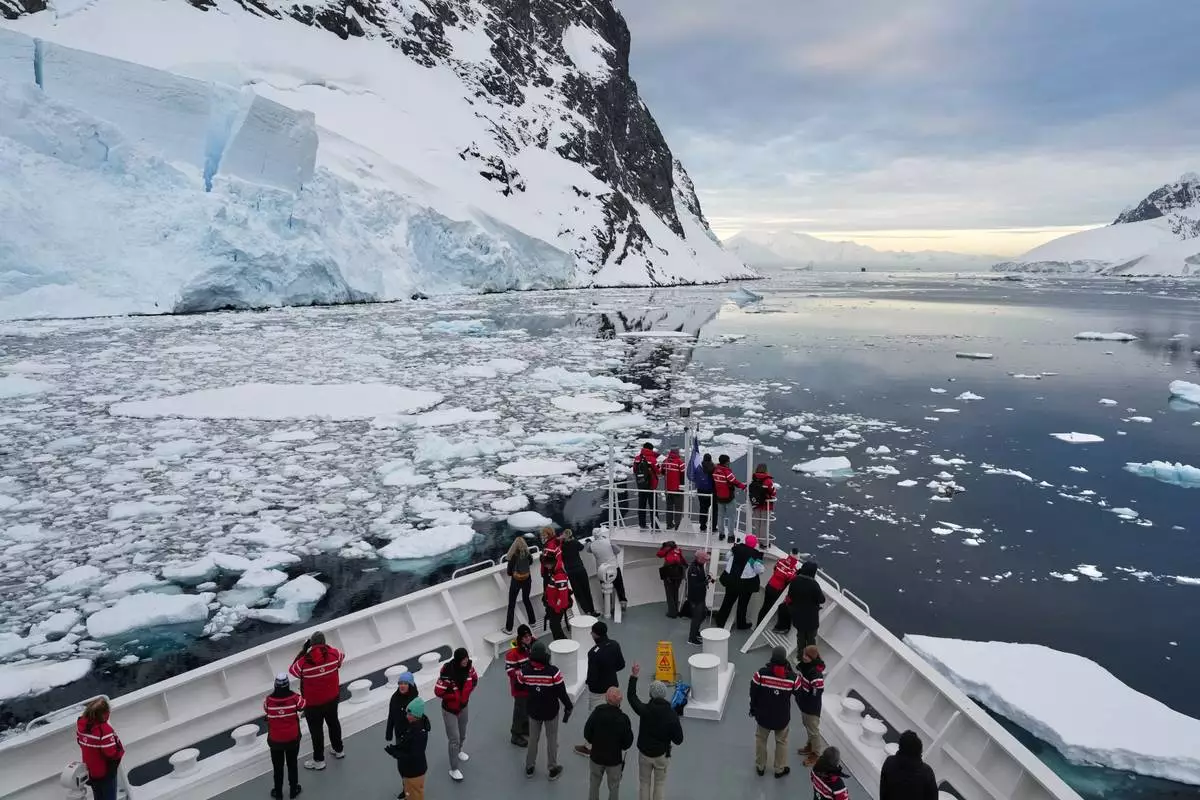
FILE - Passengers watch as a ship sails through the Lemaire Channel in Antarctica, Monday, Nov. 24, 2025. (AP Photo/Mark Baker, File)
ZUG, Switzerland--(BUSINESS WIRE)--May 6, 2026--
AMINA Bank AG ("AMINA"), a Swiss Financial Market Supervisory Authority (FINMA)-regulated crypto bank with global reach, today becomes the first bank to support Canton Coin (CC), the native token of Canton Network, offering custody and trading services to its clients. Canton Network is a public, privacy-preserving blockchain built for capital markets.
This press release features multimedia. View the full release here: https://www.businesswire.com/news/home/20260505860056/en/
Canton has gained significant institutional momentum in recent months, attracting TradFi and DeFi organizations, including the DTCC, Visa, and BitGo, that are building next-generation settlement, tokenisation, custody, and collateral workflows on the network. Canton is also developing an on-chain capital markets ecosystem that encompasses repo, lending, and wrapped asset flows — all under compliance and settlement constraints designed for regulated participants.
AMINA will help reduce friction for professional investors, Super Validators, and institutions running tokenisation and settlement workflows on Canton. Through a single FINMA-regulated institution, AMINA clients can custody and trade Canton Coin with the governance they expect from an institutional banking partner.
Myles Harrison, Chief Product Officer at AMINA, said: “Canton Network represents something we are seeing more broadly in digital assets: infrastructure that has been purpose-built for regulated institutions, not retrofitted. By making Canton Coin available for custody and trading, AMINA is providing clients, whether they are Super Validators or investors seeking exposure to Canton Network's growth, with the regulated access they need to engage with this ecosystem. Making Canton Coin available is a deliberate step to ensure our clients have regulated access to the infrastructure underpinning institutional finance’s next chapter.”
Viv Diwakar, Head of the Canton Foundation, said: “Canton Network was designed to meet the needs of regulated financial institutions — privacy, compliance, and settlement finality built into the architecture. AMINA shares that philosophy. For Canton Network participants who need a compliant, supervised home for their Canton Coin holdings, AMINA provides that with the credibility and regulatory standing that the ecosystem demands.”
AMINA has established a proven track record of being first to bring strategically significant cryptocurrencies to its professional investor and institutional client base. The bank was the first globally to support Ripple USD (RLUSD) and the first to offer SUI trading and custody, both of which have since seen growing institutional uptake. As Canton Network's ecosystem continues to develop, AMINA intends to deepen its participation in the network during the period ahead.
Disclaimer: This is a marketing communication made to you by AMINA Bank AG (“AMINA”), a Swiss bank and securities dealer with office and legal domicile at Kolinplatz 15, 6300 Zug, Switzerland, authorized and regulated by the Swiss Financial Market Supervisory Authority (“FINMA”). AMINA is not licensed as a bank in any other jurisdiction. This marketing communication is prepared solely for information and marketing purposes and is intended to be marketing material within the meaning of Article 68 of the Swiss Financial Services Act (FinSA); it is an advertisement; it is not a solicitation, recommendation, advice or an offer or intention to make an offer to buy or sell any financial instrument or to participate in any particular investment strategy. This marketing communication is for informational purposes only and does not constitute an offer or solicitation to the public in any jurisdiction where AMINA is not authorised to acquire, dispose of or engage in any product. Certain products and services may not be available to all clients based on legal and regulatory considerations.
About AMINA — Crypto. Banking. Simplified.
Founded in April 2018 and established in Zug (Switzerland), AMINA Bank AG is a pioneer in the crypto banking industry. In August 2019, AMINA Bank AG received the Swiss Banking and Securities Dealer License from the Swiss Financial Market Supervisory Authority (“FINMA”). In February 2022, AMINA Bank AG, Abu Dhabi Global Markets (“ADGM”) Branch received Financial Services Permission from the Financial Services Regulatory Authority (“FSRA”) of ADGM. In November 2023, AMINA (Hong Kong) Limited received its Type 1 (Dealing in Securities), Type 4 (Advising on Securities) and Type 9 (Asset Management) licenses from the Securities and Futures Commission (“SFC”). In October 2025, the firm’s Type 1 license was further approved for uplift to include digital asset dealing services for Professional Investors under Hong Kong’s digital asset regulatory framework. In October 2025, AMINA (Austria) AG (“AMINA EU”) received its CASP license from Austria’s Financial Market Authority (“FMA”) under the Markets in Crypto-Assets (MiCAR) framework.
CVVC Global Report and CB Insights named AMINA as one of the Top 50 Companies within the blockchain ecosystem. In 2023, AMINA won the European WealthBriefing Award in the Digital Assets Solution, Fund Manager category. AMINA was most recently recognised as Institutional Digital Asset Innovation of the Year at the Hedgeweek® Global Digital Assets Awards 2025.
To learn more about AMINA, visit www.aminagroup.com
About Canton Network
Canton is the only public, permissionless blockchain purpose-built for institutional finance–uniquely combining privacy, compliance, and scalability. With participation from leading global financial institutions and network governance independently facilitated by the Canton Foundation, Canton enables real-time, secure synchronization and settlement across multiple asset classes on a shared, interoperable infrastructure. The open-sourced network is powered by its native token, Canton Coin, and supports decentralized governance and collaborative application development. It’s the proven link between the promise of blockchain and the power of global finance, making finance flow the way it should. Learn more at: canton.network
AMINA Becomes First Bank to Support Canton Coin Trading and Custody