The expansion of the U.S.-Mexico border wall has leveled a sacred indigenous site of the Kumeyaay people, threatening cultural heritage and bypassing environmental laws.
As the U.S. rapidly expands the barrier on the border with Mexico, Mount Cuchuma, which has been considered sacred by the Kumeyaay for generations, has been left deeply scarred.
According to anthropologist Pavel Valenzuela, the damage has dealt a serious blow to the preservation of the area's history and the culture of its indigenous population.
"The mountain is a spiritual place for the native peoples, a site of wisdom and veneration," said anthropologist Pavel Valenzuela.
The anthropologist was among the first to notice heavy machinery and explosions on the mountain and called attention to the problem.
Activists took notice, with some raising alarm bells as irreplaceable geological structures were completely removed from the landscape.
"Two monoliths that were dynamited, that were exploded or blown up, were from 60 to 120 million years ago. They were considered sacred places for them. This was their temple, and it doesn't exist anymore," said Demian Vega, a coordinator at La Puerta Foundation, a Mexico-based non-profit organization dedicated to protecting natural and cultural heritages in the border area.
The area on both sides of the border may be protected land, but no warning was given to those charged with caring for it.
"In San Diego City, we were not [notified] about this. We thought it was just going to be a small part of the border, but no, they will continue the whole fence until the connection with Tijuana," Vega said.
Kumeyaay community leaders have written formal letters of complaint to Mexico's Foreign Ministry and the U.S. State Department, although they don't hold out much hope for a response.
"To feel that one of our temples is being destroyed, it's something you feel deep inside. It's a sacred place, and we cannot defend what is ours," said Isaul Adams, a local community leader.
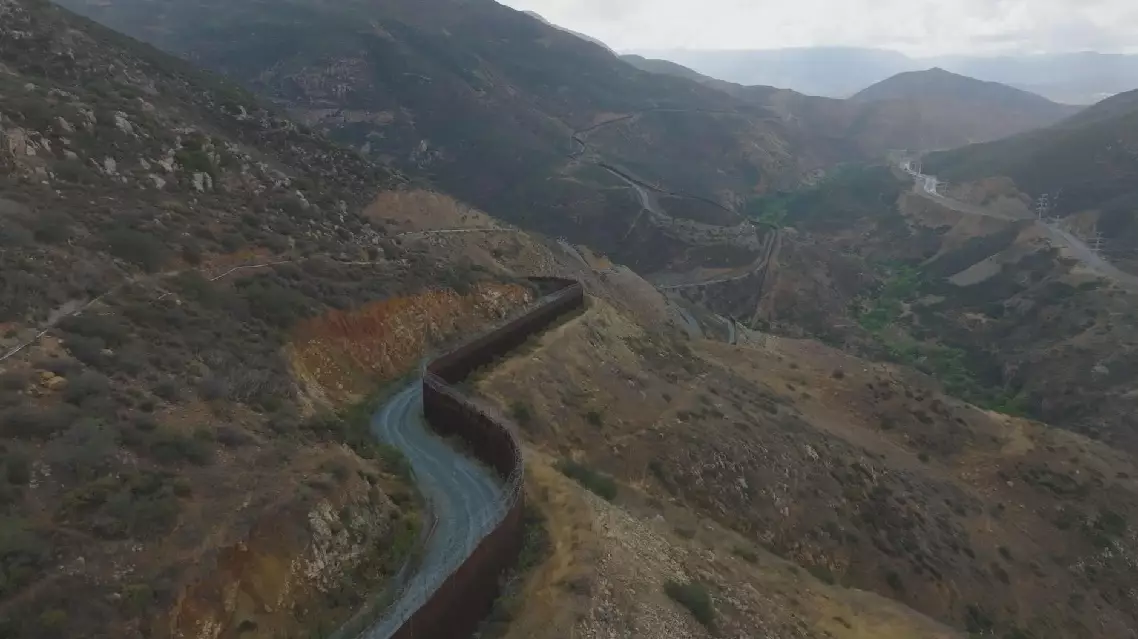
U.S. border wall expansion destroys sacred indigenous site