Skip to Content Facebook Feature Image

SCED at Uzbekistan-China (Hong Kong) Economic Forum: Strengthening Ties for Mutual Growth Under Belt and Road Initiative

HK

SCED at Uzbekistan-China (Hong Kong) Economic Forum: Strengthening Ties for Mutual Growth Under Belt and Road Initiative
HK

HK

SCED at Uzbekistan-China (Hong Kong) Economic Forum: Strengthening Ties for Mutual Growth Under Belt and Road Initiative

2026-05-06 17:38 Last Updated At:05-07 11:17

Speech by SCED at Uzbekistan-China (Hong Kong) Economic Forum

Following is the speech by the Secretary for Commerce and Economic Development, Mr Algernon Yau, at the Uzbekistan-China (Hong Kong) Economic Forum today (May 6):

Your Excellency Mr Prime Minister Abdulla Aripov (Prime Minister of the Republic of Uzbekistan, Mr Abdulla Nigmatovich Aripov), Chief Executive, Mr John Lee, distinguished guests, ladies and gentlemen,

Good afternoon. It is my honour to join you today at the Uzbekistan-China Economic Forum. I look forward to exploring how Hong Kong and Uzbekistan can forge even bolder paths toward mutual growth under the Belt and Road Initiative.

Uzbekistan: a hub in Central Asia

Uzbekistan is strategically located at the heart of Central Asia, bordering all other Central Asian countries. For thousands of years, it served as a crucial hub on the ancient Silk Road, where trade, culture, and ideas flourished. Today, under the Belt and Road Initiative, Uzbekistan continues to play a vital role as a bridge connecting Asia and Europe.

With a population of approximately 38 million, nearly 45 per cent of Central Asia's total, Uzbekistan is the region's most populous country. It is rich in natural resources and offers tremendous opportunities for companies looking to enter Central Asia. In 2025, Uzbekistan recorded impressive real gross domestic product growth of 7.7 per cent, making it one of the fastest-growing economies in the region.

The Belt and Road Initiative

Since it was proposed in 2013, the Belt and Road Initiative has become the largest international co-operation platform. It represents a pathway of shared prosperity, mutual benefits, and boundless opportunity. In a world full of uncertainties, the Belt and Road Initiative continues to provide stability and positive momentum for global development.

Uzbekistan was among the first countries to support and actively participate in this Initiative. Today, the Chinese Mainland is Uzbekistan's largest trading partner and a major source of investment. The strong economic complementarity between our two sides points to enormous potential for deeper collaboration in the years ahead.

Ties between Hong Kong and Uzbekistan

Hong Kong, as an international financial, shipping, and trade centre, values Uzbekistan as a key partner in Central Asia. Our relations have grown steadily in recent years. In 2025, our bilateral trade accounted for over 13 per cent of Hong Kong's total trade with the region.

High-level engagements further underscore our deepening ties. Last August, the Chief Executive, Mr John Lee, met with Deputy Prime Minister of Uzbekistan Mr Jamshid Khodjaev who led a delegation to Hong Kong. Last September, Deputy Minister of Economy and Finance of Uzbekistan Mr Umid Abidkhadjaev visited Hong Kong to attend the 10th Belt and Road Summit. During the policy dialogue I chaired, we had very productive discussions on new opportunities under the Belt and Road Initiative. During the Summit, Airport Authority Hong Kong signed a Memorandum of Understanding with the Uzbek partner to enhance air connectivity between us.

Hong Kong's advantages

Under the "one country, two systems" principle, Hong Kong enjoys distinctive advantages of enjoying strong support of the motherland and being closely connected to the world. As the only common law jurisdiction within China, we offer a highly open, transparent, and international business environment, supported by world-class professional services and talent. Our simple tax system, free flow of capital, goods, information and talent, together with robust intellectual property protection, make Hong Kong an ideal platform for business.

In 2025, the number of companies with overseas and Mainland parent companies registered in Hong Kong reached a record high of over 11 000. We remain the world's freest economy, the world's fifth-largest trading entity in merchandise trade, and rank third globally in attracting foreign direct investment.

To support more Mainland enterprises in expanding overseas, the Hong Kong Special Administrative Region (HKSAR) Government established the Task Force on Supporting Mainland Enterprises in Going Global last year. It brings together cross-bureau, cross-departmental, cross-organisation, and cross-sectoral resources to build a one-stop, responsive and unprecedented going-global support platform. In line with the national policy and direction of encouraging Mainland enterprises to go global, it will assist these enterprises to systematically expand globally, transform it into a new driving force for Hong Kong's economy, and further consolidate Hong Kong's position as an international business and trade hub.

With our global outlook and strategic location, Hong Kong is the premier hub for mega events. Every year, we host numerous influential international events across various fields. In addition to the annual Belt and Road Summit, a flagship event for the business community, we have the Asian Financial Forum, which gathers global financial leaders; the Asia Summit on Global Health, which explores cutting-edge medical innovations; and InnoEX, which showcases our strengths in innovation and technology. These high-profile events attract political and business leaders, representatives of international organisations, and top experts from around the world to Hong Kong. They spark vibrant exchanges of ideas and further deepen Hong Kong's connections and co-operation with the global community.

As an international aviation hub at the heart of Asia, Hong Kong is well connected to the rest of the world. From here, half of the global population is reachable within a five-hour flight. Since 2010, Hong Kong International Airport has been named the world's busiest cargo airport 15 times. With our excellent transport network, advanced communications systems, and world-class infrastructure, our airport continues to be recognised as one of the best airports in the world.

Hong Kong also possesses an outstanding talent pool. We are vigorously building a global hub for high-end professionals. Home to five of the world's top 100 universities, Hong Kong is ranked second globally for education competitiveness. Each year, the HKSAR Government offers 150 Belt and Road Scholarships to attract outstanding students from Belt and Road countries. To date, over 830 students from 57 Belt and Road countries have benefited. I warmly welcome more young people from Uzbekistan to study, innovate, and build their futures in Hong Kong. The international talent hub we are creating will support not only Hong Kong's future, but also long-term regional co-operation.

In urban planning and sustainable development, we are also happy to share Hong Kong's experience with Uzbekistan. Even in our highly dense city, about 40 per cent of our land mass has been designated as country parks and special areas. Hong Kong offers a spectacular range of natural scenery within easy reach of urban areas, demonstrating our strong commitment to ecological balance amid urban development. As Uzbekistan advances its infrastructure rapidly, Hong Kong enterprises and professionals can offer rich international expertise, including advanced construction technologies, innovative designs, and flexible financing solutions, to support your development goals.

Uzbekistan is a key regional hub in Central Asia, while Hong Kong serves as Asia's premier connectivity hub. Our strengths are highly complementary. Looking ahead, we can become ideal partners in green development, digital economy, healthcare, and many other innovative fields. Together, we are perfectly positioned for mutually beneficial co-operation.

Conclusion

Ladies and gentlemen, today's forum is more than an exchange of ideas, it is a valuable opportunity to build real partnerships between Hong Kong and Uzbekistan. I warmly invite more Uzbek companies to come to Hong Kong, to invest, and to use our international platform to access the vast Chinese Mainland market and opportunities worldwide. At the same time, I encourage all of you to fully utilise Hong Kong's role as the functional platform for the Belt and Road Initiative, to expand your business globally.

As we stand at the beginning of our country's 15th Five-Year Plan, Hong Kong will continue to play our role as a "super connector" and "super value-adder". We will actively integrate into the national development strategies, deeply participate in the high-quality development of the Belt and Road Initiative, and contribute Hong Kong's strengths to building a community with a shared future for mankind.

In closing, I wish today's forum every success and fruitful outcomes for all participants. Thank you very much.

The Secretary for Commerce and Economic Development, Mr Algernon Yau, Photo source: reference image

The Secretary for Commerce and Economic Development, Mr Algernon Yau, Photo source: reference image
FEHD releases third batch of gravidtrap indexes for Aedes albopictus in September

The Food and Environmental Hygiene Department (FEHD) today (September 29) released the third batch of gravidtrap indexes and density indexes for Aedes albopictus in September, covering 12 survey areas, as follows:

District

Survey Area

First Phase Gravidtrap Index

First Phase Density Index

Islands

Tung Chung

4.0%

1.0

Kowloon City

Ho Man Tin

1.8%

1.0

Sham Shui Po

Lai Chi Kok

5.5%

1.0

Sai Kung

Tseung Kwan O East

1.8%

1.0

Tseung Kwan O West

0.0%

N/A

District

Survey Area

Area Gravidtrap Index

Area Density Index

Sham Shui Po

Sham Shui Po and Shek Kip Mei

3.4%

1.5

North

Fanling South

2.3%

1.0

Sai Kung

Sai Kung Town

5.7%

1.0

Kwai Tsing

Kwai Chung West

3.3%

1.0

Lai King

5.7%

1.2

Yuen Long

Hung Shui Kiu and Ping Shan

2.1%

1.0

Yuen Long Town

7.4%

1.0

The FEHD continues to carry out a series of mosquito prevention and elimination measures, including:

  • interdepartmental collaboration: convening special meetings of the interdepartmental task forces on anti-mosquito work to co-ordinate relevant departments and stakeholders (such as construction site contractors, schools and property management companies) in strengthening mosquito control work at venues;

  • precise risk assessments: carrying out intensive and targeted mosquito control work at locations with more serious mosquito infestations, including stepping up inspections, eliminating mosquito breeding and potential breeding grounds, applying larvicides, conducting fogging operations to eradicate adult mosquitoes, and placing mosquito trapping devices at appropriate locations;

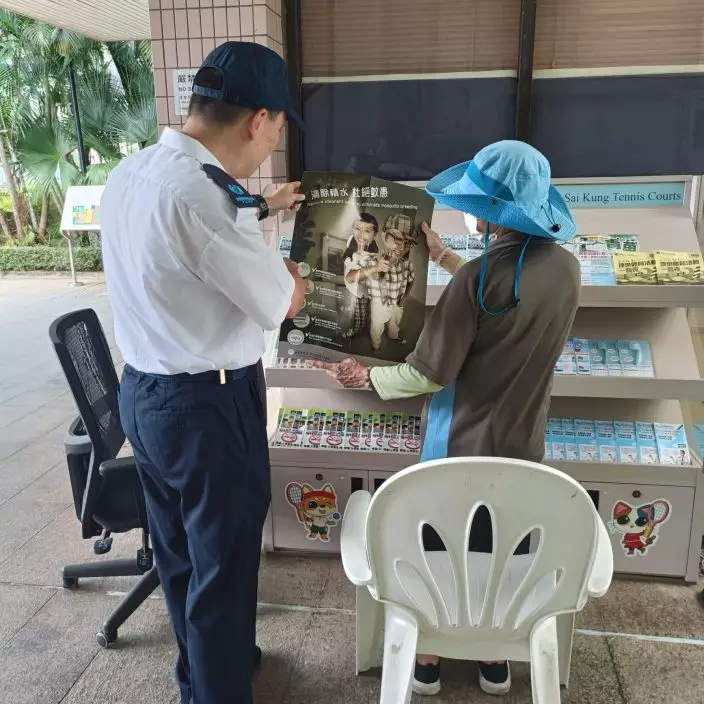
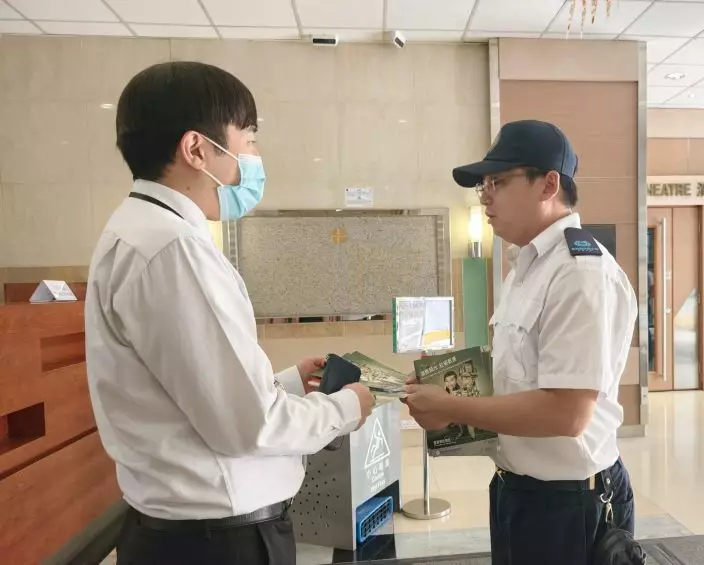
  • promotion and education: organising exhibitions with relevant departments and stakeholders, and distributing leaflets and posters to enhance public awareness of mosquito control and prevention; and

  • rapid alert mechanism: notifying residential estates that have subscribed to the gravidtrap Rapid Alert System, and advising property management companies and residents to stay vigilant and work together in taking mosquito prevention and elimination measures.

Public participation is crucial to the effective control of mosquito problems. The FEHD appeals to members of the public to continue to work together in strengthening personal mosquito control measures, including:

  • tidying up their premises and checking for any accumulation of water inside the premises;

  • removing all unnecessary water collections and eliminating the sources;

  • checking household items (those placed in outdoor and open areas in particular), such as refuse containers, vases, air conditioner drip trays, and laundry racks to prevent stagnant water;

  • changing water in flower vases and scrubbing their inner surfaces thoroughly, and removing water in saucers under potted plants at least once a week;

  • properly covering all containers that hold water to prevent mosquitoes from accessing the water;

  • properly disposing of articles that can contain water, such as disposable meal boxes and empty cans; and

  • scrubbing drains and surface sewers with alkaline detergent at least once a week to remove any mosquito eggs.

Starting in August 2025, following the completion of the surveillance of individual survey areas, and once the latest gravidtrap index and the density index are available, the FEHD has been disseminating relevant information through press releases, its website and social media. It aims to allow members of the public to quickly grasp the mosquito infestation situation and strengthen mosquito control efforts, thereby reducing the risk of chikungunya fever (CF) transmission.

Following recommendations from the World Health Organization and taking into account the local situation in Hong Kong, the FEHD sets up gravidtraps in districts where mosquito-borne diseases have been recorded in the past, as well as in densely populated places such as housing estates, hospitals and schools to monitor the breeding and distribution of Aedes albopictus mosquitoes, which can transmit CF and dengue fever. At present, the FEHD has set up gravidtraps in 62 survey areas of the community, with a surveillance period of two weeks. During the surveillance period, the FEHD will collect the gravidtraps once a week. After the first week of surveillance, the FEHD will immediately examine the glue boards inside the retrieved gravidtraps for the presence of adult Aedine mosquitoes to compile the Gravidtrap Index (First Phase) and Density Index (First Phase). At the end of the second week of surveillance, the FEHD will instantly check the glue boards for the presence of adult Aedine mosquitoes. Data from the two weeks of surveillance will be combined to obtain the Area Gravidtrap Index and the Area Density Index. The Gravidtrap and Density indexes for Aedes albopictus in different survey areas, as well as information on mosquito prevention and control measures, are available on the department's webpage (www.fehd.gov.hk/english/pestcontrol/dengue_fever/Dengue_Fever_Gravidtrap_Index_Update.html#).

The Food and Environmental Hygiene Department (FEHD) today (September 29) released the third batch of gravidtrap indexes and density indexes for Aedes albopictus in September, covering 12 survey areas. Photo shows an FEHD staff member inspecting a park in Sai Kung Town, Sai Kung District, and providing a venue management staff member with advice and technical support on mosquito prevention and control. Source: HKSAR Government Press Releases

The Food and Environmental Hygiene Department (FEHD) today (September 29) released the third batch of gravidtrap indexes and density indexes for Aedes albopictus in September, covering 12 survey areas. Photo shows an FEHD staff member inspecting a park in Sai Kung Town, Sai Kung District, and providing a venue management staff member with advice and technical support on mosquito prevention and control. Source: HKSAR Government Press Releases

The Food and Environmental Hygiene Department (FEHD) today (September 29) released the third batch of gravidtrap indexes and density indexes for Aedes albopictus in September, covering 12 survey areas. Photo shows an FEHD staff member inspecting a hospital in Lai Chi Kok, Sham Shui Po District, and providing a hospital management staff member with advice and technical support on mosquito prevention and control. Source: HKSAR Government Press Releases

The Food and Environmental Hygiene Department (FEHD) today (September 29) released the third batch of gravidtrap indexes and density indexes for Aedes albopictus in September, covering 12 survey areas. Photo shows an FEHD staff member inspecting a hospital in Lai Chi Kok, Sham Shui Po District, and providing a hospital management staff member with advice and technical support on mosquito prevention and control. Source: HKSAR Government Press Releases

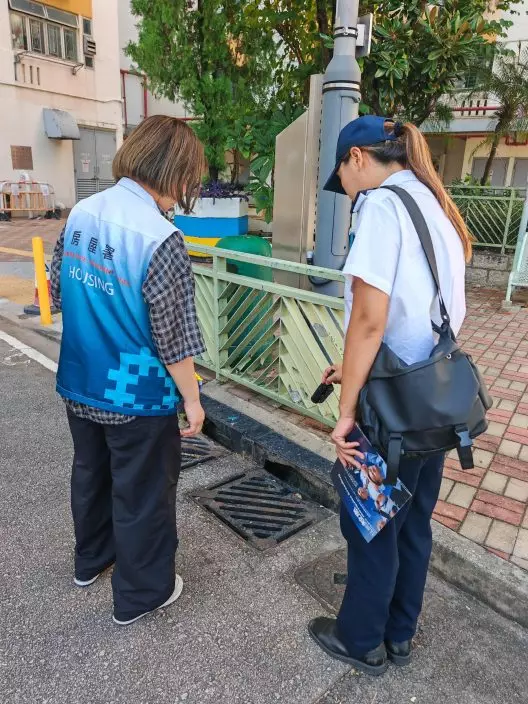
The Food and Environmental Hygiene Department (FEHD) today (September 29) released the third batch of gravidtrap indexes and density indexes for Aedes albopictus in September, covering 12 survey areas. Photo shows an FEHD staff member inspecting a public housing estate in Lai King, Kwan Tsing District, and providing an estate management staff member with advice and technical support on mosquito prevention and control. Source: HKSAR Government Press Releases

The Food and Environmental Hygiene Department (FEHD) today (September 29) released the third batch of gravidtrap indexes and density indexes for Aedes albopictus in September, covering 12 survey areas. Photo shows an FEHD staff member inspecting a public housing estate in Lai King, Kwan Tsing District, and providing an estate management staff member with advice and technical support on mosquito prevention and control. Source: HKSAR Government Press Releases

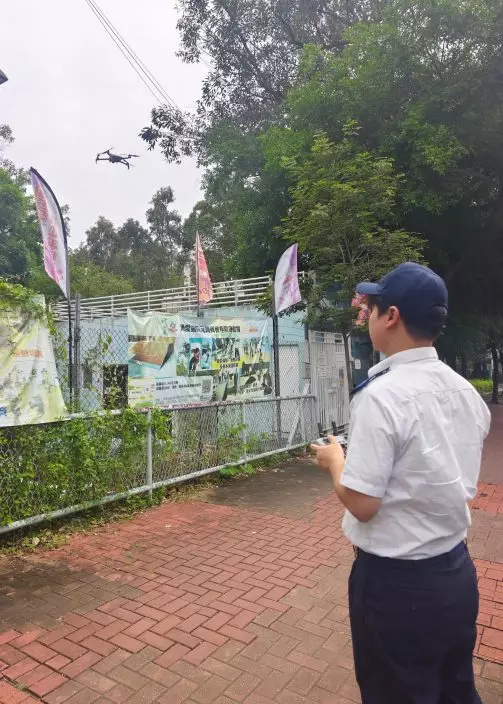
The Food and Environmental Hygiene Department (FEHD) today (September 29) released the third batch of gravidtrap indexes and density indexes for Aedes albopictus in September, covering 12 survey areas. Photo shows an FEHD staff member deploying a drone for aerial surveillance at Yuen Long Town, Yuen Long District, to identify potential mosquito breeding grounds for follow-up action. Source: HKSAR Government Press Releases

The Food and Environmental Hygiene Department (FEHD) today (September 29) released the third batch of gravidtrap indexes and density indexes for Aedes albopictus in September, covering 12 survey areas. Photo shows an FEHD staff member deploying a drone for aerial surveillance at Yuen Long Town, Yuen Long District, to identify potential mosquito breeding grounds for follow-up action. Source: HKSAR Government Press Releases

Recommended Articles