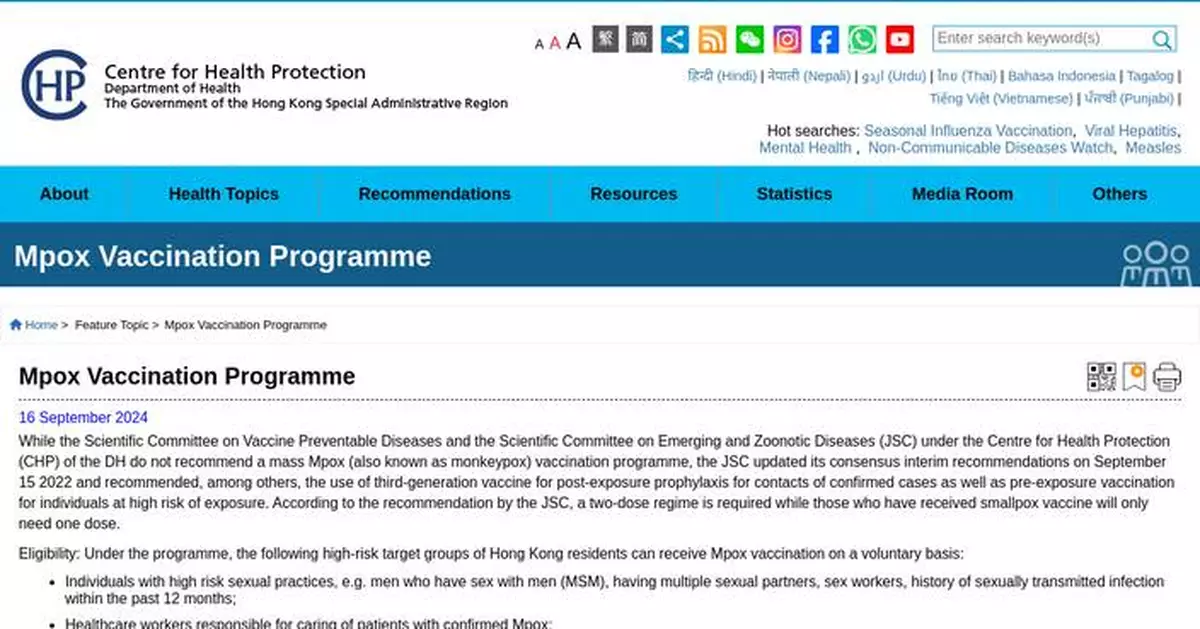
CHP investigates imported Mpox case
The Centre for Health Protection (CHP) of the Department of Health (DH) announced today (November 13) that it is investigating an imported Mpox (also known as Monkeypox) case, and strongly urged high-risk target groups to receive Mpox vaccinations. Meanwhile, the public is advised to be vigilant and avoid close physical contact with individuals suspected of contracting Mpox.
Case details
---------------
The case involves a 34-year-old man who developed a fever, fatigue and rash on his arms on November 9. The rash subsequently spread to various parts of his body, including his genital area, abdomen and chest. He attended the Accident and Emergency Department of Queen Elizabeth Hospital for medical consultation on November 11 and was admitted for isolation treatment. He is currently in stable condition. Upon laboratory testing by the CHP's Public Health Laboratory Services Branch, his clinical specimen tested positive for the Monkeypox virus.
According to information provided by the patient, he had high-risk sexual contact with other men outside Hong Kong during the incubation period. The CHP is continuing an epidemiological investigation of the case, and will report the case to the World Health Organization.
Latest situation of Mpox cases
------------------------------------
Since 2022, Hong Kong has recorded 120 Mpox cases (94 local cases and 26 imported cases). All patients are male. Epidemiological investigations revealed that among the 27 cases recorded since August, all patients reported having engaged in high-risk sexual activities during the incubation period, including having sex with male strangers or multiple partners, and having sex without a condom. Most of them have not received Mpox vaccination.
Among the local cases recorded since August, patients commonly used specific dating apps to find casual male sexual partners. After testing positive, some patients were unable to contact their newly met sexual partners, which hindered the CHP's ability to conduct effective contact tracing and implement corresponding prevention and control measures. In view of this, the CHP has increased its outreach on social media platforms to promote Mpox prevention and vaccination, and has collaborated with the operators of relevant dating apps to regularly push information about Mpox prevention and vaccination to all users in Hong Kong.
The CHP urges individuals who have engaged in high-risk sexual contact, particularly with male strangers, to remain vigilant and take appropriate personal protective measures, including receiving the Mpox vaccination and avoiding high-risk sexual contact, so as to lower the risk of infection. Members of the public should retain their sexual partners' contact information to facilitate contact tracing when necessary.
Strengthening prevention
-----------------------------
The Mpox vaccine can prevent infection and severe disease. Since late September, the CHP has set up an additional Mpox vaccination centre at the CHP Building, in addition to regular vaccination venues established by the Government. The CHP has also collaborated with relevant non-governmental organisations to provide outreach vaccination services, providing convenience and incentives to encourage individuals with high-risk contacts to get vaccinated as soon as possible. Since September 28, over 1 000 high-risk individuals have received the Mpox vaccine at the regular and additional vaccination venues.
Vaccination provides a highly effective protective barrier. Studies show that receiving two doses of the Mpox vaccine reduces the risk of infection by 82 per cent, which significantly lowers the risk of transmission to sexual partners, and protects both the vaccinated individual and others. Local data also show that vaccinated patients are 87 per cent less likely to experience viral spread to other parts of the body.
The CHP's Mpox hotline (2125 2373) will continue to provide health assessments and advice to high-risk individuals. The hotline will arrange for individuals in need to get vaccinated at the CHP. The hotline operates daily from 9am to 6pm.
More information on Mpox
-----------------------------
Mpox is not transmitted through respiratory droplets or aerosols in general, and transmission would not occur through social contact. The CHP reminds the public, especially those at higher risk of exposure, to take precautions and avoid close physical contact with persons or animals suspected of being infected. They should seek medical attention as soon as possible if they experience relevant symptoms, including rash, fever, chills, swollen lymph nodes, exhaustion, muscle pain, and severe headaches. They should not engage in activities with others that may involve contact with skin rash or body fluids.
The DH has been providing Mpox vaccination services for high-risk groups, including individuals with high-risk sexual practices (such as having multiple sexual partners), sex workers, or having a history of sexually transmitted infection within the past 12 months.
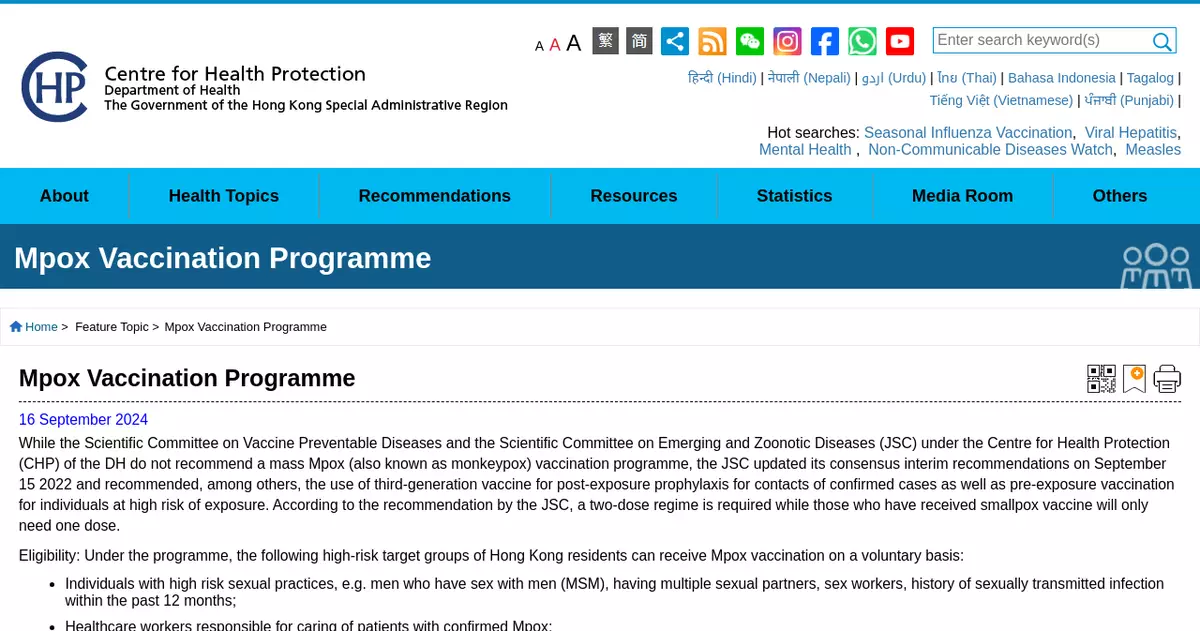
For more details, please visit the CHP's webpages on Mpox and the Mpox Vaccination Programme.
Source: AI-found images