CHP investigates case of mad honey poisoning
The Centre for Health Protection (CHP) of the Department of Health is today (May 6) investigating a case of mad honey poisoning, and reminded the public to buy honey from a reliable source or apiary.
A 59-year-old female developed chest discomfort, dizziness, transient blurred vision over bilateral eyes and near syncope around 30 minutes after consuming honey on April 30. She was sent to the Accident and Emergency Department of Pok Oi Hospital and was hospitalised for treatment. The patient was in stable condition. Her clinical diagnosis was mad honey poisoning. She was discharged on May 1.
Grayanotoxin was detected in the honey remnant and the patient's urine sample upon testing. A preliminary investigation revealed that the patient had consumed honey brought by her from Türkiye recently. The CHP's investigation is ongoing, and the Turkish health authority will be informed.
Mad honey poisoning is caused by ingestion of honey containing grayanotoxins derived from plants belonging to the Ericaceae family, including rhododendrons. Grayanotoxins are neurotoxins that can affect nerves and muscles. Symptoms of poisoning include nausea, vomiting, diarrhoea, dizziness, weakness, excessive perspiration, hypersalivation and paraesthesia shortly after ingestion. In severe cases, hypotension, bradycardia or shock may occur.
Members of the public are reminded to take heed of the following preventive advice:
 Buy honey from a reliable source or apiary;
Discard honey with a bitter or astringent taste -grayanotoxin-containing honey may cause a burning sensation in the throat; and
Pay special attention to honey from India, Nepal and the Black Sea region of Türkiye, as honey from these areas has led to grayanotoxin poisoning cases.
Buy honey from a reliable source or apiary;
Discard honey with a bitter or astringent taste -grayanotoxin-containing honey may cause a burning sensation in the throat; and
Pay special attention to honey from India, Nepal and the Black Sea region of Türkiye, as honey from these areas has led to grayanotoxin poisoning cases.
Source: AI-found images
Incoming passenger convicted and jailed for possession of duty-not-paid cigarettes
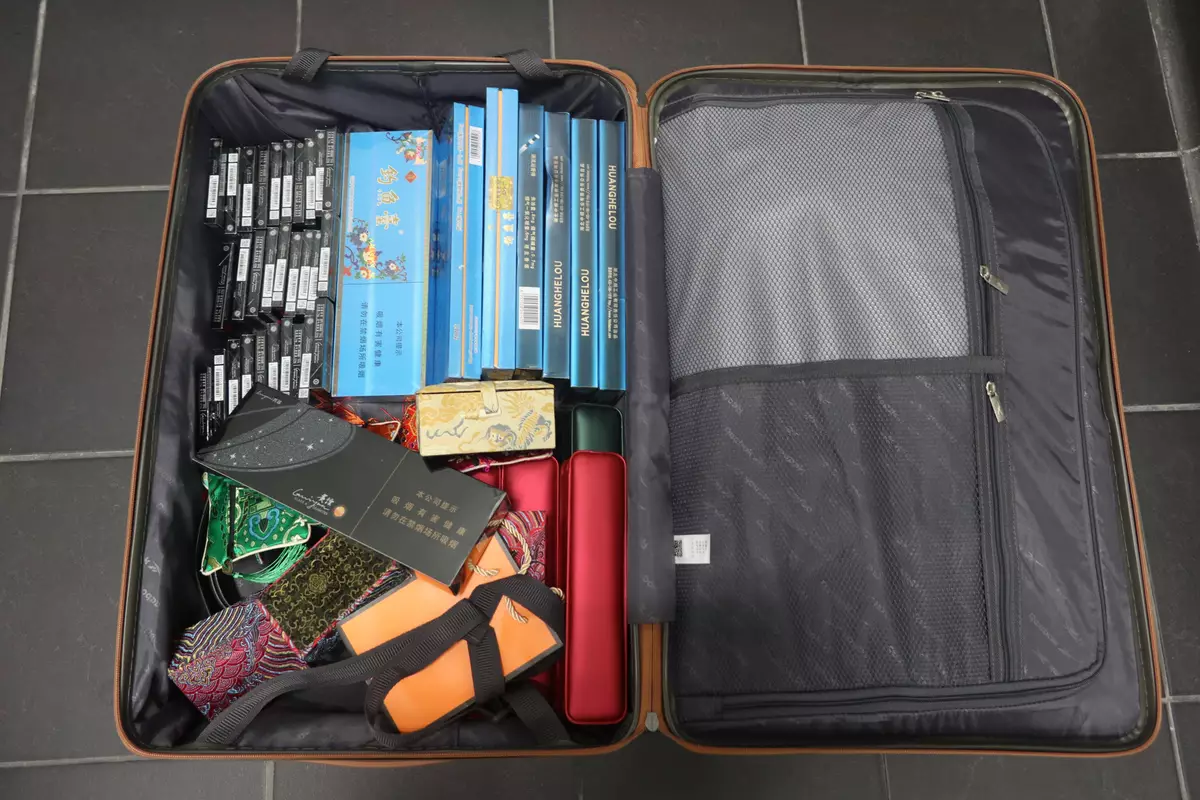
An incoming passenger was sentenced to four weeks' imprisonment with a fine of $2,000 by the Kowloon City Magistrates' Courts today (May 6) for possessing duty-not-paid cigarettes and failing to declare them to Customs officers, in contravention of the Dutiable Commodities Ordinance (DCO).
Customs officers intercepted the incoming 32-year-old male passenger yesterday (May 5) at the West Kowloon Station of the Guangzhou-Shenzhen-Hong Kong Express Rail Link and seized 2 161 duty-not-paid cigarettes from his personal baggage, with an estimated market value of about $8,860 and a duty potential of about $7,140. He was subsequently arrested.
Customs welcomes the sentence, noting that even a first-time offender may still be imprisoned. The custodial sentence has imposed a considerable deterrent effect and reflects the seriousness of the offences. Members of the public should not defy the law.
Customs reminds members of the public that under the DCO, cigarettes are dutiable goods to which the DCO applies. Any person who imports, deals with, possesses, sells or buys illicit cigarettes commits an offence. The maximum penalty upon conviction is a fine of $2 million and imprisonment for seven years.
Members of the public may report any suspected illicit cigarette activities to Customs' 24-hour hotline 182 8080 or its dedicated crime-reporting email account (crimereport@customs.gov.hk) or online form (eform.cefs.gov.hk/form/ced002).
Incoming passenger convicted and jailed for possession of duty-not-paid cigarettes Source: HKSAR Government Press Releases