Hong Kong's hosting of one of the space science community's biggest regional gatherings this week highlights the unique advantages of the city's "One Country, Two Systems" framework shows how it can play a key role in China's future space ambitions, according to a leading space researcher.
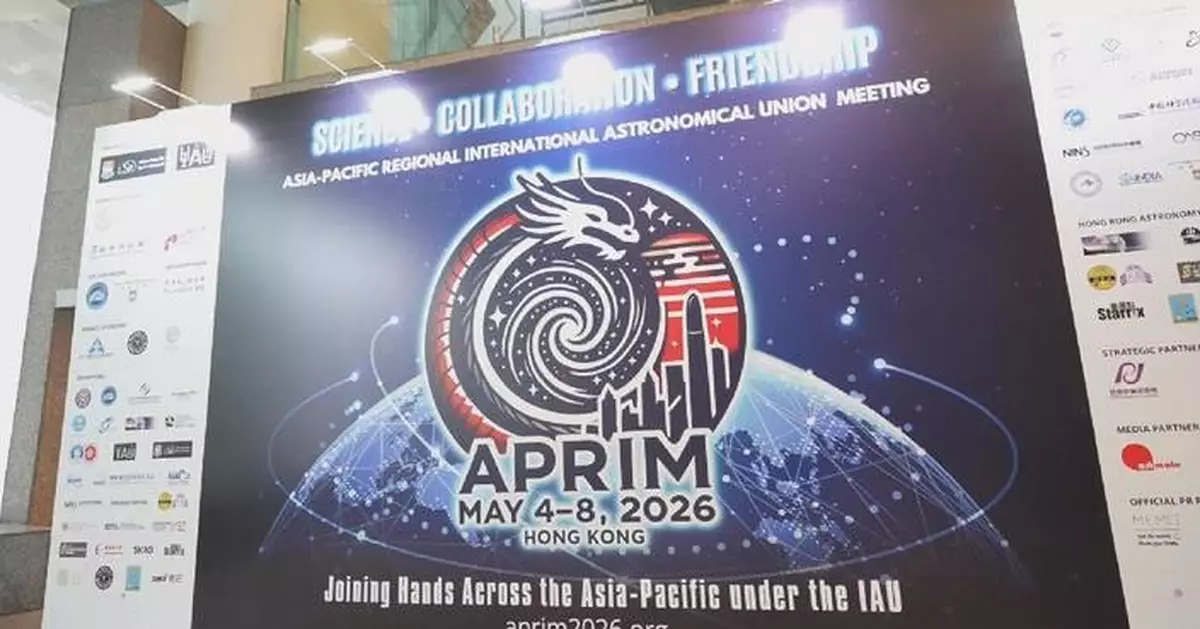
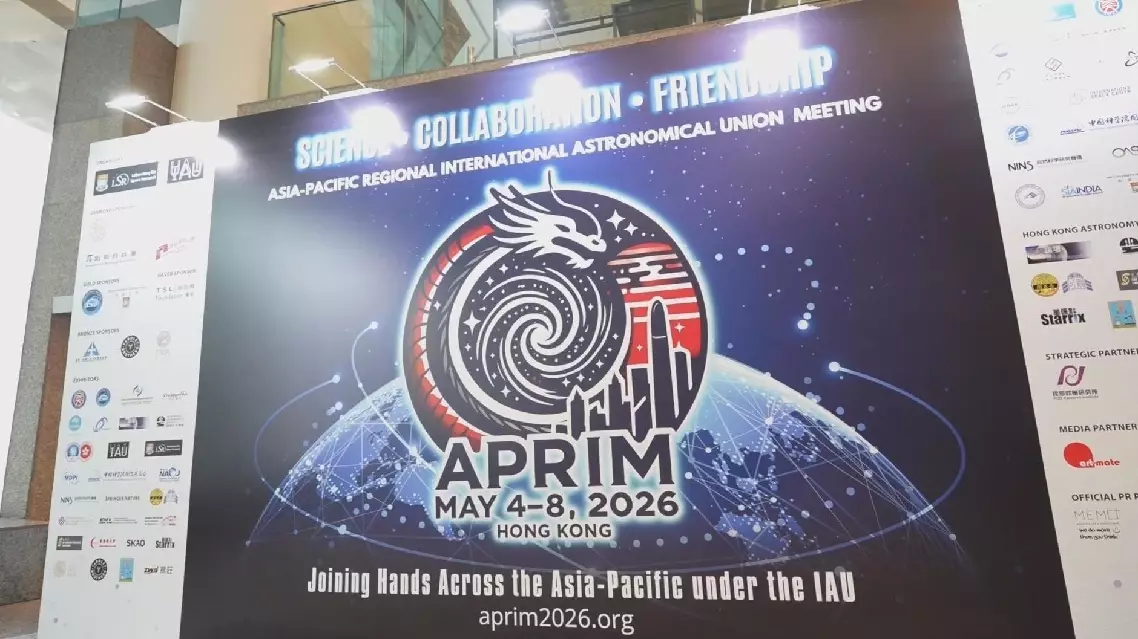
The five-day International Astronomical Union's Asia-Pacific Regional Meeting, running until Friday at the Hong Kong Convention and Exhibition Center, has drawn over 500 scientists and space specialists from China, the U.S., Russia, Japan, and beyond -- including Nobel and Shaw Prize laureates.
The agenda spans sustainable space development, debris mitigation and light pollution, underscoring a drive for coordinated policies and collaborative frameworks across the Asia-Pacific space sector.
Quentin Parker, director of the Laboratory for Space Research at the University of Hong Kong, said that holding the meeting offers the world a glimpse into Hong Kong's comprehensive abilities as a special administrative region (SAR) of China, citing its strong economy and legal standing and also the possibilities of becoming a hub of space sustainability.
"In terms of the significance, I think to show that Hong Kong as a city can run a mega science event and not just run rugby sevens, or not just run a Cantopop concert. Based in Hong Kong, under 'One Country, Two Systems' gives it some very strong and unique advantages. We have common law jurisprudence, we have incredibly strong and well regarded international regulatory frameworks. We are an IPO leader in the world at the moment. Why not can Hong Kong be a big new space center and also a global hub for space sustainability in which all of this depends? We could do it. We just need to grab the low hanging fruit as a city, as a special administrative region, and make it happen," said Parker.
Hong Kong is carving out a niche in China's deep-space exploration as the country presses ahead with its ambitious space goals.
On the China Space Day on April 24, officials unveiled collaborative payloads for the Tianwen-3 Mars sample return mission, which plans to launch within the coming two years and aims to bring samples from the Martian surface back to Earth around 2031.
Hong Kong institutions are contributing three out of the five payloads for this historic and groundbreaking mission. Among them will be the Mars Terrestrial Hyperspectral Imaging Spectrometer developed by the University of Hong Kong, a key instrument which will look for signs of life, water-containing minerals and help map Mars' surface resources.
Meanwhile, the city's first astronaut has already been named as part of China's astronaut training echelon, with the payload specialist anticipated to fly on a space mission later this year.
Parker also noted Hong Kong is heavily involved in a pivotal upcoming lunar mission, as China's Chang'e-7 lunar probe is poised for launch in the second half of 2026. It will head to the lunar south pole to explore water ice and investigate the environment.
"We are participating in the Chang'e-7 mission to the moon. We have developed a small wide-field camera telescope that's going on the lunar lander, going to land on the edge of the Shackleton Crater in the lunar South Pole region," said Parker.
The Chief Executive of Hong Kong SAR John Lee has emphasized Hong Kong's ambition to cultivate aerospace technology and nurture the space economy.
By leveraging its legal framework, financial infrastructure, and international connections, Hong Kong is anticipated to act as a "super-connector" in China's national space initiatives, spearheading the space economy.
Hong Kong can play unique role in advancing China's national space development: scholar