NEW YORK (AP) — The number of antisemitic incidents in the United States tallied by the Anti-Defamation League declined sharply in 2025 — the first drop in five years — due in part to what the ADL said was a dramatic decrease of incidents on college campuses.
The ADL tallied 1,694 antisemitic incidents on U.S. college campuses in 2024, after pro-Palestinian and anti-Zionist student protests proliferated due mostly to the Israel-Hamas war in Gaza. That figure fell by 66% in 2025, to 583, as many colleges and universities — under pressure from President Donald Trump’s administration — took steps to curb such protests.
Click to Gallery
FILE- Pro-Palestinian protesters demonstrate on the campus of DePaul University, April 30, 2024, in Chicago. (AP Photo/Charles Rex Arbogast, file)
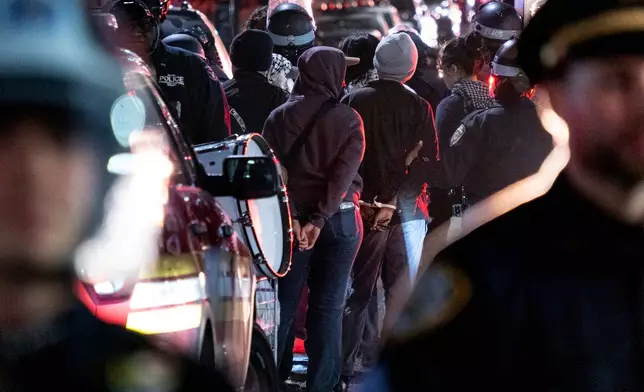
FILE - New York City police officers take people into custody near the Columbia University campus in New York Tuesday, April 30, 2024, after a building taken over by protesters earlier in the day was cleared, along with a tent encampment. (AP Photo/Craig Ruttle)
FILE - A student wrapped in an Israeli flag listens to Pro-Palestinian protesters gathered on campus at the University of Texas at Austin, on April 30, 2024, in Austin, Texas. (AP Photo/Eric Gay, File)
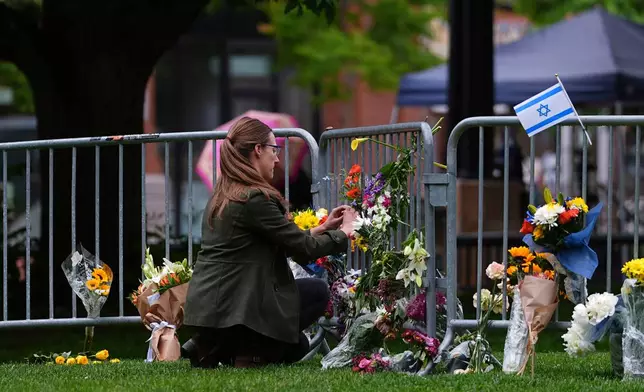
FILE - A woman places a bouquet of flowers at a makeshift memorial for victims of an attack outside of the Boulder County, Colo., courthouse Tuesday, June 3, 2025, in Boulder, Colo. (AP Photo/David Zalubowski, File)
With the drop in on-campus incidents a major factor, the ADL’s latest annual audit — released Wednesday — says there were 6,274 incidents of antisemitic assaults, harassment and vandalism overall in 2025. That’s down 33% from the record-high 9,354 incidents counted for 2024.
The states with the most antisemitic incidents in 2025 were New York (1,160), California (817) and New Jersey (687), the ADL says.
The ADL’s methodology in tallying such incidents has added grist to an intense and divisive debate among American Jews and others over the extent to which vehement criticism of Israeli policies and of Zionism should be considered antisemitic. Some critics say the ADL’s criteria is too broad.
Despite the decrease in total incidents, the ADL’s national director and CEO, Jonathan Greenblatt, said 2025 “was one of the most violent years for American Jews,” with a record-high 203 incidents of physical assault tallied in the audit.
“Numbers that would have shocked us five years ago are now our floor,” Greenblatt said. “People are being murdered because of antisemitism on American soil, and thousands more are threatened.”
Greenblatt was referring to the two Jewish people killed in a May 21 shooting outside the Capital Jewish Museum in Washington, D.C., and the 82-year-old Jewish woman who died from injuries sustained in a June 1 firebombing attack at an event in Boulder, Colorado, aimed at raising awareness of Israeli hostages held in Gaza.
In the ADL's report for 2024, antisemitic incidents related to Israel or Zionism accounted for 58% of the total, marking the first time since the annual audit began in 1979 that more than half the incidents fit this category. The change arose from widespread opposition to Israel's intensive military operation in Gaza that was launched after Hamas-led militants attacked southern Israel on Oct. 7, 2023.
In 2025, 45% of all antisemitic incidents were related to Israel or Zionism. The ADL said anti-Israel rallies featuring “extreme anti-Israel rhetoric that crossed the line into antisemitism” decreased significantly — by 67% overall and by 83% on college campuses.
Starting in 2024, the ADL launched a Campus Antisemitism Report Card, assigning grades reflecting its assessment of how colleges address antisemitism and whether they adopt ADL-recommended policies. Seeking to raise pressure on colleges, the ADL filed several lawsuits and — in cooperation with two other Jewish organizations — reached a settlement in a complaint against Pomona College.
“We welcome any decrease in antisemitic incidents on college campuses or in other settings. It is indisputably a good thing, and we hope this is just the beginning of a downward trend,” Greenblatt told The Associated Press via email.
“Yet, let me be very clear: this is not a moment for relief or complacency. Yes, ADL recorded a 66% decline of antisemitic incidents on college campuses in 2025. But here is the critical context: campus incidents in 2025 are still nearly four times higher than they were in 2021.”
In its new report, the ADL says it is “careful to not conflate general criticism of Israel or anti-Israel activism with antisemitism.” But there are gray areas. For example, the ADL contends that vilification of Zionism — the movement to establish and protect a Jewish state in Israel — is a form of antisemitism, yet some Jews are among the critics of Zionism and of the ADL itself.
The ADL's approach “emerges from their genuine concern that anti-Zionism is a genuine threat to the safety and security of American Jews,” said antisemitism expert Aryeh Tuchman. “There are a lot of people who would disagree with that. ... It's important that there be room for multiple approaches.”
Tuchman formerly led the ADL’s Center on Extremism, the group behind the annual audit, and now is director of the Nexus Center for Antisemitism at the Nexus Project, a watchdog group that promotes a more nuanced definition of antisemitism than the ADL uses.
Responding to the pressure on colleges from the ADL and Trump administration, the Council on American-Islamic Relations launched an “Unhostile Campus Campaign” aimed at ensuring that pro-Palestinian students, faculty, and staff enjoy free speech and academic freedom and are not penalized for their viewpoints.
Schools rated “most hostile” in CAIR's latest report were Columbia University, the City University of New York, and the University of Michigan.
The new ADL report surfaces amid growing concern about antisemitism elsewhere in the world.
In Britain, Prime Minister Keir Starmer said tougher action is needed against people chanting certain phrases at pro-Palestinian protests, as concerns grew over the safety of British Jews after the stabbings of two Jewish men in London.
The stabbings were the latest in a string of incidents, including recent arson attacks on synagogues and other Jewish sites in London. The U.K.’s senior police officer said British Jews are facing their greatest ever threat, and blamed social media for making antisemitism more mainstream.
— In Australia, a wide-ranging inquiry commission examining antisemitism after a massacre at a Hanukkah celebration heard this week from Jews who said escalating hatred has left them fearful and vulnerable. Fifteen people were killed when two gunmen opened fire at the celebration on Bondi Beach in December. The Commission says there has been a sharp rise in antisemitic incidents nationwide since the Israel-Hamas war began on Oct. 7, 2023.
— According to a recent study by Tel Aviv University, the total of 20 deaths in Australia, Britain and the United States made 2025 the deadliest year for antisemitic attacks since 1994. That's when the bombing of a Jewish community center in Argentina killed 85 people.
Associated Press religion coverage receives support through the AP’s collaboration with The Conversation US, with funding from Lilly Endowment Inc. The AP is solely responsible for this content.

FILE- Pro-Palestinian protesters demonstrate on the campus of DePaul University, April 30, 2024, in Chicago. (AP Photo/Charles Rex Arbogast, file)

FILE - New York City police officers take people into custody near the Columbia University campus in New York Tuesday, April 30, 2024, after a building taken over by protesters earlier in the day was cleared, along with a tent encampment. (AP Photo/Craig Ruttle)

FILE - A student wrapped in an Israeli flag listens to Pro-Palestinian protesters gathered on campus at the University of Texas at Austin, on April 30, 2024, in Austin, Texas. (AP Photo/Eric Gay, File)
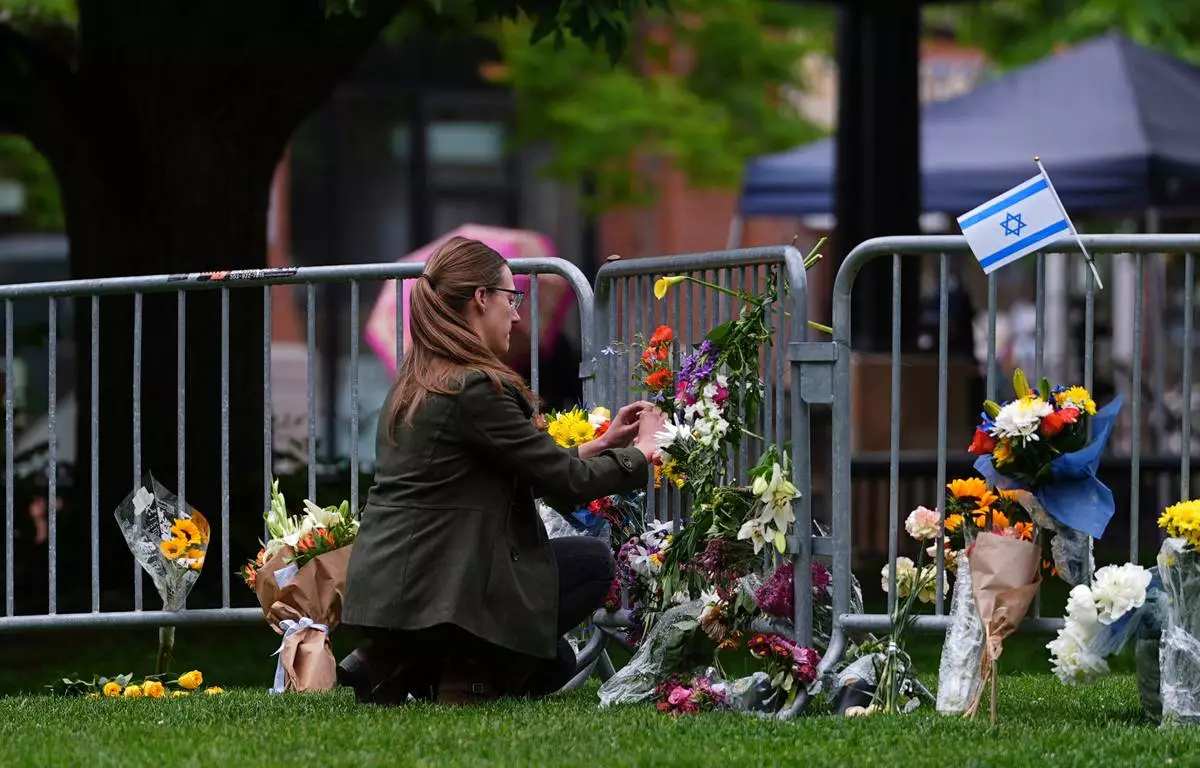
FILE - A woman places a bouquet of flowers at a makeshift memorial for victims of an attack outside of the Boulder County, Colo., courthouse Tuesday, June 3, 2025, in Boulder, Colo. (AP Photo/David Zalubowski, File)
WASHINGTON (AP) — The U.S. military fired on an Iranian oil tanker Wednesday as President Donald Trump sought to pressure Tehran into reaching a deal to end the war. The Islamic Republic said it was reviewing the latest American proposals.
A fighter jet shot out the rudder of the tanker in the Gulf of Oman as it tried to breach the American blockade of Iran’s ports, U.S. Central Command said in a social media post.
The attack occurred as Iran and the U.S. are officially in a ceasefire. Trump threatened Tehran with a new wave of bombing if a deal is not reached that includes opening the critical Strait of Hormuz.
Trump posted on social media that the two-month war could soon end and that oil and natural gas shipments disrupted by the conflict could restart. But he said that depends on Iran accepting a reported agreement that the president did not detail.
“If they don’t agree, the bombing starts,” Trump wrote.
Meanwhile, Israel struck Beirut’s southern suburbs for the first time since a ceasefire between Israel and the Iranian-backed Hezbollah militant group was announced April 17. Fighting has continued since then in southern Lebanon.
The last strikes in Beirut were on April 8, when a series of massive Israeli attacks killed more than 350 people. More than 2,500 have died in Lebanon since fighting began March 2, two days after Israel and the U.S. launched the war on Iran.
Israeli Prime Minister Benjamin Netanyahu’s office said Wednesday’s strike, which came without warning, targeted a commander in Hezbollah’s Radwan Force. Hezbollah did not immediately comment.
Trump insisted Wednesday that Iranian officials want to end the war.
“We’re dealing with people that want to make a deal very much, and we’ll see whether or not they can make a deal that’s satisfactory to us,” the president said.
He suggested, both at the White House and on social media, that the U.S. could ultimately force a settlement.
“If they don’t agree, the bombing starts,” Trump said on social media, “and it will be, sadly, at a much higher level and intensity than it was before.”
The White House believes it is near an agreement with Iran on a one-page memorandum to end the war, according to reporting by Axios. There is no deal yet, but provisions include a moratorium on Iranian uranium enrichment, lifting of U.S. sanctions, distribution of frozen Iranian funds and opening the strait for ships.
The White House did not immediately respond to questions about the possible agreement.
A spokesman for the Iranian Foreign Ministry, Esmaeil Baghaei, told state TV that Tehran had “strongly rejected” U.S. proposals reported by Axios, but that it was still examining the latest proposed agreement.
A shaky ceasefire between the U.S. and Tehran has largely held since it began April 8. Pakistan hosted in-person talks last month between the two countries, but they failed to reach an agreement.
Trump sought to increase pressure on Tehran the day after he suspended a short-lived U.S. effort to force open a safe passage for commercial ships through the strait. The waterway was a vital passage for oil and gas supplies, fertilizer and other petroleum products before the war.
Only two American-flagged merchant ships are known to have passed through the U.S.-guarded route after it opened Monday. The U.S. military said it sank six Iranian small boats threatening civilian ships.
Iran’s effective closure of the strait has sent fuel prices skyrocketing, rattled the global economy and put enormous economic pressure on countries, including major powers such as China.
China's foreign minister called for a comprehensive ceasefire Wednesday after meeting in Beijing with Iran's top envoy. Wang Yi said his country was “deeply distressed” by the conflict, which began Feb. 28 when the U.S. and Israel launched strikes against Iran.
China’s close economic and political ties to Tehran give it a unique position of influence. The Trump administration is pressing China to use that relationship to urge the Islamic Republic to open the strait.
Iranian Foreign Minister Abbas Araghchi's visit to China came ahead of a planned trip by Trump to Beijing.
Trump is scheduled to attend a high-profile summit on May 14 and 15 with Chinese President Xi Jinping. Trump was the last U.S. president to visit China in 2017.
“We believe that a comprehensive ceasefire is urgently needed, that a resumption of hostilities is not acceptable,” Wang said in a video of the meeting.
The Chinese foreign minister said the conflict “has not only caused serious losses to the Iranian people, but also had a severe impact on regional and global peace.”
Araghchi told Iranian state TV that his visit included discussions of the Strait of Hormuz, Iran's nuclear program and sanctions imposed on Tehran.
Trump has demanded a major rollback of Tehran's disputed nuclear program.
A statement published on the Chinese Foreign Ministry's website said China values Iran’s pledge not to pursue nuclear weapons while affirming its “legitimate right to the peaceful use of nuclear energy.”
Hundreds of merchant ships remain bottled up in the Persian Gulf, unable to reach the open sea without passing through the Strait of Hormuz.
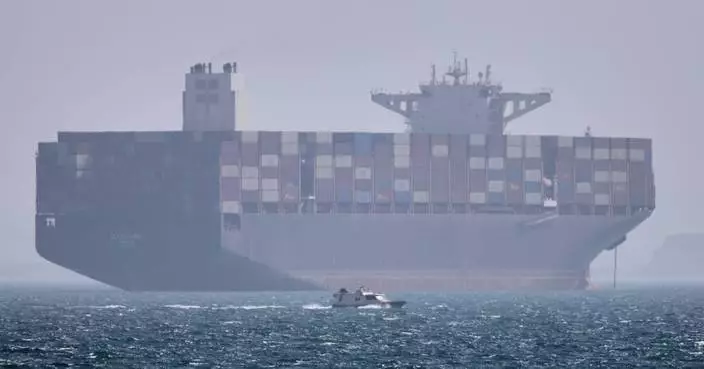
A cargo container ship operated by the CMA CGM Group was damaged, and multiple crew members were wounded when it came under attack while transiting the strait Tuesday, the French shipping company said. It said the injured crew members were taken off the ship and received medical treatment.
Oil prices and shipping will not likely return to normal until the risk of attacks in the strait has receded, said Kaho Yu, head of energy and resources at risk intelligence company Verisk Maplecroft.
“Refiners, shippers and commodity traders will remain cautious until there is clearer evidence that Hormuz disruptions will not re-escalate,” he said.
Among them is Hapag-Lloyd, one of the world's largest shipping companies. It said in a statement that the strait's shutdown is costing it around $60 million per week, with rising fuel and insurance costs hitting particularly hard. The company said alternate routes to other harbors or over land are limited.
The spot price of Brent crude oil, the international standard, fell to around $100 per barrel Wednesday, easing significantly from big price jumps earlier in the week. Crude sold for roughly $70 a barrel before the war began.
Bynum reported from Savannah, Georgia. Associated Press writers E. Eduardo Castillo in Beijing; Elena Becatoros in Athens, Greece; Munir Ahmed in Islamabad; Toqa Ezzidin in Cairo; David McHugh in Frankfurt, Germany; Adam Schreck in Dubai, United Arab Emirates; and Abby Sewell in Beirut contributed to this report.
A previous version of this story misstated the name of the company that operates the container ship.
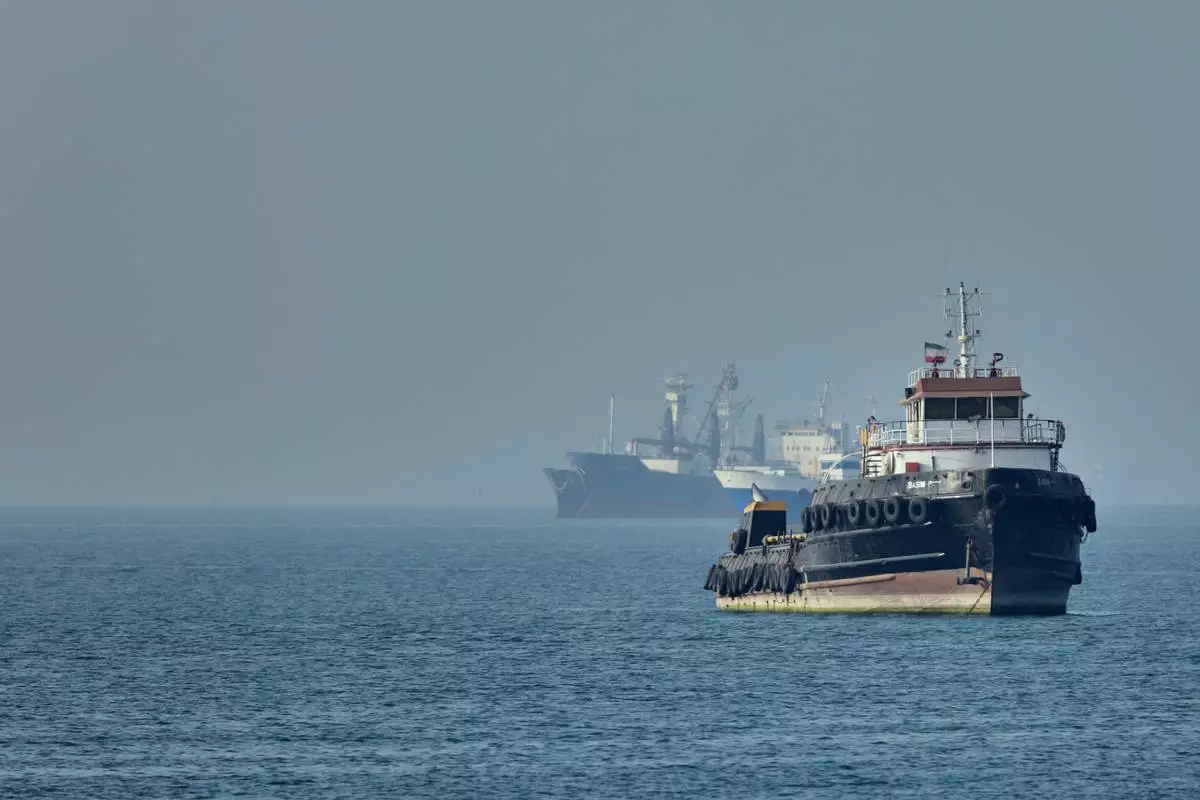
An Iranian tugboat floats in the foreground as cargo ships sit at anchor in the Strait of Hormuz off Bandar Abbas, Iran, Monday, May 4, 2026. (Amirhosein Khorgooi/ISNA via AP)
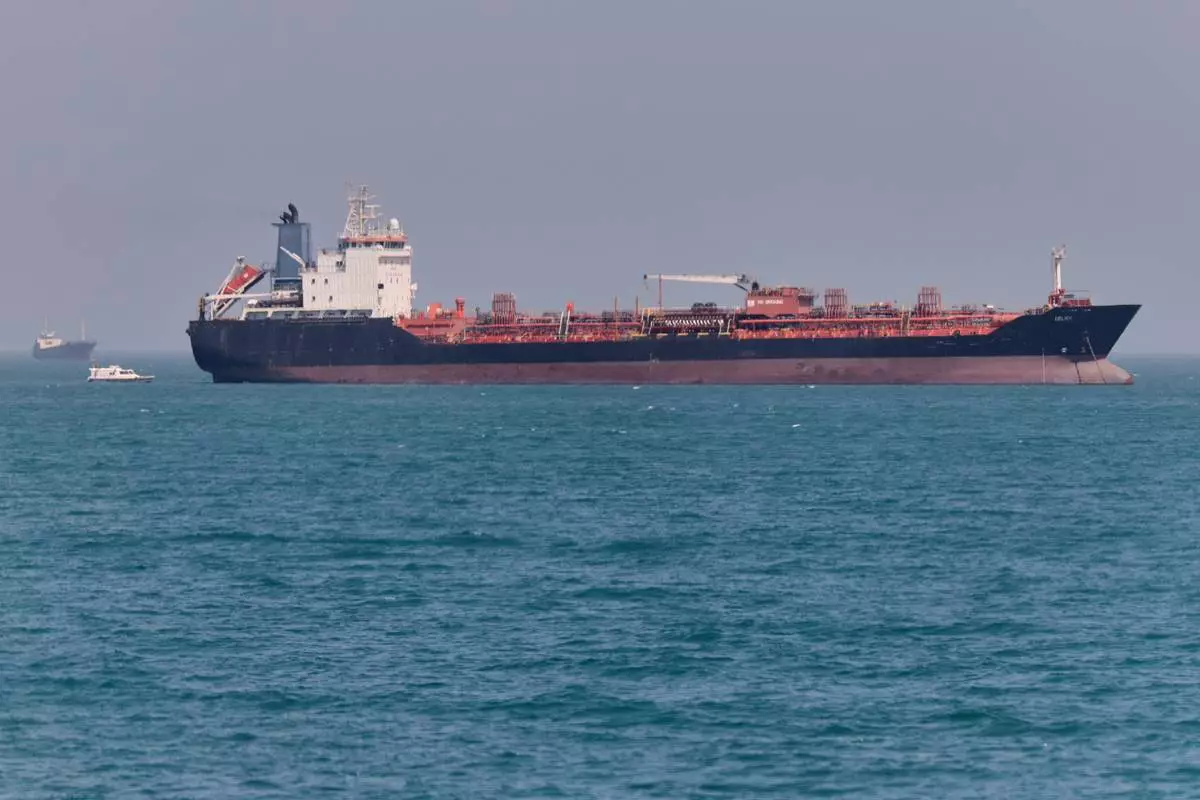
An oil tanker sits at anchor in the Strait of Hormuz off Bandar Abbas, Iran, Saturday, May 2, 2026.(Amirhosein Khorgooi/ISNA via AP)

President Donald Trump speaks before signing a proclamation in the Oval Office at the White House, Tuesday, May 5, 2026, in Washington. (AP Photo/Jacquelyn Martin)
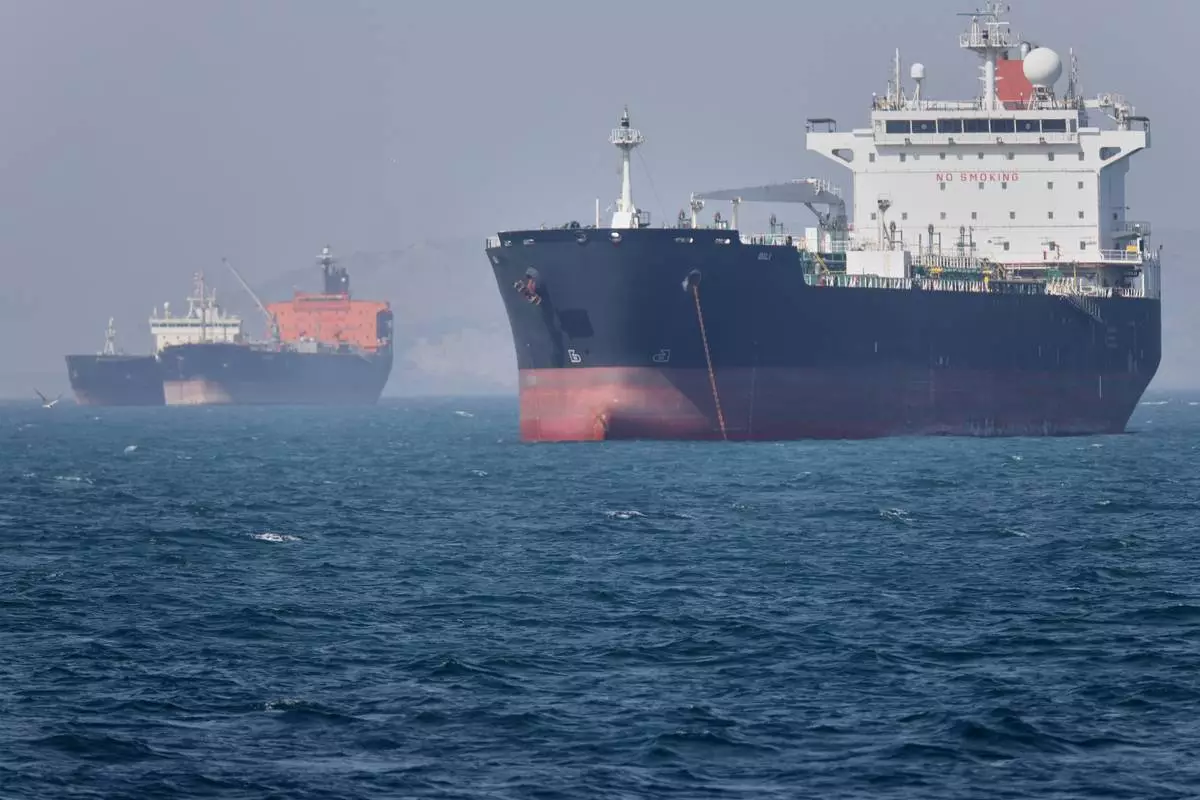
Oil tankers sit at anchor offshore in the Strait of Hormuz off Bandar Abbas, Iran, Saturday, May 2, 2026. (Amirhosein Khorgooi/ISNA via AP)
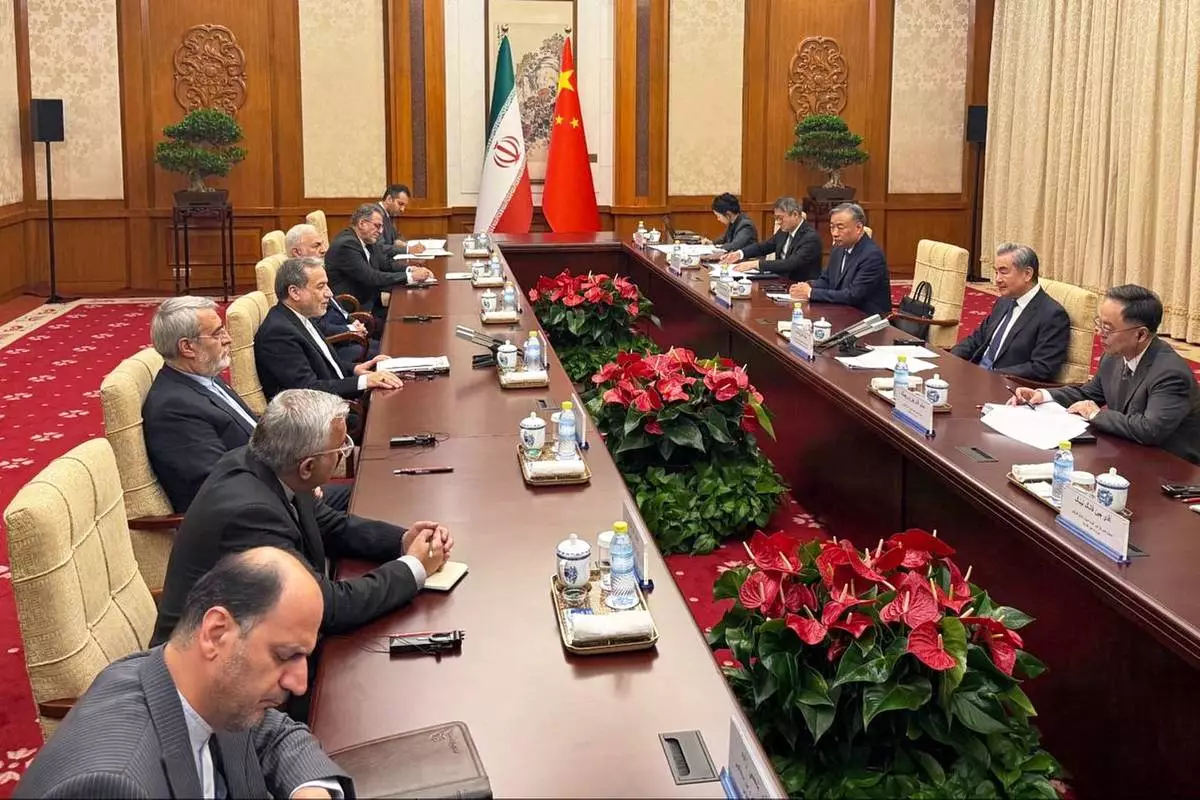
In this photo released by the Telegram channel of Iranian Foreign Minister Abbas Araghchi, China's Foreign Minister Wang Yi, second from right, meets with Iran's Foreign Minister Abbas Araghchi, center left, and their delegations in Beijing, China, Wednesday, May 6, 2026. (Telegram channel of the Iranian Foreign Minister via AP)
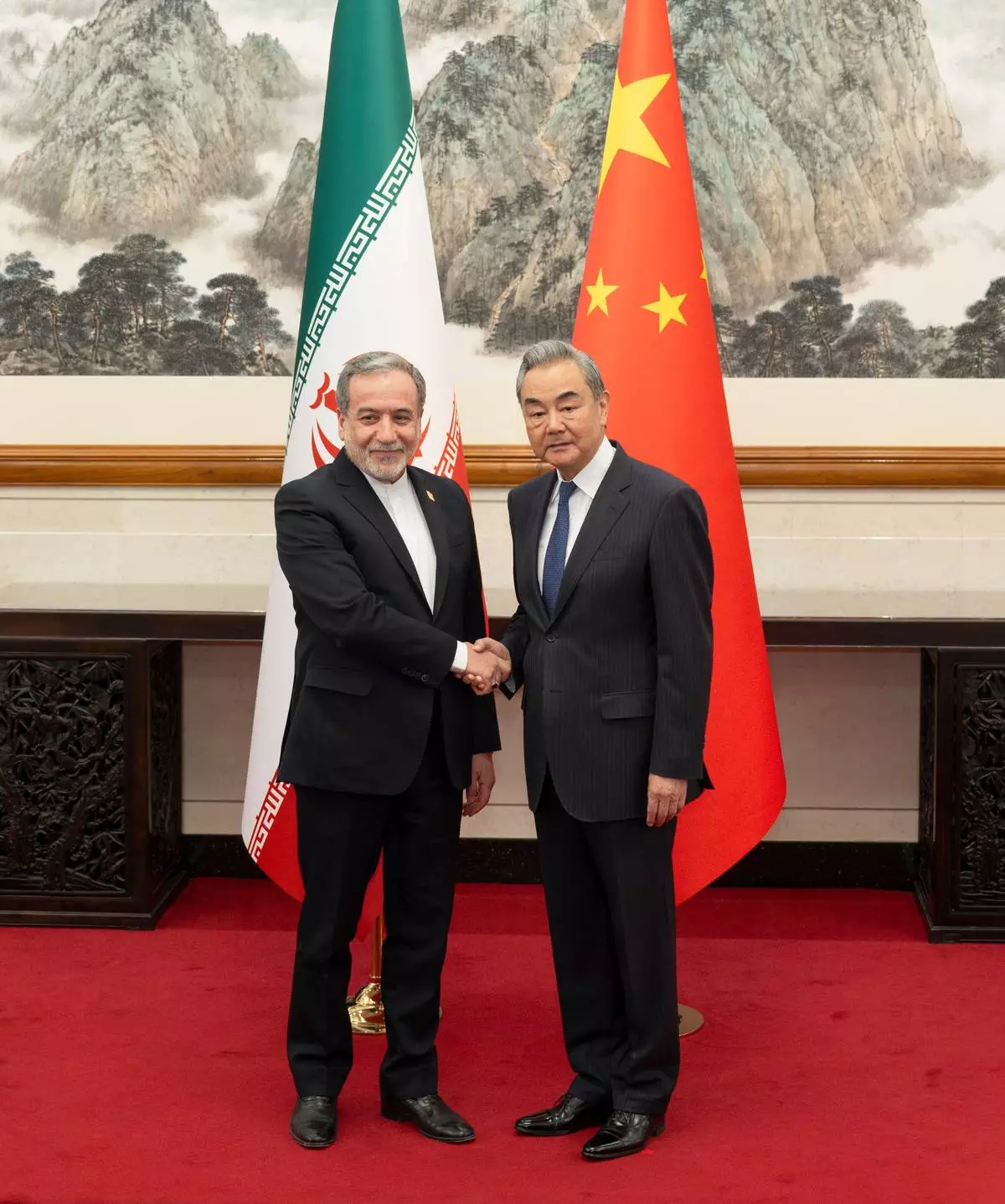
In this photo released by Xinhua News Agency, Iranian Foreign Minister Abbas Araghchi, left, is greeted by his Chinese counterpart Wang Yi prior to their bilateral meeting in Beijing, Wednesday, May 6, 2026. (Cai Yang/Xinhua via AP)
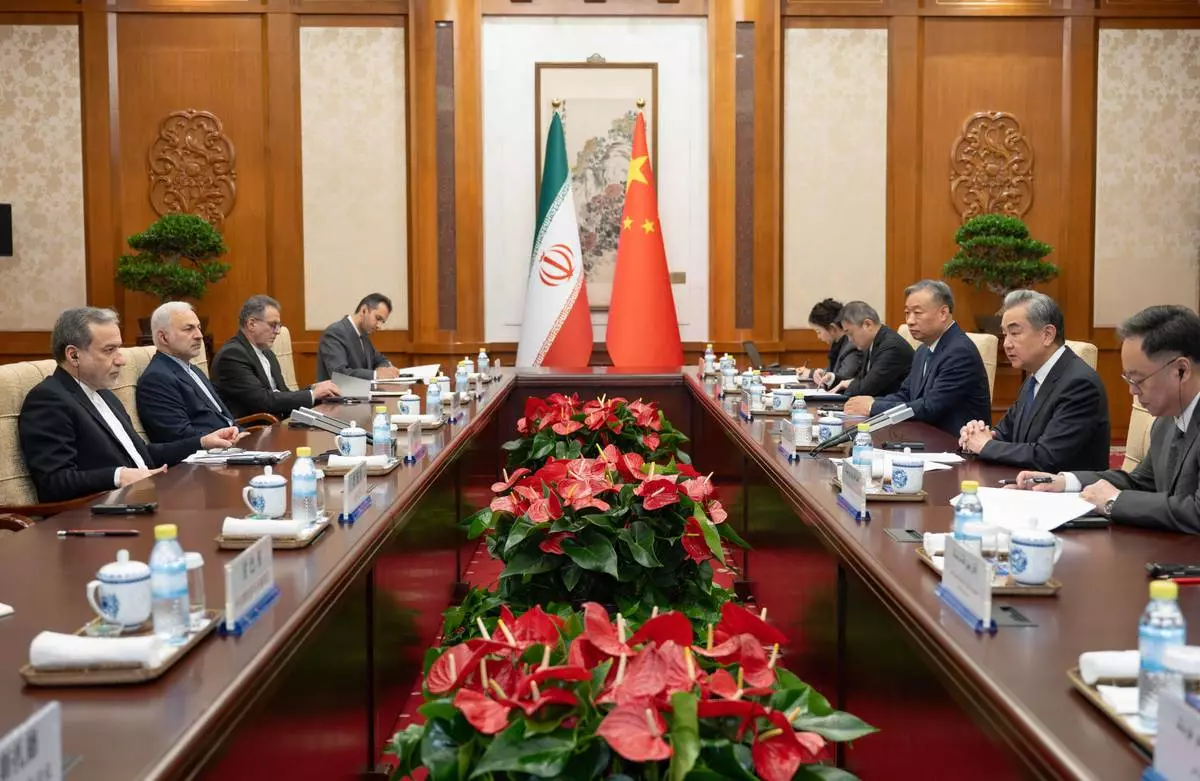
In this photo released by Xinhua News Agency, Chinese Foreign Minister Wang Yi, second right, talks to his Iranian Counterpart Abbas Araghchi, left, during the bilateral meeting in Beijing, Wednesday, May 6, 2026. (Cai Yang/Xinhua via AP)
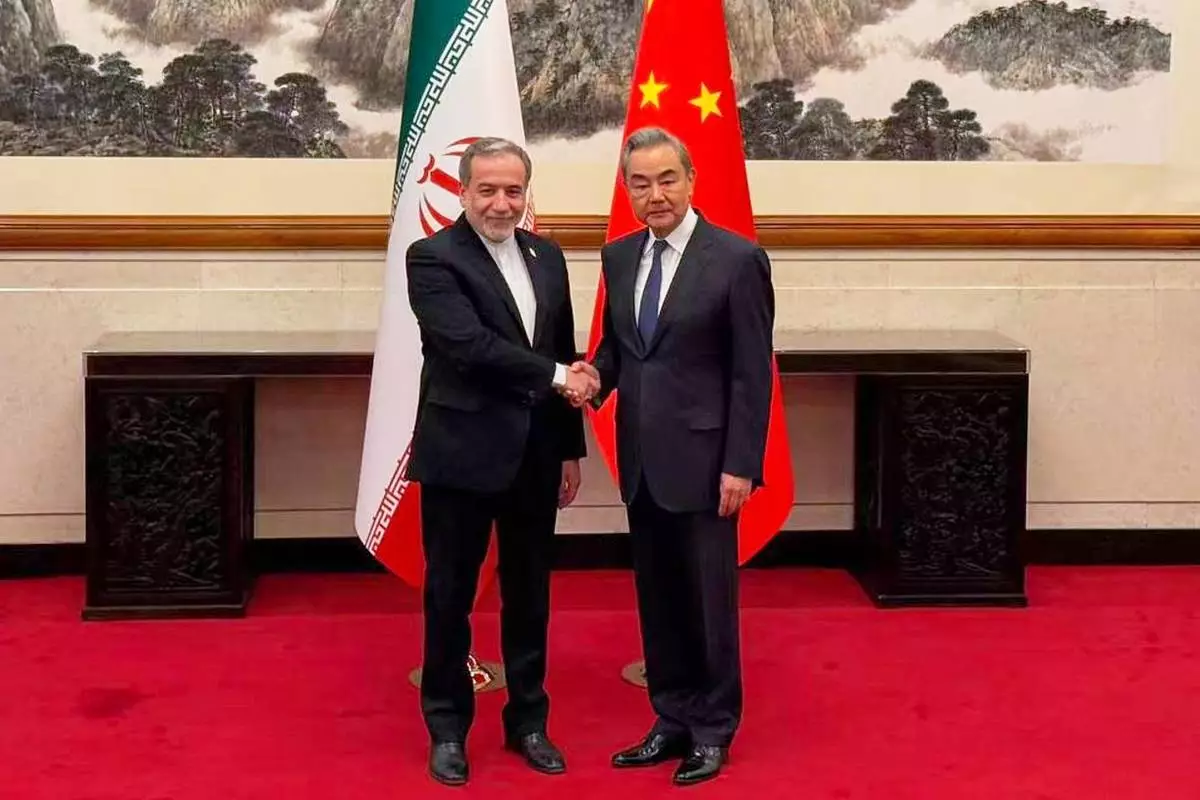
In this photo released by the Telegram channel of Iranian Foreign Minister Abbas Araghchi, China's Foreign Minister Wang Yi, right, meets with Iran's Foreign Minister Abbas Araghchi in Beijing, China, Wednesday, May 6, 2026. (Telegram channel of the Iranian Foreign Minister via AP)