PARIS (AP) — France’s aircraft carrier strike group is moving south of the Suez Canal and into the Red Sea in preparation for a potential French-British mission in the Strait of Hormuz, the French armed forces said Wednesday.
The deployment puts Europe’s most powerful warship within reach of a strait whose closure has come to epitomize the war in Iran — choking a fifth of the world’s oil and triggering what the International Energy Agency calls the largest supply disruption in the history of the global oil market.
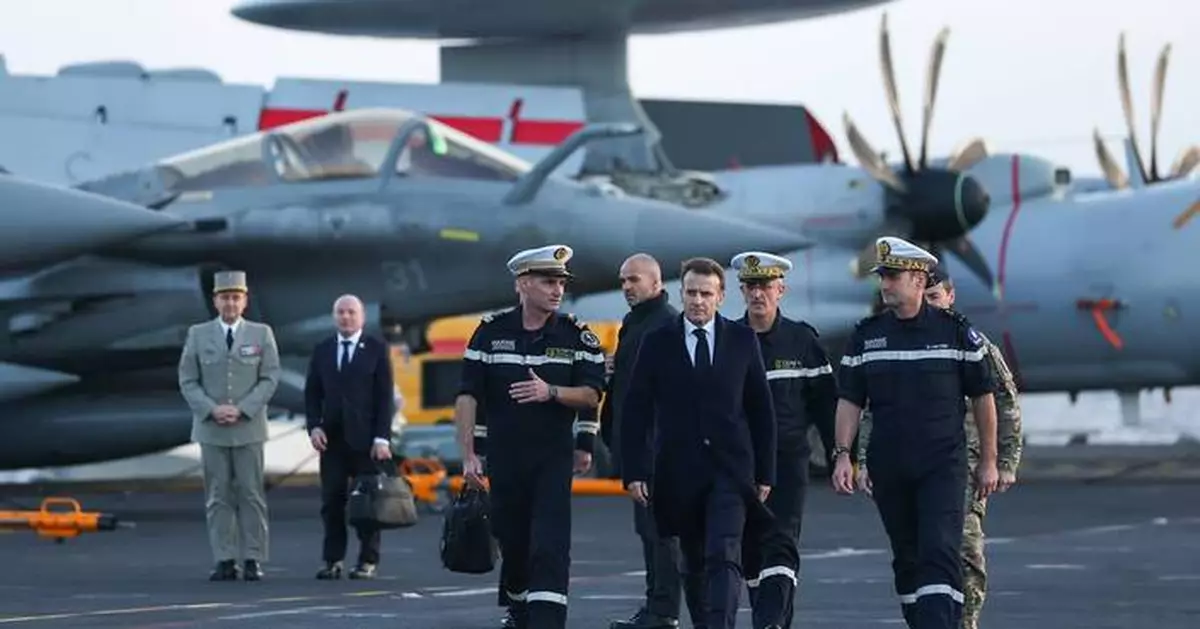
The southward repositioning of the nuclear-powered Charles de Gaulle and its escorts is the latest stage of a Middle East deployment first announced by French President Emmanuel Macron in a televised address on March 3, the day before Iran closed the strait.
The move south of Suez puts France’s only carrier — the only nuclear-powered aircraft carrier outside the U.S. Navy — closer to the Persian Gulf chokepoint of Hormuz than at any point since the war began.
“Going south of Suez is new for us,” Col. Guillaume Vernet, spokesman for the French armed forces chief of staff, told The Associated Press. “Geographically, it’s closer to the Strait of Hormuz and will therefore enable us to react faster, once the conditions are met.”
“Planning has been done and is ready to go,” he said.
But Vernet stressed that the wider Hormuz coalition — drawn up by France, Britain and more than 50 nations — will not begin operating until two thresholds are cleared: The threat to shipping must come down, and the maritime industry must be reassured enough to use the strait.
Even then, he said, any operation would require the agreement of neighboring countries.
“Today the Strait of Hormuz is stuck because of the threat, and the insurance premiums are so high. Not a single ship will jeopardize their trip or go there,” he said.
The French effort is distinct from the U.S. “Project Freedom” mission, launched Sunday and paused by U.S. President Donald Trump on Tuesday evening.
Washington has not been part of the French-British planning, which observers have said echoes the European “coalition of the willing” Macron and British Prime Minister Keir Starmer assembled to support Ukraine.
The French and British coalition, by contrast, will be conditional and defensive.
“The French position is the same since the beginning — defensive posture, respecting international law,” Vernet said.
Vernet traced the initiative to the days after Iran shut the strait on March 4 in retaliation for joint U.S. and Israeli strikes that began Feb. 28 and killed Iranian Supreme Leader Ayatollah Ali Khamenei.
He said that from the beginning of March, France wanted a multinational initiative to reestablish freedom of navigation in the Strait.
“Right after that, we had the opportunity to build things with different countries," including the U.K., Italy, the Netherlands and others, he said.
Macron and Starmer hosted dozens of countries at a Paris summit on April 17, and military planners from more than 30 nations finalized operational details at Britain’s Permanent Joint Headquarters at Northwood on April 22-23.
War-risk insurance premiums for transits of the strait have risen four to five times above preconflict levels, according to industry estimates, and around 2,000 ships remain stranded in the Gulf.
The Charles de Gaulle was ordered from the Baltic to the eastern Mediterranean by Macron’s March 3 address, in what the French presidency described as an “unprecedented” mobilization that also includes eight frigates and two Mistral-class amphibious assault ships.
French Rafale fighters based at the Al Dhafra airbase in the United Arab Emirates have been intercepting Iranian drones and missiles over the Gulf state since the war began Feb. 28, under a long-standing defense pact with Abu Dhabi that puts some 900 French personnel on the Gulf’s southern shore.
The carrier group’s southward move places French air assets — 20 Rafale fighters and E-2C Hawkeye early-warning aircraft — within range of the Strait of Hormuz without crossing into the Gulf, where the U.S. Navy has been blockading Iranian ports since April 13.
Vernet didn’t specify a date for the French-British operation, saying the carrier was being positioned to be close enough to act if and when the conditions are met.
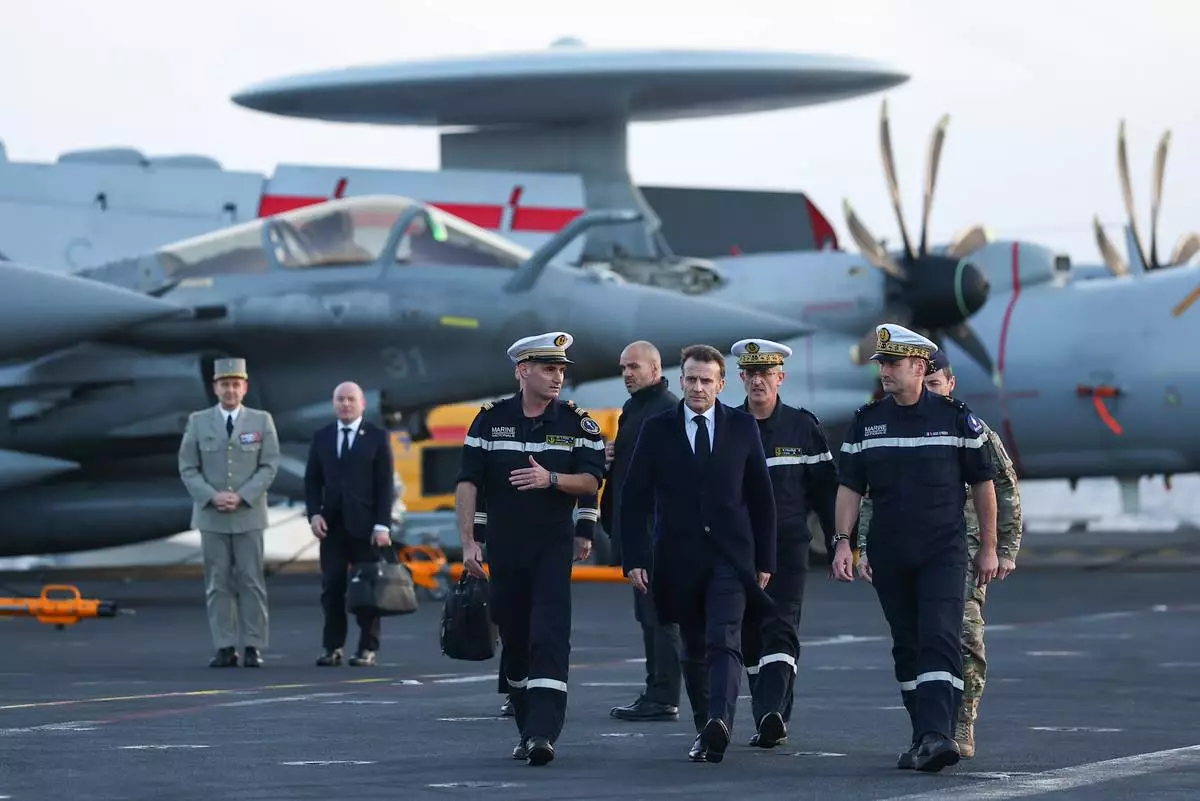
FILE - French President Emmanuel Macron, center right, visits the French aircraft carrier Charles de Gaulle, during his visit to Cyprus, March 9, 2026. (Gonzalo Fuentes/Pool Photo via AP, File)
President Donald Trump has raised hopes, again, that the United States and Iran are moving closer to an initial agreement to end the war, amid reports of another U.S. proposal that he has not detailed. And "if they don’t agree, the bombing starts, and it will be, sadly, at a much higher level and intensity than it was before,” Trump posted on social media Wednesday.
According to reporting by Axios, the U.S. has sent for Iran's review a one-page memorandum to end the war, with provisions including a moratorium on Iranian uranium enrichment, a lifting of U.S. sanctions, the distribution of frozen Iranian funds and the reopening of the Strait of Hormuz. The White House did not respond to questions about the possible agreement, and Trump wrote that it was “perhaps a big assumption” that Iran would agree.
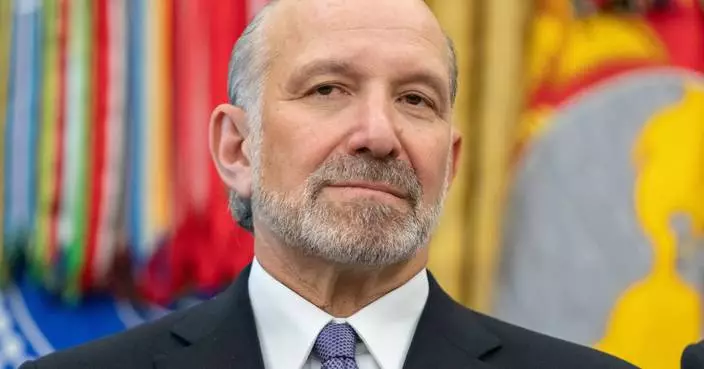
Also Wednesday, Commerce Secretary Howard Lutnick is appearing before a House committee investigating convicted sex offender Jeffrey Epstein as lawmakers seek answers for Lutnick’s contact with him in the years after 2008. Lutnick has given contradictory statements about his relationship with Epstein but said he has done nothing wrong and welcomed the closed-door interview with lawmakers.
And elections in Indiana, Ohio and Michigan on Tuesday reinforced a picture that’s becoming increasingly clear — while Trump still dominates the Republican Party, ousting lawmakers who Democrats seem to have the momentum ahead of November’s midterm elections. In Indiana, five of the president’s candidates won with the help of an avalanche of cash.
And Trump has renewed his criticism of Pope Leo XIV, potentially complicating a fence-mending visit that Secretary of State Marco Rubio plans to make this week to the Vatican. In an interview, Trump said the first American-born pontiff is helping Iran and also making the world less safe with his comments about the importance of not treating immigrants with disrespect.
The Latest:
Mohamed Abushahab, the United Arab Emirates’ U.N. ambassador, said the Security Council must “compel Iran’s compliance” with its March resolution demanding that Tehran stop attacking its Gulf neighbors and reopen the Strait of Hormuz.
He told reporters Wednesday that Iran attacked the UAE on May 4 -- while a ceasefire is in place -- with 12 ballistic missiles, three cruise missiles and four drones which resulted in a fire on critical energy infrastructure in the Fujairah oil industry zone.
The United States and its Gulf allies including the UAE have circulated a new Security Council resolution threatening Iran with sanctions or other measures if it doesn’t stop attacks and open the critically important strait, where about 20% of the world’s crude oil had transited.
The proposed resolution was drafted under Chapter 7 of the U.N. Charter which can be enforced militarily. A watered-down resolution aimed at opening the Strait of Hormuz, which was stripped of Chapter 7 language, was vetoed by Russia and China hours before Washington and Tehran announced a temporary ceasefire in early April.
The UAE’s Abushahab was asked whether he thought Russia and China would agree to the new draft under Chapter 7. “Not only is it possible, but it’s necessary,” he replied.
Rep. James Comer, the Republican chair of the House Oversight Committee, told reporters as he entered the closed-door interview that Commerce Secretary Howard Lutnick had in the past not been “100% truthful” about whether he had ever visited Epstein’s infamous private island.
Lutnick said on a podcast last year that he had decided to “never be in the room” with Epstein following a 2005 tour of Epstein’s home that disturbed Lutnick and his wife. But the release of case files on Epstein showed that Lutnick had kept in contact with Epstein and met up with him a couple of times in 2011 and 2012.
Under questioning from Democrats during an unrelated hearing earlier this year, Lutnick said he had visited Epstein’s private island with his family in 2012 for lunch.
This poll comes as the Supreme Court weighs President Trump’s efforts to restrict birthright citizenship.
The AP-NORC poll finds about two-thirds of U.S. adults say automatic citizenship should be granted to all children born in the country. Most Democrats and independents back that view, but Republicans are more doubtful: just 44% support birthright citizenship.
The poll also shows that some people are conflicted, saying in general that they support birthright citizenship but also that they oppose it in some specific circumstances.
For instance, the poll found about three-quarters of U.S. adults say they support automatic citizenship for children born to parents who are in the country legally on work visas, while only about half support it for those born to parents who are in the country illegally.
Howard Lutnick is answering questions from House lawmakers today about his relationship with his former neighbor, Jeffrey Epstein.
The commerce secretary is the highest-ranking official in the Trump administration, besides Trump himself, to appear in the Epstein case files.
Lutnick has said he barely knew Epstein and has welcomed the closed-door interview with the House Oversight Committee, but his story on his interactions with Epstein has changed. He met with Epstein a couple times and exchanged emails with the financier, even after Epstein’s 2008 conviction in Florida for soliciting prostitution from an underage girl.
France’s aircraft carrier strike group is moving south of the Suez Canal and into the Red Sea in preparation for a potential future mission as part of a French-British plan for the Strait of Hormuz, a senior French military spokesman told The Associated Press on Wednesday.
The repositioning of the nuclear-powered Charles de Gaulle puts France’s only carrier closer to the Persian Gulf chokepoint where Iran has effectively halted commercial traffic since early March. The French effort is distinct from the U.S. “Project Freedom” mission launched Sunday and paused by Trump on Tuesday evening.
“Going south of Suez is new for us,” said Col. Guillaume Vernet, spokesman for the French armed forces chief of staff.
The wider Hormuz coalition — drawn up by France, Britain and more than 50 nations — will not begin operating until the threat to shipping eases and the maritime industry is reassured enough to use the strait, Vernet said, adding that any operation would also require the agreement of neighboring countries.
A cargo container ship operated by the CMA GGM Group was damaged when it came under attack while transiting the Strait of Hormuz on Tuesday, the French shipping company said Wednesday.
Multiple crew members were injured in the attack on the CMA CGM San Antonio, the company said without providing details. The injured crew were taken off the ship and are receiving medical treatment.
Iranian Foreign Minister Abbas Araghchi’s visit comes ahead of Trump’s planned high-profile summit on May 14 and 15 with Chinese President Xi Jinping, the first such trip by a U.S. president since Trump visited in 2017.
In a televised interview Wednesday with Iran’s state media from Beijing, Araghchi said his discussions with Chinese officials included the Strait of Hormuz, Iran’s nuclear program and sanctions imposed on Tehran. And he said Iran has attained “an elevated international standing,” having proven its capabilities and strength.
China’s Foreign Ministry said after the meeting that it values Iran’s pledge not to pursue nuclear weapons while affirming its “legitimate right to the peaceful use of nuclear energy.”
U.S. Secretary of State Marco Rubio had expressed hope on Tuesday Beijing would reiterate the need for Iran to release its chokehold on the strait, its main source of leverage, as Trump demands a major rollback of its disputed nuclear program.
Five months ago, Trump was stinging from a political defeat as Republican state senators defied him on redistricting in Indiana. Now he has proved he can still punish wayward party members after the slate of challengers he endorsed defeated almost every one of those lawmakers.
The results will likely bolster Trump’s confidence heading into upcoming Republican primaries where he wants more incumbents ousted, including Sen. Bill Cassidy of Louisiana and Rep. Thomas Massie of Kentucky.
Indiana’s primary results also ratchet up pressure on Republican lawmakers in other states to move aggressively to redraw congressional district boundaries in time for the November elections.
▶ Read more
Hamburg-based shipping company Hapag-Lloyd says the closure of the Strait of Hormuz is costing it around $60 million a week, in particular in costs for fuel and insurance, as it remains too risky to permit its ships to try getting through.
Insurance costs have shot up due to the risk of attack from Iranian drones and small boats. Alternate routes to safe harbors or overland are “limited in capacity and cannot completely replace the regular maritime routes through the region,” a company statement said.
The number of ships passing the strait has dwindled to a trickle. Iran has demanded that vessels go through a vetting process run by the Islamic Revolutionary Guards Corp that involves passing to the north near the Iranian cost, submitting information on crew and cargo, and in some cases paying. But paying the IRGC risks running afoul of sanctions from the US and the EU, which have designated it a terrorist organization.
Oil prices and shipping are unlikely to return to normal until it’s clear the risk of attacks in the Strait of Hormuz have receded, cautions Kaho Yu, head of energy and resources resources at risk intelligence company Verisk Maplecroft.
“Even with diplomatic engagement continuing, energy markets are unlikely to return quickly to pre-crisis assumptions,” he said. “Refiners, shippers, and commodity traders will remain cautious until there is clearer evidence that Hormuz disruptions will not re-escalate.”
Despite the Iran-China meeting’s emphasis on de-escalation, “Hormuz remains the real metric that will be watched,” he added. “Tanker traffic and energy flows over the coming weeks and months are likely to matter more than diplomatic language in assessing whether Beijing can translate influence with Tehran into practical stability.”
About 6 in 10 U.S. adults say the United States is no longer a great place for immigrants, according to the AP-NORC poll.
Roughly 3 in 10 say the U.S. is a great place for immigrants, while about 1 in 10 say it never was. The belief that America is no longer great for immigrants is more common among Democrats and independents.
Nick Grivas, a 40-year-old Democrat from Massachusetts, said he worries that federal immigration policies could discourage new arrivals from investing in their communities, especially if they don’t believe they will be allowed to remain.
“You’re less willing to commit to the project if you don’t think that you’re gonna be able to stay,” he said.
The White House believes it is nearing an agreement with Iran on a one-page memorandum to end the war, according to reporting by Axios.
There is not an agreement yet, but the provisions include a moratorium on Iranian uranium enrichment, a lifting of U.S. sanctions and the distribution of frozen Iranian funds and the opening of the Strait of Hormuz for ships.
The White House did not respond to questions about the possible agreement.
Trump posted on social media that the war with Iran could soon end and oil and natural gas shipments could restart. But that all depends on Iran accepting a reported agreement that the U.S. president did not detail.
“If they don’t agree, the bombing starts, and it will be, sadly, at a much higher level and intensity than it was before,” Trump said.
Trump said that it was “perhaps a big assumption” that Iran would agree to the terms being offered by the United States.
Many U.S. adults say they or someone they know has made life changes because of immigration enforcement over the last year, according to a new AP-NORC poll.
About one-third of Americans say they know someone who has started carrying proof of their immigration status or U.S. citizenship, been detained or deported, changed their travel plans, or significantly changed their routines – such as avoiding work, school or leaving the house – because of their immigration status.
This is especially true among Hispanic adults, with more than half knowing someone affected. Democrats are also more likely than Republicans to say they have a personal connection to someone impacted by immigration enforcement.
Wang Yi said his country was “deeply distressed” by the conflict. He spoke after meeting with Iranian Foreign Minister Abbas Araghchi, who was visiting Beijing for the first time since the war with the U.S. and Israel started Feb. 28.
China’s close economic and political ties to Tehran give it a unique position of influence. The Trump administration is pressing China to use that relationship to urge the Islamic Republic to open the Strait of Hormuz.
The Chinese minister’s comments followed an earlier statement by Trump that he was pausing his short-lived U.S. effort to guide stranded commercial vessels out of the Strait of Hormuz in hopes that a deal could be finalized. A shaky ceasefire has been largely holding, despite exchanges of fire during the U.S. push to reopen the strait on Monday.
The seat has been vacant for more than a year, since Democrat Kristen McDonald Rivet resigned to take a seat in Congress.
Democrats are showing surprising strength in special elections and off-year contests across the country, winning races in unexpected places and significantly narrowing the gap, even when they fall short.
There’s no guarantee the trend will continue through the midterms, when turnout will be much higher, but it has nonetheless energized Democrats and spooked Republicans worried about keeping their congressional majorities.
Trump took aim at seven Republican state senators in Indiana who opposed his plan to redraw congressional district boundaries to help the party gain seats in the U.S. House. His intervention mostly paid off.
Groups allied with the president spent more than $8.3 million on advertising, an extraordinary surge of money into races that are typically low-profile.
Five Trump-backed challengers won. One incumbent won. A seventh contest was too close to call on Tuesday night.
The races were a test of Trump’s enduring grip over his party as Republicans grow increasingly anxious about the midterm elections.
By winning most of them, Trump sent a signal to Republicans everywhere that they can still get thrown out of office if they distance themselves from him even as his popularity fades. And they show the president that he can still credibly threaten consequences for Republicans who cross him.
The Trump-targeted state senators all represent districts he carried in 2024, mostly by 20 percentage points or more.
Elections in Indiana, Ohio and Michigan on Tuesday reinforced a picture that’s becoming increasingly clear — while President Donald Trump still dominates the Republican Party, Democrats seem to have the momentum ahead of November’s midterm elections.
The biggest test of Trump’s power came in Indiana, where he backed primary challenges against seven Republican state senators who rejected his redistricting plan in December. Five of the president’s candidates won with the help of an avalanche of cash.
Meanwhile in Michigan, a Democrat comfortably won a state Senate race in a bellwether district, the latest in a string of special election victories.
Over in Ohio, primaries locked in candidates for two major races with national implications.
▶ Read more

Pro-government demonstrators chant slogans as one of them holds a picture of the Iranian Supreme Leader Ayatollah Mojtaba Khamenei during their gathering at Enqelab-e-Eslami, or Islamic Revolution, square in Tehran, Iran, Monday, May 4, 2026. (AP Photo/Vahid Salemi)
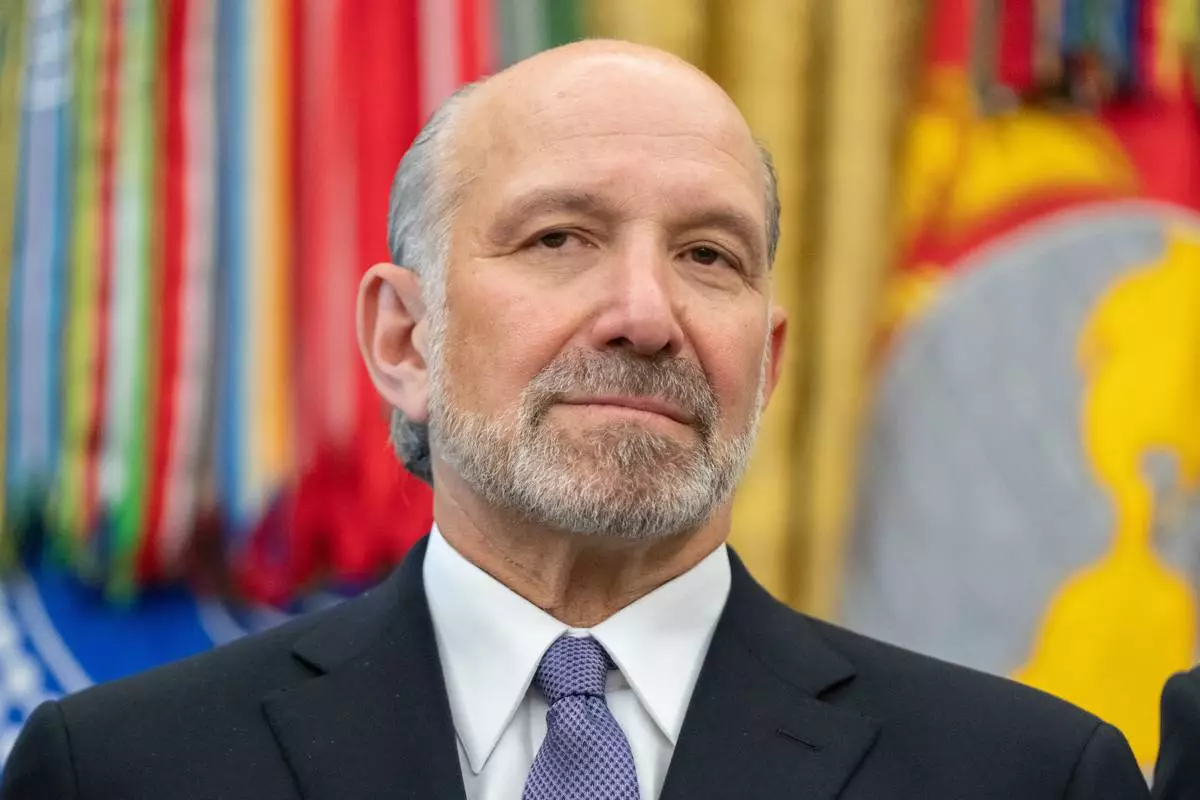
FILE - Commerce Secretary Howard Lutnick attends an event on health care affordability in the Oval Office at the White House, April 23, 2026, in Washington. (AP Photo/Mark Schiefelbein, File)
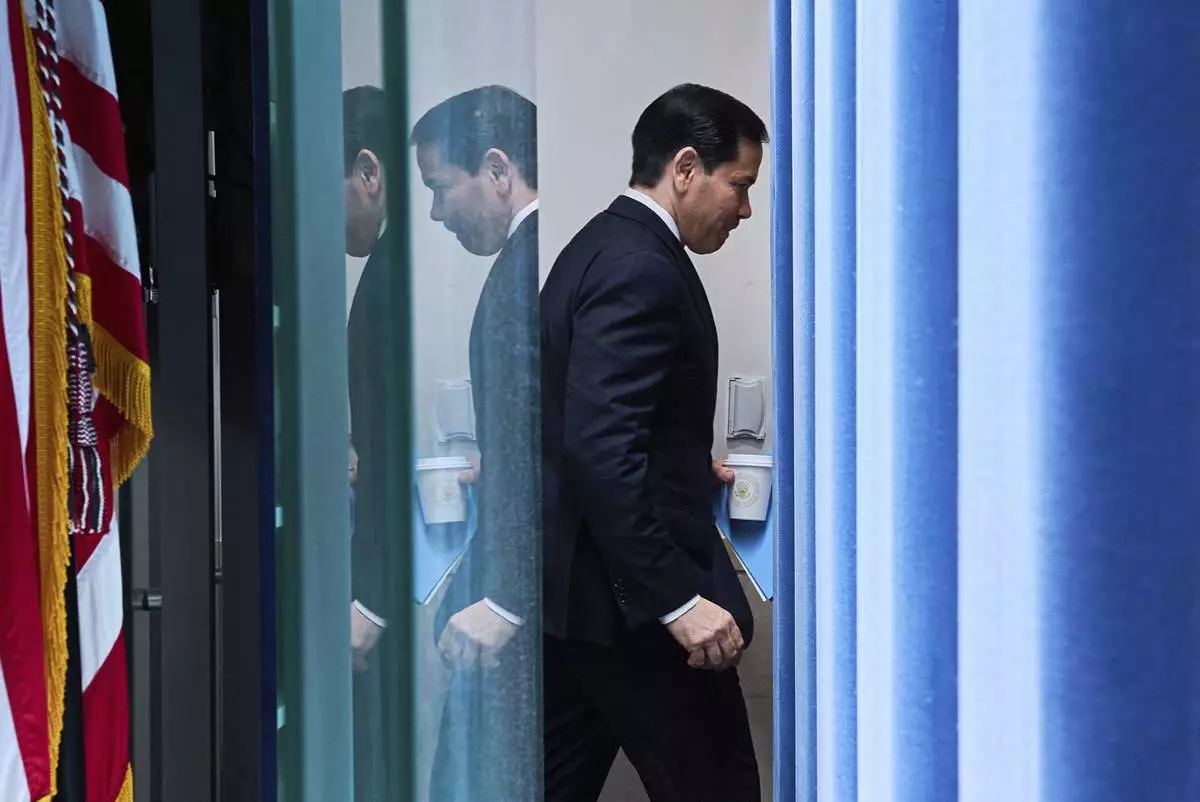
Secretary of State Marco Rubio leaves the room after speaking to the media in the James Brady Press Briefing Room of the White House, Tuesday, May 5, 2026, in Washington. (AP Photo/Jacquelyn Martin)