Skip to Content Facebook Feature Image

Worries about AI's risks to humanity loom over the trial pitting Musk against OpenAI's leaders

TECH

Worries about AI's risks to humanity loom over the trial pitting Musk against OpenAI's leaders
TECH

TECH

Worries about AI's risks to humanity loom over the trial pitting Musk against OpenAI's leaders

2026-05-07 12:00 Last Updated At:13:27

OAKLAND, Calif. (AP) — At the heart of the trial pitting Elon Musk against OpenAI CEO Sam Altman is a moment when they found common cause on an ever more pressing question: how to protect humanity from the risks of artificial intelligence.

It turned sour, and the jury is charged with settling the ensuing legal dispute between the two Silicon Valley titans.

More Images
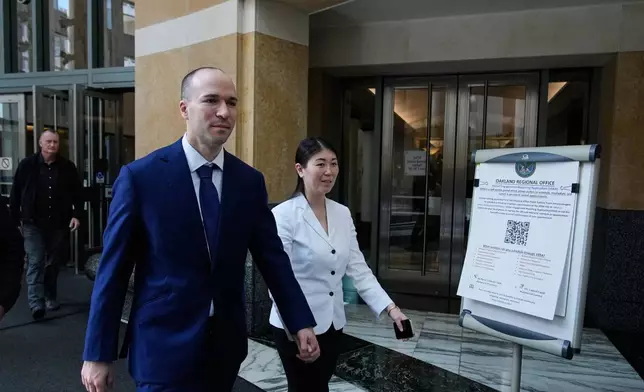
OpenAI president Greg Brockman, second left, exits the U.S. District Court, in Oakland, Calif., Thursday, April 30, 2026. (AP Photo/Godofredo A. Vásquez)
OpenAI president Greg Brockman, second left, exits the U.S. District Court, in Oakland, Calif., Thursday, April 30, 2026. (AP Photo/Godofredo A. Vásquez)

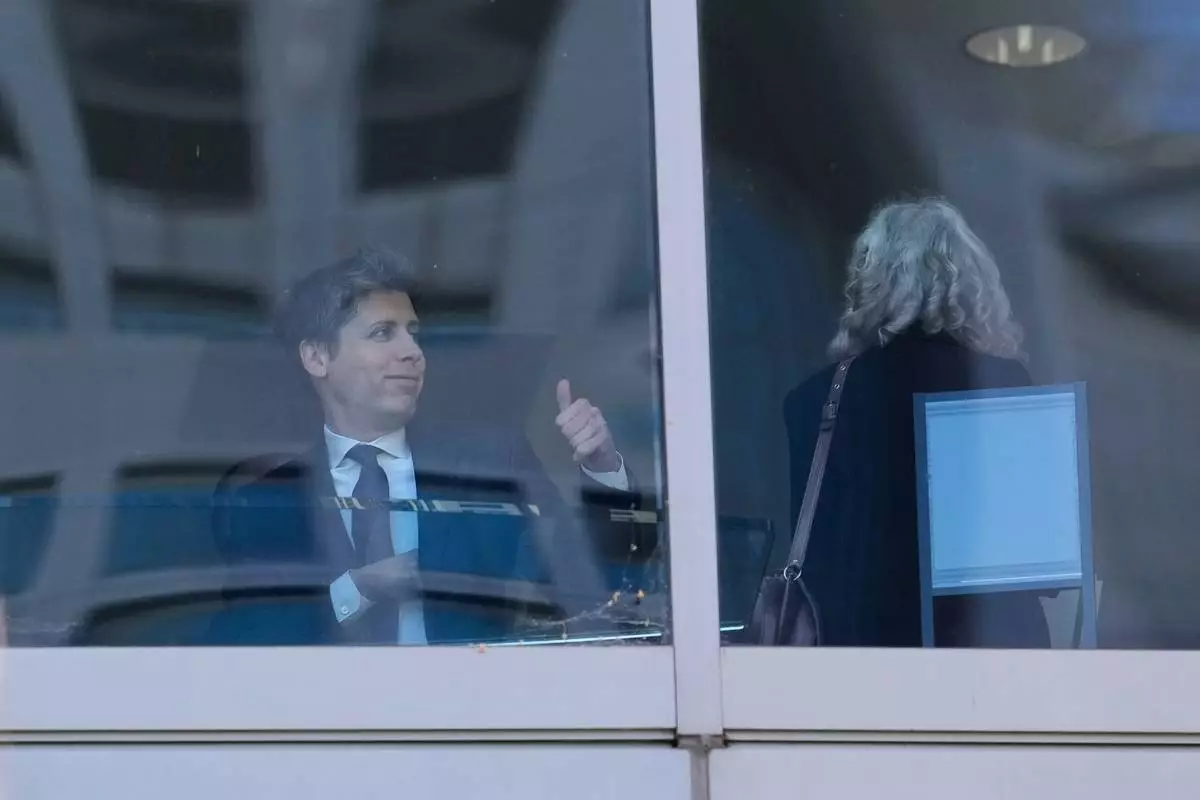
Sam Altman, left, gestures as he walks through a hallway inside the U.S. District Court in Oakland, Calif., Wednesday, April 29, 2026. (AP Photo/Godofredo A. Vásquez)
Sam Altman, left, gestures as he walks through a hallway inside the U.S. District Court in Oakland, Calif., Wednesday, April 29, 2026. (AP Photo/Godofredo A. Vásquez)
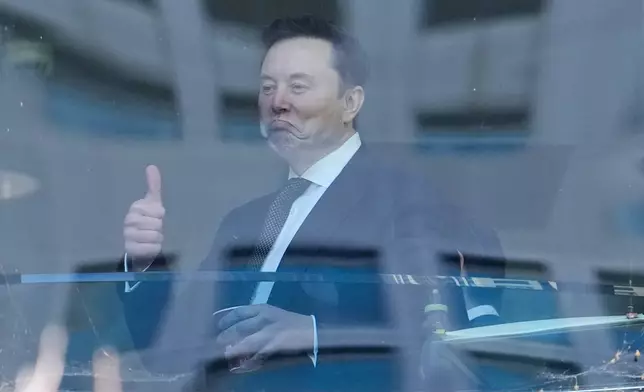
Elon Musk, left, gestures as he walks through a hallway inside the U.S. District Court in Oakland, Calif., Wednesday, April 29, 2026. (AP Photo/Godofredo A. Vásquez)

Elon Musk, left, gestures as he walks through a hallway inside the U.S. District Court in Oakland, Calif., Wednesday, April 29, 2026. (AP Photo/Godofredo A. Vásquez)

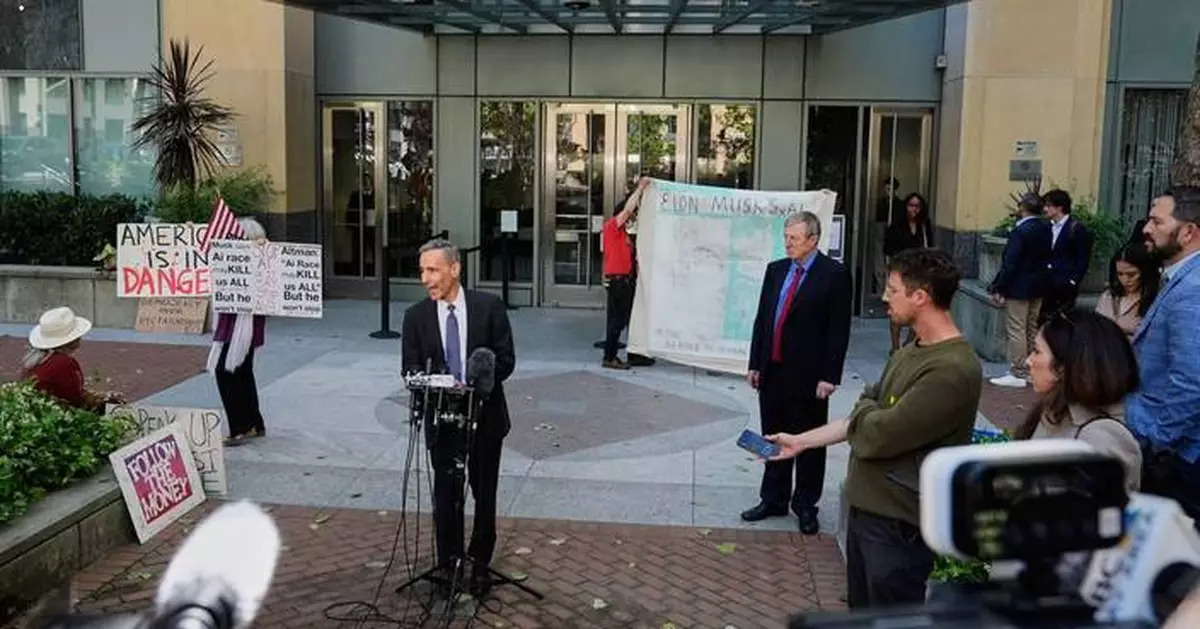
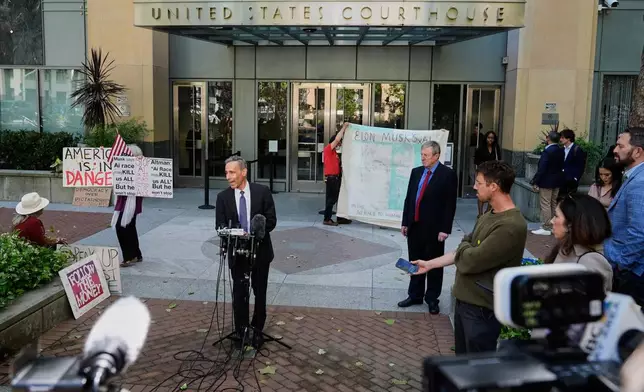
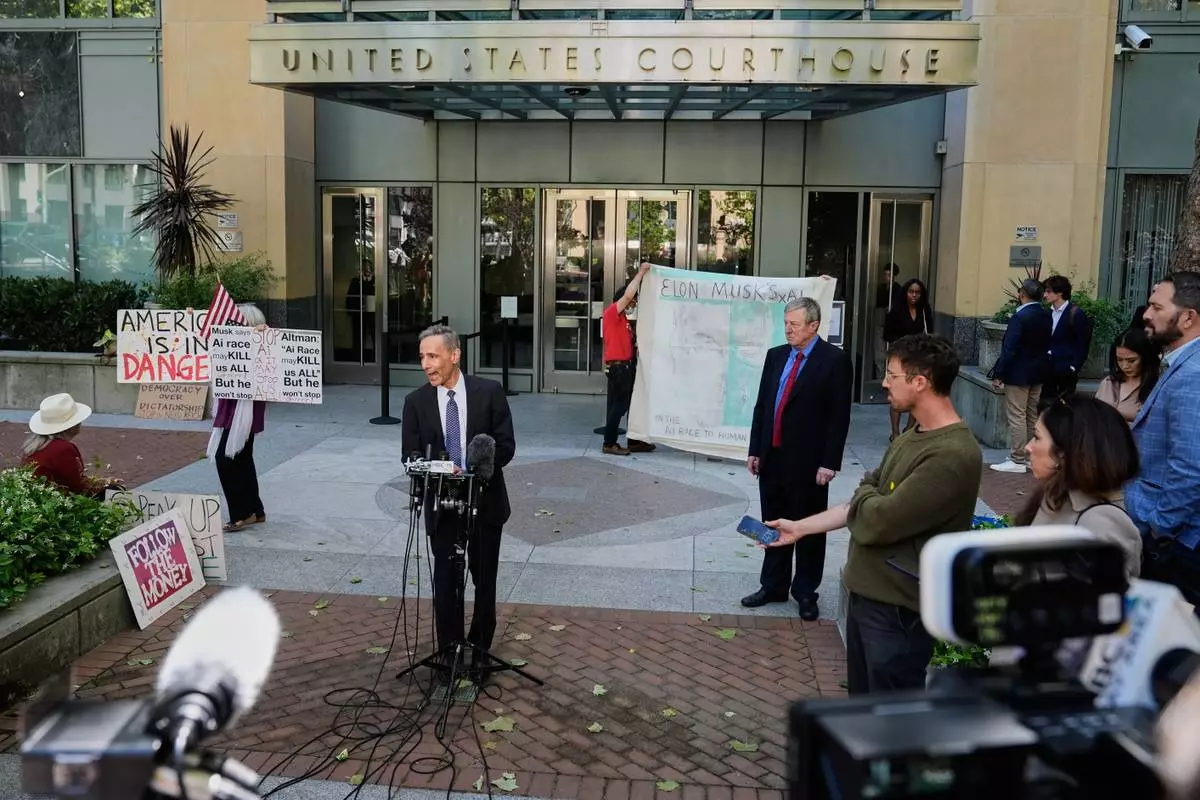
William Savitt, attorney representing OpenAI, center, speaks during a press conference outside the U.S. District Court in Oakland, Calif., Thursday, April 30, 2026. (AP Photo/Godofredo A. Vásquez)

William Savitt, attorney representing OpenAI, center, speaks during a press conference outside the U.S. District Court in Oakland, Calif., Thursday, April 30, 2026. (AP Photo/Godofredo A. Vásquez)

But the unresolved questions about the dangers of AI have been looming over the federal courthouse in Oakland, California, since the trial began last week. The technology itself is not on trial – the judge has warned lawyers not to get “sidetracked” by questions about its dangers – but witness testimony has touched on concerns around workforce disruptions and the prospect raised by Musk that superhuman AI might one day kill us all.

Musk, the world's richest person, filed the case accusing his fellow OpenAI co-founder of betraying promises to keep the company as a nonprofit. Altman, in turn, accuses Musk of trying to hobble the ChatGPT maker for the benefit of his own AI company.

One witness, AI pioneer Stuart Russell, said that the “winner take all” power struggle over AI's future is itself threatening humanity.

Musk's lawyers brought Russell to the stand as an expert witness, at the rate of $5,000 an hour. The University of California, Berkeley computer scientist listed a host of AI dangers, from racial and gender discrimination to jobs displacement, misinformation and emotional attachments that take some AI chatbot users down a spiral of psychosis.

“Whichever company develops AGI first would have a very big advantage” and an increasingly big lead over everyone else, Russell told the court, using the initials for artificial general intelligence, a term for advanced AI technology that surpasses humans at many tasks.

The trial centers on the 2015 birth of OpenAI as a nonprofit startup primarily funded by Musk.

Both Musk and Altman, who has not yet testified in the trial, have said they wanted OpenAI to safely develop AGI for the benefit of humanity and not for any one person’s gain or under any one person’s control. And both camps allege it’s the other guy who was trying to control it.

A jury of nine people selected from the San Francisco Bay Area will get to say which one of them is telling the truth.

Early on, Judge Yvonne Gonzalez Rogers warned lawyers, particularly Musk’s, not to delve into broader AI concerns that go beyond Musk’s claims that OpenAI violated its charitable mission.

“This is not a trial on the safety risks of artificial intelligence. This is not a trial on whether or not AI has damaged humanity,” Gonzalez Rogers told lawyers before jurors arrived at the federal courthouse.

Still, Musk managed to skirt that guidance in his testimony last week. Asked to describe artificial general intelligence, Musk said it is when AI becomes “as smart as any human," and added that “we are getting close to that point," and AI will be smarter than any human as soon as next year.

Musk said he has “extreme concerns” about AI and has had them for a long time. Musk said he wanted a “counterpoint” to Google, which at the time had “all the money, all the computers and all the talent” for AI, with no counterbalance.

“I was concerned AI would be a double-edged sword,” he said.

During his testimony, Musk repeatedly said that he could have founded OpenAI as a for-profit company, just like the other companies he started or took over. “I deliberately chose this,” he said, “for the public good."

The judge expressed some skepticism. In comments to lawyers last week before the jury came into the room, Gonzalez Rogers pointed out that Musk, “despite these risks, is creating a company that is in the exact same space,” referring to the billionaire’s xAI artificial intelligence company, which launched in 2023 and has since merged with Musk’s rocket company SpaceX.

OpenAI's side also claims its goals are to benefit the public. OpenAI co-founder and president Greg Brockman, a defendant in Musk's lawsuit along with Altman and their company, said he thought the technology OpenAI was developing was “transformative” — bigger than corporations, corporate structures and bigger than any one individual. It was, he said, “about humanity as a whole.”

Brockman testified this week that his No. 1 goal was always the “mission” of OpenAI and it was Musk who sought unilateral control over the company.

Brockman recalled a meeting where at first Musk seemed open to the idea of Altman being OpenAI's CEO. In the end, however, “he said people needed to know he was in charge.”

In addition to damages, Musk is seeking Altman’s ouster from OpenAI’s board. If Musk wins, it could derail OpenAI’s plans for an initial public offering of its shares.

O'Brien reported from Providence, Rhode Island.
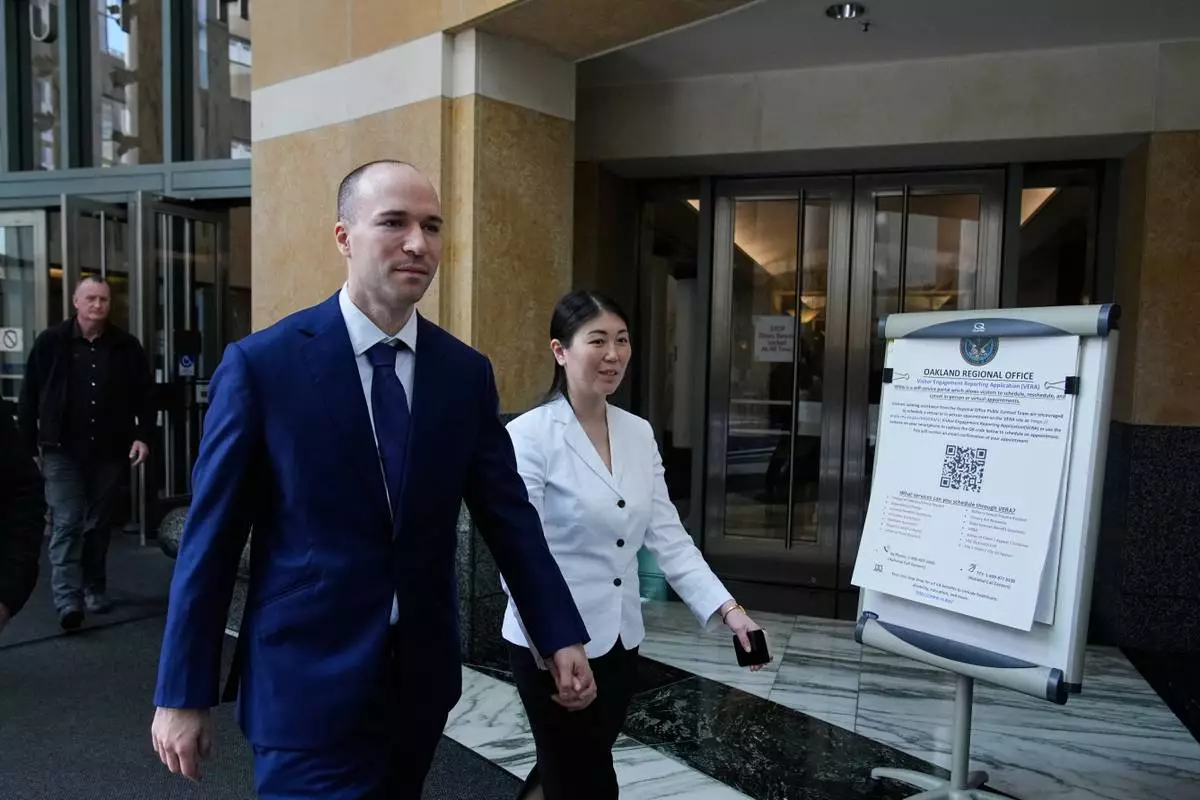
OpenAI president Greg Brockman, second left, exits the U.S. District Court, in Oakland, Calif., Thursday, April 30, 2026. (AP Photo/Godofredo A. Vásquez)
OpenAI president Greg Brockman, second left, exits the U.S. District Court, in Oakland, Calif., Thursday, April 30, 2026. (AP Photo/Godofredo A. Vásquez)

Sam Altman, left, gestures as he walks through a hallway inside the U.S. District Court in Oakland, Calif., Wednesday, April 29, 2026. (AP Photo/Godofredo A. Vásquez)
Sam Altman, left, gestures as he walks through a hallway inside the U.S. District Court in Oakland, Calif., Wednesday, April 29, 2026. (AP Photo/Godofredo A. Vásquez)
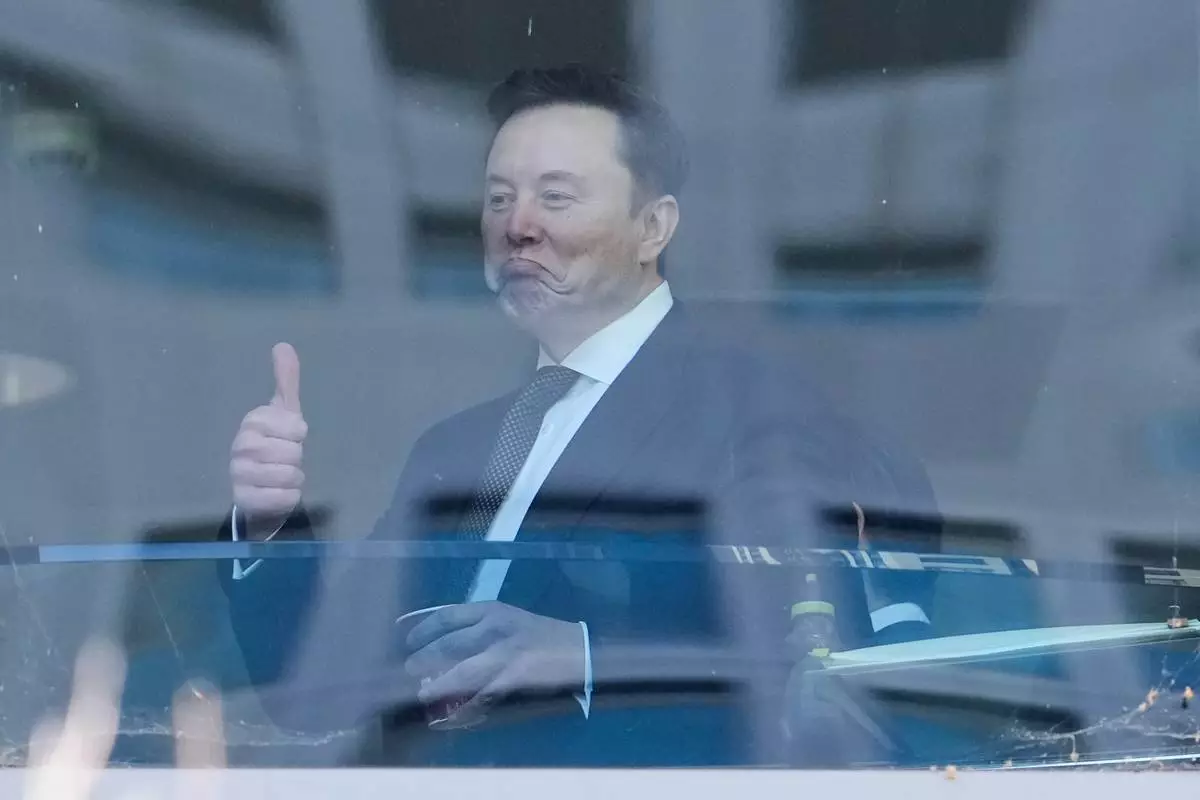
Elon Musk, left, gestures as he walks through a hallway inside the U.S. District Court in Oakland, Calif., Wednesday, April 29, 2026. (AP Photo/Godofredo A. Vásquez)

Elon Musk, left, gestures as he walks through a hallway inside the U.S. District Court in Oakland, Calif., Wednesday, April 29, 2026. (AP Photo/Godofredo A. Vásquez)

William Savitt, attorney representing OpenAI, center, speaks during a press conference outside the U.S. District Court in Oakland, Calif., Thursday, April 30, 2026. (AP Photo/Godofredo A. Vásquez)

William Savitt, attorney representing OpenAI, center, speaks during a press conference outside the U.S. District Court in Oakland, Calif., Thursday, April 30, 2026. (AP Photo/Godofredo A. Vásquez)
TOKYO--(BUSINESS WIRE)--May 7, 2026--

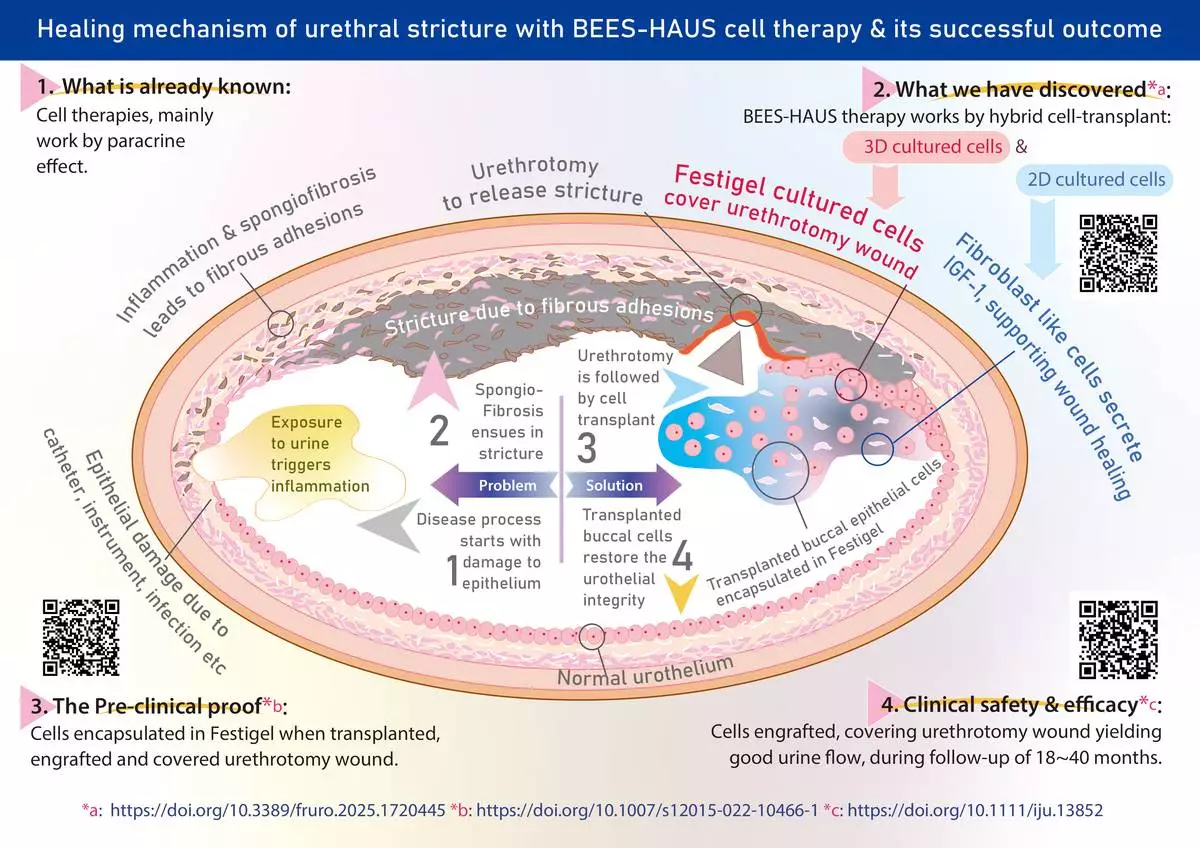
A path breaking scientific discovery, unraveling successful wound healing mechanism in urethral stricture with BEES-HAUS cell therapy has been reported by Indo-Japan physician-scientists. This milestone achievement in regenerative medicine, yielding clinical safety and efficacy, is the first of its kind, wherein a hybrid approach of mixing two groups of autologous buccal epithelial cells,one cultured in 2D and another in 3D in Festigel scaffold were used in the management of urethral stricture; paracrine effect of IGF-1 produced by 2D-cultured cells and engraftment of 3D-Festigel cultured cells, which cover the urethrotomy wound, together repairing the urothelial defect, has been published in Frontiers in Urology. This feat though modest, is a global first in terms of both in vitro tissue engineering and clinical benefits by in vivo healing, restoring the urothelial integrity and is a giant leap for its potential of yielding stricture recurrence-free good quality of life to patients with voiding problems, opined the researchers.

This press release features multimedia. View the full release here: https://www.businesswire.com/news/home/20260506584358/en/

Tissue engineering technologies to create organs in the lab such as urethra have been reported. But long-term recurrence free solution for male urethral stricture remains a challenge. Balloon dilatation or DVIU urethrotomy exposes the sub urothelial tissue to urine which triggers inflammation causing spongiofibrosis and stricture recurrence. Covering the urethrotomy wound, to restore the urothelial integrity of stricture inflicted urethra, currently accomplished by BMG-plasty with a sheet of autologous buccal tissue, in BEES-HAUS procedure is managed with cell transplant for short segment strictures. Further simplified one-step cell transplant ‘ BHES-HAUS’, that doesn’t require cell culture in a lab, yielding encouraging outcome, has been accepted for an interactive presentation at the American Urological Association meeting, AUA 2026.

Inflammatory reaction of urethra provoked by catheterization, instrumentation or infection varies between individuals and some develop urethral stricture. To predict the risks and develop better management strategies, following futuristic research have been initiated:

BEES-HAUS, having been approved in Japan as per Act on Safety of Regenerative Medicine, GN Corporation and Global Niche Corp., USA are open for out-licensing and tech-transfer of BHES-HAUS for clinical translation after approvals worldwide.

Urethral stricture starts with narrowing of a short segment of urethral lumen. At early stages, it is managed by balloon dilatation or DVIU Urethrotomy. The open urethrotomy wound after dilatation or DVIU has to heal from the edges of the wound, which may take a longer time. In BEES-HAUS cell therapy, the cell transplant having proven successful engraftment, covering the urethrotomy wound, yielding clinical safety and efficacy may be considered to be included in the treatment guidelines after validation. Its simplified version, the BHES-HAUS (Buccal epithelium Hashed and Encapsulated in Scaffold—Hybrid Approach to Urethral Stricture) accomplished in one-go without need for cell culture in a lab, works on similar principles. After long term follow-up, BHES-HAUS minimally invasive approach may be worth combining with DVIU and balloon dilatation, as it may be able to provide longer duration of recurrence-free, good quality of life without need for intermittent self-catheterization.

Urethral stricture starts with narrowing of a short segment of urethral lumen. At early stages, it is managed by balloon dilatation or DVIU Urethrotomy. The open urethrotomy wound after dilatation or DVIU has to heal from the edges of the wound, which may take a longer time. In BEES-HAUS cell therapy, the cell transplant having proven successful engraftment, covering the urethrotomy wound, yielding clinical safety and efficacy may be considered to be included in the treatment guidelines after validation. Its simplified version, the BHES-HAUS (Buccal epithelium Hashed and Encapsulated in Scaffold—Hybrid Approach to Urethral Stricture) accomplished in one-go without need for cell culture in a lab, works on similar principles. After long term follow-up, BHES-HAUS minimally invasive approach may be worth combining with DVIU and balloon dilatation, as it may be able to provide longer duration of recurrence-free, good quality of life without need for intermittent self-catheterization.

Recommended Articles