PHOENIX (AP) — Paul Skenes struck out the side in the eighth inning, throwing a nasty splitter past Gabriel Moreno on his 97th and final pitch of the evening before smacking his glove in approval as he walked back to the dugout.
Watch out big-league hitters — the defending National League Cy Young winner is starting to heat up.
Click to Gallery
Pittsburgh Pirates starting pitcher Paul Skenes sits in the team dugout during the seventh inning of a baseball game against the Arizona Diamondbacks, Wednesday, May 6, 2026, in Phoenix. (AP Photo/Ross D. Franklin)

Pittsburgh Pirates starting pitcher Paul Skenes throws against the Arizona Diamondbacks during the seventh inning of a baseball game, Wednesday, May 6, 2026, in Phoenix. (AP Photo/Ross D. Franklin)

Pittsburgh Pirates starting pitcher Paul Skenes throws against the Arizona Diamondbacks during the first inning of a baseball game, Wednesday, May 6, 2026, in Phoenix. (AP Photo/Ross D. Franklin)

Pittsburgh Pirates starting pitcher Paul Skenes reacts after retiring the Arizona Diamondbacks during the eighth inning of a baseball game, Wednesday, May 6, 2026, in Phoenix. (AP Photo/Ross D. Franklin)
The 23-year-old right-hander threw eight innings of two-hit ball on Wednesday night, leading the Pirates to a 1-0 win over the Arizona Diamondbacks in a stellar performance that was among the best of his career.
“It’s not easy, but it's simple," Skenes said. “It you execute your pitches, it's going to go the way you want it to.”
It was the second time in the past three outings that Skenes has been at his best. He took a perfect game into the seventh inning of a 6-0 win over the Milwaukee Brewers on April 24.
Skenes pounded the strike zone on Wednesday with his five-pitch mix, coaxing the aggressive Diamondbacks hitters into quick outs. He retired the first 14 batters of the night before Lourdes Gurriel Jr. reached base on a soft dribbler down the third-base line that was ruled a single.
Skenes tried to make the play, but couldn't get off the mound fast enough. His throw to first base sailed well wide of the bag.
“I got a good grip — just threw it away,” Skenes said, flashing a small grin. “Didn’t throw it to the right place. Got to throw it to the right place next time.”
Nolan Arenado followed with a sharp single to left field, but that was the last baserunner Skenes allowed. He struck out seven and he rarely fell behind in the count, throwing 65 of 97 pitches for strikes.
He has a 5-2 record this season with a 2.36 ERA, striking out 46 batters over 42 innings. It's a big reason the Pirates look like contenders this season in the NL Central with a 20-17 record.
“I don’t know what else there is to say — he was unbelievable,” manager Don Kelly said. “Getting ahead in counts, the elite stuff, putting guys away, low pitch count, very efficient. He was unreal.”
It was a mild surprise that Skenes wasn't back on the mound in the ninth to try for his first career shutout. Left-hander Gregory Soto handled the ninth, working around a one-out walk to secure his second save of the season.
Kelly said Skenes' command wasn't quite as sharp in the eighth inning and his velocity was down slightly, prompting the change.
Skenes — the No. 1 overall pick in 2023 out of LSU — has never thrown a nine-inning complete game in his big league career. He threw 8 1/3 innings once as a rookie in 2024 and threw an eight-inning complete game last season in a 1-0 loss against the Phillies.
This time, Skenes was on the winning end of a 1-0 game. Brandon Lowe supplied the only offense, hitting a 435-foot solo homer to center field. After that, the veteran second baseman had a leisurely evening in the field.
On nights like this one, Skenes doesn't need much help.
“It was really easy — didn't have to do a whole lot,” Lowe said. “Just get out there, watch him do what he does and consistently roll out great appearances. It's fun when you can sit back and let him go on auto-pilot.”
AP MLB: https://apnews.com/MLB
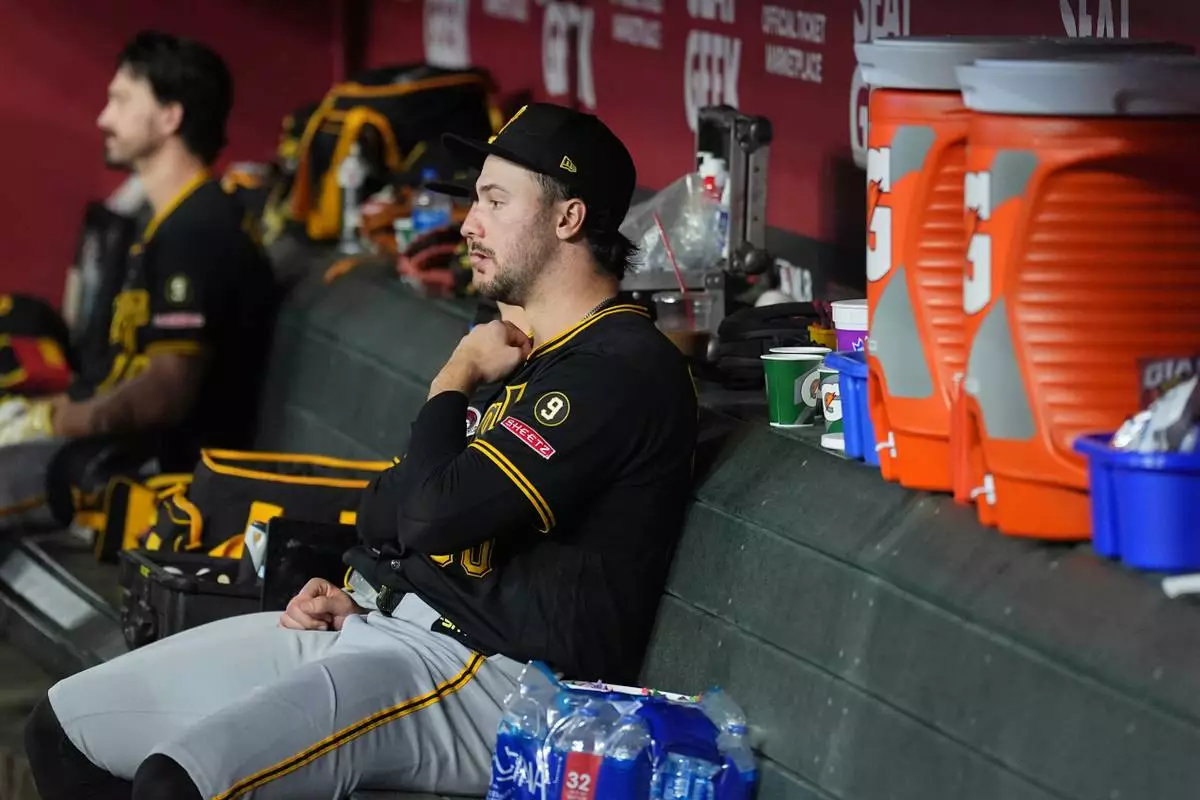
Pittsburgh Pirates starting pitcher Paul Skenes sits in the team dugout during the seventh inning of a baseball game against the Arizona Diamondbacks, Wednesday, May 6, 2026, in Phoenix. (AP Photo/Ross D. Franklin)

Pittsburgh Pirates starting pitcher Paul Skenes throws against the Arizona Diamondbacks during the seventh inning of a baseball game, Wednesday, May 6, 2026, in Phoenix. (AP Photo/Ross D. Franklin)

Pittsburgh Pirates starting pitcher Paul Skenes throws against the Arizona Diamondbacks during the first inning of a baseball game, Wednesday, May 6, 2026, in Phoenix. (AP Photo/Ross D. Franklin)

Pittsburgh Pirates starting pitcher Paul Skenes reacts after retiring the Arizona Diamondbacks during the eighth inning of a baseball game, Wednesday, May 6, 2026, in Phoenix. (AP Photo/Ross D. Franklin)