Skip to Content Facebook Feature Image

How one German artist's remembrance stones turn Berlin sidewalks into Holocaust memorials

News

How one German artist's remembrance stones turn Berlin sidewalks into Holocaust memorials
News

News

How one German artist's remembrance stones turn Berlin sidewalks into Holocaust memorials

2026-05-07 15:01 Last Updated At:15:10

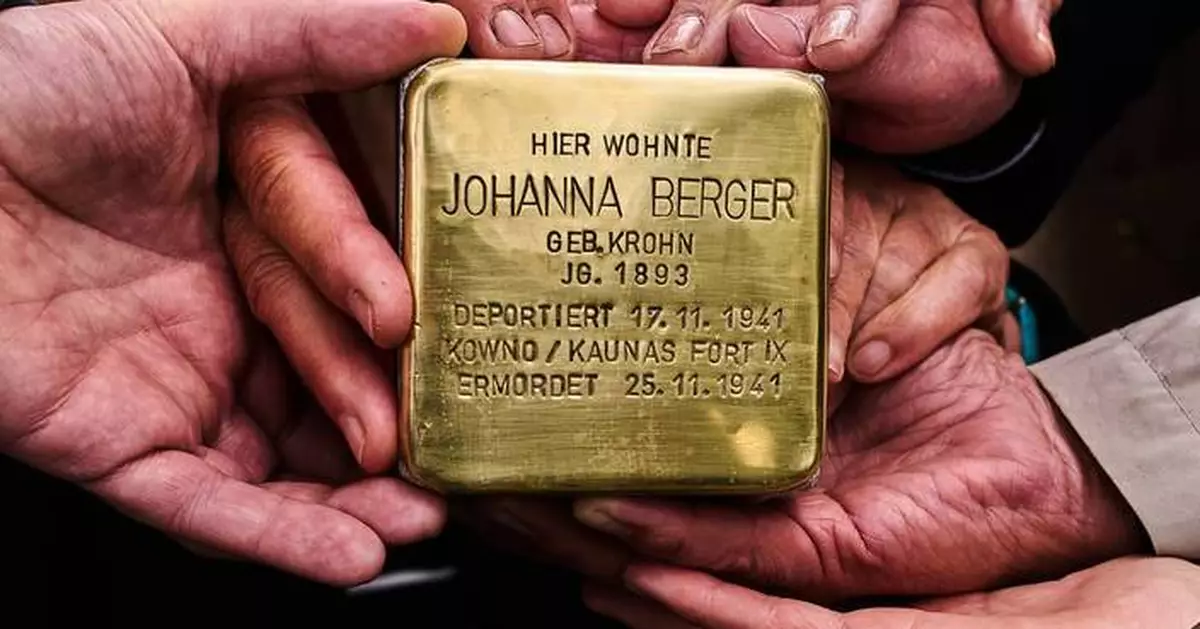
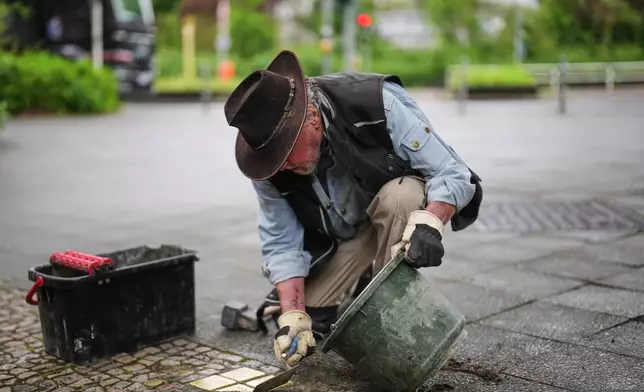
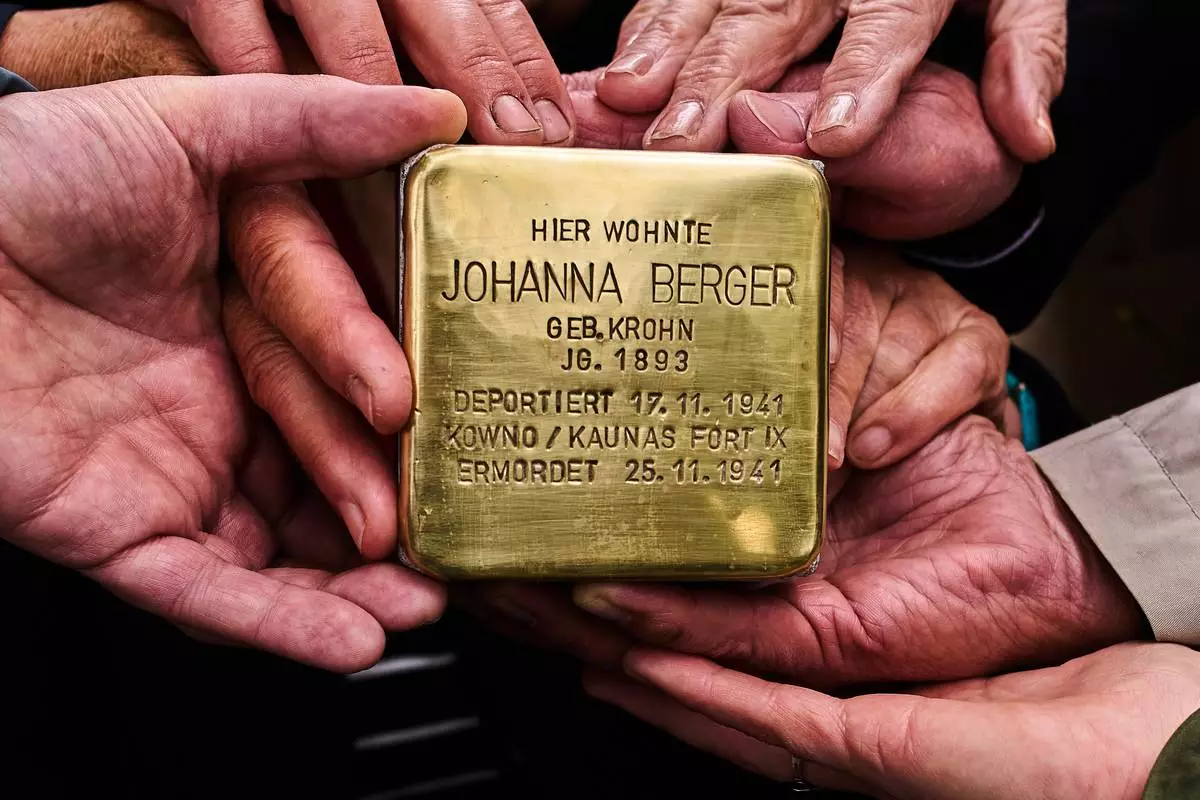
BERLIN (AP) — Artist Gunter Demnig carefully placed a palm-sized Holocaust memorial brass plaque into the sidewalk on a busy street corner of Berlin. It said: “Johanna Berger, born in 1893, lived here; deported on Nov. 17, 1941, murdered on Nov. 25, 1941.”

After Demnig had swiped the sand off Berger's memorial stone and those for her husband and two sons, a dozen relatives drew closer around the four plaques, which are called Stolpersteine, or “stumbling blocks,” in German. They put down white roses and recited the Kaddish, the Jewish prayer for the dead, while traffic roared by on a rainy spring day.

More Images
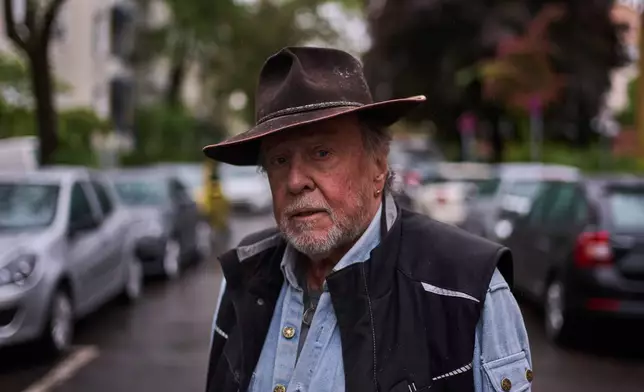
Artist Gunter Demnig poses for a portrait prior of a ceremony placing palm-sized brass Holocaust plaques called "Stolpersteine", or "Stumbling Blocks" with the names of victims of the Nazi regime in front of their former home, in Berlin, Germany, Wednesday, May 6, 2026. (AP Photo/Markus Schreiber)
Artist Gunter Demnig poses for a portrait prior of a ceremony placing palm-sized brass Holocaust plaques called "Stolpersteine", or "Stumbling Blocks" with the names of victims of the Nazi regime in front of their former home, in Berlin, Germany, Wednesday, May 6, 2026. (AP Photo/Markus Schreiber)

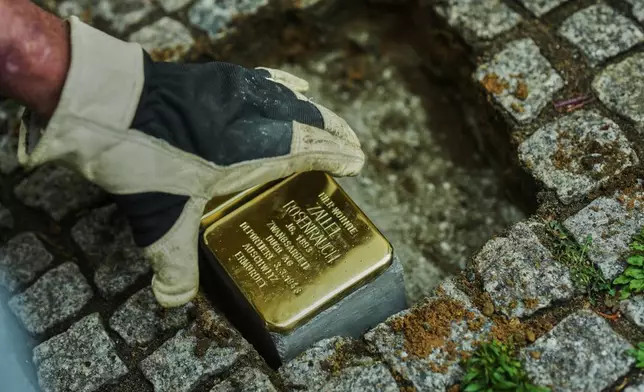
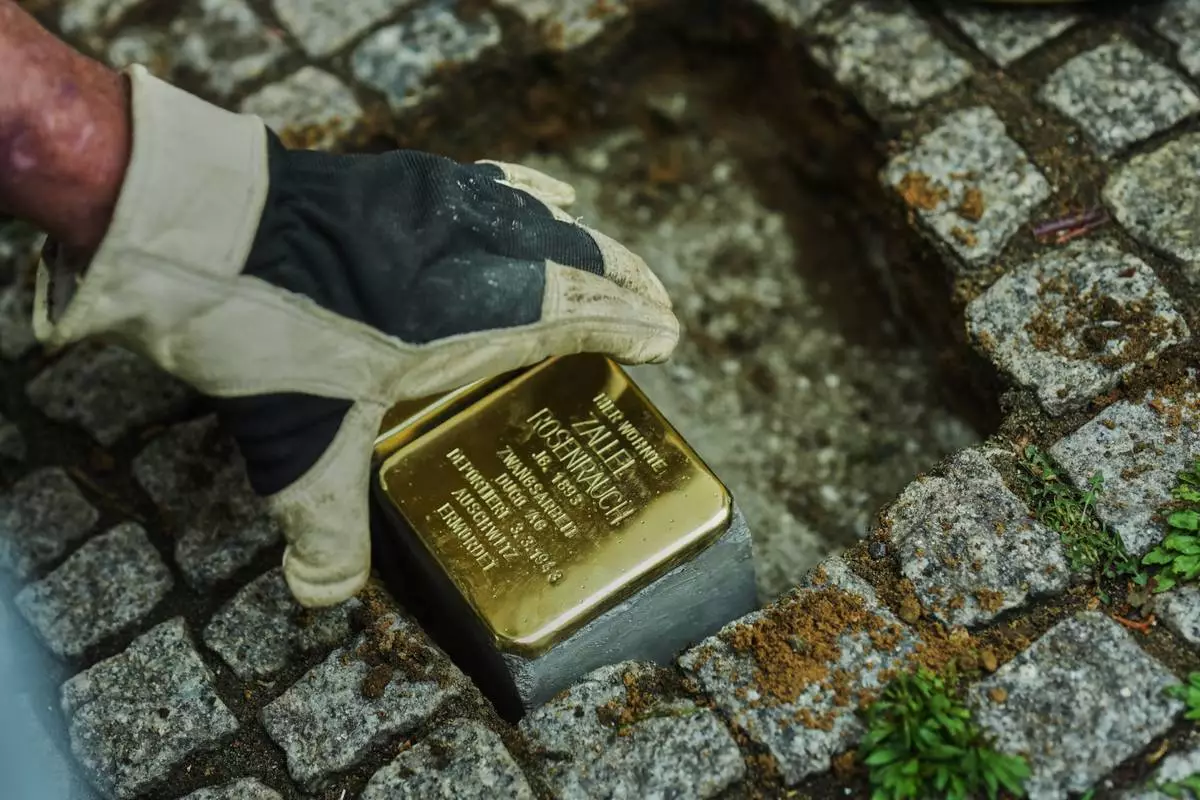
Artist Gunter Demnig places a palm-sized brass Holocaust plaque called "Stolpersteine", or "Stumbling Blocks" with the inscription " Zallel Rosenrauch, born in 1893, lived here; forced labourer at DUCO AG; deported on 3 March 1943; murdered in Auschwitz" front of her former home in Berlin, Germany, Wednesday, May 6, 2026. (AP Photo/Markus Schreiber)
Artist Gunter Demnig places a palm-sized brass Holocaust plaque called "Stolpersteine", or "Stumbling Blocks" with the inscription " Zallel Rosenrauch, born in 1893, lived here; forced labourer at DUCO AG; deported on 3 March 1943; murdered in Auschwitz" front of her former home in Berlin, Germany, Wednesday, May 6, 2026. (AP Photo/Markus Schreiber)

Artist Gunter Demnig places a palm-sized brass Holocaust plaques called "Stolpersteine", or "Stumbling Blocks" with the names of victims of the Nazi regime in front of their former home at a street in Berlin, Germany, Wednesday, May 6, 2026. (AP Photo/Markus Schreiber)
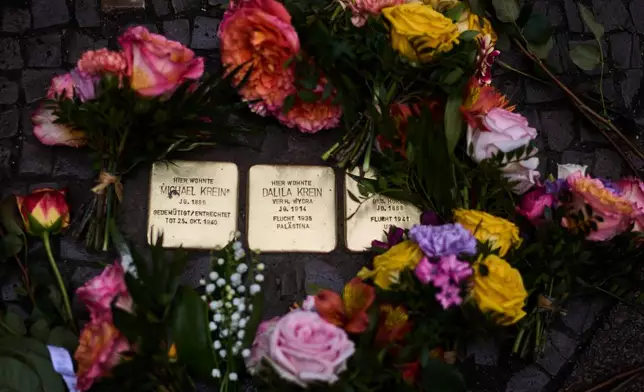
Artist Gunter Demnig places a palm-sized brass Holocaust plaques called "Stolpersteine", or "Stumbling Blocks" with the names of victims of the Nazi regime in front of their former home at a street in Berlin, Germany, Wednesday, May 6, 2026. (AP Photo/Markus Schreiber)

Flowers lay near palm-sized brass Holocaust plaques of the Krein family, after the so called "Stolpersteine", or "Stumbling Blocks" by artist Gunter Demnig, in Berlin, Germany, Wednesday, May 6, 2026. (AP Photo/Markus Schreiber)
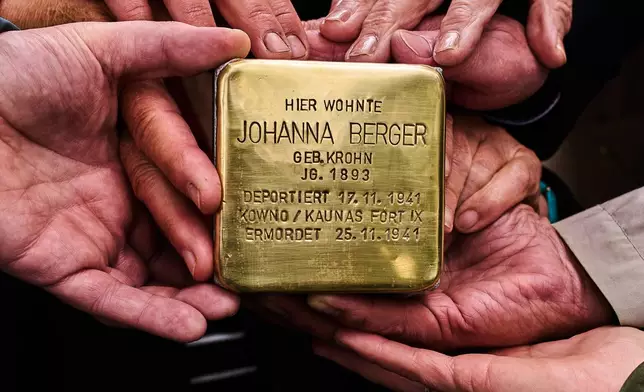
Flowers lay near palm-sized brass Holocaust plaques of the Krein family, after the so called "Stolpersteine", or "Stumbling Blocks" by artist Gunter Demnig, in Berlin, Germany, Wednesday, May 6, 2026. (AP Photo/Markus Schreiber)

Relatives shows a photo a palm-sized brass Holocaust plaque reading "Johanna Berger, born in 1893, lived here; deported on Nov. 17, 1941, murdered on Nov. 25, 1941 in Kowno/Kaunas Fort IX" by artist Gunter Demnig prior to the placing of the so called "Stolperstein" or "Stumbling Blocks" in front of her former home in Berlin, Germany, Wednesday, May 6, 2026. (AP Photo/Markus Schreiber)

Relatives shows a photo a palm-sized brass Holocaust plaque reading "Johanna Berger, born in 1893, lived here; deported on Nov. 17, 1941, murdered on Nov. 25, 1941 in Kowno/Kaunas Fort IX" by artist Gunter Demnig prior to the placing of the so called "Stolperstein" or "Stumbling Blocks" in front of her former home in Berlin, Germany, Wednesday, May 6, 2026. (AP Photo/Markus Schreiber)

Demnig installed the first plaque in the German capital three decades ago. By now, one can find more than 11,000 of his memorial stones all over the city. But Demnig's decentralized Holocaust memorial goes much further than that — the artist and his teams of supporters have laid 126,000 stones in Germany and 31 other countries across Europe. The first stone was installed in 1992 in the western German city of Cologne.

In a unique way, the shiny brass squares that are embedded in the pavement, make passersby stop and interrupt their daily lives for a moment as they bend down to read the names of those who perished. Small children can often be seen as they examine the Stolpersteine closely and demand answers from their parents.

“My basic idea behind this was that wherever in Europe the German Wehrmacht, the SS, the Gestapo, and their local collaborators committed murders or carried out deportations, symbolic stones should be placed there," the 78-year-old German artist said in an interview with The Associated Press on Wednesday.

Jewish family members oftentimes will travel from all over the world to attend the stonelaying ceremonies, because many of the victims were gassed in the Nazis' concentration camps and these memorial stones are the closest thing to a grave or a burial.

“The Stolpersteine are some kind of substitute for the missing gravestones,” Michael Tischler said after Wednesday's ceremony. The 72-year-old Berliner is a grandnephew of Berger who perished in the Holocaust like several other members of Tischler's family.

“I think this brings the family history to a certain conclusion, or at least a provisional one," Tischler said.

The memorial stones don't only bring solace to the families of the victims, but they have also created some kind of grassroots movement that brings together neighborhood initiatives, schools or religious communities to research the history of their city.

Together, old and young browse through archives and check timeworn resident lists to find out if any Jews or others who were persecuted during the Third Reich — such as communists, gays or Roma — used to live in the streets or even homes where they live today.

Once they can confirm a victim's former place of residence, they arrange for a stonelaying ceremony and make sure the brass plaque is polished periodically, so it won't lose its shine.

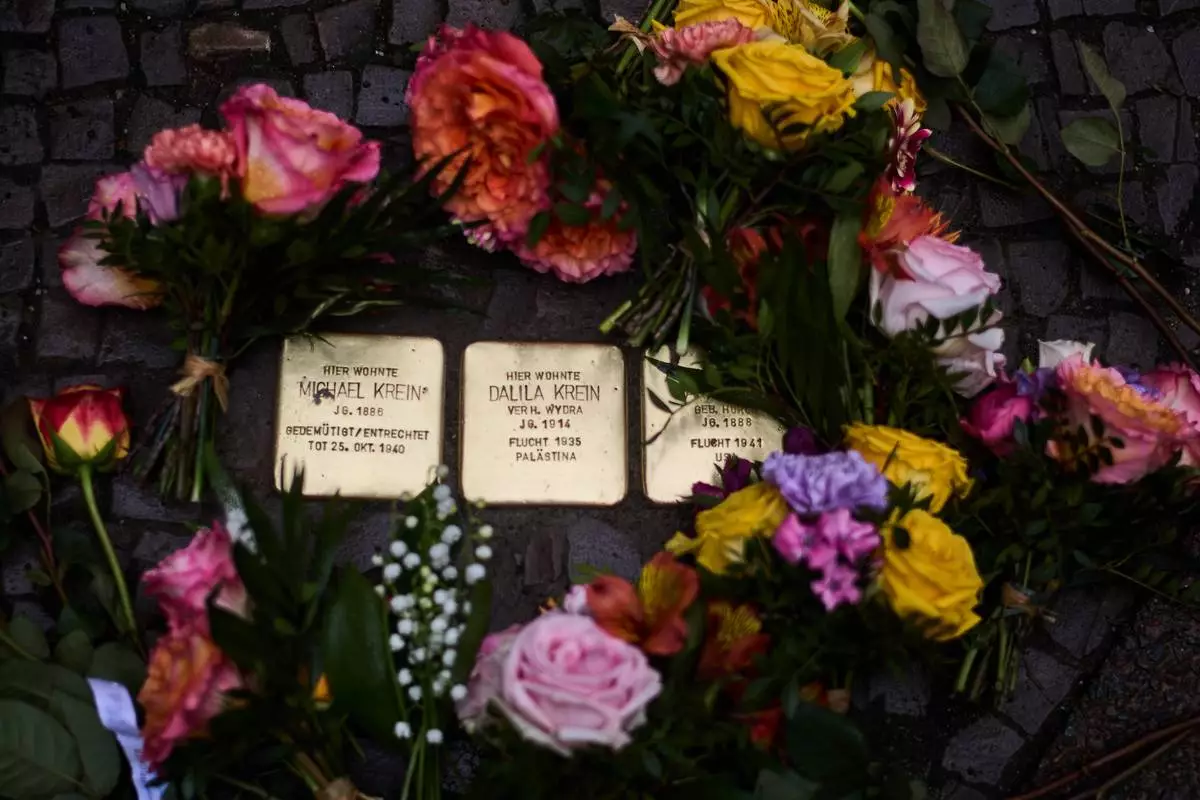
On Wednesday, several 10th graders from the Friedrich-Bergius-Schule attended another Berlin stonelaying ceremony on Stierstraße, where many Jews used to live. Demnig's three new stones for the Krein family — Michael, his wife Maria and their daughter Dalila — brought the number of Stolpersteine to 62 on this street.

While Maria and Dalila managed to escape to the U.S. and British-controlled Palestinian territory, respectively, Michael, a musician, died in Berlin in 1940 as a forced laborer under the Nazis.

High school student Sibilla Ehrlich, 16, watched as a group of violinists played solemn melodies and some elderly neighbors talked about the lives of the three Jews under Nazi dictatorship.

“It is just so horrible, all this the hatred of others," she said. “I keep thinking: what if this had been my family."

Before the Holocaust, Berlin had the biggest Jewish community in Germany. In 1933, the year the Nazis came to power, around 160,500 Jews lived in Berlin. By the end of World War II in 1945, their numbers had diminished to about 7,000 through emigration and extermination.

All in all, around 6 million European Jews and others were killed in the Holocaust.

As Germany commemorates the Allied liberation from the Nazis 81 years ago on May 8, many people in Germany fear that the lessons of the Holocaust may be forgotten as the far right is quickly gaining influence in Germany again.

Tischler, too, worries about his country's future in times of rising antisemitism, but he says the memorial stones offer a glimpse of hope.

“I hope that these Stolpersteine will still give some people pause for thought,” he said.
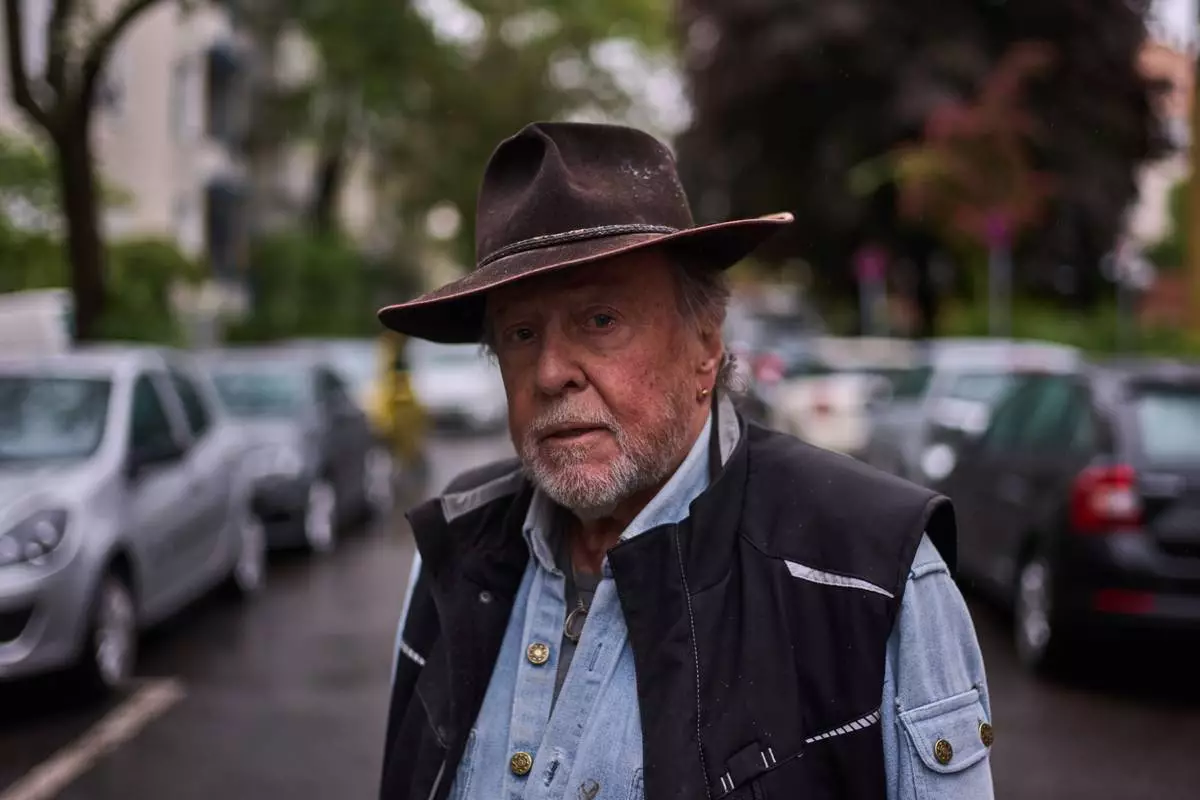
Artist Gunter Demnig poses for a portrait prior of a ceremony placing palm-sized brass Holocaust plaques called "Stolpersteine", or "Stumbling Blocks" with the names of victims of the Nazi regime in front of their former home, in Berlin, Germany, Wednesday, May 6, 2026. (AP Photo/Markus Schreiber)
Artist Gunter Demnig poses for a portrait prior of a ceremony placing palm-sized brass Holocaust plaques called "Stolpersteine", or "Stumbling Blocks" with the names of victims of the Nazi regime in front of their former home, in Berlin, Germany, Wednesday, May 6, 2026. (AP Photo/Markus Schreiber)

Artist Gunter Demnig places a palm-sized brass Holocaust plaque called "Stolpersteine", or "Stumbling Blocks" with the inscription " Zallel Rosenrauch, born in 1893, lived here; forced labourer at DUCO AG; deported on 3 March 1943; murdered in Auschwitz" front of her former home in Berlin, Germany, Wednesday, May 6, 2026. (AP Photo/Markus Schreiber)
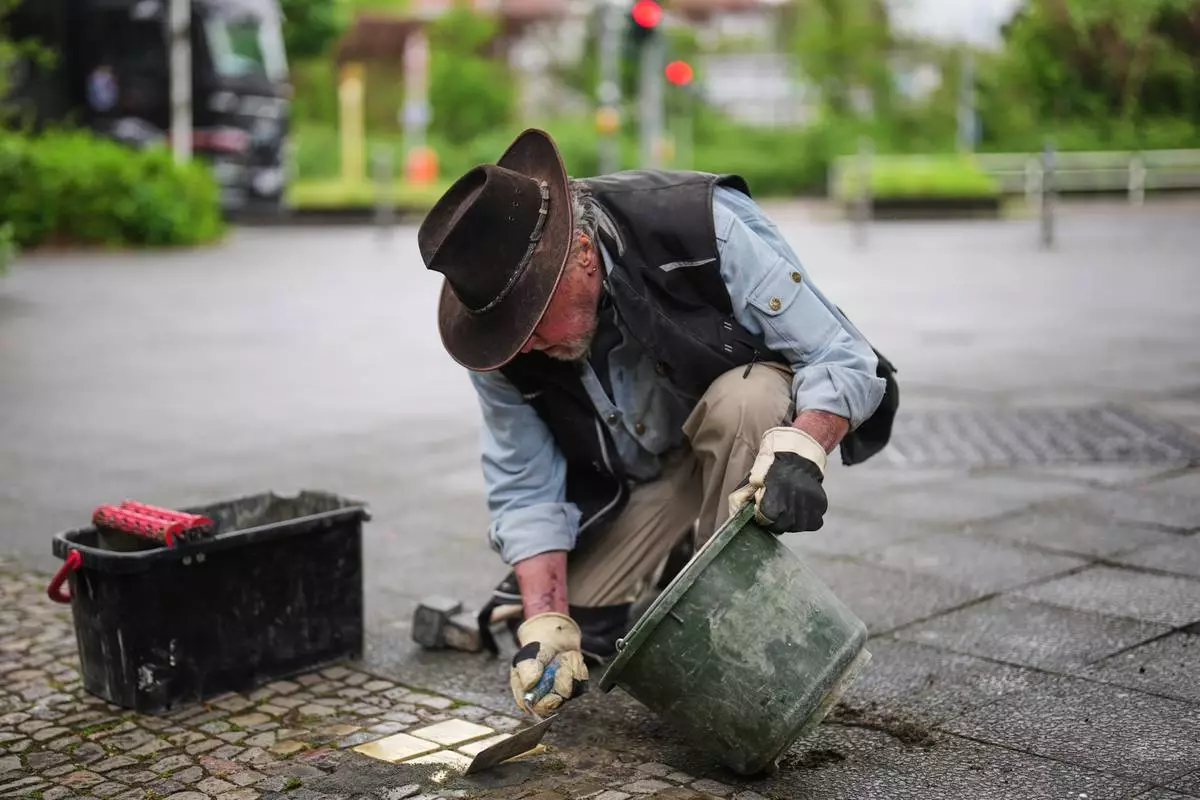
Artist Gunter Demnig places a palm-sized brass Holocaust plaque called "Stolpersteine", or "Stumbling Blocks" with the inscription " Zallel Rosenrauch, born in 1893, lived here; forced labourer at DUCO AG; deported on 3 March 1943; murdered in Auschwitz" front of her former home in Berlin, Germany, Wednesday, May 6, 2026. (AP Photo/Markus Schreiber)

Artist Gunter Demnig places a palm-sized brass Holocaust plaques called "Stolpersteine", or "Stumbling Blocks" with the names of victims of the Nazi regime in front of their former home at a street in Berlin, Germany, Wednesday, May 6, 2026. (AP Photo/Markus Schreiber)
Artist Gunter Demnig places a palm-sized brass Holocaust plaques called "Stolpersteine", or "Stumbling Blocks" with the names of victims of the Nazi regime in front of their former home at a street in Berlin, Germany, Wednesday, May 6, 2026. (AP Photo/Markus Schreiber)

Flowers lay near palm-sized brass Holocaust plaques of the Krein family, after the so called "Stolpersteine", or "Stumbling Blocks" by artist Gunter Demnig, in Berlin, Germany, Wednesday, May 6, 2026. (AP Photo/Markus Schreiber)
Flowers lay near palm-sized brass Holocaust plaques of the Krein family, after the so called "Stolpersteine", or "Stumbling Blocks" by artist Gunter Demnig, in Berlin, Germany, Wednesday, May 6, 2026. (AP Photo/Markus Schreiber)

Relatives shows a photo a palm-sized brass Holocaust plaque reading "Johanna Berger, born in 1893, lived here; deported on Nov. 17, 1941, murdered on Nov. 25, 1941 in Kowno/Kaunas Fort IX" by artist Gunter Demnig prior to the placing of the so called "Stolperstein" or "Stumbling Blocks" in front of her former home in Berlin, Germany, Wednesday, May 6, 2026. (AP Photo/Markus Schreiber)

Relatives shows a photo a palm-sized brass Holocaust plaque reading "Johanna Berger, born in 1893, lived here; deported on Nov. 17, 1941, murdered on Nov. 25, 1941 in Kowno/Kaunas Fort IX" by artist Gunter Demnig prior to the placing of the so called "Stolperstein" or "Stumbling Blocks" in front of her former home in Berlin, Germany, Wednesday, May 6, 2026. (AP Photo/Markus Schreiber)

NEW DELHI (AP) — With a massive population, a rapidly growing economy and already the global powerbroker in cricket, India is preparing to expand its influence in international sport.

The 2030 Commonwealth Games are already locked in for Ahmedabad, and there's high expectations for India's bid to host the 2036 Olympics.

Prime Minister Narendra Modi has envisioned a developed India by 2047, and the government is focused on improving living standards, transport infrastructure, education and becoming a global hub for tech and innovation.

And that's the bedrock of India’s aspirations for the Olympics and beyond.

“India today reflects a confident and aspirational mindset, ready to lead and shape the future of global sport,” Dr. Mansukh Mandaviya, Union Minister of Youth Affairs and Sports, said in an interview with The Associated Press. “Our growing capability to host major international sporting events is a testament to how far we've progressed.

“At the same time, our athletes continue to make the nation proud, signaling the steady rise of India as a formidable sporting force.”

On Thursday, Mandaviya was due to preside over a national sports conclave in Delhi, where India’s preparedness for the 2026 Asian Games and Commonweath Games, as well as the 2028 Olympics in Los Angeles, will be measured.

Discussion topics also included compliance to the National Sports Governance Act that was introduced last year, pertaining to transparency of national sports federations, and the hosting of and participation in international events.

So far in 2026, India has hosted three high-profile cricket events — the men’s Twenty20 World Cup, the Women’s Premier League and currently the Indian Premier League, one of the richest and most followed franchise leagues in international sport.

New Delhi is hosting the badminton world championships, Bhubaneshwar is slated to host a World Athletics Continental Tour meet and Ahmedabad is set to host the Asian weightlifting championships.

Indian authorities are also considering ways of bringing Formula 1 back to the country for the first time since 2013. Influential sports officials have already helped get cricket back into the Olympics for Los Angeles in 2028.

Outside of cricket, the Commonwealth Games are the biggest barometer for India’s developing sport story.

New Delhi hosted the Asian Games in 1982 and 1951, and also the 2010 Commonwealth Games that was fraught with logistics problems. Long delays in getting facilities ready and a list of scandals overshadowed the event.

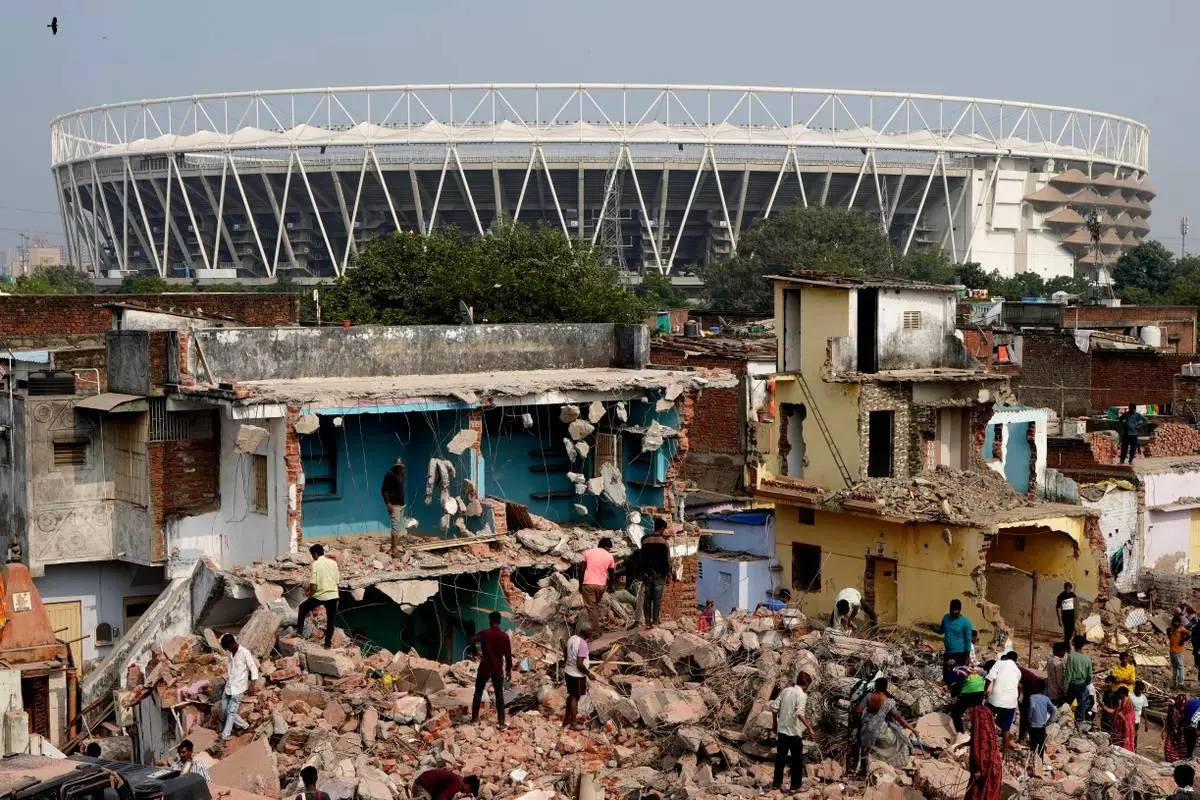
Indian officials expect Ahmedabad to put those problems into the distant past. The Sardar Patel Sports Enclave is marked as a key hub for the 2030 Games, which bring together thousands of athletes from 74 Commonwealth nations and territories.

The complex also houses the biggest cricket stadium in the world – the Narendra Modi Stadium – and it can be optimized to host different sports.

But this is a tale growing beyond infrastructure alone. There is a genuine push toward attaining success on the field as well, and sustained efforts have been made over the past decade to develop a robust sports ecosystem.

There are more than fifteen professional leagues across sports actively nurturing talent and creating future opportunities.

The Sports Authority of India has established sports-specific centers of excellence across the country, designed to provide world-class infrastructure and scientific training with the aim of producing Olympic and international medalists.

The results are showing – India recorded its best-ever showing at the Asian Games with 107 medals in the last edition staged in 2023. It won the Thomas Cup (badminton) in 2022, a first squash World Cup title, earned 29 medals — including seven gold — at the 2024 Paralympics in Paris, and 20 medals at the World Boxing Cup finals.

Olympic and world champion javelin thrower Neeraj Chopra is among the standout individual performers.

Sports backers say the individual success stories matter in sending out a message of fitness and participation through society.

Hari Ranjan Rao, Sports Secretary, Government of India, said while the infrastructure is put in place, “we are also working on our messaging.”

The Khelo India — or Play India — program has grown since 2018 at the youth and university level, winter and para games, beach and water sports, and even tribal games.

“The aim is to draw out the masses into an active lifestyle,” Rao said, “As well as into participation.”

And with extra participation, India is hoping for greater success.

“As we prepare to host the 2030 Commonwealth Games and advance our bid for the 2036 Olympic Games, India stands ready to take center stage,” Mandaviya said. “We are determined to emerge as a global sporting powerhouse, both in producing champions and in hosting world class events.”

AP sports: https://apnews.com/sports

FILE - People search in the rubble after authorities demolished various structures near the Narendra Modi stadium, seen behind, as part of the preparations for the 2030 Commonwealth Games in Ahmedabad, India, Saturday, Nov. 29, 2025. (AP Photo/Ajit Solanki,File)

FILE - People search in the rubble after authorities demolished various structures near the Narendra Modi stadium, seen behind, as part of the preparations for the 2030 Commonwealth Games in Ahmedabad, India, Saturday, Nov. 29, 2025. (AP Photo/Ajit Solanki,File)

FILE - From left, Olympic Bronze medallist in wrestling Bajarng Punia, Olympic Bronze medallists in boxing, Lovlina Borgohain, Olympic Gold medallist in javelin throw Neeraj Chopra, Olympic Silver medallist in wrestling Ravi Dahiya and captain of Indian men's hockey team who won bronze medal, Manpreet Singh at Tokyo Olympic games, stand for a photographs during a felicitation function in New Delhi, India, Monday, Aug. 9 2021. (AP Photo/Manish Swarup.File)

FILE - From left, Olympic Bronze medallist in wrestling Bajarng Punia, Olympic Bronze medallists in boxing, Lovlina Borgohain, Olympic Gold medallist in javelin throw Neeraj Chopra, Olympic Silver medallist in wrestling Ravi Dahiya and captain of Indian men's hockey team who won bronze medal, Manpreet Singh at Tokyo Olympic games, stand for a photographs during a felicitation function in New Delhi, India, Monday, Aug. 9 2021. (AP Photo/Manish Swarup.File)

Gujarat Titans' Arshad Khan bowls a delivery during the Indian Premier League cricket match between Gujarat Titans and Royal Challengers Bengaluru in Ahmedabad, India, Thursday, April 30, 2026. (AP Photo/Ajit Solanki)

Gujarat Titans' Arshad Khan bowls a delivery during the Indian Premier League cricket match between Gujarat Titans and Royal Challengers Bengaluru in Ahmedabad, India, Thursday, April 30, 2026. (AP Photo/Ajit Solanki)

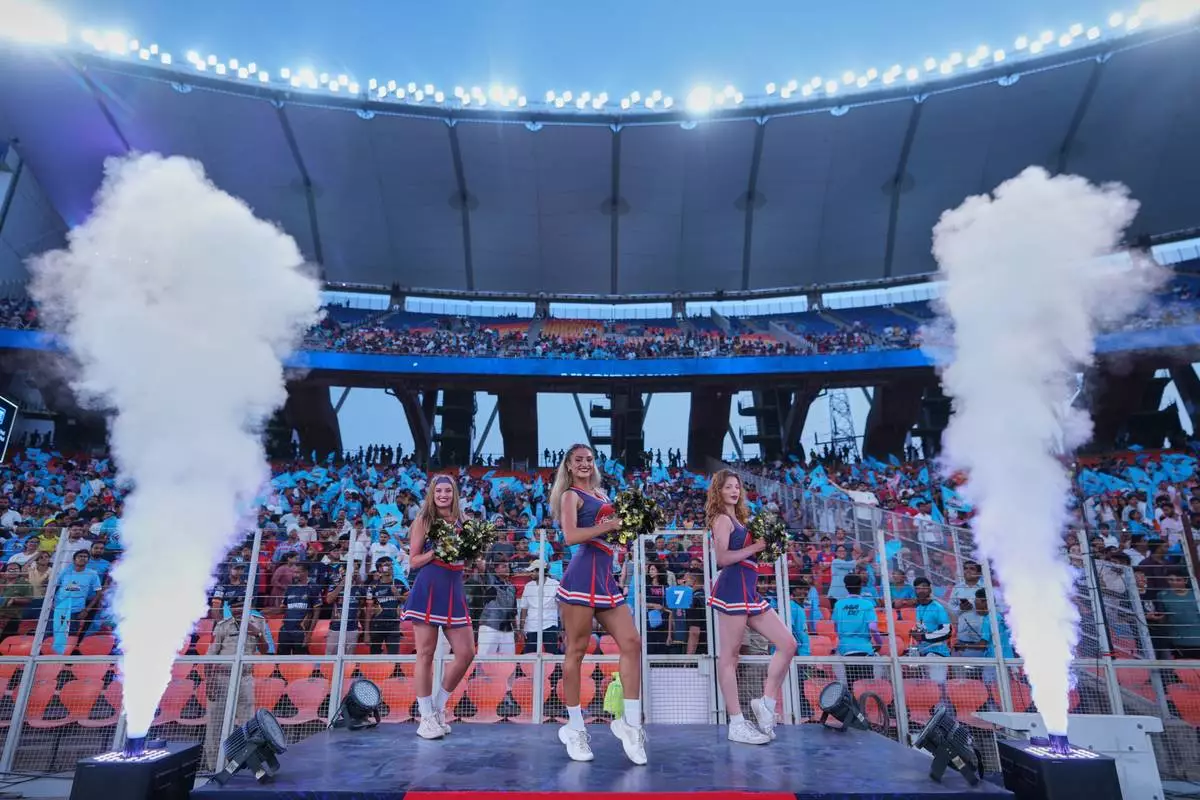
Cheer leaders dance before the Indian Premier League cricket match between Gujarat Titans and Punjab Kings in Ahmedabad, India, Sunday, May 3, 2026. (AP Photo/Ajit Solanki)

Cheer leaders dance before the Indian Premier League cricket match between Gujarat Titans and Punjab Kings in Ahmedabad, India, Sunday, May 3, 2026. (AP Photo/Ajit Solanki)

Recommended Articles