Skip to Content Facebook Feature Image

From cricket’s capital to Olympic ambitions, India’s next play on the world sports stage

Sport

From cricket’s capital to Olympic ambitions, India’s next play on the world sports stage
Sport

Sport

From cricket’s capital to Olympic ambitions, India’s next play on the world sports stage

2026-05-07 09:21 Last Updated At:09:31

NEW DELHI (AP) — With a massive population, a rapidly growing economy and already the global powerbroker in cricket, India is preparing to expand its influence in international sport.

The 2030 Commonwealth Games are already locked in for Ahmedabad, and there's high expectations for India's bid to host the 2036 Olympics.

More Images
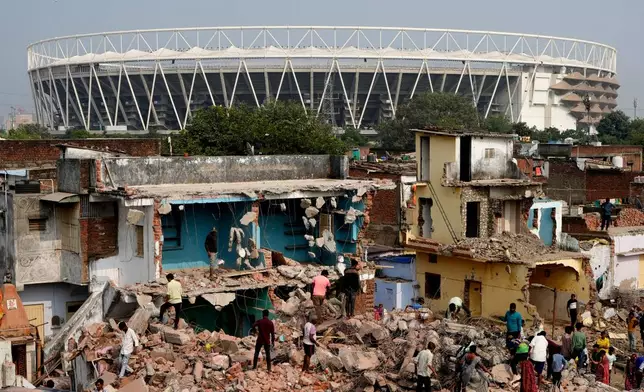
FILE - People search in the rubble after authorities demolished various structures near the Narendra Modi stadium, seen behind, as part of the preparations for the 2030 Commonwealth Games in Ahmedabad, India, Saturday, Nov. 29, 2025. (AP Photo/Ajit Solanki,File)
FILE - People search in the rubble after authorities demolished various structures near the Narendra Modi stadium, seen behind, as part of the preparations for the 2030 Commonwealth Games in Ahmedabad, India, Saturday, Nov. 29, 2025. (AP Photo/Ajit Solanki,File)

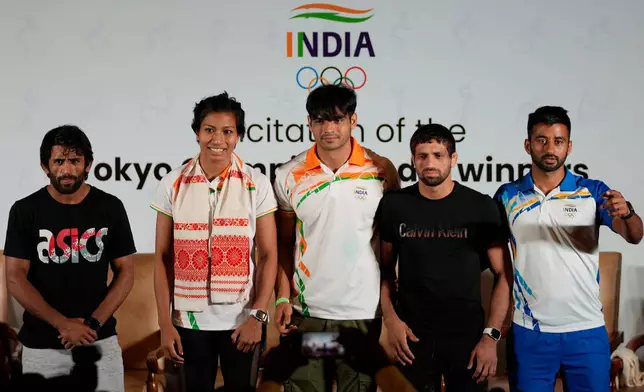
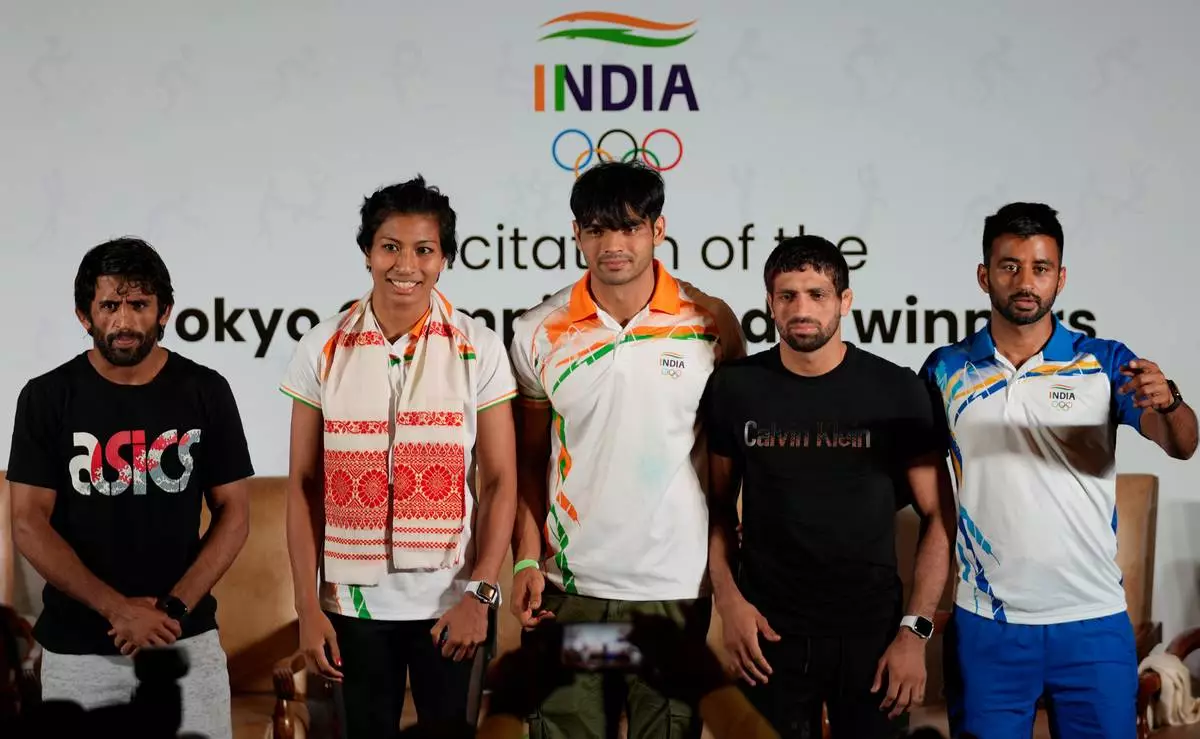
FILE - From left, Olympic Bronze medallist in wrestling Bajarng Punia, Olympic Bronze medallists in boxing, Lovlina Borgohain, Olympic Gold medallist in javelin throw Neeraj Chopra, Olympic Silver medallist in wrestling Ravi Dahiya and captain of Indian men's hockey team who won bronze medal, Manpreet Singh at Tokyo Olympic games, stand for a photographs during a felicitation function in New Delhi, India, Monday, Aug. 9 2021. (AP Photo/Manish Swarup.File)
FILE - From left, Olympic Bronze medallist in wrestling Bajarng Punia, Olympic Bronze medallists in boxing, Lovlina Borgohain, Olympic Gold medallist in javelin throw Neeraj Chopra, Olympic Silver medallist in wrestling Ravi Dahiya and captain of Indian men's hockey team who won bronze medal, Manpreet Singh at Tokyo Olympic games, stand for a photographs during a felicitation function in New Delhi, India, Monday, Aug. 9 2021. (AP Photo/Manish Swarup.File)

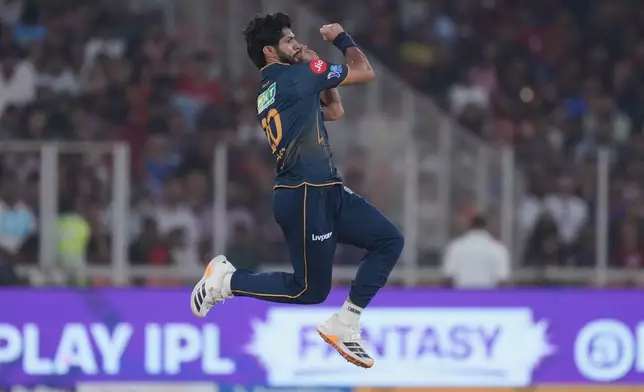
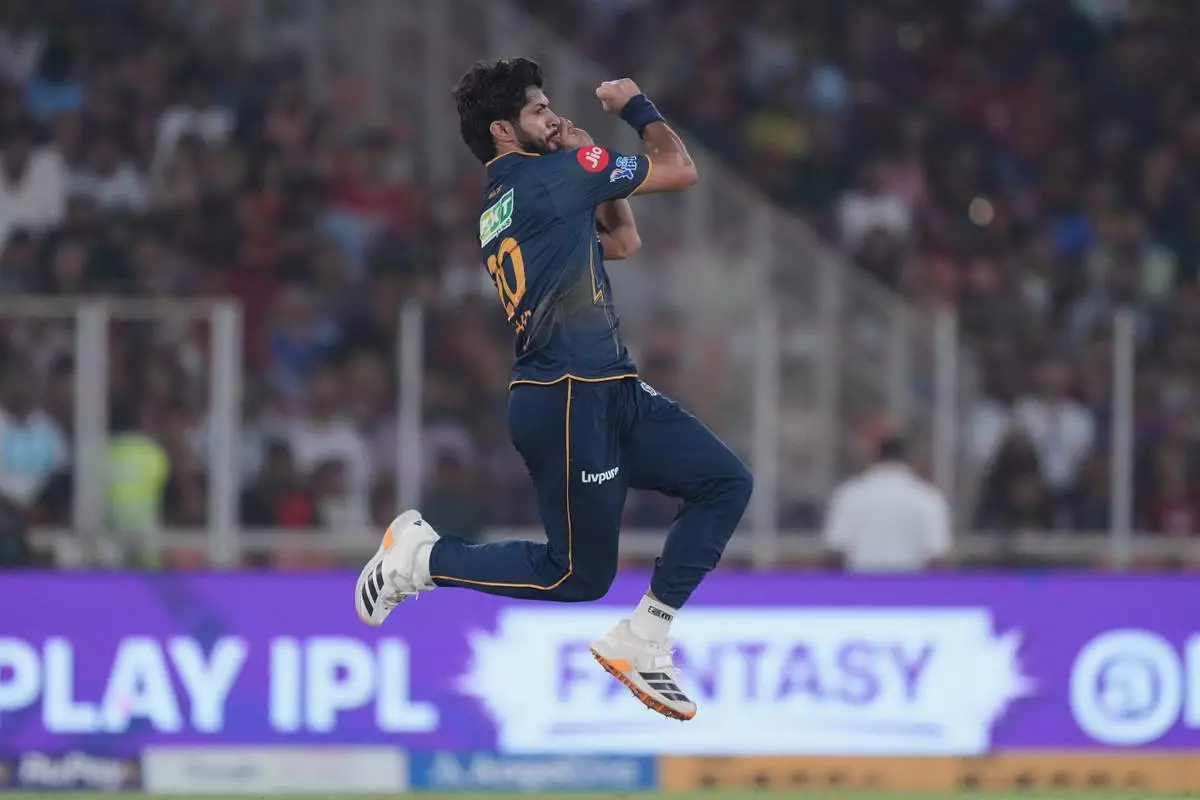
Gujarat Titans' Arshad Khan bowls a delivery during the Indian Premier League cricket match between Gujarat Titans and Royal Challengers Bengaluru in Ahmedabad, India, Thursday, April 30, 2026. (AP Photo/Ajit Solanki)
Gujarat Titans' Arshad Khan bowls a delivery during the Indian Premier League cricket match between Gujarat Titans and Royal Challengers Bengaluru in Ahmedabad, India, Thursday, April 30, 2026. (AP Photo/Ajit Solanki)

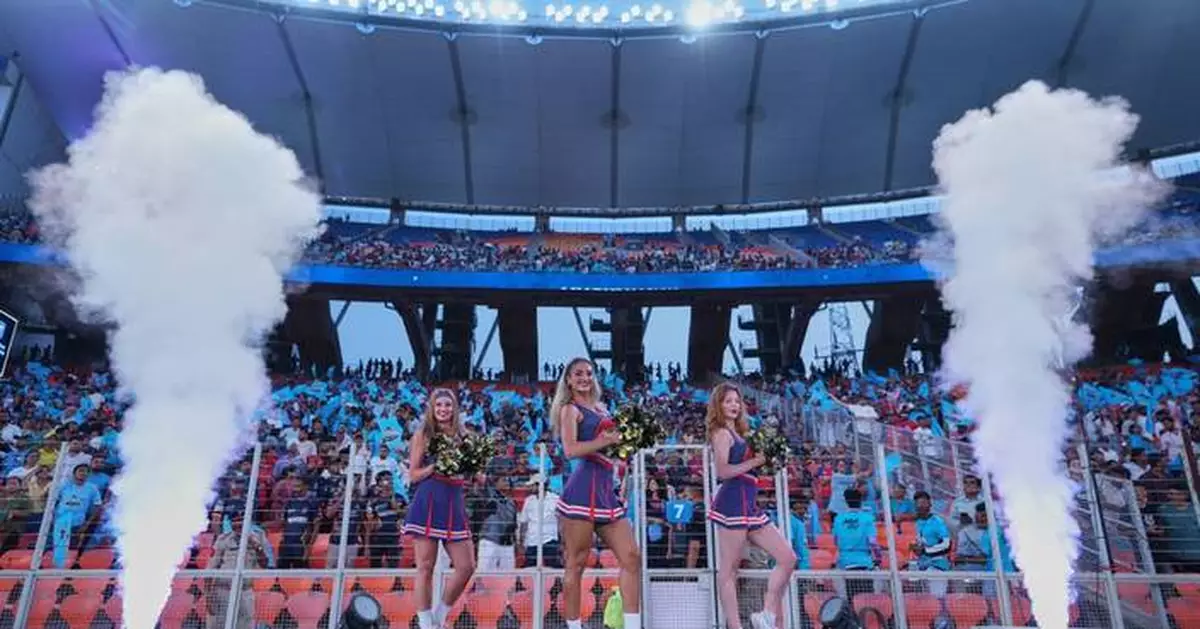
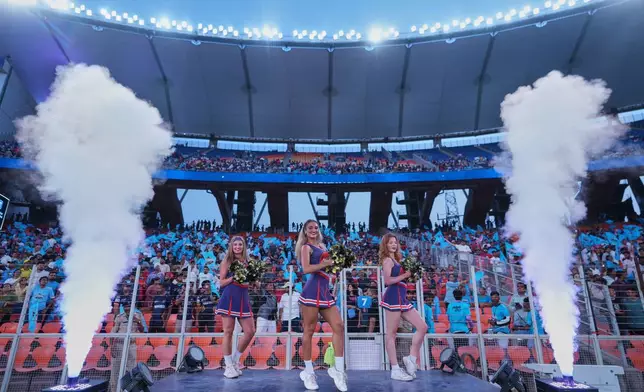
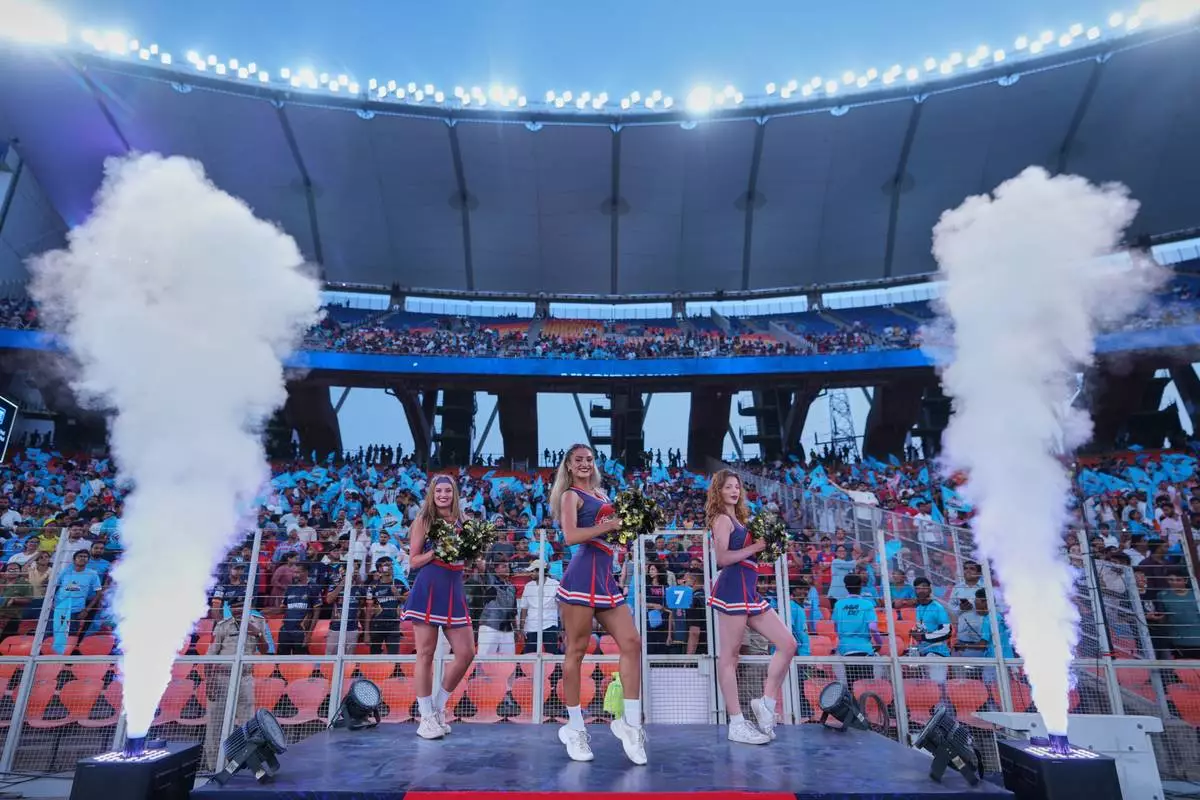
Cheer leaders dance before the Indian Premier League cricket match between Gujarat Titans and Punjab Kings in Ahmedabad, India, Sunday, May 3, 2026. (AP Photo/Ajit Solanki)

Cheer leaders dance before the Indian Premier League cricket match between Gujarat Titans and Punjab Kings in Ahmedabad, India, Sunday, May 3, 2026. (AP Photo/Ajit Solanki)

Prime Minister Narendra Modi has envisioned a developed India by 2047, and the government is focused on improving living standards, transport infrastructure, education and becoming a global hub for tech and innovation.

And that's the bedrock of India’s aspirations for the Olympics and beyond.

“India today reflects a confident and aspirational mindset, ready to lead and shape the future of global sport,” Dr. Mansukh Mandaviya, Union Minister of Youth Affairs and Sports, said in an interview with The Associated Press. “Our growing capability to host major international sporting events is a testament to how far we've progressed.

“At the same time, our athletes continue to make the nation proud, signaling the steady rise of India as a formidable sporting force.”

On Thursday, Mandaviya was due to preside over a national sports conclave in Delhi, where India’s preparedness for the 2026 Asian Games and Commonweath Games, as well as the 2028 Olympics in Los Angeles, will be measured.

Discussion topics also included compliance to the National Sports Governance Act that was introduced last year, pertaining to transparency of national sports federations, and the hosting of and participation in international events.

So far in 2026, India has hosted three high-profile cricket events — the men’s Twenty20 World Cup, the Women’s Premier League and currently the Indian Premier League, one of the richest and most followed franchise leagues in international sport.

New Delhi is hosting the badminton world championships, Bhubaneshwar is slated to host a World Athletics Continental Tour meet and Ahmedabad is set to host the Asian weightlifting championships.

Indian authorities are also considering ways of bringing Formula One back to the country for the first time since 2013. Influential sports officials have already helped get cricket back into the Olympics for Los Angeles in 2028.

Outside of cricket, the Commonwealth Games are the biggest barometer for India’s developing sport story.

New Delhi hosted the Asian Games in 1982 and 1951, and also the 2010 Commonwealth Games that was fraught with logistics problems. Long delays in getting facilities ready and a list of scandals overshadowed the event.

Indian officials expect Ahmedabad to put those problems into the distant past. The Sardar Patel Sports Enclave is marked as a key hub for the 2030 Games, which bring together thousands of athletes from 74 Commonwealth nations and territories.

The complex also houses the biggest cricket stadium in the world – the Narendra Modi Stadium – and it can be optimized to host different sports.

But this is a tale growing beyond infrastructure alone. There is a genuine push toward attaining success on the field as well, and sustained efforts have been made over the past decade to develop a robust sports ecosystem.

There are more than fifteen professional leagues across sports actively nurturing talent and creating future opportunities.

The Sports Authority of India has established sports-specific centers of excellence across the country, designed to provide world-class infrastructure and scientific training with the aim of producing Olympic and international medalists.

The results are showing – India recorded its best-ever showing at the Asian Games with 107 medals in the last edition staged in 2023. It won the Thomas Cup (badminton) in 2022, a first squash World Cup title, earned 29 medals — including seven gold — at the 2024 Paralympics in Paris, and 20 medals at the World Boxing Cup finals.

Olympic and world champion javelin thrower Neeraj Chopra is among the standout individual performers.

Sports backers say the individual success stories matter in sending out a message of fitness and participation through society.

Hari Ranjan Rao, Sports Secretary, Government of India, said while the infrastructure is put in place, “we are also working on our messaging.”

The Khelo India — or Play India — has grown since 2018 at the youth and university level, winter and para games, beach and water sports, and even tribal games.

“The aim is to draw out the masses into an active lifestyle,” Rao said, “As well as into participation.”

And with extra participation, India is hoping for greater success.

“As we prepare to host the 2030 Commonwealth Games and advance our bid for the 2036 Olympic Games, India stands ready to take center stage,” Mandaviya said. “We are determined to emerge as a global sporting powerhouse, both in producing champions and in hosting world class events.”

AP sports: https://apnews.com/sports
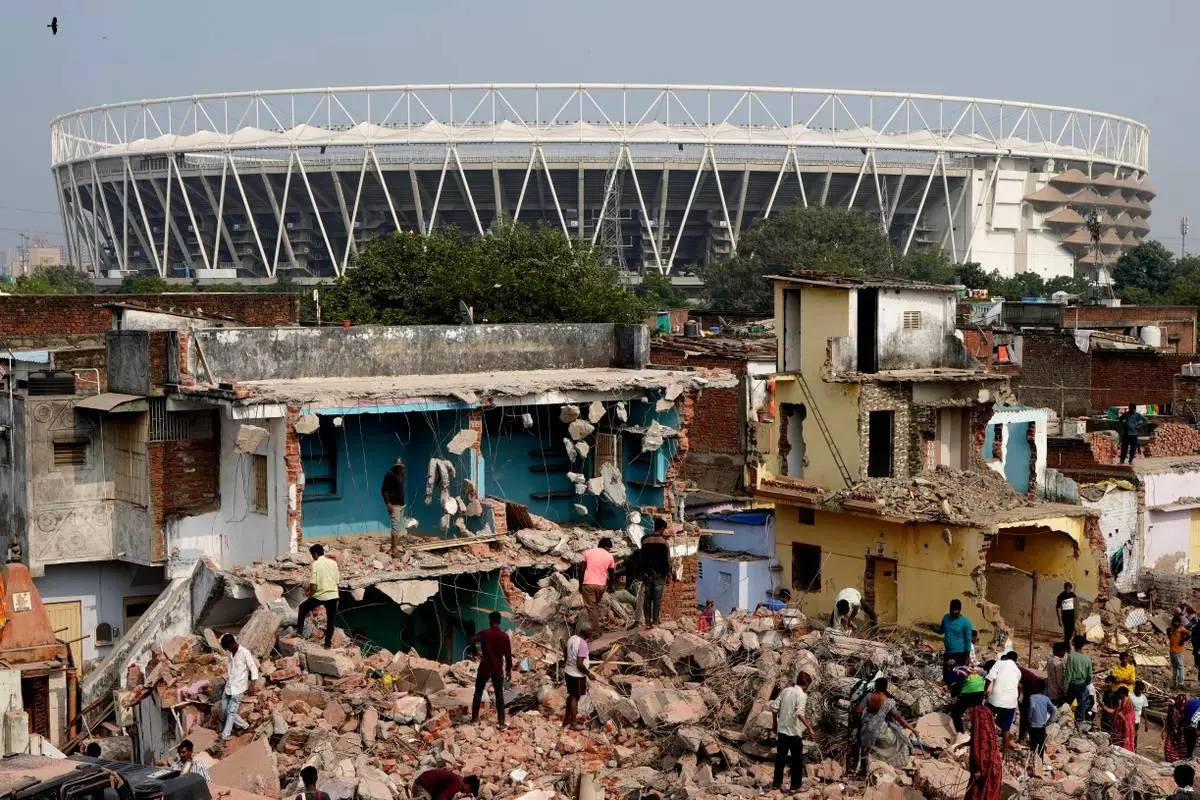
FILE - People search in the rubble after authorities demolished various structures near the Narendra Modi stadium, seen behind, as part of the preparations for the 2030 Commonwealth Games in Ahmedabad, India, Saturday, Nov. 29, 2025. (AP Photo/Ajit Solanki,File)
FILE - People search in the rubble after authorities demolished various structures near the Narendra Modi stadium, seen behind, as part of the preparations for the 2030 Commonwealth Games in Ahmedabad, India, Saturday, Nov. 29, 2025. (AP Photo/Ajit Solanki,File)

FILE - From left, Olympic Bronze medallist in wrestling Bajarng Punia, Olympic Bronze medallists in boxing, Lovlina Borgohain, Olympic Gold medallist in javelin throw Neeraj Chopra, Olympic Silver medallist in wrestling Ravi Dahiya and captain of Indian men's hockey team who won bronze medal, Manpreet Singh at Tokyo Olympic games, stand for a photographs during a felicitation function in New Delhi, India, Monday, Aug. 9 2021. (AP Photo/Manish Swarup.File)
FILE - From left, Olympic Bronze medallist in wrestling Bajarng Punia, Olympic Bronze medallists in boxing, Lovlina Borgohain, Olympic Gold medallist in javelin throw Neeraj Chopra, Olympic Silver medallist in wrestling Ravi Dahiya and captain of Indian men's hockey team who won bronze medal, Manpreet Singh at Tokyo Olympic games, stand for a photographs during a felicitation function in New Delhi, India, Monday, Aug. 9 2021. (AP Photo/Manish Swarup.File)

Gujarat Titans' Arshad Khan bowls a delivery during the Indian Premier League cricket match between Gujarat Titans and Royal Challengers Bengaluru in Ahmedabad, India, Thursday, April 30, 2026. (AP Photo/Ajit Solanki)
Gujarat Titans' Arshad Khan bowls a delivery during the Indian Premier League cricket match between Gujarat Titans and Royal Challengers Bengaluru in Ahmedabad, India, Thursday, April 30, 2026. (AP Photo/Ajit Solanki)

Cheer leaders dance before the Indian Premier League cricket match between Gujarat Titans and Punjab Kings in Ahmedabad, India, Sunday, May 3, 2026. (AP Photo/Ajit Solanki)

Cheer leaders dance before the Indian Premier League cricket match between Gujarat Titans and Punjab Kings in Ahmedabad, India, Sunday, May 3, 2026. (AP Photo/Ajit Solanki)
The European fishing fleet has long been a powerhouse at catching tuna, with a fleet of massive vessels known as purse seiners that can hold as much as 4 million pounds (1.8 million kilograms) of fish at a time. Dozens of them roam the Indian Ocean, fishing for skipjack, yellowfin and bigeye tuna destined for cans on grocery store shelves.

So when Jess Rattle began seeing purse seine ships fishing the Indian Ocean under the flags of Mauritius, Tanzania and Oman, she wondered whether European corporations might be involved.

“We wanted to understand who really owned these vessels,” said Rattle, head of investigations at the London-based environmental charity Blue Marine Foundation. “Were they owned by the coastal states whose quota they were now using, or in fact, were they owned by the EU?”

A new report released Thursday by the Blue Marine Foundation and Kroll, a global investigations firm, and shared with The Associated Press in advance reveals the extent of the European fleet’s access to Indian Ocean tuna stocks, finding that European companies have taken a third of the tropical tuna catch at a time when yellowfin and bigeye tuna are under pressure and still rebounding from being severely overfished.

They have done so in part by registering their ships under the flags of the Seychelles, Mauritius, Kenya, Tanzania and Oman to gain access to a greater catch limit, Rattle’s team found. The practice has allowed the European-owned fleet to expand to more than 50 purse seine ships and supply vessels and increase its catch of tropical tuna despite the European Union’s commitments to cutting back.

The finding comes ahead of an annual meeting of the Indian Ocean Tuna Commission in the Maldives, which brings together the EU and 28 countries with a stake in the tuna fishery.

While common in the fishing industry and not illegal, reflagging a vessel to a foreign country makes it difficult for observers and regulators to gauge the impact of European companies on the fishery. Parent company ownership is often obscured via layers of shell companies and foreign registries, which Rattle and the team at Kroll tracked down over the course of months.

“Europe’s opportunity to help stop overfishing is greater than first appears,” said Benedict Hamilton, a managing director at Kroll.

Though European companies have long fished under the Seychelles flag, Rattle said, their registering under the flags of Oman and Kenya is new. Europeche Tuna Group, which represents the European tuna industry, said in a statement that the industry’s relationship with coastal nations reflects its long-term investment in the region and strong local partnerships.

Spokesperson Anne-France Mattlet said the European industry benefits the economy of regional countries by paying taxes and fishing license fees, investing in local infrastructure, and unloading tuna and other fish in their ports and canneries.

Mattlet concurred with the report’s findings that Europeche has more than 50 purse seine and supply ships operating throughout the Indian Ocean, including with non-EU flags.

Maciej Berestecki, a spokesperson for the European Commission, said in a statement the reflagging of fishing vessels is a private business decision not influenced by public authorities, and that the EU does not defend or represent the interests of vessels flagged to other countries.

“The EU has done, and keeps doing, its utmost to promote and respect catch limits,” Berestecki said.

Despite Europe’s distance from the Indian Ocean, its fishing fleets have long played a dominant role there. Spanish and French tuna companies first introduced purse seine ships to the Indian Ocean in the 1980s, which allowed them to quickly increase their yearly catch. The ships get their name from their giant nets that encircle the tuna and close like a drawstring purse.

But the EU has occasionally butted heads with coastal nations that want a say over the fishing practices in the ocean at their doorstep.

Five years ago, with yellowfin tuna stocks in sharp decline, the Maldives accused the EU of not putting forth a serious proposal to lower tuna quotas at a contentious meeting of the tuna commission. In 2023, the EU objected to a proposal from Indonesia for a closure on purse seine fishing gear that passed with the support of 15 other countries.

In recent years, the tuna commission has put in place new management measures to rebuild the vulnerable yellowfin and bigeye tuna stocks, which are beginning to show signs of recovering. For instance, the EU agreed to reduce the yellowfin tuna catch for EU-flagged vessels by 21%.

Those new limits may be pushing European fishing companies to look to other countries’ quotas to maintain their catch, said Glen Holmes, senior officer with Pew Charitable Trusts.

Holmes and colleagues from Pew, Global Fishing Watch, and other environmental groups are advocating for greater ownership transparency among fishing fleets in the Indian Ocean.

Shipowners have long registered vessels under the flags of foreign countries, much to the dismay of transparency advocates, who say the practice limits oversight of those ships. Sanctioned oil tankers in the ‘ghost fleet’, for instance, frequently change their name and flags to conceal their ownership.

Certain flags have become known as ‘flags of convenience,’ offering companies low fees and lenient attitudes toward fishing or trade rules. Some countries may simply have fewer resources to enforce the laws of the sea.

A January report by the environmental group Oceana found European companies routinely register fishing vessels under the flags of foreign nations, including some countries the EU has accused of “turning a blind eye to illegal fishing activities.”

Oceana is calling on EU countries to begin collecting and publishing ownership data for their fishing fleet.

The change would help the EU better enforce its own laws, which prevent any European individual from benefiting financially from the practices of illegal fishing, said Vanya Vulperhorst, Oceana’s illegal fishing campaign director for Europe. And it would shed light on “the real EU fleet,” she said.

“What we found last year is that the real European fleet, if you add the non-EU flagged vessels, doubles,” Vulperhorst said.

—-

This story was supported by funding from the Walton Family Foundation. The AP is solely responsible for all content.

—-

Contact AP’s global investigative team at Investigative@ap.org or https://www.ap.org/tips/

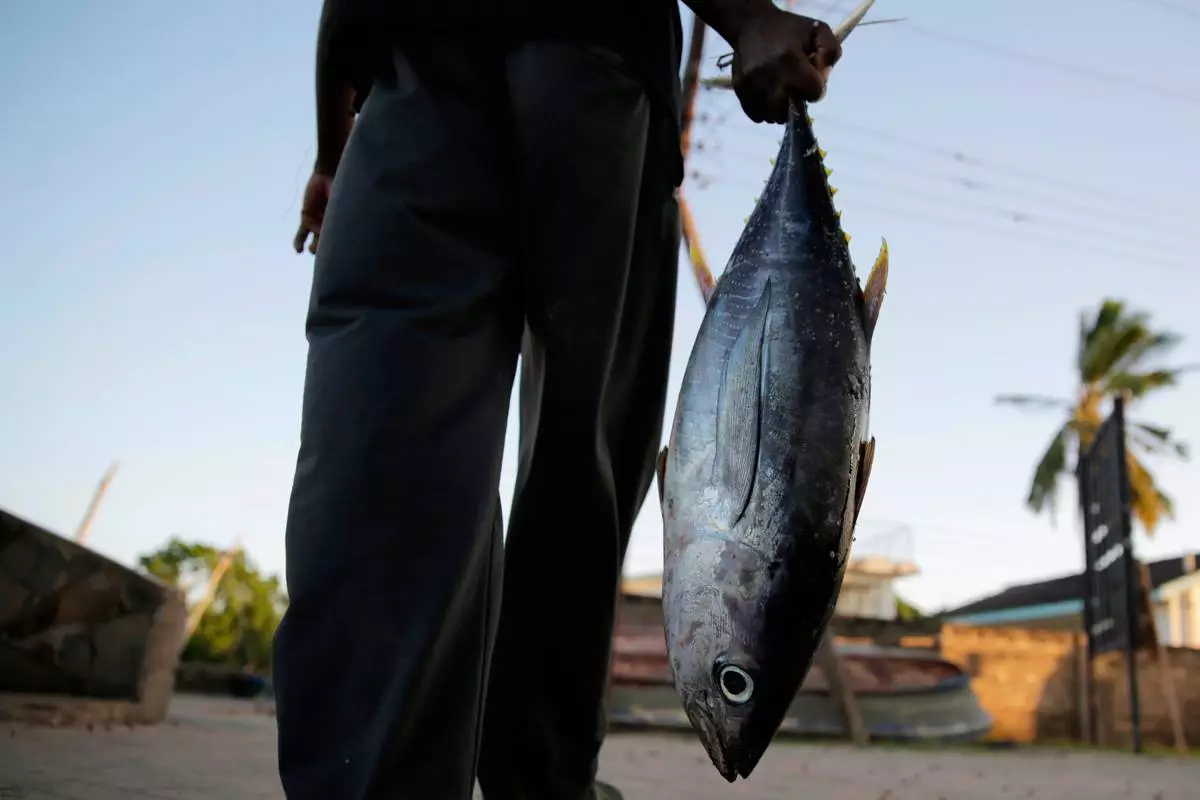
FILE - A fisherman holds a yellowfin tuna after a catch in Vanga, Kenya, June 14, 2022. (AP Photo/Brian Inganga, File)

FILE - A fisherman holds a yellowfin tuna after a catch in Vanga, Kenya, June 14, 2022. (AP Photo/Brian Inganga, File)

Recommended Articles