Skip to Content Facebook Feature Image

AccurKardia’s AK+ Guard™ Named “Best New ECG Technology Solution” By MedTech Breakthrough

Business

AccurKardia’s AK+ Guard™ Named “Best New ECG Technology Solution” By MedTech Breakthrough
Business

Business

AccurKardia’s AK+ Guard™ Named “Best New ECG Technology Solution” By MedTech Breakthrough

2026-05-07 22:15 Last Updated At:22:31

NEW YORK--(BUSINESS WIRE)--May 7, 2026--

AccurKardia, an innovator in ECG-based diagnostics technology, today announced that AK+ Guard™ has been selected as winner of the “Best New ECG Technology Solution” award in the 10 th annual MedTech Breakthrough Awards program conducted by MedTech Breakthrough, an independent market intelligence organization that recognizes the most innovative companies, technologies and products in the global digital health and medical technology market.

This press release features multimedia. View the full release here: https://www.businesswire.com/news/home/20260507798318/en/

AI-powered AK+ Guard hyperkalemia detection software uses Lead I ECG data to alert patients and clinicians of moderate to severe episodes of hyperkalemia. Designed to work with a range of consumer and clinical wearables, including smartwatches, hyperkalemia monitoring can occur outside of the clinic, prompting earlier intervention to prevent exacerbations or sudden cardiac events. Additionally, by helping to manage hyperkalemia risk, AK+ Guard could facilitate maintenance of cardiorenal protective therapies in at-risk chronic kidney disease and heart failure patients.

AK+ Guard uses advanced deep learning to transform a standard Lead I ECG into a non-invasive metabolic biosensor, with the AI analyzing the waveform for signs of hyperkalemia. AK+ Guard’s AI has been trained on a vast dataset of paired ECG and blood-serum values to correlate often subtle electrical signatures with hyperkalemia. This model received Breakthrough Device Designation from the U.S. Food and Drug Administration (FDA) and was accepted in the FDA TAP program in January 2025.

A recent independent validation study, conducted across the Sharp HealthCare system, tested AK+ Guard’s ability to detect moderate-to-severe hyperkalemia (≥6.5 mmol/L) using Lead I ECGs. The model achieved an AUROC of 0.903, with 82.3% sensitivity and 82.5% specificity in results presented at 2025 American Heart Association Scientific Sessions.

“We saw that the current standard of care for hyperkalemia detection and monitoring had been underserving patients. Our solution delivers a speedier, more accessible pathway to detection and risk management, making a meaningful impact on patient care,” said Moin Hussaini, chief product officer of AccurKardia. “AK+ Guard detects hyperkalemia in the ECG when it begins to pose a cardiac risk, and enables monitoring between lab visits. We’re also proud that our AI delivers equitable, high-performance diagnostics across diverse populations, a critical differentiator in medical AI.”

Now celebrating its 10th anniversary, the MedTech Breakthrough Awards program has spent a decade recognizing the companies driving meaningful progress and improving patient care across the global health and medical technology industry. The program spans a wide range of categories – including Telehealth, Clinical Administration, Patient Engagement, Electronic Health Records (EHR), Virtual Care, Medical Devices and beyond – honoring the innovations reshaping how care is delivered worldwide.

This year's program drew a record-breaking number of nominations from leading companies and startups across more than 20 countries, reflecting the growing global impact and momentum of the digital healthcare industry.

“AccurKardia’s AK+ Guard represents a fundamental leap forward in patient care,” said Steve Johansson, managing director, MedTech Breakthrough. “By replacing a blood draw with an AI-processed signal, AK+ Guard empowers patients to monitor themselves at home or anywhere, non-invasively and frequently. AccurKardia has not just automated a manual task; they are enabling a life-saving physiological measurement that was previously impossible to obtain outside of a laboratory.”

About AccurKardia

AccurKardia is an ECG-led diagnostics software company focused on transforming ECG data into a more powerful diagnostic tool and broad biomarker to improve patient outcomes and save lives globally. With initial applications in cardiology, the company offers transformative, cloud-based diagnostic tools, including AccurECG™ 2.0, an FDA-cleared Class II software as a medical device (SaMD) for fully automated, near real-time ECG interpretation. AccurKardia is also advancing an investigational pipeline of ECG-based biomarkers, including AK+ Guard™ for hyperkalemia risk assessment using Lead I ECG, and AK-AVS™ for aortic stenosis risk assessment, both of which have received FDA Breakthrough Device Designation. For more information, please visit www.accurkardia.com.

About MedTech Breakthrough

Part of Tech Breakthrough, a leading market intelligence and recognition platform for global technology innovation and leadership, the MedTech Breakthrough Awards program is devoted to honoring excellence and innovation in medical & health technology companies, products, services and people. The MedTech Breakthrough Awards provide a platform for public recognition around the achievements of breakthrough healthcare and medical companies and products in categories that include Patient Experience & Engagement, Health & Fitness, Medical Devices, Clinical Administration, Connected Healthcare, Medical Data, Healthcare Cybersecurity and more. For more information visit MedTechBreakthrough.com.

Tech Breakthrough LLC does not endorse any vendor, product or service depicted in our recognition programs, and does not advise technology users to select only those vendors with award designations. Tech Breakthrough LLC recognition consists of the opinions of the Tech Breakthrough LLC organization and should not be construed as statements of fact. Tech Breakthrough LLC disclaims all warranties, expressed or implied, with respect to this recognition program, including any warranties of merchantability or fitness for a particular purpose.

Disclaimer:

For detailed technical AccurECG 2.0 requirements, relevant disclosures, and approved indications for use, please refer to the U.S. FDA 510(k) K252361 summary and product labeling.

AK-AVS and AK+ Guard are currently for research use only and have not been cleared or approved by the U.S. FDA for use in the United States. This technology is under development and intended solely for investigational purposes.
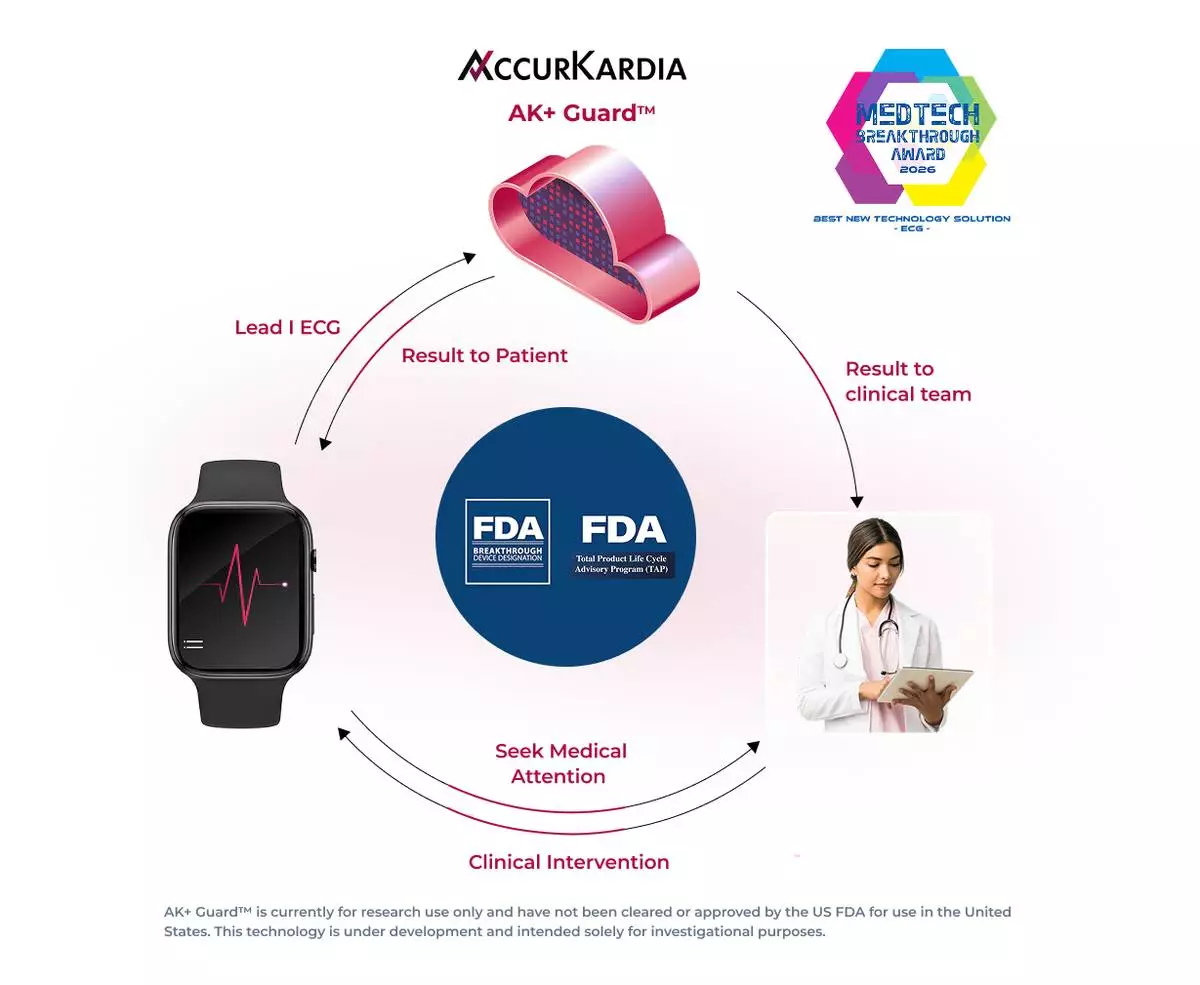
AI-powered AK+ Guard hyperkalemia detection software uses Lead-I ECG data to alert patients and clinicians of moderate to severe episodes of hyperkalemia. Designed to work with a range of consumer and clinical wearables, including smartwatches, hyperkalemia monitoring can occur outside of the clinic, prompting earlier intervention to prevent exacerbations or sudden cardiac events. Additionally, by helping to manage hyperkalemia risk, AK+ Guard could facilitate maintenance of cardiorenal protective therapies in at-risk chronic kidney disease and heart failure patients.

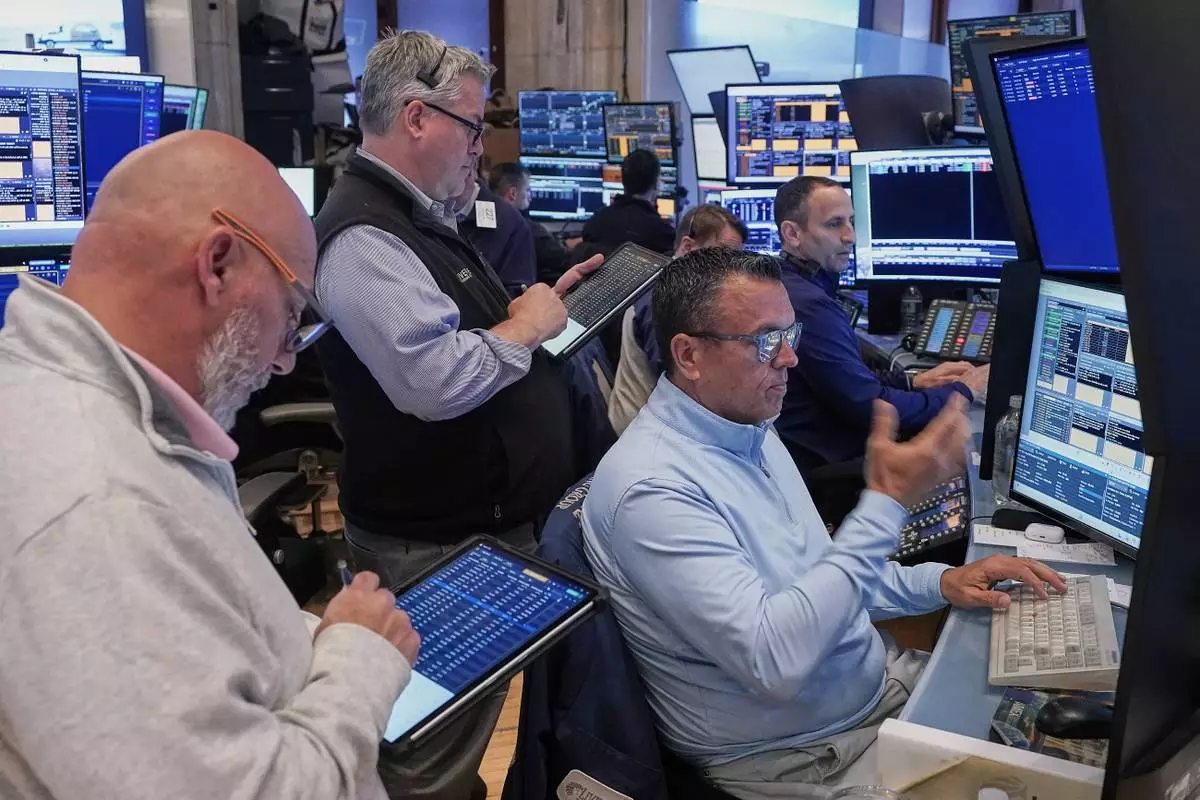
AI-powered AK+ Guard hyperkalemia detection software uses Lead-I ECG data to alert patients and clinicians of moderate to severe episodes of hyperkalemia. Designed to work with a range of consumer and clinical wearables, including smartwatches, hyperkalemia monitoring can occur outside of the clinic, prompting earlier intervention to prevent exacerbations or sudden cardiac events. Additionally, by helping to manage hyperkalemia risk, AK+ Guard could facilitate maintenance of cardiorenal protective therapies in at-risk chronic kidney disease and heart failure patients.
NEW YORK (AP) — The U.S. stock market is hanging just below its records Thursday as oil prices keep dropping on hopes that a deal may be nearing to allow tankers to deliver crude once again from the Persian Gulf to customers.

The price for a barrel of Brent crude oil, the international standard, fell 0.5% to $100.76, down from more than $115 early this week. It and gasoline are still much more expensive than they were before the war with Iran began, but hope is rising in financial markets as Iran said it was reviewing the latest U.S. proposals on ending their war.

On Wall Street, the S&P 500 fell 0.3% from its all-time high set the day before after a spokesperson for Pakistan’s Foreign Ministry said, “We expect an agreement sooner rather than later.” Pakistan has been acting as a mediator between the United States and Iran, and the hope is that they will reopen the Strait of Hormuz. Its closure during the war has kept oil tankers trapped in the Persian Gulf and sent prices higher for crude and all kinds of products.

The Dow Jones Industrial Average was down 244 points, or 0.5%, as of 1:14 p.m. Eastern time, and the Nasdaq composite fell 0.1% from its own record.

Of course, Wall Street has rallied strongly before on hopes for a coming end to the war with Iran, only to get quickly disappointed. That could happen again, and tensions are still high in the Middle East after a U.S. fighter jet shot out the rudder of an Iranian oil tanker in the Gulf of Oman Wednesday as it tried to breach the American blockade of Iran’s ports.

Despite all those uncertainties, a powerful parade of U.S. companies saying they made even bigger profits during the first three months of the year than analysts expected has helped support the U.S. stock market. Stock prices tend to follow the path of corporate profits over the long term.

Datadog leaped 25.7% to help lead the U.S. market after the monitoring and security platform for cloud applications topped analysts' expectations for profit in the latest quarter.

Albemarle rose 6.1% after the lithium products and specialty chemicals company likewise delivered better-than-expected results. Taser maker Axon Enterprise rallied 10.2% after raising its forecast for revenue this year in part because of big growth for its counter-drone products.

They helped offset a 12.5% drop for Whirlpool, which tumbled after reporting much weaker results than analysts expected. It announced the largest price increases in a decade for its major appliances in North America, while accelerating cuts to its costs, as it contends with weaker confidence among U.S. consumers.

Shake Shack dropped 28.4% after its results for the latest quarter fell well below analysts' expectations.

McDonald’s was mostly unchanged even though its revenue for the latest quarter edged past analysts’ expectations. CEO Chris Kempczinski said high gasoline prices and consumer anxiety over the Iran war could dent its sales this spring.

In the bond market, Treasury yields held relatively steady. The yield on the 10-year Treasury rose to 4.38% from 4.36% late Wednesday, but remains down from 4.45% early this week.

Lower yields can bring down rates for mortgages and other kinds of loans going to U.S. households and businesses, which in turn can give the economy a boost. Lower yields also tend to push upward on prices for stocks and other kinds of investments.

The 10-year Treasury yield, though, remains well above its 3.97% level from just before the war.

Several reports on the U.S. economy also came in mixed. One said more U.S. workers applied for unemployment benefits last week, but the increase was not as bad as economists expected. Another report suggested that productivity for U.S. workers improved by only half of what economists expected for the latest quarter.

In stock markets abroad, indexes fell in Europe following a stronger finish in Asia.

Japan’s Nikkei 225 roared 5.6% higher as trading in Tokyo reopened following a holiday and caught up with big gains for Asian markets from earlier in the week. It’s at a record after soaring nearly 71% in the last 12 months on strength for tech stocks benefiting from the boom in artificial intelligence.

“I think it’s a kind of bubble because buying activity concentrated on leading AI, artificial intelligence stock and semiconductor-related stocks. It’s a situation where only semiconductor stocks are being bought,” said Takashi Hiroki, chief strategist at MONEX.

AP Business Writers Matt Ott and Elaine Kurtenbach contributed to this report.

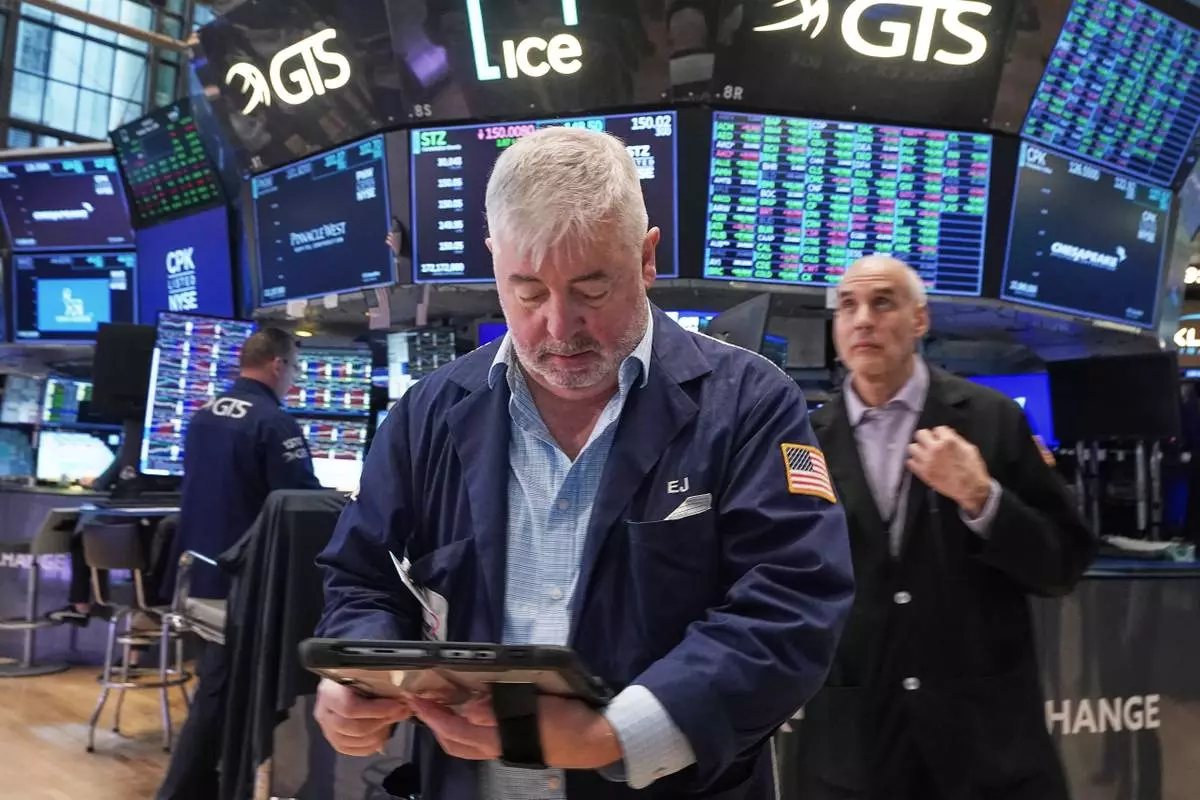
Robert Finnerty, Jr., foreground right, works with colleagues on the floor of the New York Stock Exchange, Thursday, May 7, 2026. (AP Photo/Richard Drew)

Robert Finnerty, Jr., foreground right, works with colleagues on the floor of the New York Stock Exchange, Thursday, May 7, 2026. (AP Photo/Richard Drew)

Trader Edward McCarthy, center, works on the floor of the New York Stock Exchange, Tuesday, May 5, 2026. (AP Photo/Richard Drew)

Trader Edward McCarthy, center, works on the floor of the New York Stock Exchange, Tuesday, May 5, 2026. (AP Photo/Richard Drew)

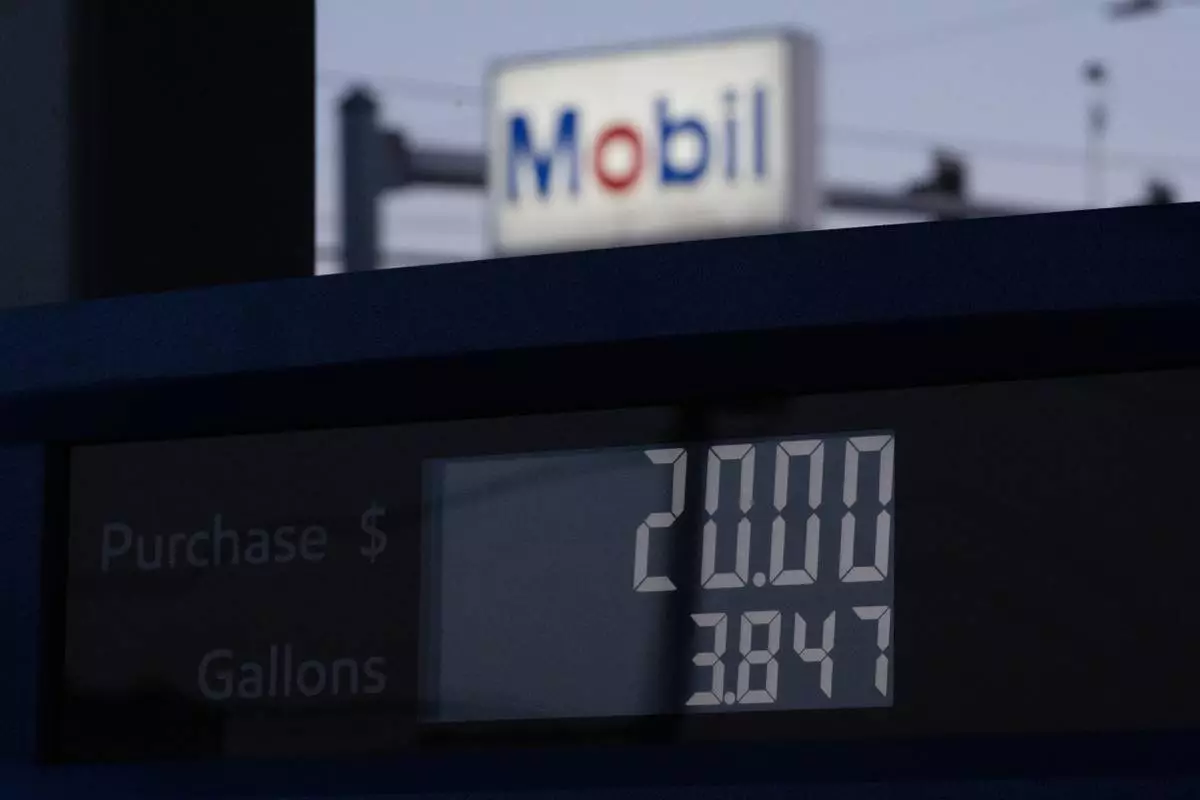
A display shows $20 for gasoline on a gas pump at a Mobil gas station on Wednesday, April 29, 2026, in Portland, Ore. (AP Photo/Jenny Kane)

A display shows $20 for gasoline on a gas pump at a Mobil gas station on Wednesday, April 29, 2026, in Portland, Ore. (AP Photo/Jenny Kane)

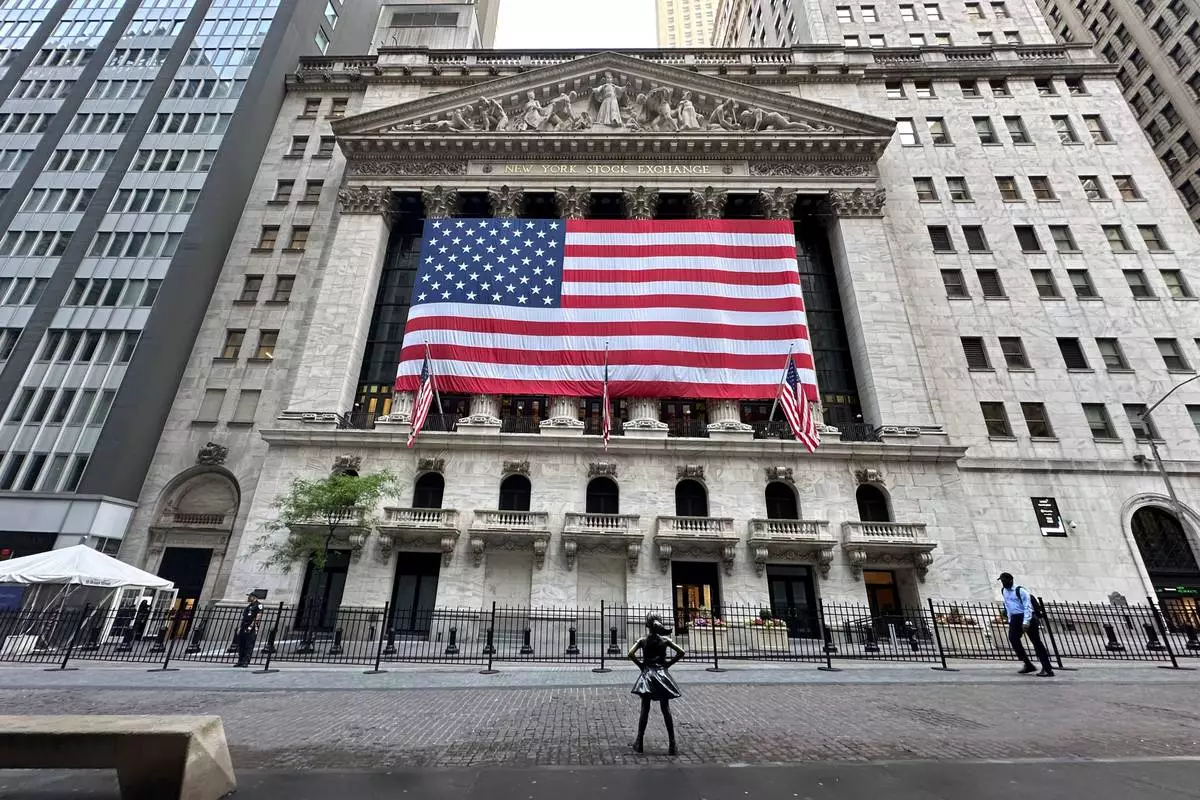
FILE - People pass the New York Stock Exchange on May 28, 2024, in New York. (AP Photo/Peter Morgan, File)

FILE - People pass the New York Stock Exchange on May 28, 2024, in New York. (AP Photo/Peter Morgan, File)

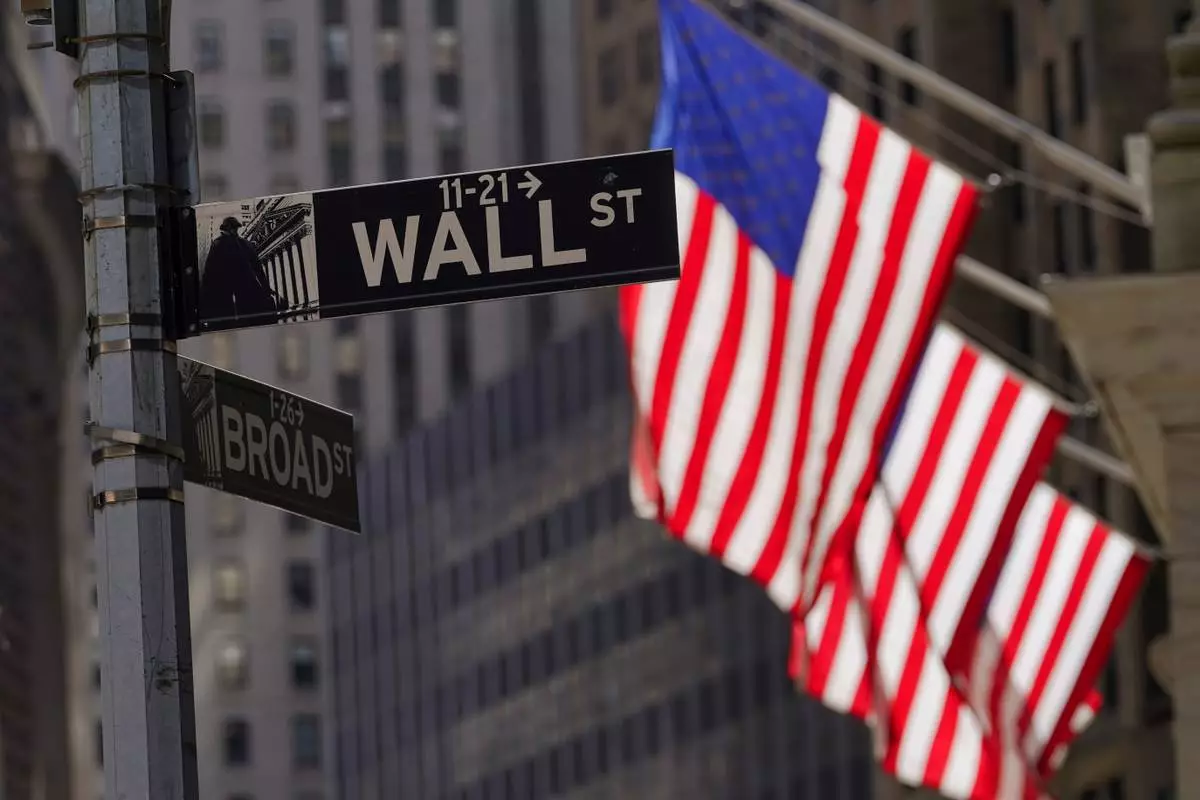
FILE - American flags fly outside the New York Stock Exchange, Friday, Sept. 23, 2022, in New York. (AP Photo/Mary Altaffer, File)

FILE - American flags fly outside the New York Stock Exchange, Friday, Sept. 23, 2022, in New York. (AP Photo/Mary Altaffer, File)

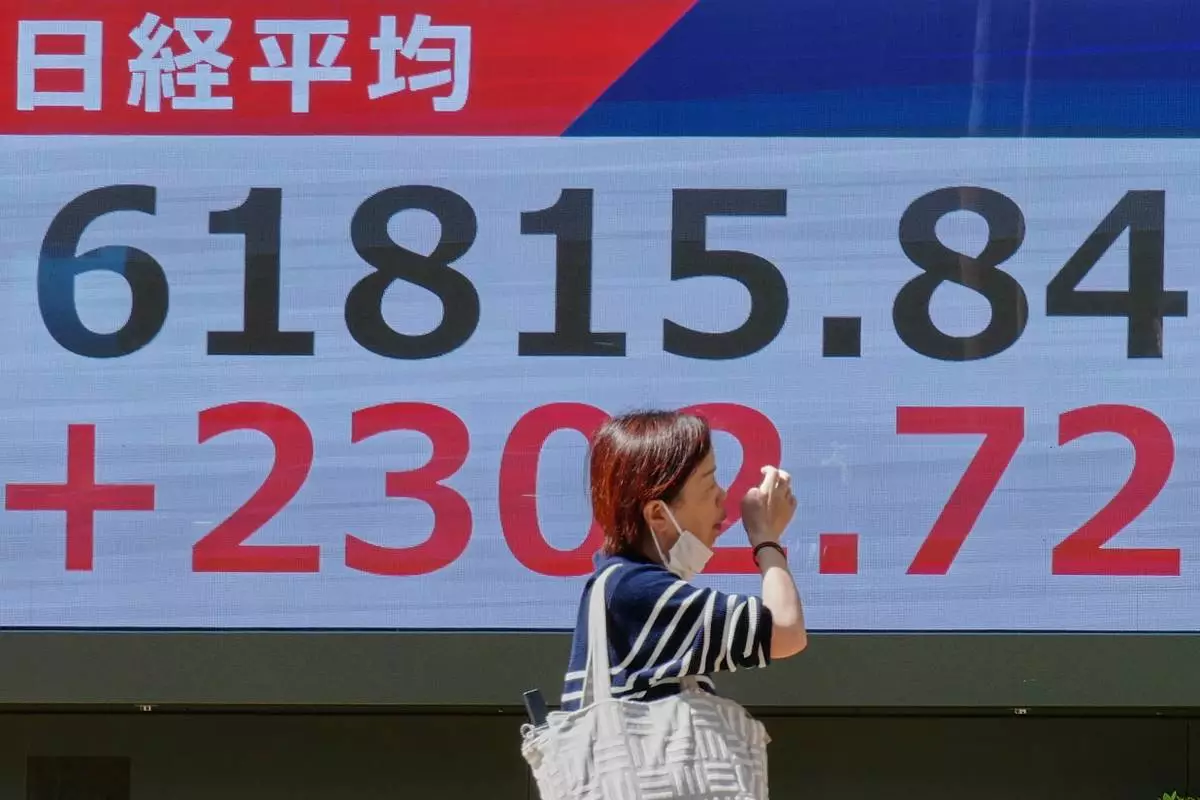
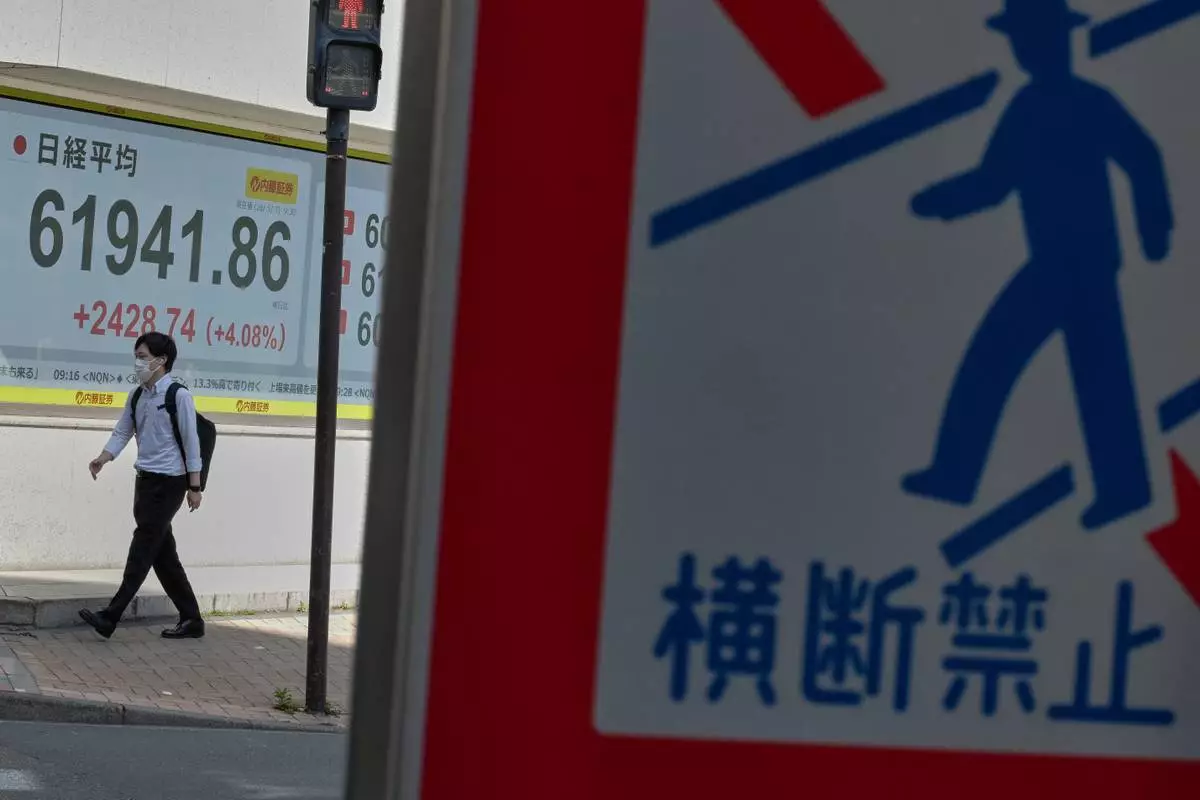
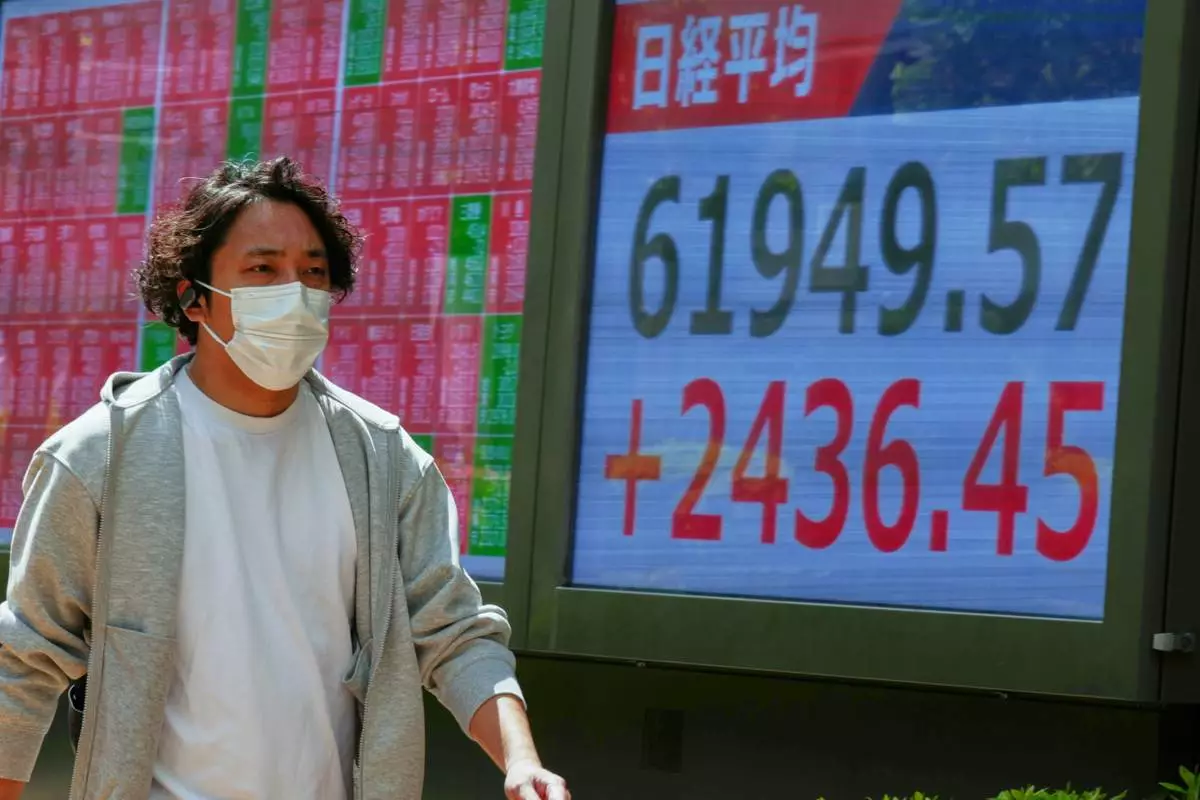
A person walks in front of an electronic stock board showing Japan's Nikkei index at a securities firm Thursday, May 7, 2026, in Tokyo. (AP Photo/Eugene Hoshiko)

A person walks in front of an electronic stock board showing Japan's Nikkei index at a securities firm Thursday, May 7, 2026, in Tokyo. (AP Photo/Eugene Hoshiko)

A person walks in front of an electronic stock board showing Japan's Nikkei index at a securities firm Thursday, May 7, 2026, in Tokyo. (AP Photo/Eugene Hoshiko)

A person walks in front of an electronic stock board showing Japan's Nikkei index at a securities firm Thursday, May 7, 2026, in Tokyo. (AP Photo/Eugene Hoshiko)

A person walks in front of an electronic stock board showing Japan's Nikkei index at a securities firm Thursday, May 7, 2026, in Tokyo. (AP Photo/Eugene Hoshiko)

A person walks in front of an electronic stock board showing Japan's Nikkei index at a securities firm Thursday, May 7, 2026, in Tokyo. (AP Photo/Eugene Hoshiko)

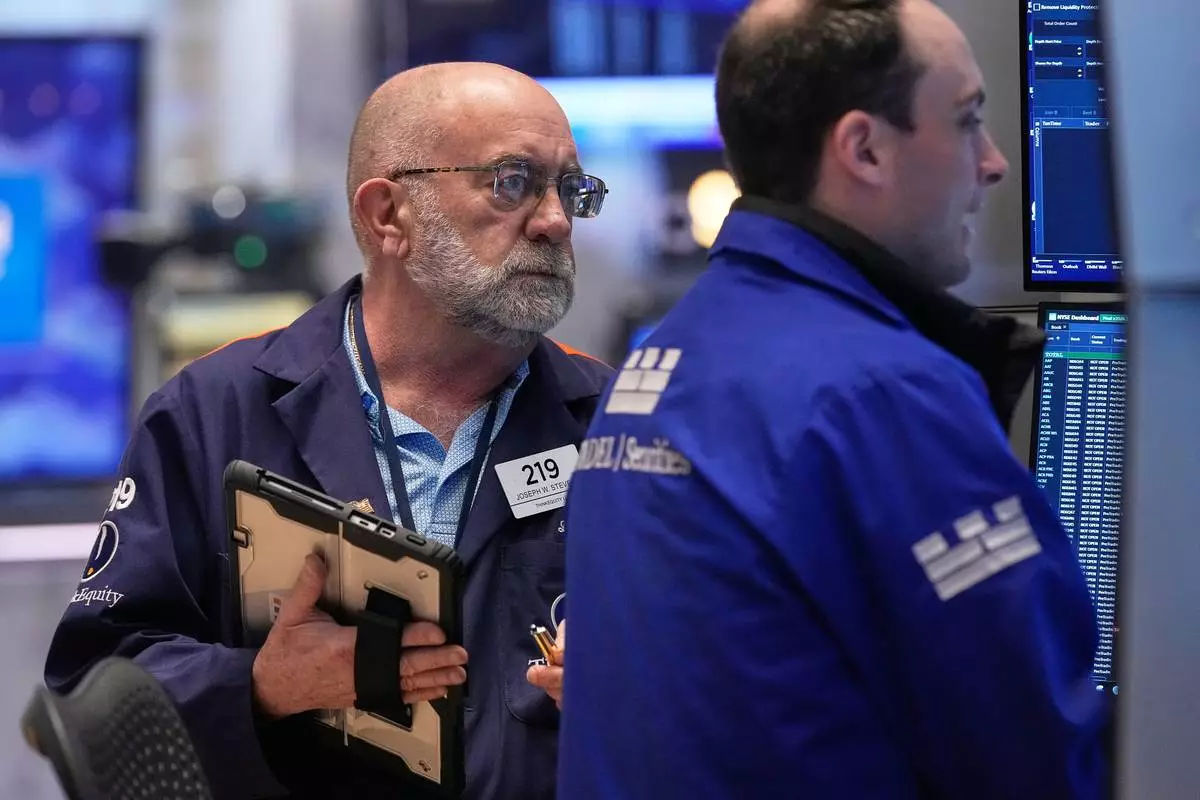
Trader Joseph Stevens, left, works on the floor of the New York Stock Exchange, Tuesday, May 5, 2026. (AP Photo/Richard Drew)

Trader Joseph Stevens, left, works on the floor of the New York Stock Exchange, Tuesday, May 5, 2026. (AP Photo/Richard Drew)

Recommended Articles