French prosecutors are seeking charges against Elon Musk and his social platform X for child sexual abuse images on the platform, deepfakes, disinformation and complicity in denying crimes against humanity by the platform's artificial intelligence system, Grok.
The Paris public prosecutor's office said Wednesday it has opened an investigation into X on charges including complicity in possessing and distributing child sexual abuse images and unlawfully collecting personal data. It's also investigating charges of disseminating non-consensual images or other content and denial of crimes against humanity.
X and its parent company SpaceX did not immediately respond to messages seeking comment Thursday.
The investigation comes less than three weeks after Musk and Linda Yaccarino — the former CEO of X — were summoned for “voluntary interviews" to discuss the allegations. They did not show up, but French authorities said this wouldn't hinder the investigation.
Musk was summoned after a search took place in February at the French premises of X as part of an investigation opened in January 2025 by the cybercrime unit of the Paris prosecutor’s office. Musk and Yaccarino have been invited in their capacities as managers of X at the time of the events investigated. Yaccarino was CEO from May 2023 until July 2025.
French authorities opened their investigation after reports from a French lawmaker alleging that biased algorithms on X likely distorted the functioning of an automated data processing system. It expanded after the AI system, Grok, generated posts that allegedly denied the Holocaust, a crime in France, and spread sexually explicit deepfakes.
It’s looking into alleged “complicity” in possessing and spreading sexual abuse images of minors, sexually explicit deepfakes, denial of crimes against humanity and manipulation of an automated data processing system as part of an organized group, among other charges.
Grok, which was built by xAI and is available through X, sparked global outrage this year after it pumped out a torrent of sexualized nonconsensual deepfake images in response to requests from X users.
Grok also wrote in a widely shared post in French that gas chambers at the Auschwitz-Birkenau death camp were designed for “disinfection with Zyklon B against typhus” rather than for mass murder — language long associated with Holocaust denial.
In later posts on X, the chatbot reversed itself and acknowledged that its earlier reply was wrong, saying it had been deleted, and pointed to historical evidence that Zyklon B was used to kill more than 1 million people in Auschwitz gas chambers.
In March, the Paris prosecutor’s office alerted the U.S. Department of Justice and the Securities and Exchange Commission, suggesting “that the controversy surrounding sexually explicit deepfakes generated by Grok may have been deliberately orchestrated to artificially boost the value of the companies X and xAI — potentially constituting criminal offenses,” prosecutors said.
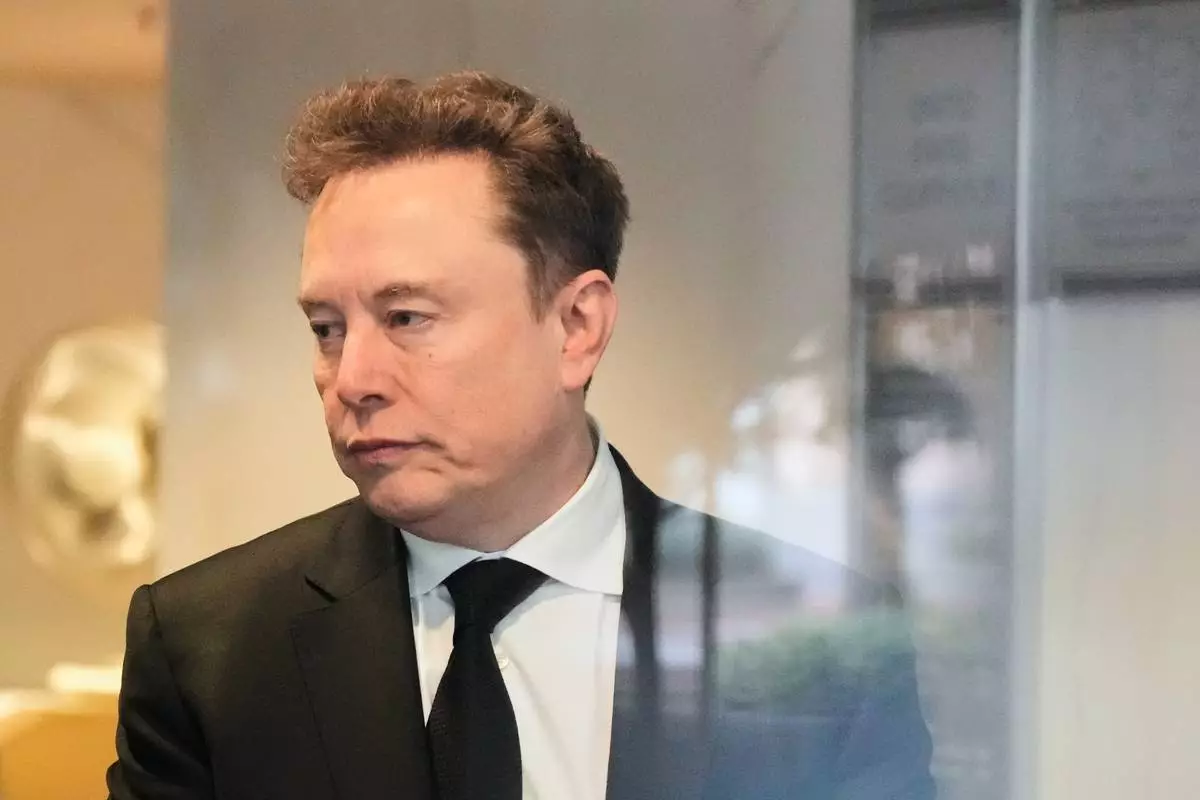
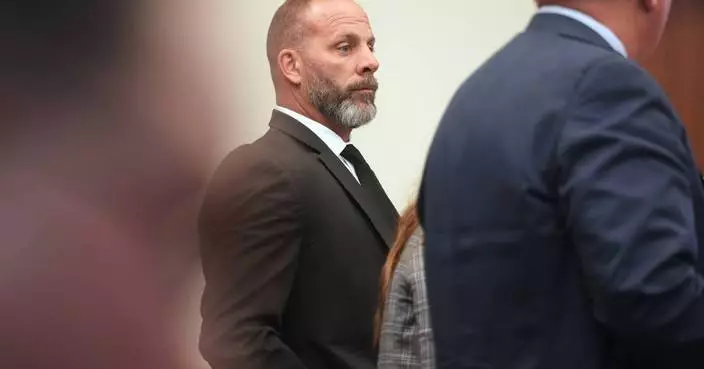
Elon Musk arrives at the U.S. District Court in Oakland, Calif., Tuesday, April 28, 2026. (AP Photo/Godofredo A. Vásquez)
WASHINGTON (AP) — President Donald Trump's proposal to put a coat of white paint on the exterior of a 19th-century historic landmark building next to the White House could cost taxpayers at least $7.5 million, a White House official involved in the project said Thursday.
Ryan Erb, the construction operations and facilities manager in the White House Office of Administration, which is spearheading the proposal, discussed details with members of the National Capital Planning Commission as the federal agency opened its review process.
The commission did not approve the project on Thursday, instead directing the White House to provide the agency with additional information at a future date.
The proposed painting of the Eisenhower Executive Office Building is one piece of a broader plan the Republican president has said will make Washington more beautiful.
Trump is making numerous changes inside and outside the White House and its grounds, most notably razing the East Wing to build a 1,000-person ballroom. Across the street from the mansion, Lafayette Park is closed for renovations, including restoring the fountains.
“President Trump continues to beautify the White House and our Nation’s Capital and is giving it the glory it deserves — something everyone should celebrate,” White House spokesperson Davis Ingle said in an emailed statement after the meeting.
Questioned about project costs, Erb said his office continues to work with an outside vendor to test the silicate paint they want to use, but offered $7.5 million as a preliminary estimate just for the exterior paint job. The White House would use money already designated for maintenance and upkeep projects.
“Unfortunately, we can't rush that process,” Erb told the commissioners at their monthly meeting. “We're trying to get all the data first.”
The White House has put forward two proposals: painting the entire gray granite exterior of the Eisenhower building white, or painting most of the building white while leaving the granite base as is. Painting the entire building is preferred, officials have said.
Trump last year said the gray is a “really bad color.”
Erb said Thursday that the paint is being tested on granite samples from a quarry in Maine because no testing can be done on the Eisenhower building itself. He stressed that the samples are new stone and not aged like what is on the building, which opened in 1888 after 17 years of construction.
“The initial data was encouraging for this process,” he said.
But the proposal has alarmed preservationists, architects, historians and others who argue that granite is not meant to be painted and that paint would trap moisture and deteriorate the stone.
“Painting the granite facade of the building white will adversely and permanently alter this important landmark, and should be rejected,” said Priya Jain, of the Society of Architectural Historians. She was among 11 people who commented at Thursday's meeting. Most urged the commission to reject the proposal.
More than 2,000 public comments submitted to the agency and available on its website were also strongly opposed to the plan. Commenters criticized the expected cost as a waste of taxpayer dollars and argued that a white Eisenhower building would throw off the visual balance along that portion of Pennsylvania Avenue and overwhelm the White House. Some suggested improved landscaping, lighting and other steps to improve the building’s appearance.
The capital planning commission, chaired by top Trump White House aide Will Scharf, approved staff comments on the proposal. That means White House officials will have to present additional information to the agency on a future date, including details about the type of paint to be used as well as alternatives that could improve the building's appearance without painting it.
A separate federal agency — the U.S. Commission of Fine Arts — is also reviewing the proposal and recently asked the White House to present additional information, including about paint testing, before a vote to approve it.
The Eisenhower Executive Office Building, which sits across a driveway from the White House, is a National Historic Landmark. It is also listed on the National Register of Historic Places.
A lawsuit against the proposed paint job is also pending in federal court.
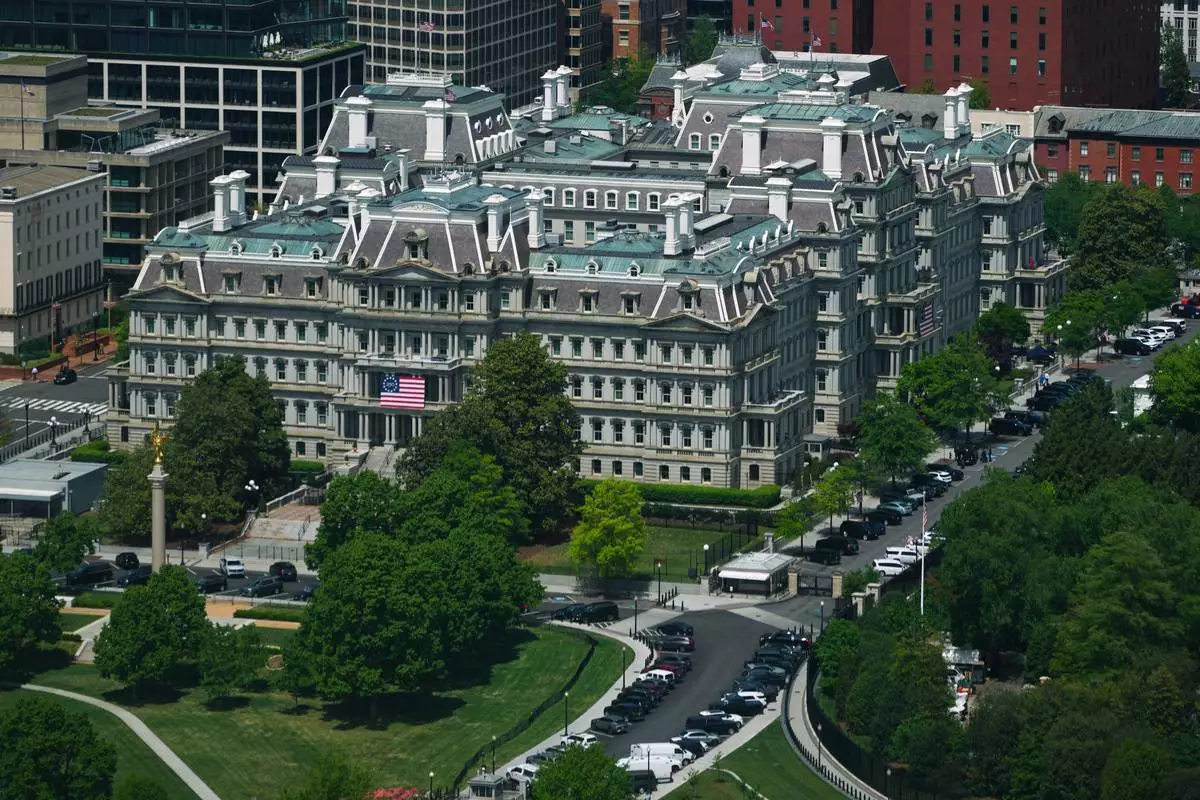
FILE - The Eisenhower Executive Office Building is seen at the White House complex, April 20, 2026, in Washington. (AP Photo/Julia Demaree Nikhinson, File)