WASHINGTON (AP) — A federal court ruled Thursday against the new global tariffs that President Donald Trump imposed after a stinging loss at the Supreme Court.
A split three-judge panel of the Court of International Trade in New York found the 10% global tariffs were illegal after small businesses sued.
The court ruled 2-1 that Trump overstepped the tariff power that Congress had allowed the president under the law. The tariffs are “invalid″ and ”unauthorized by law,” the majority wrote.
The third judge on the panel found the law allows the president more leeway on tariffs.
If the administration appeals Thursday’s decision, as expected, it would first turn to the U.S. Court of Appeals for the Federal Circuit, based in Washington, and then, potentially, the Supreme Court.
At issue are temporary 10% worldwide tariffs the Trump administration imposed after the Supreme Court in February struck down even broader double-digit tariffs the president had imposed last year on almost every country on Earth. The new tariffs, invoked under Section 122 of the Trade Act of 1974, were set to expire July 24.
The court’s decision directly applied only to three of the plaintiffs — the state of Washington and two businesses, spice company Burlap & Barrel and toy company Basic Fun! “It’s not clear’’ whether other businesses would have to continue to pay the tariffs, said Jeffrey Schwab, director of litigation at the libertarian Liberty Justice Center, which represented the two companies.
“We fought back today and we won, and we’re extremely excited,” Jay Foreman, CEO of Basic Fun!, told reporters Thursday.
The ruling marked another legal setback for the Trump administration, which has attempted to shield the U.S. economy behind a wall of import taxes. Last year, Trump invoked the 1977 International Emergency Economic Powers Act (IEEPA) to declare the nation's longstanding trade deficit a national emergency, justifying sweeping global tariffs.
The Supreme Court ruled Feb. 28 that IEEPA did not authorize the tariffs. The U.S. Constitution gives Congress the power to establish taxes, including tariffs, though lawmakers can delegate tariff power to the president.
Dave Townsend, a trade lawyer at Dorsey & Whitney, said the ruling will open the door for more companies to request that the tariffs be thrown out and that any payments they've made be refunded.
“Other importers likely will now ask for a broader remedy that applies to more companies,” Townsend said, though he cautioned the case could also reach the Supreme Court.
Trump is already taking steps to replace the tariffs that were struck down by the Supreme Court in January. The administration is conducting two investigations that could end in more tariffs.
The Office of the U.S. Trade Representative is looking into whether 16 U.S. trading partners — including China, the European Union and Japan — are overproducing goods, driving down prices and putting U.S. manufacturers at a disadvantage. It is also investigating whether 60 economies — from Nigeria to Norway and accounting for 99% of U.S. imports — do enough to prohibit the trade in products created by forced labor.
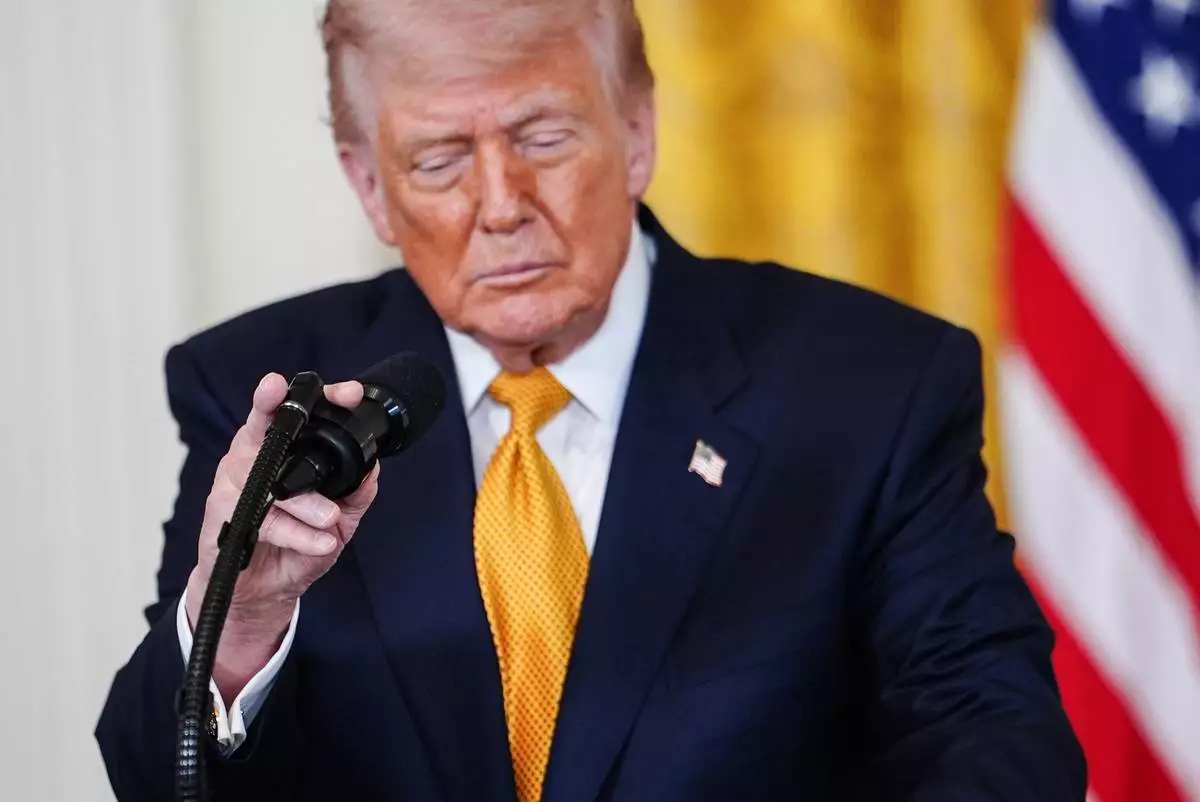
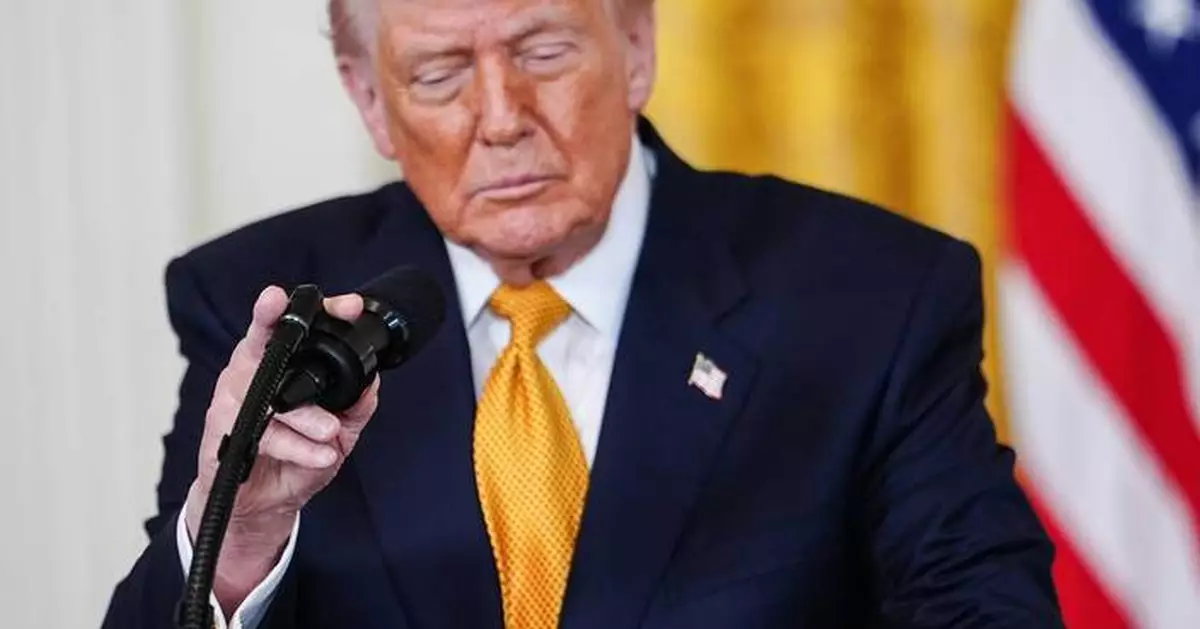
President Donald Trump adjusts his microphone while speaking during an event for military mothers in the East Room of the White House, Wednesday, May 6, 2026, in Washington. (AP Photo/Julia Demaree Nikhinson)
ARROYO GRANDE, Calif. (AP) — Scientists specializing in human decomposition and soil took samples from the ground Thursday outside a home connected to the man convicted of killing 19-year-old college student Kristin Smart in 1996. Her body was never found.
The San Luis Obispo County Sheriff's Office served a search warrant Wednesday on the home of Susan Flores, whose son Paul Flores was convicted in 2022 of killing Smart. Authorities have not answered questions about what prompted the search.
Tim Nelligan, an expert in soil vapor testing, confirmed by phone Thursday that he was on the premises, gathering samples from the yards of Flores and a neighbor. He said is team has, in general, “come up with a methodology to assess soil vapor" and its relation to “human cadaver decomposition,” but that he could not discuss the current investigation.
Smart went missing from California Polytechnic State University in May 1996 after returning from an off-campus party. Prosecutors alleged she was killed during an attempted rape and that the last person she was seen with was Paul Flores, a fellow student. She was declared legally dead in 2002.
The decades-old case has captivated the public, fueled in part by a podcaster who helped investigators by bringing forward additional witnesses. Chris Lambert of the “Your Own Backyard” podcast first reported the search of the home in the central coast town of Arroyo Grande, about 100 miles (160 kilometers) northwest of Los Angeles.
Attempts to reach Susan Flores for comment Wednesday and Thursday were not successful. She has never faced criminal charges related to the case.
Nelligan and other scientists poked instruments into the soil and pulled up long tubing. Soil vapor sampling, which is an evolving science, involves collecting underground gas samples to detect volatile organic compounds associated with human decomposition.
Lambert, the podcaster, said he did not know much about the search, but was optimistic investigators could locate Smart's body. He said past searches of Susan Flores' home have never been thorough.
“This property in particular has been overlooked for quite some time," he said Thursday in front of the house.
Paul Flores and his father, Ruben Flores, were arrested in 2021.
Prosecutors alleged Smart’s remains were buried on Ruben Flores’ property and later moved. He was acquitted of accessory charges. That property is different from the one currently being searched.
Paul Flores was sentenced in March 2023 to prison, where he has been physically attacked at least twice.
In 2024, a judge ruled that Paul Flores must pay just over $350,000 to Smart's family for costs they incurred after her death.
The family has said it would forgo restitution if Flores would tell them where the woman's body was. Flores’ attorney, Harold Mesick, said in 2024 that the defense did not know where her remains are. Flores maintains his innocence.
The county district attorney’s office said Wednesday it was helping the sheriff's office with the investigation.
“While those responsible for Kristin’s death — and those with knowledge of her whereabouts — could provide answers at any time, we remain firmly committed to using every lawful tool available to locate Kristin’s remains and to support her family until she is brought home,” District Attorney Dan Dow said in a statement.
—-
This version corrects the spelling of Tim Nelligan's name on second reference.
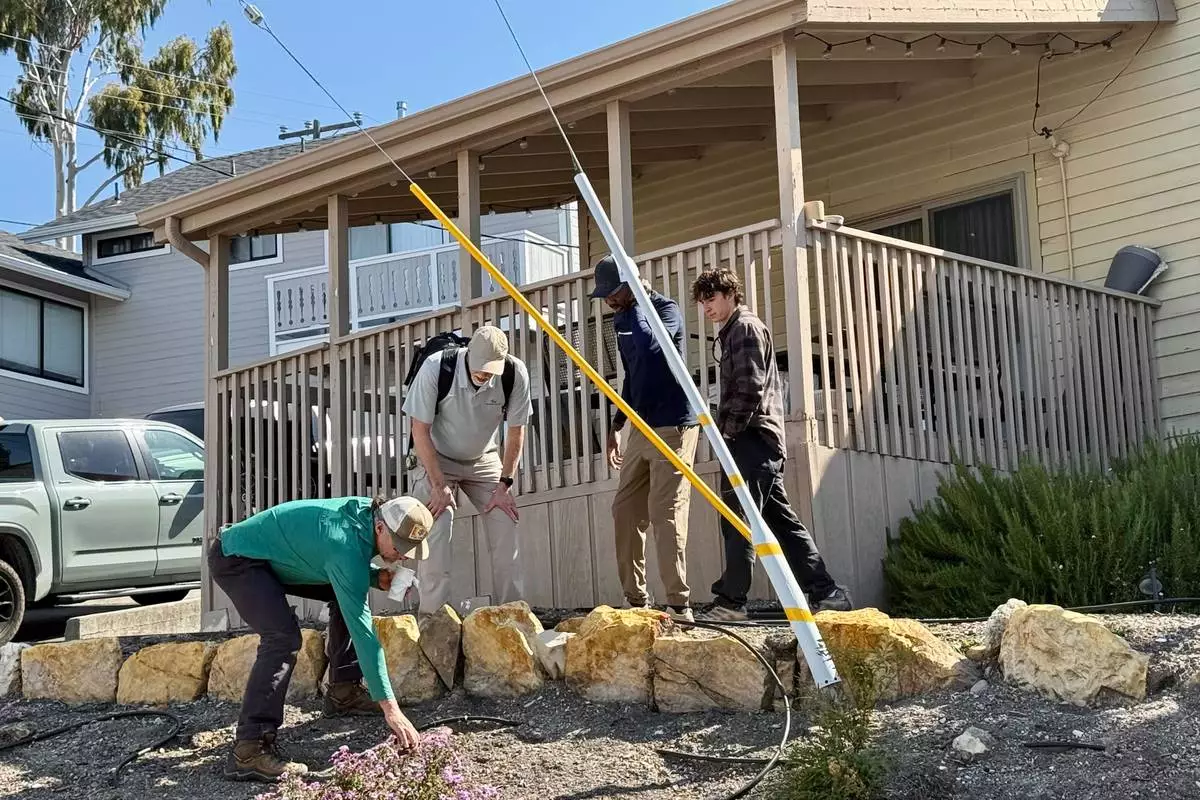
Authorities take samples from the soil Thursday, May 7, 2026, from the neighboring yard of a home in Arroyo Grande, Calif., connected to the man convicted of killing Kristin Smart. (AP Photo/Haven Daley)
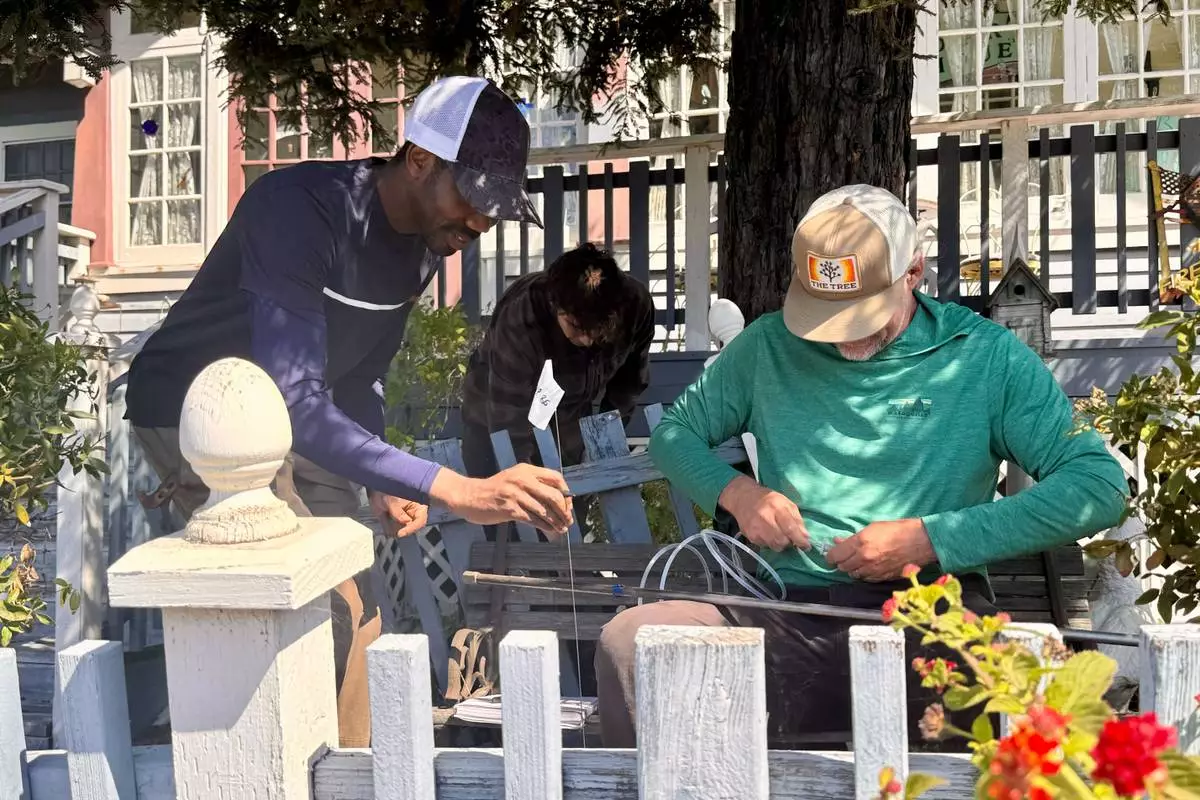
Authorities take samples from the soil Thursday, May 7, 2026, from the front yard of a home in Arroyo Grande, Calif., connected to the man convicted of killing Kristin Smart. (AP Photo/Haven Daley)
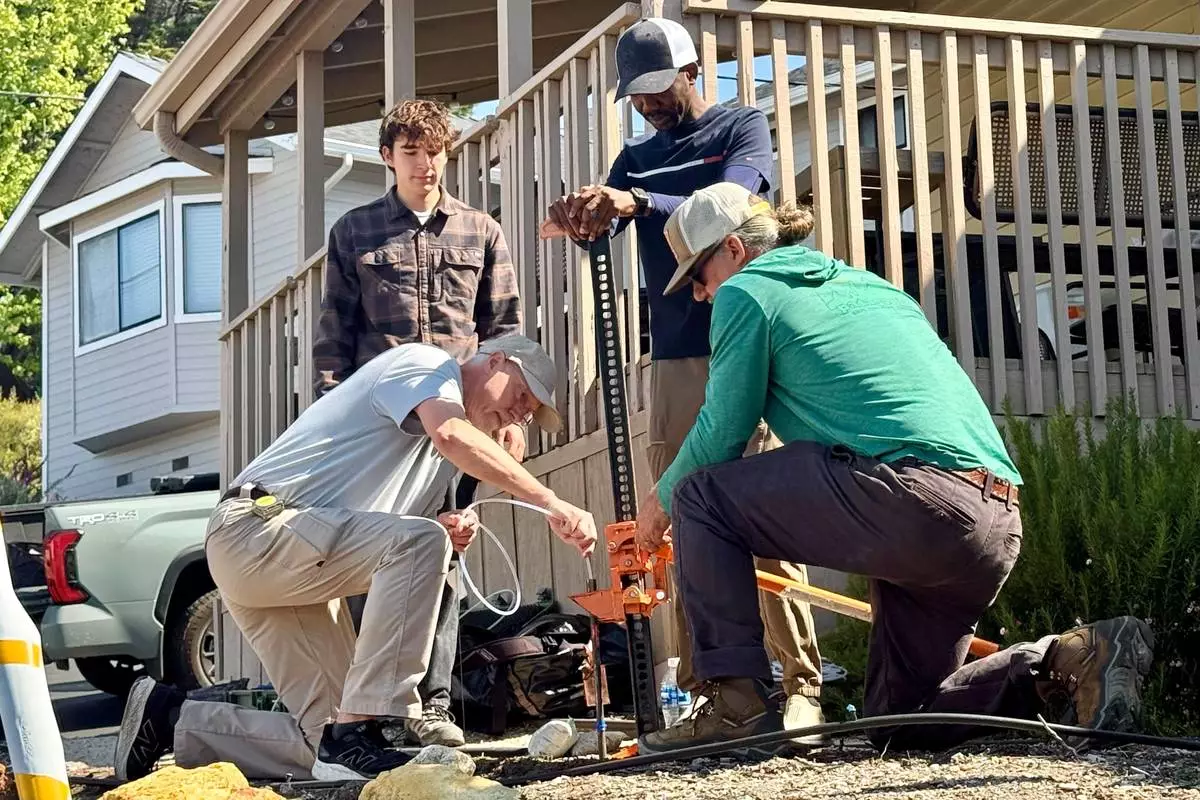
Authorities take samples from the soil Thursday, May 7, 2026, from the neighboring yard of a home in Arroyo Grande, Calif., connected to the man convicted of killing Kristin Smart. (AP Photo/Haven Daley)
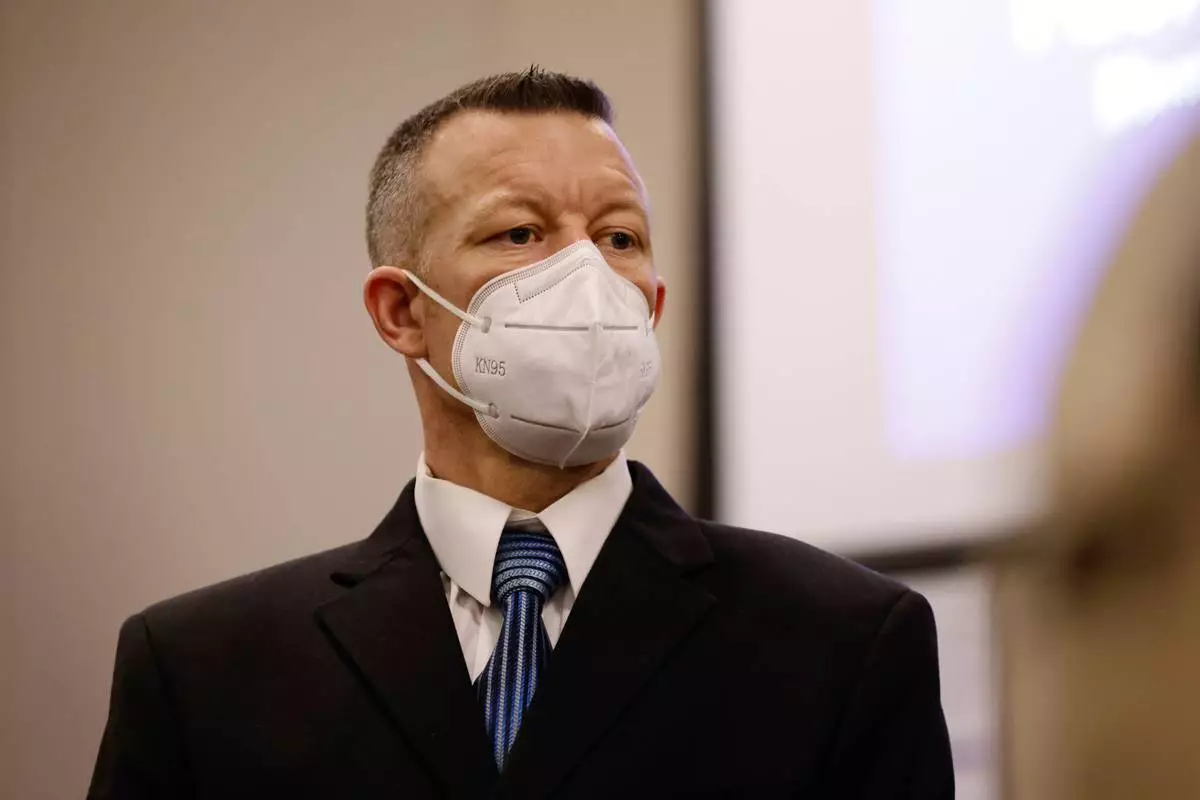
FILE - Paul Flores listens during his murder trial in Monterey County Superior Court in Salinas, Calif., on July 18, 2022. (Daniel Dreifuss/Monterey County Weekly via AP, Pool, File)
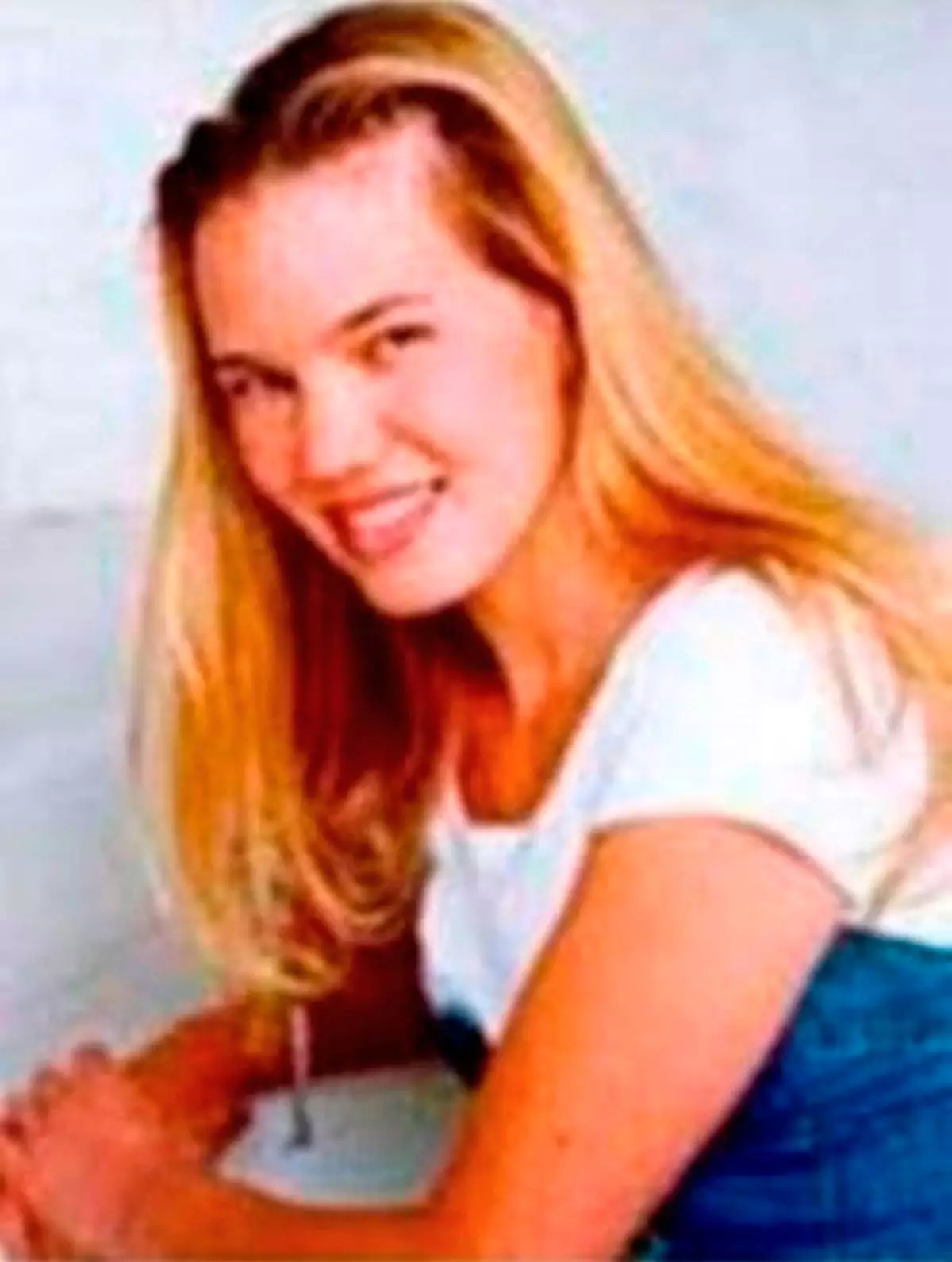
FILE - This undated photo released by the FBI shows Kristin Smart, the California Polytechnic State University, San Luis Obispo student who disappeared in 1996. (FBI via AP, File)
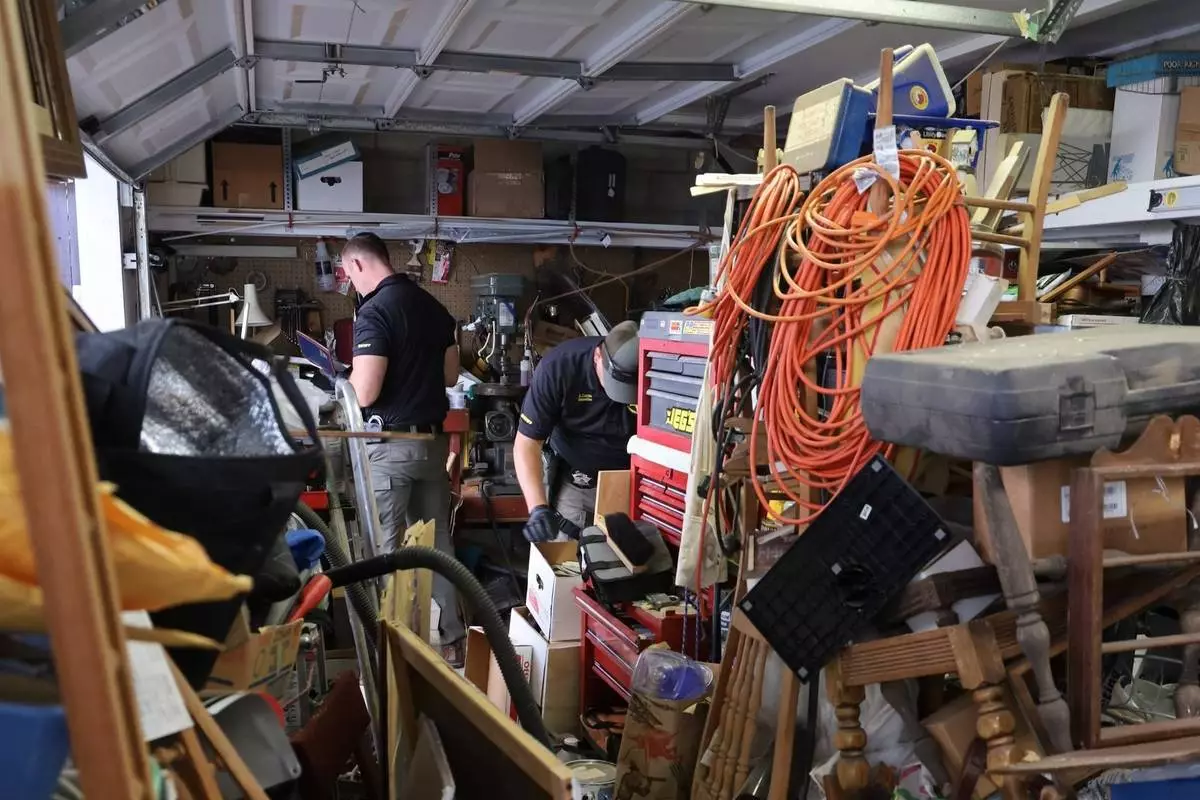
This photo provided by San Luis Obispo County Sheriff's Office shows authorities conducting a search on Wednesday, May 6, 2026, at a home in Arroyo Grande, Calif., connected to the man convicted of killing Kristin Smart. (San Luis Obispo County Sheriff's Office via AP)