Skip to Content Facebook Feature Image

What about Cinderella and the brackets? What to know about NCAA Tournament expansion

Sport

What about Cinderella and the brackets? What to know about NCAA Tournament expansion
Sport

Sport

What about Cinderella and the brackets? What to know about NCAA Tournament expansion

2026-05-08 07:04 Last Updated At:07:10

The NCAA Tournament is getting a supersized makeover, a long-expected expansion that many basketball fans should notice and pay attention to beginning next season.

The sanctioning body increased the fields for its men’s and women’s March Madness tournaments to 76 teams apiece on Thursday. That means there will be eight more games — 12 total involving 24 teams — squeezed into the highly popular bracket without substantially changing the overall format.

More Images
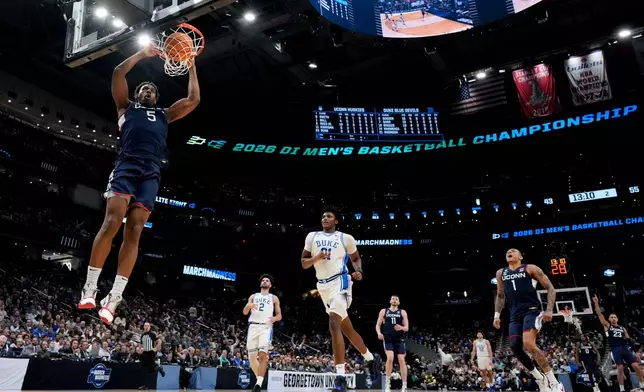
FILE - UConn forward Tarris Reed Jr. (5) dunks against Duke during the second half in the Elite Eight of the NCAA college basketball tournament on March 29, 2026, in Washington. (AP Photo/Stephanie Scarbrough, File)
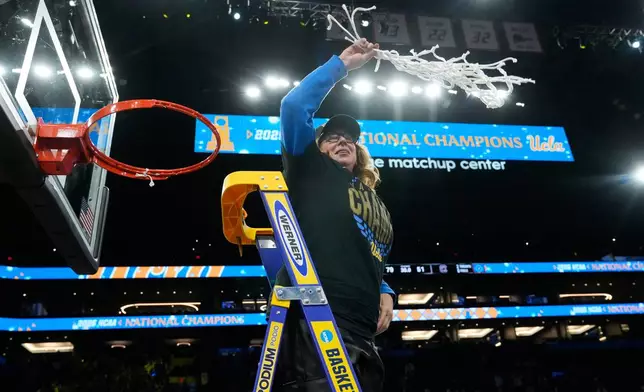
FILE - UConn forward Tarris Reed Jr. (5) dunks against Duke during the second half in the Elite Eight of the NCAA college basketball tournament on March 29, 2026, in Washington. (AP Photo/Stephanie Scarbrough, File)

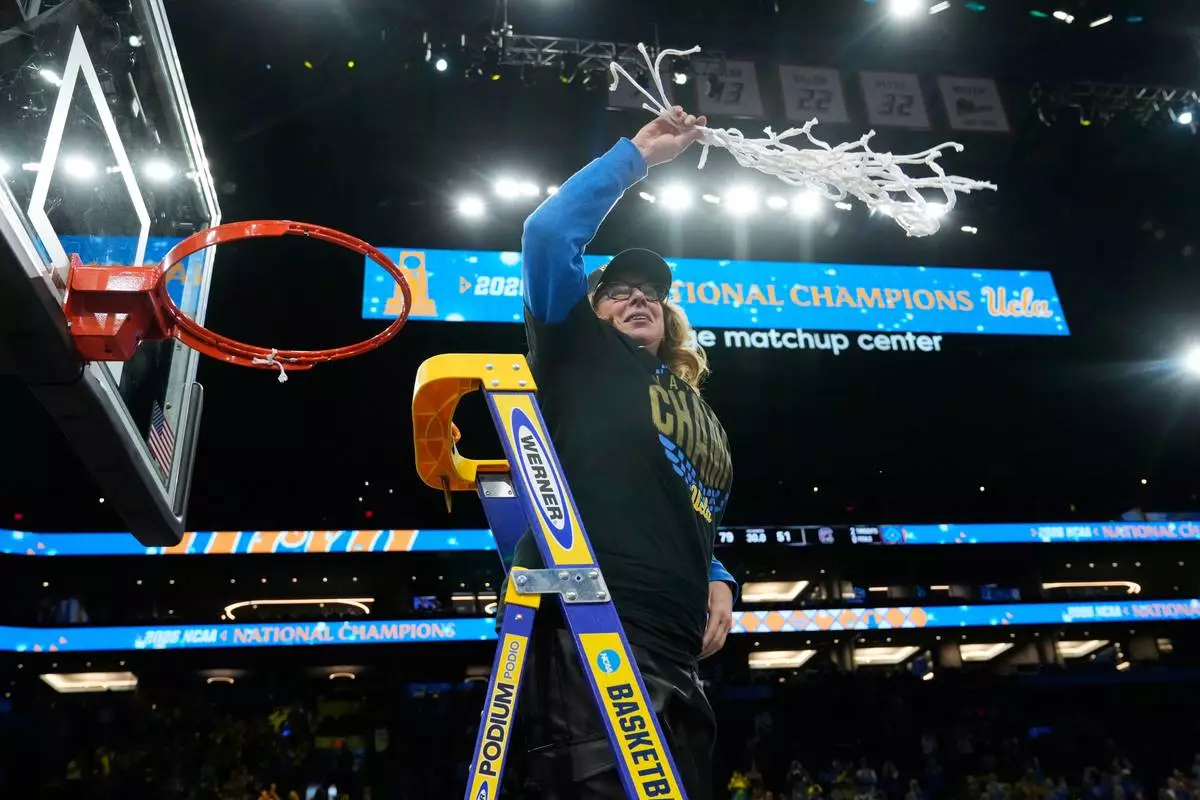
FILE - UCLA head coach Cori Close celebrates after cutting down the net after UCLA defeated South Carolina in the women's National Championship Final Four NCAA college basketball tournament game, April 5, 2026, in Phoenix. (AP Photo/Ross D. Franklin, File)
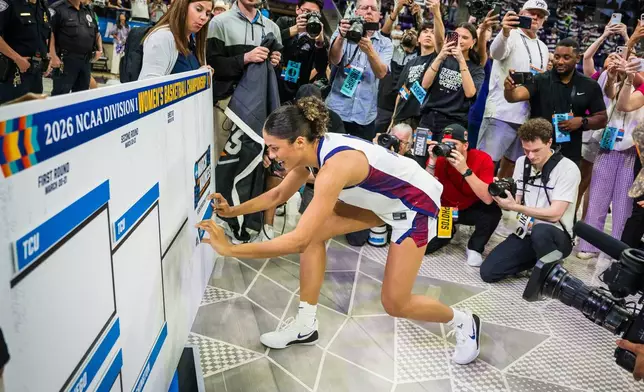
FILE - UCLA head coach Cori Close celebrates after cutting down the net after UCLA defeated South Carolina in the women's National Championship Final Four NCAA college basketball tournament game, April 5, 2026, in Phoenix. (AP Photo/Ross D. Franklin, File)

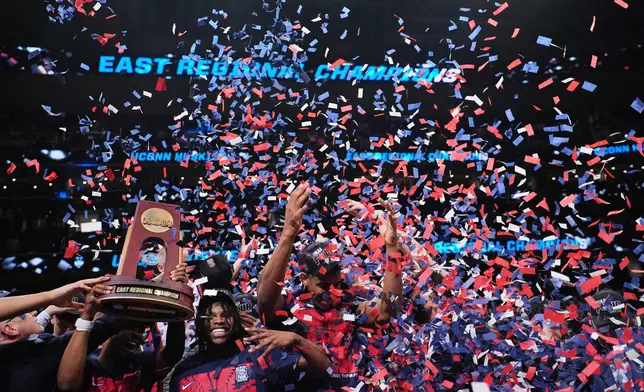
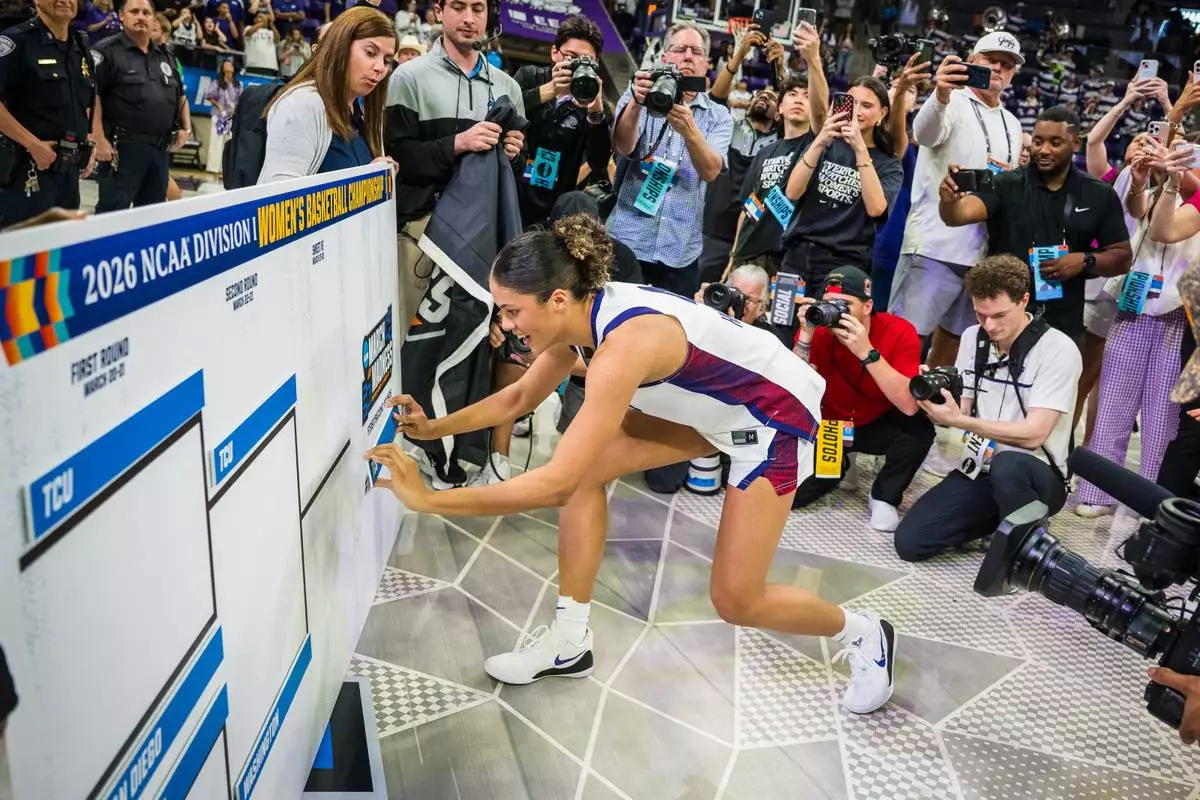
FILE - TCU guard Donovyn Hunter (4) places the team placard on the bracket board after the second round of the NCAA college basketball tournament March 22, 2026, Fort Worth, Texas. (AP Photo/Jessica Tobias, File)

FILE - TCU guard Donovyn Hunter (4) places the team placard on the bracket board after the second round of the NCAA college basketball tournament March 22, 2026, Fort Worth, Texas. (AP Photo/Jessica Tobias, File)

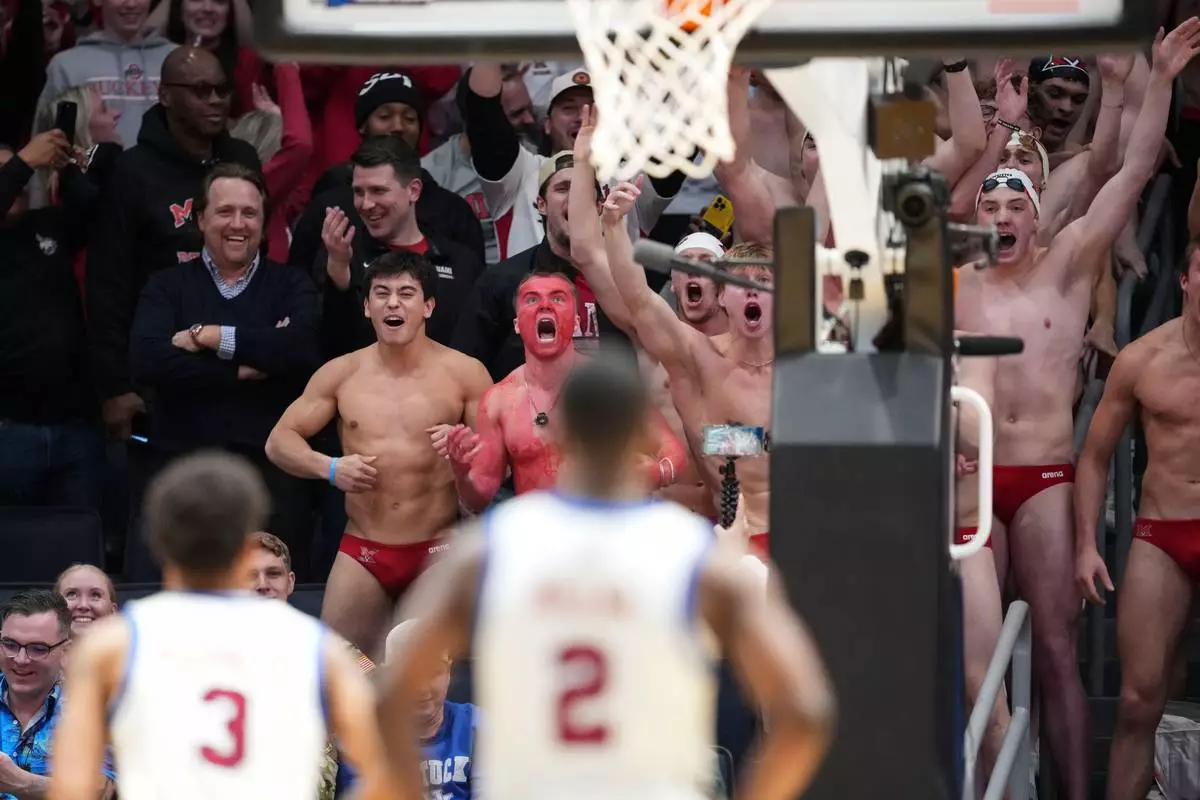
FILE - The Miami (Ohio) swim team attempts to distract SMU forward Corey Washington (3) from taking a free throw during a First Four college basketball game in the NCAA Tournament in Dayton, Ohio, March 18, 2026. (AP Photo/Jeff Dean, File)
FILE - The Miami (Ohio) swim team attempts to distract SMU forward Corey Washington (3) from taking a free throw during a First Four college basketball game in the NCAA Tournament in Dayton, Ohio, March 18, 2026. (AP Photo/Jeff Dean, File)

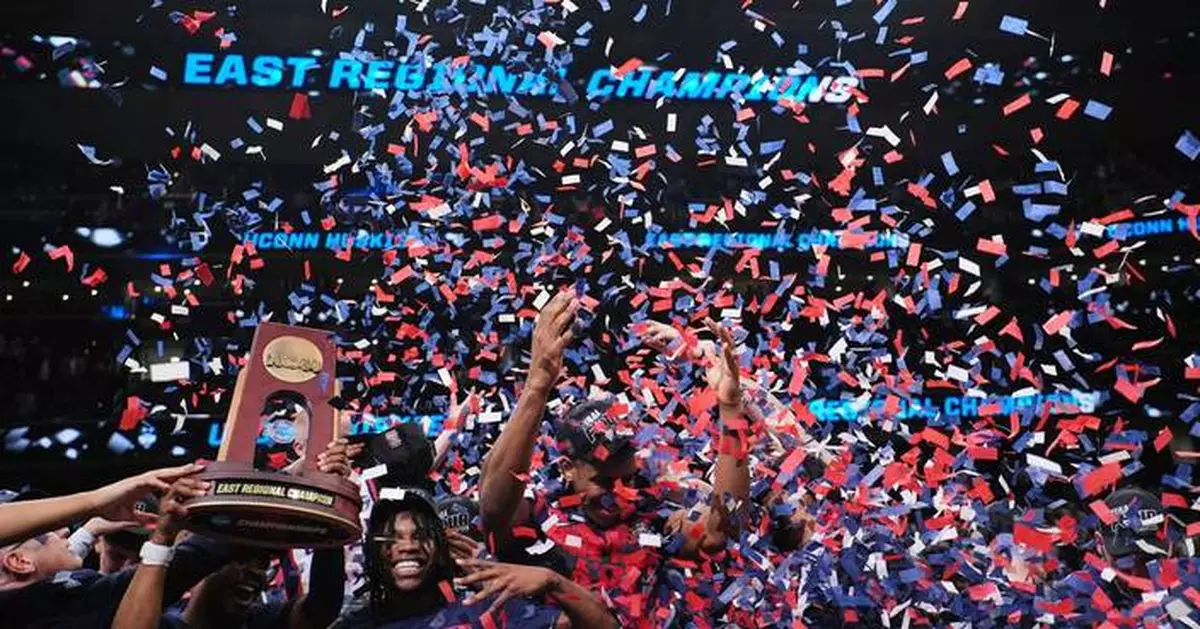
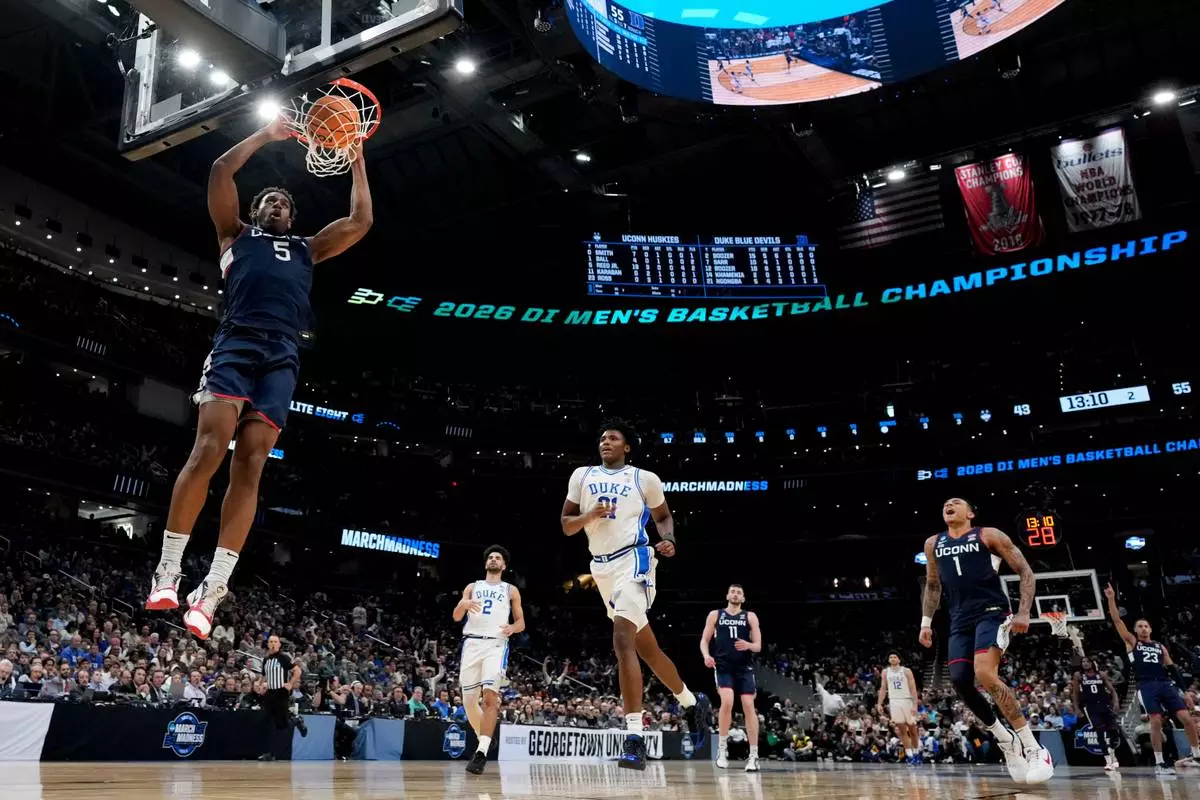
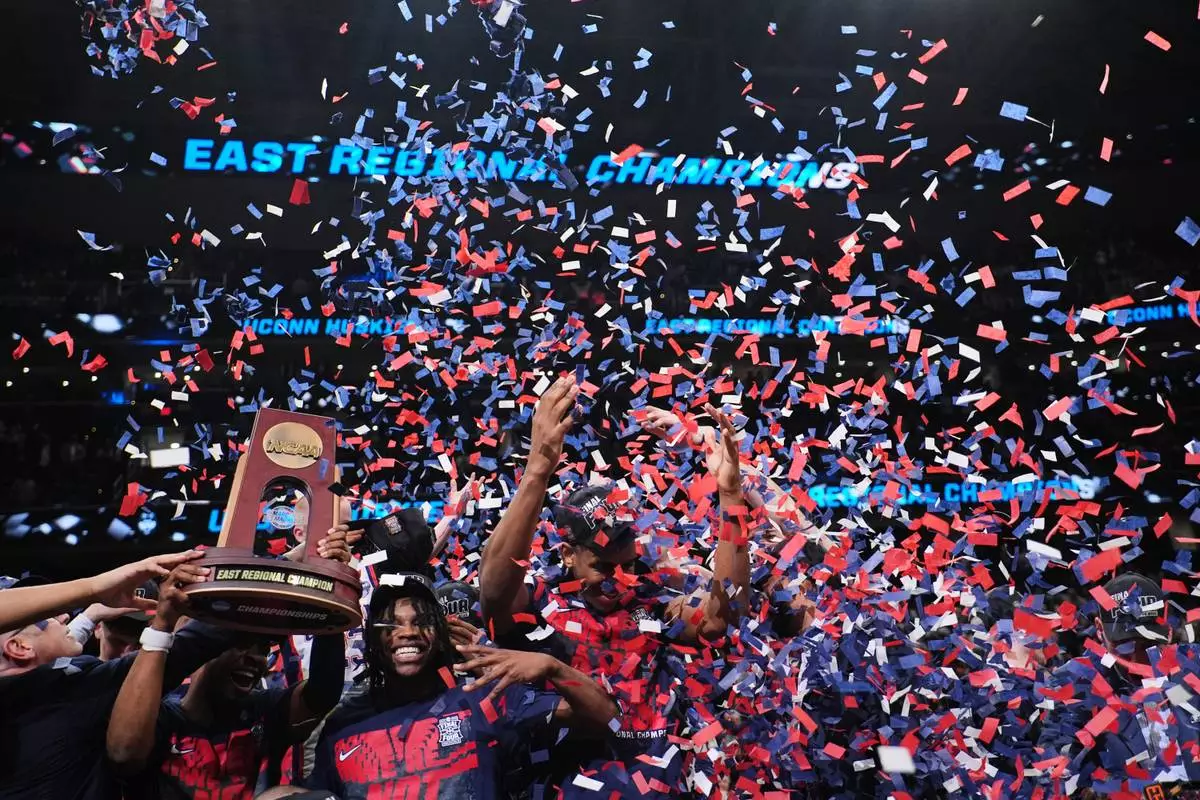
FILE - UConn players celebrate after their win against Duke in the Elite Eight of the NCAA college basketball tournament March 29, 2026, in Washington. (AP Photo/Abbie Parr, File)

FILE - UConn players celebrate after their win against Duke in the Elite Eight of the NCAA college basketball tournament March 29, 2026, in Washington. (AP Photo/Abbie Parr, File)

NCAA coaches and administers have lobbied for more access to the lucrative, postseason showcase for years. The biggest questions always revolved around how many teams would get in and what would the new setup look like.

The first expansion of the tournaments in 15 years, since adding increasing the field from 64 to 68 teams, will turn what has been known as the First Four into a bigger affair that will now be called the March Madness Opening Round.

The 12 winners will move into the main 64-team bracket that will begin, as usual, on Thursday for the men and Friday for the women.

Money seems like the primary reason, though some will argue it's about providing more spots for deserving teams.

The change comes at a time when conferences and universities are desperately looking for ways to add revenue. Some schools are strapped for cash while having to share revenue with top athletes and are trying to better position themselves for the next iteration of the ever-changing landscape of college sports. With schools now allowed to spend more than $20 million on their athletes, the race to stay competitive is frenetic.

The NCAA said it will distribute more than $131 million in new revenue to schools that make the tournament. That money will come from expanded TV advertising opportunities for alcohol, the likes of which were previously restricted. It said the value of the rights agreement will increase $50 million each year on average over the course of the six years remaining on existing broadcast agreements with CBS and others.

Most of the eight new slots are expected to go to teams from the four power conferences — Atlantic Coast, Big Ten, Big 12 and Southeastern — that were already commanding the bulk of the entries in the bracket.

Keith Gill, the chairman of the Division I men’s basketball committee, called the expansion “a nice way to create some access but make sure we have the bracket we all love when we start Thursday at noon.”

Although no mid-major program advanced past the first weekend of either tournament the last two seasons, there still will be a chance for someone to make a run to the Sweet 16 or maybe even the Final Four.

Leaders in the power conferences acknowledge that smaller programs – most recently Saint Peter’s in 2022, Loyola Chicago in 2018 and George Mason in 2006 — help make March Madness what it is.

Those sorts of teams will have a path, even if revenue sharing and name, image and likeness payments have it increasingly more difficult for mid-major programs to keep talent beyond one year. And remember, there was actually concern last season that a Miami (Ohio) team with a 31-1 record would be left out.

On the men’s side, Auburn, Cincinnati, Indiana, Oklahoma and San Diego State surely would have slipped into the field and landed a spot in the opening round. Those schools surely would have drawn more attention – and more TV ratings — than many of the teams in the First Four: Howard, Lehigh, Miami (Ohio), Prairie View, SMU and UMBC.

On the women’s side, BYU, Cal, Texas A&M and Utah likely would have made the field and gotten more eyeballs than games including Missouri State, Samford, Southern and Stephen F. Austin.

Most brackets excluded the First Four and began with first-round games played Thursday (men) and Friday (women).

Having eight more teams playing in the opening round could change that – and make it more difficult for someone – or artificial intelligence – to land that elusive perfect bracket.

The late DePaul mathematics professor Jeffrey Bergen calculated the odds of picking a perfect bracket at 1 in 9.2 quintillion, assuming every game is a 50-50 proposition, or about 46 million times the number of stars in our galaxy. Adding eight games to the mix won't make it any easier.
FILE - UConn forward Tarris Reed Jr. (5) dunks against Duke during the second half in the Elite Eight of the NCAA college basketball tournament on March 29, 2026, in Washington. (AP Photo/Stephanie Scarbrough, File)
FILE - UConn forward Tarris Reed Jr. (5) dunks against Duke during the second half in the Elite Eight of the NCAA college basketball tournament on March 29, 2026, in Washington. (AP Photo/Stephanie Scarbrough, File)

FILE - UCLA head coach Cori Close celebrates after cutting down the net after UCLA defeated South Carolina in the women's National Championship Final Four NCAA college basketball tournament game, April 5, 2026, in Phoenix. (AP Photo/Ross D. Franklin, File)
FILE - UCLA head coach Cori Close celebrates after cutting down the net after UCLA defeated South Carolina in the women's National Championship Final Four NCAA college basketball tournament game, April 5, 2026, in Phoenix. (AP Photo/Ross D. Franklin, File)

FILE - TCU guard Donovyn Hunter (4) places the team placard on the bracket board after the second round of the NCAA college basketball tournament March 22, 2026, Fort Worth, Texas. (AP Photo/Jessica Tobias, File)
FILE - TCU guard Donovyn Hunter (4) places the team placard on the bracket board after the second round of the NCAA college basketball tournament March 22, 2026, Fort Worth, Texas. (AP Photo/Jessica Tobias, File)

FILE - The Miami (Ohio) swim team attempts to distract SMU forward Corey Washington (3) from taking a free throw during a First Four college basketball game in the NCAA Tournament in Dayton, Ohio, March 18, 2026. (AP Photo/Jeff Dean, File)
FILE - The Miami (Ohio) swim team attempts to distract SMU forward Corey Washington (3) from taking a free throw during a First Four college basketball game in the NCAA Tournament in Dayton, Ohio, March 18, 2026. (AP Photo/Jeff Dean, File)

FILE - UConn players celebrate after their win against Duke in the Elite Eight of the NCAA college basketball tournament March 29, 2026, in Washington. (AP Photo/Abbie Parr, File)


FILE - UConn players celebrate after their win against Duke in the Elite Eight of the NCAA college basketball tournament March 29, 2026, in Washington. (AP Photo/Abbie Parr, File)
BOULDER, Colo. (AP) — A judge sentenced a man to life in prison without the possibility of parole Thursday after he pleaded guilty to killing one person and injuring a dozen others in a 2025 firebombing attack on a demonstration in Boulder, Colorado, in support of Israeli hostages in Gaza.

Speaking to the court through an interpreter, Mohamed Sabry Soliman apologized to the victims and expressed regret for the attack last June as not in line with Islamic teaching.

Yet Soliman, an Egyptian national who federal authorities say was living in the U.S. illegally, targeted the victims because they were Jewish, Boulder County District Judge Nancy Salomone pointed out before sentencing him.

“You chose a time and a place and a set of circumstances and weapons that were designed to inflict the most pain that you could,” Salomone said.

Besides life in prison, Salomone's sentence includes hundreds of years for dozens of charges including attempted murder, assault and attempted assault.

The June 1 attack rattled Boulder, a scenic city of 100,000 people near the mountains northwest of Denver.

Posing as a gardener, Soliman attacked the demonstrators on Pearl Street, a quaint downtown pedestrian mall lined with shops and restaurants. Jewish community members had been demonstrating there weekly in support of Israeli hostages held in the Gaza Strip since Oct. 7, 2023.

Yelling “Free Palestine," Soliman lit and threw two Molotov cocktails out of 18 he'd brought in a box. The bursting bottles filled with gasoline badly burned Karen Diamond, 82, and injured a dozen others.

Diamond died three weeks later after what her sons in a victim's statement called “indescribable pain.”

Soliman still faces federal hate crimes charges. He has pleaded not guilty while prosecutors in that case weigh whether to seek the death penalty.

The attack could have been even worse, Boulder County District Attorney Michael Dougherty told the court before the sentencing. Soliman tried twice to buy a gun and was denied, Dougherty said. So he “decided to set them on fire" in what Dougherty called a “cowardly” crime.

Soliman entered the U.S. in August 2022 on a tourist visa that expired in February 2023. He filed for asylum and was granted a work authorization in March 2023, but that also expired, federal authorities said.

He worked a series of low-paying jobs. At the time of the attack, Soliman was living with his wife and their five children in an apartment in Colorado Springs.

Federal authorities alleged Soliman planned the attack for a year, and an FBI affidavit said Soliman told police after his arrest that he sought "to kill all Zionist people," a reference to the movement to establish and protect a Jewish state in Israel.

Soliman said in court that he respected Jewish people he has known, but questioned the deaths of innocents in Israeli attacks on Gaza.

“Yes, I am against Israel and I can’t deny that. And that is my right,” Soliman said.

Soliman’s federal defense lawyers argue he should not have been charged with hate crimes because he was motivated by opposition to Zionism. An attack motivated by someone’s political views is not considered a hate crime under federal law.

State prosecutors identified 29 victims in the attack. Thirteen were physically injured. The others were considered victims because they could have been hurt. A dog was also injured in the attack, and Soliman was charged with animal cruelty.

Soliman’s wife, Hayam El Gamal, and their children spent 10 months in immigration detention until April, when a federal judge in Texas ordered their release. The couple divorced in April.

An immigration appeals court had dismissed their case to stay in the U.S. and issued a deportation order. But U.S. District Judge Fred Biery in San Antonio allowed their release on the condition that El Gamal and her oldest child, who is 18, wear electronic monitoring.

Soliman’s attorneys seek to block the family’s deportation until a judge determines they won’t need to be present for court proceedings in his federal case.

Associated Press writer Jacques Billeaud in Phoenix contributed to this story.

FILE - Law enforcement officials investigate after an attack on the Pearl Street Mall, June 1, 2025, in Boulder, Colo. (AP Photo/David Zalubowski, file)

FILE - Law enforcement officials investigate after an attack on the Pearl Street Mall, June 1, 2025, in Boulder, Colo. (AP Photo/David Zalubowski, file)

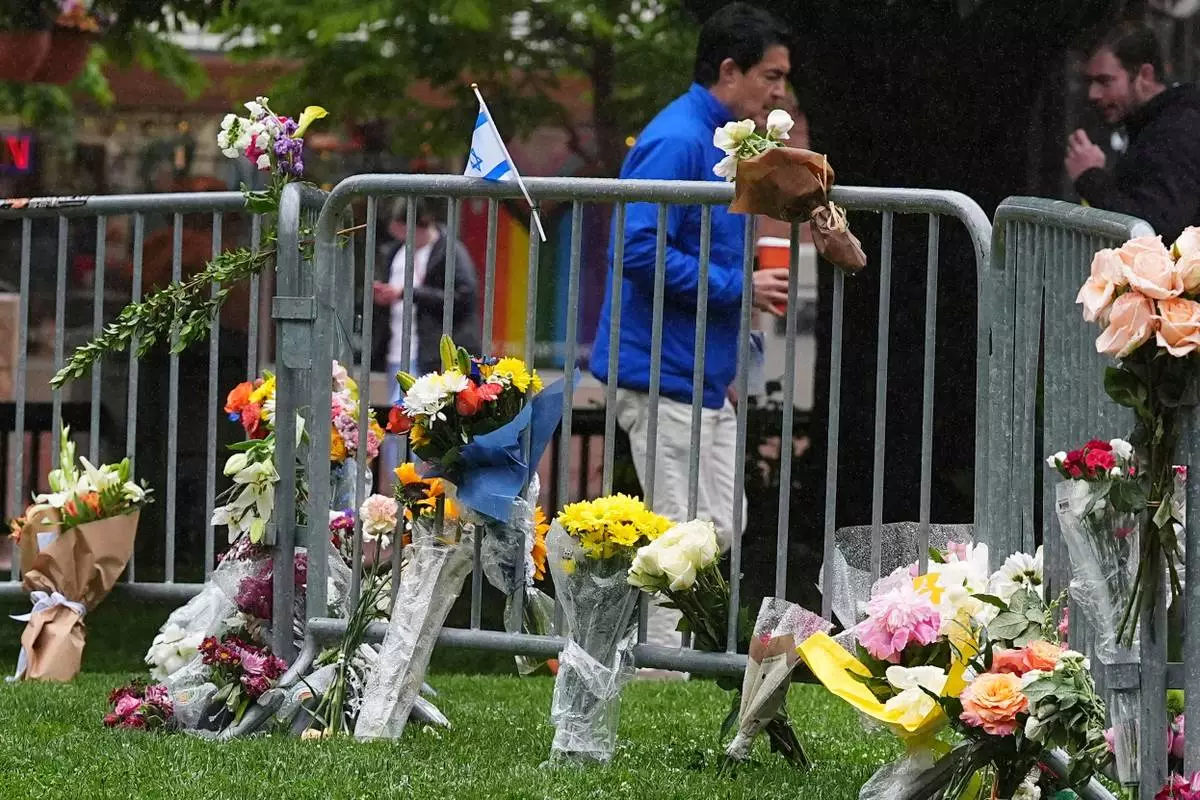
FILE - Bouquets of flowers stand along a makeshift memorial for victims of an attack outside of the Boulder County courthouse on June 3, 2025, in Boulder, Colo. (AP Photo/David Zalubowski, file)

FILE - Bouquets of flowers stand along a makeshift memorial for victims of an attack outside of the Boulder County courthouse on June 3, 2025, in Boulder, Colo. (AP Photo/David Zalubowski, file)

Recommended Articles