Thirty former Ohio State football players, including some former NFL players, have agreed to join a federal lawsuit against the university over the sexual abuse of student athletes decades ago by a team doctor, a lawyer in the case said Thursday.
The lawyer, Rocky Ratliff, said in an interview that the men came forward some eight years after the first lawsuit was filed because they needed to overcome the shame of revealing that they'd been sexually abused by another man and the fear of taking on the university publicly.
They are “tearful and living with it,” Ratliff said. “But as this case progresses on, they see how Ohio State’s treating athletes from the university and I think they want people to know it’s OK, even if it is male to male (sexual abuse), to come forward.”
Ohio State has fought lawsuits in federal court since 2018 brought by former student athletes against the university over its failure to stop abuse by Dr. Richard Strauss. Hundreds say they were abused by Strauss, who worked at the school from 1978 to 1998. He died in 2005.
The men have signed letters of agreement to join a lawsuit filed by other student-athletes who say they are victims of Strauss, Ratliff said.
Of the 30, only three have agreed to make their identities public, Ratliff said. They are Al Washington, Ray Ellis and Keith Ferguson, he said. All were members of the 1980 Rose Bowl team and were recruited by and played for legendary coach Woody Hayes. The Associated Press does not identify people who say they’re victims of sexual abuse unless they choose to make their names public.
Some other former football players have settled with the school in sealed agreements that kept their names a secret, Ratliff said.
In a statement, Ohio State said it has “sincerely and persistently tried to reconcile with survivors, including former football student-athletes, through monetary and non-monetary means, including settlements, counseling services and other medical treatment.”
As of April 15, the university has settled with 317 survivors for more than $61 million, and is remains actively engaged in mediation, the school said.
In an interview, Washington said it was hard to talk about the abuse he suffered and recalled being subjected to “unlawful” physical exams by Strauss when he was 18 or 19. He and the other players tried to make light of it with each other and joke about it.
“But it was really uncomfortable,” said Washington, now 67.
He didn't discuss it with others over the decades, but watching the 2025 documentary film “Surviving Ohio State” put it back into his thoughts.
“As a matter of fact, I couldn’t make it through that movie,” Washington said. “The pain and anguish that I saw, I just couldn’t take it.”
Strauss was on the faculty and medical staff and Ohio State. He retired in 1998 with emeritus status. School trustees revoked that mark of honor three years ago.
Washington played linebacker at Ohio State and was a fourth-round draft pick by the New York Jets in 1981. After a year with the Jets he went to the Ottawa Roughriders of the Canadian Football League.
Ellis, 67, was a safety at Ohio State and spent five years with the Philadelphia Eagles and two with the Cleveland Browns. He recorded 14 interceptions and three sacks over seven NFL seasons.
Ferguson, 67, was a defensive end at Ohio State and a fifth-round draft pick by San Diego in 1981. He spent five years with the Chargers and six more with Detroit. His best season came in 1986, when he recorded 9 1/2 sacks for the Lions.
AP Pro Football Writer Mark Long in Jacksonville, Florida, contributed.

FILE - A person walks over the Ohio State University's emblem in the campus student union, May 18, 2019, in Columbus, Ohio. (AP Photo/John Minchillo, File)
DUBAI, United Arab Emirates (AP) — Iran has created a government agency to vet and tax vessels seeking passage through the crucial Strait of Hormuz, a shipping data company reported Thursday, as Tehran said it was reviewing the latest U.S. proposals for ending the war.
The Iranian effort to formalize control over the channel raised new concerns about international shipping, with hundreds of commercial ships bottled up in the Persian Gulf and unable to reach the open sea. Still, hope that the two-month conflict could soon be over buoyed international markets.
Iranian Foreign Ministry spokesperson Esmail Baghaei said the Islamic Republic was reviewing messages from Pakistan, which is mediating peace negotiations, but Iran “has not yet reached a conclusion, and no response has been given to the U.S. side,” Iranian state TV reported.
Late in the day, Iranian state media said the country’s armed forces exchanged fire with “the enemy” on Qeshm Island in the Strait of Hormuz. It is the largest Iranian island in the Persian Gulf, home to about 150,000 people. It also houses a water desalination plant.
No other details were reported. The White House and U.S. Central Command did not immediately respond to requests for comment.
Semiofficial Iranian news agencies said explosions were heard in southern Iran near Bandar Abbas. The reports from the Fars and Tasnim agencies did not identify the source of the blasts.
Meanwhile, U.S. Secretary of State Marco Rubio discussed Middle East peace efforts at the Vatican with Pope Leo XIV, whose opposition to the Iran war has led to open sparring with President Donald Trump.
The Trump administration has sent mixed messages on its strategy to end the war. A tenuous ceasefire and previous declarations that military operations were over have given way to new threats of bombing if Tehran does not accept a deal that allows for resumption of oil and natural gas shipments disrupted by the conflict.
Trump also suspended an attempt by the U.S. military to open a safe passage for commercial ships through the strait, saying the pause would allow more time to reach a peace agreement. An official in Saudi Arabia said Thursday that the kingdom and U.S. ally refused to support Trump's effort to reopen the strait by force.
The ceasefire between the U.S. and Iran has largely held since April 8. But in-person talks between the two countries hosted by Pakistan last month failed to reach an agreement. The war began Feb. 28, when the U.S. and Israel launched strikes against Iran.
Pakistani Foreign Minister Ishaq Dar spoke by phone Thursday with his Iranian counterpart, Abbas Araghchi, the Pakistani Foreign Ministry said.
“We expect an agreement sooner rather than later,” Pakistani Foreign Ministry spokesperson Tahir Andrabi said Thursday. “We hope the parties will reach a peaceful and sustainable solution that will contribute not only to peace in our region but to international peace as well.”
He declined to give a timeline.
Pakistani Prime Minister Shehbaz Sharif, speaking in televised remarks, said Islamabad remained in “continuous contact with Iran and the United States, day and night, to stop the war and extend the ceasefire.”
In other regional developments, direct talks between Israel and Lebanon were scheduled to resume next week in Washington, according to a U.S. official speaking on condition of anonymity to discuss plans for the closed-door meetings. The official said talks will be held May 14 and 15.
Iran established a new government agency to approve transit and collect tolls from shipping in the strait, shipping data firm Lloyd’s List Intelligence said Thursday. The move has raised concerns about eroding the freedom of navigation on which global trade depends.
The agency, called the Persian Gulf Strait Authority, is “positioning itself as the only valid authority to grant permission to ships transiting the strait,” Lloyd’s reported in an online briefing. Lloyd's said the authority had emailed it an application form for ships seeking passage.
Iran has effectively closed the strait, a vital waterway for the shipment of supplies of oil, gas, fertilizer and other petroleum products, while the U.S. is blockading Iranian ports. The disruptions have sent fuel prices skyrocketing and rattled the global economy.
The new Iranian agency formalizes an existing, albeit murky, vetting lane that takes vessels through the strait’s northern waters near the Iranian coastline. Iran controls which ships are allowed to pass and, for at least some vessels, imposes a tax on their cargo.
Maritime law experts say Iran’s demands to vet or tax vessels violate international law. The United Nations Convention on the Law of the Sea calls for countries to permit peaceful passage through their territorial waters.
The U.S. and its Gulf allies are pushing for the U.N. Security Council to support a resolution that condemns Iran’s chokehold on the strait and threatens sanctions. A prior resolution calling for reopening the strait was vetoed by Iran allies Russia and China.
Top Iranian officials have said Supreme Leader Mojtaba Khamenei is playing a key role in overseeing negotiations with the U.S. But he remains in hiding and has not appeared in public since he was wounded early in the war.
Iranian President Masoud Pezeshkian said he met recently for more than two hours with Khamenei. In remarks aired Thursday on Iranian state television, Pezeshkian praised the supreme leader’s “sincere” behavior in what he said was a long in-person meeting.
Khamenei has only released a series of written statements since being named supreme leader in March. He replaced his father, Ayatollah Ali Khamenei, who was killed during the war’s initial strikes.
Trump did not consult with U.S. ally Saudi Arabia before launching the short-lived effort to force open a shipping passage through the strait, according to a Saudi official who was not authorized to discuss the matter publicly and spoke on condition of anonymity.
“We told them that we are not part of this and that they can’t use our territories and bases for this,” the official said Thursday.
The official said Saudi Arabia sent a message to Iran that the kingdom would not be involved in U.S. attacks related to Trump’s attempt to reopen the strait.
Trump suspended the effort, dubbed Project Freedom, during its second day Tuesday. Only two American-flagged merchant ships are known to have passed through the U.S.-guarded route. The U.S. military said it sank six Iranian small boats threatening civilian ships.
McHugh reported from Frankfurt, Germany, and Bynum reported from Savannah, Georgia. Associated Press journalists Sally Abou AlJoud, in Beirut; Elena Becatoros in Athens, Greece; Matthew Lee in Washington; Samy Magdy and Amir-Hussein Radjy in Cairo; Munir Ahmed in Islamabad, Pakistan; Farnoush Amiri in New York and Nicole Winfield in Vatican City contributed to this report.
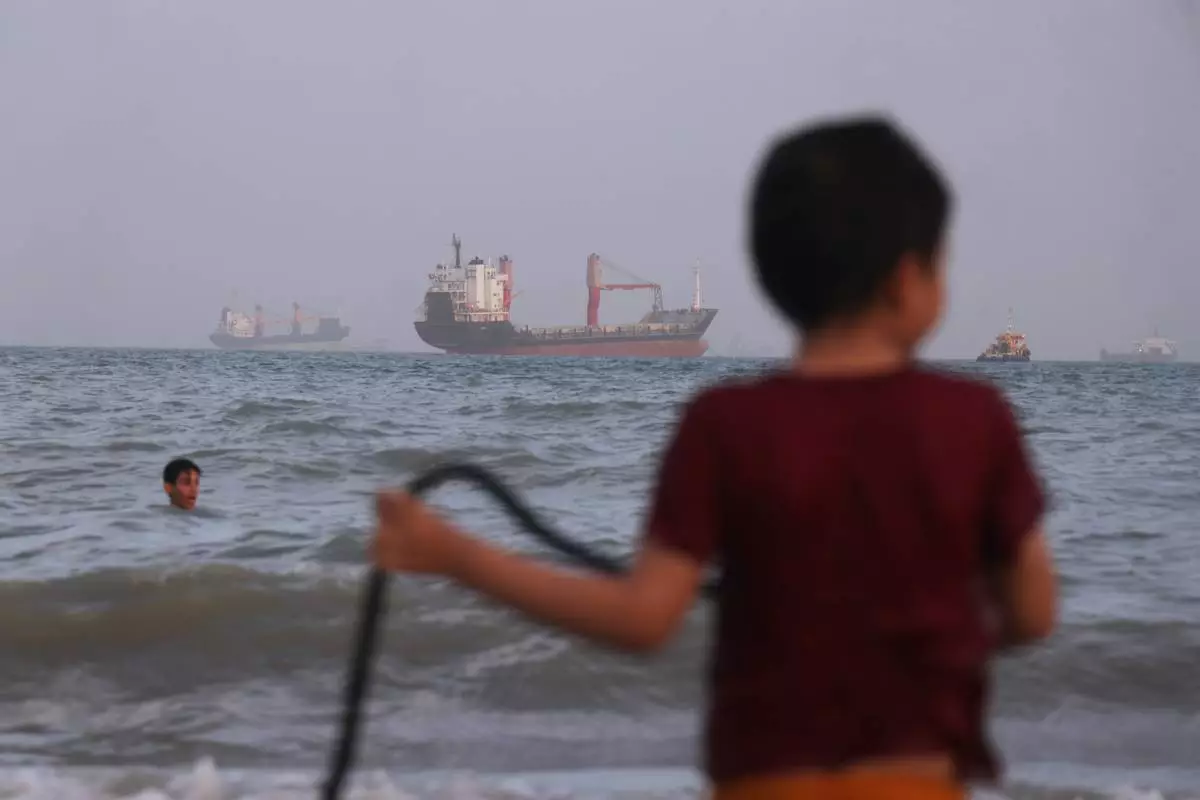
Children play in the water along the shore as a mix of bulk carriers, cargo ships, and service vessels sit offshore in the Strait of Hormuz off Bandar Abbas, Iran, Sunday, April 26, 2026.(Razieh Poudat/ISNA via AP)
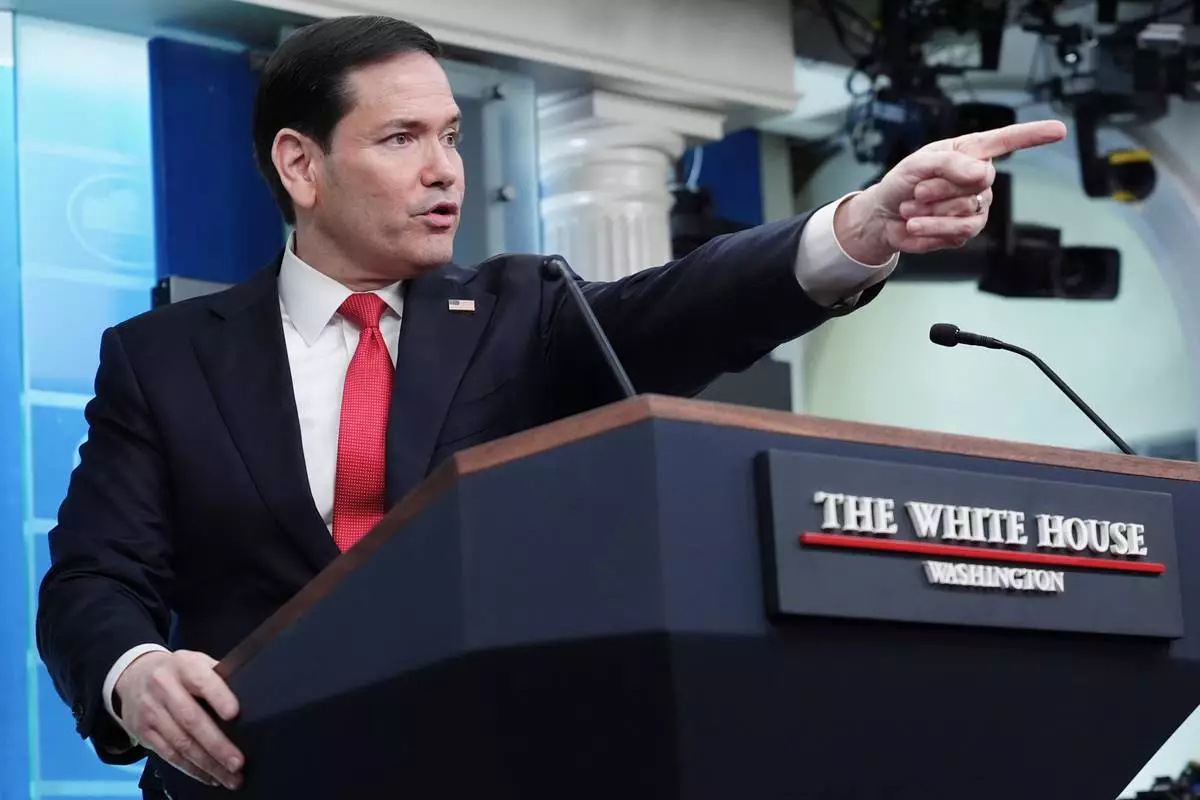
Secretary of State Marco Rubio calls on a reporter in the James Brady Press Briefing Room at the White House, Tuesday, May 5, 2026, in Washington. (AP Photo/Jacquelyn Martin)
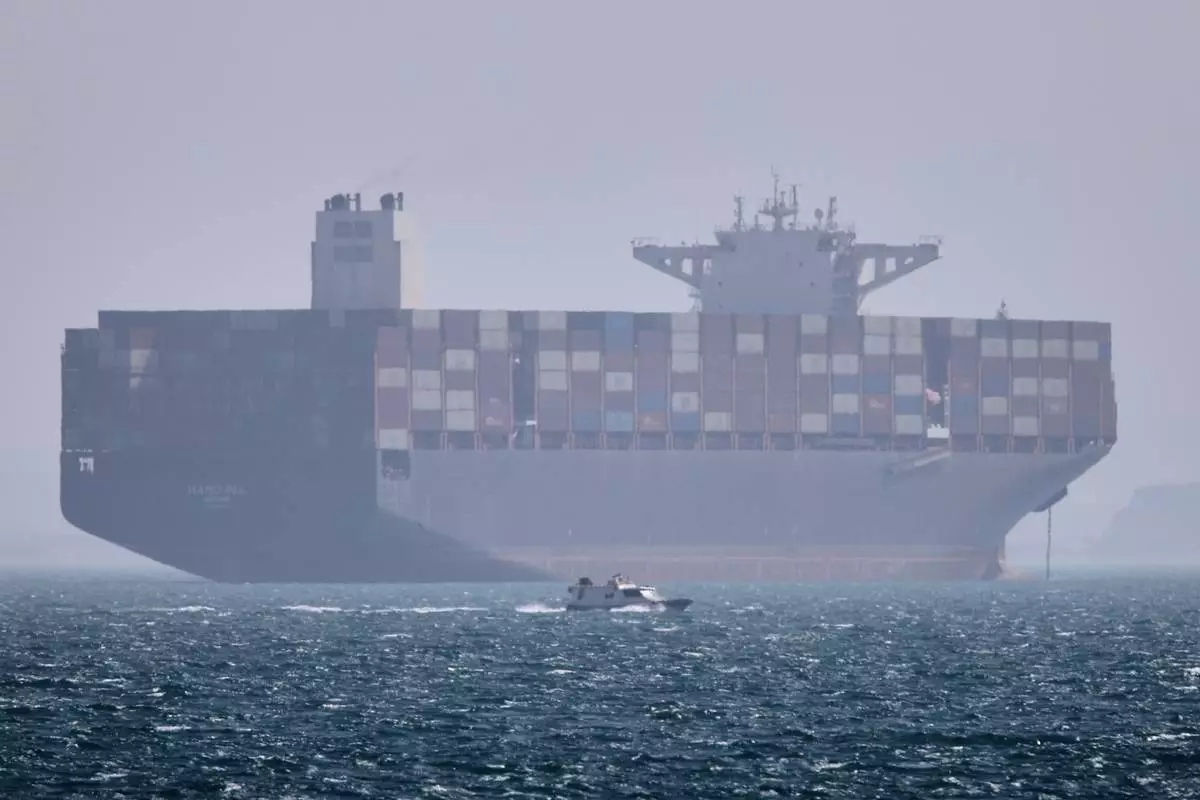
A container ship sits at anchor as a small motorboat passes in the foreground in the Strait of Hormuz off Bandar Abbas, Iran, Saturday, May 2, 2026. (Amirhosein Khorgooi/ISNA via AP)
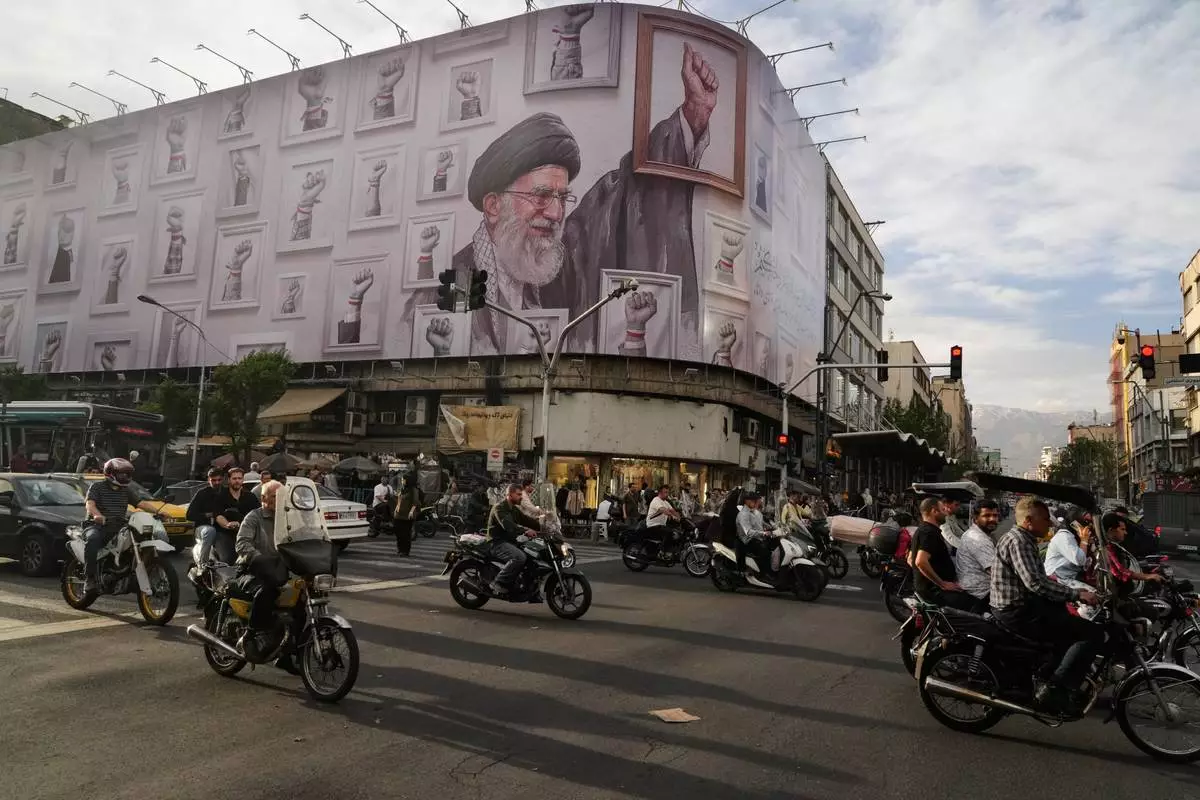
Motorbikes drive past a billboard with graphic showing the late Iranian Supreme Leader Ayatollah Ali Khamenei, who was killed in the U.S. and Israel strikes on Feb. 28, with his framed fist amongst his supporters framed fists in downtown Tehran, Iran, Wednesday, May 6, 2026. (AP Photo/Vahid Salemi)
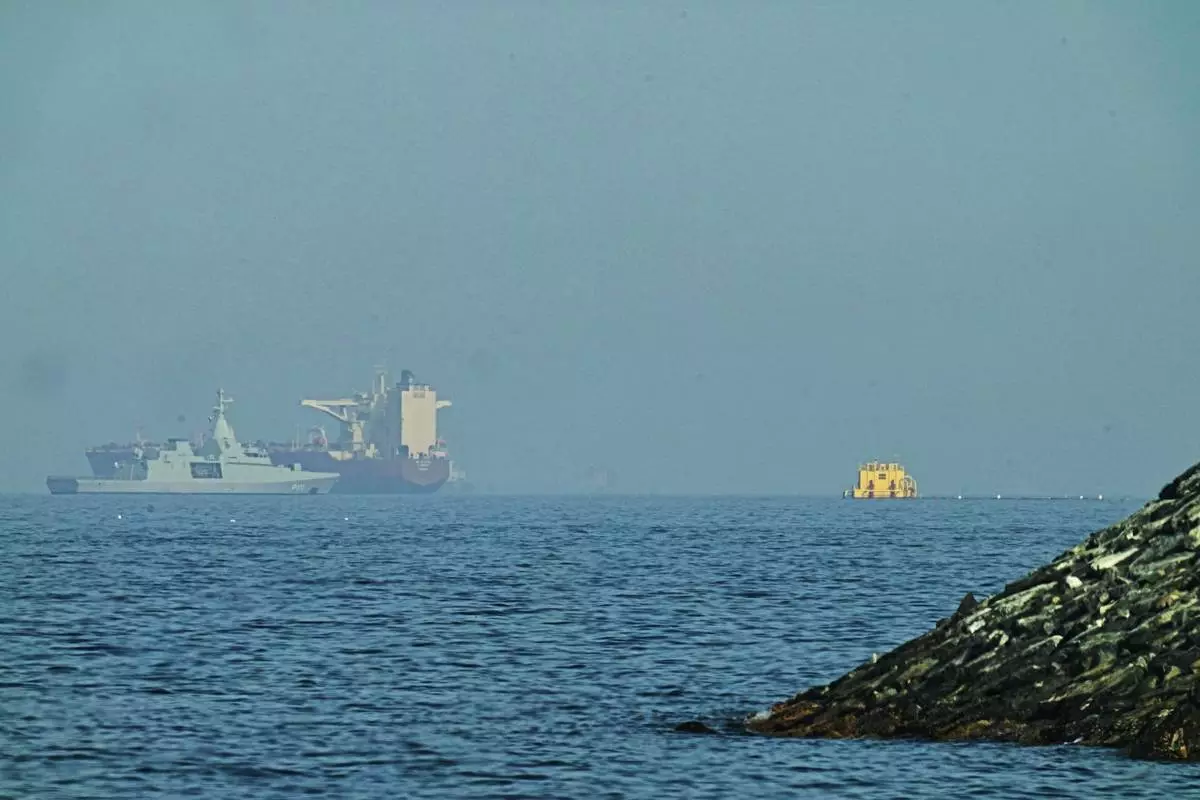
An Emirati patrol boat, left, is near a tanker anchored in the Gulf of Oman near the Strait of Hormuz, as seen from a coastal road near Khor Fakkan, United Arab Emirates, Friday, May 1, 2026. (AP Photo/Fatima Shbair)
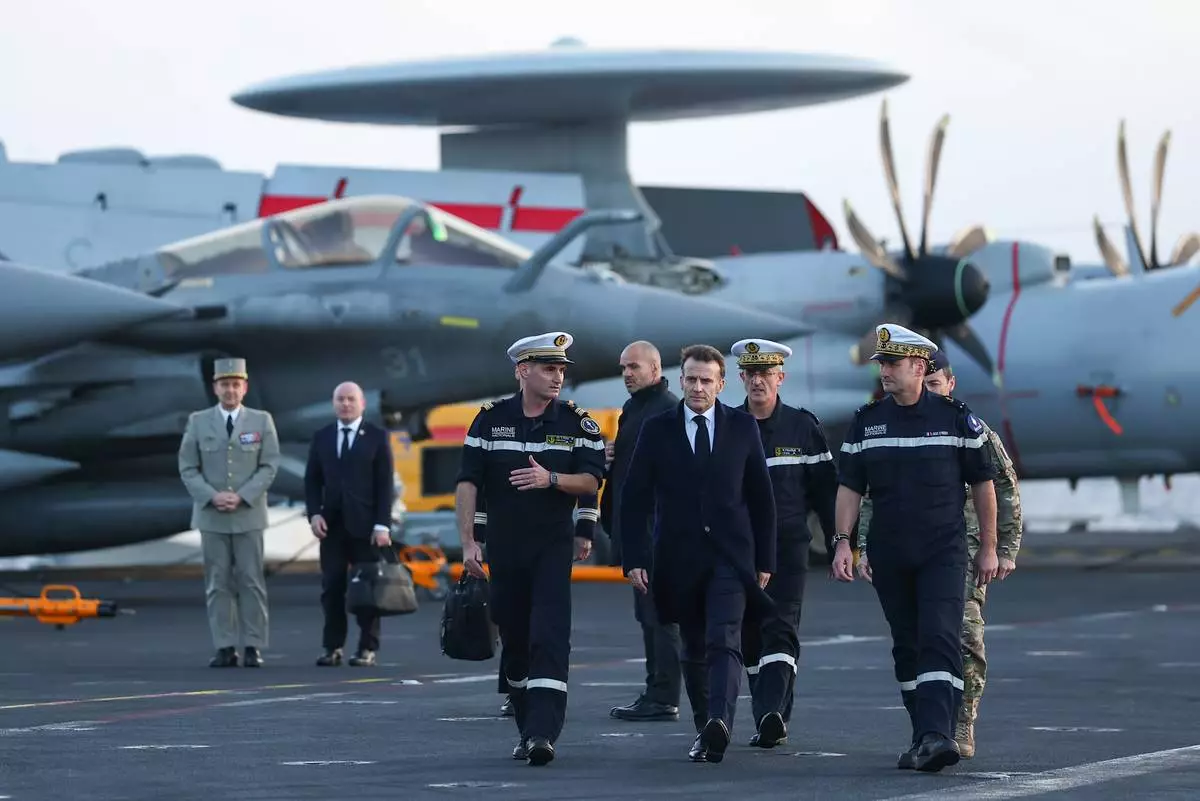
FILE - French President Emmanuel Macron, center right, visits the French aircraft carrier Charles de Gaulle, during his visit to Cyprus, March 9, 2026. (Gonzalo Fuentes/Pool Photo via AP, File)
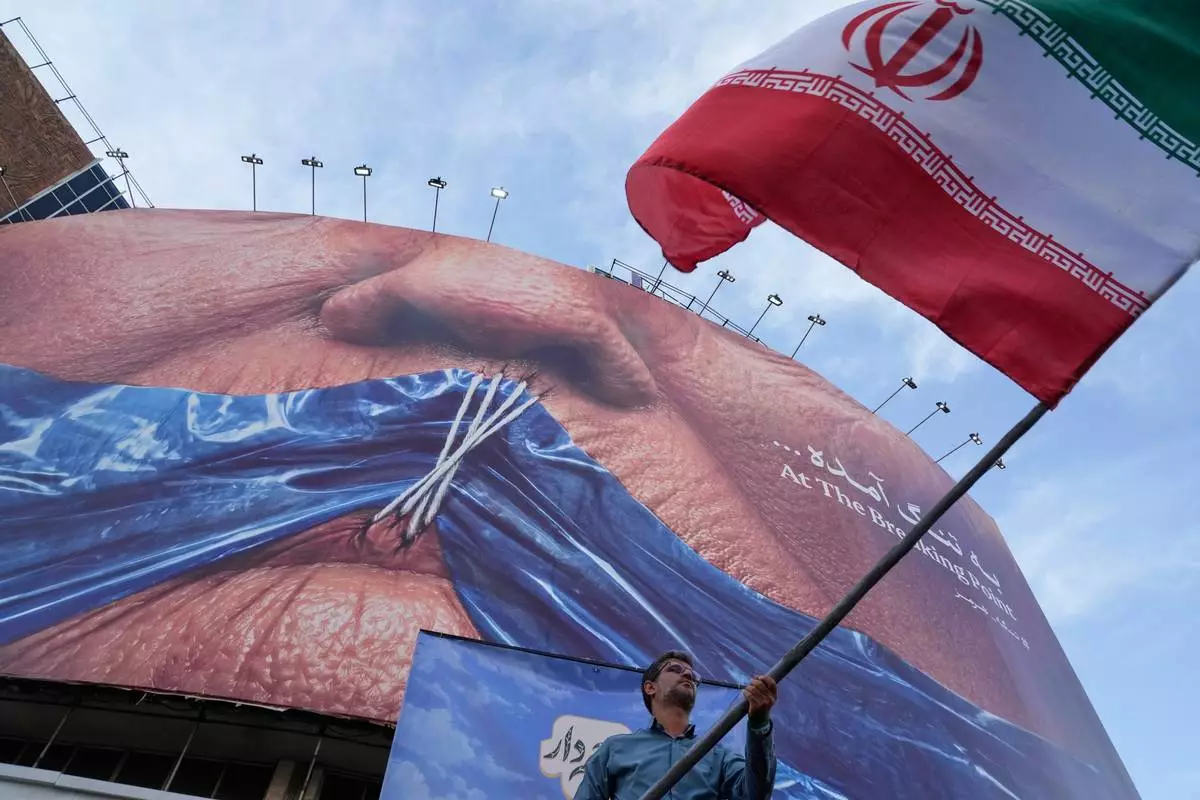
A man waves an Iranian flag for a pro-government campaign under a billboard with graphic showing Strait of Hormuz and sewn lips of U.S. President Donald Trump in a square in downtown Tehran, Iran, Wednesday, May 6, 2026. (AP Photo/Vahid Salemi)