China's cultural and tourism market showed solid growth during the 2026 May Day holiday, with domestic trips and total spending both ahead of last year’s holiday, according to official data released on Thursday.
The Ministry of Culture and Tourism announced that 325 million domestic trips were made across the country during the 5 day holiday, representing a 3.6 percent increase from the same period last year.
Tourists spent 185.49 billion yuan (about 27.08 billion U.S. dollars), up 2.9 percent year on year, the ministry said, citing calculations from its data center.
Public cultural institutions across the country organized around 49,400 cultural events during the holiday, attracting approximately 88 million tourists, the ministry noted.
Nighttime cultural tourism in key centers remained robust, with major nighttime tourism destinations receiving more than 80.41 million visits, an increase of 6.44 percent year on year.
During the May Day holiday, around 32,000 commercial performances, excluding performances in entertainment venues, were held nationwide, generating box office revenue of 2.476 billion yuan (about 364 million U.S. dollars), a year-on-year increase of 14.66%.
Trips by foreign nationals to and from China during the holiday rose to nearly 1.26 million, a 12.5 percent increase from a year earlier, with 436,000 travelers arriving visa-free, up 14.7 percent.

Chinese make more domestic trips, spend more money during 2026 May Day holiday
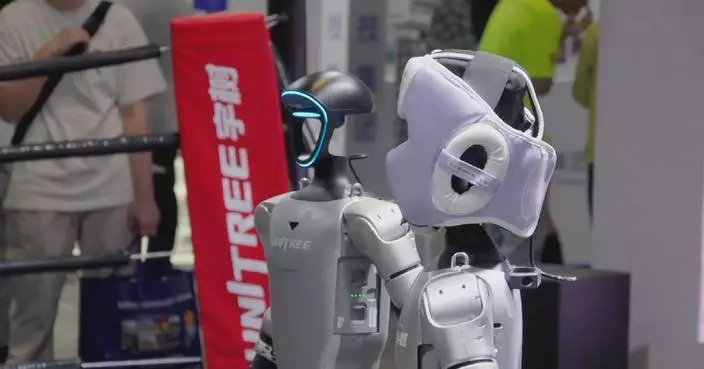
China's growing production capacity for robots, along with their expanding range of applications, is increasingly turning robotic exports into a new business "calling card" for the nation's foreign trade.
According to customs data, the country's exports of robots, listed under separate categories, totaled 11.32 billion yuan (about 1.66 billion US dollars) in Q1 of this year, with products reaching 148 countries and regions worldwide.
Among them, cleaning robots led the momentum. In Q1, cleaning robots exported 7.75 billion yuan (about 1.14 billion US dollars), accounting for nearly 70 percent of total robot exports. Industrial robots also performed robustly, with exports reaching 3.16 billion yuan (about 464 million US dollars), up 42 percent year on year.
In Wuhu City, east China's Anhui Province - home to the country's first national-level robot industrial clustering zone - robot dogs are finding practical overseas use. One such four-legged robot can carry up to five kilograms, offers up to two hours of continuous operation, and supports night lighting. Its ability to access narrow areas that are difficult for people to reach makes it useful for property management and security patrol inspections at overseas residential compounds and factory sites.
"Our humanoid robots and robot dogs have already been exported to more than 30 countries and regions. For example, in Europe, we sell in the United Kingdom, Poland, and Italy, and in these markets we have achieved batch deliveries," said Shen Xiantian, Overseas Sales Director of AiMOGA Robotics.
Industry data shows that by the end of 2024, China had more than 450,000 enterprises involved in the intelligent robotics sector. The country has become a net exporter of industrial robots and remains the world's largest robot producer.
"China's robots going abroad is, at its core, the export of China's manufacturing capability. Behind it is the rise of the entire Chinese robotics industrial chain," said Zhang Wei, sales director of Efort Intelligent Equipment Co.,Ltd.

Robotics industry creates new "calling card" for China's foreign trade