Schools and universities across the country are recovering from an outage that knocked down Canvas, an online platform that manages exams, course notes, lecture videos and grades. The disruption tied to a cyberattack hit in the middle of finals period for many colleges, a high-stress time when students and instructors rely heavily on the platform.
By late Thursday, Instructure, the parent company of Canvas, said the platform was available again to most users.
The hacking group ShinyHunters claimed responsibility for the breach, said Luke Connolly, a threat analyst at the cybersecurity firm Emsisoft. On Friday, Instructure and Canvas no longer appeared on a site where ShinyHunters lists its targets.
Some schools, however, have continued to block students and teachers from accessing Canvas, citing an abundance of caution while assessing security threats.
Here's what to know about the outage.
Schools and universities use Canvas to manage nearly all aspects of instruction. The platform acts as a gradebook, a hub for digital lectures and course materials, a discussion board for classroom projects, and a messaging platform between students and instructors.
Some courses also give quizzes and exams on the platform, or use it as a portal where final projects and papers are submitted on deadline.
ShinyHunters is a loose association of teenage and young adult hackers in the U.S. and the United Kingdom who have been linked to other large-scale cyberattacks, including one on Ticketmaster, Connolly said. On the page listing their targets, the group describes itself as “rooting your systems since ‘19,” using a term for accessing a computer system’s deepest layer.
Earlier this week, ShinyHunters said that nearly 9,000 schools and 275 million individuals' data could be leaked if schools did not pay the ransom by a deadline of May 6. The group then extended the deadline, indicating some schools had engaged with them to negotiate.
In a statement posted to ShinyHunters' ransomware site, the group said it would not be commenting on the incident.
Schools and universities, rich in personally-identifiable information on students, teachers and employees, have become prime targets for criminal hackers in ransomware attacks. Targets can be individual districts, like the Minneapolis Public Schools or Los Angeles Unified School District, or external vendor platforms like Canvas or PowerSchool that education systems increasingly rely on to manage schedules, courses and exams.
The data breach appeared to involve student ID numbers, email addresses, names and messages on the Canvas platform, Instructure’s chief information security officer, Steve Proud, said in an update shared Saturday. He said the company had not found evidence that passwords, dates of birth, government identification or financial information were compromised.
Though most schools seem to have restored access to Canvas, the disruptions to finals period are likely to ripple throughout the week.
The University of Massachusetts at Dartmouth said that it would postpone exams scheduled for Friday and Saturday to ensure students had time to review course materials that would not have been accessible during the shutdown.
The University of Illinois postponed all exams that were scheduled to take place Friday, Saturday or Sunday for all classes, regardless of whether the courses utilized Canvas.
And Montgomery County Public Schools in Maryland continued to limit access to Canvas on Friday, citing an abundance of caution “while we work to better understand the full impact of the incident and any potential vulnerabilities involving information connected to the platform.”
The Associated Press’ education coverage receives financial support from multiple private foundations. AP is solely responsible for all content. Find AP’s standards for working with philanthropies, a list of supporters and funded coverage areas at AP.org.
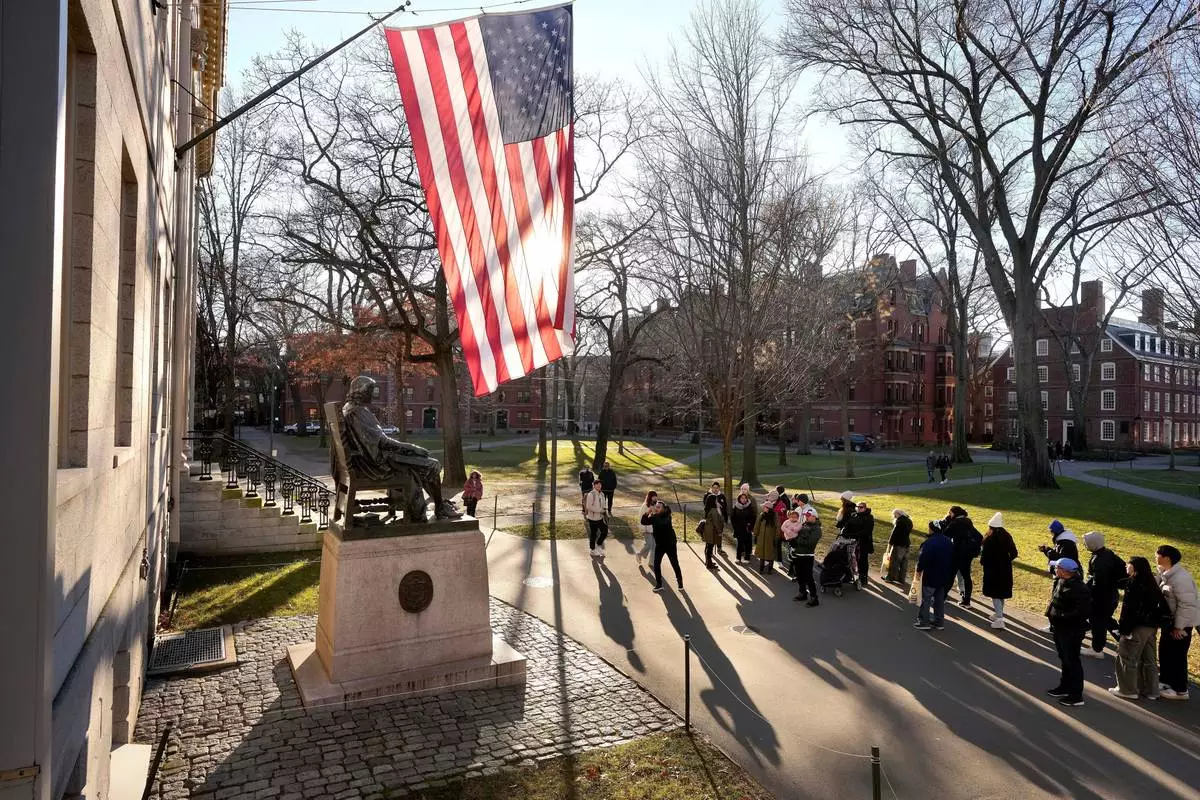
FILE - People take photos near a John Harvard statue, left, on the Harvard University campus, Jan. 2, 2024, in Cambridge, Mass. (AP Photo/Steven Senne, File)
NEW YORK (AP) — U.S. stocks are rising toward records Friday following the latest sign that the nation’s job market is doing better than economists expected.
The S&P 500 climbed 0.8% and was on track to top its all-time high after a report said U.S. employers added 115,000 more jobs than they cut last month, even though the war with Iran is raising fuel costs and uncertainty for everyone. The Dow Jones Industrial Average was down 19 points, or 0.1%, as of 1:10 p.m. Eastern time, and the Nasdaq composite was 1.5% higher and heading for its own record.
While hiring slowed from March’s level, it was nevertheless nearly double what economists expected. And it helped keep the S&P 500 on track for a sixth straight winning week, which would be its longest such streak since 2024. The U.S. stock market has blasted higher since late March, in part on hopes that the war will not mean a worst-case scenario for the global economy and that the Strait of Hormuz will reopen to allow oil tankers to deliver crude from the Persian Gulf again.
It’s still to be determined if those hopes are warranted or just wishful. U.S. forces fired on and disabled two Iranian oil tankers on Friday after exchanging fire with Iranian forces in the Strait of Hormuz overnight. U.S. Secretary of State Marco Rubio said he hopes to receive “a serious offer” from Iran later in the day after Washington gave its latest proposal to end the war and reopen the strait.
The price for a barrel of Brent crude oil climbed 1.5% to $101.54 following the latest volleys of fire in the war. It's still much more expensive than it was before the fighting began, when it was at roughly $70 per barrel, but it's not as high as its heights above $119 during the war.
One big factor helping to support the U.S. stock market despite the war’s uncertainties is the strong profits that companies have been reporting for the start of 2026.
Monster Beverage jumped 14.3% after the energy drink maker joined the parade of companies topping analysts’ expectations for profit and revenue for the latest quarter. It benefited from strong growth outside the United States, and total net sales there made up about 45% of its total, the highest percentage ever for it.
Akamai Technologies leaped even more, 19.8%, after its results squeaked past expectations. It announced a $1.8 billion deal to provide cloud infrastructure services to an unnamed client over seven years. The cybersecurity and cloud computing company is benefiting from the surge in investment in artificial-intelligence technology.
Such voracious demand for AI helped CoreWeave report revenue for the latest quarter that was more than double what it was a year earlier, but its net loss was worse than analysts expected. It also gave a forecasted range for revenue in the current quarter whose midpoint fell below analysts’ expectations. The stock of the company, which offers AI computing power to customers over the cloud, fell 13.2%.
In stock markets abroad, indexes fell across much of Europe and Asia. Germany's DAX lost 1.3%, and Hong Kong’s Hang Seng dropped 0.9% for two of the bigger losses.
South Korea’s Kospi was an exception, and it inched up 0.1% to another all-time high.
In the bond market, Treasury yields eased and remained lower after a report suggested sentiment among U.S. consumers is still stuck near its lowest level since 2022. Consumers told the survey from the University of Michigan they're concerned about both high gasoline prices and tariffs, though their expectations for inflation in the coming year softened by a bit.
The yield on the 10-year Treasury fell to 4.36% from 4.41% late Thursday and from 4.45% early this week.
Lower yields can bring down rates for mortgages and other kinds of loans going to U.S. households and businesses, which in turn can give the economy a boost. Lower yields also tend to push upward on prices for stocks and other kinds of investments.
The 10-year Treasury yield, though, remains well above its 3.97% level from just before the war.
AP Business Writers Chan Ho-him and Matt Ott contributed to this report.
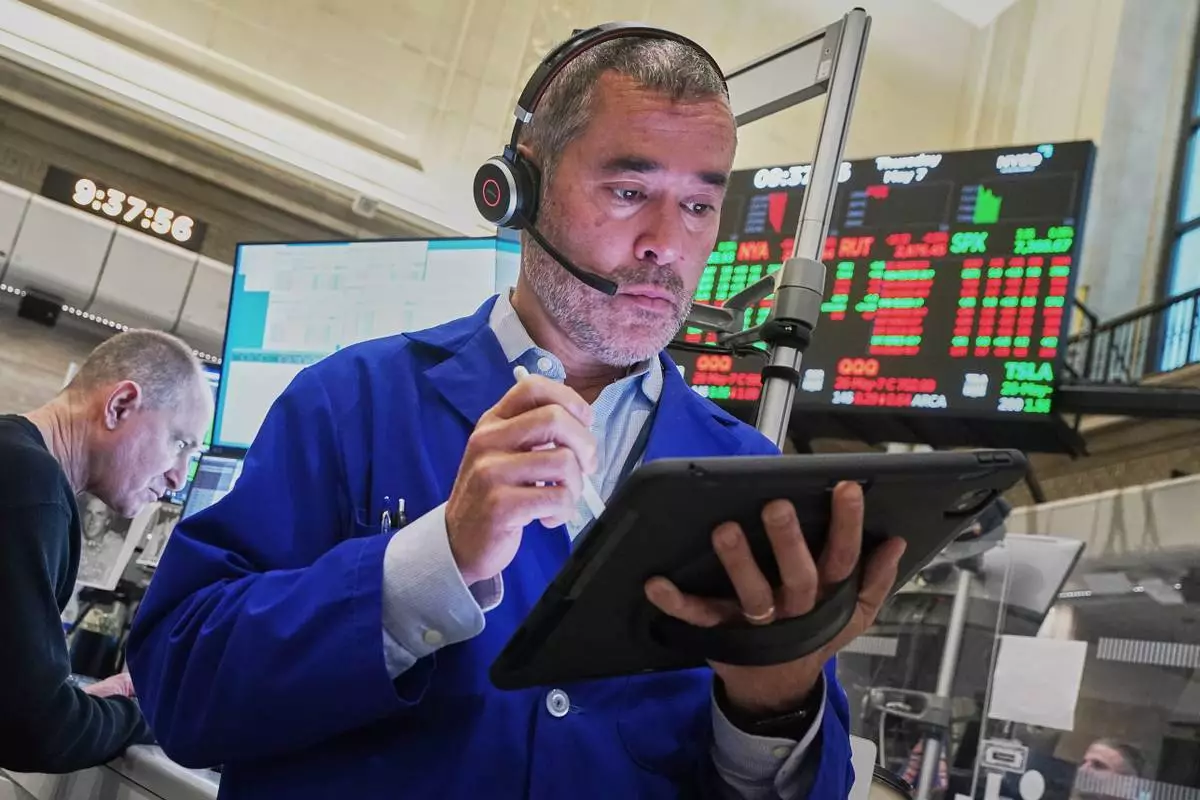
Options trader Justin Kanda works on the floor of the New York Stock Exchange, Thursday, May 7, 2026. (AP Photo/Richard Drew)
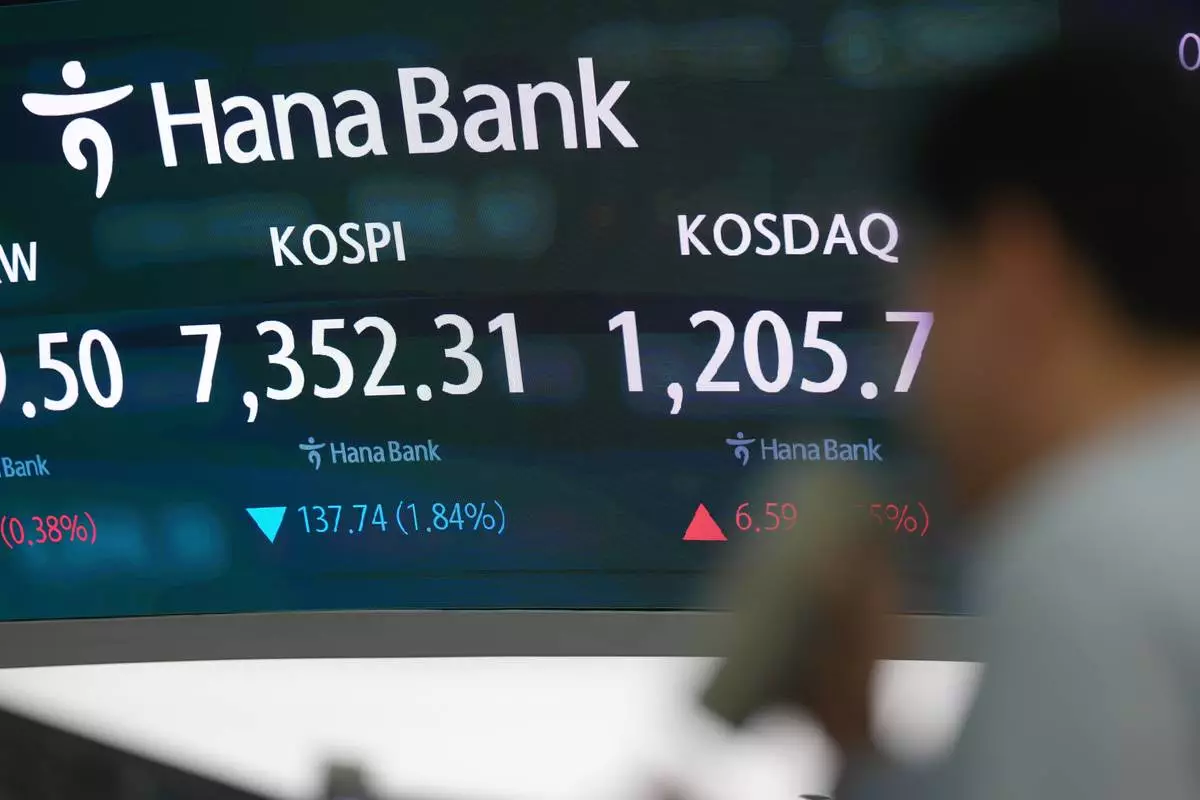
A dealer walks past near the screen showing the Korea Composite Stock Price Index (KOSPI) and the Korean Securities Dealers Automated Quotations (KOSDAQ) at a dealing room of Hana Bank in Seoul, South Korea, Friday, May 8, 2026. (AP Photo/Lee Jin-man)
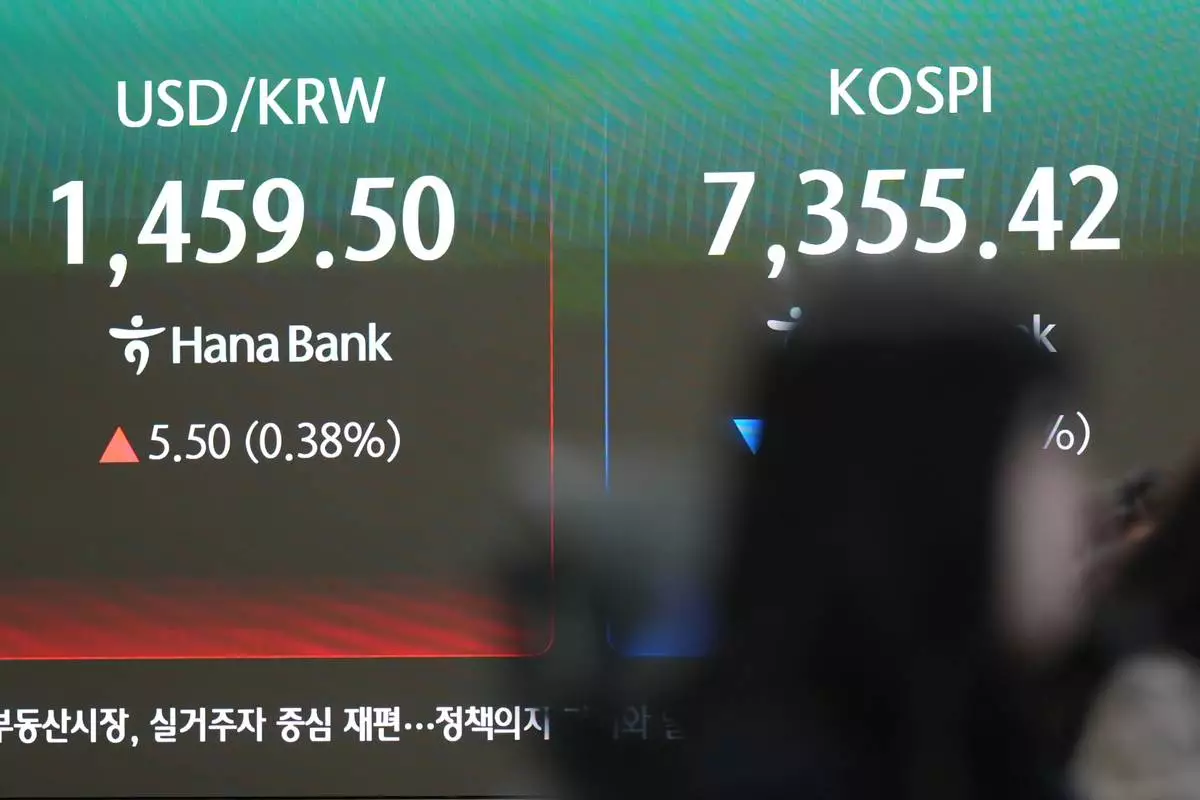
The screens showing the Korea Composite Stock Price Index (KOSPI) and the foreign exchange rate between U.S. dollar and South Korean won are displayed at a dealing room of Hana Bank in Seoul, South Korea, Friday, May 8, 2026. (AP Photo/Lee Jin-man)
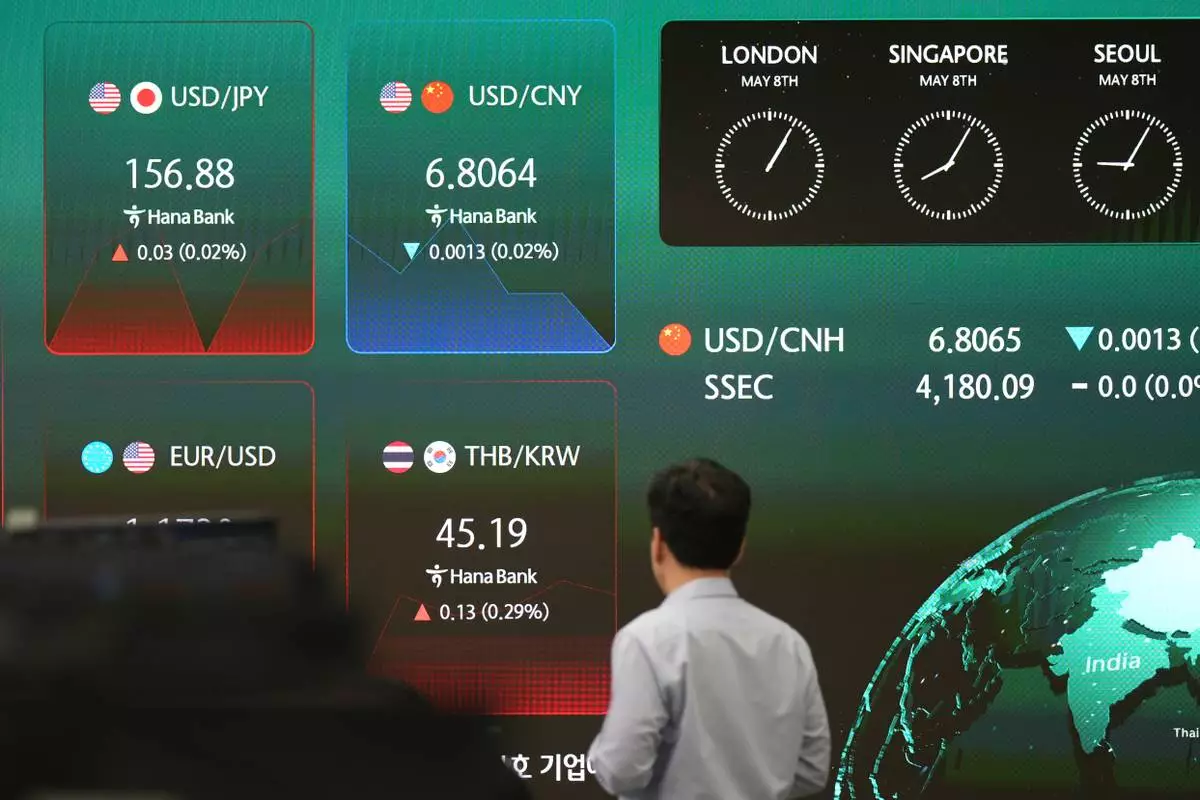
A dealer walks past near the screens showing the foreign exchange rates at a dealing room of Hana Bank in Seoul, South Korea, Friday, May 8, 2026. (AP Photo/Lee Jin-man)
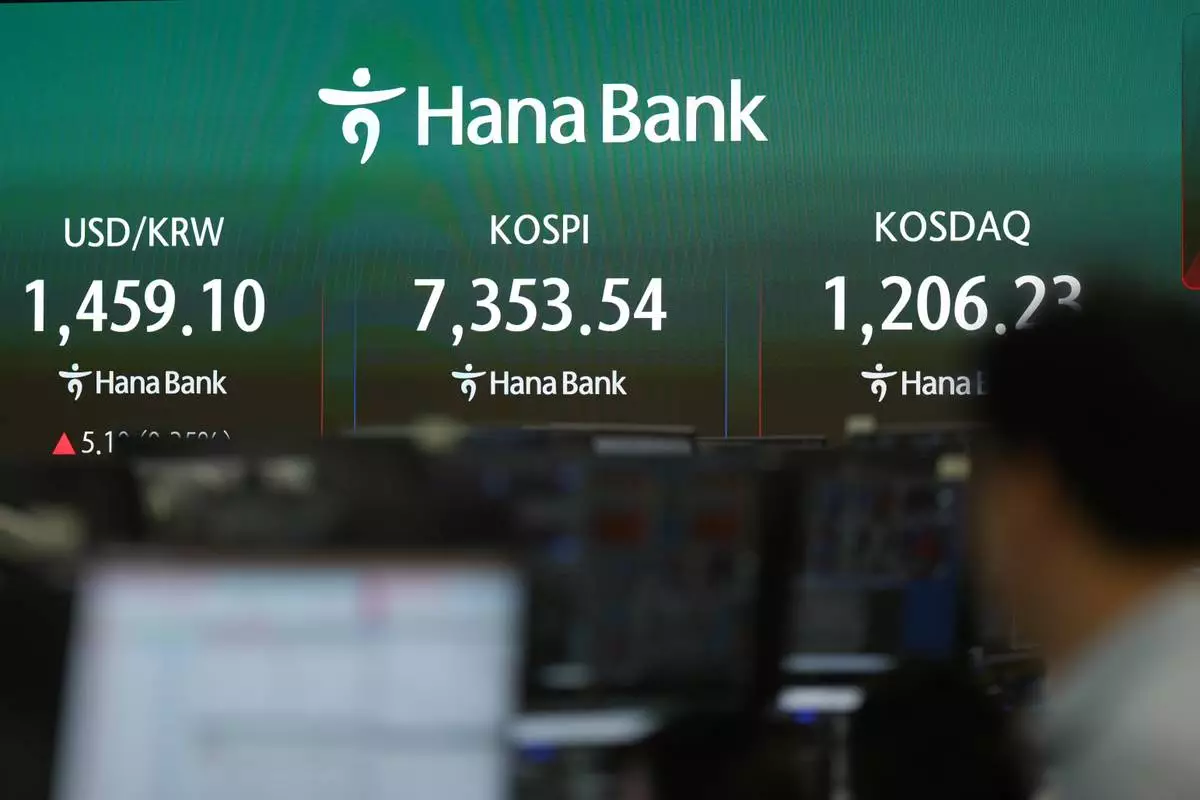
A dealer walks past near the screens showing the Korea Composite Stock Price Index (KOSPI), the foreign exchange rate between U.S. dollar and South Korean won and the Korean Securities Dealers Automated Quotations (KOSDAQ) at a dealing room of Hana Bank in Seoul, South Korea, Friday, May 8, 2026. (AP Photo/Lee Jin-man)
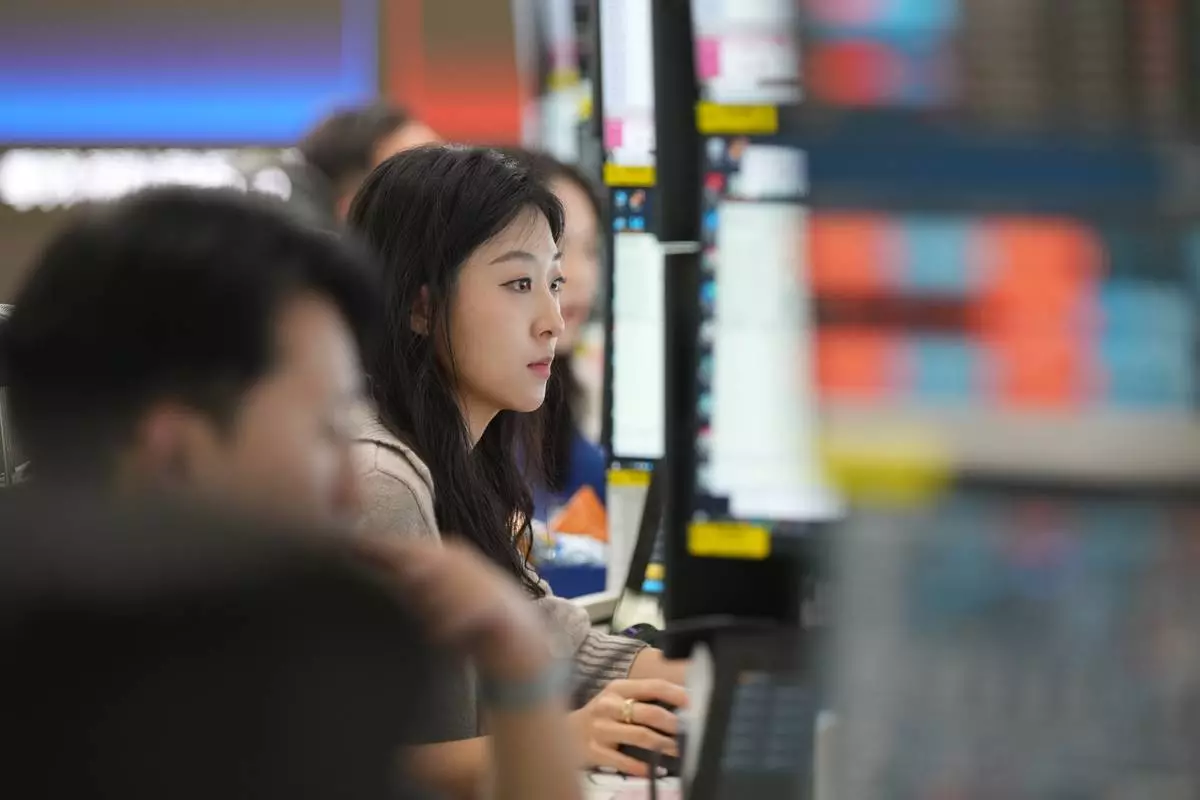
A dealer watches computer monitors at a dealing room of Hana Bank in Seoul, South Korea, Friday, May 8, 2026. (AP Photo/Lee Jin-man)