JAKARTA, Indonesia (AP) — An explosive eruption Friday of Mount Dukono on the remote Indonesian island Halmahera killed three hikers and injured five who were climbing in a restricted area around the active volcano, authorities said.
About 20 climbers had set out Thursday to ascend the nearly 1,355-meter (4,445-foot) volcano in defiance of safety restrictions, said North Halmahera police chief Erlichson Pasaribu.
They became stranded when Dukono erupted at 7:41 a.m. local time, spewing a thick ash column that rose about 10 kilometers (6 miles) above the summit. The eruption was recorded on seismographs for more than 16 minutes, Indonesia’s Geological Agency said.
“They were aware that climbing was prohibited as the mountain is a restricted zone due to its high alert status, but insisted on going ahead,” Pasaribu said in a television interview.
Rescue teams were deployed after receiving an emergency signal from the mountain area. Two Singaporean men and one Indonesian woman died at the scene, Pasaribu said.
As of Friday afternoon, 17 climbers had been safely evacuated, including seven Singaporean nationals and two Indonesians who joined the rescue operation and provided information on climbing routes of the victims before the eruption, National Disaster Management Agency spokesperson Abdul Muhari said. Five of those evacuated were reported injured.
The bodies had not yet been recovered because continued eruptions and dangerous conditions prevented rescue teams from reaching the location.
Muhari said the search and rescue operation was halted late Friday due to darkness, and would resume early Saturday.
The Center for Volcanology and Geological Hazard Mitigation has long banned activities within a 4‑kilometer (2.5‑mile) danger zone radius of Dukono’s crater, citing hazards such as volcanic explosions, ashfall and toxic gases. Officials believe the hikers were inside the restricted zone at the time of the eruption.
Despite warnings on social media and signs at the site, “many people remain determined to climb, driven by the desire to create online content,” Pasaribu said.
Mount Dukono is one of Indonesia’s most active volcanoes and has been erupting almost continuously since 1933. Indonesia sits along the Pacific “Ring of Fire,” an area of intense seismic and volcanic activity, and is home to more than 120 active volcanoes.
Authorities also have warned of possible secondary hazards, including volcanic mudflows, especially during heavy rain, which could travel along rivers flowing from the volcano’s slopes.
Volcanic activity at Dukono remains high, and authorities said it was at the second highest alert level. Authorities said the volcano has shown an increase in explosive magmatic eruptions since late March, with an average of about 95 eruptions a day.
“Friday’s eruption was among the strongest during this period,” said Lana Saria, who heads Indonesia's Geology Agency at the Energy and Mineral Resources Ministry. She added that ash clouds ranging from white to gray and black in color were being blown northward.
She warned that ashfall could affect nearby settlements, including the town of Tobelo, raising health risks and disrupting transportation and daily life.
Officials urged residents, tourists and climbers to remain calm, follow official guidance and avoid restricted areas as monitoring of Mount Dukono continues.
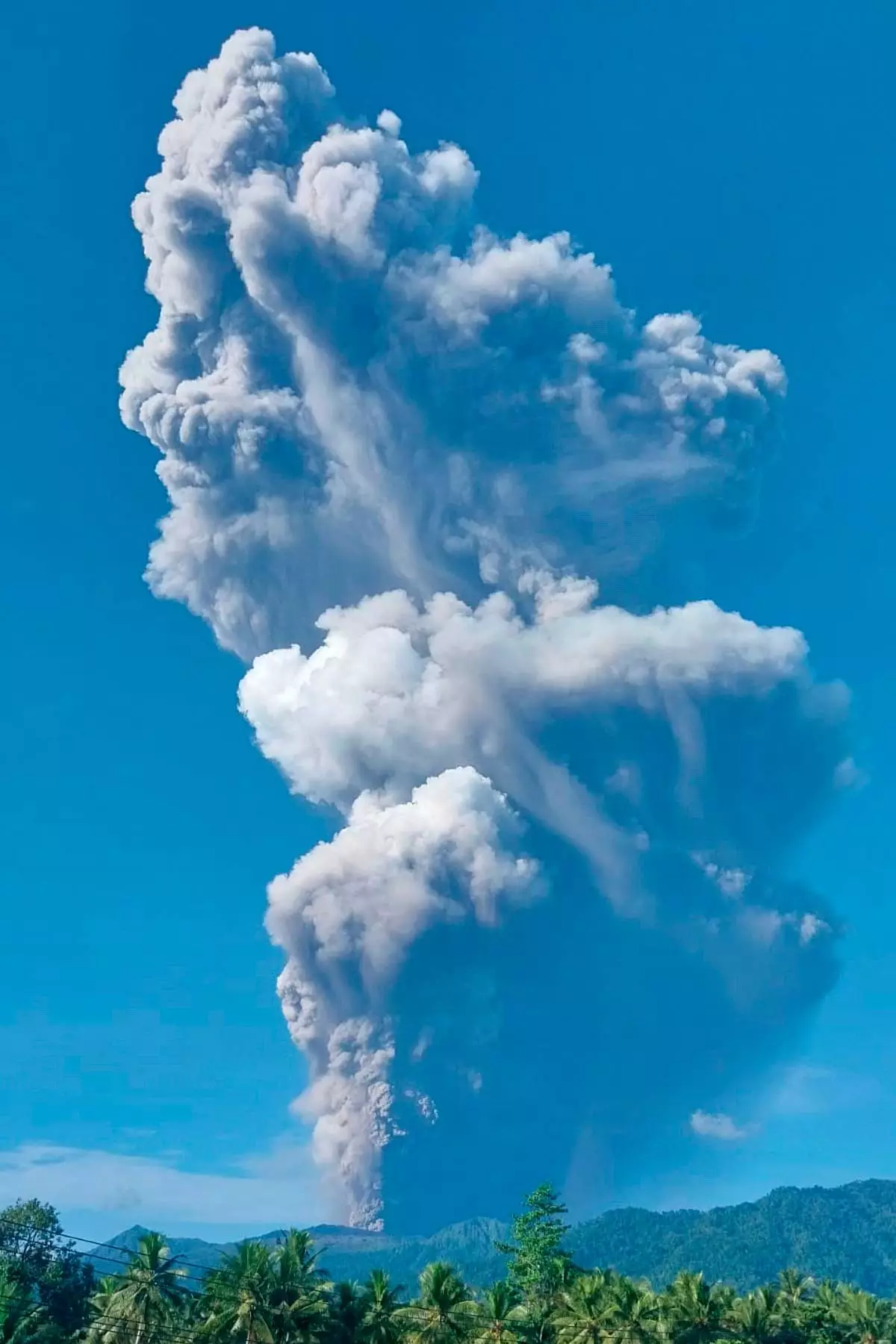
In this photo released by the Badan Geologi, the geological agency of Indonesia's Ministry of Energy and Mineral Resources, Mount Dukono releases volcanic materials during an eruption in North Halmahera, Indonesia, Friday, May 8, 2026. (Badan Geologi via AP)
ROME (AP) — U.S. Secretary of State Marco Rubio urged European allies Friday to move beyond rhetoric and take concrete action against Iran, even as he sought to repair strained ties with Italy and the Vatican during a two-day visit following tensions over the U.S.-Israeli war in Iran.
Speaking after meetings with Premier Giorgia Meloni and Foreign Minister Antonio Tajani, Rubio warned that Tehran was attempting to assert control over the strategic Strait of Hormuz, calling the move “unacceptable” and a threat to global security.
“Everybody says Iran is a threat. Everybody says that Iran can’t have a nuclear weapon … but you’ve got to do something about it,” Rubio told reporters in Rome. “If the answer is no … then you better have something more than just strongly worded statements to back it up.”
Rubio said Iran was trying to normalize control over an international waterway, a precedent he warned could encourage similar actions elsewhere. He also cautioned Tehran against targeting U.S. maritime assets, saying the United States had thwarted attacks on three Navy ships in the strait.
“The red line is clear. They threaten Americans, they are going to be blown up,” he said.
Rubio said Washington was pursuing a diplomatic track, including a proposed U.N. Security Council resolution aimed at preserving freedom of navigation. He added the U.S. was awaiting Iran’s response on Friday to ongoing diplomatic efforts.
Rubio's visit comes after weeks of sharp disagreements between Washington and Rome over the Iran war, tariffs and U.S. President Donald Trump’s criticism of both Meloni and Pope Leo XIV.
Meloni described her meeting with Rubio as “constructive, frank and productive,” focused on both bilateral relations and major international issues. She said the talks covered strategic topics, including the Middle East, freedom of navigation in the Strait of Hormuz, Ukraine, China and areas of Italian interest such as Libya and Lebanon.
“We both understand how important the trans-Atlantic relationship is, but we also understand that each country must defend its own national interests," Meloni stressed after the meeting.
Tajani struck a more conciliatory tone after meeting his U.S. counterpart, reaffirming the importance of the trans-Atlantic alliance.
“I am convinced Europe needs America — Italy needs America — and the United States also needs Europe and Italy,” Tajani said, adding he hoped “tensions have been calmed.”
He said discussions covered the Iran conflict and its spillover into Lebanon, as well as Venezuela and Cuba. The U.S. State Department said Rubio also raised the need to protect economic interests and end the war in Ukraine.
Despite the effort to ease tensions, differences remain over the Iran conflict. Italy has opposed the U.S.-Israeli bombing campaign, with Meloni calling it “illegal,” and has resisted involvement in offensive operations.
Tajani said Italy would be prepared to contribute naval forces to demine the Strait of Hormuz once a permanent ceasefire is reached, and would maintain its role in the U.N. peacekeeping mission in Lebanon. He also stressed the importance of continued U.S. troop presence in Europe amid concerns about possible reductions.
Rubio said “no final decision” had been made on NATO troop adjustments, noting that any changes would depend on U.S. national interests and global priorities.
The U.S. has announced a decision to pull 5,000 military personnel from Germany and Trump has threatened to withdraw more troops from Italy and Spain over their stance on the war.
Italy, a key logistics hub for U.S. and allied operations in the Mediterranean and beyond, has already signaled limits to its cooperation. In March, it declined to allow U.S. bombers bound for the Middle East to use a base in Sicily without parliamentary approval, reflecting constitutional constraints and strong domestic opposition to the war.
Meloni, weakened by a recent referendum defeat and facing public unease over the conflict, has insisted that any use of Italian bases for offensive operations would require parliamentary backing.
The war has also raised economic concerns in Italy, with Meloni warning that disruptions in the Strait of Hormuz risk driving up energy costs and inflation, while U.S. tariff threats weigh on the country’s export-driven economy.
Rubio also sought to ease tensions with the Vatican following Trump’s criticism of the pope's calls for peace. After a lengthy meeting on Thursday with the pontiff and Vatican Secretary of State Cardinal Pietro Parolin, Rubio said Washington remained committed to a “productive and fruitful” relationship with the Catholic Church.
“The president’s perspective is clear. He thinks that Iran is a threat, and it needs to be addressed. And that position remains unchanged,” Rubio said.
Rubio confirmed that Cuba was also discussed at the Vatican, with Washington hoping the church's Caritas charity organization would continue distributing humanitarian aid.
Rubio said the U.S. has provided about $6 million in humanitarian aid to Cuba, to be distributed through Caritas, should the Cubans allow it. He added Washington has also offered up to $100 million in additional aid, but the Cuban government has not accepted it so far. Rubio blamed Cuba’s government for blocking assistance and worsening conditions, describing it as “incompetent."
U.S. officials said the Vatican talks underscored strong bilateral ties and a shared commitment to promoting peace, even as differences over the Iran war persist.
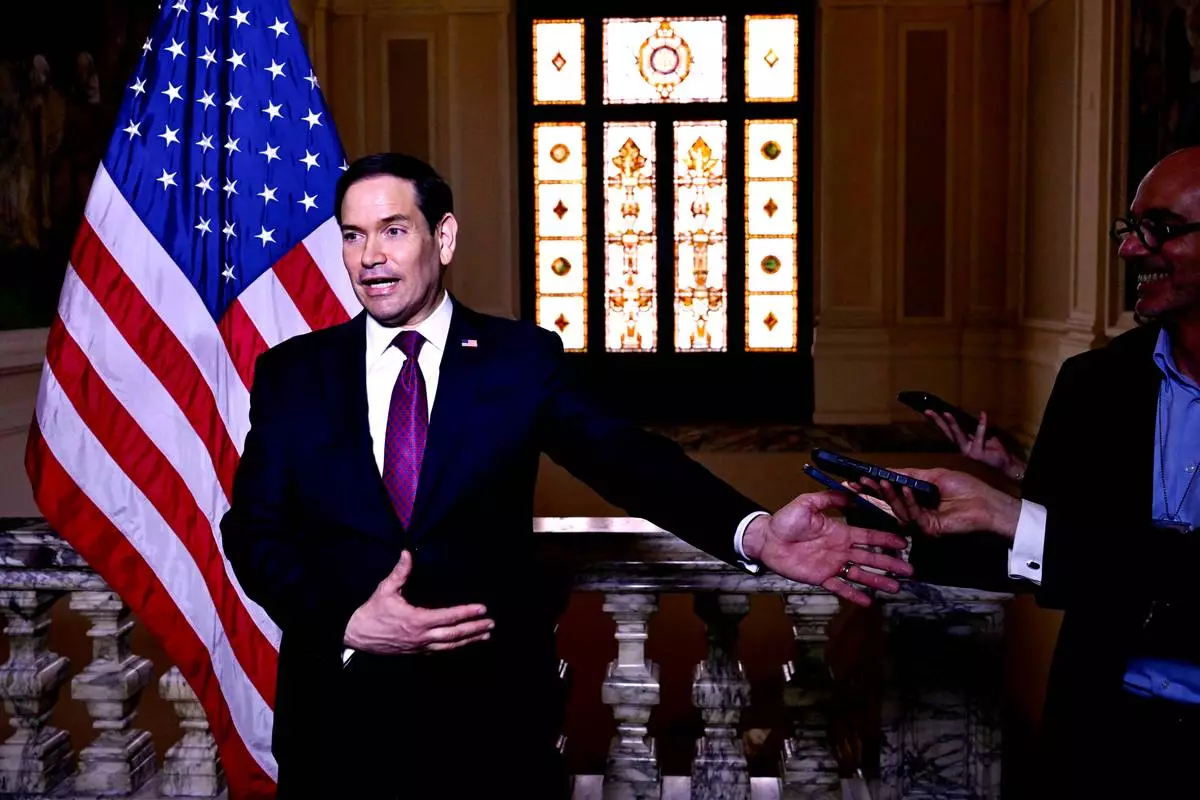
US Secretary of State Marco Rubio speaks during a press conference at the US Embassy in Rome, Friday, May 8, 2026. (Stefano Rellandini/Pool Photo via AP)
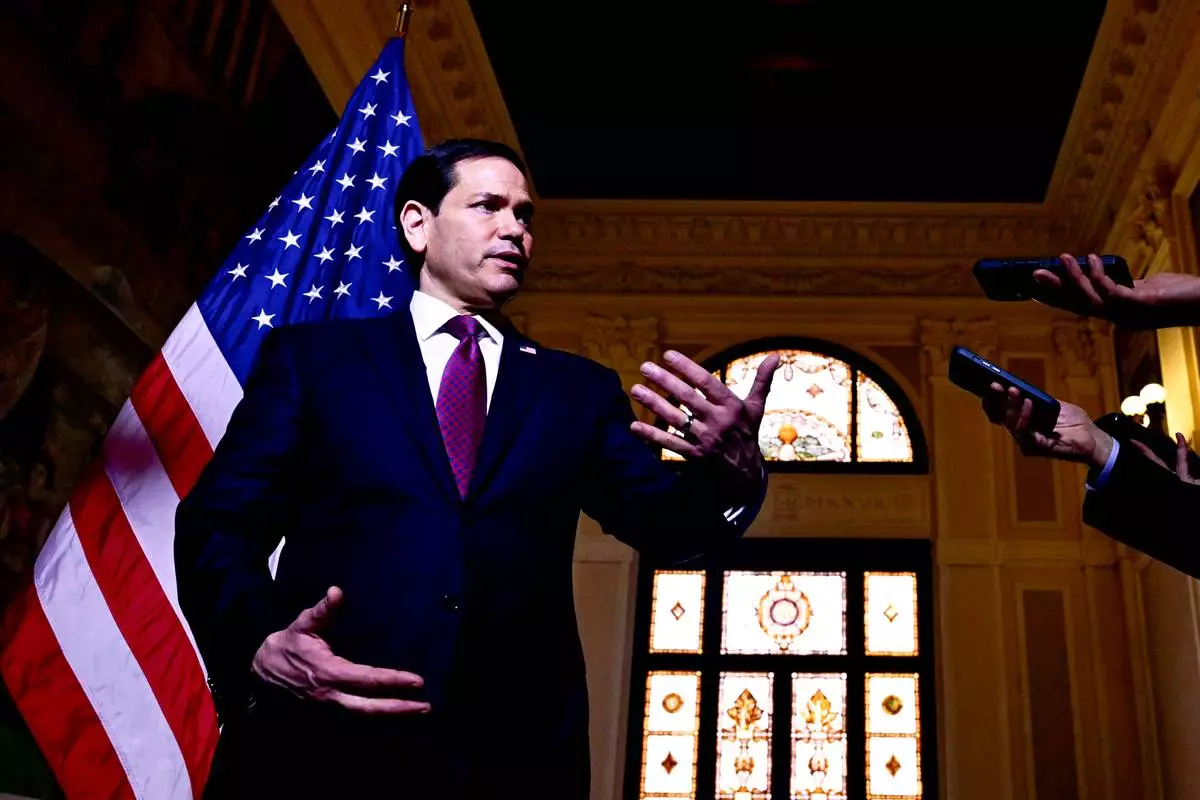
US Secretary of State Marco Rubio speaks during a press conference at the US Embassy in Rome, Friday, May 8, 2026. (Stefano Rellandini/Pool Photo via AP)
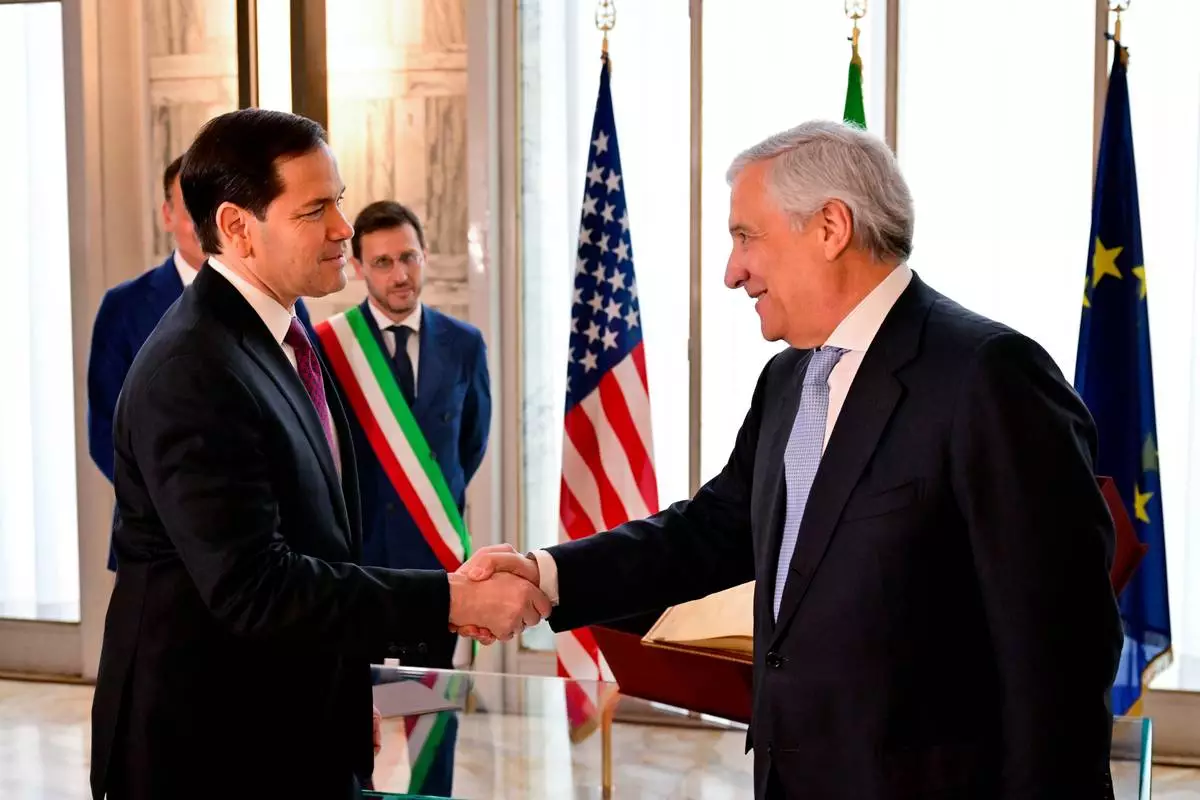
US Secretary of State Marco Rubio meets Italian Foreign Minister Antonio Tajani during his two-day visit to Italy and the Vatican, in Rome, Friday, May 8, 2026. (Stefano Rellandini/Pool Photo via AP)
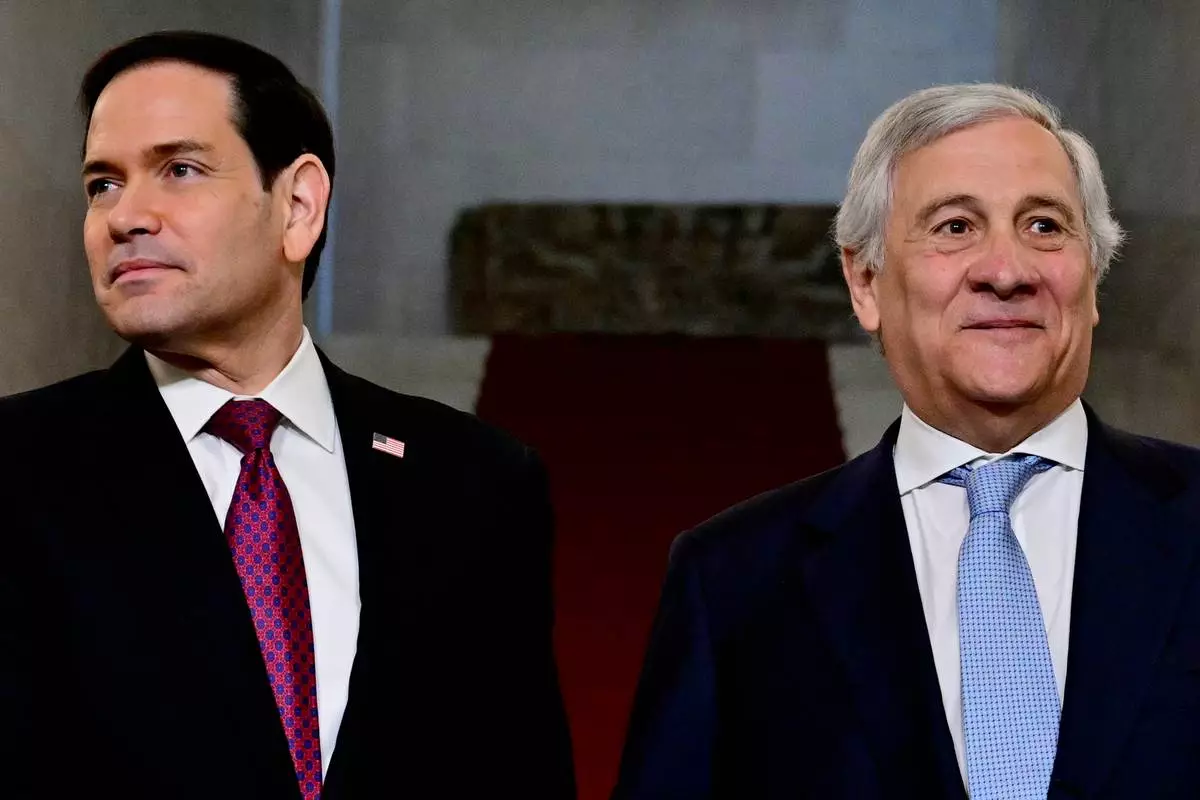
US Secretary of State Marco Rubio meets Italian Foreign Minister Antonio Tajani during his two-day visit to Italy and the Vatican, in Rome, Friday, May 8, 2026. (Stefano Rellandini/Pool Photo via AP)
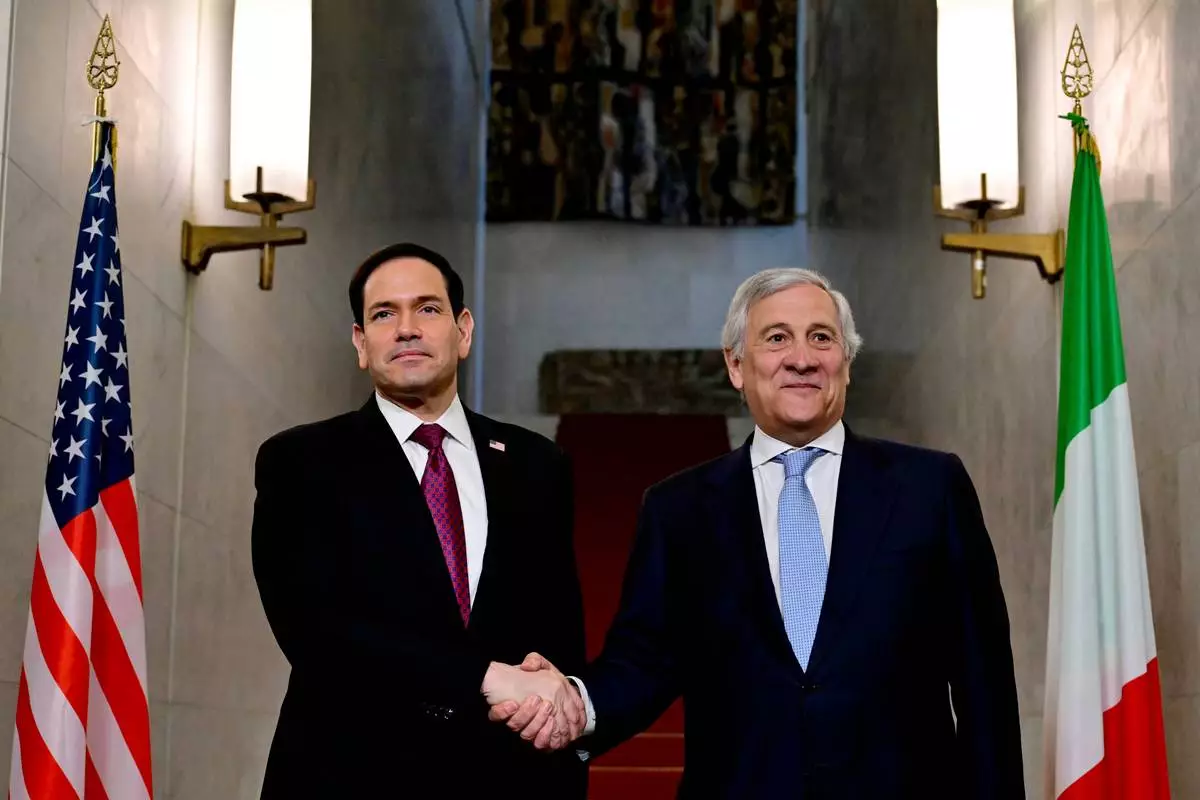
US Secretary of State Marco Rubio meets Italian Foreign Minister Antonio Tajani during his two-day visit to Italy and the Vatican, in Rome, Friday, May 8, 2026. (Stefano Rellandini/Pool Photo via AP)
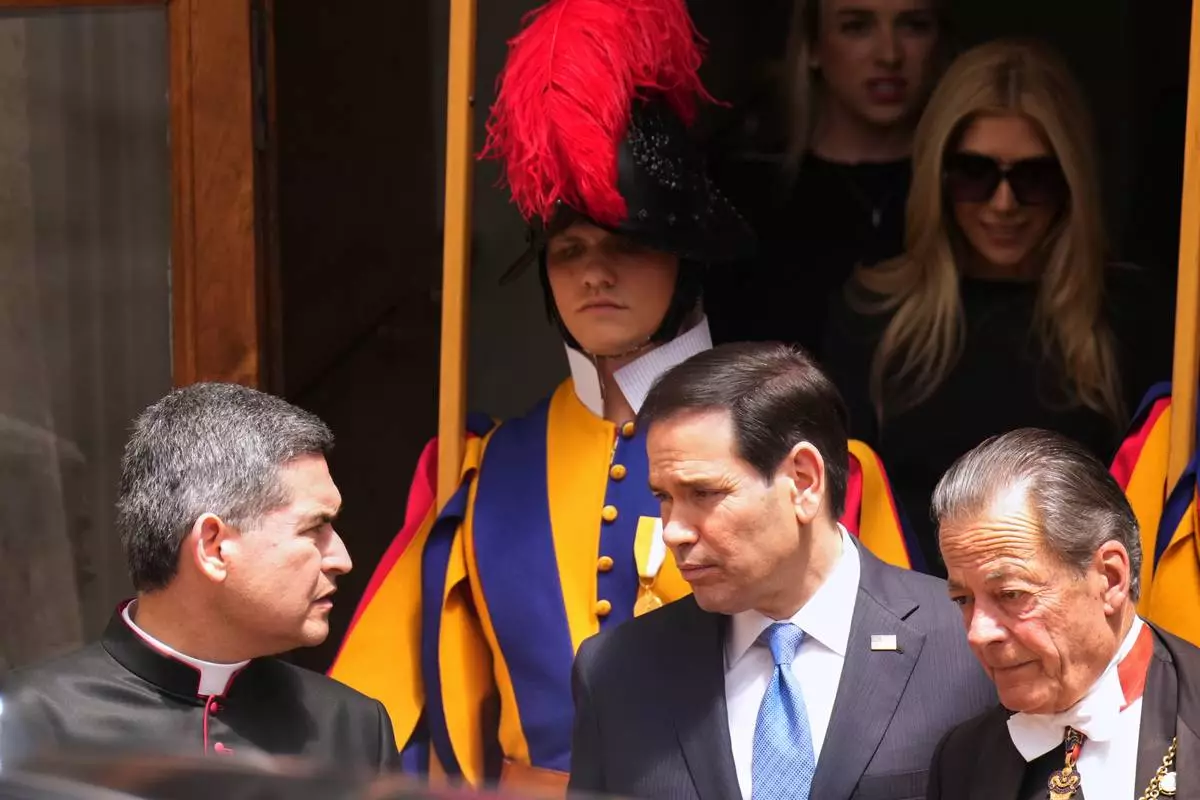
US Secretary of State Marco Rubio leaves the St. Damasus courtyard after meeting with Pope Leo XIV and Vatican Secretary of State Pietro Parolin the Vatican, Thursday, May 7, 2026. (AP Photo/Andrew Medichini, Pool)
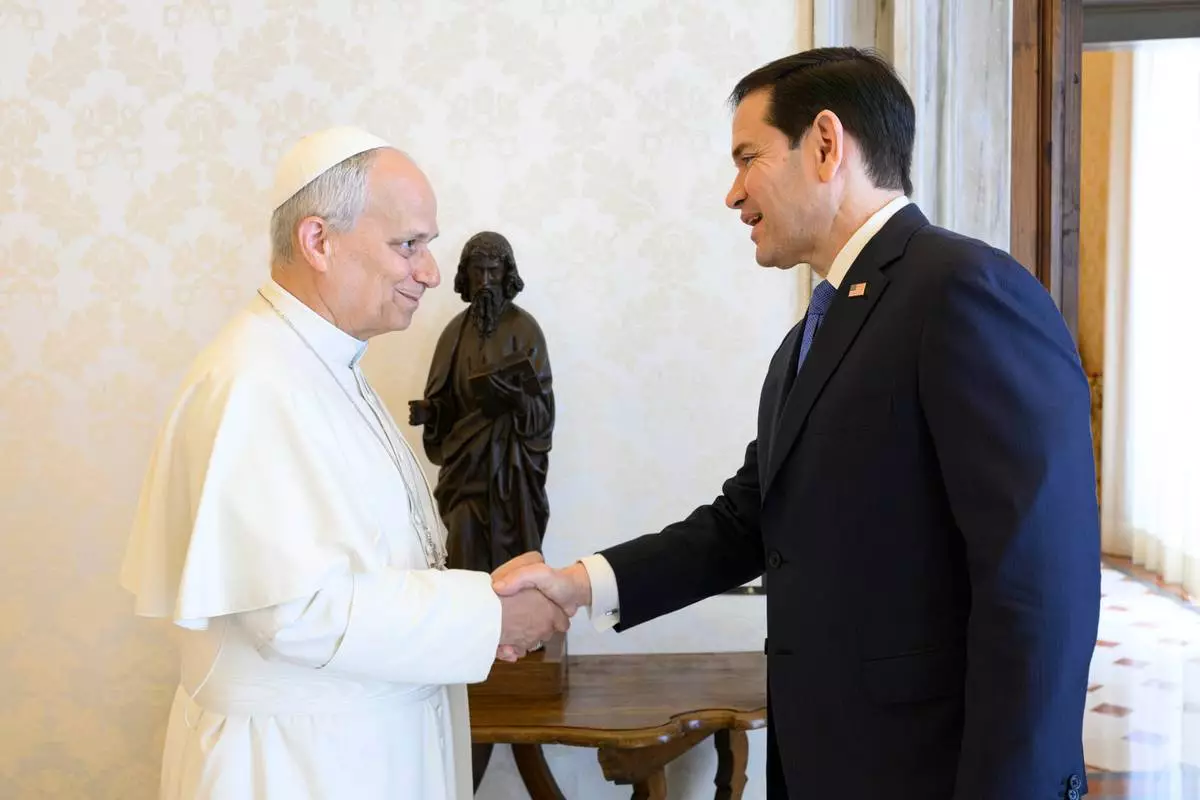
In this handout photo provided by Vatican Media Pope Leo XIV greets U.S. Secretary of State Marco Rubio, right, upon his arrival for talks in the pope's private library at the Vatican, Thursday, May 7, 2026. (Vatican Media via AP)
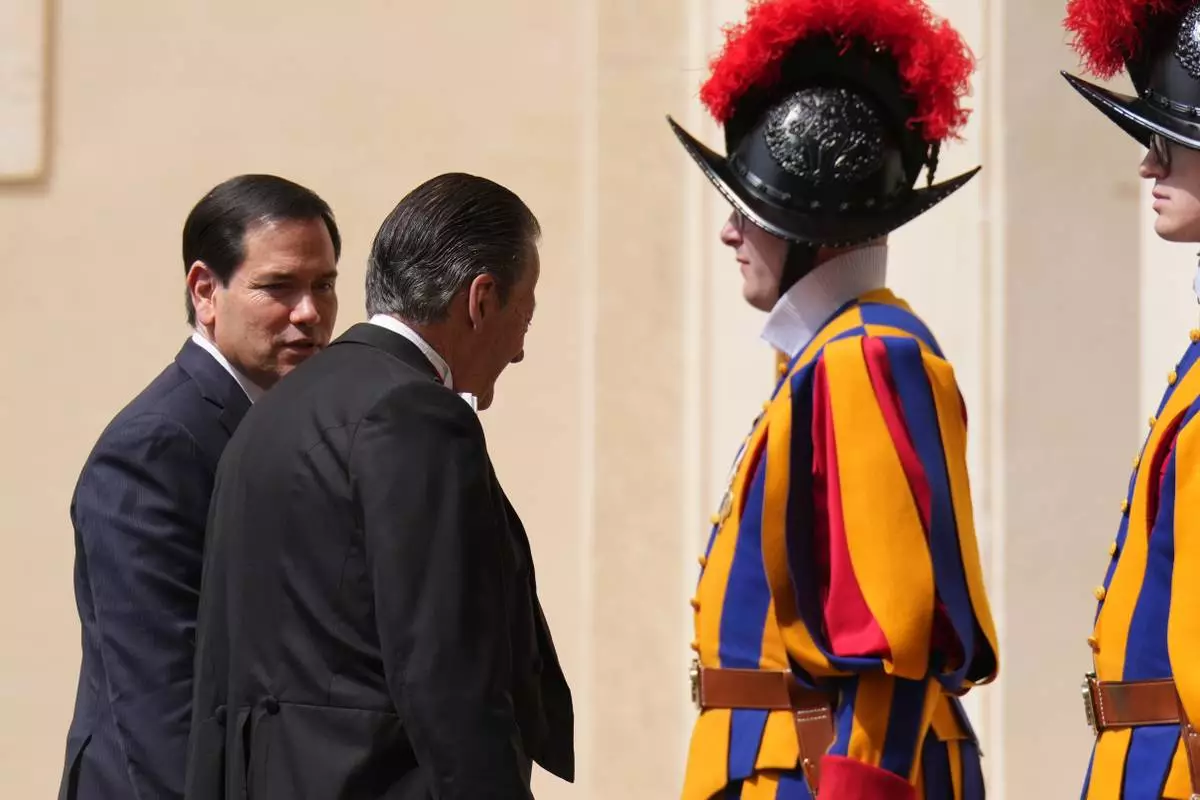
US Secretary of State Marco Rubio enters at the St. Damasus courtyard to meet with Pope Leo XIV and Vatican Secretary of State Pietro Parolin the Vatican, Thursday, May 7, 2026. (AP Photo/Andrew Medichini, Pool)
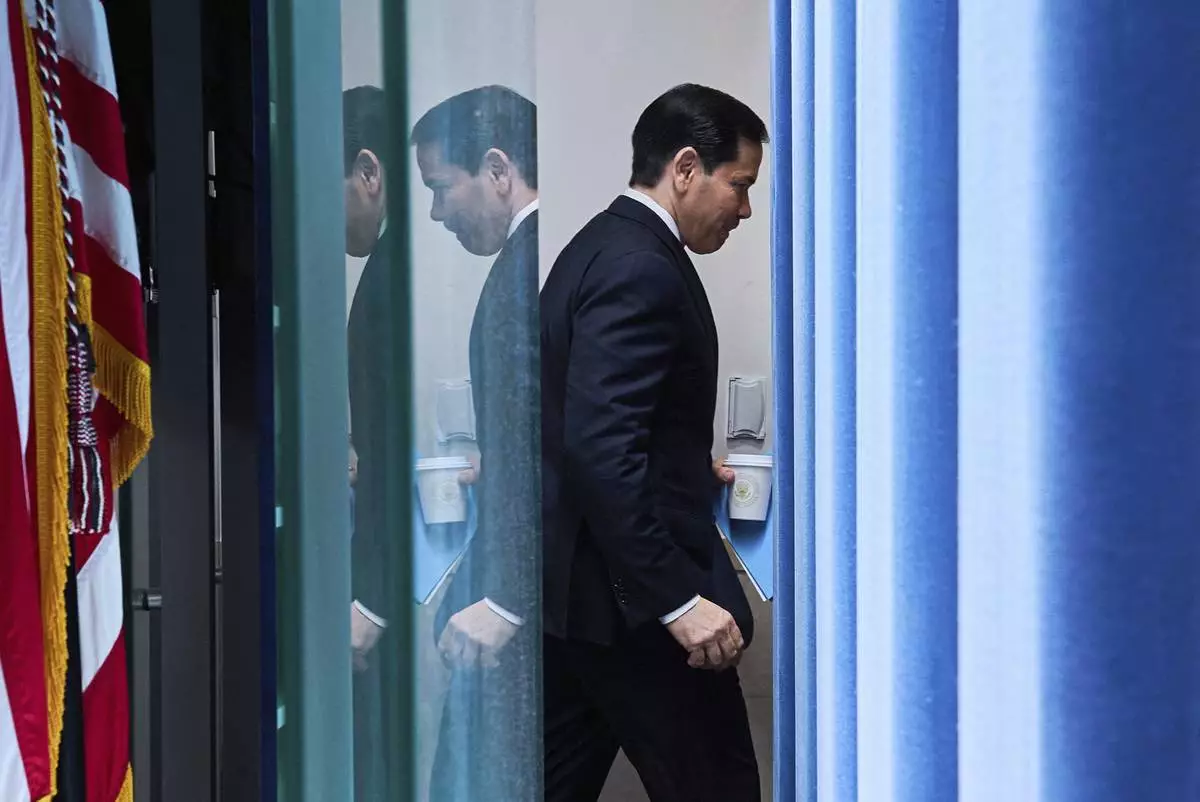
Secretary of State Marco Rubio leaves the room after speaking to the media in the James Brady Press Briefing Room of the White House, Tuesday, May 5, 2026, in Washington. (AP Photo/Jacquelyn Martin)
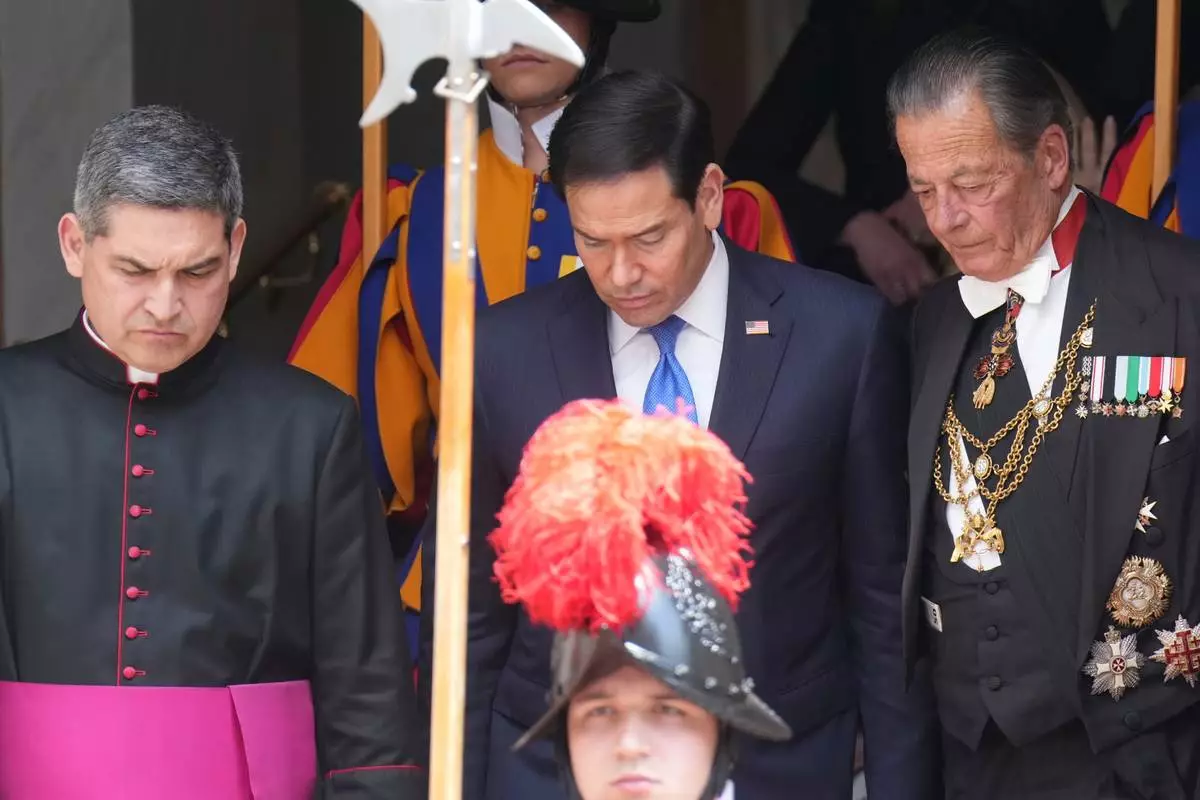
US Secretary of State Marco Rubio leaves the St. Damasus courtyard after meeting with Pope Leo XIV and Vatican Secretary of State Pietro Parolin the Vatican, Thursday, May 7, 2026. (AP Photo/Andrew Medichini, Pool)