MADISON, Wis. (AP) — President Donald Trump's administration is quietly pushing national park, refuge and wilderness area managers to dramatically scale back hunting restrictions, raising questions about visitor safety and the impact on wildlife.
U.S. Department of the Interior Secretary Doug Burgum issued an order in January directing multiple agencies to remove what he termed “unnecessary regulatory or administrative barriers” to hunting and fishing and justify regulations they want to keep in place.
“Expanding opportunities for the public to hunt and fish on Department-managed lands not only strengthens conservation outcomes, but also supports rural economies, public health, and access to America's outdoor spaces,” Burgum wrote. “The Department's policy is clear: public and federally managed lands should be open to hunting and fishing unless a specific, documented, and legally supported exception applies.”
The order applies to 55 sites in the lower 48 states under the National Park Service's jurisdiction, according to the National Parks Conservation Association. Managers at various locations have already lifted prohibitions on hunting stands that damage trees and training hunting dogs, using vehicles to retrieve animals and hunting along trails, according to an NPCA review of site regulations the organization recently performed after learning of the order. The New York Times was the first to report on the changes.
The hunting season in the Cape Cod National Seashore in Massachusetts, for example, would be extended through the spring and summer. Hunters in the Lake Meredith National Recreation Area in Texas would be allowed to clean their kills in bathrooms. And hunters would be allowed to kill alligators in the Jean Lafitte National Historical Park and Preserve in Louisiana.
Burgum’s order comes as hunting continues to decline in the face of increasing urbanization. Only about 4.2% of the U.S. population identified as a hunter older than 16 in 2024, according to U.S. Fish and Wildlife Service and U.S. Census data, leaving state wildlife agencies short on revenue from license sales and excise taxes on guns and ammunition.
Hunting advocates and conservative policymakers have been exploring multiple avenues to keep hunting alive, including promoting the sport to women and young children, creating seasons for more species and expanding hunter access to public land.
Hunting is currently allowed across about 51 million National Park Service acres spanning 76 sites, although only about 8 million of those acres lie in the contiguous United States with the rest in Alaska, according to the NPS website. Fishing is allowed in 213 sites. NPS sites typically adopt state hunting and fishing regulations although they can impose restrictions that go beyond them to protect public safety and wildlife resources, like prohibiting shooting along a trail or near buildings.
Dan Wenk, a former Yellowstone National Park superintendent and NPS deputy operations director, said park managers established their regulations by talking with stakeholders and, as a result, most of the restrictions have been widely accepted. He said it makes no sense for the Trump administration to upend that structure without substantial public discussion.
“Process never seems to stand in the way of many things with this administration,” Wenk said in a telephone interview with The Associated Press. “This was never a big issue. I'd love to know the problem we're trying to solve. Then I could understand the costs that it's going to take to solve it in terms of resources and visitor safety.”
Interior Department spokesperson Elizabeth Peace said in an email that the order is a “commonsense approach to public land management" and promised that any closures or limits needed for public safety, resource protection or legal compliance will remain in place.
“For decades, sportsmen and women have been some of the strongest stewards of our public lands," she said, “and this order ensures their access is not unnecessarily restricted by outdated or overly broad limitations that are not required by law.”
Asked in a follow-up email about the extent of any public outreach efforts, if any, Peace said only that the department had given the AP its statement on the order.
The Theodore Roosevelt Conservation Partnership, which works to preserve access for hunting and fishing, posted a statement online in January calling the order a balance between wildlife management and outdoor traditions hunters and anglers support. Ducks Unlimited posted a statement in March saying Burgum's order recognizes duck hunters' “vital role.”
“This process will streamline federal regulations, make them more consistent with existing state rules, and provide more public-land access for outdoor recreation. Thank you, Secretary Burgum, for prioritizing America’s hunters and anglers," the statement said.
Elaine Leslie, former head of the NPS' biological resources department, said Trump is undermining a process that was put in place in good faith and the order does not reflect science-based management.
“I don't want to take my young grandchildren to a park unit only to have a hunter drag a gutted elk they shot across a visitor center parking lot. Nor enter a restroom where hunters are cleaning their game,” Leslie said in a text to the AP. "There is a time and place for hunting, trapping and fishing ... but that doesn't mean every place has to be open to every activity especially at the expense of others and degrading our public resources.”
Associated Press writer Matthew Daly in Washington, D.C., contributed to this report.
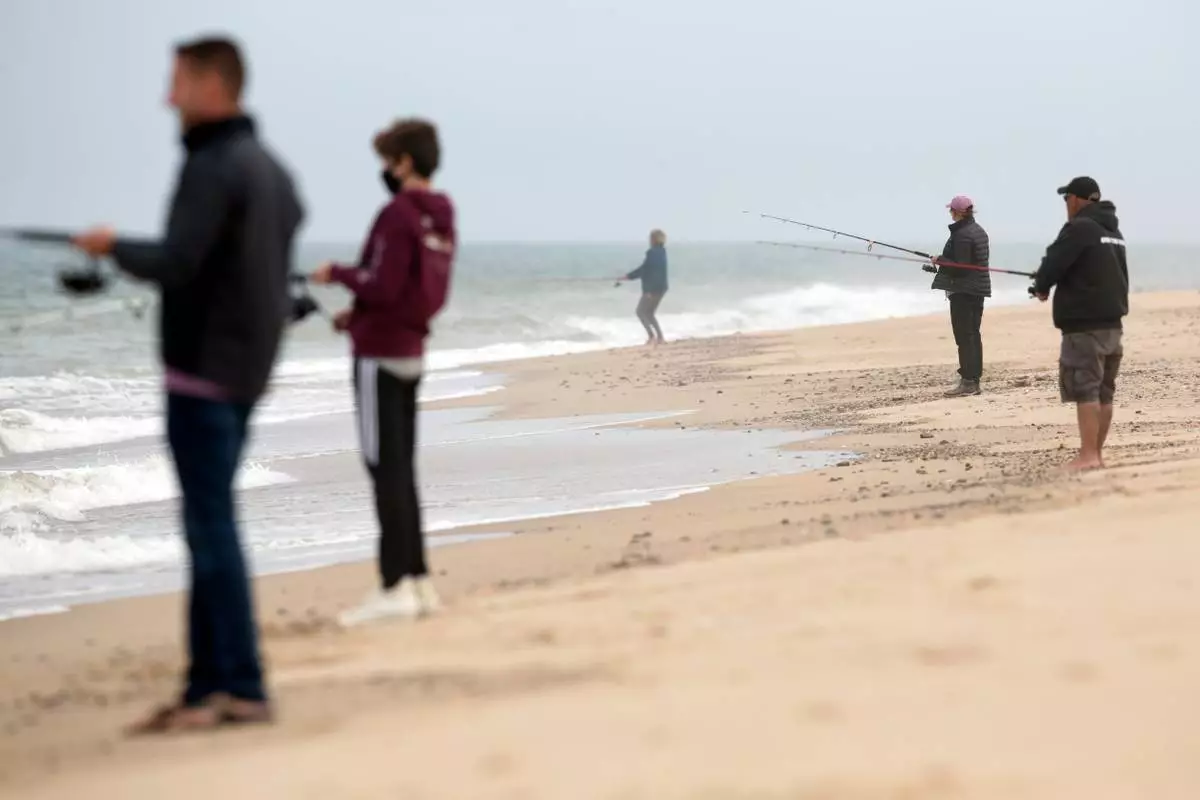
FILE - People fish on Race Point Beach, part of Cape Cod National Seashore, May 25, 2020, in Provincetown, Mass. (AP Photo/Michael Dwyer, File)
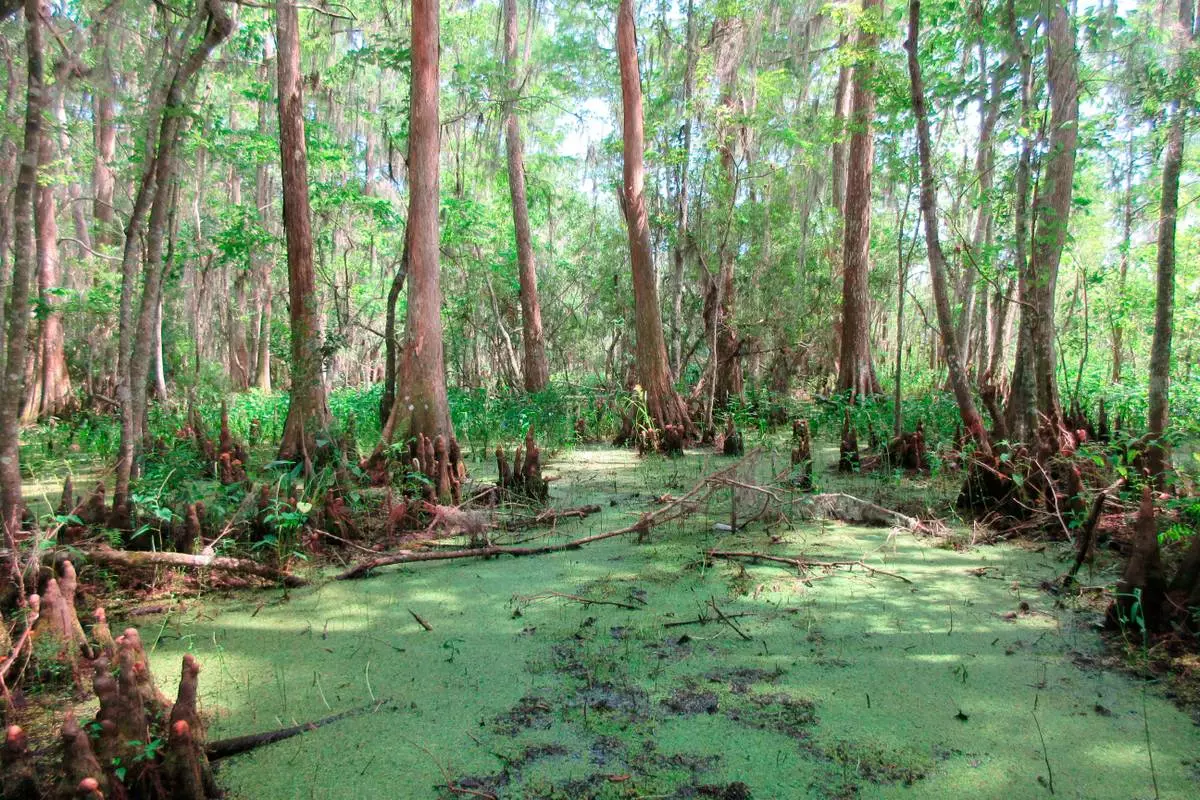
FILE - Cypress trees grow in a swamps in the Barataria Preserve, part of Jean Lafitte National Historical Park and Preserve in Marrero, La., June 3, 2018. (AP Photo/Beth J. Harpaz, File)
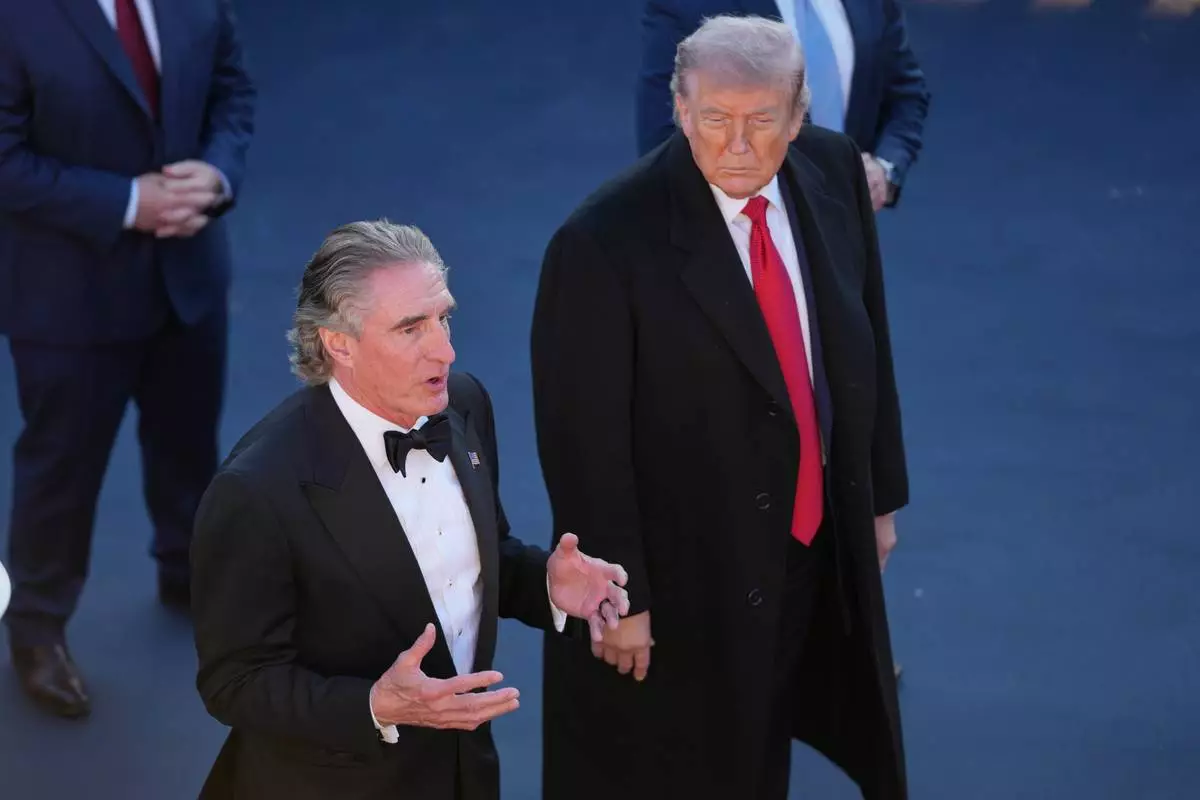
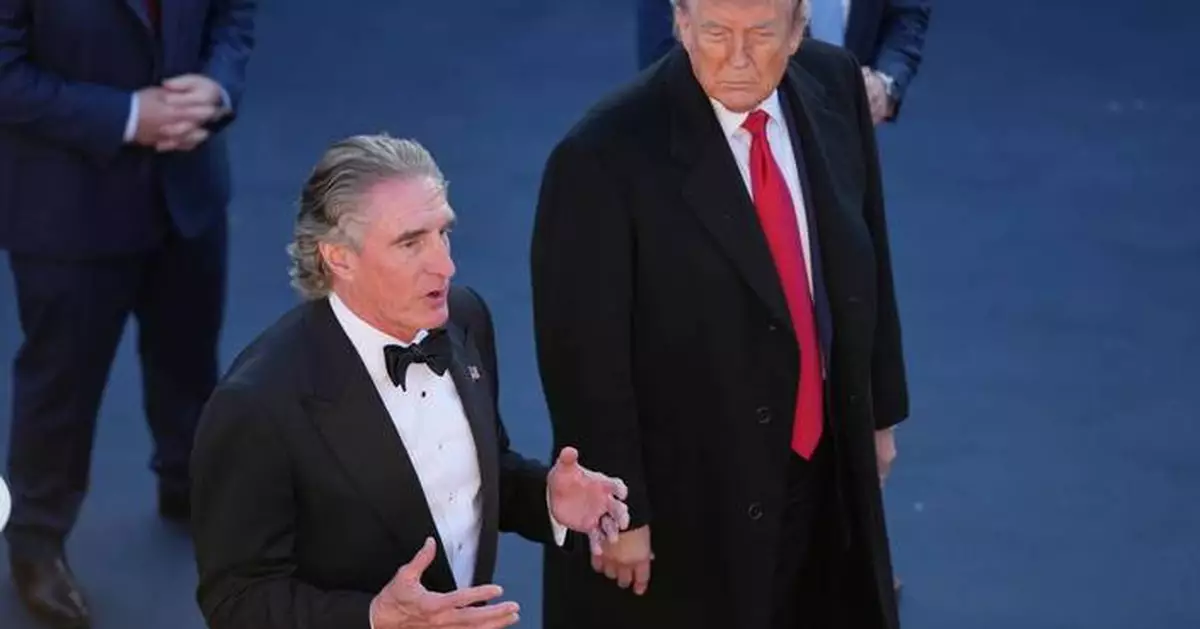
President Donald Trump listens as Interior Secretary Doug Burgum speaks at the Lincoln Memorial Reflecting Pool during a visit to to see the new blue protective coating being applied as part of a renovation project, Thursday, May 7, 2026, in Washington. (AP Photo/Mark Schiefelbein)
Tens of thousands of students studying for final exams around the world Friday regained access to a key online learning system after a cyberattack had earlier knocked it offline, throwing schools and universities into turmoil.
Elizabeth Polo was in a creative writing class at the University of Maryland late Thursday afternoon when a classmate shouted, “Canvas got hacked.” A message from a hacking collective flashed on her computer screen.
“Our whole class just like was like freaking out about it,” said Polo, a junior. “Our poor professor was trying to get everyone to calm down but it was just kind of chaos.”
Across academia, the outage set off panic and confusion as students and faculty members found themselves locked out of a platform they rely on to manage grades and access course notes and assignments. Colleges scrambled to reschedule final exams as students lost any way to access materials they needed to study.
Instructure, the company behind Canvas, said in an update late Thursday that the system was available for most users. Instructure has not posted about the attack on its social media, and the company didn’t immediately respond to emails from The Associated Press asking whether it paid a ransom and inquiring about what happened with the compromised data.
Rich in digitized data, the nation’s schools are prime targets for far-flung criminal hackers, who are assiduously locating and scooping up sensitive files that not long ago were committed to paper in locked cabinets. Past attacks have hit Minneapolis Public Schools and the Los Angeles Unified School District.
A hacking group called ShinyHunters claimed responsibility for the breach at Canvas, said Luke Connolly, a threat analyst at the cybersecurity firm Emsisoft. The hacking group posted online that nearly 9,000 schools worldwide were affected, with billions of private messages and other records accessed, Connolly said.
The message that flashed on Polo's computer screen urged individual schools to reach out directly to the hacking group to negotiate a settlement and threatened to leak data if they didn’t. She said that Canvas later took that message down, replacing it with a message saying the site was undergoing scheduled maintenance.
Just before 1 a.m. Friday, Polo was able to submit an assignment on Canvas, but she now worries personal data has been compromised.
On Thursday, “Instructure discovered the unauthorized actor involved in our ongoing security incident made changes to the pages that appeared when some students and teachers were logged in,” Instructure said Friday in a statement. “Out of an abundance of caution, we immediately took Canvas offline to contain access and further investigate.”
Instructure, the company behind Canvas, said it confirmed that the unauthorized actor exploited an issue related to its Free-For-Teacher accounts. The company has temporarily shut down those accounts.
The outage happened just as a deadline arrived for semester-long projects in one of Gwyneth Doland’s journalism classes at the University of New Mexico.
“They were a little hyperventilating,” recalled Doland, who extended the deadlines. “None of these platforms are fail-proof. I’m glad that they got that lesson.”
That the attack came with finals looming came as no surprise to Huseyin Can Yuceel, the security research lead at Picus Labs.
“Timing is everything, because they want to inflict pain as much as possible,” he said, “so they can extort money out of it.”
Teachers said they had to find workarounds to help students study for exams and submit final assignments. Some schools, such as the University of Texas at San Antonio, announced they were pushing back finals scheduled for Friday in response to the outage.
Rod Uzat, a professor of Educational Leadership at the University of Texas Permian Basin, pushed back the posting of grades by a day.
“The concern is for those of us who were doing the grading if there’s anything left,” Uzat said.
Rhongho Jang, a computer science professor at Wayne State University in Detroit, was finalizing grades for a class of 94 students when the system went down. He keeps paper copies of the student exams, but all of the semester assignments, which make up half of the final grade, are done online.
If those assignments and grades could not be recovered, Jang would have given his students full credit.
“I didn’t want to penalize them,” he said. “We cannot judge based on the data we don’t have. The final responsibility is still on the server.”
The breach underscored how much schools depend on outside companies' digital platforms to keep their operations running.
“What it boils down to is concentration risk,” said Joseph Blankenship, a vice president and research director at Forrester. He said any space, including education, is particularly vulnerable when there’s only one or maybe two key providers hosting essential technology.
Allan Liska, of the cybersecurity firm Recorded Future, said the outage did appear deliberate, not a glitch, and that Instructure was trying to figure out how widespread the problem was and make sure the hackers were no longer inside its system.
“There’s no indication at this point that any ransom has been paid,” Liska said. “And it likely is still a little too early for a ransom to have been paid. You know, normally these negotiations kind of drag on for a while.”
Connolly described ShinyHunters as a loose affiliation of teenagers and young adults based in the U.S. and the United Kingdom. The group also has been tied to other attacks, including Live Nation’s Ticketmaster subsidiary. ShinyHunters posted online that it was not commenting on the Canvas incident.
ShinyHunters, or an offshoot, also was behind a previous smaller breach of Instructure, Liska said. Sometimes small breaches reveal weaknesses that threat actors later exploit in future leaks, said Yuceel, who likened it to a leak in a boat.
“You fixed it, but you already have the water in the boat,” he said.
Associated Press writer Wyatte Grantham-Philips contributed to this report.
The Associated Press’ education coverage receives financial support from multiple private foundations. AP is solely responsible for all content. Find AP’s standards for working with philanthropies, a list of supporters and funded coverage areas at AP.org.
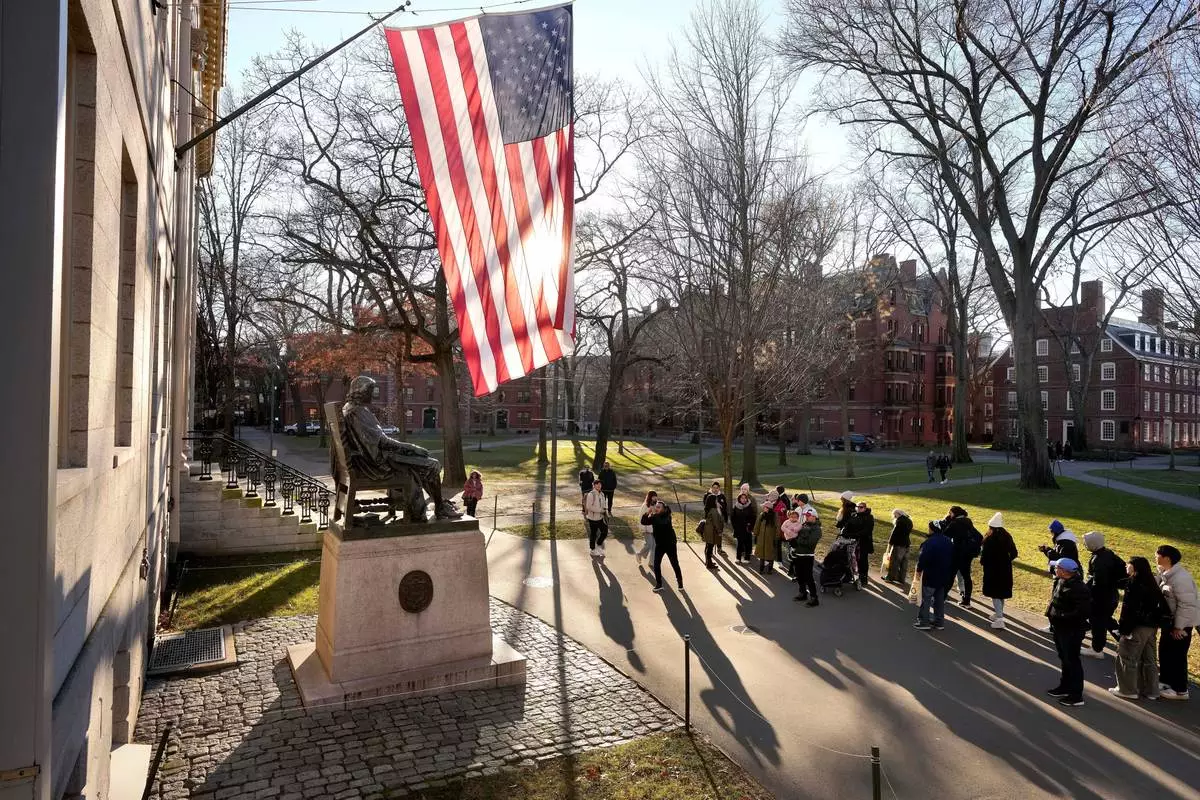
FILE - People take photos near a John Harvard statue, left, on the Harvard University campus, Jan. 2, 2024, in Cambridge, Mass. (AP Photo/Steven Senne, File)