Michael Levitt, 2013 Nobel laureate in chemistry and vice chairman of the World Laureates Association (WLA), said China's "AI Plus" initiative could accelerate scientific innovation, noting that the key to success lies in giving young researchers more independence and responsibility.
In an interview with the China Media Group (CMG) aired on Friday, Levitt termed the initiative's focus on AI-driven research paradigms as "very appropriate," emphasizing that young scientists are often the real force behind breakthroughs.
"I think focusing on technology and science is very appropriate. For me, a real force for innovation is young people, and China has a lot of educated young people, and people who care about education. So I think it's a very appropriate initiative. So we need to realize that we need to give young scientists independence and responsibility, also let them make mistakes. This is why a very good scientist is failing all the time, because he is doing difficult things," he said.
"If all the time you don't challenge yourself, [once] you challenge yourself, you're going to fail. You're trying to do, but you don't know how to do, like a child's learning to walk. If you hold a child who's learning to walk, you fall once, it's finished, you would never learn," he added.
Commenting on China's 15th Five-Year Plan (2026–2030), which emphasizes sci-tech innovation and the cultivation of top-tier talent, Levitt said that it is important for young people to boldly challenge themselves and explore the unknown.
"That's essential. One problem, for example: I did my work that got me the Nobel Prize was all finished by 1975. I was born in 1947, so I was 27 years old. Until 2013, for it to be recognized. Almost every single person who did important work did it before the age of 40. If you want innovation, it will come from young people. Older people can make an innovative framework -- they can provide an environment where young people can essentially do what they want to do," he said.
In 2018, Levitt joined Fudan University, where he has led an interdisciplinary team in quantitative biology research. Now in his eighth year of teaching in China, Levitt continues to offer courses annually and regularly engages with young Chinese students, sharing insights and fostering exchanges.
Levitt expressed strong confidence in Chinese youth, describing them as innovative, adventurous and brave.
"I think Chinese are very innovative. There's a group at Fudan who are working on areas that I am familiar with. I meet students, I talk to young people, and I talk to many young people, and I think that is the important thing. And again, also, another thing that I do like about the Chinese way of doing things is experimentation. If you want to develop EV, you don't choose one company, you help 100 companies. You know that 100 won't succeed, but you also know that the success will be much bigger," he added.
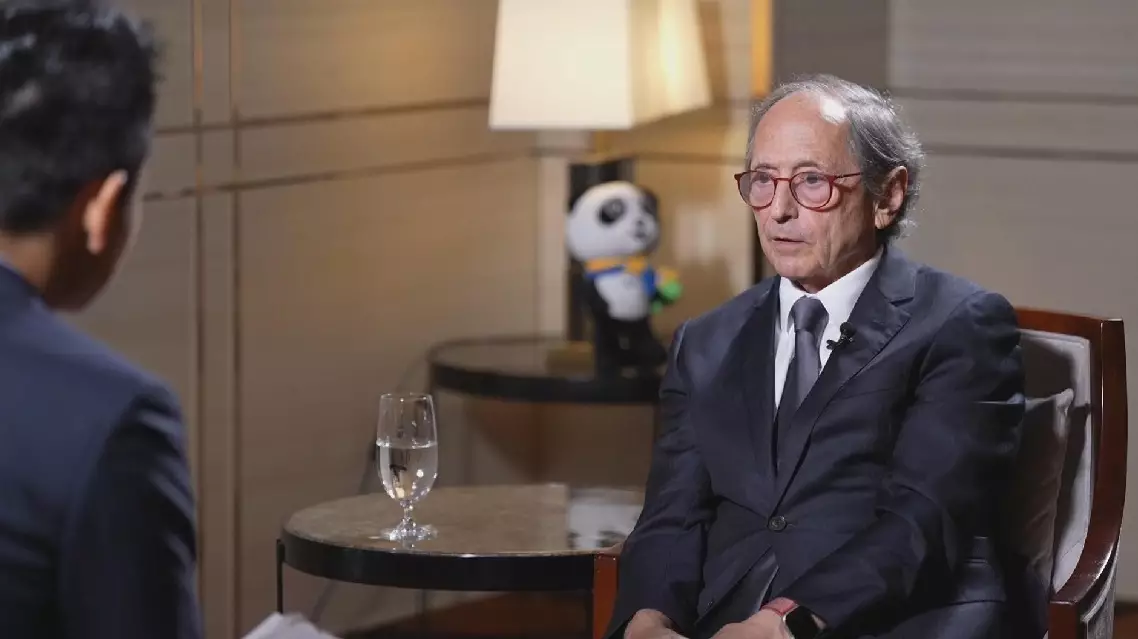
Nobel laureate says China's 'AI Plus' initiative could empower young researchers in innovation