Pets are driving new forms of consumption in China, from fresh meals and birthday cakes to custom clothing and memorial items, as they increasingly become companions that provide emotional comfort.
This shift reflects a broader change in China's pet market, where demand is moving from basic necessities toward more personalized and experience-oriented services.
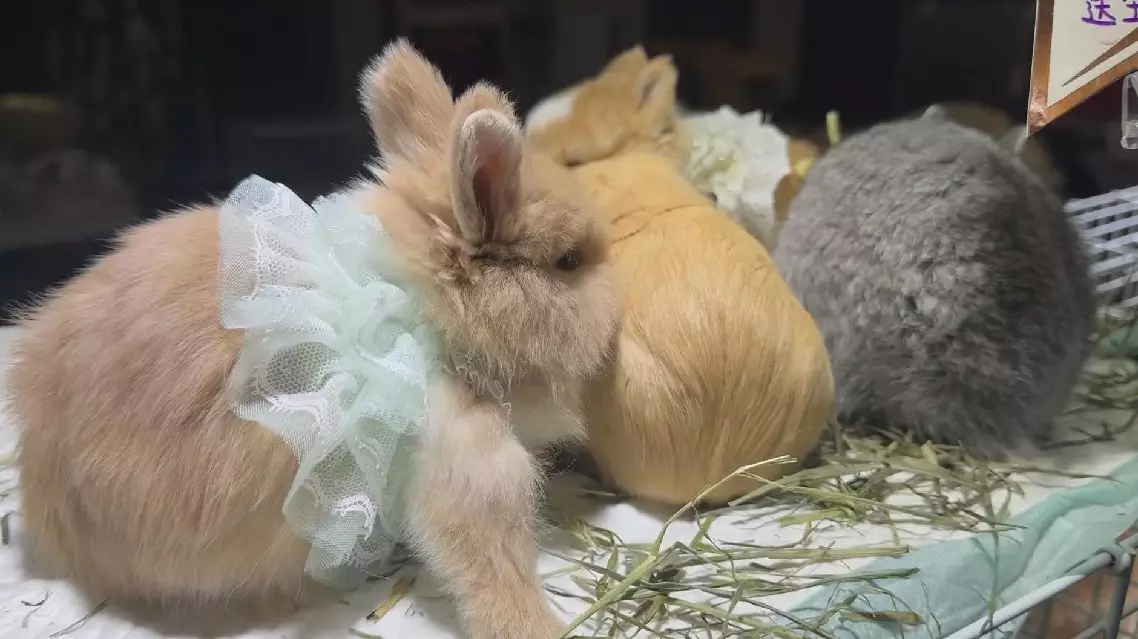
The TOPS Pet Show in Shanghai, running from Thursday to Sunday, comes with four-legged furry attendees and constant meows and barks.
For many city dwellers, especially younger generations, pets are no longer just animals kept at home; they are companions, family members, and the most dependable source of comfort after a long day at work.
The emotional bond is reshaping not only what people buy, but also what motivate their spending.
"The breed has little to no body odor, doesn't bark much, and doesn't shed. Its coat is especially soft on the back. The breed may help with depression mainly because it's calm and quiet," said a doghouse owner.
According to the 2026 China Pet Industry White Paper, dog owners spent an average of 3,006 yuan (about 442 U.S. dollars) annually in 2025, while cat owners spent 2,085 yuan.
While the pets themselves may be small, the emotional connection behind them is becoming a major engine for business growth.
"The majority of pet owners are still quite young; it's the first time they own a pet. They are looking for learning about the pet, so emotional value is very important. Like you said, there is no one more loyal than your pet, so you try to cherish that and find nutritional solution that can extend the life of your animal. The pet population is still increasing, ownership is increasing, and the number of pets fed with industrial products is also still increasing," said Francois Gergaud, Business Executive Officer of Nestlé Purina PetCare Greater China.
Much of the spending still goes into the food bowl. The White Paper shows that in 2025, food made up 53.7 percent of China's pet consumption market, remaining the largest category.
Spending on staple food, snacks, and nutritional products all saw modest growth.
Healthcare ranked second, making up 27.6 percent of the market.
"When giving dogs de-worming medication, we also consider how much they'll enjoy it, so we make the medication into chewable beef chunks, similar to a treat. That way, when dogs take the preventative medicine, it feels like something they get to enjoy each month," said Nicole Niu, Head of Companion Animal Business, Boehringer Ingelheim China, a German pharmaceutical company.
China's pet economy opens up new consumption scenarios