China's economic development picked up steadily in April, with key indicators pointing to broad-based improvements in infrastructure activity and a sharp move of capital toward advanced technology sectors, according to the data released Sunday by the State Information Center(SIC), a think tank under the National Development and Reform Commission (NDRC).
The data showed that in the investment landscape, the average operating rate of national construction machinery rose by 3.6 percentage points month on month in April.
Port logistics, heavy lifting, and civil construction all recorded rebounds, signaling steady progress in infrastructure construction.
Concrete equipment, as key construction machinery, saw a notable rebound in activity, with its operating rate increasing by around 5 percentage points both year on year and month on month.
"Municipal infrastructure, transport projects, industrial parks, urban renewal -- all types of projects are being rolled out across the board. For major projects in various regions, efforts are being made to seize the construction window and accelerate the pace. This also reflects that physical investment in infrastructure, industry, and urban construction is picking up speed, and investment vitality is steadily improving," said Shen Chunfeng, a big data expert from iRootech, a company that helps businesses achieve intelligent transformation by applying technologies such as industrial intelligence and embodied intelligent robots.
April marks the peak construction season in many regions.
More than 10 provinces and municipalities, including Anhui, Beijing, Ningxia, and Zhejiang, ranked among the top in terms of comprehensive operating rates. "Domestic engineering construction is moving from localized improvement to nationwide pickup. The coverage of projects starting work has expanded greatly, market activity is broadening, and the positive trend in real economy investment and infrastructure construction is further consolidating," said Shen.
Investment is also moving faster from traditional sectors toward new arenas.
According to fresh data from the SIC, capital investment in frontier areas such as artificial intelligence (AI) and humanoid robots jumped 175.2 percent year on year in April.
The value of winning bids for infrastructure projects in data, computing power, and networks rose 61.7 percent year on year, continuing to activate new drivers of economic growth.
"In April, China saw strong investment momentum in frontier fields. Investment activity in digital infrastructure grew rapidly, and the ability of sectors such as AI to attract capital is notable. This shows that, with coordinated efforts from both the government and the market, investment is concentrating more quickly on new tracks -- providing a strong boost to the development of new quality productive forces and steadily strengthening the foundations for high-quality economic development," said Xing Yuguan, an associate researcher of the Big Data Development Department under the SIC.
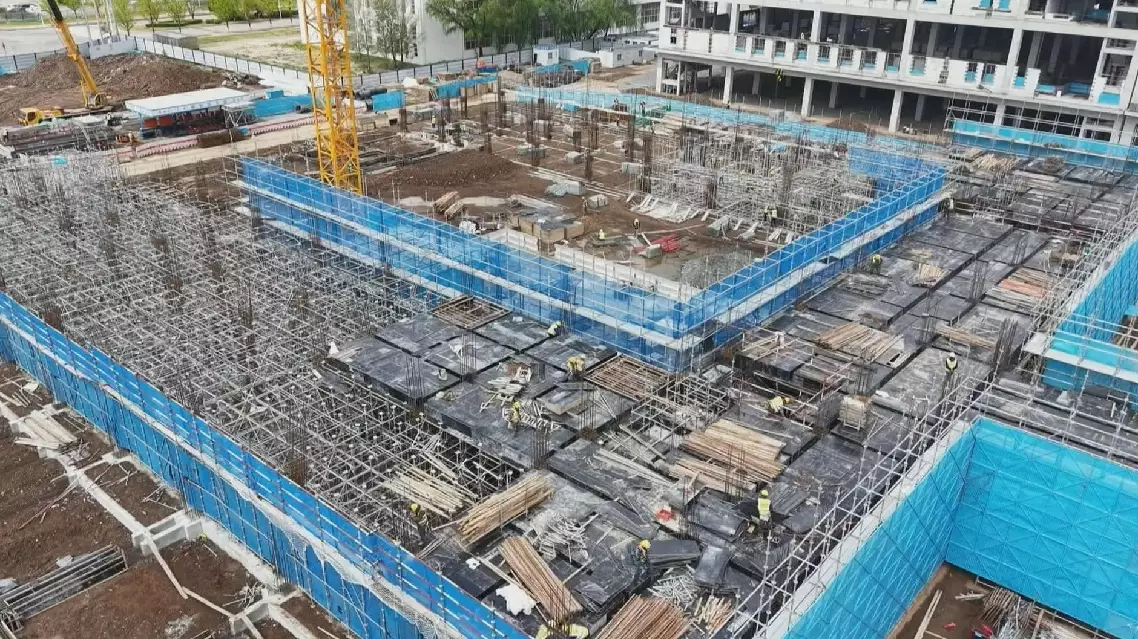
China’s economic momentum strengthens as infrastructure activity rises, frontier investment surges
Top business leaders from across the Asia-Pacific have weighed in on innovation development, artificial intelligence adoption and supply chain resilience at a dialogue session in Shenzhen, as the southern Chinese city plays host to this week's Asia-Pacific Economic Cooperation (APEC) meetings.
The two-day 2026 APEC CEO Summit opened in the city on Tuesday, drawing more than 2,000 political and business representatives from 21 member economies and 13 non-APEC economies. Discussions are set to focus on emerging areas of cooperation, including the digital economy, artificial intelligence and green, low-carbon development.
Among the speakers was Zeng Yuqun, chairman and CEO of Contemporary Amperex Technology Company Limited (CATL), China's leading battery manufacturer, who said the company has always put innovation first as the main force behind its development.
"I think the important things are technology innovation and the business model innovation, and we [work] together to make a solution to a sustainable green future. For example, everyone now is focused on the EV. We are more focused on the infrastructure of EV. So, battery swapping is one of the innovations which can help all the EV cars to swap the battery in 99 seconds, so it's very fast. This one really can [be applied] to this region," said Zeng.
The discussion then moved to AI adoption, where Suzanne P. Clark, president and CEO of the U.S. Chamber of Commerce, voiced the optimism running through the U.S. business community and pointed to the healthcare industry as proof of the technology's potential.
"I think the American business community is largely digital and AI optimistic. If we think about solving big challenges at scale, this is the technology that we will need. In the United States, it's estimated, for example, that the healthcare savings due to AI could be 360 billion U.S. dollars. That's 10 percent of household spending. That's a really big deal. Not to mention the cures that we're starting to see around the world for what was once thought of as just intractable diseases," said Clark.
Baidu chairman and CEO Li Yanhong highlighted that AI's value lies in real-world applications, adding that the company's on applying AI to specific scenarios in different countries and organizations.
"I care more about how to apply these AI technologies to all kinds of scenarios, in all countries, in all companies. If you look at the application layer, I think robotaxi is probably a perfect example. Every year, more than a million people get killed on the road. But when robotaxi is operated, the city record is like 10 times better than a human driver. We're saying over the past few years, the US and China gradually opened up the road to robotaxi operations," said Li.
Representing the traditional mining industry, Rio Tinto's CEO Simon Trott called for innovation on supply chains in order to strengthen its resilience.
"The innovations we need to make in our own business, particularly for in how we search for and develop mines. But I think in some ways the greater innovation is going to be how we innovate around our supply chains. Because if you think about it, trust is probably the cheapest input that we have. Because without that, you'll see supply chains fracture," said Trott.
The 2026 APEC CEO Summit, part of the 2026 APEC Economic Leaders' Week, runs Tuesday and Wednesday at the Qianhai International Convention Center under the theme 'To Prosper and Win the Future Together.'
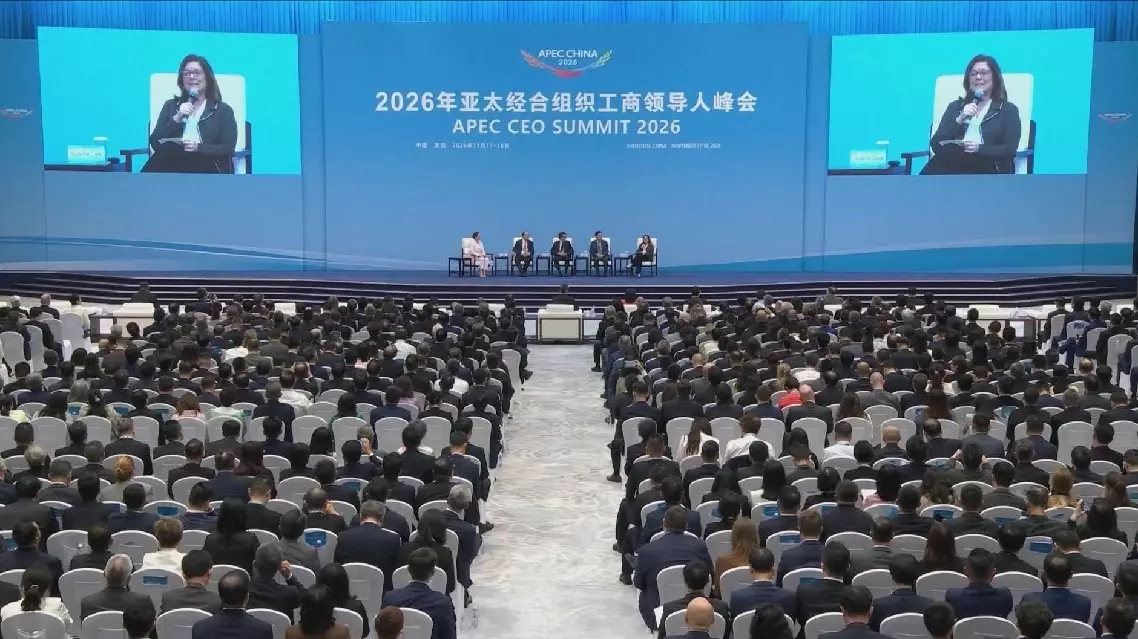
Business leaders at APEC CEO Summit share insights on innovation, AI adoption