CASABLANCA, Morocco (AP) — The remains of a U.S. soldier who went missing during military exercises in Morocco a week ago were recovered in the Atlantic Ocean, the army said Sunday. Military teams were still searching for a second missing soldier.
The remains were those of 1st Lt. Kendrick Lamont Key Jr., a 14A Air Defense Artillery officer who was one of two U.S. soldiers who fell off a cliff during a recreational hike in Morocco while off duty. He was 27 years old.
The two were reported missing May 2 after participating in African Lion, an annual multinational military exercise held in Morocco.
“A Moroccan military search team found the Soldier in the water along the shoreline at approximately 8:55 a.m. local time May 9, within roughly one mile of where both Soldiers reportedly entered the ocean,” U.S. Army Europe and Africa said in a statement.
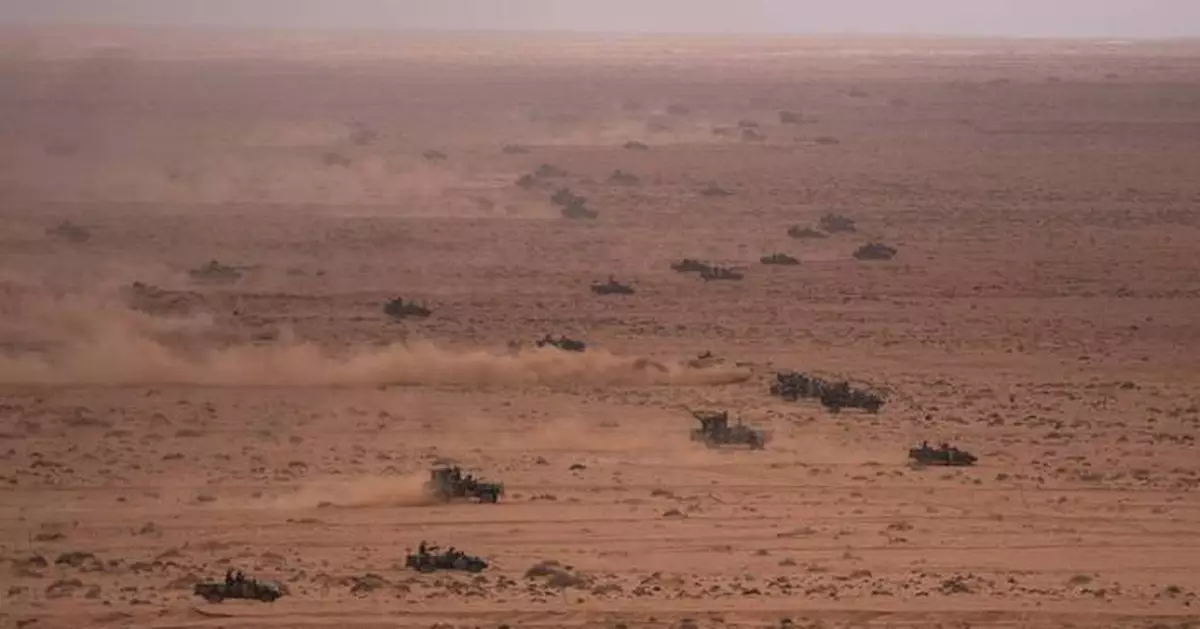
The two went missing around 9 p.m. near the Cap Draa Training Area outside Tan-Tan, a terrain characterized by mountains, desert and semidesert plains, according to the Moroccan military.
Their disappearance triggered a search-and-rescue operation involving more than 600 personnel from the United States, Morocco and other military partners. The operation deployed frigates, vessels, helicopters and drones.
Search efforts will continue for the missing second soldier, a U.S. defense official told The Associated Press on condition of anonymity as they were not allowed to speak publicly on the issue.
The official said a U.S. contingent remained in Morocco after the war games ended Friday to provide command and control and to continue search and rescue operations.
Key was assigned to Charlie Battery, 5th Battalion, 4th Air Defense Artillery Regiment, 10th Army Air and Missile Defense Command, the army said. His decorations include the Army Achievement Medal and Army Service Ribbon.
He entered military service in 2023 as an officer candidate and earned his commission through Officer Candidate School in 2024 as an Air Defense Artillery officer. He later completed the Basic Officer Leader Course at Fort Sill, Oklahoma, according to the statement.
African Lion 26, is a U.S.-led exercise launched in April across four countries – Morocco, Tunisia, Ghana and Senegal – with more than 7,000 personnel from over 30 nations. Since 2004, it has been the largest U.S. joint military exercise in Africa.
In 2012, two U.S. Marines were killed and two others injured during a helicopter crash in Morocco’s southern city of Agadir while taking part in the exercises.
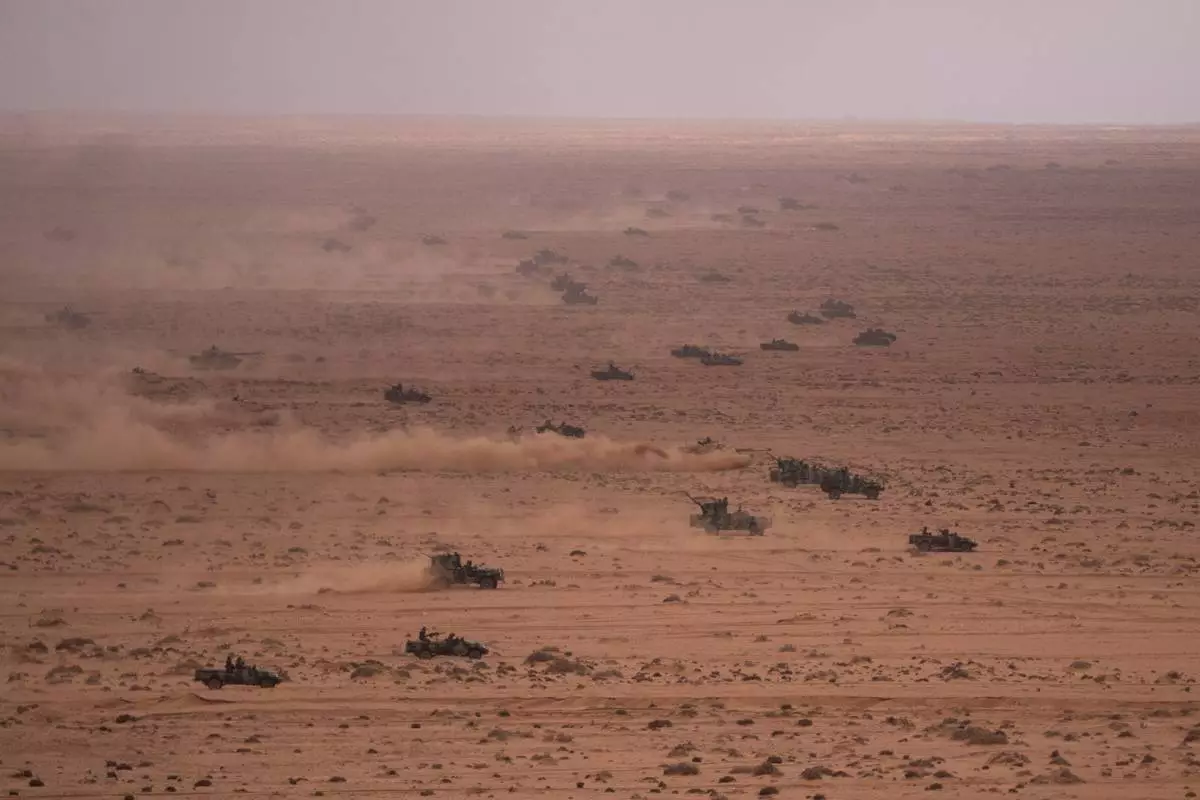
FILE - U.S and Moroccan military forces take part in the 20th edition of the African Lion military exercise, in Tantan, south of Agadir, Morocco, Friday, May 31, 2024. (AP Photo/Mosa'ab Elshamy, File)
DUBAI, United Arab Emirates (AP) — Iran has sent its response to the latest U.S. ceasefire proposal via Pakistani mediators and wants negotiations to focus on permanently ending the war, Tehran's state-run media said Sunday. Pakistan confirmed receiving it.
Iran seeks to end the war on all fronts, including in Lebanon, where Israel is fighting the Iranian-backed Hezbollah militant group, and to ensure the security of shipping, state TV said. Washington’s latest proposal addressed a deal to end the war, reopen the Strait of Hormuz and roll back Iran’s nuclear program.
The White House had no immediate comment but U.S. President Donald Trump on social media accused Tehran of “playing games” with the United States for nearly 50 years, adding: "They will be laughing no longer!"
Trump is giving diplomacy “every chance we possibly can before going back to hostilities,” the U.S. ambassador to the United Nations, Mike Waltz, told ABC earlier.
Iran's new supreme leader, Mojtaba Khamenei, who has not been seen or heard publicly since the war began, “issued new and decisive directives for the continuation of operations and the powerful confrontation with the enemies” while meeting with the head of the joint military command, the state broadcaster reported, with no details.
The fragile ceasefire was tested when a drone ignited a small fire on a ship off Qatar and the United Arab Emirates and Kuwait reported drones entering their airspace. The UAE said it shot down two drones and blamed Iran. No casualties were reported, and no one immediately claimed responsibility.
Qatar's Foreign Ministry called the ship attack a “dangerous and unacceptable escalation that threatens the security and safety of maritime trade routes and vital supplies in the region." The United Kingdom Maritime Trade Operations Center gave no details about the ship's owner or origin.
Kuwait Defense Ministry spokesperson Brig. Gen. Saud Abdulaziz Al Otaibi said forces responded to drones but did not say where they came from.
Iran and armed allied groups like Hezbollah in Lebanon have used drones to carry out hundreds of strikes since the war began with U.S. and Israeli attacks on Feb. 28.
Trump has reiterated threats to resume full-scale bombing if Iran does not accept an agreement to reopen the strait and roll back its nuclear program. Iran has largely blocked the strategic waterway that's key to the global flow of oil, natural gas and fertilizer since the war began, rattling world markets.
The U.S. military in turn has blockaded Iranian ports since April 13, saying it has turned back 61 commercial vessels and disabled four. On Friday, it struck two Iranian oil tankers it said were trying to breach the blockade. Iran’s Revolutionary Guard navy says any attack on Iranian oil tankers or commercial vessels would be met with a “heavy assault” on U.S. bases in the region and enemy ships.
Another sticking point in negotiations is Iran’s highly enriched uranium. The U.N. nuclear agency says Iran has more than 440 kilograms (970 pounds) enriched up to 60% purity, a short, technical step from weapons grade.
In an interview posted late Saturday, an Iranian military spokesperson said forces were on “full readiness” to protect sites where uranium is stored.
“We considered it possible that they might intend to steal it through infiltration operations or heli-borne operations,” Brig. Gen. Akrami Nia told the IRNA news agency.
Israeli Prime Minister Benjamin Netanyahu in an excerpt of an interview with CBS airing Sunday said the war isn't over because the enriched uranium needs to be taken out of Iran. “Trump has said to me, ‘I want to go in there,’ and I think it can be done physically,” he said.
Russian President Vladimir Putin said Saturday that Moscow’s proposal to take enriched uranium from Iran to help negotiate a settlement remains on the table.
The majority of Iran’s highly enriched uranium is likely at its Isfahan nuclear complex, the International Atomic Energy Agency director-general told The Associated Press last month. The facility was hit by U.S.-Israeli airstrikes in the 12-day war last year and faced less intense attacks this year.
Iran's deputy foreign minister warned against a planned French-British effort that aims to support maritime security in the Strait of Hormuz after hostilities are over.
“The presence of French and British vessels, or those of any other country, for any possible cooperation with illegal U.S. actions in the Strait of Hormuz that violate international law will be met with a decisive and immediate response from the armed forces,” Kazem Gharibabadi said on social media.
French President Emmanuel Macron responded by saying it won't be a military deployment but an international mission to secure shipping once conditions allow.
Several attacks against ships in the Persian Gulf have occurred over the past week, and a U.S. effort to “guide” ships through the strait was quickly paused.
South Korea announced initial findings from an investigation that said two unidentified objects struck the South Korean-operated vessel HMM NAMU about one minute apart while it was anchored in the strait last week, causing an explosion and fire. A foreign ministry spokesperson said officials have yet to determine who was responsible.
Magdy reported from Cairo. Associated Press writers Munir Ahmed in Islamabad; Melanie Lidman in Tel Aviv, Israel; Tong-hyung Kim in Seoul; Julia Frankel in Jerusalem; and Josh Boak in Washington contributed to this report.
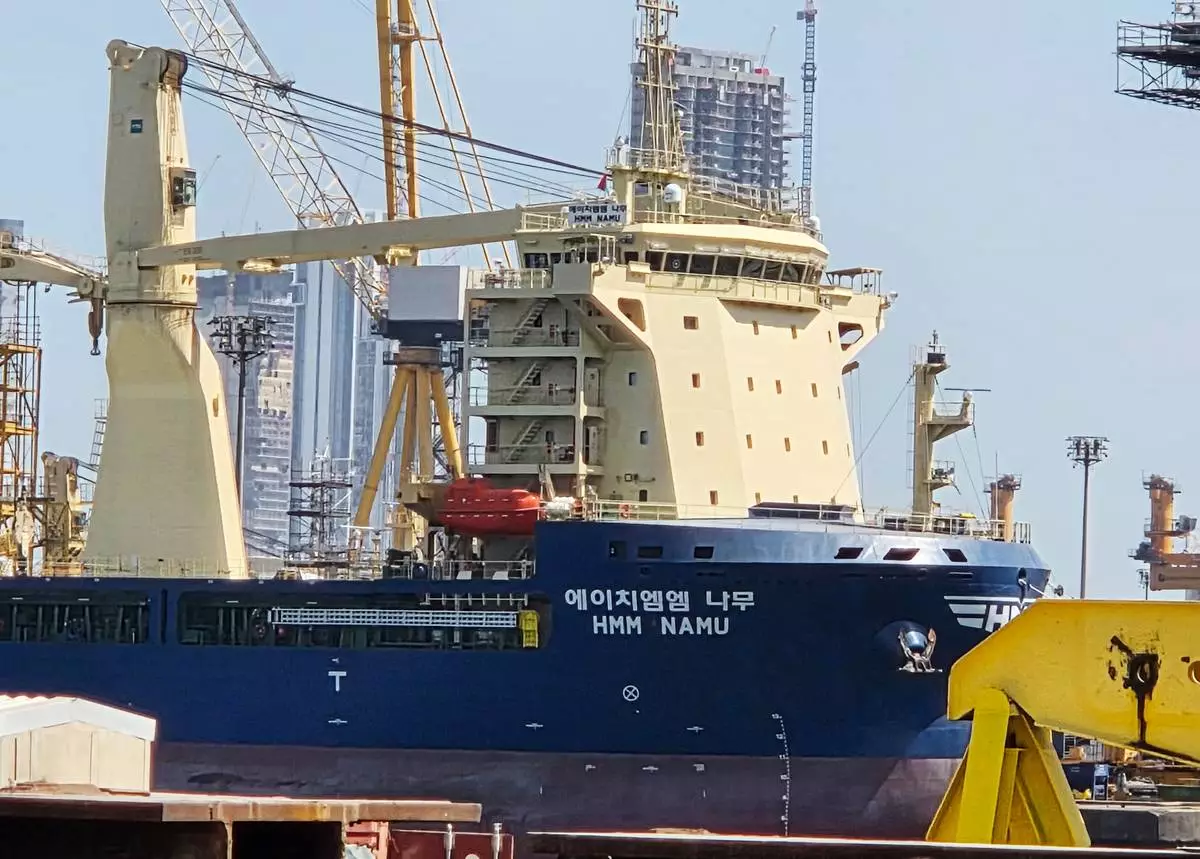
The South Korean-operated vessel HMM NAMU is docked after being damaged from a fire following an explosion in the Strait of Hormuz, at a port in Dubai, United Arab Emirates, Friday, May 8, 2026. (Kim Sang-hun/Yonhap via AP)
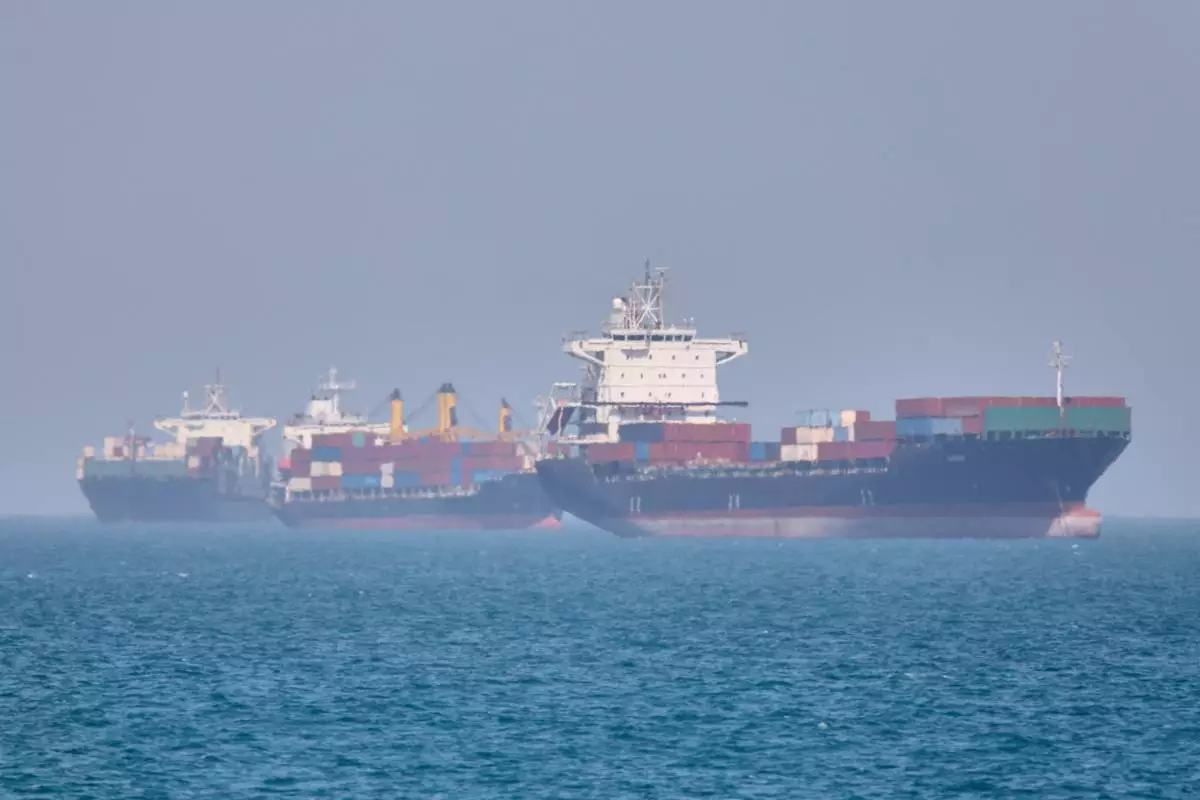
Container ships sit at anchor in the Strait of Hormuz off Bandar Abbas, Iran, Saturday, May 2, 2026.(Amirhosein Khorgooi/ISNA via AP)