A Chinese fashion designer has Su embroidery, or Su Xiu, a premier Chinese folk craft dating hack over 2,000 years, to the global stage with her designs inspired by this ancient Chinese technique.
Originating in the Suzhou area of east China's Jiangsu Province, Su embroidery is one of the country's most renowned traditions.
Known for its remarkable precision, subtle shifts in color, extraordinary range of stitches, it is a craft that demands both patience and control.
On May 20, 2006, China listed Su embroidery among the first batch of national intangible cultural heritages.
Fashion designer Lan Yu, whose work has been inspired by the technique, believes the best way to preserve it is to integrate it into people's everyday lives.
"I visit many museums and spend time observing traditional crafts, and I've started to realize what survives today has already been filtered by time, what people no longer use has simply faded away. So we don't want these crafts to exist only behind glass, the best way to preserve it is to wear it," said Lan.
Lan's designs have reached audiences far beyond China, bringing this craft into a global conversation.
"When we brought Su embroidery to the international stage, including the Grand Palais in Paris, it was described as the pinnacle of human craftsmanship. Having seen embroidery traditions around the world -- from European lace to French techniques -- I believe Su embroidery stands out for the time it requires, its precision, and its incredible versatility," said Lan.
But taking tradition beyond its origins is never without challenges.
"The hardest challenge is actually breaking through cultural barriers. Before this, Parisians tended to believe that French haute couture represented the pinnacle of craftsmanship. So as a form of craftsmanship coming from outside, how do you define it, and how do you present and promote it is the key," said Lan.
In the end, telling China's story isn't about speaking louder, it's about being understood. It means telling stories people can connect with, and expressing beauty that resonates at first glance, according to the designer.
But connection doesn't come from imitation. It comes from knowing who you are. Only when a culture stays true to itself can it truly travel and be seen, she added.
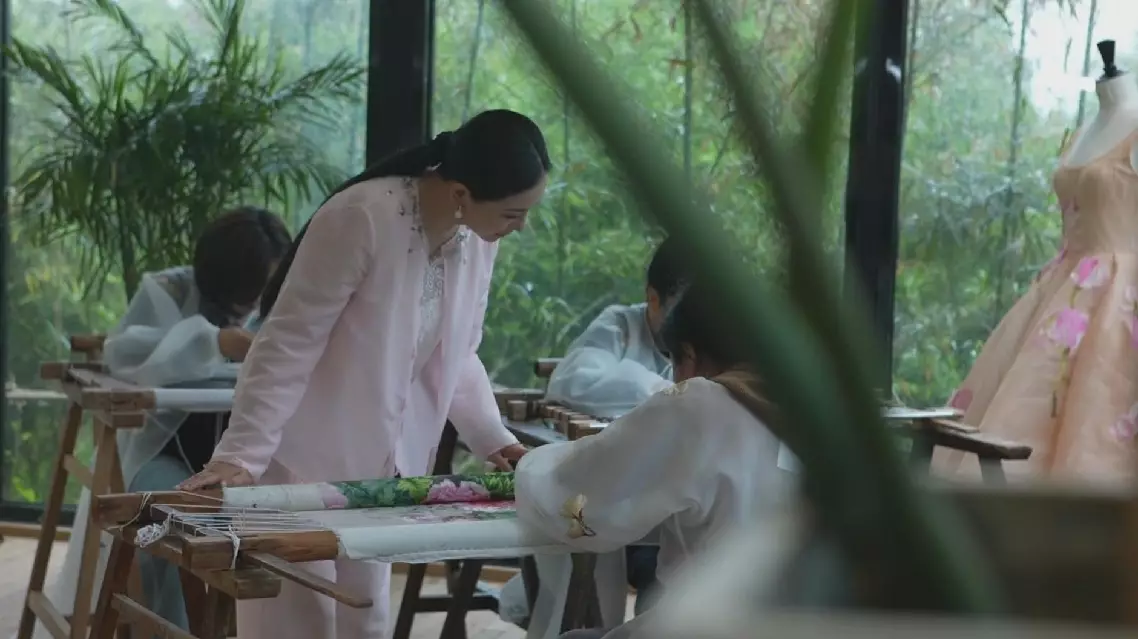
Chinese designer brings traditional embroidery to international stage