Iran has handed over its response with a focus on the cessation of regional conflict and maritime security to the latest U.S. proposed text for ending the war, while U.S. President Donald Trump called it "totally unacceptable."
According to a report by Iran's official news agency IRNA on Sunday, Iran has submitted its response to the latest U.S. proposal to Pakistan, which has been acting as a mediator. The Iranian response focuses on ending the war and ensuring maritime security in the Persian Gulf and the Strati of Hormuz, said another report by the Iranian Students' News Agency (ISNA) on Sunday.
An official Iranian source described the response as "pragmatic and positive," putting an emphasis on ending conflict across the region, particularly in Lebanon. The response covers negotiations on the Strait of Hormuz, Iran's nuclear program, and the complete lifting of sanctions against Iran. The current phase of talks should focus entirely on ceasing hostile actions in the region, according to the source.
Citing an informed source, the semi-official Tasnim news agency reported on Sunday that in its response to the U.S. proposal, Iran demands a 30-day window for rescinding U.S. sanctions on Iranian oil sales, and the release of Iran's frozen assets following the preliminary agreement.
Pakistani Prime Minister Shehbaz Sharif confirmed that Islamabad had received Iran's response. A Pakistani Foreign Ministry source later said that the response had been forwarded to the U.S.
U.S. President Donald Trump said on Sunday that Iran's latest response to the U.S. proposal is "totally unacceptable."
"I have just read the response from Iran's so-called 'Representatives.' I don't like it -- TOTALLY UNACEPTABLE!" Trump wrote on his Truth Social, without elaborating.
Sources familiar with the matter said the Iranian response failed to meet a key U.S. demand that is an advance commitment by Iran on the final disposition of its nuclear program and its stockpile of highly enriched uranium, whereas Iran proposed a mutual cessation of hostilities and the gradual resumption of commercial navigation through the Strait of Hormuz, conditional on the U.S. lifting its blockade on Iranian ships and ports.
In another post on Truth Social, Trump accused Iran of "playing games with the Unite States and the rest of the World, for 47 years."
In an interview with independent journalist Sharyl Attkisson, which was recorded last week and aired on Sunday, Trump said that the U.S. is monitoring Iranian enriched uranium buried under the rubble, and the U.S. Space Force takes charge of the matter.
If anyone approaches the Iranian enriched uranium, the United States will know about it and "blow them up," he said.
Israeli Prime Minister Benjamin Netanyahu spoke with Trump over the phone on Sunday. Trump described the conversation as "very nice," during which they exchanged views on Iran's response.
Regarding negotiations with Iran, Trump said they are his responsibilities, "not anyone else's."
In a recent U.S. media interview, Netanyahu made clear that the war with Iran is not over, stressing that the enriched uranium must be removed from Iran and related facilities dismantled.
The United States and Israel conducted joint strikes on Tehran and other Iranian cities on Feb. 28, killing Iran's then Supreme Leader Ali Khamenei, senior Iranian officials and civilians. Iran responded with missile and drone attacks against Israel and U.S. interests in the region and tightened control over the Strait of Hormuz.
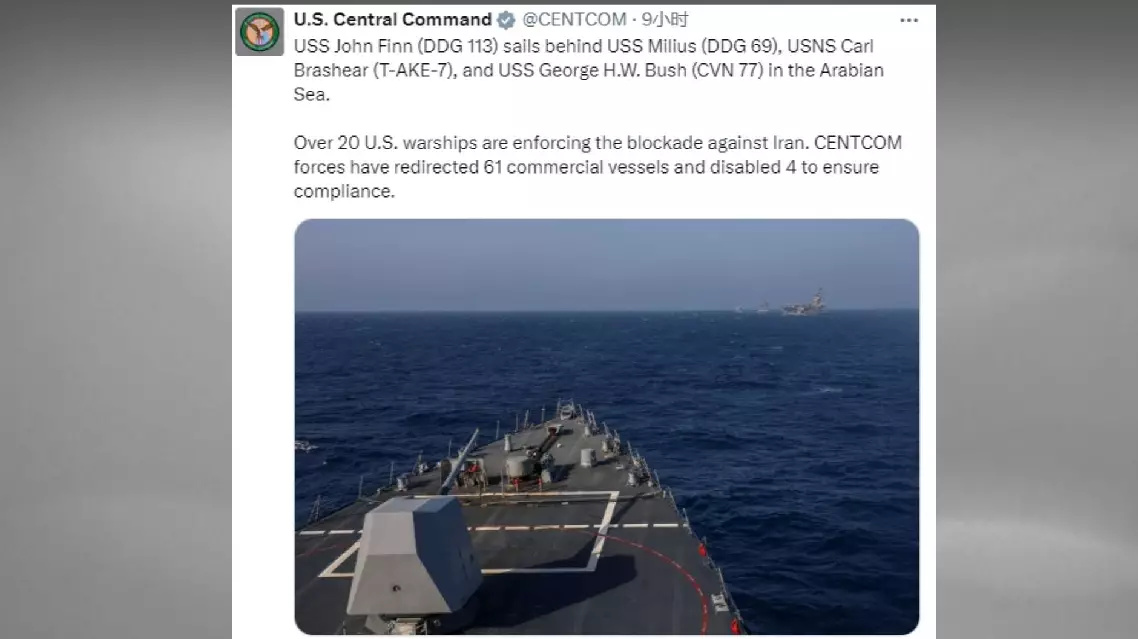
A ceasefire between the warring parties took effect on April 8, which was followed by talks between Iranian and U.S. delegations in Pakistan's Islamabad on April 11 and 12 that ended without an agreement. Later, the United States imposed its blockade on the strait.
Over the past weeks, the two sides have reportedly exchanged several proposed plans outlining conditions for ending the conflict through Pakistan.
Iran hands over response to US proposal, while Trump calls it 'unacceptable'