WASHINGTON (AP) — Will the real Democratic candidate for U.S. Senate in Nebraska please stand up?
One of the more notable matchups in Nebraska’s state primary on Tuesday features two Democratic contenders for U.S. Senate who accuse each other of being “fake” candidates with no intention of competing to win the general election. The outcome could impact whether Nebraska has a competitive general election for the seat.
Voters in the Cornhusker State also will choose nominees for a full slate of contests ranging from governor to state Legislature and local offices.
Topping the ballot is the U.S. Senate race, where Republican incumbent Pete Ricketts is seeking a full term, following his 2023 appointment and 2024 special election victory to replace Republican Ben Sasse.
Although Ricketts faces four Republican primary challengers, he’s already looking ahead to an expected general election contest against independent candidate Dan Osborn, an industrial mechanic and military veteran who came within 7 points of defeating Republican U.S. Sen. Deb Fischer in her 2024 reelection bid.
The Democratic nominee will be either pharmacy technician and community college instructor Cindy Burbank or pastor Bill Forbes.
The Nebraska Democratic Party supports Burbank for the primary and Osborn for the general election. The party originally had planned not to field a general election candidate to coalesce support behind the independent Osborn. Forbes’ last-minute candidate filing, along with past statements and political positions, has prompted allegations from party leaders that he entered the primary so that a Democrat would be on the fall ballot, siphoning votes away from Osborn and helping Ricketts.
Forbes denies the allegation. State records indicate he is a registered Democrat.
Burbank was also a late entrant to the race, and she cites keeping Forbes off the November ballot as a major priority of her campaign. On her website, she says Osborn “deserves a fair shot against Ricketts.”
Nebraska’s Republican Secretary of State, Bob Evnen, had Burbank tossed from the ballot in March following a complaint filed by the Republican Party of Nebraska alleging she was not running in good faith. The Nebraska Supreme Court ordered Burbank back on the ballot.
The primary contest will not break any fundraising records. Burbank received about $4,300 for her campaign as of April 22, while Forbes reported zero monetary contributions to his.
Republicans have held both of Nebraska’s U.S. Senate seats since the 2012 election, and the state is not a top target for Democrats looking to retake the chamber in 2026. But an upset over Ricketts or even a competitive race could give the party more breathing room as it looks to flip Republican seats in Alaska, Maine, North Carolina and Ohio.
In the race for governor, incumbent Republican Gov. Jim Pillen faces five primary challengers, while former state Sen. Lynne Walz and frequent candidate Larry Marvin compete for the Democratic nomination. Marvin has previously run for U.S. Senate four times since 2012.
In the Omaha-based 2nd Congressional District, six active candidates are running for the Democratic nomination to replace retiring Republican U.S. Rep. Don Bacon. Omaha City Councilmember Brinker Harding is unopposed for the Republican nomination. The seat is critical to Democratic hopes to retake the chamber.
There are also 11 primary elections for Nebraska's unicameral state legislature. The races are nonpartisan, but many candidates run as Republicans or Democrats. Each race will have two winners advance to the general election, though voters can vote for only one candidate.
Here are some of the key facts about the election and data points the AP Decision Team will monitor as the votes are tallied:
Nebraska falls within both the Central and Mountain time zones, but all polls close simultaneously at 9 p.m. ET.
The AP will provide vote results and declare winners in contested primaries for U.S. Senate, U.S. House, governor, secretary of state and state Legislature.
Nebraska voters registered with a political party may vote only in their own party’s primary. In other words, Democrats can’t vote in the Republican primary or vice versa. The state Democratic and Libertarian parties allow independent or unaffiliated voters to vote in their primaries. The state Republican and Legal Marijuana NOW parties allow independent or unaffiliated voters to vote in federal contests only. Voter ID is required.
As of May 1, Nebraska had about 1.3 million registered voters, about 621,000 Republicans and about 328,000 Democrats.
About 219,000 votes were cast in each of the two Republican U.S. Senate primaries in 2024, which was about 18% of registered voters at the time. Pillen’s Republican primary for governor in 2022 had about 270,00 total votes cast, or about 22% of registered voters. The Democratic gubernatorial primary that year had about 100,000 votes, roughly 8% of registered voters.
About 39% of the Republican primary vote and about 65% of the Democratic primary vote was cast before Election Day in both the 2022 and 2024 primaries.
As of Thursday, about 56,000 Republican primary ballots and about 49,000 Democratic primary ballots had already been cast in Tuesday’s election.
More than three-quarters of Nebraska’s 93 counties tend to release all or nearly all of their early and absentee vote results in the first vote update of the night, often before any results from in-person Election Day results are available. Nearly two-thirds of counties tend to release no or relatively few in-person Election Day results in their first report, including the most populous counties of Douglas and Lancaster.
In Ricketts’ last U.S. Senate primary in 2024, the AP first reported results just as polls closed statewide at 9 p.m. ET. About 90% of the vote had been counted by 12:10 a.m. ET, with the final vote update of the night a little more than an hour later at 1:35 a.m. ET with about 98% of the total vote counted. The AP declared Ricketts the winner at 9:10 p.m. ET.
The Associated Press does not make projections and will declare a winner only when it’s determined there is no scenario that would allow a trailing candidate to close the gap. If a race has not been called, the AP will continue to cover any newsworthy developments, such as candidate concessions or declarations of victory. In doing so, the AP will make clear that it has not yet declared a winner and explain why.
Recounts are automatic in Nebraska if the vote margin is 1% of the total vote or less in races where more than 500 votes are cast. The AP may declare a winner in a race that is subject to a recount if it can determine the lead is too large for a recount or legal challenge to change the outcome.
As of Tuesday, there will be 175 days until the 2026 midterm elections.
Follow the AP’s coverage of the 2026 election at https://apnews.com/projects/elections-2026/.
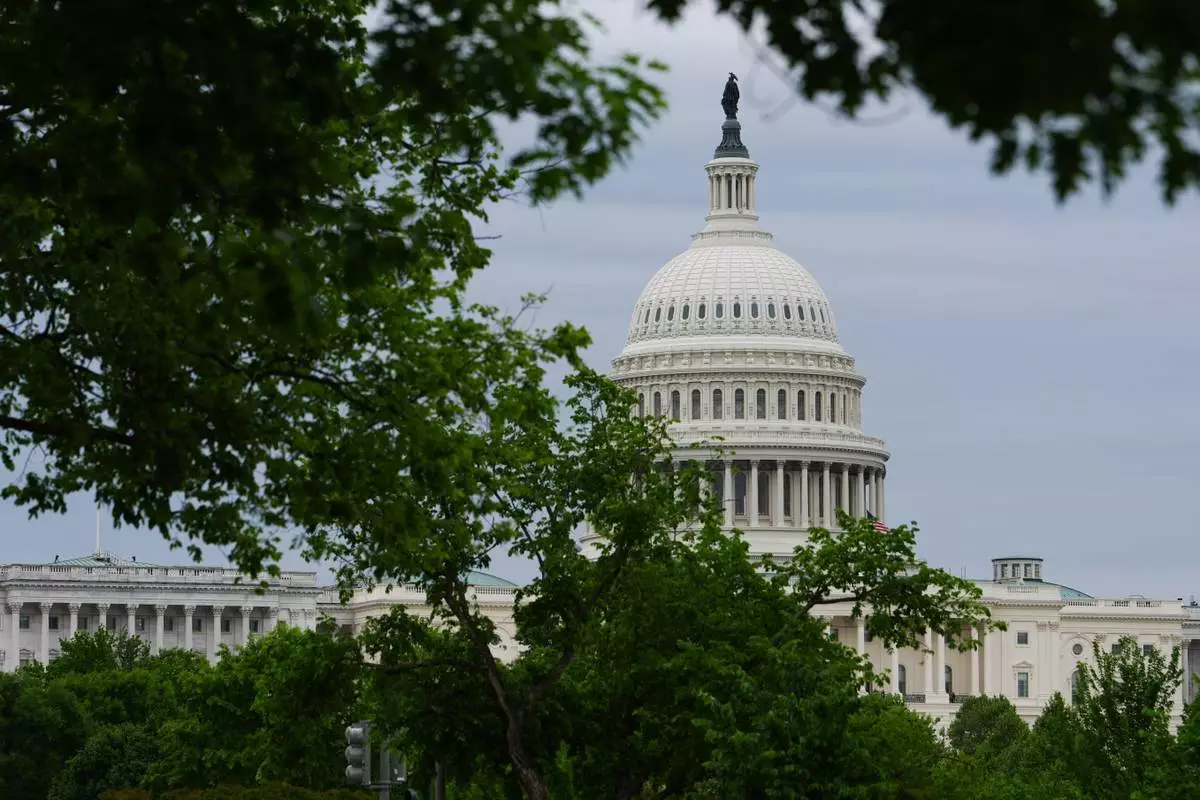
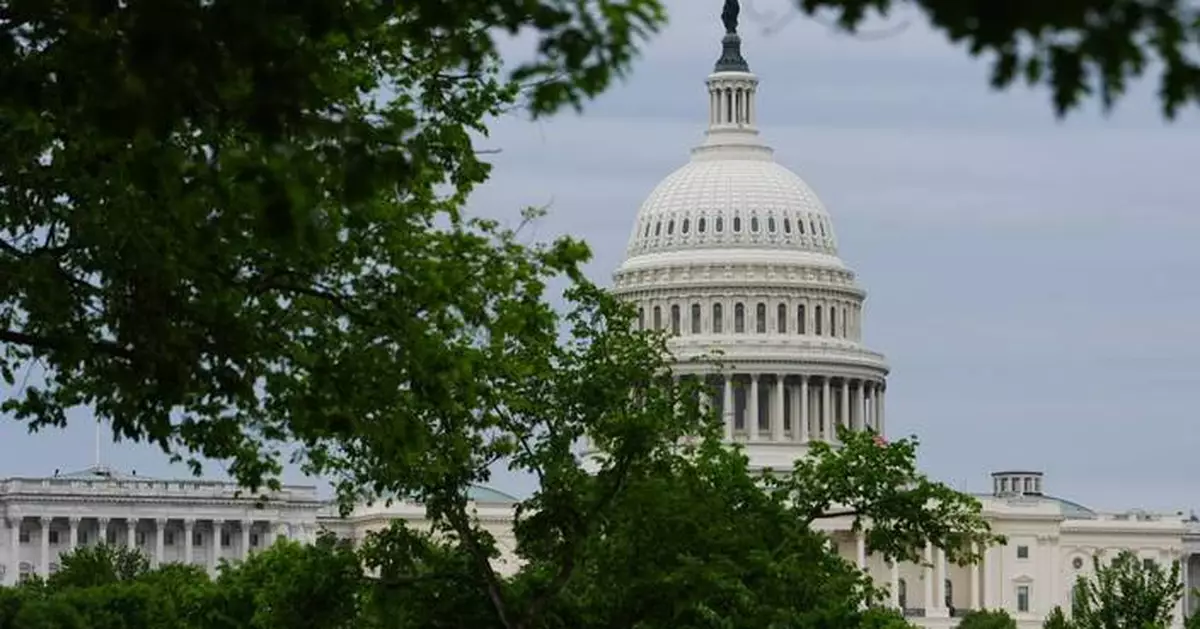
The U.S. Capitol is seen, Thursday, May 7, 2026, in Washington. (AP Photo/Julia Demaree Nikhinson)