In Horgos City, northwest China's Xinjiang Uygur Autonomous Region, smart greenhouses have created an optimal growing environment for tomatoes, enabling efficient production.
At the Horgos Modern Agricultural Science and Technology Industrial Park, different varieties of tomatoes are gradually ripening.
Outside of the greenhouses, the temperature measures 34 degrees Celsius, while the temperature inside is only 26 degrees Celsius, ideal for tomatoes entering their ripening stage.
The secret behind cooling down the high temperature lies in the temperature regulation room.
Inside this room, 170 sets of pipes, fans, and wet curtains work together to maintain the indoor temperature. The greenhouse is covered with a "double-layer polymer functional film" that acts like an intelligent skin, precisely adjusting light transmission and effectively blocking strong UV rays to ensure even fruit coloring. "After cold water goes through the wet curtain, the dry and hot air turns into moist and cool air, which is then drawn into the greenhouse by fans. When it's about 39 or 40 degrees Celsius outside, this semi-enclosed system can still lower the temperature by 12 degrees Celsius. The film has a certain light selectivity and scattering effect; it blocks the green light that plants don't like while letting in the light they need, making the lighting more uniform and gentler on the plants, ensuring their healthy growth," said Zhang Xiaofeng, head of a Xinjiang agricultural sci-tech development group.
This year, the local area has turned waste into treasure by piping carbon dioxide emitted from nearby industrial production into the smart greenhouses.
By enhancing photosynthesis efficiency, the tomatoes grow better and yield more. With the help of technology, the industrial park's annual tomato output currently reaches about 6,000 tons.
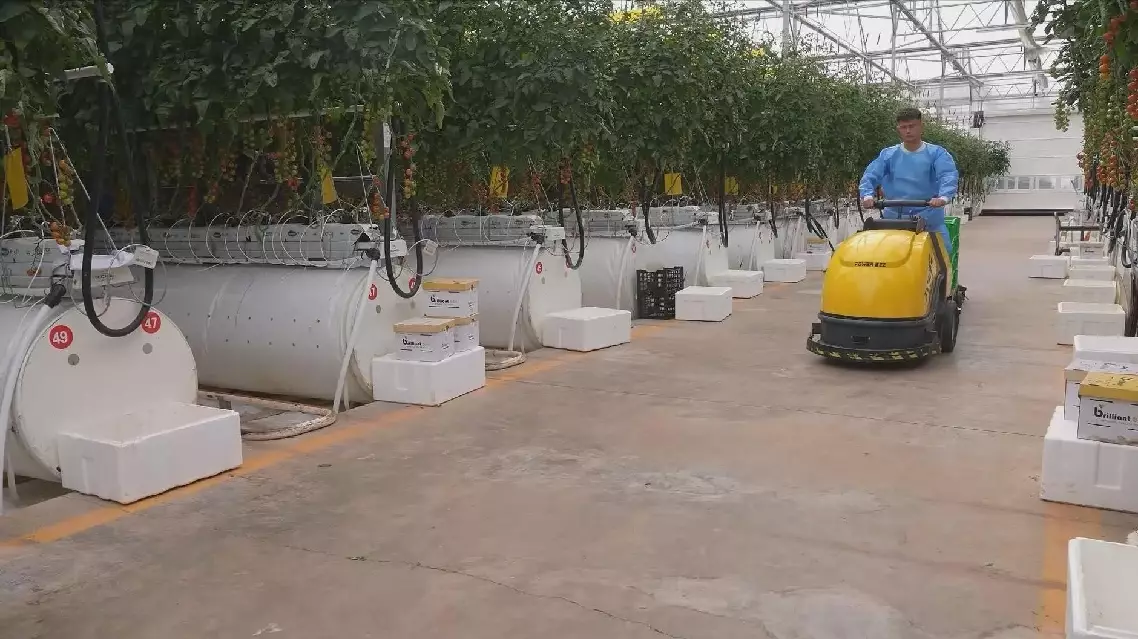
Smart greenhouses boost tomato production in Horgos
Chinese stock markets dropped on Monday, as AI and tech stocks continued to see-saw, according to China Global Television Network (CGTN) market analyst Timothy Pope.
The benchmark Shanghai Composite Index closed down 0.59 percent at 3,882.01 points, with the Shenzhen Component Index, which has more exposure to the tech sector, closing 2.13 percent lower at 13,794.29 points.
Trading volumes on the two indices rose with around 2.01 trillion yuan (about 296.28 billion U.S. dollars) traded on Monday, up from 1.88 trillion yuan (about 280 billion U.S. dollars) last Friday.
Traditional sectors such as precious metals, coal mining, and insurance led the gains, while bio-tech stocks were among the top decliners.
The ChiNext Index, tracking China's Nasdaq-style board of growth enterprises, lost 3.21 percent to close at 3,431.89 points on Monday.
The STAR Composite Index, which tracks the performance of stocks on China's sci-tech innovation board, closed 3.10 percent lower on Monday at 1,896.16 points.
"The A-share markets seem locked in this cycle of rally and rout for those growth stocks, particularly in the AI and adjacent sectors. Today was very much on the rout side so, while the Shanghai Composite Index was down 0.6 percent, we saw the Shenzhen Component down more than 2 percent, the ChiNext board was down 3.2 percent and the STAR 50 down 3.1 percent. Those last three are more exposed to the tech rally than the Shanghai Composite. The big losers as I said were AI hardware companies - Shenzhen Gongjin Electronics was down 10 percent, Zhongji Innolight fell more than 7 percent. But they weren't alone because the other big winning sector of the last few weeks - biotech - was in retreat today as well. Investors were rotating into gold and coal stocks as well, and agricultural stocks extended the food security trade rally that we saw at the end of last week. There were a number of stocks across those sectors, all of those were hitting the upper limits of trade today," said Pope.
Pope said the rest of the week will be dominated by earnings reports from some of China’s biggest companies.
"The rest of the week is going to be mostly about earnings. The end-of-August filing deadline is fast approaching. Friday will be a really big day on the earnings calendar. We've got BYD, PetroChina, Shenhua Energy and a lot of big banks as well. Earnings that we are going to see for ICBC, China Merchants Bank and others will give us an insight into how much pressure the big banks are under with their margins. BYD is also going to be an interesting one in light of the government's anti-involution campaign and its efforts to avert a bit of a race to the bottom in the EV sector. And before we get there, there are Nvidia results in the US on Wednesday which will doubtless impact every stock in the AI space," he said.
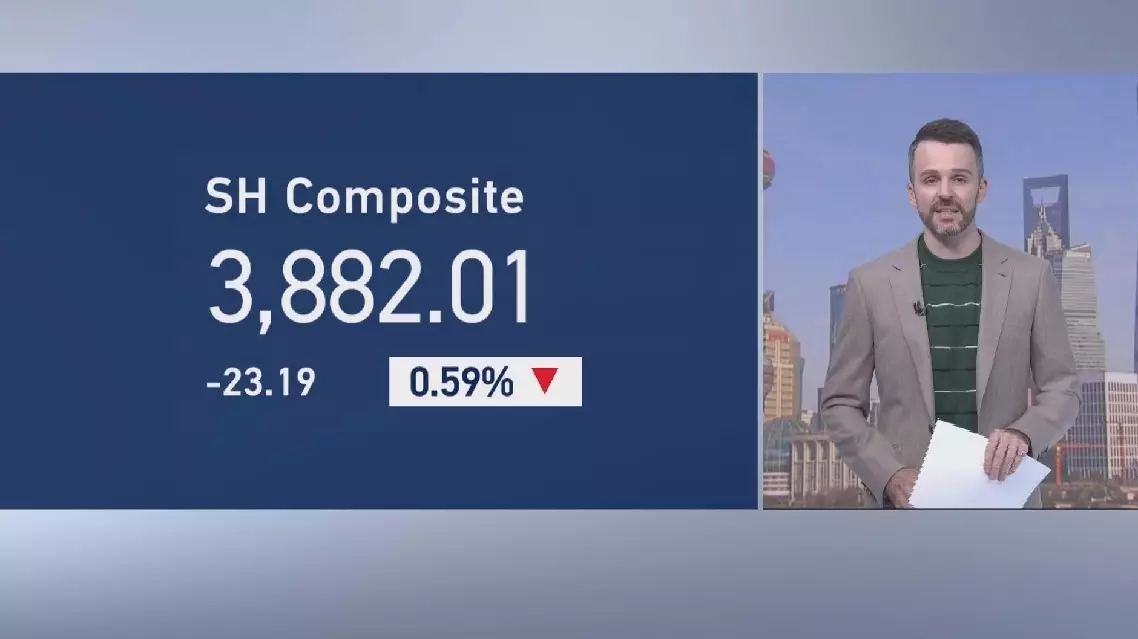
Chinese stock markets start week lower on AI volatility: analyst