Skip to Content Facebook Feature Image

EU sanctions Hamas leaders and Israeli settlers, but shelves stronger economic pressure

News

EU sanctions Hamas leaders and Israeli settlers, but shelves stronger economic pressure
News

News

EU sanctions Hamas leaders and Israeli settlers, but shelves stronger economic pressure

2026-05-11 22:17 Last Updated At:22:31

BRUSSELS (AP) — The European Union reached a unanimous political agreement Monday to issue new sanctions on Hamas leaders and the Israeli settler movement, top European diplomats said, after years of deadlock and growing popular pressure sparked by the carnage in Gaza.

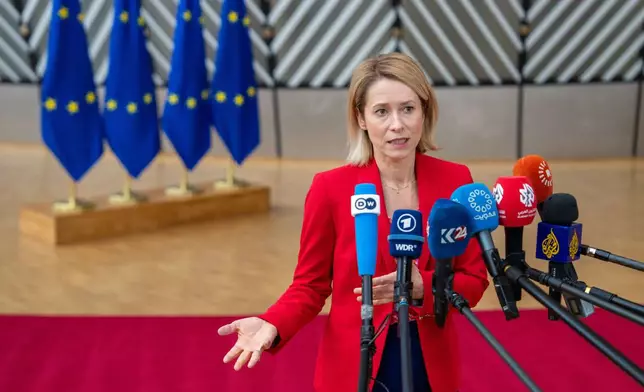
EU’s foreign policy chief Kaja Kallas said in a social media post after a meeting in Brussels on Monday of the 27-nation bloc 's foreign ministers that extremism and violence should carry consequences. “It was high time we move from deadlock to delivery," she said.

More Images
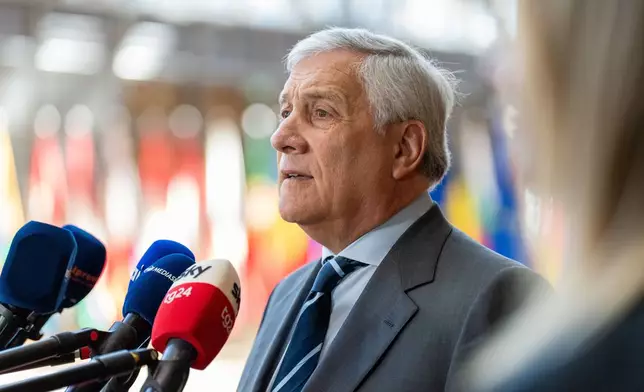
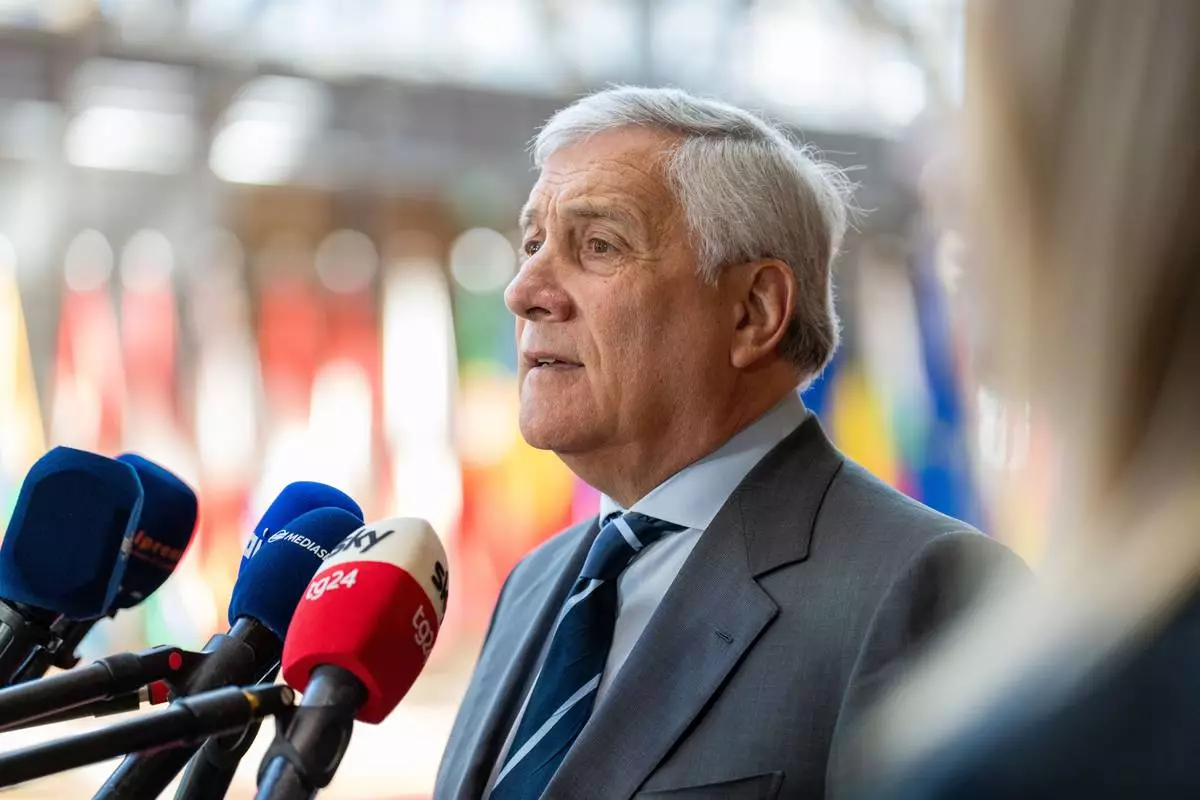
Italy's Foreign Minister Antonio Tajani speaks with the media as he arrives for a meeting of EU foreign ministers at the European Council building in Brussels, Monday, May 11, 2026. (AP Photo/Marius Burgelman)
Italy's Foreign Minister Antonio Tajani speaks with the media as he arrives for a meeting of EU foreign ministers at the European Council building in Brussels, Monday, May 11, 2026. (AP Photo/Marius Burgelman)
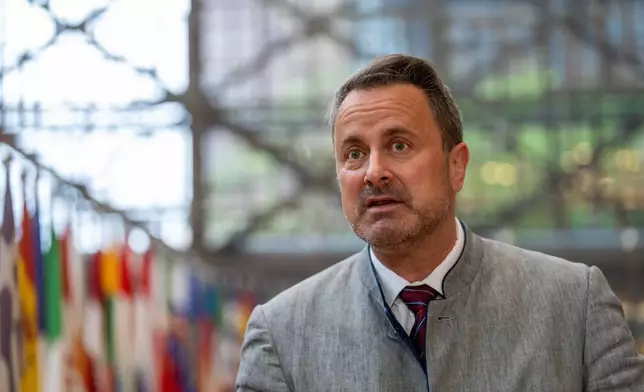
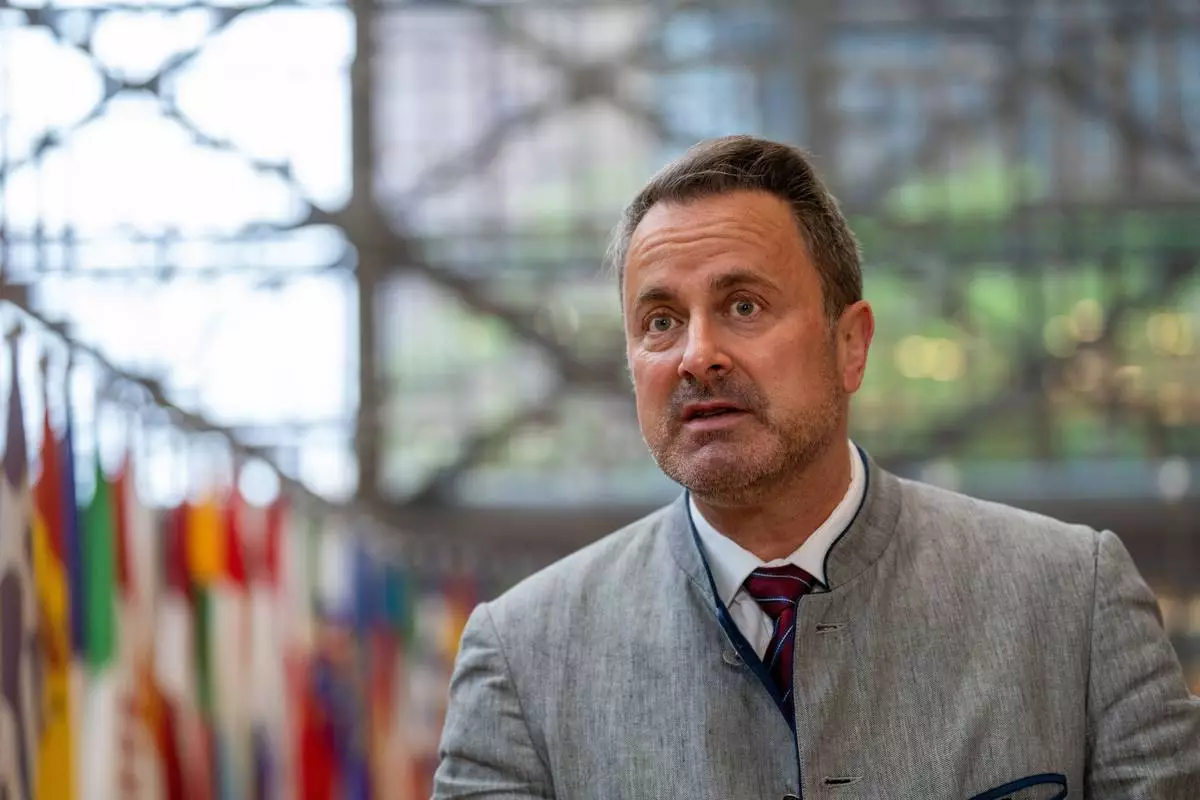
Luxembourg's Foreign Minister Xavier Bettel speaks with the media as he arrives for a meeting of EU foreign ministers at the European Council building in Brussels, Monday, May 11, 2026. (AP Photo/Marius Burgelman)
Luxembourg's Foreign Minister Xavier Bettel speaks with the media as he arrives for a meeting of EU foreign ministers at the European Council building in Brussels, Monday, May 11, 2026. (AP Photo/Marius Burgelman)

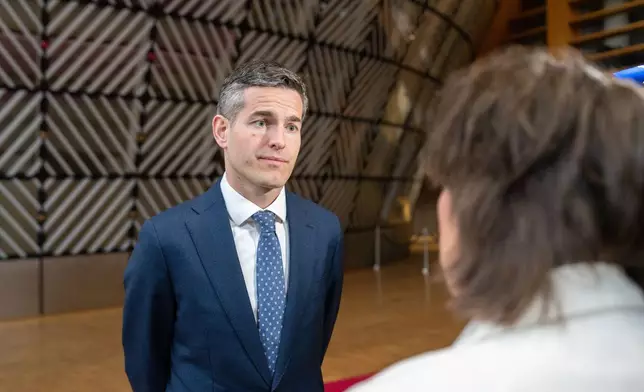
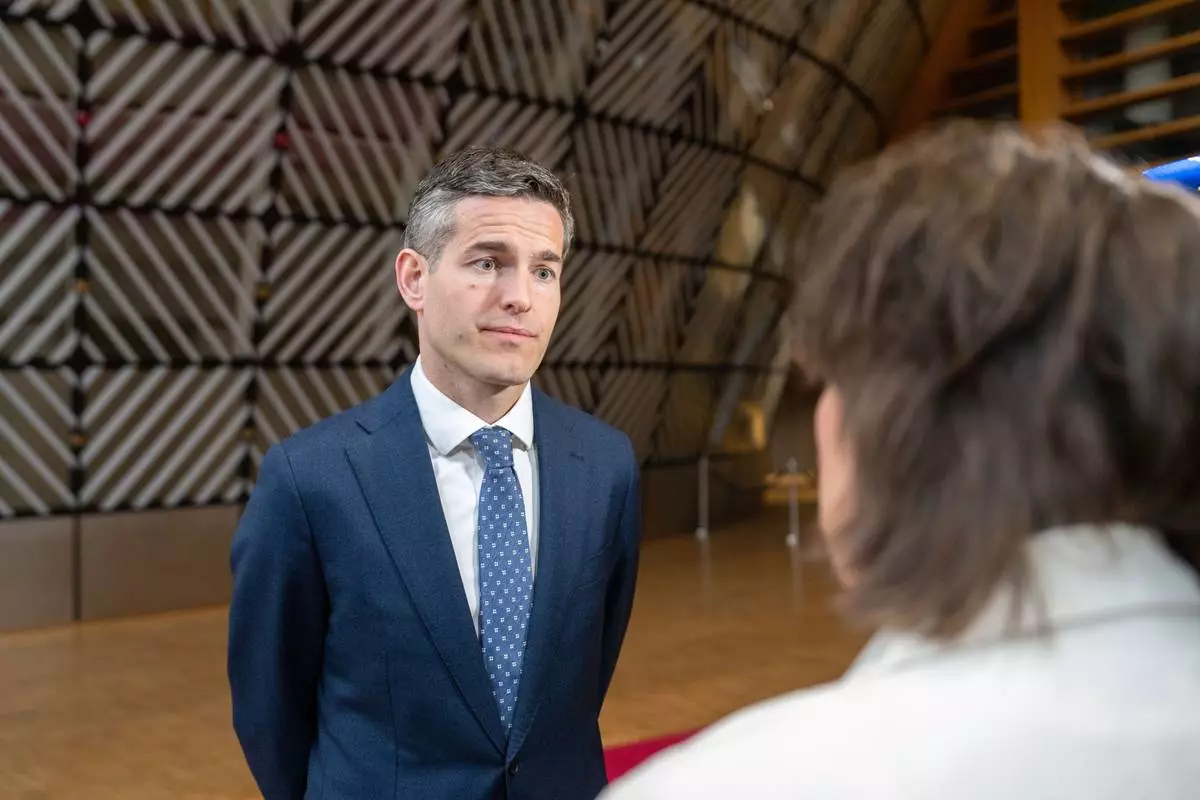
Netherland's Foreign Minister Tom Berendsen speaks with the media as he arrives for a meeting of EU foreign ministers at the European Council building in Brussels, Monday, May 11, 2026. (AP Photo/Marius Burgelman)

Netherland's Foreign Minister Tom Berendsen speaks with the media as he arrives for a meeting of EU foreign ministers at the European Council building in Brussels, Monday, May 11, 2026. (AP Photo/Marius Burgelman)

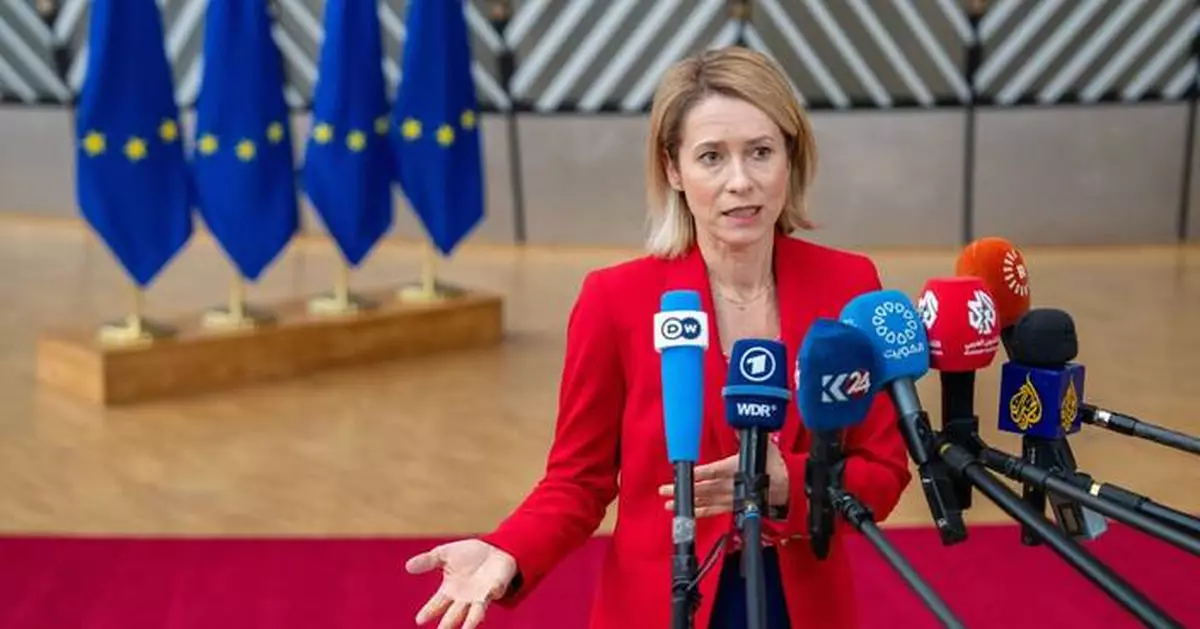
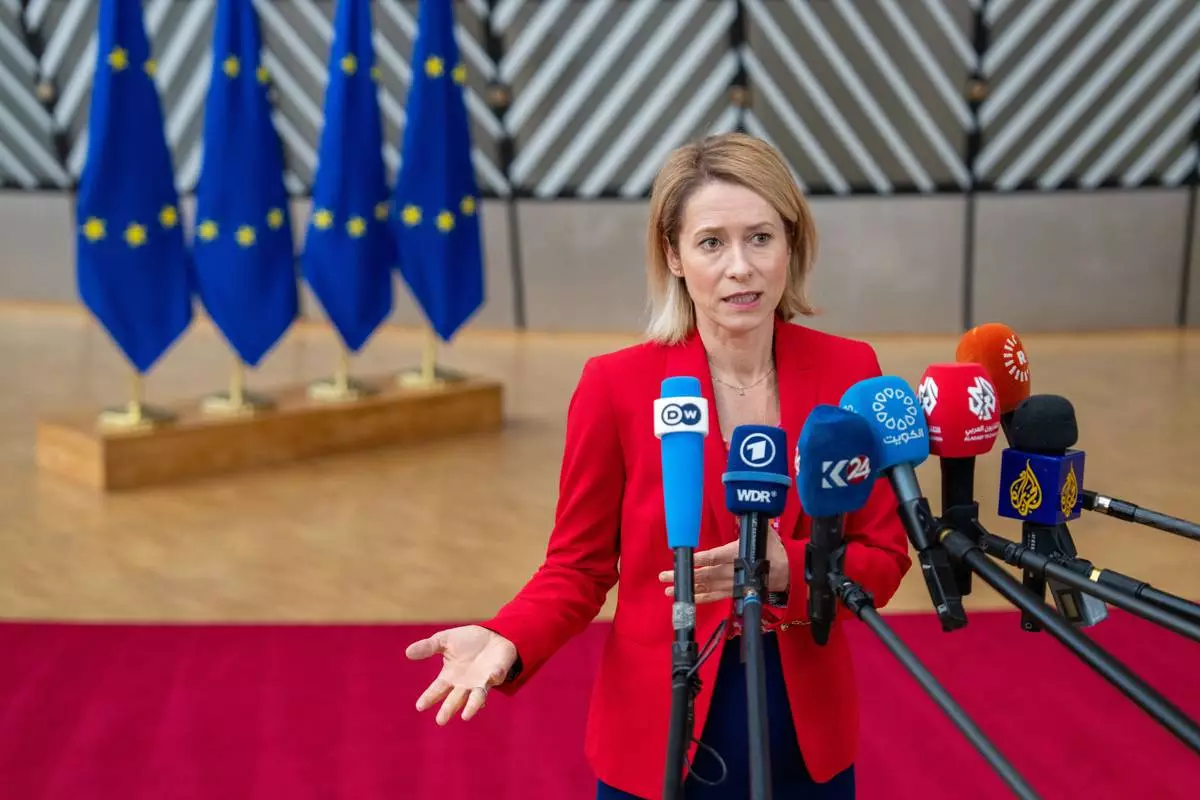
European Union foreign policy chief Kaja Kallas speaks with the media as she arrives for a meeting of EU foreign ministers at the European Council building in Brussels, Monday, May 11, 2026. (AP Photo/Marius Burgelman)

European Union foreign policy chief Kaja Kallas speaks with the media as she arrives for a meeting of EU foreign ministers at the European Council building in Brussels, Monday, May 11, 2026. (AP Photo/Marius Burgelman)

The group failed to endorse even stronger measures pushed by some European governments and did not immediately release details of the new measures, but French Foreign Minister Jean-Noël Barrot said the ministers had decided to sanction Hamas leaders and both leaders and organizations in the Israeli settler movement in the West Bank.

“The European Union is sanctioning today the main Israeli organizations guilty of supporting the extremist and violent colonization of the West Bank, as well as their leaders. These most serious and intolerable acts must cease without delay,” he said in a post Monday on social media.

“It is sanctioning the main leaders of Hamas, responsible for the worst antisemitic massacre in our history since the Shoah during which 51 French people lost their lives, a terrorist movement that must imperatively be disarmed and excluded from any participation in the future of Palestine," Barrot said.

Palestinians, rights groups and international observers are increasingly warning about the worsening violence in the West Bank, where young Palestinian men are being killed with increasing regularity amid a broader climate of arson, vandalism and the displacement of farming communities near settlements and outposts in the occupied West Bank.

At least 40 Palestinians have been killed since the start of the year, according to the United Nations Office for the Coordination of Humanitarian Affairs, including a record 11 by settlers, two more than in all of 2025.

The unanimous EU vote is a sign of the political possibilities unleashed by the ouster last month of Hungarian Prime Minsiter Viktor Orbán after 16 years in power in Budapest. A staunch supporter of Israeli Prime Minister Benjamin Netanyahu, Orbán had repeatedly vetoed earlier attempts to sanction Israeli settlers for actions in the West Bank.

But Orbán was defeated in an election in April by Péter Magyar, and the approval Monday of the new EU sanctions "validates the notion that Orbán was blocking them single-handedly," said Martin Konečný, head of the Brussels-based European Middle East Project.

The sanctions could signal a turning point in the EU's Israel policy. Criticism of Israeli Prime Minister Benjamin Netanyahu and his government's actions in Gaza, the West Bank, Lebanon, Syria and Iran had pushed many European governments, led by Spain, Ireland and the Netherlands, to seek such penalties.

“You can’t just turn a blind eye,” Luxembourg Foreign Minister Xavier Bettel said ahead of the meeting.

However, EU diplomats failed to agree on stronger actions to pressure Israel like banning products from Israeli settlements in the West Bank or suspending a key trade agreement.

“There’s so much that you can and should be doing, and so to get stuck in this question of adding a few more settlers is missing the big picture,” said Hugh Lovatt, a fellow at the European Council on Foreign Relations. “The EU’s narrowed the scope of action now to individuals and to a few entities, and in doing that it’s ignoring the far more systemic issues at play."

Claudio Francavilla, Human Rights Watch associate EU director, said the sanctions were “a step in the right direction, but so many more needed for the EU to comply with international law.”

Italian Foreign Minister Antonio Tajani said before the meeting in Brussels that his government needed more time to study a French-Swedish proposal to sever West Bank settlers from EU markets, effectively withholding support for the plan from Italy despite mounting popular political pressure.

Individual nations could ban settlement goods on their own if the process stalls in Brussels, Dutch Foreign Minister Tom Berendsen said.

The EU's next Foreign Affairs Council later in May will be focused on trade.

“We have been talking about measures for too long,” said Spanish Foreign Minister José Manuel Albares Bueno in Brussels. “Let’s move on to a vote and stop saying that there is no qualified majority for it. Let’s see how many of us are in agreement and who is not.”
Italy's Foreign Minister Antonio Tajani speaks with the media as he arrives for a meeting of EU foreign ministers at the European Council building in Brussels, Monday, May 11, 2026. (AP Photo/Marius Burgelman)
Italy's Foreign Minister Antonio Tajani speaks with the media as he arrives for a meeting of EU foreign ministers at the European Council building in Brussels, Monday, May 11, 2026. (AP Photo/Marius Burgelman)
Luxembourg's Foreign Minister Xavier Bettel speaks with the media as he arrives for a meeting of EU foreign ministers at the European Council building in Brussels, Monday, May 11, 2026. (AP Photo/Marius Burgelman)
Luxembourg's Foreign Minister Xavier Bettel speaks with the media as he arrives for a meeting of EU foreign ministers at the European Council building in Brussels, Monday, May 11, 2026. (AP Photo/Marius Burgelman)

Netherland's Foreign Minister Tom Berendsen speaks with the media as he arrives for a meeting of EU foreign ministers at the European Council building in Brussels, Monday, May 11, 2026. (AP Photo/Marius Burgelman)
Netherland's Foreign Minister Tom Berendsen speaks with the media as he arrives for a meeting of EU foreign ministers at the European Council building in Brussels, Monday, May 11, 2026. (AP Photo/Marius Burgelman)
European Union foreign policy chief Kaja Kallas speaks with the media as she arrives for a meeting of EU foreign ministers at the European Council building in Brussels, Monday, May 11, 2026. (AP Photo/Marius Burgelman)
European Union foreign policy chief Kaja Kallas speaks with the media as she arrives for a meeting of EU foreign ministers at the European Council building in Brussels, Monday, May 11, 2026. (AP Photo/Marius Burgelman)
BRUSSELS (AP) — The European Union on Monday imposed sanctions on 16 officials accused of helping Russia to abduct tens of thousands of children from Ukraine and force many to change their identities or be put up for adoption.

Sanctions were also slapped on seven centers suspected of indoctrinating the children or training them to serve in the armed forces, either for Russia or pro-Russian militias inside Ukraine.

Over 130 people and “entities” are now under EU travel bans and asset freezes over the abductions.

EU headquarters said the measures target “those responsible for the systematic unlawful deportation, forced transfer, forced assimilation, including indoctrination and militarized education, of Ukrainian minors, as well as their unlawful adoption and removal to the Russian Federation and within temporarily occupied territories.”

Since Russia launched its full-scale invasion of Ukraine in early 2022, about 20,500 children have been unlawfully deported or forcibly transferred to Russia or Russian-held territories in eastern Ukraine.

EU officials say many of the children are stripped of their Ukrainian identity and culture, given Russian passports and put up for adoption. Some are forced into schools for indoctrination or into military camps.

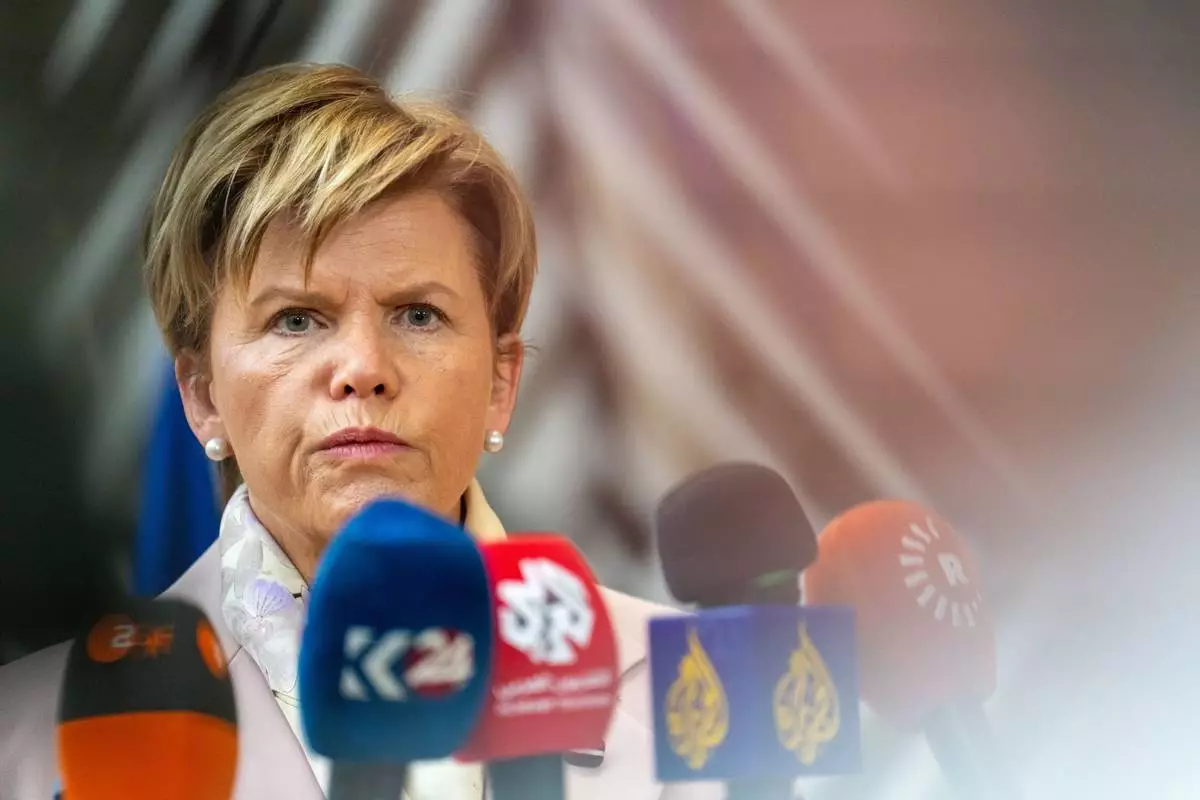
“Russia is trying to erase their identity,” Latvian Foreign Minister Baiba Braže said Monday at a meeting with EU counterparts in Brussels, where the sanctions were endorsed. “When you look at the Genocide Convention, it’s one of the features of the genocide crime. So, it’s very serious.”

The International Criminal Court has issued an arrest warrant for Russian President Vladimir Putin for war crimes, accusing him of personal responsibility for the abductions.

Around 2,200 children have been returned, but identifying them is complicated. Those taken at a young age can be difficult to recognize just a few years later. Getting them home is a harrowing task, and while Ukraine has reintegration structures in place some may face a long period of adaption when they return.

The EU on Monday was hosting, alongside Canada, a meeting of the 47-country International Coalition for the Return of Ukrainian Children to increase diplomatic pressure on Russia and rally support for work to verify and trace those who are taken.

“War has really many faces, but stealing the children is really one of the most horrific,” EU Enlargement Commissioner Marta Kos said ahead of the gathering. “We should stop this, and Russia should pay.”

The officials targeted by Monday’s sanctions include the heads of children’s camps, government representatives and military officers in charge of youth training.

One of the 16 named was Lilya Shvetsova, head of the “Red Carnation” camp in occupied Crimea. The EU said she supervised “activities aimed at shaping the political and ideological views of children present at the facility, including Ukrainian children.”

Like others on the list, she was determined to be “supporting and implementing actions and policies contributing to the deportation, forced transfer, forced assimilation, including indoctrination, or militarized education of Ukrainian minors.”

European Commissioner for Enlargement Marta Kos speaks with the media as she arrives for a meeting of EU foreign ministers at the European Council building in Brussels, Monday, May 11, 2026. (AP Photo/Virginia Mayo)

European Commissioner for Enlargement Marta Kos speaks with the media as she arrives for a meeting of EU foreign ministers at the European Council building in Brussels, Monday, May 11, 2026. (AP Photo/Virginia Mayo)

Latvia's Foreign Minister Baiba Braze speaks with the media as she arrives for a meeting of EU foreign ministers at the European Council building in Brussels, Monday, May 11, 2026. (AP Photo/Marius Burgelman)
Latvia's Foreign Minister Baiba Braze speaks with the media as she arrives for a meeting of EU foreign ministers at the European Council building in Brussels, Monday, May 11, 2026. (AP Photo/Marius Burgelman)
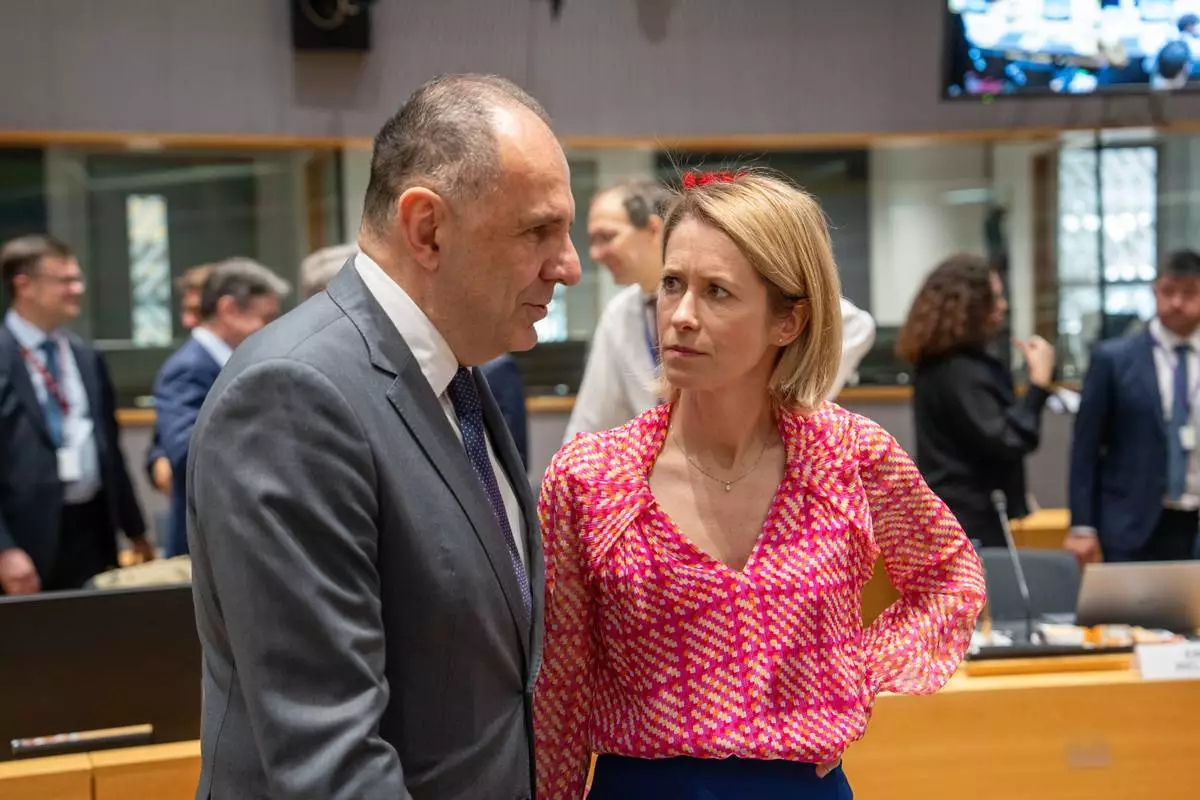
Greece's Foreign Minister Giorgos Gerapetritis, left, speaks with European Union foreign policy chief Kaja Kallas during a round table meeting of EU foreign ministers at the European Council building in Brussels, Monday, May 11, 2026. (AP Photo/Marius Burgelman)
Greece's Foreign Minister Giorgos Gerapetritis, left, speaks with European Union foreign policy chief Kaja Kallas during a round table meeting of EU foreign ministers at the European Council building in Brussels, Monday, May 11, 2026. (AP Photo/Marius Burgelman)
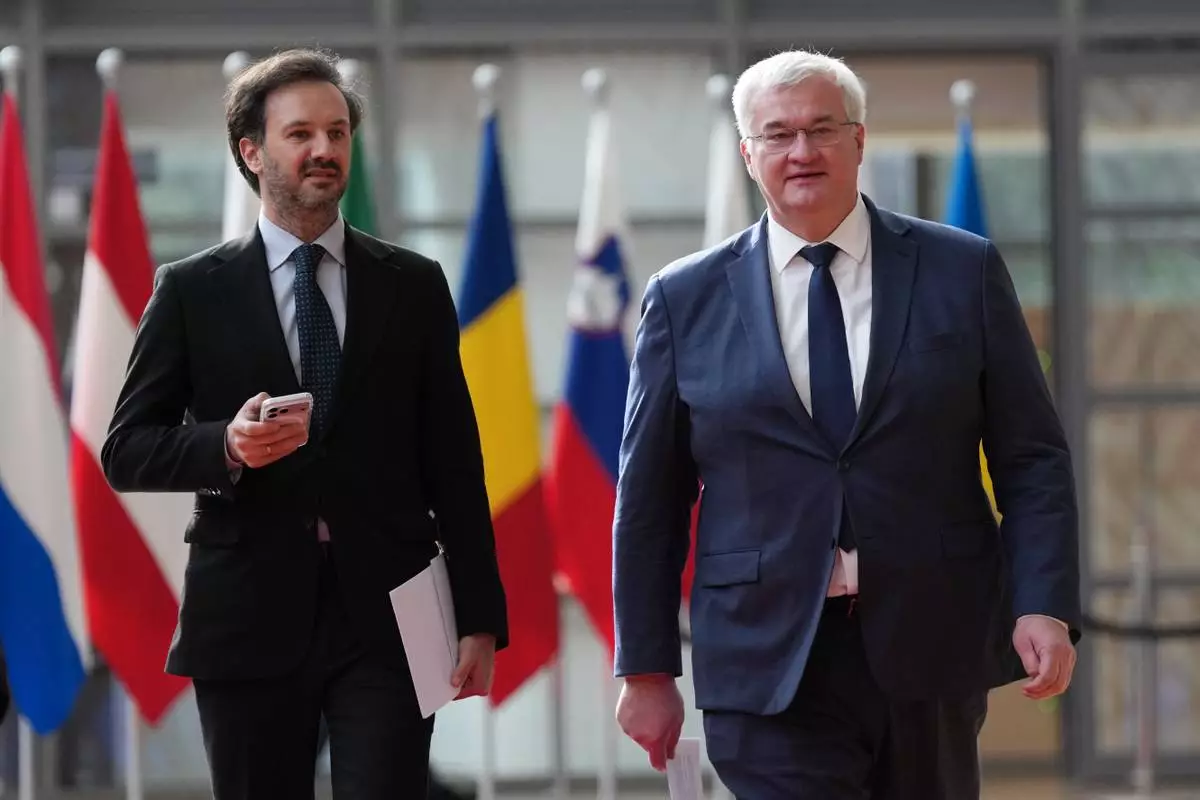
Ukraine's Foreign Minister Andrii Sybiha, right, arrives for a meeting of EU foreign ministers at the European Council building in Brussels, Monday, May 11, 2026. (AP Photo/Virginia Mayo)

Ukraine's Foreign Minister Andrii Sybiha, right, arrives for a meeting of EU foreign ministers at the European Council building in Brussels, Monday, May 11, 2026. (AP Photo/Virginia Mayo)

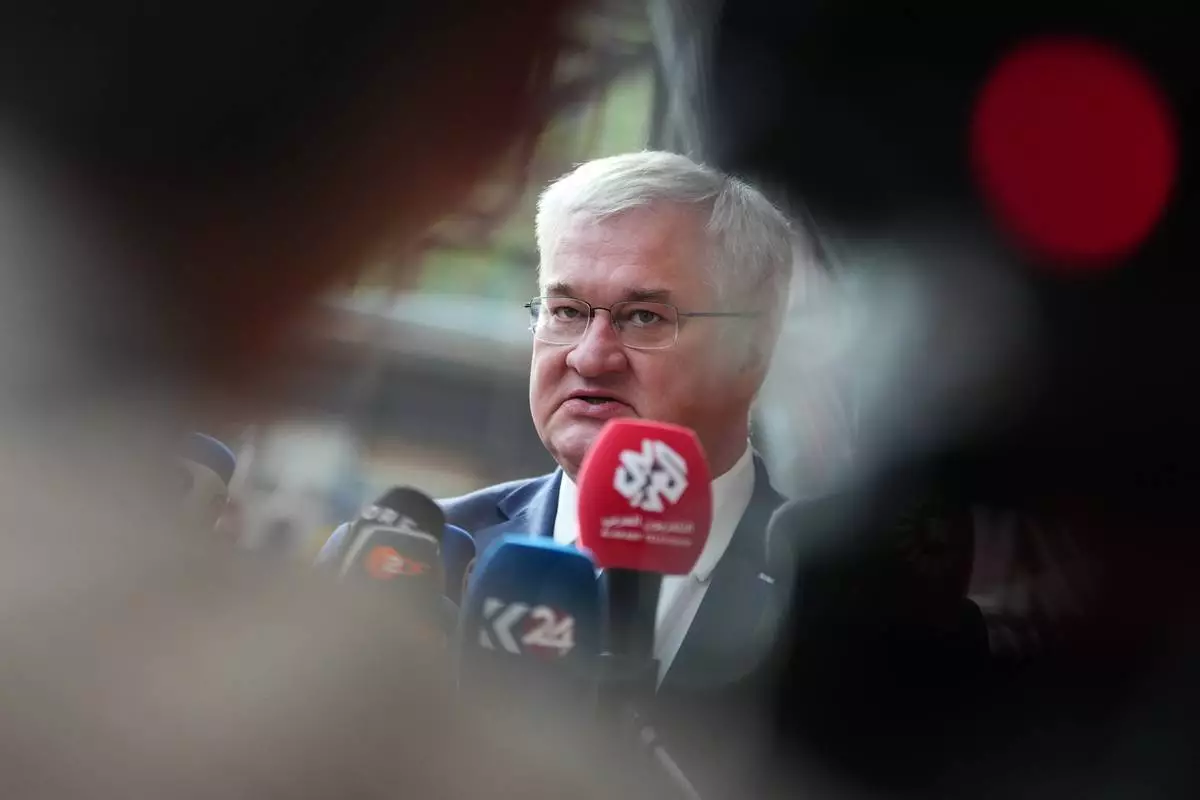
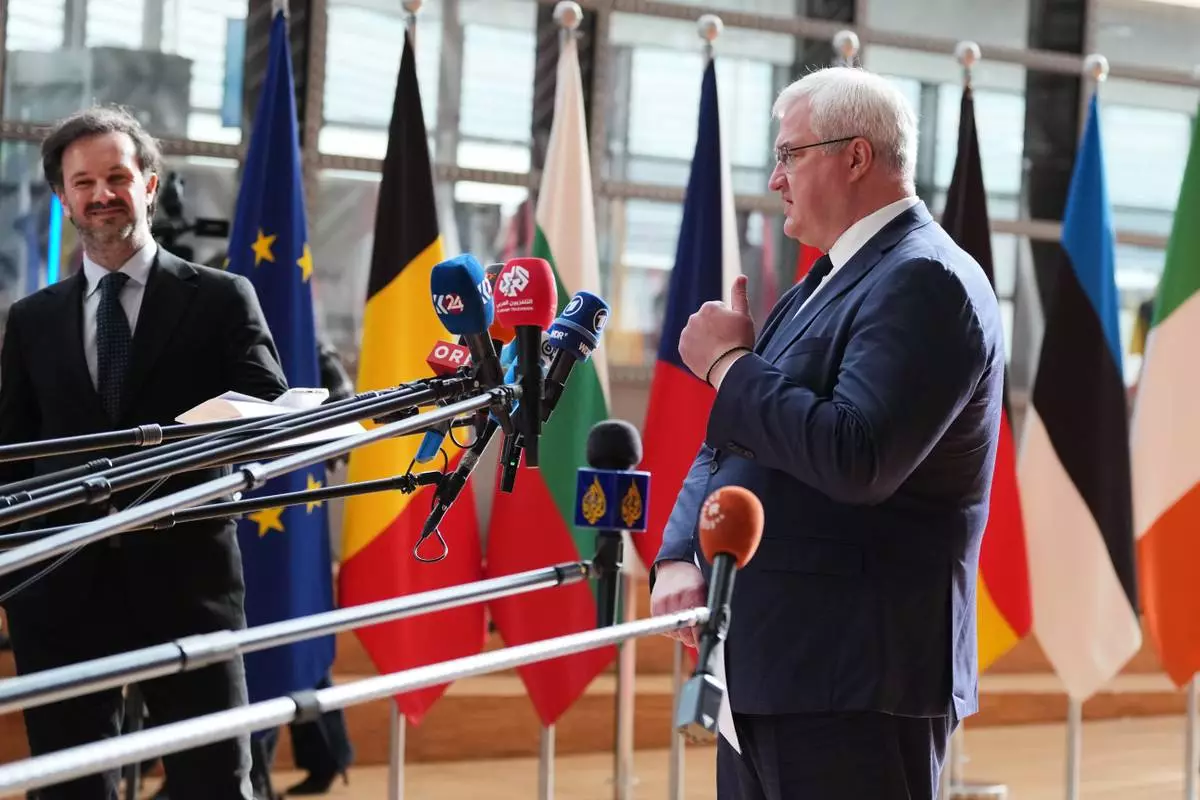
Ukraine's Foreign Minister Andrii Sybiha speaks with the media as he arrives for a meeting of EU foreign ministers at the European Council building in Brussels, Monday, May 11, 2026. (AP Photo/Virginia Mayo)

Ukraine's Foreign Minister Andrii Sybiha speaks with the media as he arrives for a meeting of EU foreign ministers at the European Council building in Brussels, Monday, May 11, 2026. (AP Photo/Virginia Mayo)

Ukraine's Foreign Minister Andrii Sybiha, right, speaks with the media as he arrives for a meeting of EU foreign ministers at the European Council building in Brussels, Monday, May 11, 2026. (AP Photo/Virginia Mayo)

Ukraine's Foreign Minister Andrii Sybiha, right, speaks with the media as he arrives for a meeting of EU foreign ministers at the European Council building in Brussels, Monday, May 11, 2026. (AP Photo/Virginia Mayo)

Recommended Articles